Standing Tall at the Podium

Height Is the Only Advantage for This Mental Midget

Today I watched the debate between Vice President Kamala Harris and her opponent. There couldn’t possibly be two candidates who were more different from each other.

Trump’s only advantage is that he is almost a foot taller than Harris, and America is a country which tends to over-reward candidates who are tall. I myself am of medium height (5 feet 8 inches, or 1.75 meters), though because of a pituitary tumor I had from an early age, I was the shortest male in class throughout my elementary school years. It was only after the tumor was removed at age 21 that I grew to my present height.

There have been statistics to the effect that greater than average height is a clear advantage in politics, business, and wooing. My own thinking is that the height advantage, while real, is no guarantee of success.

At today’s presidential debate, it was Kamala Harris who stood tall. She was quick to react, made frequent eye contact, and even began by going to Trump’s podium and shaking his hand, which no doubt surprised the ex-president to no end. Trump, on the other hand, looked like the grumpy old man that he is, wanting to chase all the darned kids off his lawn, and speaking with a cold, constipated rage that made me think we probably wouldn’t live out his term if elected.

“You Have To Swing”

Jack Kerouac (1922-1969)

Jack Kerouac is not best known for his poetry, but his can be fun to read, such as this short lament:

Woman

A woman is beautiful
but
you have to swing
and swing and swing
and swing like
a handkerchief in the
wind

Renoir in the Waiting Room

Auguste Renoir’s “Bal du Moulin de la Galette” (1876)

There I was, waiting for a full hour beyond my appointment time at my physician’s office. Going through my mind was the question “What should I write about for my blog tonight?” Hanging in the waiting room were two reproductions of paintings by Pierre Auguste Renoir, one of which was “Bal du Moulin de la Galette.”

The thought suddenly came to me that no other artist depicted women so radiantly. In the above painting, it seems that there is a soft spotlight on every woman’s face. The men do not quite receive the same treatment. That tendency is even more pronounced in “La Promenade” at the Getty Center in Los Angeles:

Auguste Renoir’s “La Promenade” (1870)

The following is from an earlier post about the painter from December 2, 2021:

What I find truly amazing is that much of the same sensibility was passed on to his son, Jean, who became one of the great motion picture directors. There are times when the viewer feels that the father could have directed the same scene in the same way…..

Some of the same feeling is in his earlier The Rules of the Game (1939), which is set in the present day. The men in the film all fly around the Marquise de la Chesnaye (played by Nora Gregor) like moths circling a flame.

Of course, Jean Renoir was very conscious of his father’s work, appearing in several of the paintings. He also wrote a beautiful biography of him called Renoir, My Father, which is available in a New York Review edition and is well worth reading.

Although I was in my doctor’s waiting room for a long time, my mind kept flitting back to the father and son whose paintings and films have influenced me so much.

Mister Care Wack Dreams About Girls

New York Bathing Beauties Circa 1960

I am enjoying a collection of the miscellaneous writings by Jack Kerouac during his 63 days atop Desolation Peak in Washington State’s Northern Cascades. I have particularly enjoyed the chapters he wrote for a projected (but never completed) novel called Ozone Park in the “Duluoz Legend” series of slightly fictionalized autobiography. Here is a quote from a deleted chapter from a work that Kerouac (called Mister Care Wack by a hobo friend named Slim) abandoned.

O Kerouac, you poor fool, wandering the streets of night in search of romance in the golden nothingness of existence! Foolish as men are, they’re never more foolish than when they’re 21 years old and actually think that they do exist to be loved somehow either by a personal God who bends over them like a Guardian Angel with those wings of a loving destiny (mayhap I still believe that) or by a woman and women He sends to soul-soothe their sad predestined hugeness of being (“I am Jack Kerouac, there’s something about me that never happened before, she will notice it”) and so they sit at the windows of night smoking Frank Sinatra cigarettes, vain as veritable d’Annunzios, beautiful as the sea, mistaken as lost angels, lovable as God, misunderstood as secret saints, yearny as young girls, masculine as rocks and immovable as self-faith. And this is the reason why they eventually do get loved, but not for the reason they imagine to be foremost, their melancholy which they take to be the penalty is really the reward and is gained. A woman sees a man wrapped in self-torture, and when he smiles there’s already no need for smiles and come-ons.

Thoughts of a lonely young man stuck on a mountaintop.

Not So Fragile After All

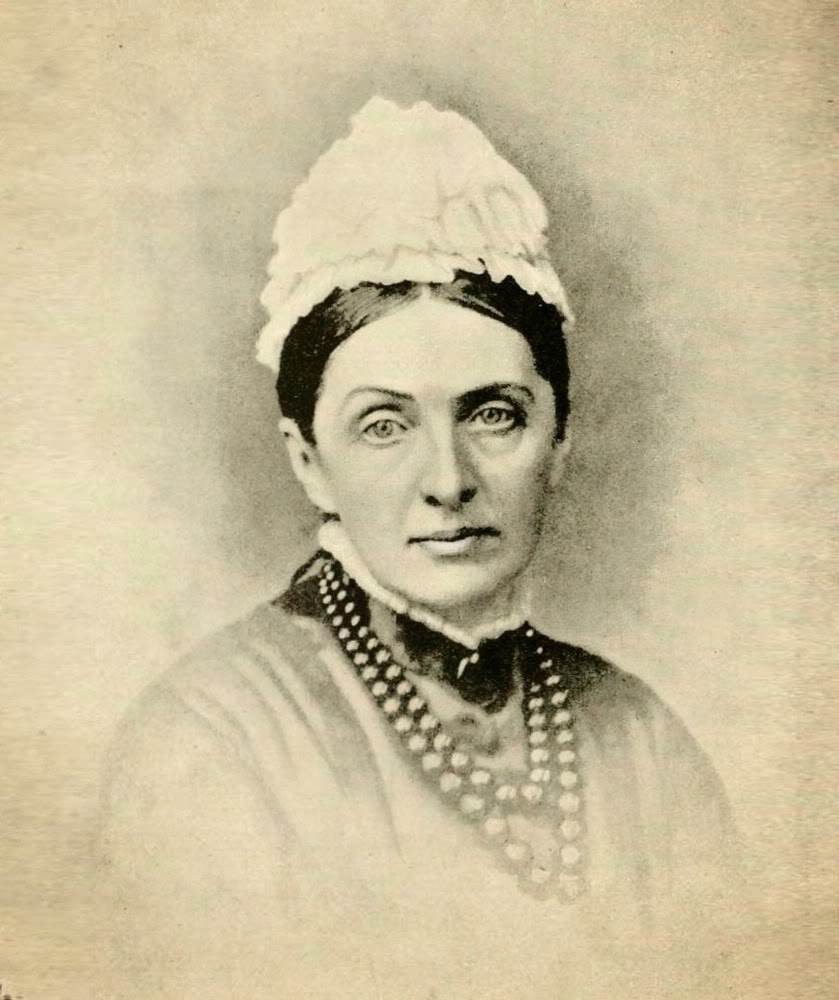
Isabella Lucy Bird (1831-1904)

Were Victorian women really as fragile as depicted? Take the case of Isabella Lucy Bird, who is described in her Wikipedia entry as follows:

From early childhood Bird was frail, suffering from a spinal complaint, nervous headaches, and insomnia. The doctor recommended an open-air life, and consequently, Bird learned to ride in infancy, and later to row. Her only education came from her parents: her father was a keen botanist who instructed Bird in flora, and her mother taught her daughters an eclectic mix of subjects. Bird became an avid reader. However, her “bright intelligence, [and] an extreme curiosity as to the world outside, made it impossible for her brain and her nature generally to be narrowed and stiffened by the strictly evangelical atmosphere of her childhood.”

So what did this proper lady do for kicks? She traveled around the world for several decades, writing a series of creditable travel classics. I am currently reading Six Months in the Sandwich Islands, amongst the Palm Groves, Coral Reefs and Volcanoes (1874), which described her seven-month stay in the Hawaiian Archipelago.

Other books and articles describe her travels to Australia, the American West, Japan, Malaya, Greece, Persia, Tibet, China, Korea, and Morocco.

Isabella Bird was by no means the only woman solo traveler of her time. There was also Lady Florence Dixie (1855-1905), who wrote an excellent book about Patagonia; Frances Trollope (1779-1863), mother of novelist Anthony Trollope, who wrote of her travels in the United States; and Lady Hester Stanhope (1776-1839), who traveled extensively in the Middle East.

Dame Freya Stark (1893-1993)

Somewhat later, there was Dame Freya Stark, who traveled by herself among the Arabs and lived to the ripe old age of a hundred. I have read several of her books, which are uniformly excellent.

I can only look upon these women travelers with wonder and admiration.

Like Father, Like Son

The illustration above is of Pierre-Auguste Renoir’s La Promenade, painted in 1870, and on display at the Getty Center in Los Angeles. I have always been partial to Renoir’s paintings, particularly when they have these luminous portraits of women. In the painting, the man’s face is in shadow; he is reduced to a polite gesture of leading his lady on. The young woman, on the other hand, lights up the canvas.

What I find truly amazing is that much of the same sensibility was passed on to his son, Jean, who became one of the great motion picture directors. There are times when the viewer feels that the father could have directed the same scene in the same way.

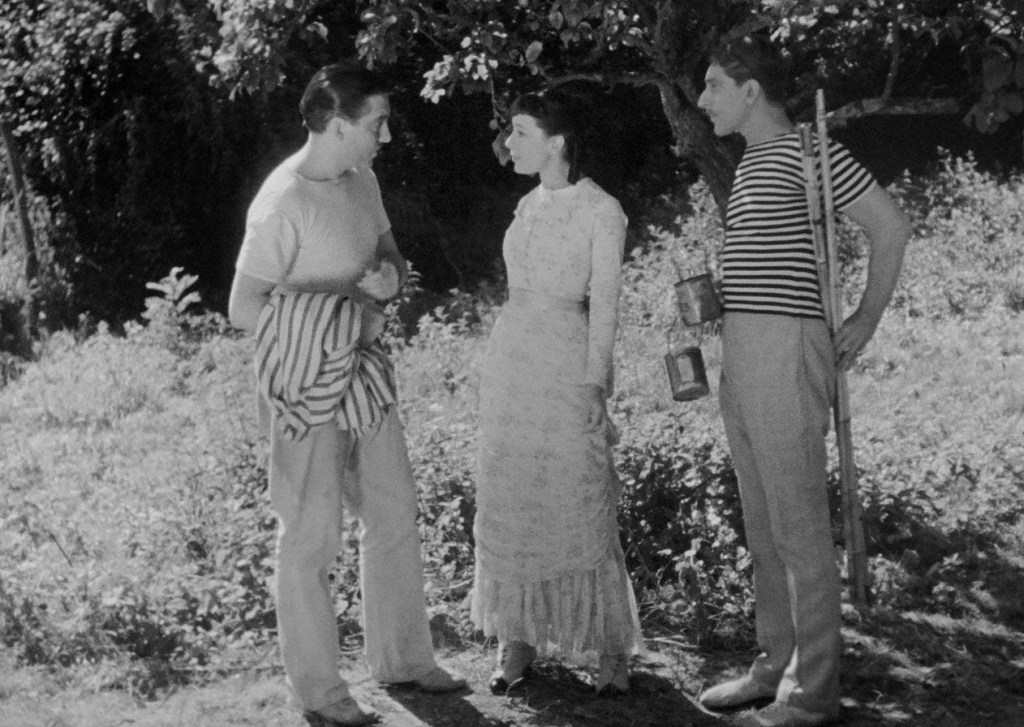
Above is a still from A Day in the Country (1946), which is set in the same period and shows us a picnic in the woods—with the same feeling of the radiance of the female character. Some of the same feeling is in his earlier The Rules of the Game (1939), which is set in the present day. The men in the film all fly around the Marquise de la Chesnaye (played by Nora Gregor) like moths circling a flame.

Of course, Jean Renoir was very conscious of his father’s work, appearing in several of the paintings. He also wrote a beautiful biography of him called Renoir, My Father, which is available in a New York Review edition and is well worth reading.

Artemisia

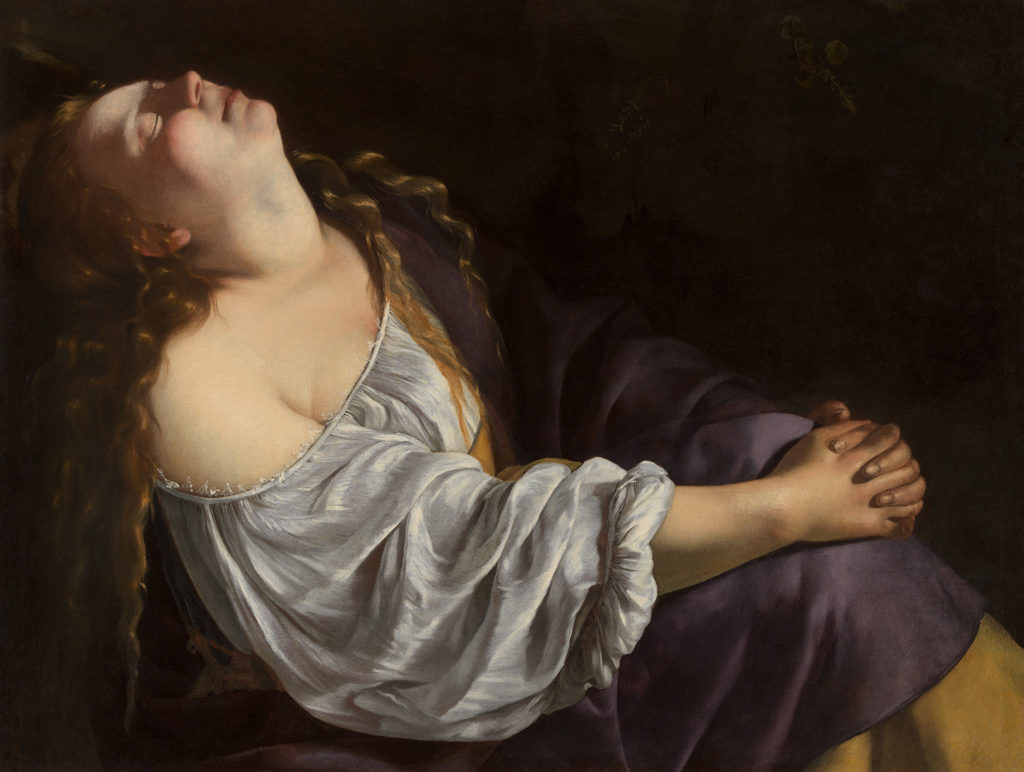
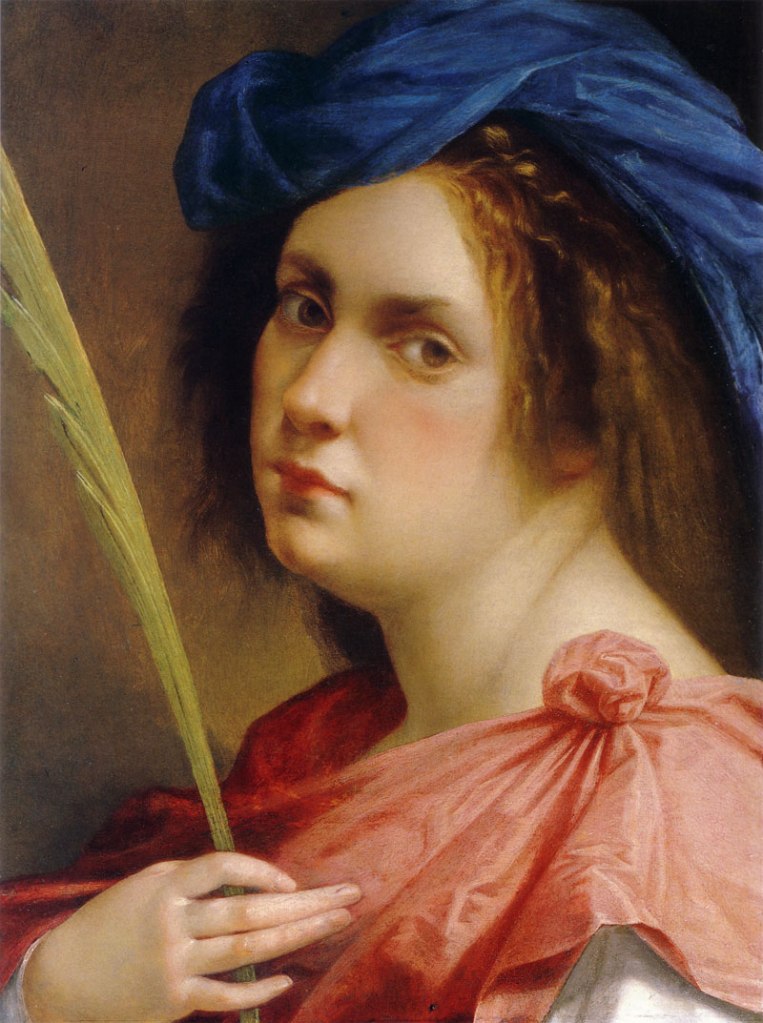
Artemisia Gentileschi’s Maria Magdalen in Ecstasy

One of the great Italian Baroque painters just happened to be a woman: Artemisia Gentileschi (1593-1656). The daughter of another painter, her father Orazio, Artemisia concentrated on painting women subjects, frequently using herself as the model. She was raped by another painter of her father’s generation and was hurriedly married off to protect her.

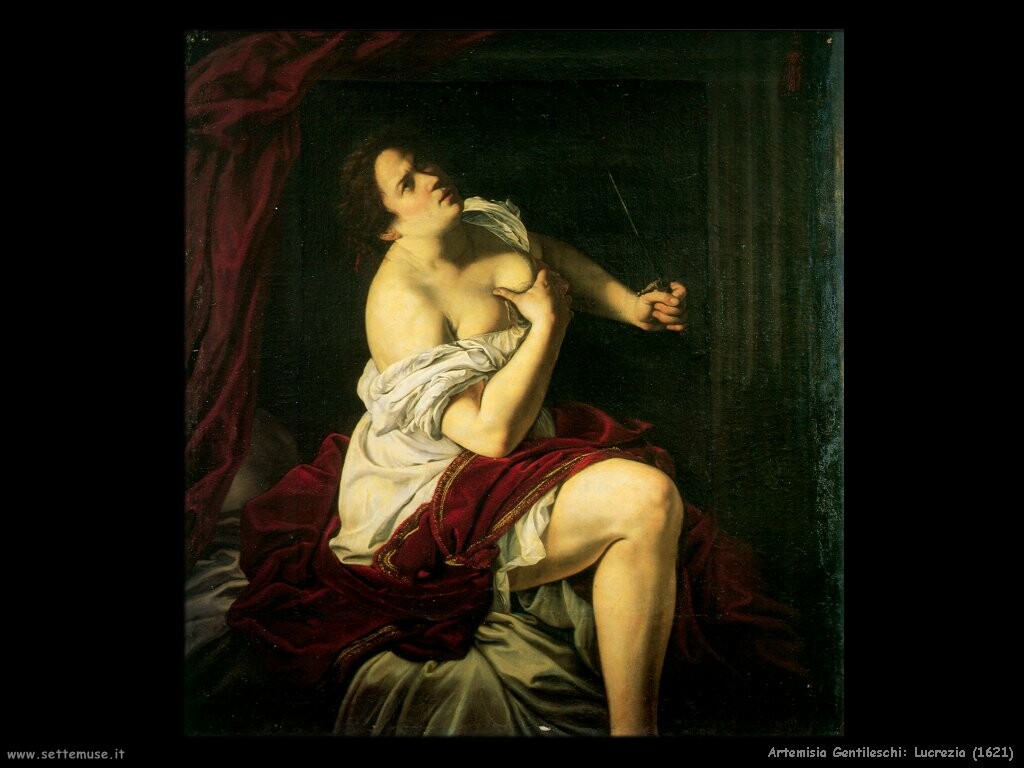
Her paintings have frequently compared to Caravaggio in their sense of immediacy and their lushness. Julian Bell describes her painting Lucretia in The New York Review of Books:

Lucrezia (1621)

The half-stripped woman picked out against the dark in Artemisia Gentileschi’s Lucretia is viewed from above, yet as I stand before this yard-high canvas, she seems to bear down on me. Light, here, is weight: the gleam on shoulder, knee, breasts, arm, and neck presses on my eye and there is no distance from the presented flesh. I have to do with this stout woman as if I were wrestling or embracing her. For whether you interlock with someone in anger or desire, that person will always possess a separate life, will, mind, and narrative, and so it is here. Lucretia tugs not at me but at the dark above, at God. Her prayer, stab-sharp, convulses not only her temples and the hand that clutches a dagger, but the whole rough thrash of limbs, gown, and sheets that fills this single-minded canvas.

Interestingly, the ancient Roman subject of the painting, Lucretia, was—according to Livy—raped by one of her husband’s kin and committed suicide to assuage her violated honor.

Small wonder that Artemisia is regarded as some kind of proto-feminist! But if you disregard for a moment her subject matter, she is also a great painter. She is more than a feminist: she is a profoundly great artist.

Women of Adventure

Dame Freya Madeline Stark (1893-1993)

Some of the world’s most intrepid travelers were women. I am thinking particularly of Freya Stark, who tromped all through the Middle East and Afghanistan, in the processing writing a couple dozen excellent books, and died at the ripe age of 100. In her book Baghdad Sketches (1937), she wrote:

To awaken quite alone in a strange town is one of the pleasantest sensations in the world. You are surrounded by adventure. You have no idea of what is in store for you, but you will, if you are wise and know the art of travel, let yourself go on the stream of the unknown and accept whatever comes in the spirit in which the gods may offer it. For this reason your customary thoughts, all except the rarest of your friends, even most of your luggage – everything, in fact, which belongs to your everyday life, is merely a hindrance. The tourist travels in his own atmosphere like a snail in his shell and stands, as it were, on his own perambulating doorstep to look at the continents of the world. But if you discard all this, and sally forth with a leisurely and blank mind, there is no knowing what may not happen to you.

In her book Valleys of the Assassins (1934), she added:

To awaken quite alone in a strange town is one of the pleasantest sensations in the world. You are surrounded by adventure. You have no idea of what is in store for you, but you will, if you are wise and know the art of travel, let yourself go on the stream of the unknown and accept whatever comes in the spirit in which the gods may offer it. For this reason your customary thoughts, all except the rarest of your friends, even most of your luggage – everything, in fact, which belongs to your everyday life, is merely a hindrance. The tourist travels in his own atmosphere like a snail in his shell and stands, as it were, on his own perambulating doorstep to look at the continents of the world. But if you discard all this, and sally forth with a leisurely and blank mind, there is no knowing what may not happen to you.

This woman makes Ernest Hemingway look like a wussy boy in short pants.

And Freya Stark is not the only woman traveler who dared to go solo into the uncharted areas of the earth. There was also Isabella L. Bird (1831-1904), who traveled extensively in Asia, and Mary Kingsley (1862-1900), whose destination was West Africa. In fact, Wikipedia compiled a list of female explorers which sets one to thinking. You can find it here.

Ladies of the Road

Another Fun Event at the Automobile Driving Museum: The Women’s Car Show

On Saturday, Martine and I dropped in at the Automobile Driving Museum in El Segundo to see a car show dedicated to the wheels of women auto enthusiasts. This weekend, for the first time I began to detect a spring of hope in this grim pandemic season. Americans are getting vaccinated, and businesses are slowly beginning to open up again. (For the first time in over a year, we ate indoors at Ye Olde King’s Head Restaurant in Santa Monica.)

I was curious to see what a Women’s Car Show would be like, and found that the ladies liked vintage cars as much as men do. The men, however, would not accompany it with a fashion show.

Poster for the Women’s Car Show

Martine has developed a real fondness for the Automobile Driving Museum and its various events. I enjoy going because there are so few things that she likes so much. I also enjoy being with car enthusiasts, because many of the old cars are indeed works of art that I can well appreciate.

The Month of Reading Women

This Month I Am Reading Only Books Written by Women, Such as Virginia Woolf

I read a lot of books, but I feel I have not given women authors their due. So far, I have read Celeste Ng’s Little Fires Everywhere and am within a few pages of finishing Joyce Carol Oates’s The Man Without a Shadow. Ng is new to me, but I have always loved Oates, though I haven’t nearly enough of her prolific works.

Among the books I will be selecting from for the rest of March (in no particular order):

  • Something by Svetlana Alexievich, most likely Secondhand Time [Russia]
  • Rosario Santos’s The Fat Man from La Paz: Contemporary Fiction from Bolivia*
  • Ludmilla Petrushevskaya’s The Time: Night* [Russia]
  • Marilynne Robinson’s Gilead* [USA]
  • Simone de Beauvoir’s The Ethics of Ambiguity [France]
  • Patricia Highsmith’s The Black House [USA]
  • Dorothy B. Hughes’s In a Lonely Place [USA]
  • Selma Lagerlof’s The Saga of Gosta Berling* [Norway]
  • Virginia Woolf’s To the Lighthouse [England]
  • Clarice Lispector’s Hour of the Star [Brazil]
  • Silvia Moreno-Garcia’s Gods of Jade and Shadow* [Mexico/Canada]
  • Marie NDiaye’s Three Strong Women [France]
  • Dawn Powell’s The Locusts Have No King* [USA]
  • Valeria Luiselli’s Lost Children Archive* [Mexico/USA]

Invariably, I will not read some of the above and likely add some other writers, such as Charlotte Brontë, Willa Cather, Madeleine Albright, or Helen Hunt Jackson. It all depends on how I like the books I have selected.

Books marked with an asterisk [*] are by authors I have not yet read.