When Did We Become So Trashy?

Yeah, Eat Plenty of Maggots and Lose Weight

Yeah, Eat Plenty of Maggots and Lose Lotsa Weight

There is a new spate of ads on the Internet aimed at idiots. They are usually aimed to appeal to more ignorant Internet users and are frequently sponsored by DoubleClick and related enterprises that would love to load your computer with malware. Once they have you, you’ll see plenty of ads featuring big-breasted middle-aged women, old codgers joyful at reducing their mortgage debt, and finding ways to get your beanpole to extend to ridiculous lengths.

What I find interesting is, that if you click on one of these, you will be directed immediately toward other bonehead ads that make ridiculous promises. You will probably even forget what you were looking for in the first place. Just follow the pendulous boobs and you will be directed to Pleasure island where, in no time at all, you will turn into a donkey.


Oh, No, Another Bill Nye Debate?!

Look, Bill, Your Heart’s in the Right Place, but ...

Look, Bill, Your Heart’s in the Right Place, but …

Today, my blog is written by Juan Cole. I thought it was really funny, so here it is in its entirety:

David Gregory’s Meet the Press today hosted a debate between Bill Nye the Science Guy and Texas Rep. Louie Gohmert (R-TX) on whether gravity is just a theory.

“Sure,” Gohmert said, “things fall down all the time. But that doesn’t mean gravity is a law. Look at the Leaning Tower of Pisa. It’s still there after hundreds of years. Things don’t always fall down.”

Nye pointed out that Isaac Newton discovered the law of gravity in the 17th century and it is settled science.

Gohmert challenged Nye’s certainty. “The cultists who tout science always speak as though we know for sure that scientific discoveries are true. Gravity has only been theorized for a couple hundred years. It’s too early to tell. How much money do they want us to waste on suspension bridges and other expensive technology aimed at keeping things from falling down, on the basis of a theory?”

Nye tore off his bow-tie and began chewing on it in frustration.

“Wasn’t it an apple that hit Newton on the head?” Gohmert asked. “Well, I’ve read the Bible and I know that an apple was used to tempt Eve. Maybe the Serpent was just tempting Newton with a secular humanist theory.”

Nye said, “What?”

“Besides,” Gohmert went on, “we all saw that movie ‘Gravity.’ Obviously there’s no gravity in outer space. So if the theory doesn’t work everywhere, there must be something wrong with it.”

“The law of gravity says,” Nye replied, “that ‘any two bodies in the universe attract each other with a force that is directly proportional to the product of their masses and inversely proportional to the square of the distance between them.’ Gravity works in deep outer space, it is just that bodies there are distant from the earth. And in ‘Gravity’ they were just falling around the earth, in the grip of its gravity.”

Moderator David Gregory smirked. “That’s a lot of verbiage there, Bill. If you can’t explain something clearly, maybe it’s because there’s something wrong with the theory.”

Gohmert angrily interrupted Gregory. “Besides, we all know that Muslims believe in gravity. That should make you suspicious of it, right there.”

Nye turned to Gregory. “How can you call yourself a journalist? This is a carnival with a bearded lady exhibit!”

Gregory shrugged. “Next you’ll be saying Glenn Greenwald is a journalist. I am not an activist. I don’t know whether gravity is universal. I let both sides tell their story.”

“That’s not a ‘side’! He’s just mouthing nonsense! It doesn’t even make any sense.”

Gohmert pounded the table. “This whole gravity thing is just a way for scientists to get taxpayers’ hard-won money away from them. NASA wouldn’t get all that funding for rocket fuel if people realized that ‘gravity’ is just a theory.”

Gregory turned to the camera and smiled. “There you have it, folks. Next week on ‘Meet the Press:’ A quarter of Americans think the sun goes around the earth. Could they be right? To explain, we’ll be joined by a homeless man who says he is possessed by the spirit of the ancient astronomer Ptolemy.”



The Squid Test

Not the Loveliest of Sea Cretaures

Not the Loveliest of Sea Creatures

If lots of different categories of foods fail to pass your “Yuck!” test, it’s fairly certain that squid is on your “avoid at all costs” list. It’s a pity, because most people have never had any really fresh squid. They’re used to those rubbery breaded rings served with a generic tomato dipping sauce at some restaurants with pretensions to high class.

Today, I went to a new Italian restaurant in Westwood called the Donna Sophia Trattoria Napoletana and decided to give them the squid test. Their daily special was tagliatelle cooked in squid ink with calamari. I had never tried anything cooked in squid ink before, but I was feeling decidedly peckish, so I went for it. It was delicious. The calamari pieces were actually tender, and the tagliatelle was made from scratch. Sometimes it pays to take a chance.

Usually, the only places where I’ve had really tender calamari was in certain of the more ethnic Thai restaurants. It was great to see an Italian restaurant where they knew something about squid above and beyond keeping it in the freezer for several decades.

If Donna Sophia had failed to pass my squid test, I would reluctantly have concluded that the place was not very good. Fortunately, it passed with flying colors. It’s so unusual to see a new restaurant in Westwood that is not exclusively Burgers-and-Fries or rice-bowls.


Pacheco and the Dogs

Another Great Poet Leaves Us

Another Great Poet Leaves Us

It is a well-known fact that poets don’t grow on trees. Belatedly, I am recognizing the death of José Emilio Pacheco, the Mexican poet who just recently died after a fall at the age of seventy-four. I am not familiar enough with Pacheco’s poetry—to be honest, I am not nearly familiar enough with poetry in general. I should read more, even though there is nothing that is more demanding—or rewarding. Take this simple example, called “A Dog’s Life”:

A Dog’s Life

We despise dogs for letting themselves
be trained, for learning to obey.
We fill the noun dog with rancor
to insult each other.
And it’s a miserable death
to die like a dog.

Yet dogs watch and listen
to what we can’t see or hear.
Lacking language
(or so we believe),
they have a talent we certainly lack.
And no doubt they think and know.

And so
they probably despise us
for our need to find masters,
for our pledge of allegiance to the strongest.

Thanks to Fred Runk, here is the Spanish text of the poem:

Despreciamos al perro dejarse
domesticar y ser obediente.
Llenamos de rencor sustanivo perro
para insultarmnos.
Y una muerte indigna
es morir como un perro.

Sin embargo los perros miran y eschucan
lo que no vemos ni escucharmos.
A falta de lenguaje
(o eso creemos)
poseen un don que ciertamente nos falta .
Y sin duda piensan y saben.

Asi pues,
resulta muy probable que nos desprecien
por nuestra necesidad de buscar amos,
poe nuestro voto de obediencia al mas fuerte.

Books To Be Buried With

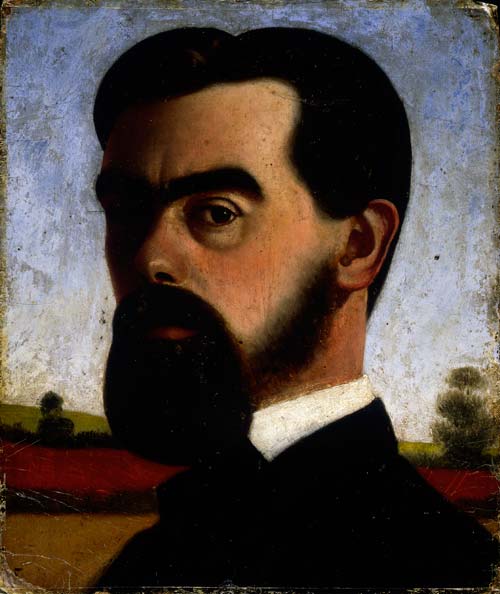
Samuel Butler

Samuel Butler

I see they packed the volume of Shakespeare that he had near him when he died in a little tin box and buried it with him. If they had to bury it they should have either not packed it at all, or, at the least, in a box of silver-gilt. But his friends should have taken it out of the bed when they saw the end was near. It was not necessary to emphasize the fact that the ruling passion for posing was strong with him in death. If I am reading, say, Ally Sloper’s Half Holiday up to my last conscious hours, I trust my friends will take it out and put it in the waste-paper basket when they see I have no further use for it. If, however, they insist on burying it with me, say in an an old sardine-box, let them do it at their own risk, and may God remember it against them in that day.—Samuel Butler, Notebooks

The Great Drought of 2014

Baldwin Lake—Now a Mudhole

Baldwin Lake—Now a Giant Mudhole

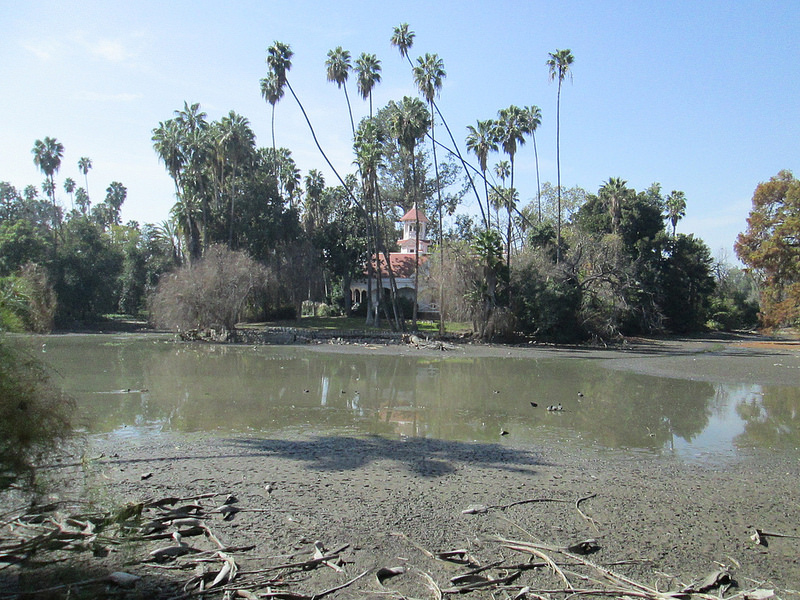
The California drought of 2014—the worst recorded in the State’s history—was brought home quite suddenly to Martine and me when we visited the Los Angeles Arboretum today. Baldwin Lake, which in normal years looks so beautiful (see photo below) is now a giant mudhole. Typically, the lake is fed from runoff from current rainfall, of which, for iall intents and purposes, there has been none this year.

Migrating ducks and geese still made it a stopover, and Martine was ready for them with some day-old bread. But the fish in the lake looked as if they were gasping for breath. It was heartbreaking.

Baldwin Lake in Better Times

Baldwin Lake in Better Times

We still had a good time at the Arboretum. The Canada Geese were actually not too proud to accept Martine’s bread, The mallards and squirrels also came up to her for handouts.

I am hoping that our drought will eventually come to an end. I would hate to think that Los Angeles would become like Chile’s awful Atacama Desert, where there is almost no measurable rain over an entire century.


A Cultural Treasure

Liao Chiung-Chih, the Embodiment of Taiwanese Opera

Liao Chiung-Chih, the Embodiment of Taiwanese Opera

Today, Martine and I did something a little different. The Taiwan Academy had a film, presentation, and performance by the star of the Taiwanese Opera, Liao Chiung-Chih. Most of the presentation was in the Taiwanese dialect, but it didn’t matter, because I was enthralled from start to finish. Ms. Liao was phenomenal: I have never seen anyone with her extraordinary control of voice and movement. After a short film, she demonstrated several vocal singing styles, followed by a library of hand, foot, and torso gestures—and this at the age of approximately eighty.

While we did not understand a word of the language, we appreciated an artistry that goes far beyond anything that performers in the West are called upon to demonstrate. Ms. Liao kept me on the edge of my seat for two hours. There was a translator with a microphone, but still many sentences got lost. It almost didn’t matter, however, because the actress’s talent was so apparent that it almost obviated the need for translation.

At the end, of her presentation, Two performers from the Taiwan Opera, Chang Meng-I (below right) and Hwang Yea-Rong (below left), acted a sequence from one of the most famous operas in the genre, The Butterfly Lover. Based on a folktale some 1,600 years old, the opera can be traced to the Jin Dynasty. It has become the Chinese equivalent of Romeo and Juliet, with their star-crossed lovers, Liang Shanbo and Zhu Yingtai.

Two Taiwanese Opera Performers Dressed for a Scene from The Butterfly Lover

Two Taiwanese Opera Performers Dressed for a Scene from The Butterfly Lover

Originally, I thought I was going to have to work on taxes today, but I got a last-minute reprieve. So we took the bus to the main branch of the Los Angeles Library downtown, where the performance was held in the Mark Taper Auditorium. Sponsoring the event was the Taiwan Academy, which has opened a branch in Los Angeles.

Below is a photo of Liao Chiung-Chih made up as a character in the Taiwan Opera:

This Woman Is Eighty Years Old?

This Woman Is Eighty Years Old?

A Frugal Chariot

Emily Dickinson

Emily Dickinson

Here is one of Emily Dickinson’s simpler poems—but no less powerful for all that. It is called “A Book”:

There is no frigate like a book
To take us lands away,
Nor any coursers like a page
Of prancing poetry.
This traverse may the poorest take
Without oppress of toll;
How frugal is the chariot
That bears a human soul!

At a time when poetry is being pushed aside by the young in favor of video games and other more spurious entertainments, it is good to see a simple statement of why it should not be so.

There are few things one can read that can so work the mind and enliven the spirit as a powerful poem, such as those of Emily Dickinson. Usually, they are complex arrangements of relatively few words. Fortunately, there is a reward for making the effort, a reward in the form of greater understanding.


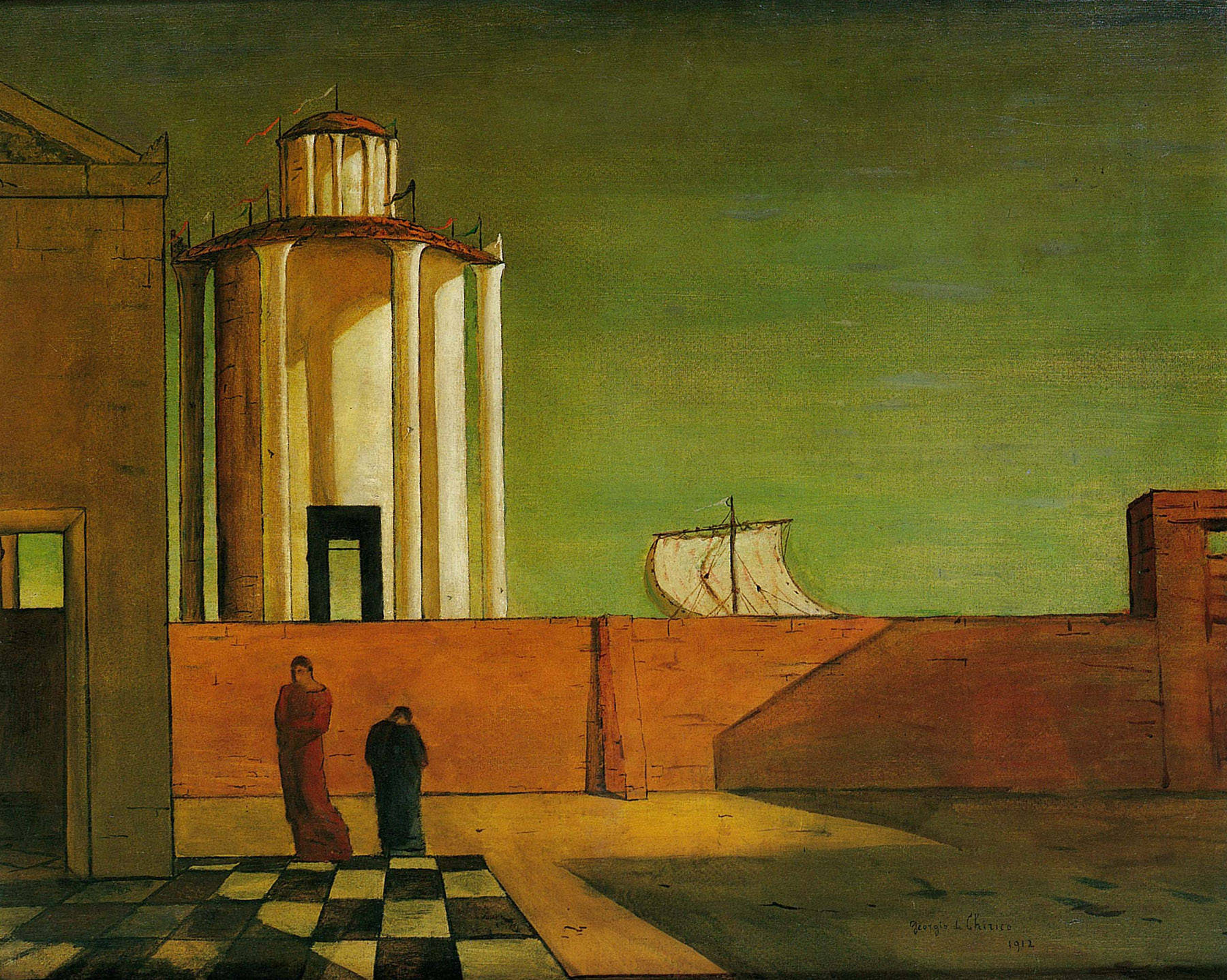
“The Enigma of Arrival”

One of My Favorite Paintings by Giorgio de Chirico

One of My Favorite Paintings by Giorgio de Chirico

I remember the first time I landed at the Manuel Crescencio Rejón Aeropuerto in Mérida, Yucatán, in November 1975. It was my first real trip out of the country (I don’t include Niagara Falls and Tijuana as being quite outside the U.S.), and it was a real eye-opener. It was night, and the vibe was tropical. In the cab to the Hotel Mérida, I passed a huge Coca Cola bottling plant before we took the turn to the right toward Calle 60. So many businesses were open to the street, and families were seated at card tables with beers and sodas. The local men were all dressed in white; and the women wore colorfully embroidered huipiles.

What was different between this and all my previous travels was that I was alone in a strange land and feeling an unusual sense of the remoteness of all my previous experience to what I was experiencing in the moment. I felt like the two huddled figures in Giorgio de Chirico’s painting, “The Enigma of Arrival” (shown above)—except that the streets of Mérida were crowded. I didn’t get much sleep that night, much of which was spent leaning out of my sixth floor window onto Calle 60. All night long, figures walked up and down the street, occasionally stopping in mid-stride to stare right at me. (How did they do that?)

The next morning, I had breakfast at the Restaurant Express, which was right across the street from a 17th century Franciscan church and the old Gran Hotel, which used to be the only one in town around the turn of the century. Eventually, I grew used to the crowds, the food, the warm, humid, floral air. I loved Yucatán and went back there four or five times.

In 1987, V. S. Naipaul wrote a novel entitled The Enigma of Arrival, which discussed the strangeness of his life (he was born in Trinidad) in the English countryside.

I have grown to love the actual enigma of arrival in a different country. I am more alive to everything around me. It is a good feeling.


Against Speed Reading

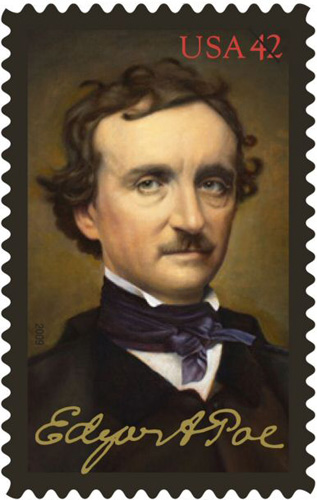
PICEdgar-Allan-Poe-stamp(1)I have seen many computations respecting the greatest amount of erudition attainable by an individual in his life-time; but these computations are falsely based, and fall infinitely beneath the truth. It is true that, in general, we retain, we remember to available purpose, scarcely one-hundredth part of what we read; yet there are minds which not only retain all receipts, but keep them at compound interest forever. Again:—were every man supposed to read out, he could read, of course, very little, even in half a century; for, in such case, each individual word must be dwelt upon in some degree. But, in reading to ourselves, at the ordinary rate of what is called “light reading,” we scarcely touch one word in ten. And, even physically considered, knowledge breeds knowledge, as gold gold; for he who reads really much, finds his capacity to read increase in geometrical ratio. The helluo librorum [“glutton of books”] will but glance at the page which detains the ordinary reader some minutes; and the difference in the absolute reading (its uses considered), will be in favor of the helluo, who will have winnowed the matter of which the tyro mumbled both the seeds and the chaff. A deep-rooted and strictly continuous habit of reading will, with certain classes of intellect, result in an instinctive and seemingly magnetic appreciation of a thing written; and now the student reads by pages just as other men by words. Long years to come, with a careful analysis of the mental process, may even render this species of appreciation a common thing. It may be taught in the schools of our descendants of the tenth or twentieth generation. It may become the method of the mob of the eleventh or twenty-first. And should these matters come to pass—as they will—there will be in them no more legitimate cause for wonder than there is, to-day, in the marvel that, syllable by syllable, men comprehend what, letter by letter, I now trace upon this page.—Edgar Allan Poe, Marginalia