Walking Through History

The Nice Lady from the Legio X Fretensis

The Nice Lady from the Legio X Fretensis

Martine and I love attending the large military re-enactment encampment at Old Fort MacArthur in San Pedro. Last year we missed it because I was still in Iceland, but today we spent the whole day at the Old Fort MacArthur Days event. It’s not that we were interested in the shooting events with all their noise and smoke: It’s just that it feels like walking through history.

The Legio X Fretensis (“of the sea strait”) actually existed. It was established by Augustus (then called Octavius) Caesar around 40 or 41 B.C. to fight during the Roman civil war. It lasted almost 500 years, fighting in the civil war that saw the end of the Roman Republic, plus two of the Roman-Jewish wars in Palestine. Some elements of it fought with Marcus Aurelius.

In San Pedro, the members we saw belong to a group that calls itself an “educational service organization” whose purpose is to instruct people about the Roman army, particularly in the First Century A.D. I enjoyed stopping by their tent for a few minutes to talk to the well-informed lady pictured above. As you may or may note know, I am a Roman history nut who has read all the works of Tacitus and many of his contemporaries. I am always delighted to find people who not only are well read in the subject, but can add to my knowledge.

During the next few days, you will see a few more postings about some of the things we saw during the re-enactment. By the way, Old Fort MacArthur is not named after General Douglas MacArthur, but after his father, General Arthur MacArthur, Jr., who was Governor-General of the Philippines after the Spanish American War. It seems to me his son also had some dealings with that particular archipelago….


Serendipity: A Re-Discovery

Loren Eiseley (1907-1977)

Loren Eiseley (1907-1977)

Have you ever laid something precious aside and, years later, suddenly be reminded of it? Then, going back to it, you find it was not only as good as you ever thought it was, but even better.The last book I read by Loren Eiseley was The Man Who Saw Through Time, about Sir Francis Bacon, back in 1990. Then I saw a blog by Fred Runk, whose perceptive comments you may have encountered in this space, quoting and commenting on a poem by Eiseley. It seemed as if a vortex formed around my head, in which I saw the waste of nearly a quarter century without once having encountered one of my favorite writers. I am making up for lost time by reading The Star Thrower, his last book, with essays on nature and science and a few of his early poems.

There is something small and humble about Eiseley as he examines nature and our place in it. Survival of the fittest?

A major portion of the world’s story appears to be that of fumbling little creatures of seemingly no great potential, falling, like the helpless little girl Alice, down a rabbit hole or an unexpected crevice into some new topsy-turvy realm…. The first land-walking fish was, by modern standards, an ungainly and inefficient invertebrate. Figuratively, he was a water failure who had managed to climb ashore on a continent where no vertebrates existed. In a time of crisis he had escaped his enemies…. The wet fish gasping in the harsh air on the shore, the warm-blooded mammal roving unchecked through the torpor of the reptilian night, the lizard-bird launching into a moment of ill-aimed flight, shatter all purely competitive assumptions. hese singular events reveal escapes through the living screen, penetrated, one would have to say in retrospect, by the ‘overspecialized’ and the seemingly ‘inefficient,’ the creatures driven to the wall.

In another essay, he talks about how life on our planet would have failed if it weren’t for the birth of flowers and everything that came in their train. At another time, we see him playing with an unafraid young fox with a pile of bones and selecting one and handing it to him. In yet another essay, we see him watching while an unusual squirrel manages to climb a post that had a wrap-around funnel protecting the food left for birds.

This is not BIG nature. It is all little nature with a lot of very BIG implications. Eiseley is a wonderful essayist and poet, deserving not only of scientific fame, but literary fame as well. It is no accident that the Introduction to The Star Thrower was written by an admirer named W. H. Auden.

In future, I will write more about Eiseley. Having rediscovered him, I cannot let him down.

Hold That Line!

There Has Been Relatively Little Change Since WWI

There Has Been Relatively Little Change Since After WWI

Take a quick look at this map. Given that the Middle East is such a volatile and combative part of the world, it is amazing that so little has changed since the pacts after the First World War. At that time, there were quite a few changes: Several countries that formerly belonged to the Ottoman Empire were carved out of desert because the British and French wanted it so. The British and French are long gone, but the lines they drew still hold (as of 1:30 p.m. today anyway).

The biggest change on the map was the creation of all the independent “-stans” after the Soviet Union fell apart around 1992. Other changes include the creation of Pakistan in 1946 (though its eastern part is now Bangladesh) and the union of the former British colony of Aden with Yemen. Also Cyprus is now independent (but divided into Greek and Turkish halves).

Probably the only country whose boundary was not drawn by the European powers is Pakistan. Far from stable, however, the Islamabad government is currently facing three insurgencies: the Taliban, the Belochis, and in Karachi (from several ethnic groups). They also risk war with Iran because of the Belochi insurgency and with China over helping to radicalize in Uighurs in China’s Xinjiang province.

Islamic populations in general seem to be divided into two groups:

  1. Apprehensive, politically ineffectual people who just want to get on with their lives, and
  2. Jihadists who want to conquer the world and introduce Sharia law everywhere.

In the near future, it seems that the Jihadists will be in the ascendant. That tendency will be reversed eventually because radicals who want to blow themselves up are generally not effective in creating a strong country. I suspect that soon the map boundaries will change until they are unrecognizable from the above illustration. Also, I suspect that there will be a lot more countries: several in Iraq, Pakistan, and Syria. Even tiny Lebanon is split between Sunni, Shi’ite, Druze, and Maronite Christian enclaves. Talk about Balkanization!

I think the best thing for the United States to do is to disengage from any military activity in the region: We always end up arming the wrong people. (It would have helped if someone in the Pentagon knew Arabic.) Although extraction of oil through fracking is dangerous, it would be nice if we were independent of the Middle East for our oil needs. Then we could just let them kill one another and go tsk-tsk while shaking our heads.

One exception: Look at what’s sitting right in the center of that map. The most stable country of the group is Iran. I think we should be friends with them and let bygones be bygones. But no military intervention, please!


“Mother of Stone and Sperm of Condors”

Pablo Neruda

Pablo Neruda

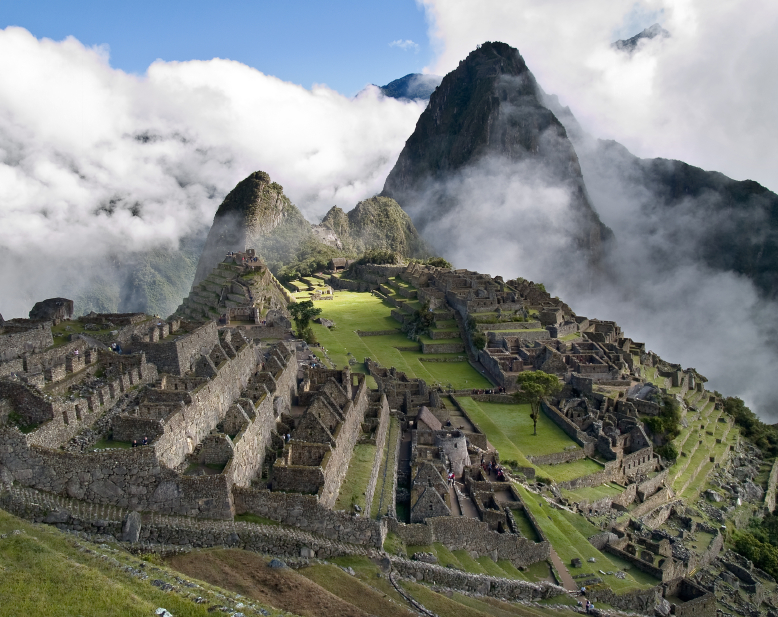
Chilean poet Pablo Neruda has, in his The Heights of Macchu Picchu, written with exquisite feeling about those Inca forebears who gave all South Americans a metaphor that unites the disparate strains of their pasts. The following is the sixth poem in the sequence:

Then up the ladder of the earth I climbed
through the barbed jungle’s thickets
until I reached you Macchu Picchu.

Tall city of stepped stone,
home at long last of whatever earth
had never hidden in her sleeping clothes.
In you two lineages had run parallel
met where the cradle both of man and light
rocked in a wind of thorns.

Mother of stone and sperm of condors.

High reef of the human dawn.

Spade buried in primordial sand.

This was the habitation, this is the site:
here the fat grains of maize grew high
to fall again like red hail.

The fleece of the vicuña was carded here
to clothe men’s loves in gold, their tombs and mothers,
the king, the prayers, the warriors.

Up here men’s feet found rest at night
near eagles’ talons in the high
meat-stuffed eyries. And in the dawn
with thunder steps they trod the thinning mists,
touching the earth and stones that they might recognize
that touch come night, come death.

Neruda’s Macchu Picchu

Neruda’s Macchu Picchu

I gaze at clothes and hands,
traces of water in the booming cistern,
a wall burnished by the touch of a face
that witnessed with my eyes the earth’s carpet of tapers,
oiled with my hands the vanished wood:
for everything, apparel, skin, pots, words,
wine, loaves, has disappeared,
fallen to earth.

And the air came in with lemon blossom fingers
to touch those sleeping faces:
a thousand years of air, months, weeks of air,
blue wind and iron cordilleras—
these came with gentle footstep hurricanes
cleansing the lonely precinct of the stone.

For some reason, Neruda always spelled the ruins “Macchu Picchu” rather than “Machu Picchu,” as it is called today. That’s okay. He’s a poet and can call the place whatever he wants. For all intents and purposes, it’s his creation.


Bad Taxi!

Beware of Unregulated Taxis

Beware of Unregulated Taxis

In many countries, taxicabs are unregulated. There are no meters. What is worse, many of them are looking for victims to rob, rape, or kidnap. According to the PeruNews website:

In the taxi robbery, a driver takes you to where his accomplices are waiting and then stops, sometimes pretending to stall the engine or run out of fuel. Then, you get mugged or kidnapped. Nice.

Many of the cabs used in these crimes have just been stolen, so don’t get into a vehicle with e.g. a broken window. You can reduce the chances by taking a cab from a company that you call up.

On the street, one cab is as good as another. The fact that it’s yellow, has a phone number written on it, is parked by the cinema rather than being driving past when you flag it down, a driver with official-looking ID; none of these means a safe taxi.

Many of the worst instances take place from Lima’s Jorge Chavez International Airport. Of course you can get a better deal if you walk past the legitimate (and more costly) taxi stands in the airport’s international arrivals area, but you can also get driven to ATMs and requested under duress to drain your bank account with the maximum permissible withdrawals.

That’s one of the reasons it’s a good idea to have a cellphone in Peru. This way, you can get a list of legitimate taxi companies from your guidebook and call for pickup. So what if it costs a few soles more! Your security is worth something, no?

Another problem, even with legitimate taxis, are thieves that break windows and grab the passengers’ bags. Make sure your luggage is securely locked in the trunk, and keep any bags with you on the floor and between your legs. You might even want to get a strap that attaches them to your legs. I plan to do that, even though I am taking a Taxi Verde or a Mitsui Remisse from the airport.

In one sense, Peru is a dangerous place. In another—wherever you are in the world—you have to keep your eyes open and be ready.

Streaming Agony

This Junk Is Everywhere

Video Is Great—When You Want It!

Over the last year, I’ve noticed that when I visit many websites, I automatically activate videos, usually advertising some sh*t I don’t want. Even if my mouse rolls over some areas of the screen, it is interpreted as a wish to be sold to. In that case, my first reaction is to turn down the sound; and then I hunt for active video screens and hit the stop button.

Webmasters are allowing advertisers to push them around. One instance is the “obliterad” that covers the screen and forces you to hit the X to shut it down. I have complained to several websites, but it was like asking them to empty their cash registers into a bag I am holding. They need the money, but they also need not to annoy their readers. I know I can get many more readers at Tarnmoor.Com if I started running ads, but the intention is not to become the most visited site on the Internet. In fact, greater popularity would force me to spend gobs of time interacting with people with whom I would prefer not to interact.

One easy way to counteract the automatically activated videos is for browsers to ask whether you want to run any videos. That way, I retain the ability to choose. YouTube is great, but I don’t need video when looking at a news story about Syria or our dysfunctional Congress.

Unfortunately, many of the news website stories involve activating a video. CNN, MBCNEWS, and others are trying to ram not only their stories, but their stupid ads down my throat. Do you wonder why I sometimes feeling like spewing back at them?

If, on this website, you see no ads or involuntary streaming video, it’s because I’m trying to apply the Golden Rule.


“Terribly-Sad-Life Syndrome”

Feeling Blue? Commit Suicide with the Help of Big Pharma!

Feeling Blue? Commit Suicide with the Help of Big Pharma!

Back when I was a teenager in Cleveland, we used to have a neighbor named Elizabeth (though in Hungarian, it was pronounced Bözsi) who was separated from her husband and whose life was a sea of troubles. Her back yard abutted ours, and there was no fence to keep her out. (More’s the pity!) Whenever I saw her mournfully trudging across our lawn to visit Mother, I would groan and immediately resolve to take a nice long hot bath until she was finished spilling all her troubles, most of which—in my opinion—were self-inflicted. But Bözsi was one of Mom’s “dear-hearts,” and thus beyond criticism. She probably thought I had a cleanliness fetish. The way I see it, she made me feel dirty.

Now one such “dear-heart” named Lina has fastened herself onto Martine. She tried bringing me into her circle of sympathetic listeners, but I would just disappear. The first time she saw me, she thought to enlist my aid in finding her a good workman’s compensation attorney. Ever since I threw her out of my apartment last year for overstaying her welcome, she rightfully thinks I don’t like her. Her problems are, of course, legion; and she is, of course, an innocent victim of circumstances.

In the May 5, 2014 issue of The New Yorker, there is an excellent investigative article by Rachel Aviv entitled “Prescription for Disaster: The Heartland’s Pain-Pills Problem.”

In certain parts of the country, people like Bözsi and Lina go to sympathetic doctors who prescribe pain pills such as OxyContin, Actiq, Duragesic Patches, and a whole array of habit-forming medications that numb the taker to life, and possibly drain that life away in the long run. Rachel Aviv’s story tells of one osteopathic physician named Stephen Schneider who opened a medical clinic in a suburb of Wichita. Because the good doctor was upbeat, sympatico, and not at all reluctant to prescribe what the patient wanted, before long many of them started to die of heart failure and other causes.

Agents from the Kansas Bureau of Investigation and the Drug Enforcement Administration led Schneider into one of the clinic‘s fourteen exam rooms and asked him why he had been prescribing so many opioid painkillers. He responded that sixty percent of his patients suffered from chronic pain, and few other physicians in the area would treat them. The agents wrote, “He tries to believe his patients when they describe their health problems and he will believe them until they prove themselves wrong.” When asked how many of his patients had died, Schneider said that he didn’t know.

How does one draw the boundary line in cases such as these? One psychiatrist refers to this complex of possibly physical/possibly psychological pain as the “terribly-sad-life syndrome.” Many of these patients are at a dead end and feel that life has dealt them a bad hand. They are hurting and want to be numbed. And, since it is less embarrassing to admit to physical pain when, in fact, it is primarily psychological, they are actually putting themselves in harm’s way. In effect, they are dopers and the nice doctor is a dealer.

If I were a saint, I would be more sympathetic to these people. Instead, I feel somewhat repelled by them. My Mom didn’t, but then she was something of a saint. I guess, if I am to be a saint, I would choose a different class of people to help.


Our Heroes Are Developers?

What About Our Artists, Writers, and Scientists?

What About Our Artists, Writers, and Scientists?

I’m sorry to have to say this, but there is something highly suspect in the way we name our cities and streets. In Los Angeles, we have Culver City—named after a real estate developer, one Harry Culver. Van Nuys is named after a developer with the unlikely name of Isaac Newton Van Nuys. World-famous Wilshire Boulevard is named after Henry Gaylord Wilshire. Again and again, we see streets named after developers, their wives, daughters, sons, and I wouldn’t be surprised if some are called after their dogs and cats.

Where in this broad city of ten million people do we see writers like Raymond Chandler, Nathanael West, or Evelyn Waugh commemorated? And what about scientists? Granted, Burbank is named after world-famous botanist Luther Burbank—oops, sorry, it was David Burbank, a dentist and entrepreneur who gave his name to Beautiful Downtown Burbank. In a city crawling with Nobel Prize winners, it seems the names have already been taken by lowlife developers, who splashed out with their developments and skipped town before the inevitable problems began to “develop.”

When I was in Buenos Aires, I stayed on a street named Emiliano Zola. Granted, Zola was a French writer, but at least it wasn’t named after some entrepreneurial skunk. Paris has an Avenue Victor Hugo. Northern California does much better than we do, with numerous streets named after writers, not to mention Jack London Square in Oakland. Well, where is there anything in La-La Land named after Charles Bukowski or John Fante?

Is it some residual puritanism that makes us avoid artists, writers, and scientists when naming places? I am sure that Donald Trump (depicted above) is no model of right behavior.

Perhaps we should rename some of those cities and streets originally named after long-forgotten developers and replace them with people who have mattered to us—not people who have ripped off our forefathers.

And while we’re at it, what about showing someone other than dead presidents and other founding fathers on our currency? I’d like to see Nathaniel Hawthorne, Edgar Allan Poe, Walt Whitman, Emily Dickinson, and William Faulkner on our currency. We can hold our head up high among the peoples of the world with our great writers.


Puno Gets No Respect

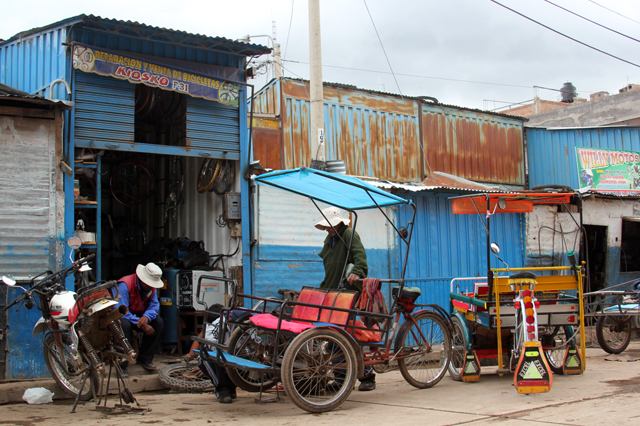
Bicycle Repair Shop in Puno

Bicycle Repair Shop in Puno

As one who lived the first seventeen years of his life in Cleveland, Ohio, I am well aware that some places come as a major disappointment to travelers. Cleveland was usually referred to as “The Mistake on the Lake” and, parodying the Chamber of Commerce motto of “The Best Location in the Nation,” “The Worst Location in the Nation.” And on the old Dobie Gillis TV show, wasn’t that hippie Maynard G. Krebs always going to see a movie called The Monster That Devoured Cleveland.

Well, Puno is one of those cities that gets no respect. A major entrepot for goods being trucked from Peru to Bolivia and vice versa. It is also one of Peru’s major centers of indigenous population, including both Quechuas and Aymaras.

If you take a look at the books written by travelers, you get a pretty dim view of the place. Paul Theroux (The Old Patagonian Express) and Christopher Isherwood (The Condor and the Cows) didn’t even give the place a chance: They arrived at night and left that same night on a boat bound across lake Titicaca for Copacabana, Bolivia. Since there are now no boat crossings to Bolivia—unless one is on an expensive catamaran tour—that option no longer exists.

When Patrick Leigh Fermor visited in the early 1970s (Three Letters from the Andes), he didn’t have much good to say about the place:

There was little for the eye to feast on outside. Puno is an assembly of corrugated iron roofs, sidings and goods yards sprawling round a church like a Gothic mud pie. We picked our way through the debris and squatting Aymara Indians—treading softly lest we tread on their dreams—to a ramshackle lacustrine port where an old steamer lay at anchor, brought piecemeal overland long before the railway, so that each plate was cut down to the weight a mule can carry, and sometimes a llama, then welded and riveted together again on the lake shore.

Fermor describes being met at the train station by a gaggle of unruly Aymara porters “seizing our luggage and bickering and punching each other all the way across the tracks to the repellent Ferrocarril hotel,” which had mislaid all the partys reservations.

Some years later, Michael Jacobs (The Andes), had this to say about Puno: “Neither of us was keen to stay any longer than necessary in Puno, which looked, under bright sunlight, even uglier than I had remembered it. The sun accentuated its resemblance to a waste tip of dirty brown boxes washed up by the lake.”

In Cut Stones and Crossroads, Ronald Wright damns the city with faint praise: “Puno has improved: I’ve found a hotel with hot water and a restaurant with hot food.” In The White Rock, Hugh Thomson considers Puno a “‘one-nighter,’ if that.”

Given all that bad publicity, I am sure that I will enjoy Puno. There isn’t much to see in the city proper (or should I say improper?), but there are the burial towers at Sillustani and the Islands of Taquile and Amantani in the middle of the lake. Plus, I will be trying to outlast the soroche I am sure will overtake me there at the elevation of 12,500 feet. Hey, nothing can surprise me: I’m from Cleveland.


Tarnmoor’s ABCs: Los Angeles

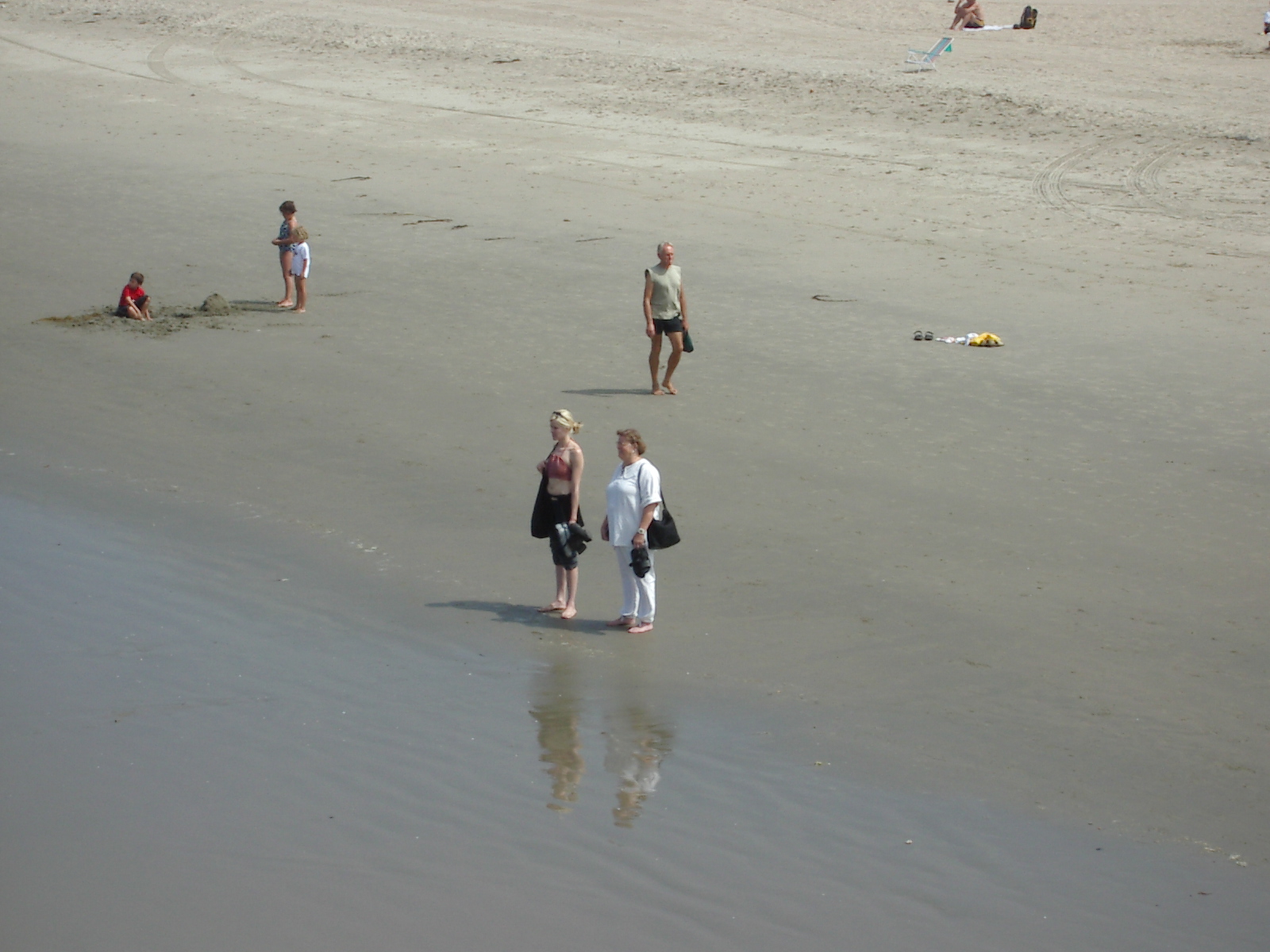
Venice Beach 2002

Venice Beach 2002

I was so very impressed by Czeslaw Milosz’s book Milosz’s ABC’s. There, in the form of a brief and alphabetically-ordered personal encyclopedia, was the story of the life of a Nobel Prize winning poet, of the people, places, and things that meant the most to him. Because his origins were so far away (Lithuania and Poland) and so long ago (1920s and 1930s), there were relatively few entries that resonated personally with me. Except it was sad to see so many fascinating people who, unknown today, died during the war under unknown circumstances.

My own ABCs consist of places I have loved (Iceland), things I feared (Earthquakes), writers I have admired (Chesterton, Balzac, and Borges); things associated with my past life (Cleveland and Dartmouth College), people who have influenced me (John F. Kennedy), and things I love to do (Automobiles and Books). This blog entry is my own humble attempt to imitate a writer whom I have read on and off for thirty years without having sated my curiosity. Consequently, over the months to come, you will see a number of postings under the heading “Tarnmoor’s ABCs” that will attempt to do for my life what Milosz accomplished for his. To see my other entries under this category, hit the tag below marked “ABCs”. I don’t guarantee that I will use up all 26 letters of the alphabet, but I’ll do my best. Today, we’re at the letter “L,” for Los Angeles, where I have lived for almost half a century..

Los Angeles is a difficult place to get to know. It took me at least five years before I even had a grudging acceptance of the city. Now I feel that I love it, for all its strange ways. I do not love the earthquakes, the hot weather, the gigantic brush fires that fill my lungs with ash, the self-entitled young professionals in their expensive sports cars, the decaying infrastructure, the Santa Ana Winds that make the skin peel off around my fingernails, or the long distances involved in going just about anywhere. And yet, there is a quality of the light that suffuses this place, especially early and late in the day. I also like the blend of cultures, mostly Latino and Asian, that make this a cosmopolitan metropolis.

This is a city that has its own literature. Here, for instance, is Raymond Chandler in his story “Red Wind”:

There was a desert wind blowing that night. It was one of those hot dry Santa Anas that come down through the mountain passes and curl your hair and make your nerves jump and your skin itch. On nights like that every booze party ends in a fight. Meek little wives feel the edge of the carving knife and study their husbands’ necks. Anything can happen. You can even get a full glass of beer at a cocktail lounge.

Mostly because of the outside influence of Hollywood in its glory days, many great writers passes this way and left their mark: Aldous Huxley, Bertolt Brecht, Thomas Mann, William Faulkner, Scott Fitzgerald, Nathanael West, John Fante, Evelyn Waugh, Ray Bradbury, and Joan Didion—just to name a few. If you like that sort of thing (I do not), there has also been a lot of modern art and architecture produced.

You may have heard that California is in a historic drought and has received precious little rain for the last three years. When I go to Lima, Peru, later this summer, I will be in another Pacific coast city where it almost never rains. I suspect it will remind me of L.A., except for the very different cultural context.

Would I ever move from Los Angeles? Possibly. Around the time I retire, I will no doubt come to the realization that I can no longer afford to live here. When that happens, it will be a difficult time for me. But then, nothing is forever.