However well a man may have calculated his scheme of life, still circumstances, years, experience, always introduce a new element and teach new lessons. You find that you don’t know what you thought you did know, and what you thought of primary importance that in practice you reject. That’s what has happened to me. The hard life, which up to now I have lived, now that my race is almost run I renounce. And why? Hard facts have taught me that a man can have no better qualities than mildness and complaisance.—Terence, Adelphoe
Home » 2014 (Page 24)
Yearly Archives: 2014
What the Democrats Don’t Get
I am daily besieged by dozens of almost identical e-mails asking me for support. At first, they want me to just sign a petition. That’s fine with me. Then they hold out the tin cup, asking me for money so that the evil Koch Brothers, the Nazgul of our own time and place, do not hurl us all into a pit of unrelenting misery.
Look, I hate the Koch Brothers as much as they do—but I also hate television. All these Democratic-aligned organizations are doing is arranging for millions in political ad buys on a medium which I do not support, and for which I have active contempt. I am also getting a little bit suspicious: Just whom are these organizations supporting? Is it the issue named? Or is it the collective broadcast and cable television networks? And has anyone ever checked to see whether there are kickbacks taking place?
That reminds me of a snippet I read last night from Christopher Isherwood’s South American travel journal Condors and Cows: “In Bogotá, he says, the milk was always sold diluted with water. One day, a pure-milk dairy was started but soon went bankrupt. It had been deliberately ruined by the directors of the water-works, who feared a serious drop in water-consumption.” In other words, are the TV ad people involved in these movements as a way of drumming up business?
These are questions that need to be asked, because I, for one, am reluctant to respond to any of these ads—regardless of my political beliefs.
Dreams at High Altitude
The other night I dreamed of Bolivia. I was in La Paz, one of the country’s two capitals—the other is Sucré in the South. I was trying to navigate between two locations within the city, but all I had was a two-dimensional street map that didn’t give me any idea whether I had to go uphill or downhill. The Lonely Planet guide to Bolivia lists the altitude of La Paz at 12,007 feet (3,660 meters), but isn’t that just an average? Even higher than La Paz is the erstwhile suburb of El Alto, which is, at 13, 620 feet, not only the highest major metropolis in the world with a million people, most of them Aymara, but also is home to the La Paz’s international airport,the world’s highest.
I am obsessing about La Paz: It is a city that pops up in my dreams because it is set in a huge bowl under several conical volcanoes, the most spectacular of which is Illimani at 16,350 feet. I keep thinking of traveling up and down the city by taxi and on foot, gasping all the while because of the high altitude.
Currently, I am thinking of starting my vacation in Lima and traveling through southern Peru to Lake Titicaca and then on to La Paz. From there, I plan to fly “open jaws” back to Los Angeles. That saves me time and money from having to deadhead back to Lima.
The big question is my susceptibility to Soroche, or altitude sickness. If, upon arriving in Cusco, I appear to have the beginnings of either HAPE (high altitude pulmonary edema) or HACE (high altitude cerebral edema), I will turn around and return to Arequipa, going on to Tacna (in Peru) and Arica (in Chile), possibly as far as Antofagasta. In that case, I would deadhead back to Lima and fly home from there.
So if that alternate scenario takes place, I would have to have a flight from La Paz to Los Angeles that I can cancel if necessary. Is that possible? It remains to be seen.
Addendum: These two quotes from Christopher Isherwood’s South American diary, The Condor and the Cows, add an eyewitness’s observations to the city :
Sixty miles from the lake [Titicaca] the plain suddenly ends. You look over its edge into a deep horse-shoe valley and there is La Paz, fourteen hundred feet below. The view makes you gasp, for it is backed by the enormous snow-peak of Illimani, which fills the sky to the south. Illimani is rather higher than Mount Pelion would be if it were piled not on Ossa but upon Mont Blanc.
Believe it or not, I actually had the following scene in my dream:
Many of the side streets are so steep that you could scarcely hold your footing on the worn pavement. The Paceños have learned to slither down it in long strides, like skaters. What with the altitude, the gradients, the scarcity of elevators and the shortage of taxis, you spend most of the day painfully out of breath, and envy the Indians, whose enormous lungs enable them to trot uphill without the least sign of strain.

Anglo Saxon Attitudes
The following scrap of dialogue appears in Lewis Carroll’s Through the Looking Glass:
All this was lost on Alice, who was still looking intently along the road, shading her eyes with one hand. ‘I see somebody now!’ she exclaimed at last. ‘But he’s coming very slowly—and what curious attitudes he goes into!’ (For the messenger kept skipping up and down, and wriggling like an eel, as he came along, with his great hands spread out like fans on each side.)
‘Not at all,’ said the King. ‘He’s an Anglo-Saxon Messenger—and those are Anglo-Saxon attitudes. He only does them when he’s happy. His name is Haigha.’ (He pronounced it so as to rhyme with ‘mayor.’)
Angus Wilson wrote a famous satirical novel by the name of Anglo-Saxon Attitudes back in 1956, but I am going to put a slightly different spin on the phrase. I am somewhat surprised that most Americans only read books originally written in English. My late friend Norman Witty was one such: The only exception was for some books written in French, and then he would only read them in French.
There is an Italian phrase—“traddutore, traditore”—whose meaning is that translators are all traitors. I don’t believe that. Some translators are notoriously inept, but they usually get hammered in the reviews. I remember one such translator of Proust’s Within a Budding Grove, the second volume of his In Search of Lost Time, which was translated by James Grieve into In the Shadow of Young Girls in Flower. A reviewer for the Times Literary Supplement suggested that one go back to C. K. Scott-Moncrieff’s somewhat prissy rendering which is nearing its centenary.
In my time, I have read many archaic translations, such as Constance Garnett’s of the novels of Dostoyevsky, Ellen Marriage’s of Balzac’s The Human Comedy, and even the dreadful Peter Anthony Motteux translation of Cervantes, which dates back to 1712. It didn’t matter that much. Even a bad translation will help one to appreciate the greatness of Dostoyevsky, Balzac, Cervantes—or anyone else for that matter. There are probably some old chestnuts around that are truly terrible, such as the Portuguese-English phrasebook that Mark Twain published because of its frequent howlers.
Now what I mean by Anglo Saxon Attitudes is a kind of linguistic provincialism, that eschews works from other countries because they were not written in English. I will grant you that English and American literature are remarkably wide, but so is that of other countries. My life would have been relatively impoverished if I had not read the works of Jorge Luis Borges, Euripides, the Icelandic sagas, Gyula Krúdy (a fellow Hungarian), Orhan Pamuk, Mo Yan, Kobo Abe, Stanislaw Lem, Boris and Arkady Strugatsky, Honoré de Balzac, Jorge Amado, or Fernando Pessoa. I suspect that approximately half the books I read were translated from other languages. So I didn’t get the same from them as a native speaker of the original languages, but I venture I got at least 75%, and that 75% has meant—literally—the world to me.
It’s Greek To Me
Nothing grows clearer to me year by year than that the nature of the Greeks and of antiquity, however simple and universally familiar it may seem to lie before us, is very hard to understand, indeed is hardly accessible at all, and that the facility with which the ancients are usually spoken of is either a piece of frivolity or an inherited arrogance born of thoughtlessness. We are deceived by a similarity of words and concepts: but behind them there always lies concealed a sensation which has to be foreign, incomprehensible or painful to modern sensibility.—Friedrich Nietzsche, Daybreak, Book III
I Run Into Charles Keating
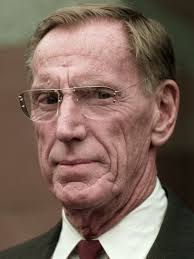
When Charles Keating died in Phoenix last week, I thought of my meeting with him in Iceland (of all places) in August 2001. I was staying at the Foss Hotel Skaftafell in Svinafell (see photograph below), about two kilometers south of what was then the Skaftafell National Park, and is now merely part of the giant Vatnajökull National Park that occupies most of the country’s southwestern quadrant. Since I was traveling alone and without camping gear, it was the only place I could stay in walking distance of the park without roughing it.
I was sitting in the hotel dining room, close to a large center table where there was a large, noisy group who were swilling large amounts of imported wine. (What other kind is there in Iceland?) The oldest member of the group excused himself for a rest room visit, while his friends talked about him behind his back. It was then I learned the man was the infamous Charles Keating, whose leadership of the American Continental Corporation and the Lincoln Savings & Loan Association led him afoul of the law, more so because he had tried to suborn five legislators (the so-called “Keating Five”) into letting him off scot free. It didn’t work, as in December 1991, he was convicted on seventeen counts of fraud, racketeering, and conspiracy and given the maximum sentence of ten years by Judge Lance Ito. At the time, Ito is said to have remarked, “More people have suffered from the point of a fountain pen than from a gun.”
When Keating returned to the table, he noticed my sour looks (I don’t much cotton to strangers, especially when they’re drunk ratbags) and invited me over to his table. I politely refused and finished up my meal to return to my room and read Viking sagas about even more thoroughgoing ratbags.
The next morning, as I was hiking to the national park headquarters, I saw the Keating party leave in a small chartered tour bus and sighed with relief. I knew two people who had invested in his S&L and nothing good to say for or to the man. It was rather pitiful that he found it necessary to travel with a bunch of yes-men who had nothing particularly good to say about him while he was out of earshot.
So it goes.
As Likely As Any Other Theory
Since most of the news about Malaysian Flight 370—or just about anything else—is so preposterous of late, I have decided to float some of my own theories. My theory is that Neptune (a.k.a. Poseidon), the Roman God of the Sea has hijacked Flight 370 and taken the Boeing down to his undersea palace a thousand miles west of Perth, Australia, where the passengers will be fêted on tea and cakes until he allows them to take off again.
As for Vladimir Putin’s recent takeover of Crimea, it is my firm belief that my friend Bill Korn has it right on his blog. Mr. Putin is trying to put together a new Greater Teabagistan now that the old Soviet Empire has run out of steam. And who better to rule as the new Czar of Teabagistan than Putin himself. I understand he is even thinking of taking Transdniester away from the Republic of Moldova because he feels they are not pronouncing it right. (Our Vladi is a stickler for correct pronunciation.)
In the United States, with the McCutcheon vs. FEH (not FEC as reported) decision, the U.S. Supreme Court is on the point of granting full freedom of speech and all other First Amendment rights to corporations, and then embarking upon the next step: Declaring human beings to be a carbon unit infestation that has arrogated too many rights to itself.
The real reason for David Letterman’s upcoming retirement from CBS is that he wants to become the new Stephen Colbert, while Colbert takes over his helm at CBS. Talk about a Chinese fire drill!
Perhaps I should apply to the news stations to come up with theories for their breaking news stories. If anyone can break the news, look no further than yours truly.
By the way, the above illustration of Neptune is by Indian artist Shakti Prasad Srichandan.
American Noir
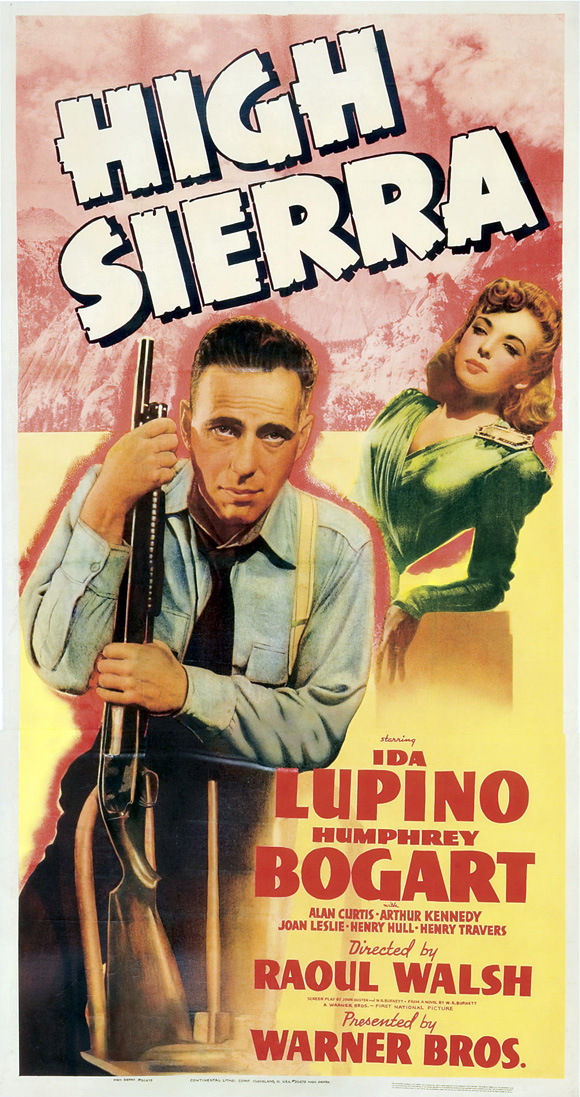
Today, I came back from working on a Saturday to see the end of Warner Brothers’ High Sierra (1941) with Martine. There was Roy “Mad Dog” Earle, trapped on an Eastern Sierra cliff face and surrounded by police and reporters waiting to put an end to his career of crime. I had seen the film so many times that it was now in my blood. It was one of a handful of U.S. films that defined for me the whole American experience between the 1930s and the 1950s. I thought I would put together a list of the films in the genre that were my favorites.
Here are thirteen of them, arranged in alphabetic order:
- The Big Heat (1953), directed by Fritz Lang, with Glenn Ford and Gloria Grahame
- The Big Sleep (1946), directed by Howard Hawks, with Humphrey Bogart and Lauren Bacall
- Criss Cross (1949), directed by Robert Siodmak, with Burt Lancaster, Dan Duryea, and Yvonne De Carlo
- Detour (1946), directed by Edgar G. Ulmer, with Tom Neal and Ann Savage
- Double Indemnity (1944), directed by Billy Wilder, with Barbara Stanwyck and Fred MacMurray
- Gun Crazy (1949), directed by Joseph H. Lewis, starring Peggy Cummins and John Dall
- High Sierra (1941), directed by Raoul Walsh, with Humphrey Bogart and Ida Lupino
- The Maltese Falcon (1941), directed by John Huston, with Humphrey Bogart, Peter Lorre, and Sydney Greenstreet
- Out of the Past (1947), directed by Jacques Tourneur, with Robert Mitchum and Kirk Douglas
- The Postman Always Rings Twice (1946), directed by Tay Garnett, with Lana Turner and John Garfield
- They Live by Night (1949), directed by Nicholas Ray, with Farley Granger and Cathy O’Donnell
- Where the Sidewalk Ends (1950), directed by Otto Preminger, with Dana Andrews and Gene Tierney
- White Heat (1949), directed by Raoul Walsh, with James Cagney and Virginia Mayo
If this seems like a long list, please note that I could have stretched it to fifty or a hundred without too much difficulty. There were a lot of noir films made in Hollywood over a long period.
What are noir films? According to Alain Silver, James Ursini, and Elizabeth Ward’s Film Noir: The Encyclopedia (New York: Overlook Duckworth, 2010):
Film noir is grounded neither in personal creation nor in translation of another tradition into cinematic terms. Rather it is a self-contained reflection of American cultural preoccupations in film form. In short, it is the unique example of a wholly American film style. “Film noir” is literally “black film,” not just in the sense of reflecting a dark mood in American society, but equally, almost empirically, as a black slate on which the culture could inscribe its ills and in the process produce a catharsis to help relieve them.
There is a whole galaxy of elements which, together or in unison, make up a film noir plot. They include crime, police, private detectives, “bad girls,” urban environments with “mean streets,” and both inner and outer darkness.
Asking the Pilot
Since people have been flying in heavier-than-air machines for over a century, it is amazing how little accurate information one can find in the news whenever there is a fatal crash or—heaven forbid—a missing aircraft. For many years, I had been reading Patrick Smith’s excellent “Ask the Pilot” column in Salon.Com, before that website decided to cut him loose in favor of more celebrity-conscious material. Patrick is the author of a book entitled Cockpit Confidential, which I am adding to my TBR (To Be Read) pile of books. On his excellent website, called Ask the Pilot, he writes:
More than ever, air travel is a focus of curiosity, intrigue, anxiety and anger. In these pages I do my best to inform and entertain. I provide answers for the curious, reassurance for the anxious, and unexpected facts for the deceived.
I begin with a simple premise: everything you think you know about flying is wrong. That’s an exaggeration, I hope, but not an outrageous starting point in light of what I’m up against. Commercial aviation is a breeding ground of bad information, and the extent to which different myths, fallacies, wives’ tales and conspiracy theories have become embedded in the prevailing wisdom is startling. Even the savviest frequent flyers are prone to misconstruing much of what actually goes on.
Which isn’t surprising. Air travel is a complicated, inconvenient, and often scary affair for millions of people, while at the same time cloaked in secrecy. Its mysteries are concealed behind a wall of specialized jargon, corporate reticence and an irresponsible media. Airlines, it hardly needs saying, aren’t the most forthcoming of entities, while journalists and broadcasters like to keep it simple and sensational. It’s hard knowing who to trust or what to believe.
In the current edition of his website, he launches a broad-based attack on the Huffington Post, which did an article entitled “16 Alarming Secrets That Will Change How You Will Feel About Flying.” I recommend you read the Huffpost article, and then look at what Smith has to say about it entitled “Nonsense from the Huffington Post.”
Not only is Ask the Pilot a great resource for information on flying, but it contains some fascinating travel articles written by a guy who’s been just about everywhere. I like it so much that I am planning to link to it on my own site.
The Long View
As a student of history, I tend to be an optimist in the long run. It’s quite possible that the American people will take a generation or more to act upon discovering that they were being had by super wealthy and powerful individuals and corporations. By then, I and most of my friends will have passed on. But then, remember that all those old stupid white people inhabiting the Confederate States of America will all be gone, too. Some of the most annoying commentators on the political scene today, people such as Sean Hannity, Rush Limbaugh, Glenn Beck, Bill O’Reilly, and and Ann Coulter will be seen as passé as the John Birch Society and Father Coughlin. (You do remember them, don’t you?) And the Rand Pauls and Ted Cruzes of this world will either have been voted out of office or decided it was better to pursue power than ideological purity.
History is made up of large cycles. Ever since the end of World War Two, the United States has been in a “Let’s Go to War with People About Whom We Know Nothing” cycle. The list of our military incursions over the last sixty years would take several pages—though I’m tempted to try to list them one of these days, but after tax season. One of the things that will happen rather sooner than later is the realization that America is no longer viewed as “the City on the Hill” for all the world to look up to and follow. We will be just another large country thathas shamelessly squandered its power. By the way, that’s happening to Russia now. I think the Crimea will, in the long run, be a poisoned cookie for Putin.
I think I will read Mark Twain and Charles Dudley Warner’s The Gilded Age, for a look at the last time we let rich and powerful individuals have their way. Then, too, there is Frank Norris’s The Octopus and Theodore Dreiser’s Frank Cowperwood trilogy (The Financier, The Titan, and The Stoic). It was the labor movement that put an end to much of that. Even though GOP stooges like Scott Walker, Governor of Wisconsin, have done everything they could to destroy labor, I think it will be back again … but in the long run.
People my age have seen both worlds. It’s so depressing to straightline tendencies that we hate until they assume monstrous proportions, I would like to quote a GOP President whom I admire. Calvin Coolidge once said, “If you see ten troubles coming down the road, you can be sure that nine will run into the ditch before they reach you.” You just have to be ready for the one that does.


You must be logged in to post a comment.