Oh, No! Not Again!

Chile’s Calbuco Volcano in Eruption

Chile’s Calbuco Volcano in Eruption

It’s getting to be downright monotonous. Four years ago, when Martine and I were planning our trip to Argentina, we had originally decided to included San Carlos Bariloche on the eastern slope of the Andes on our itinerary. But then, a Chilean volcano decided to trash the whole area. Here’s what I wrote at that time:

It looks like some sort of ghastly aviation accident, doesn’t it? But no, what you are seeing above [actually below, in this posting] is a grounded aircraft in San Carlos de Bariloche covered in volcanic ash from the eruption of the Puyehue-Cordon Caulle volcanic complex in neighboring Chile. Not only was the airport at Bariloche closed for lack of visibility, but the ash drifted eastward over the South Atlantic by Trelew and Puerto Madryn.

I have just named three of my main destinations for our upcoming trip to Argentina five months from now. No doubt the eruptions will cease soon, if they have not already done so.

One thing we can expect is that there will be a lot more blowing dust and ash given the prevailing winds in Patagonia and the huge amount of ash generated by the eruption.

Our plan is to go to Bariloche via one of the few remaining long-haul passenger railways in Argentina, the Tren Patagonico connecting Viedma with Bariloche. Viedma is five hours north of Puerto Madryn by bus, so we’ll have the opportunity of seeing more of the Atlantic coast between the two cities.

Plane Covered with Ash at Bariloche’s Airport

Plane Covered with Ash at Bariloche’s Airport

Well, the eruptions from Cordon Caulle kept going until several states along the Eastern Andes were declared a disaster zone. So we skipped Bariloche and went to El Calafate instead, which did not disappoint.

Now the Chileans are doing it again to me, with Calbuco in eruption. And, of course, I am planning once again to visit Bariloche in November. I can only hope that this particular event does not last as long as the one four years ago. So far, the only area in Argentina that has been affected is around Neuquén, several hours to the north of where I’ll be.

I just noticed that the ash has already made its way to Buenos Aires, closing all international flights from Ezeiza airport.

The Buenos Aires Herald has included a great video shot by a Chilean tourist at the moment Calbuco blew its top. You can find it by clicking here.

Land of Dinosaurs

Exhibit at Trelew’s Museo Paleontológico Egidio Feruglio

Exhibit at Trelew’s Museo Paleontológico Egidio Feruglio

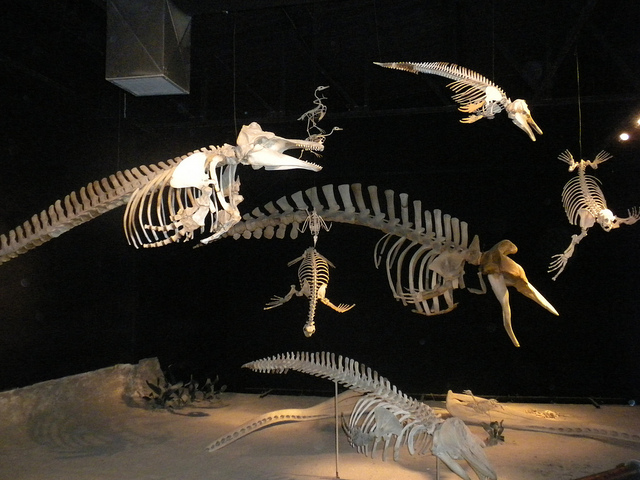
The first book I ever read about Patagonia was George Gaylord Simpson’s Attending Marvels: A Patagonian Journal, about the paleontologist’s search for dinosaur bones in that windy desert that forms most of Argentina’s South. A sparsely populated country (less than one person per square mile), Patagonia preserves its paleontological heritage better than most populated places.

Near Nequén, there are three active digs that a tourist can visit. In Trelew, there is the attractive Museo Paleontológico Egidio Feruglio. Even the airport at Trelew has dinosaur bones on display.

Last September, CBS announced the discovery of substantial dinosaur remains for Dreadnoughtus schrani, which lived 77 million years ago, measured 85 feet long, and weighed in at 65 tons—heavier than a Boeing 737. (I wonder whether it was a vegetarian.)

I probably will not spend much time digging for fossils on my next trip to Argentina, but it’s always fun to see what others have dug up in that desolate land.


A Visit to the Holy Land

Argentina’s Own Biblical Theme Park: Tierra Santa

Argentina’s Own Biblical Theme Park: Tierra Santa

Both times I have visited Argentina, I stopped in at Buenos Aires’s Tierra Santa, a theme park dedicated to the Bible, particularly the New Testament. It’s relatively easy to get to: Take the commuter train a mere stop or two from Retiro Station to Estación Raúl Scalabrini Ortiz and walk to the northern exit, which takes you almost a mile past a water park along the Rio de la Plata to Argentina’s occasionally tacky and very Catholic version of the Holy Land.

One can easily spend two or three hours seeing the Disneyfied exhibits of the Creation, the Last Supper, and the Sermon on the Mount. There are several Middle Eastern type restaurants, gift shops, and hundreds of full size plaster statues representing figures from the Bible. Above is the Crucifixion, atop a sun-drenched Golgotha you can climb to be in the middle of the action.

It can’t be all that bad, because according to the park’s website, Pope Francis visited it.

If you are really famished after your visit, there was a branch of Siga la Vaca (“Follow the Cow”), an all-you-can-eat parrillada right next door.

The Seafarer

Viking Craft

Viking Craft

Several days ago, I quoted an Anglo-Saxon poem called “The Wanderer.” Today, I give you a somewhat longer piece, which was translated by Ezra Pound in 1911. According to Wikipedia:

The poem is told from the point of view of an old seafarer, who is reminiscing and evaluating his life as he has lived it. The seafarer describes the desolate hardships of life on the wintry sea. He describes the anxious feelings, cold-wetness, and solitude of the sea voyage in contrast to life on land where men are surrounded by kinsmen, free from dangers, and full on food and wine. The climate on land then begins to resemble that of the wintry sea, and the speaker shifts his tone from the dreariness of the winter voyage and begins to describe his yearning for the sea. Time passes through the seasons from winter — “it snowed from the north” — to spring — “groves assume blossoms” — and to summer — “the cuckoo forebodes, or forewarns.”

Then the speaker again shifts, this time not in tone, but in subject matter. The sea is no longer explicitly mentioned; instead the speaker preaches about steering a steadfast path to heaven. He asserts that “earthly happiness will not endure,” that men must oppose “the devil with brave deeds,” and that earthly wealth cannot travel to the afterlife nor can it benefit the soul after a man’s death.

Generally speaking, I am not a big fan of Ezra Pound, but in this early version, I think he surpasses himself. This is “The Seafarer” by that greatest of Anglo-Saxon poets, Anonymous:

May I for my own self song’s truth reckon,
Journey’s jargon, how I in harsh days
Hardship endured oft.
Bitter breast-cares have I abided,
Known on my keel many a care’s hold,
And dire sea-surge, and there I oft spent
Narrow nightwatch nigh the ship’s head
While she tossed close to cliffs. Coldly afflicted,
My feet were by frost benumbed.
Chill its chains are; chafing sighs
Hew my heart round and hunger begot
Mere-weary mood. Lest man know not
That he on dry land loveliest liveth,
List how I, care-wretched, on ice-cold sea,
Weathered the winter, wretched outcast
Deprived of my kinsmen;
Hung with hard ice-flakes, where hail-scur flew,
There I heard naught save the harsh sea
And ice-cold wave, at whiles the swan cries,
Did for my games the gannet’s clamour,
Sea-fowls, loudness was for me laughter,
The mews’ singing all my mead-drink.
Storms, on the stone-cliffs beaten, fell on the stern
In icy feathers; full oft the eagle screamed
With spray on his pinion.
Not any protector
May make merry man faring needy.
This he little believes, who aye in winsome life
Abides ‘mid burghers some heavy business,
Wealthy and wine-flushed, how I weary oft
Must bide above brine.
Neareth nightshade, snoweth from north,
Frost froze the land, hail fell on earth then
Corn of the coldest. Nathless there knocketh now
The heart’s thought that I on high streams
The salt-wavy tumult traverse alone.
Moaneth alway my mind’s lust
That I fare forth, that I afar hence
Seek out a foreign fastness.
For this there’s no mood-lofty man over earth’s midst,
Not though he be given his good, but will have in his youth greed;
Nor his deed to the daring, nor his king to the faithful
But shall have his sorrow for sea-fare
Whatever his lord will.
He hath not heart for harping, nor in ring-having
Nor winsomeness to wife, nor world’s delight
Nor any whit else save the wave’s slash,
Yet longing comes upon him to fare forth on the water.
Bosque taketh blossom, cometh beauty of berries,
Fields to fairness, land fares brisker,
All this admonisheth man eager of mood,
The heart turns to travel so that he then thinks
On flood-ways to be far departing.
Cuckoo calleth with gloomy crying,
He singeth summerward, bodeth sorrow,
The bitter heart’s blood. Burgher knows not —
He the prosperous man — what some perform
Where wandering them widest draweth.
So that but now my heart burst from my breast-lock,
My mood ‘mid the mere-flood,
Over the whale’s acre, would wander wide.
On earth’s shelter cometh oft to me,
Eager and ready, the crying lone-flyer,
Whets for the whale-path the heart irresistibly,
O’er tracks of ocean; seeing that anyhow
My lord deems to me this dead life
On loan and on land, I believe not
That any earth-weal eternal standeth
Save there be somewhat calamitous
That, ere a man’s tide go, turn it to twain.
Disease or oldness or sword-hate
Beats out the breath from doom-gripped body.
And for this, every earl whatever, for those speaking after —
Laud of the living, boasteth some last word,
That he will work ere he pass onward,
Frame on the fair earth ‘gainst foes his malice,
Daring ado, …
So that all men shall honour him after
And his laud beyond them remain ‘mid the English,
Aye, for ever, a lasting life’s-blast,
Delight mid the doughty.
Days little durable,
And all arrogance of earthen riches,
There come now no kings nor Cæsars
Nor gold-giving lords like those gone.
Howe’er in mirth most magnified,
Whoe’er lived in life most lordliest,
Drear all this excellence, delights undurable!
Waneth the watch, but the world holdeth.
Tomb hideth trouble. The blade is layed low.
Earthly glory ageth and seareth.
No man at all going the earth’s gait,
But age fares against him, his face paleth,
Grey-haired he groaneth, knows gone companions,
Lordly men are to earth o’ergiven,
Nor may he then the flesh-cover, whose life ceaseth,
Nor eat the sweet nor feel the sorry,
Nor stir hand nor think in mid heart,
And though he strew the grave with gold,
His born brothers, their buried bodies
Be an unlikely treasure hoard.

With the Terries and the Firmies

Carl Barks Painting of Uncle Scrooge

Carl Barks Painting of Uncle Scrooge

As a kid who loved to read, where do you suppose I found my most interesting stories? The answer is simple: I was a devout reader of Walt Disney’s Uncle Scrooge Comics, created by the redoubtable artist Carl Barks who created the character and illustrated so many great Scrooge and Donald Duck cartoons.

Another big fan of Barks’s work was George Lucas, who frequently borrowed incidents from the Scrooge archive, such as the rolling rock in Indiana Jones and the Raiders of the Lost Ark. And it is said that the musical Mackenna’s Gold was largely based on the “Seven Cities of Gold” episode.

Perhaps my favorite of them all was Barks’s explanation of how earthquakes happen. One day, when all the money from Uncle Scrooge’s huge money vault disappears underground (a plot device he used often), the tycoon travels with Donald and his three nephews, Huey, Dewey, and Louie, to discover the cause.

The Boys Discover What Really Causes Earthquakes

The Boys Discover What Really Causes Earthquakes

The episode entitled “The Land Beneath the Ground” speculates that under the earth are two types of apodal (legless) creatures that, together, cause the shaking and rolling characteristics of temblors. They are called “Terries” and “Firmies” respectively. Fortunately, Huey, Dewey, and Louie find the answers to all their problems in their voluminous Junior Woodchucks Handbook and save the day, and their uncle’s treasure.

I should get a copy of that for my library!

On Being Young and Entitled

Barbie Doll Strikes Back

Malicious Barbie Doll Strikes Back

I don’t suppose it’s worth wasting much bandwidth on the subject, but I was disgusted by ESPN Announcer Britt McHenry’s tirade against some poor clerk when she came to pick up her towed car. If you’ve spent the last week in a Siberian yurt, you may have missed this wretched display available on YouTube.

What struck me is that this bottle-blonde popsie felt so superior to some poor overweight woman with bad teeth who was collecting the tow charge from her. She keeps referring to her own college education, but behaves as if she had never finished grade school.

What type of massive intellect does it require to read the news from a telepromper in front of a TV camera? And it’s just sports news at that. This woman probably has an intellect not much higher than a puppy’s, and if she gets paid well, it’s just because she is eye candy and doesn’t stumble too much over the words she has to read.

If she had her just deserts, she would be spending time in a jail cell with a Leona Helmsley or a young Conrad Hilton.

Getting overpaid for looking like Barbie doesn’t give you special privileges.


Ghosts on the Pampas

Mapuche Indian Women

Mapuche Indian Women

One doesn’t hear much about the aboriginal population of Argentina. That is because, for the most part, the Indians of Argentina were done away with. Those who didn’t die of the white man’s diseases were rounded up and either executed or imprisoned during the 1870s under the “Conquest of the Desert” fomented by President Julio Argentino Roca (pictured below on the Argentinian 100 peso note).

Two Argentinian writers, however, did a fair job resuscitating the original peoples of the land. In The Witness, Juan José Saer writes of the fictional Colastiné who inhabited La Litoral along the Rio Paraná. A Spanish cabin boy is one of several prisoners from his 16th century landing party. His mates are all cooked and eaten in a cannibal feast. Yet there is a strange beauty to them:

For the Indians everything seems and nothing is. And the appearance of things is situated above all in the field of non-existence. The open beach, the transparent day, the cool green of the trees in spring, the otters with their smooth, rippling skin, the yellow sand, the golden-scaled fish, the moon, the sun, the air and the stars, the tools they skilfully and patiently fashioned from recalcitrant materials, in short everything that presented itself clearly to the senses was for them formless, and had a vague and sticky underside against which the darkness beat.

Saer’s Colastiné are true primitives, whereas César Aira’s Mapuche in The Hare are subtly ironic. Fortunately for them, the Mapuche survive today on the Chilean side of the Andes. (Unlike the Argentineans, the Chileans frequently intermarried with their tribal peoples.)

Argentine 100-Peso Note

Argentine 100-Peso Note

In The Hare, the narrator, Clarke, is an Englishman in search of the legendary Legibrerian Hare, which can not only run and leap, but fly when necessary. The Mapuche chief Calfucurá tells Clarke:

We have a word for “government” which signifies, in addition to a whole range of other things, a “path,” but not just an ordinary path—the path that certain animals take when they leap in a zigzag fashion, if you follow me; although at the same time we ignore their deviations to the right and left, which due to a secondary effect of the trajectory end up of course not being deviations at all, but a particular kind of straight line.

Both Saer and Aira are superb writers, and both capture in their own ways the peoples who came before them.

“Here Is Man Brief”

Scene from the Bayeux Tapestry

Scene from the Bayeux Tapestry

This was a world that almost seemed to know it wasn’t going to be around long. Anglo-Saxon poetry is not plentiful, but what exists has a sadness that is touching. The following is an excerpt from “The Wanderer” as translated by Clifford Truesdell IV:

Where went the rider? Where went the giver of treasure? Where went the high seats? Where are the halls of feasting? Alas for the bright cup! Alas for the mailed warrior! Alas for the prince’s glory! How time vanishes, darkens under night’s helmet as if it never were. Stands now where stood beloved companions a wall, wondrous high, snake-like mottled. Spears’ might took off the warriors, slaughter-greedy weapons, notorious fate; and storms smite these stone walls; snow falling binds the earth, winter’s tumult. When dark comes night’s shadow deepens, sends from north fierce hail-fall, to harrow men. All is hardship in earth realm, Fate’s course undoes world under heaven. Here are goods brief, here is friend brief, here is man brief, here is kin brief.

Virtually all known Anglo-Saxon poems and fragments can fit into a slim paperback edition. I myself own two such collections, and find myself coming back again and again.

Tarnmoor’s ABCs: UCLA

Royce Hall on the Campus of the University of California at Los Angeles

Royce Hall on the Campus of the University of California at Los Angeles

All the blog posts in this series are based on Czeslaw Milosz’s book Milosz’s ABC’s. There, in the form of a brief and alphabetically-ordered personal encyclopedia, was the story of the life of a Nobel Prize winning poet, of the people, places, and things that meant the most to him.

My own ABCs consist of places I have loved (Iceland, Patagonia, Quebec, Scotland), things I feared (Earthquakes), writers I have admired (Chesterton, Balzac, Proust, and Borges); locales associated with my past life (Cleveland and Dartmouth College), people who have influenced me (John F. Kennedy), foods I love (Olives and Tea), and things I love to do (Automobiles and Books). This blog entry is my own humble attempt to imitate a writer whom I have read on and off for thirty years without having sated my curiosity. Consequently, over the weeks to come, you will see a number of postings under the heading “Tarnmoor’s ABCs” that will attempt to do for my life what Milosz accomplished for his. To see my other entries under this category, hit the tag below marked “ABCs”. I don’t guarantee that I will use up all 26 letters of the alphabet, but I’ll do my best. The fact that I made it as far as the letter  “U” is a major surprise to me.

I came out to California at the tail end of December 1966 to attend graduate school at UCLA. My original intention was to become a Professor of Film History and Criticism. Well, I didn’t. Instead I ran into dirty politics as personified by one Professor Howard Suber who waged a kind of dirty war on those of his students who loved film. Out of an inborn cussedness, he made it difficult to sign up for classes; and he appointed himself chairman of my thesis committee over my personal choice of the late Bob Epstein. I knew at once that my chances of a Masters degree based on a study of the Westerns of John Ford was a goner.

It was around this time that Governor Ronald Reagan began making deep cuts in the budget of California’s universities. Seeing the handwriting on the wall, I made a sidestep into computer programming at System Development Corporation in Santa Monica, which led, by a commodius vicus of recirculation, into my present profession in accounting.

My quandary was that I loved film, but was not willing to immolate myself for he sake of principle. I kept my hand in film, writing articles and chapters of books even after I was out of the program. I even wrote a humorous article for the UCLA Daily Bruin entitled “Confessions of an Ex-Filmfreak: Or, Slow Death 24 Times a Second.”

My apartment is a scant three miles from the UCLA campus, which I still visit from time to time for various cultural events. It’s always interesting to look back at the decisions that led me to where I am today.

Do I have any regrets? Not really.


“History Never Really Says Goodbye”

We Lost Another Great One Today

We Lost Another Great One Today

There are many great writers who have written powerfully about Mexico, Argentina, Colombia, Chile, and Brazil—but only one who saw Latin America as a whole, saw to the core of its myriad tragedies, and wrote a great body of work analyzing it. That was Eduardo Galeano, who died today in Montevideo, Uruguay, at the age of 74.

I loved what he wrote in Children of the Days: “History never really says goodbye. History says ‘See you later!’”

My favorite of his works is the trilogy Memory of Fire (1982-1986), an anecdotal history of Latin America from before 1492 to the present day, liberally interlarded with quotations and observations. Perhaps, however, he is most famous for The Open Veins of Latin America: Five Centuries of the Pillage of a Continent (1971).

As you may know, I have had a love affair with Latin America since my first visit to Mexico in 1975. In addition to Mexico, I have also visited Peru, Argentina, and Uruguay. And as long as the blood is flowing in my veins, I am planning yet more trips.

In The Open Veins of Latin America, Galeano wrote:

The division of labor among nations is that some specialize in winning and others in losing. Our part of the world, known today as Latin America, was precocious: it has specialized in losing ever since those remote times when Renaissance Europeans ventured across the ocean and buried their teeth in the throats of the Indian civilizations. Centuries passed, and Latin America perfected its role. We are no longer in the era of marvels when face surpassed fable and imagination was shamed by the trophies of conquest— the lodes of gold, the mountains of silver…. Our defeat was always implicit in the victory of others; our wealth has always generated our poverty by nourishing the prosperity of others.

Galeano’s life has been a stressful one. Always a lover of liberty, he fled Uruguay for Argentina in 1973 when a military coup took over his country. Three years later, when the rightist generals rose to power in Argentina, he was off to Spain, from whence he did not return until 1985, when Uruguay restored civilian rule.

At a speech he delivered at the University of Wisconsin, he said, “I tried, I try, to be stubborn enough to go on believing, in spite of all evidences that we humans are badly built, but we are still unfinished.”

The question is: Will we as a species be undone before we are ever finished? If so, we need more writers like Galeano.