The New Petersen

The Redesigned Petersen Automotive Museum

The Redesigned Petersen Automotive Museum

The new look takes some getting used to, but it seems to be an astonishing success. Martine and I have visited the Petersen Automotive Museum about once every year. Never did we see such a crowd as we saw today. We had to park on the second floor of the parking structure, for the first time ever.

I always liked the old Petersen, but it had grown a bit tatty over the years. Now both the inside and outside are all new. One starts with the historical exhibits on the third floor, comes down to see the industry exhibits on the second floor, and finally returns to the ground floor to see exhibits of the classic automobile as a fine art form, including cars painted by David Hockney and Alexander Calder.

Insofar as I know, Southern California now has three world class auto museums:

  • The Petersen Automotive Museum on Wilshire Boulevard’s Museum Row
  • The Nethercutt Collection in Sylmar in the San Fernando Valley, a free museum that charges no admission and is easily as extensive as the Petersen
  • The Murphy Auto Museum in Oxnard, which Martine and I have not visited yet (but hope to see next monh after tax season)

Since L.A. is a city made possible by the automobile, it makes sense to study the phenomenon here.

Where the old Petersen thematically separated their vehicles in mutually exclusive areas, the new layout intermixes such items as famous cars used in movies, old horseless carriages, motorcycles, and one-of-a-kind fantasy cars so that one doesn’t just skip around. It is possible to see the same technological and design ideas cross-fertilizing the different kinds of vehicles on the road.

It is quite evident that the Petersen got a large influx of money (some $90 million I understand). The new chairman, Peter Mullin, has run his own auto museum in Oxnard, which may have merged with the Petersen.


Hidden in the Credits

Production Designer Sir Ken Adam

Production Designer Sir Ken Adam

Above all, we tend to give credit to the actors in a movie. Those who know a little more about how films will tend to credit the director. But it doesn’t stop there. What about producers like Val Lewton and Henry Blanke, cinematographers like Gregg Toland and Gabriel Figueroa, editors like Slavko Vorkapich, and—more to the point here—production designers like Sir Ken Adam?

I remember having a Dartmouth Film Society dinner with Hollywood producer Max Youngstein in the mid 1960s. He had just produced Fail-Safe (1964). When I asked him if the production had been designed by Ken Adam, he positively beamed at me. He prided himself for having found someone else who gave the film a Ken Adam touch.

Why? Ken Adam was responsible for film designs which will forever be associated in our minds with the best of the 1960s, such as Doctor No (1962) and Doctor Strangelove (1964).

Doctor No’s “Reception Room” in the Film of the Same Name

Doctor No’s “Reception Room” in the Film of the Same Name

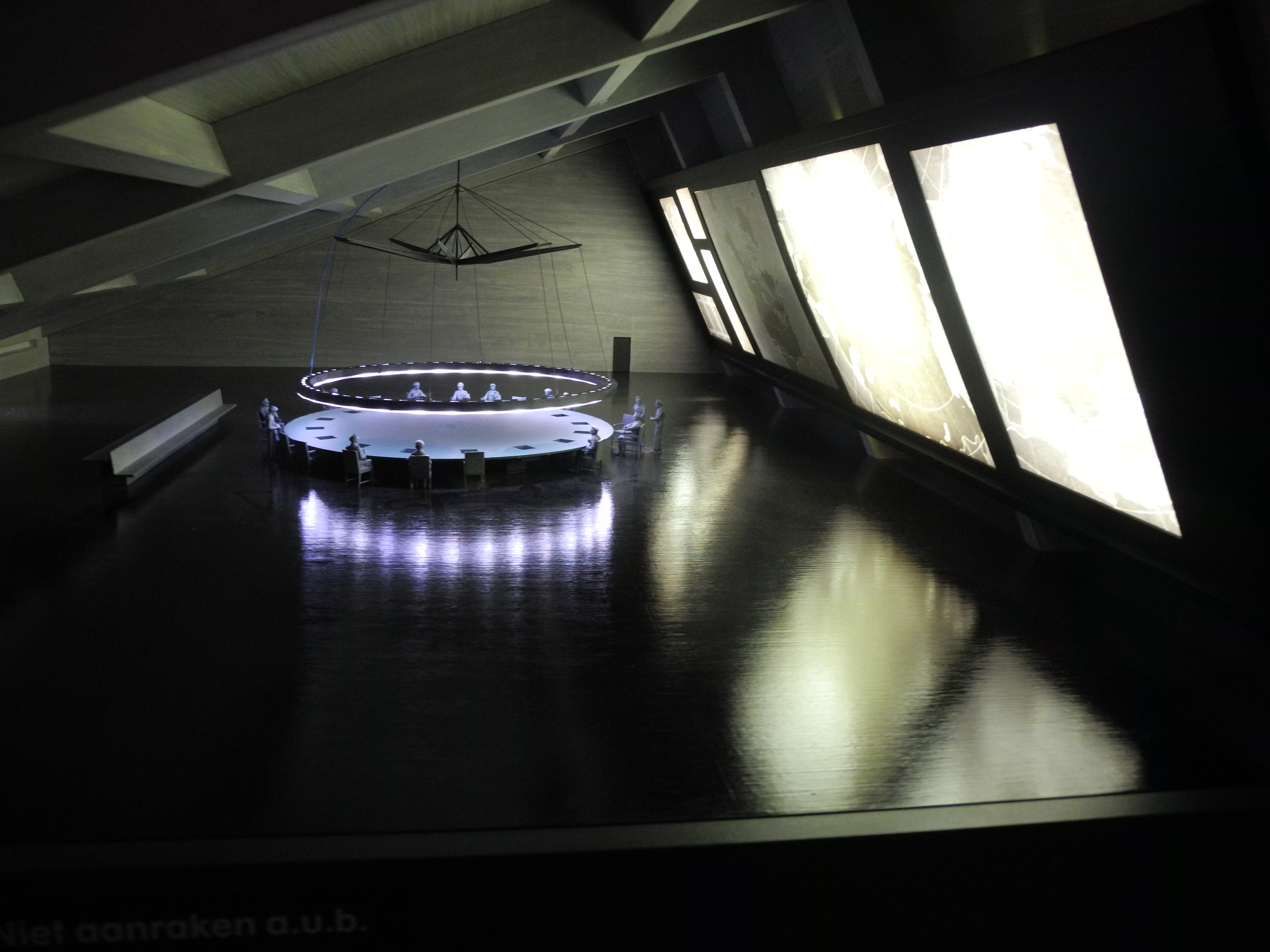
In addition there was the War Room in Doctor Strangelove, or How I Learned to Stop Worrying and Love the Bomb (1964):


Kubrick’s War Room in Doctor Strangelove

Model for Kubrick’s War Room in Doctor Strangelove

As one who lived through that anxious time, I will always remember Ken Adam’s sets for these and other films. Perhaps he is unknown to the general film-going public, but now that we lost him, his vision will be missed.

Berezina in a Dish

My Least Favorite Hungarian Food

My Least Favorite Hungarian Food

Whenever my mother made it, I always ran out of the house and stayed away until the smell dissipated. What made things difficult is that she always made kocsonya (pronounced KOH-chone-yah) in the winter. As my Uncle Emil used to say, he couldn’t eat any unless there was snow on the ground. I did him one better: I couldn’t eat kocsonya if there was any in the Western Hemisphere.

I’ve always said that a serving of the noxious stuff reminded me of a frozen river with mangled human and animal remains—very like the Berezina River in Belarus where Napoleon lost thousands of his remaining forces after retreating from Moscow.

Apparently there’s a Russian equivalent. In a short story entitled “Aspic,” Tatyana Tolstoya describes cooking up a batch very like the recipe I’m describing:

Now it’s boiling, raging. Now the surface is coated with gray, dirty ripples: all that’s bad, all that’s weighty, all that’s fearful, all that suffered, darted, and tried to break loose, oinked and mooed, couldn’t understand, resisted, and gasped for breath—all of it turns to muck. All the pain and death are gone, congealed into repugnant fluffy felt. Finito. Placidity, forgiveness.

Kind of makes vegetarianism attractive, no? And that’s about all I could say without retching….


Not Immune from Prosecution

In Iceland 26 Bankers Are Serving Time Behind Bars

In Iceland 26 Bankers Are Serving Time Behind Bars

In the United States, bankers seem to have received “Get Out of Jail Free” cards for their transgressions. In tiny Iceland, on the other hand, a group of bankers are serving a combined seventy-four years of hard time. And today, five more bankers from Glitnir Bank are being charged.

Here are four more stories from The Iceland Review of that spunky little country’s unwillingness to put up with banking fraud:

Now those felonious clowns who packaged all those weird mortgage securities in 2008 and earlier should be doing hard time in stir in one of our fine prisons, where protecting one’s ass is a full-time occupation. Why Barack Obama and Hillary Clinton have not hauled them in is a travesty of justice.


Thunder and Lightning and Rain

This Never Happens in L.A., Does It?

This Never Happens in L.A., Does It?

It is a well-known fact that I have become openly contemptuous of all he hoopla about this year’s El Niño predictions. Well, early this morning, we were hit by a major thunderstorm that abated just as I started dressing up to go to work. There was, in addition to the thunder, considerable lightning and rain. In Altadena, my friend Bill Korn showed pictures of his vegetable garden under a layer of fall hail.

I guess, better late than never. I wouldn’t mind seeing a few more of these storms over the next couple of months. We still need to fill those reservoirs and deepen that Sierra snow pack.


Serendipity: Two Armies

Russian Spetznaz Special Forces Troops in Camouflage

Russian Spetznaz Special Forces Troops in Camouflage

I saw this passage in an introduction by Robert D. Kaplan, who was quoting French military writer Jean Lartéguy’s The Centurions:

I’d like … two armies: one for display, with lovely guns, tanks, little soldiers, fanfares, staffs, distinguished and doddering generals, and dear little regimental officers … an army that would be shown for a modest fee on every fairground in the country.

The other would be the real one, composed entirely of young enthusiasts in camouflage battledress, who would not be put on display but from whom … all sorts of tricks would be taught. That’s the army in which I should like to fight.

The first army would be huddled in the Green Zone or Bagram AFB, eating pizzas and drinking Cokes. Whenever they would venture out in force, they would be blown to smithereens without ever having seen the face of their enemy.

The second army was the one that bagged Osama bin Laden at Abbottabad and that will defeat ISIS if ISIS is ever to be defeated.

By the way, do not underestimate the French military. They are not all “surrender monkeys,” as some Americans would have it. It was the first army—the parade ground army—that surrendered at Sedan and Dien Bien Phu.

Favorite Films: The IPCRESS File

Michael Caine in The IPCRESS File (1965)

Michael Caine in The IPCRESS File (1965)

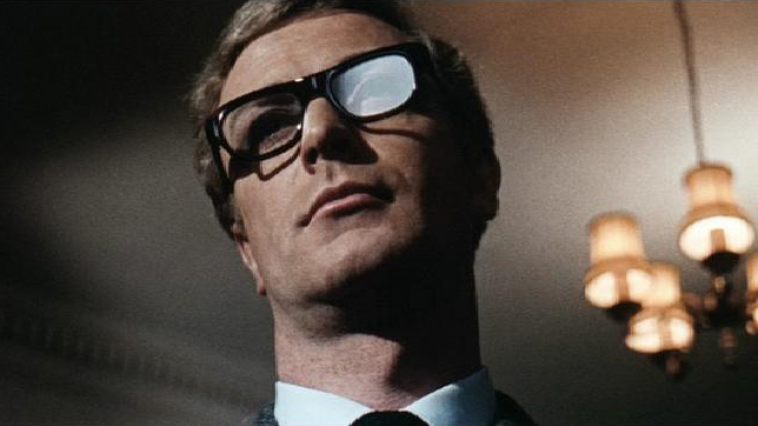
Michael Caine co-starred with a pair of glasses (curiously similar to the ones that Rick Perry sported while he was still running for President) in a spy film that was most un-James-Bond-like, despite the fact that Harry Saltzman produced both The IPCRESS File and many of the classic Bonds.

(By the way, if you’re wondering why IPCRESS is in all caps, it’s because it’s an acronym for Induction of Psycho-neuroses by Conditioned Reflex with Stress, the brainwashing scheme used by Commie spies to “turn” British scientists.)

The IPCRESS File was Michael Caine’s first big shot at stardom. His spy is unnamed in Len Deighton’s novels, but you couldn’t very well have an unnamed character in a film who is constantly being directly addressed by his friends and co-workers. It was Caine who came up with the moniker Harry Palmer, and it stuck.

Palmer’s world of spies is much dirtier than Bond’s. You wouldn’t suspect M or Q or Miss Moneypenny for being a Russian plant; but in Harry Palmer’s WOOC(P) [SIC] organization no one is near as squeaky clean.

In the film, Harry accidentally kills one CIA operative in an underground garage who was tailing him too closely and is suspected of killing another whose bullet-riddled body is found in his flat.

Kidnapped from a train, Harry finds himself in an Albanian prison being brainwashed to forget everything he knew about the IPCRESS project. Some people, and Harry is one of them, just can’t succumb to brainwashing; and he comes out ahead.

Sidney J. Furie’s film direction is edgy and effective. I had not seen the film since my college days when I saw that it was being screened on Turner Classic Movies. Coincidentally, I had read Deighton’s novel just a couple of weeks ago.


“In the month of Athyr …”

Mummy Portrait of Deceased

Early Christian Mummy Portrait of Deceased

One of my favorite poets of the last century was Constantine P. Cavafy, who lived most of his life in Alexandria, Egypt. I have just finished reading E. M. Forster’s Pharos and Pharillon: A Novelist’s Sketchbook of Alexandria Through the Ages, which ends which a chapter on “The Poetry of C. P. Cavafy.”

In it, he talks about meeting Cavafy in the street and having a marvelous conversation with him:

It is delivered with equal ease in Greek, English, or French. And despite its intellectual richness and human outlook, despite the matured charity of its judgments, one feels that it too stands at a slight angle to the universe: it is the sentence of a poet.

What a wonderful line! “It too stands at a slight angle to the universe.”

The Poet

The Poet

In his book, Forster quotes (and, I suspect, translated) this fragmentary funerary poem of a young man who died one November (“Athyr”), probably not unlike the mummy facial covering illustrated above:

It is hard to read . . . on the ancient stone.
“Lord Jesus Christ” … I make out the word “Soul”,
“In the month of Athyr … Lucius fell asleep.”
His age is mentioned … “He lived years …”—
The letters KZ show … that he fell asleep young,
In the damaged part I see the words … “Him … Alexandrian”.
Then came three lines … much mutilated.
But I can read a few words … perhaps “our tears” and “sorrows”.
And again: “Tears” … and: “for us his friends mourning”.
I think Lucius … was much bloved.
In the month of Athyr … Lucius fell asleep ….

In case you have never heard of Cavafy before, he was a major inspiration for Lawrence Durrell’s The Alexandria Quartet.

What Do These Burmese Kings Have in Common?

Put Your Thinking Caps On

Put Your Thinking Caps On

The four Burmese kings are: Uzana, Minrekyawswa, Razadarit, and (of course) Tabinshweti.

Uzana was trampled to death by an elephant in 1254; Minrekyawswa was crushed to death by an elephant in 1417;
Razadarit died while lassoing elephants in 1423; and Tabinshweti was beheaded while searching for an elephant in 1551.

Now if you were a king in Burma, that suggests you stay away from the GOP.

The above is courtesy of the Futility Closet.

Word

Now Which of These Can Be Considered as Medioxumous?

Now Which of These Can Be Considered as Medioxumous?

I was always a word freak. Even from my middle school years, I studied vocabulary books to increase my store of words. Imagine my delight when, in 1968, as a graduate student in film at UCLA, I got a job proofreading two computerized transcripts of Merrian-Webster dictionaries.

One interesting wrinkle was that my predecessor in my job, a young lady, was murdered by a graduate student in film at UCLA. (It wasn’t me, honest!)

In the process of proofreading thousands of pages of dictionary entries, I collected a few interesting words that don’t make it into print much these days:

  • Septemfluous: “flowing in seven streams,” describing the blood of the crucified Christ.
  • Medioxumous: “of or relating to the middle rank of deities”
  • Rotl: “any of various units of weight of Mediterranean and Near Eastern countries ranging from slightly less than one pound to more than six pounds”
  • And, coming to us from Welsh, cwm and crwth (not misprints), meaning “valley” and “crowd” respectively, and pronounced “coom” and “crooth.”

I have a few words to add to these from the 1755 edition of Dr. Samuel Johnson’s Dictionary of the English Language. They don’t seem to have made it into subsequent editions, though the Futility Closet managed to ferret them out:

  • Finger-flinger: “a pretender to astrology and prediction,” not to be confused with an irate motorist
  • Pissburnt: “stained with urine”
  • Centuriator: “a name given to historians, who distinguish times by centuries”
  • Longimanous: “long-handed; having long hands”
  • Overyeared: “too old,” like the writer of this blog

The illustration above is by the talented BurenErdene at DeviantArt.