Greene with Envy

Front Entrance to the Gamble House

Yesterday, Martine and I drove to Pasadena to visit the Gamble House. No, it’s not a casino. It was the home of the Gambles of the Procter & Gamble fame. Situated on Orange Grove near where the Tournament of Roses Parade makes the turn onto Colorado, the area is a turn of the century (19th to 20th, that is) millionaires’ row. We had visited the house before, years ago, but it’s a good thing to renew one’s acquaintance with great works of art from time to time.

the house is the work of the architectural firm of Greene & Greene. While their works are usually characterized as “arts and crafts bungalows,” what we have here is a sizeable mansion.
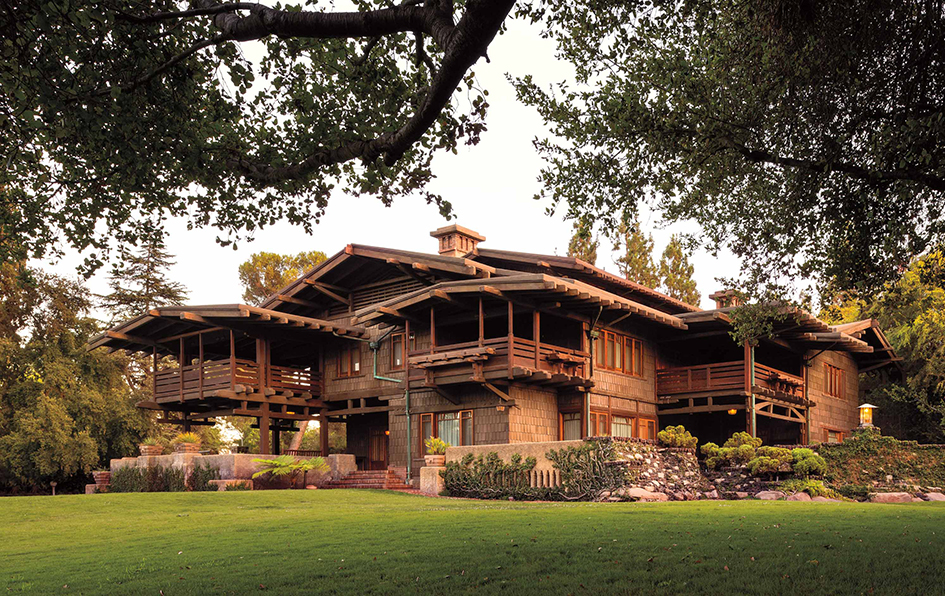
Gamble House Exterior

There is something infinitely pleasing and subtle about the works of Greene & Greene when they are at the top of their game, and the Gamble house was definitely at the top of their game. The architects decided not only the exterior feature of the building, the room layouts, and the grounds—but even the furniture in many cases. In one room, everything is made to resemble a vase on the dresser.

Although the architects had never been to the Orient, they did stop at the World’s Columbian Exposition in Chicago on their way to California, where they saw a number of examples of Japanese architecture. That glimpse was sufficient to get them thinking about how to use wood not only for weight-bearing, but also for decorative purposes.

Gamble House Sample Interior

Note the way all the features in the above room blend in with one another. The pottery, the lighting fixture, the table and chairs seem all of a piece. At one point where the servants would injure their hip by banging into a sharp counter corner, the architects made the counter trapezoidal, eliminating the sharp corner. At another point, the very short Aunt Julia Gamble had a special chair made for her to work with the fastenings on her high-button shoes. (Also note Aunt Julia’s little step stool in the above photo for her comfort.) In the boys’ bedroom, there is a low, wide drawer for storing their shoes. In the kitchen, there is a super-wide drawer for storing tablecloths without wrinkling them along the folds.

Everything is on a human scale. And strikingly beautiful.


Ten Classic British Film Comedies

George Cole as “Flash Harry” and Alastair Sim as Headmistress Millicent Fritton in The Belles of St. Trinian’s

In honour of the Royal Wedding—wait, belay that!—I would like to honour the British for what they made me do in my formative years, namely, to laugh my head off. I just watched one of Martine’s favorite films at her side, The Belles of St. Trinian’s (1954). It starred the great Alastair Sim in two roles, as the Headmistress of St. Trinian’s School for Girls Millicent Fritton and as her scapegrace horse racing tout brother Clarence. You may recall Sim as Ebenezer Scrooge in the best version of Charles Dickens’s A Christmas Carol (1951).

It suddenly hit me that I have never written about the British film comedies that help sustain me through high school and college, while I was suffering from a pituitary tumor that almost killed me in 1966. Consequently, I have put together a list of ten films that I loved and that made me laugh:

  • Passport to Pimlico (1949), directed by Henry Cornelius.
  • Kind Hearts and Coronets (1949), directed by Robert Hamer. With Alec Guinness playing seven parts.
  • Whisky Galore! (1949), directed by Alexander Mackendrick. One of the very best.
  • The Lavender Hill Mob (1951), directed by Charles Crichton. Guinness again.
  • The Importance of Being Earnest (1952), directed by Anthony Asquith. On the importance of Bunburying.
  • The Belles of St. Trinian’s (1954), directed by Frank Launder. Alastair Sim x 2.
  • Father Brown (1954), directed by Alexander Mackendrick. Guinness as Chesterton’s priest/detective.
  • Hobson’s Choice (1954), directed by David Lean. Charles Laughton and John Mills.
  • The Ladykillers (1955), directed by Alexander Mackendrick. Peter Sellers’s first film.
  • School for Scoundrels (1960), directed by Robert Hamer. Based on Stephen Potter’s books.

So you can wake up in the middle of the night at watch the pre-game show for the Royal Wedding, or you can laugh your ass off. Guess what I would recommend!


O Brave New World!

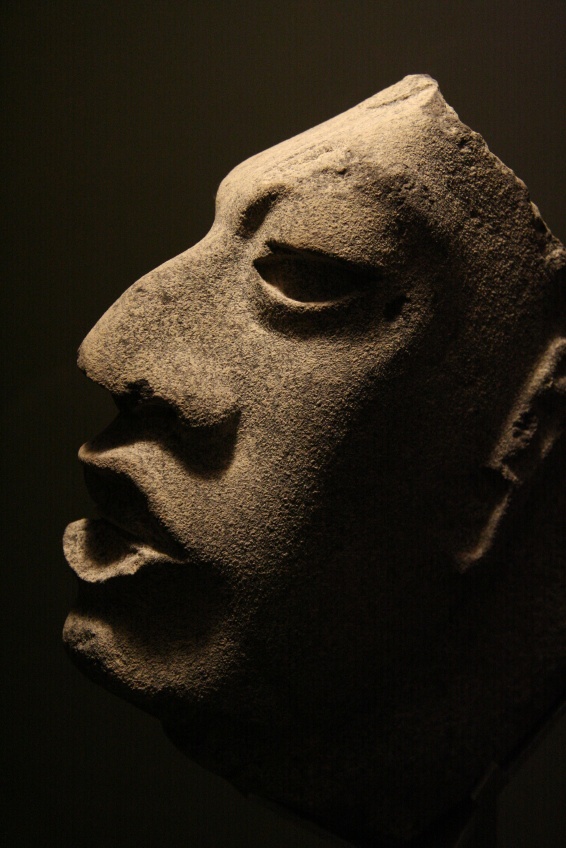
Maya Nose on Pre-Columbian Figure

The world opened up for me when I was thirty years old. It was the first time I even thought of breaking loose from my mother and father and exploring the world. For my first trip, I chose Yucatán in November 1975. And it was magical. First there was that cab ride to the Hotel Mérida past snack bars that were open to the street. It was my first experience of the tropics (other than Florida), and in the dark I saw men and women drinking beer and sodas. I was able to peer into houses and saw families watching television.

Once I checked in to my hotel, I stood at my sixth-floor window looking down onto Calle 60 and looking at passers-by walking on the sidewalk below. Suddenly one stopped and looked straight up at me. How did he know to do that? I stayed up until the wee hours of the morning, staring at an optician’s office across the way called Optica Rejón.

I was entranced by the zócalo and the 16th-century structures surrounding it. I had my boots polished every day. There was endless people-watching, all those Maya with their distinctive noses.

How many goodly creatures are there here!
How beauteous mankind is! O brave new world,
That has such people in ’t!


Around mid-afternoon, I hung out at the main entrance of the University (also on Calle 60, just a couple blocks from my hotel). So many beautiful young women that looked so different from the ones back home! Young Maya women are astonishingly good looking.

Can you wonder that, feeling the way I did about travel, that it would become a major feature of my life. Even though, in the next two years, I would travel to Europe, there was something about Latin American that lured me—and still does.

Why I’m Stuck on the Maya

Maya Girls

My first real trip outside the borders of the United States was to Yucatán in November 1975. I was so entranced with what I saw that I kept coming back to Maya Mexico for years, until 1992. During that time, I also wanted to go to Guatemala, but a civil war between the Maya and the Ladinos (Mestizos) was raging until 1996; and Guatemala was on the State Department’s “Level 4: Do Not Travel” list until just recently. Even now, the State Department as the whole country classified under a blanket “Level 3: Reconsider travel to Guatemala due to crime” warning.

Why is it that I am so fascinated by the Maya that I would risk flouting President Trumpf’s State Department?

For one thing, the Maya are incredible survivors. The Aztecs were ground down by Cortez within two years. In Peru, it took forty years before resistance was smashed by Pizarro and his successors. And the Maya? That took a full 180 years before the last Maya kingdom (at Tayasal in Guatemala) was leveled.

Today, there are 1.5 million speakers of Nahuatl, the language of the Aztecs. There are some 6 million speakers of the 26-odd Mayan languages and dialects. Of course, the Incan Quechua language has even more speakers: some 8.5 to 11 million speakers in several South American countries.

In recent years, there have been several disturbances in the Maya area:

  • In Mexico, there was a Maya war against the Ladinos in Yucatán that lasted from 1847 to 1901 and a Zapatista revolt in Chiapas that flared briefly in 1994.
  • In Guatemala, there was a violent civil war against the Ladinos from 1960 to 1996. It is estimated that tens of thousands of Maya were massacred by the army.
  • In El Salvador, there was a civil war from 1979 to 1981. (Only some of the indigenous peoples involved in that one were Maya.)

The Maya are still there, occupying large parts of Mexico (Yucatán, Chiapas, Tabasco, Campeche, and Quintana Roo); Belize; Guatemala; and parts of Honduras and El Salvador. It is no small achievement for them to have survived so much persecution for upwards of 500 years.

That is what interests me.


Quiriguá

Zoomorph at Quiriguá

Now that Martine has returned for the time being, I can turn my attention to other things, like that dream of Guatemala that is taking shape in my mind. One of the Maya ruins that I hope to visit is Quiriguá, which is nestled close to the border with Honduras. As the crow flies, it is not far from the even more spectacular ruins at Copán just over the line into Honduras.

In the 1840s, John Lloyd Stephens and his artist Frederick Catherwood paid visits to Copán, Quiriguá, and Palenque. Below is one of the many stelae at Quiriguá as drawn by Catherwood:

Stela at Quiriguá

Quiriguá is actually a small ruin that can be seen within a couple of hours. The trick is getting there in the first place. As I have mentioned in an earlier post, I have been informed that some shuttles that go to Copán also pay a visit to Quiriguá as part of the return trip to Guatemala City or Antigua. But as I look at the map of Guatemala, I see that the road network is nowhere near the routing of flying crows. It would probably add a couple of hours to the return trip. So I remain skeptical until I can get some information from someone on the ground in Guatemala.

Return #4

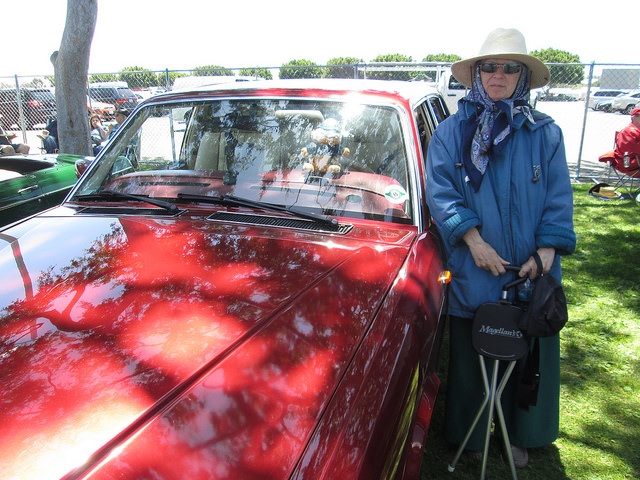
Martine at 2017 Scottish Festival

I am not used to being on an emotional roller coaster … but perhaps I’d better get used to it. As I was drinking a cup of hot green tea to soothe my laryngitis, I got a collect call from Martine to pick her up at the Greyhound Bus Station.

Within minutes, I was on the road; and Martine was there waiting for me. This was another escape attempt that didn’t quite pan out. It was to some unspecified location in the high desert. That was odd because my little girl hates the desert, ever since she spent two years at Twentynine Palms working at the Naval Hospital at the military base there. But, as usual, she didn’t want to talk about it. I think she is afraid that I’ll track her down and collaborate with police and social workers to have her returned to me. Actually, I wouldn’t do that, as it would erode her trust in me.

I suspect that she things that’s what I did during her Escape #2 to Truckee, California. Actually, it was the authorities in Truckee who contacted me and asked me to send them a Greyhound ticket via e-mail. They were the ones who took the initiative.

Will there be another attempt to leave L.A.? I suspect there will, even though she told me tonight that God apparently is putting up roadblocks in her attempts to get away from L.A.

Sigh!


Josef Von Sternberg Part 2

Marlene Dietrich and Gary Cooper in Morocco (1930)

As promised in my previous post, here is a list of my favorite Josef Von Sternberg, starting with the great films with Marlene Dietrich (all of which are great) and continuing with his other projects.

Films with Marlene Dietrich

  • The Blue Angel, or Der Blaue Engel in Germany (1930)
  • Morocco (1930), with the French Foreign Legion in North Africa
  • Dishonored (1931), about Mata Hari
  • Shanghai Express (1932), a train ride through China during a civil war
  • Blonde Venus (1932), with Dietrich’s famous “Hot Voodoo” dance number
  • The Scarlet Empress (1934), my favorite, with Dietrich as Catherine the Great of Russia
  • The Devil Is a Woman (1935), Dietrich as a Spanish femme fatale a la Carmen

Silent Films

  • The Salvation Hunters (1924), a great beginning to Von Sternberg’s career
  • Underworld (1927), a superb gangster film
  • The Last Command (1928), Emil Jannings as a Czarist general who becomes an actor in Hollywood

Other Films

  • The Shanghai Gesture (1941), with Gene Tierney in a Chinese gambling casino
  • Duel in the Sun (1946), signed by King Vidor, co-directed with Von Sternberg

In closing, I want to recall a run-in I had at Dartmouth with an Anti-Semite who insisted that Von Sternberg was born in Brooklyn and that his real name was Jo Stern. As if that meant anything! It turns out that the “Von” in his name is a fantasy, but he was born in Europe and came to America as a child.

Josef Von Sternberg

German Poster for Der Blaue Engel (1930)

Now that Martine is out of my life for the time being, I am watching more television—though in an organized way. Last night, there was a Josef Von Sternberg festival on Turner Classic Movies (TCM). I had seen most of the films before, but wanted to see a couple of them again. First was The Blue Angel (Der Blaue Engel in German, 1930), which Von Sternberg filmed in Germany, working for the first time with Marlene Dietrich.  Next came The Shanghai Express (1932), set in China on a train ride through a civil war setting.

I visited the director at his house on Lindbrook in Westwood near the UCLA campus. At the time (the late 1960s), it was difficult to see old films unless they were screened on a 16mm or 35mm projector. I was looking to do my master’s thesis on Sternberg and hoped that somehow he had access to prints of his films that I could arrange to have screened for me. Although he did not, I was impressed by his graciousness. He had been considered to be one of Hollywood’s ogres, but he made some of the most beautiful films I had ever seen. Even his first picture, The Salvation Hunters (1924), was incredible, all the way through to his last The Saga of Anatahan (1952).

Along the way, he wrote an interesting autobiography called Fun in a Chinese Laundry (1965) and a novel called Daughters of Vienna (1922), which I hunted down and read through an inter-library loan.

I even knew the director’s son, Nicholas, whom I met frequently at UCLA at film screenings. Today he is a cinematographer in his own right.

Josef Von Sternberg

Josef Von Sternberg died in 1969, leaving behind a body of work that will never be equaled, especially as he filmed almost exclusively in black and white. There was a crowded, almost claustrophobic quality to his work. In Morocco (1930), he has a company of French Foreign Legionnaires walking in chiaroscuro along a narrow street under a series of crisscrossed laths. The train in Shanghai Express leaves Peiping (now Beijing) along a narrow street crowded with Chinese and their animals. He was a master of the cucoloris, a kind of cut-out for casting interesting shadows.

My friend Peter, who is himself a cinematographer, tells me that a film director had to see how the shot was lit at every stage of the actors’ movements or the camera’s. No one was better at this than Von Sternberg.

I will follow up this post with a list of my favorite Von Sternberg films in a day or two.


Escape from Los Angeles

Martine Has Left Me Today for the Fourth Time

This morning, I drove Martine to the Greyhound Bus Station downtown for her fourth escape from me and Los Angeles. She has continued to be depressed and to spend the better part of the day in bed. Sometimes she would watch television (usually old classics from the 1950s and 1960s), and sometimes she would re-read the Book of Psalms from my old Good News Bible. There has never been an angry word between us, though at times she has picked on me for complaints of the “Who moved my cheese?” variety.

Some of my friends think I am well rid of her. I do not feel that way because I worry about her. She has a pattern of making bad decisions, such as the one that made her ineligible for Medicare. She doesn’t have much money left, and she has no one to go to. Her only family is a sick half-brother in New York and a sick half-sister in France. I’m pretty much all there is of her family, though we are not married. I would gladly have married her, but she decided she wanted to make all her own decisions.

I hope Martine comes back. The last time she escaped, she came back sick. I hope she comes back because she remembers that, yes, I love her, and that without me life is too lonely and too miserable. All my friends think she will return. I am not quite so sure.


My Flirtation with India

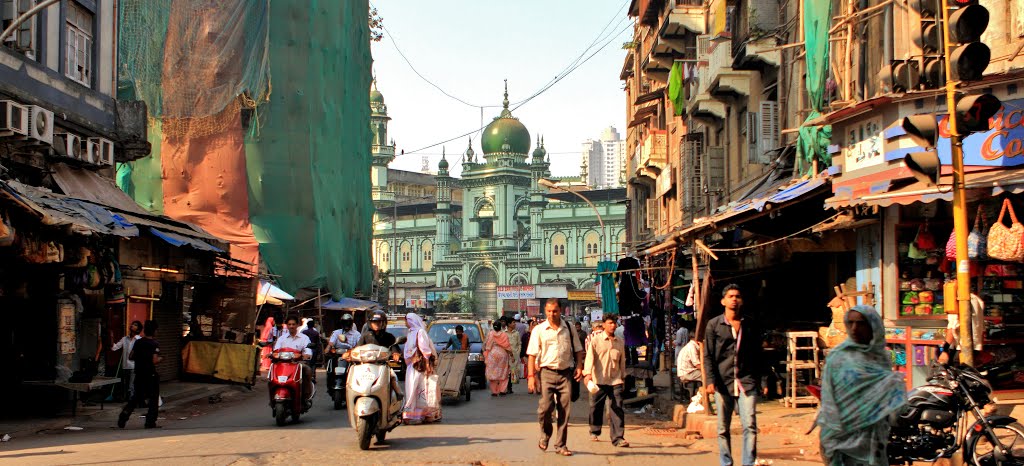
Mumbai Street Scene

For years, I have been fascinated with India in a way I have not been with any other Asian locale. Is it possible that I would ever go there on a vacation? There are a number of factors pro and con:

PRO

  • I have a good friend—Mohan—in Chennai (formerly known as Madras).
  • I love reading about India. One of my favorite authors is the Tamil R. K. Narayan who wrotre a series of novels about a mythical town called Malgudi. Also, I have just finished Paul Theroux’s The Elephanta Suite, which I enjoyed.
  • English would probably take me further in India than in any other Asian destination.
  • Indian curries, especially vegetarian curries, are one of my favorite cuisines.

CON

  • What frightens me about India is the same thing I hate in Los Angeles: Unrelenting heat. I would have to time my visit carefully so I’m not stuck there just before the monsoons arrive.
  • I would probably not enjoy spending much time in India’s large, crowded cities, such as Mumbai, Kolkata, or Chennai.
  • One of my friends from Dartmouth College, also, like me, from Cleveland, died in India a few years after graduation of some gastric disturbance. Because of the state of my health, I would be afraid of contracting food poisoning.

There you have it: A few random observations of what goes through my mind when I consider going to India.