Simulacrum

IRL Streamer Ice Poseidon, Alias Paul Denino

As I predicted, the heat wave I described a couple of days ago has persisted, despite the lies and blandishments of several so-called weathermen. To escape the heat, I spent time reading and lunching at the Westfield Mall in Culver City, followed by movies at the Cinemark at the nearby Howard Hughes Center. Yesterday, it was Whitney, which I described in yesterday’s post. Today, I saw Ant-Man and the Wasp. (Meh!)

Being in the midst of so many people, I was appalled to see that people escaping the heat at the air-conditioned mall depended on their smart phones for entertainment. I was probably the only one of hundreds of people at the mall who had a book. Two or three old men were reading newspapers. And hoards of others were playing games on their smartphones, checking their social media, and other utterly useless tasks. Children were using electronic devices that emitted the usual treacly bibblety-bobbledy-boop sounds of programs oriented for the young.

In addition to my book, I read an article in the July 9 and 16 issue of The New Yorker Magazine entitled “No More Secrets” by Adrian Chen. It was about an IRL (“In Real Life”) streamer named Paul Denino, who styles himself as Ice Poseidon. Imagine living your life hooked up to video equipment that captures your life from minute to minute. On YouTube, I saw a number of video clips from Ice Poseidon’s oeuvre and was thrown for a loss. Ice Poseidon’s life was not really life, but a series of situations in which the Streamer (or Screamer?) and his retinue got into various boring scrapes and liberally dropped f-bombs along the way. If that were my life, I would set about ending it in some dark corner far from the nearest video camera.

All these video devices were intended to enhance life. Instead, they have created a kind of empty simulacrum of life. I keep thinking of the little boy I saw yesterday staring into space while the video game on his tablet kept emitting nonsensical noises to which no one paid any heed.

A Rare Beauty

Whitney Houston

The 1980s were a strange decade for me. Befoe I met Martine, I was in love with two gorgeous black women—though I was firmly ensconced in the “friend zone” with both of them. There was Melinda, with whom I worked, and Janice, a young physician. And my favorite singer was the lovely Whitney Houston, whose 1985 album, “Whitney Houston” contained some of the most beautiful singing I had ever heard. That plus the fact that she looked like an angel come down to earth made her my favorite listening choice, to the annoyance of some of my friends. The first tape I bought for my new 1985 Mitsubishi Montero was her first album.

Today I saw Kevin Macdonald’s documentary entitled Whitney. The singer’s life was neatly divided into two parts: the spectacular rise and the equally spectacular fall. As beautiful and talented as she was, Whitney was sexually abused as a child—by one of her female relatives—and then she fell in love with and married a debauched ogre, alias singer/dancer Bobby Brown, who help turn her hopes and dreams into mud.

When I look back at the early eighties, I think of the twin scourges of AIDS and cocaine. Cocaine was everywhere. If one was a celebrity, one had no problem getting as much nose powder as one wanted. It is pathetic to see Whitney toward the end of her life, aware that somewhere she had taken a wrong turning, but still faithful to many of the people who were living off her fame and intent on killing the goose that laid their golden eggs.

In the Blast Furnace

I Am Dreading the Next Few Days

As a giant high pressure area is setting up over the Southwest, we are expecting two days of high nineties (36-37º Celsius). Although the weather forecasts show a ten degree drop for Sunday, I am predicting the heat will probably persist, as it is wont to do. Santa Ana weather conditions almost always last longer than predicted, sometimes even for weeks.

Oh, but then there’s always the ocean, no? Not in this case. The winds blow the heat and smog westward toward the ocean. Sometimes we can see the smog hovering a few miles off the shore, waiting to be blown back over Southern California. Not only is it ungodly hot at the beach, but one’s feet burn in the superheated sand. Not a pleasant experience?

What to do? I will try to find a movie I can see during the afternoon. My comfort will depend on the theater’s air-conditioning system remaining in good working order. As for our apartment, we have no air conditioning. If there is a power outage (and our little area is subject to at least one or two a year), I will just have to go to bed early.

There are two bad aspects to living in Southern California: heat waves and earthquakes.

Better Than Ever

Monaco Stamp Commemorating Honoré de Balzac

It has been over six years since I opened a book by one of my favorite authors, Honoré de Balzac (1799-1850). Sometimes when I revisit a favorite author after a long absence, I find that my ardor has cooled somewhat. Not so with Balzac!

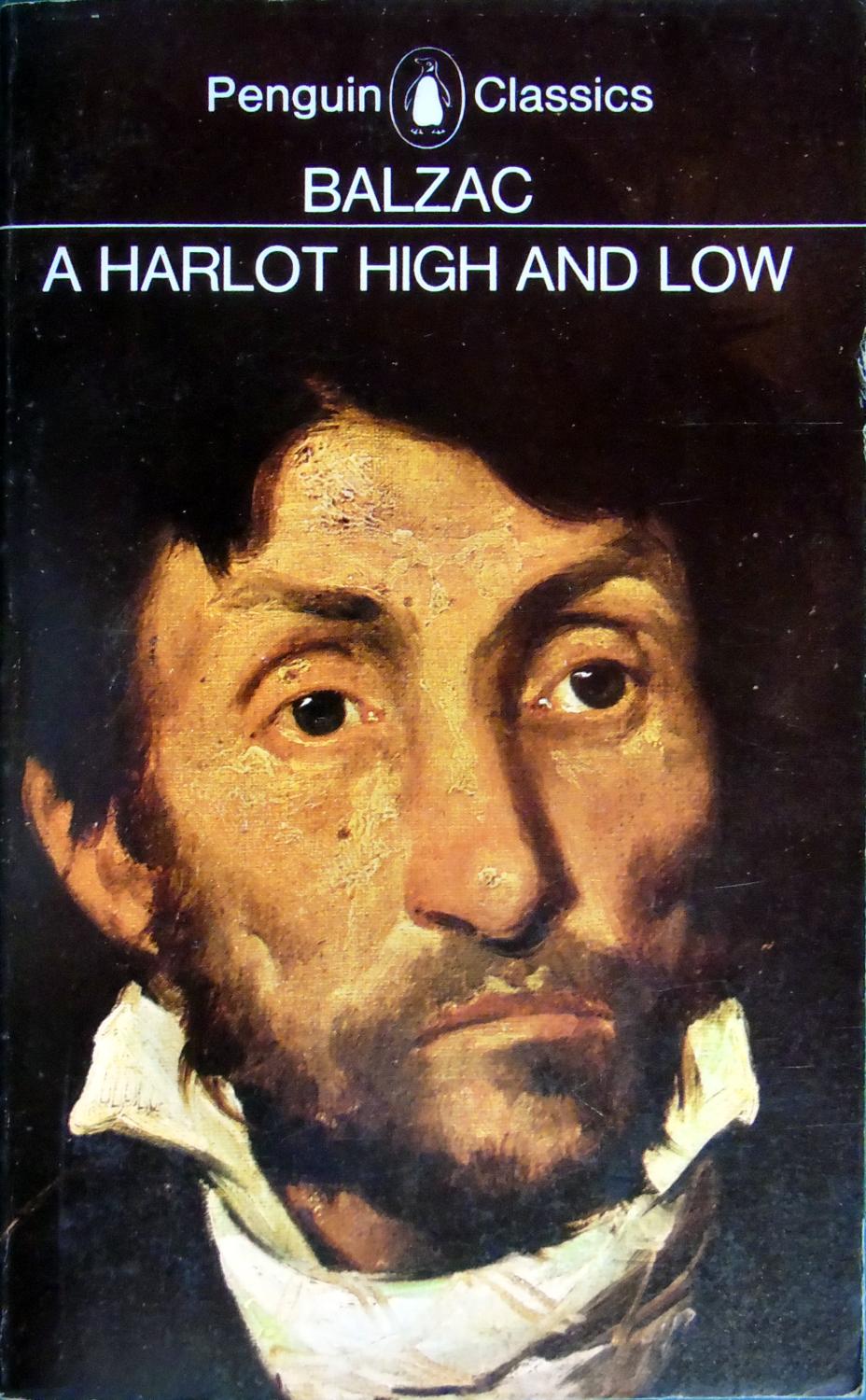
In the Yahoo French Literature Reading Group, I recommended that we select A Harlot High and Low, a.k.a. Splendeurs et misères des courtisanes (1838-1847) for our July read. It didn’t take too many pages before I was as entranced as ever. It was almost half a century ago that I first undertook to read Père Goriot (1835), still my favorite among his works. Interestingly, two of the characters from the earlier book—Eugène de Rastignac and Vautrin—appear in the work I am re-reading.

The period of the author’s life somehow tied together the French Revolution (1789-1799), the reign of Napoleon Bonaparte, the Bourbon Restoration, the reign of Louis-Philippe “The Citizen King,” and the Revolutions of 1848. No other writer on the Continent was able to bridge these critical periods as Balzac did with his Comédie Humaine series of stories and novels, although Charles Dickens at times came close.

Balzac was the first writer to share characters between stories. As one reads his works, one gains a deeper understanding not only of the characters, but the times and milieus in which they lived.

The Work I’m Re-Reading Now

As I re-read A Harlot High and Low, I see myself returning to my favorites among his works:

  • The Wild Ass’s Skin (Le Peau de Chagrin), 1831
  • Eugénie Grandet, 1833
  • Old Goriot (Le Père Goriot), 1835—probably the best place to start if you want to read Balzac
  • César Birotteau, 1837
  • Lost Illusions (Illusions Perdues),  1837-1842
  • Cousin Bette (La Cousine Bette), 1846
  • Cousin Pons (Le Cousin Pons), 1847
  • A Harlot High and Low (Splendeurs et Misères des Courtisanes), 1838-1847

Over the years, I have actually read all 50-odd novels and all 20-odd short stories that have been translated into English, some more than once. And it appears that I’m not finished yet.


The Scents of Los Angeles

Night-Blooming Jasmine

The two most noticeable floral scents of Los Angeles both become apparent in May or June and last for several months. The more pleasant of the two is night-blooming jasmine, as most Angelenos refer to it. I love taking walks in the spring and encountering a display of jasmine blossoms. The other scent does not smell as good, but is more beautiful. I refer to the jacaranda tree, which originated in Paraguay and Argentina and eventually became a denizen of Southern California. It purple flowers are beautiful, but there is a slight acridness to the smell of the blossoms.

Jacaranda Tree in Santa Monica

Note that, in the above photo, there is a layer of fallen jacaranda blossoms under the tree. If one parks one’s car under a jacaranda, the blossoms seem to stick and, well, stink a bit.

Perhaps my least favorite smell in Los Angeles is not floral. In the fall, when the Santa Ana Winds blow, parts of the city, especially the hills, catch fire. The air is filled with tons of ash that tends to cause asthmatic attacks. Fortunately, I have not experienced that for quite a few years—and my fingers are crossed.

An Automobile Museum Right By LAX

The Automobile Driving Museum in El Segundo

There’s an old Hungarian expression which, roughly translated into English, states “It was almost poking your eyes out!” This was the case with the Automobile Driving Museum (ADM), which is tucked among warehouses and hotels within hailing distance of the Los Angeles Airport (LAX). Although I’ve been driving distances to see the Petersen and Nethercutt Automotive Museums, and even as far as Oxnard to see the Mullin and Murphy Automotive Museums, there was an equally interesting auto museum right in the neighborhood.

There are several unique features to the ADM. On Sundays, they give free drives in classic cars for a few blocks around the museum. Martine and I took a ride in a 1957 Ford Fairlane 500 Skyliner Convertible. Within the museum is a cute little ice cream parlor which also sells sodas and snacks. Finally, most of the cars on display allow you to not only touch them, but get in and snuggle behind the wheel as if you were driving them. The picture below with Martine behind the wheel of a 1949 Crosley Station Wagon:

Martine Behind the Wheel

Perhaps most important of all, the ADM provides lavish documentation about the cars on display as well as wall and free-standing displays of information about how the American auto industry developed from its earliest days. There are approximately 130 cars on display including some unique items (which they don’t allow you to touch) in a glassed-in auto “showroom” adjoining the museum.

It is appropriate that Southern California is so richly endowed with automotive museums seeing as it was a city made possible by the automobile, with its vast spaces and mountains. All of these automotive museums are worth visiting—much more so than many so-called tourist attractions, such as Hollywood Boulevard.

A Section of the Museum Display Space


A Vanished Arcadia

Historical site of Encarnacion and Jesuit ruins in Paraguay, South America

The following is a lightly edited repeat of a post I made back in March 2013.

It is interesting to me that, for the first time in its history, the papacy is in the hands of a Jesuit, from South America no less. In southeastern Paraguay and in the Argentinean state of Misiones, there are numerous ruins attesting to the 17th and 18th century Jesuit missions—missions that were so powerful that they were, in effect, the government of Paraguay. If you ever saw Roland Joffe’s 1986 movie, The Mission, with Robert DeNiro, Liam Neeson, and Jeremy Irons, you have some idea of what this Jesuit government was like.

You can find out even more by reading the forgotten classic history by R. B. Cunninghame Graham entitled A Vanished Arcadia: Being Some Account of the Jesuits in Paraguay 1607 to 1767.

It even finds its way into Voltaire’s Candide, but its author being such an anticlerical cuss, he has his hero kill the Jesuit commandant of one of the missions. Yet he writes in Histoire Politique et Philosophique des Indes:

When in 1768 the missions of Paraguay left the hands of the Jesuits, they had arrived at perhaps the highest degree of civilization to which it is possible to conduct a young people, and certainly at a far superior state than that which existed in the rest of the new hemisphere. The laws were respected there, morals were pure, a happy brotherhood united every heart, all the useful arts were in a flourishing state, and even some of the more agreeable sciences: plenty was universal.

Poster for Roland Joffe’s Film The Mission (1986)

I have long thought that, if my thoughts had ever taken a turn toward the Catholic priesthood, I would have become a Jesuit. My teachers at St. Peter Chanel in Bedford, Ohio, wanted me to become one of them, a Marist. But, in the end, I became neither.

So now Pope Francis is a Jesuit from Argentina. He, I am sure, is quite aware of the history of the Jesuits in the southern cone of South America. It would be nice if he did for the Catholic Church what the Jesuits did for the Guarani in Paraguay and Argentina. Benedict XVI was a good man, but not strong enough for the task of making his faith relevant to a world that is falling away from the Church.

Hard-Boiled

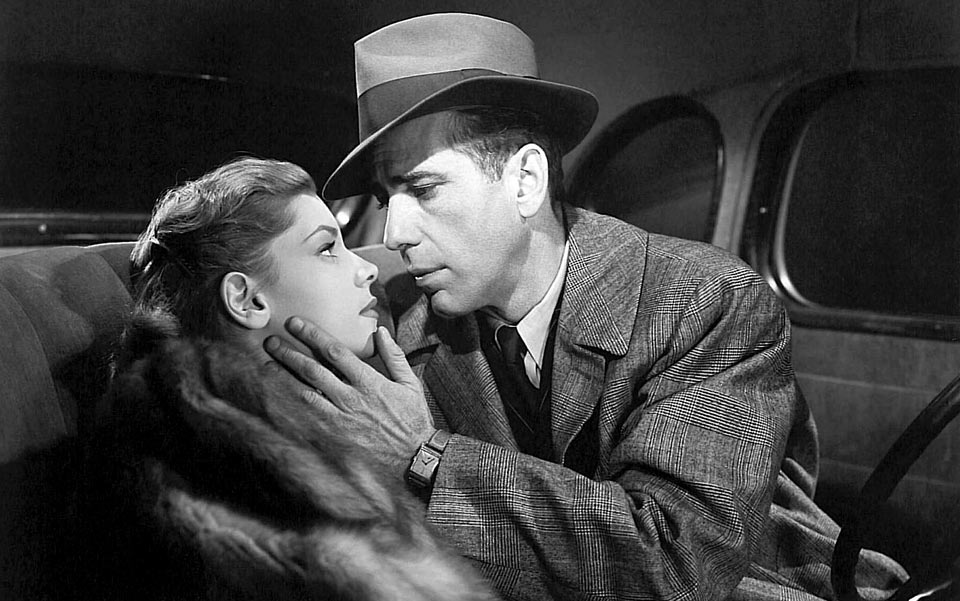
Lauren Bacall and Humphrey Bogart in Howard Hawks’s Masterpiece The Big Sleep (1946)

I’ve written before about American film noir, which includes many of my favorite films, such as The Big Sleep, High Sierra (1941), Double Indemnity (1944), and The Big Heat (1953)—not to mention several hundred other likely prospects.

Today I would like to say a few words about the literary genre that spawned these films. Although it was not until 1945 that the French publishing house Gallimard introduced its Serie Noir editions that gave birth the the genre’s name, noir novels had been written for years. There was even an early noir film by D. W. Griffith entitled The Musketeers of Pig Alley (1913).

What is it about the United States that produced this genre of hard-boiled urban crime fiction? It probably has something to do with our fascination with hard-boiled dicks, cigarettes, hard-luck losers, cheap booze, hot floozies, and guns. Here are just a few mileposts in the genre, alphabetically ordered:

  • W. R. Burnett: High Sierra (1941)
  • James M. Cain: The Postman Always Rings Twice (1934)
  • Raymond Chandler: The Long Goodbye (1953), probably my favorite of all the noir writers.
  • James Ellroy: L.A. Confidential (1990)
  • Kenneth Fearing: The Big Clock (1946)
  • David Goodis: The Moon in the Gutter (1953), which I’m reading now.
  • William Lindsay Gresham: Nightmare Alley (1946)
  • Dashiell Hammett: The Maltese Falcon (1930)
  • Patricia Highsmith: Strangers on a Train (1950)
  • Chester Himes: The Real Cool Killers (1959)
  • Dorothy B. Hughes: In a Lonely Place (1947)
  • Jim Thompson: The Killer Inside Me (1952)
  • Cornell Woolrich: Night Has a Thousand Eyes (1945)

I think I’ll stop at thirteen writers—a most appropriate number for this list. Not coincidentally, all have been made into classic films, both in the U.S. and France. Without straining my mind too much, I could probably double the size of the list. What’s interesting is that this list includes women (Highsmith and Hughes) and one African-American (Himes).

While none of the above names fit in with Beckett, Joyce, Faulkner, and the other literary heavyweights of the last hundred years, I would not be surprised if their works could be found on their night-stands.

Serendipity: The Acorn Woodpecker

Sometimes There Just Doesn’t Seem To Be Any Rhyme or Reason …

I have been reading Ursula K. Le Guin’s collection of stories and poems entitled Buffalo Gals and Other Animal Presences (1990) with the usual rapture that goes with reading her work. The following is from an introduction to a group of “Seven Bird and Beast Poems” followed by the relevant bird poem. Enjoy!

The first [poem] is a joke about one of my favorite kinds of bird, the acorn woodpecker (Melanerpes formicivorus in Latin, boso in Kesh). They are handsome little woodpeckers, still common in Northern California, splendidly marked, with a red cap, and a white circle around the eye giving them a clown’s mad stare. They talk all the time—the loud yacka-yacka-yacka call, and all kinds of mutters, whirs, purrs, comments, criticisms, and gossip going on constantly among the foraging or housekeeping group. They are familial or tribal. Cousins and aunts help a mated pair feed and bring up the babies. Why they make holes and drop acorns into them when they can’t get the acorns back out of the holes is still a question (to ornithologists—not to acorn woodpeckers). When we removed the wasp- and woodpecker-riddled outer wall of an old California farmhouse last year, about a ton of acorns fell out, all worm-hollowed husks; they had never been accessible to the generations of Bosos who had been diligently dropping them since 1870 or so. But in the walls of the barn are neat rows of little holes, each one with a long Valley Oak acorn stuck in, a perfect fit, almost like rivets in sheet iron. These, presumably, are winter supply.On the other hand, they might be a woodpecker art form. Another funny thing they do is in spring, very early in the morning, when a male wants to assert the tribal territory and/or impress the hell out of some redhead. He finds a tree that makes a really loud sound, and drums on it. The loudest tree these days—a fine example of the interfacing of human and woodpecker cultures—is a metal chimney sticking up from a farmhouse roof. A woodpecker doing the kettledrum reveille on the stovepipe is a really good way to start the day at attention.

What Is Going On in the Oaks Around the Barn

The Acorn Woodpeckers
are constructing an Implacable
Pecking Machine to attack oaks
and whack holes to stack acorns in.

They have not perfected
it yet. They keep cranking
it up ratchet by ratchet
by ratchet each morning
till a Bluejay yells, “SCRAP!”
and it all collapses
into black-and-white flaps and flutters
and redheads muttering curses
in the big, protecting branches.

God, how I miss Ursula and her keen insights!


The Allergy Sufferer

Yup, That’s Me, All Right!

I was first made conscious of it in high school. I sneezed a lot, and my scalp was full of flakes. My doctor concluded that I had allergies. Consequently, I was sent to an allergist around Cleveland’s University Circle. He produced a rectangular network of scratches on my arm, each one representing a known allergen. The upshot: I was allergic to cats (that one I already knew), tomatoes, and oats. I did not believe in those last two.

Nevertheless, I was in the doctor’s office every Saturday morning for the next year or so getting a shot to fight my allergies. The results were imperceptible: Every time we visited my uncle’s house, my eyes watered, I sneezed, and my face was essentially an ugly red splotch. My parents rightly decided that this therapy was taking me nowhere.

Then, when I came to Los Angeles, I discovered I had asthma. I suspect that was the result of sleeping on the floor with all the dust mites and other nasty biota. I had a bed, but I liked the idea of sleeping on a firm surface. I still do, but I sleep in bed on an extra-firm mattress instead.

This spring has been a bad time for my allergies. It started with two months of blepharitis, an annoying allergy to the dandruff in my eyelashes?! Then there was the inevitable nose-blowing and lava-flows of thin mucus. My super-power in this time of year? I become Mucus Man. I slime all evil-doers.

To top it all off, I occasionally get a light spell of asthmatic wheezing. Yuck!