Escape from Los Angeles

Martine Has Left Me Today for the Fourth Time

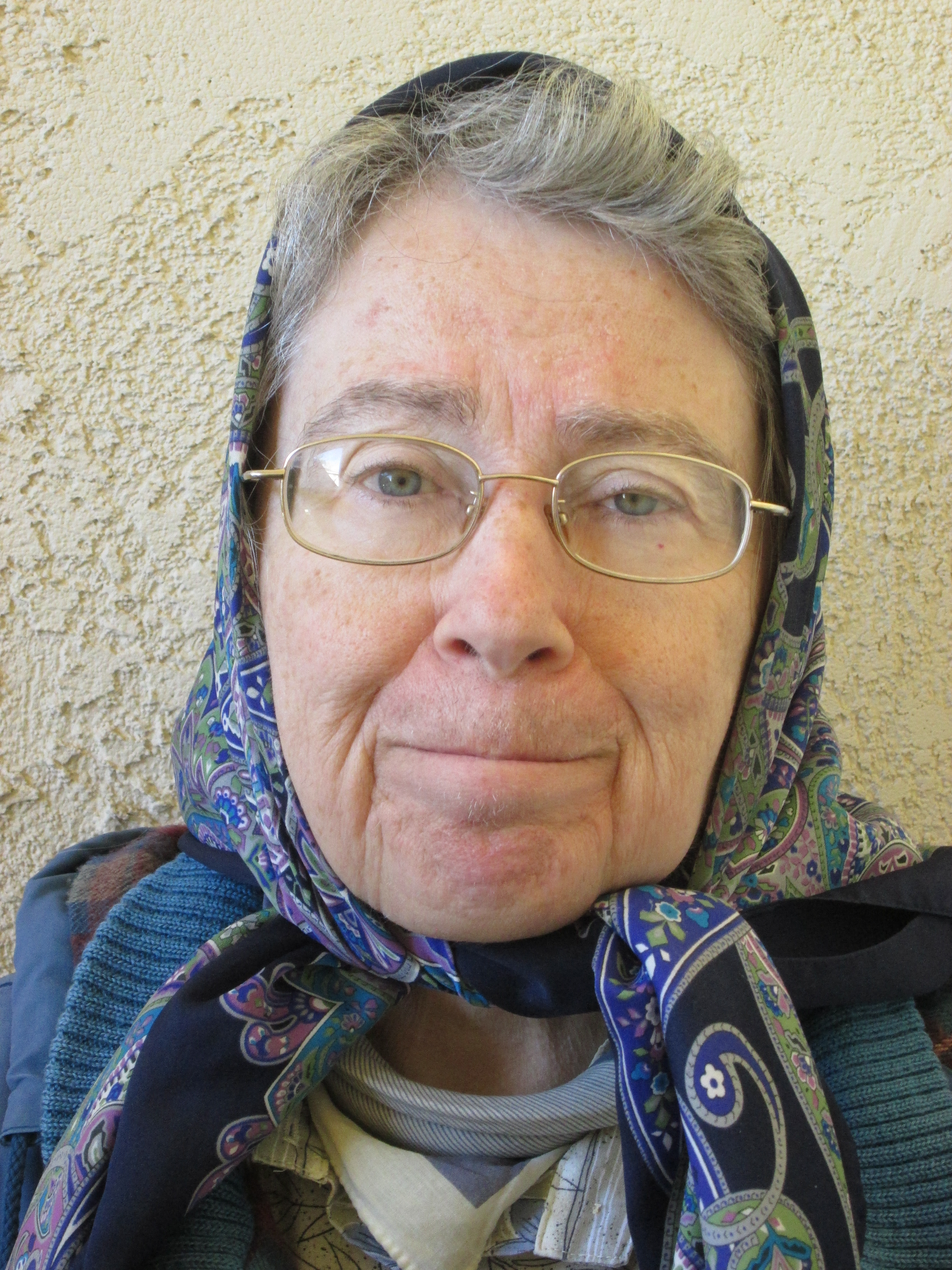
This morning, I drove Martine to the Greyhound Bus Station downtown for her fourth escape from me and Los Angeles. She has continued to be depressed and to spend the better part of the day in bed. Sometimes she would watch television (usually old classics from the 1950s and 1960s), and sometimes she would re-read the Book of Psalms from my old Good News Bible. There has never been an angry word between us, though at times she has picked on me for complaints of the “Who moved my cheese?” variety.

Some of my friends think I am well rid of her. I do not feel that way because I worry about her. She has a pattern of making bad decisions, such as the one that made her ineligible for Medicare. She doesn’t have much money left, and she has no one to go to. Her only family is a sick half-brother in New York and a sick half-sister in France. I’m pretty much all there is of her family, though we are not married. I would gladly have married her, but she decided she wanted to make all her own decisions.

I hope Martine comes back. The last time she escaped, she came back sick. I hope she comes back because she remembers that, yes, I love her, and that without me life is too lonely and too miserable. All my friends think she will return. I am not quite so sure.


My Flirtation with India

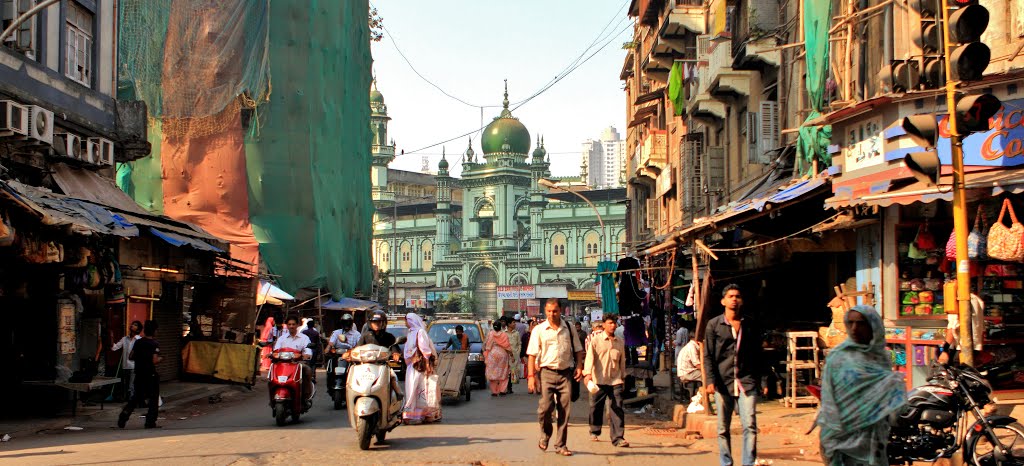
Mumbai Street Scene

For years, I have been fascinated with India in a way I have not been with any other Asian locale. Is it possible that I would ever go there on a vacation? There are a number of factors pro and con:

PRO

  • I have a good friend—Mohan—in Chennai (formerly known as Madras).
  • I love reading about India. One of my favorite authors is the Tamil R. K. Narayan who wrotre a series of novels about a mythical town called Malgudi. Also, I have just finished Paul Theroux’s The Elephanta Suite, which I enjoyed.
  • English would probably take me further in India than in any other Asian destination.
  • Indian curries, especially vegetarian curries, are one of my favorite cuisines.

CON

  • What frightens me about India is the same thing I hate in Los Angeles: Unrelenting heat. I would have to time my visit carefully so I’m not stuck there just before the monsoons arrive.
  • I would probably not enjoy spending much time in India’s large, crowded cities, such as Mumbai, Kolkata, or Chennai.
  • One of my friends from Dartmouth College, also, like me, from Cleveland, died in India a few years after graduation of some gastric disturbance. Because of the state of my health, I would be afraid of contracting food poisoning.

There you have it: A few random observations of what goes through my mind when I consider going to India.

Los Angeles the Hard Way

An Old RTD Bus on Its Route

When I first came to Los Angeles late in 1966, I did not know how to drive. And now I was living in a city in which it is considered to be impossible to get anywhere on public transit. For the next nineteen years, I was to disprove that. It was then that I began to study the city’s public transportation network. At that time, there was no fast rail, no subways—only buses. I lived in or near Santa Monica, so I could take either the Santa Monica Big Blue Buses or the orange RTD buses.

Why hadn’t I learned to drive? In Cleveland, we were too poor; and besides, my father was too impatient to teach me. When he tried, every time I made a mistake, he swatted me, hard. I thought it would be better if I put it off.

And so I did. Then something else came up. One of my family’s medical curses caught up with me in my twenties: high blood pressure. For years, I was taking a medication called Catapres that gave me narcolepsy, especially when I was a passenger in a moving automobile.

Suddenly, in 1985, I was off Catapres. The narcolepsy, having left me, no longer kept me from taking driving lessons at the ripe old age of 40. So I called the Sears-Roebuck driving school, and a patient teacher by the name of Jerry Kellman taught me. I passed my driving test with flying colors. I purchased a 1985 Mitsubishi Montero with automatic transmission (most in that model line were stick shift) and hit the roads.

Although I am on my third car, a 2018 Subaru Forester, I still take the buses (and now the trains, which Los Angeles now has) from time to time to go where I want without having to pay exorbitant parking fees. My trips downtown cost me a total of $1.50 there and back, which compares well to the $20-30 parking fees in cramped lots which would lead to dents in my new car.

So now I’m ambidextrous, to to speak. I can drive or take public transportation.


The Trilogy from Hell?

Samuel Beckett (1906-1989)

I finally finished reading Samuel Beckett’s “trilogy” of novels: Molloy (1955), Malone Dies (1956), and The Unnamable (1958). The years are for the English versions written by Beckett of works originally released in French.

In recommending it to you, I am doing you a favor, or I am doing you no favors, or you are probably wondering about my sanity, which you might well do, as I do myself even on changeable days in the spring. Have I gone too far? Or have I not gone far enough?

It took me many years to read this trilogy, though I only started in 2010. (It took me eight years to read 414 pages? I must be slipping.) I owned the edition below since the 1970s at least.

The Evergreen Black Cat Edition I Read

Molloy wasn’t too bad. At times, it even resembled a novel as I knew it, or thought I knew it:

And if I failed to mention this detail in its proper place, it is because you cannot mention everything in its proper place, you must choose, between the things not worth mentioning and those even less so. For if you set out to mention everything you would never be done, and that’s what counts, to be done, to have done.

Malone Dies are the thoughts of a dying man (who must actually be pretty healthy to remember so many thousands of words in his “condition”):

For I want as little as possible of darkness in his story. A little darkness, in itself, at the time, is nothing. You think no more about it and you go on. But I know what darkness is, it accumulates, thickens, then suddenly bursts and drowns everything.

With The Unnamable, one is on altogether dicier terrain. There are paragraphs that seem to go on for a hundred pages and sentences that go on for two or three pages. Molloy and Malone had actual human existences at some point, but the unnamed character in the final novel, who may once have been called Mahood and who may once have been called The Worm, has one arm and one leg, or no arms and no legs. At one point he has a single lidless unblinking eye, and he seems to have ears and a mouth, or maybe not. There isn’t a lot to hold on to in The Unnamable. Except, of course, the language:

…I don’t feel a mouth on me, I don’t feel the jostle of words in my mouth, and when you say a poem you like, if you happen to like poetry, in the underground, or in bed, for yourself, the words are there, somewhere, without the least sound, I don’t feel that either, words falling, you don’t know where, you don’t know whence, drops of silence through the silence, I don’t feel it, I don’t feel a mouth on me, nor a head, do I feel an ear, frankly now, do I feel an ear, well frankly now I don’t, so much the worse, I don’t feel an ear either, this is awful, make an effort, I must feel something, yes, I feel something, they say I feel something, I don’t know what I feel, tell me what I feel and I’ll tell you who I am…

Now all of that is just a small part of a single sentence near the end of The Unnamable. Can you wrap your head around a hundred and twenty pages of that? I managed to and even loved it. This is a “story” in which nothing happens, in which everything ventured meets its opposite. It’s like a collision of matter with anti-matter. Boom!


Portrait of a Sucker

Scene in the Crafts Market, Otavalo, Ecuador

There is nothing quite like the crafts market of a Latin American city like Chichicastenano, Guatemala; Otavalo, Ecuador; or Cusco, Peru. One wonders down narrow ways awash with color and aglitter with native ingenuity. There are times when I felt bad for not buying far more handicrafts than I could reasonably be expected to carry—especially the textiles. What I do buy is usually small enough to fit into the single bag with which I travel.

I remember the first time I felt this way. I was in San Cristóbal de las Casas in Chiapas, Mexico. It was December 1979, and I was fascinated by the Highland Maya textiles. It was then that a little Chamula girl, no older than eight or nine, sold me a little doll in native costume that she had made herself (or so she said). As she was describing it in her Highland Mayan dialect of which I knew not a single word, and stroking it as if it were something rare and magical, my heart melted and I bought the doll. I still have it on one of my bookshelves, resting against the Latin American literature section.

At some point, I’ll take a picture of it so that you can all see what I sucker I am. I suppose it is better than being heartless.

The Truth Shall Set You Free

Note: I Said “The Truth,” NOT “The Tweet”

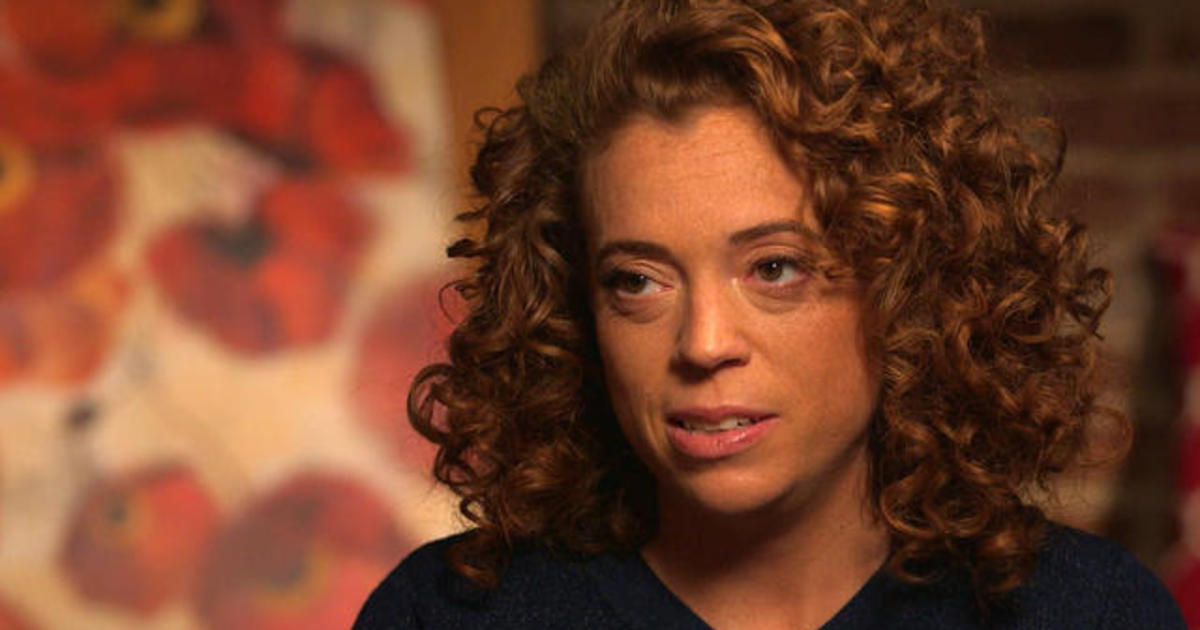
This year’s White House Correspondents’ Dinner featured a young comedienne named Michelle Wolf, of whom I had never heard before her scathing performance. I am told that many were offended. Good!

On one hand, the media has come under attack from Führer Trumpf and his minions for being “fake news.” On the other hand, they have become such a dispirited bunch that they half-heartedly waste space on presidential pronouncements that are lies and trial balloons. If the audience thought Wolf was in bad taste, they haven’t bothered to take a look in the mirror lately. For the most part, they don’t like the Current Occupant any more than I do, but many work for corporations that rather like the idea of the Trumpf presidency.

What Comes from His Midnight Lucubrations? Not News, but Monsters from the Id

Listen, the man is a poor actor. How does one send an actor to Coventry? Simple. One ignores him, or—if that is not possible—disparages him without cease.

Maybe Michelle Wolf is not the world’s funniest comedian. It’s just that she has balls that are mostly lacking in her audience. Perhaps the Capital’s press association should take this occasion to schedule her for next year, too. After all, Trumpf is already on the run. He’s afraid to attend!


An Excerpt from My Book List

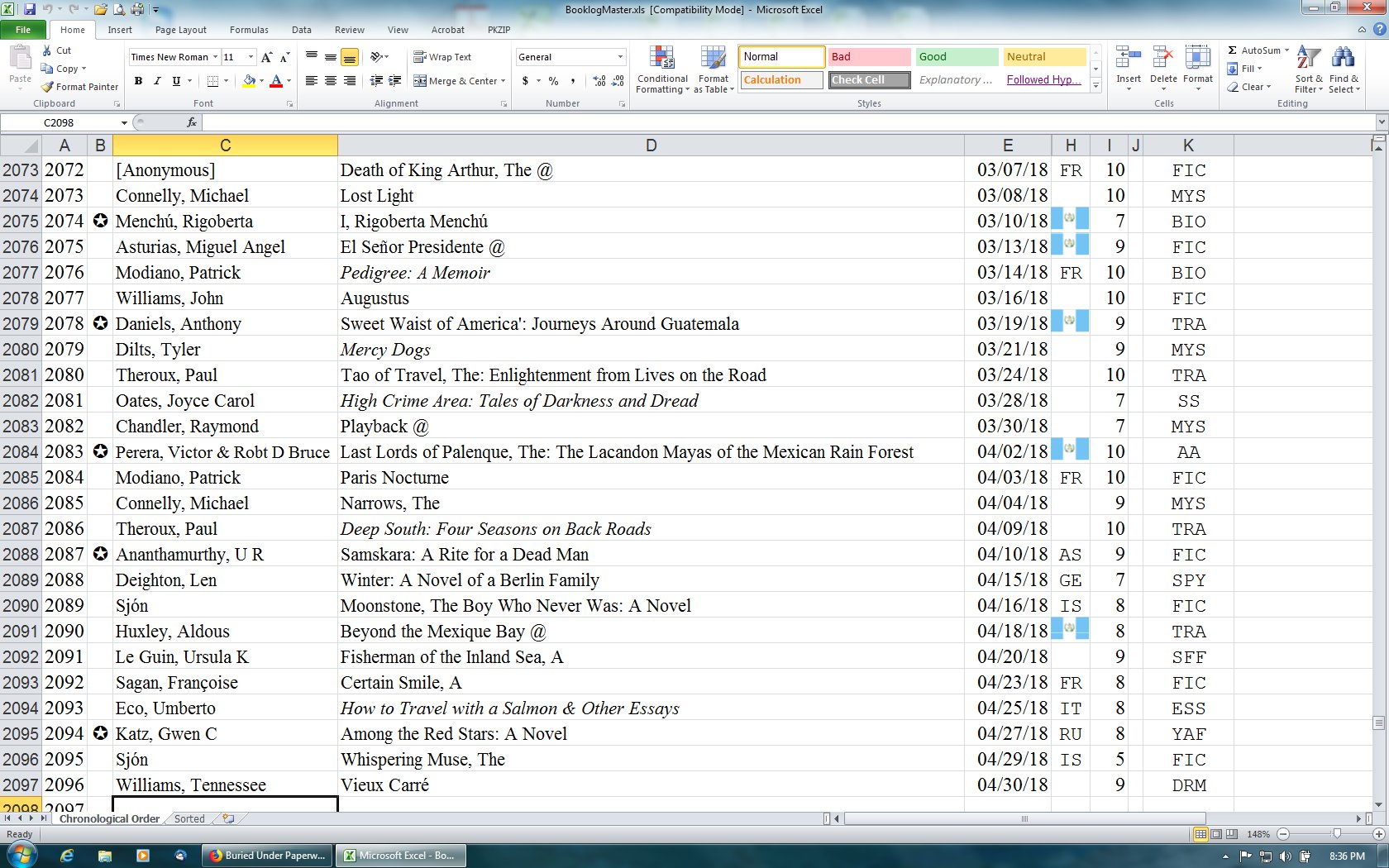
My Excel List of Books I’ve Read Since Early March

I know it’s a little fancy, but I’ve been messing with computers since 1964, when I was a junior at Dartmouth College. There are a lot of abbreviations and symbols which may not make sense, but which I will try to explain here:

  • Col B: A star indicates a new author I have never read.
  • Col D: If an entry is in Italics, I read it on my Kindle. A Commercial-At (@) indicates a re-read.
  • Col H: Either a miniature Guatemalan flag for my vacation reading, or a 2-character country abbreviation. FR=France, AS=Asian, GE=Germany, IS=Iceland, IT=Italy, RU=Russia.
  • Col I: My rating from 0 (worst) to 10 (best).
  • Col K: Genre. FIC=Fiction, MYS=Mystery,BIO=Biography, TRA=Travel, SS=Short Stories, AA=Anthropology & Archeology, SFF=Sci-Fi and Fantasy, DRM=Drama, YAF=Young Adult Fiction, and so on.

The first column is a counter indicating I have read 2,096 works since 1998, when I started. Now that I am retired (for now), I am reading more than ever.


Buried Under Paperwork

I Might Be Retired, But the Paper Still Piles Up

I give up. After I spent several hour looking for a piece of paper this morning, I have decided to order a Fujitsu Scanner so that I can keep my documents on the hard drive, the way I did at work. Bureaucracies love burying us under unnecessary documents and forms, such that the important stuff gets lost in their midst.

It is so much easier to scan the important documents and set up a directory structure by organization (Medicare, Health Insurance), year, with special filenames for the really important stuff. It was so easy at work. At home, it is near impossible.

Next: What am I going to do about shredding unwanted documents that have my Social Security Number and credit card numbers on them?


Among the Night Witches

A Young Adult Novel About Women Night Bomber Pilots for the Russians in WW2

I don’t usually read Young Adult fiction, but circumstances dictated that I read Among the Red Stars by Gwen C. Katz. First of all, my friend Bill Korn recommended it to me and suggested that I visit the author at last weekend’s Los Angeles Times Festival of Books. The which I proceeded to do last Saturday. Gwen was there in a shared booth, and I purchased a hardbound copy of her book.

Yesterday, I finally had a chance to start the book. Given Bill’s recommendation, I expected it would be interesting. It was actually written well enough to almost qualify as standard adult fiction. The book was about what the Wehrmacht troops invading Russia called the Nachthexen, the Night Witches. The term referred to young women who flew primitive old bombers at night behind enemy lines. The heroes are Valka (Valentina) and Iskra, a pilot and navigator who knew each other from childhood. Valka corresponds with Pasha, a friend from her home town who is conscripted into a rifle company.

Almost half of the novel consists of letters between Valka and Pasha, which gradually turn into love letters as Valka begins to realize how much her childhood friend means to her.

Valka (Valentina) , the Heroine

Many of the events described as well as many of the minor characters are taken from real life. Although I do not know much about the women flyers in the VVS (short for Военно-воздушные силы, or Military Air Forces), I felt that Gwen Katz did a creditable job researching her book. Added to that were interesting and diverse characters and well-plotted-out action that was exciting without being too subject to shallow wish fulfillment.  The ending, in which Valka and Iskra fly to rescue Pasha in German-held territory might be a bit much; but it is well within the standards of YA literature.

Author Gwen C. Katz at the L.A. Times Festival of Books

I am curious to see what Miss Katz will do for her next novel. And I will be looking out for it.


Serendipity: The Writer Gives an Interview

Jorge Luis Borges Giving an Interview for Spanish Television in 1967

I was just looking through V. S. Naipaul’s A Turn in the South (1989) when a passage on page 57 suddenly struck my eyes. Toward the end of his life, Jorge Luis Borges was blind. During this time, he gave many interviews which were published (I have at least a dozen of them on my shelves). My guess is that he saw the interviews as an easy replacement for having to write the stories, essays, and poems for which he was famous.

It was something I had worried about that these figures of Atlanta, because they had been so often interviewed, and though they might appear new to the out-of-towner, might in fact have been reduced to a certain number of postures and attitudes, might have become their interviews. Like certain writers—Borges, to give a famous example, who had given so many interviews to journalists and others who, in the manner of interviewers, had wanted absolutely the set interview, the one in the file, had wanted to leave out nothing that had occurred in every other interview, that he, Borges, had finally become nothing more than his interview, a few stories, a few opinions, a potted autobiography, a pocket personality. Which was the way, I had been told, the media created two or three slogans for a politician and reduced him to those easily spoken words.

Fortunately, Borges was wily enough to give a series of varied interviews which, though they had some common elements, especially in the area of “a potted autobiography,” are still capable of entrancing the reader.