
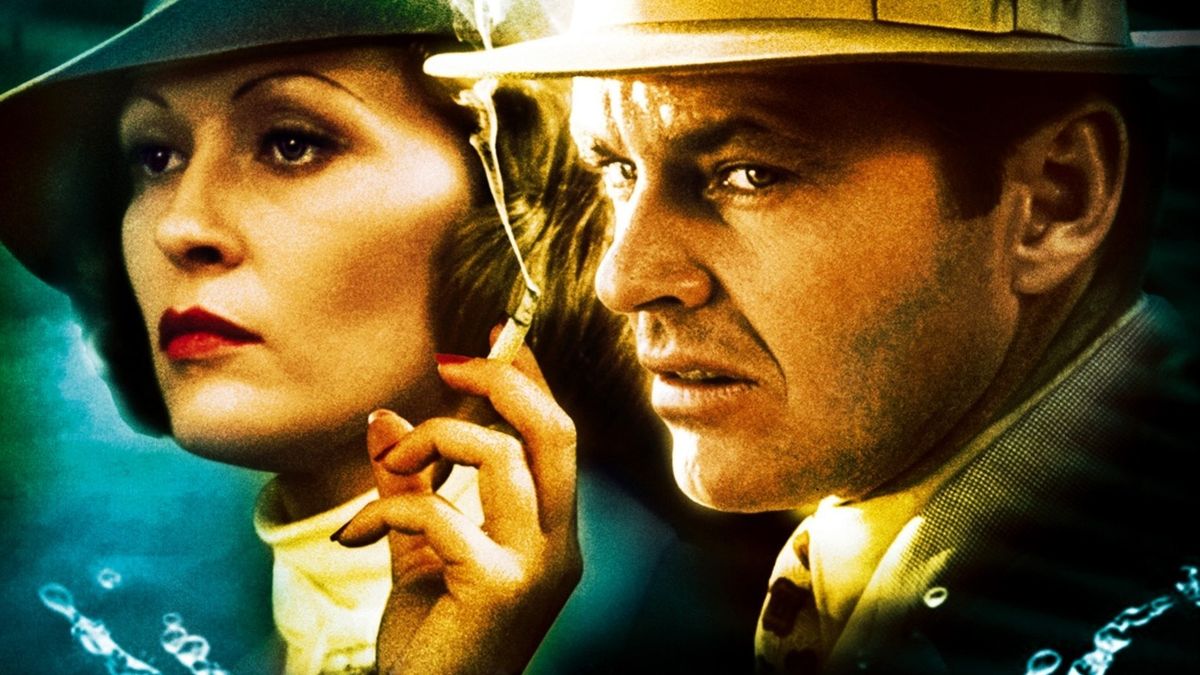
Faye Dunaway and Jack Nicholson in Chinatown
I have always loved film noir, a uniquely American genre that reveals the dark underbelly of life in the U.S. It gets particularly interesting when that revelation is from a foreign filmmaker who succeeds in seeing us for what we are. And, of course, although he is a great film artist, Polanski has been driven from our shores for statutory rape several years after his lovely pregnant wife, Sharon Tate, was mutilated and murdered by Charles Manson’s followers.
Last night I saw the unrelentingly vicious The Sweet Smell of Success (1957) with Burt Lancaster and Tony Curtis, directed by a Scotsman—Alexander Mackendrick—known mostly for such British comedies as Whisky Galore, The Ladykillers, and The Man in the White Suit. Tonight, after a long absence, I saw Chinatown (1974), one of the greatest (and last) noir masterpieces.

Director Roman Polanski in a Bit Part as a Thug
The film presents us with a conundrum about the strange murder of L.A. water commissioner Hollis Mulwray. Detective Jake Gittes (Nicholson) is hired by a woman posing as Mrs Mulwray to find the woman that her husband is seeing on the side. It turns out that the real Mrs Mulwray (Dunaway) did no such thing. But Gittes begins to uncover so many weird secrets relating to water delivery and real estate chicanery that the ultimate secret finally starts to make itself known. Film director John Huston as multimillionaire Noah Cross plays a pivotal role in pushing the film to its shocking conclusion.
We do not usually encounter a hero who is forced to submit to raw, naked power the way that Jake Gittes is forced to; and that is a more European contribution from the film’s Polish director. We are used to seeing our film heroes prevail against insuperable odds. Of course, that doesn’t usually happen in real life.
Chinatown is a film worth seeing many times. After all these years, I am only now beginning to understand it.

 Tarnmoor
You must be logged in to post a comment.