With Martine at the Arboretum

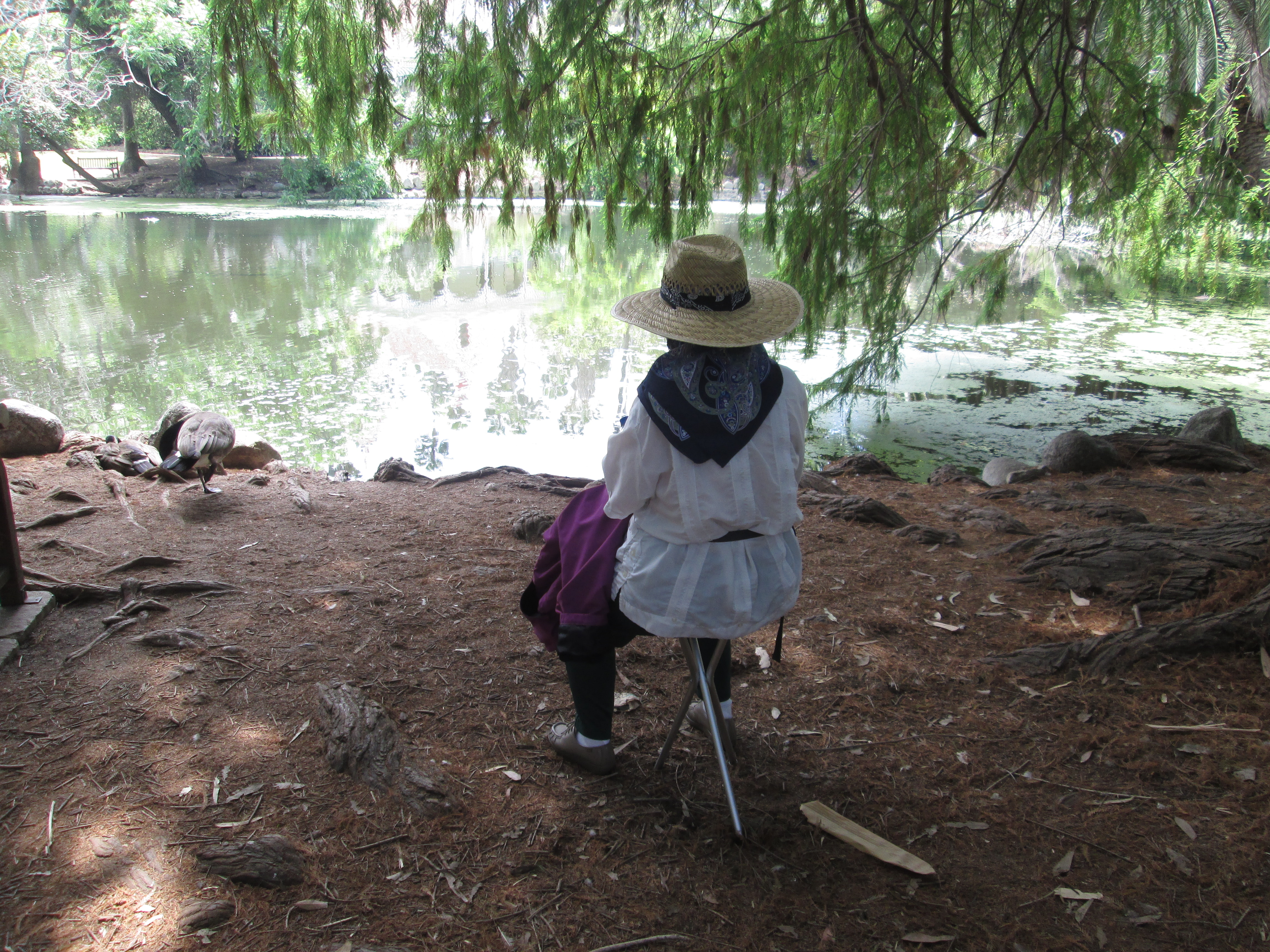
Martine Sitting on the Shore of Baldwin Lake

Yesterday Martine asked me if we could drive to the Los Angeles Arboretum in Arcadia. I was reluctant at first, as it is an hour drive at high speed over several freeways, but I was delighted that Martine actually wanted to go somewhere that was interesting to her. And the botanical gardens of Southern California are favorite destinations for her. She is shown here siting on her tripod cane chair, wearing one of my old guayaberas and a Mexican straw hat, looking at the ducks and geese plying Baldwin Lake.

We would up staying over four hours, much of it with the geese and ducks.

A Mother’s Day Portrait of Mom with Ducklings

Most of the time was spent around the lake and its various inlets. Having seen all the signs about warning not to feed the birds and wild animals, Martine felt she had to explain to the geese why she didn’t bring any food for them. They did not seem to be very put out by the lack of bread crumbs because they were so busy rooting around in the grass for the insects and plants that form much of their diet. Still, it was interesting that she felt so bad about not being able to feed them herself.

The View Across Baldwin Lake at the Queen Anne Cottage

Because we have had a wet winter, Baldwin Lake no longer looked like a large mudhole. It was covered with millions of tiny leaves that had fallen from the surrounding trees (you can see them in the middle photo above).

When she is at a botanical garden, there is no trace of the depression that marred so much of her life in the last year and a half. She no longer wants to escape to another city: She can’t because she has spent her savings on previous abortive trips. Instead, she is taking long walks in our neighborhood, which, probably, is good for her.


Traveling with Mister Thorax

Paul Theroux in 2015

The photograph shows the office of the ultimate travel writer. His first book was The Great Railway Bazaar in 1975. Not coincidentally, that was the first year when the travel bug got me. Its bite was long lasting: I am still suffering from the effects of it. His next travel book was The Old Patagonian Express: By Train Through the Americas (1979). This was the book that set me to thinking about South America, though it was to be almost a quarter century later that I felt I was able to follow in his footsteps.

It was in his 1992 The Happy Isles of Oceania that he was mistakenly called Mr. Thorax by a hotel employee in Australia or New Zealand. I rather like the name.

Below are some of his observations on travel taken from a 2015 Wall Street Journal interview. (Much better, if you can get a copy, is his 2011 book The Tao of Travel.) My own comments on travel are appended in indented text..

I never splurge on: comfort or luxury when I’m traveling alone. I eat in simple restaurants, wandering like a dog rather than taking taxis. Traveling through the Deep South I often stayed at inexpensive chain motels, the ones that serve a free breakfast of weak coffee, Kool Aid and Froot Loops in a Styrofoam bowl.

I’m with Paul—except you won’t find me sharing his breakfast of weak coffee, Kool Aid and Froot Loops.

The difference between travel and tourism: is the difference between walking in the hot sun to meet an angry person who is going to insult me and then tell me his amazing story, and lying in the sun sipping a cool drink and reading, say, “Death in Venice.” The first is more profitable; the second more pleasant. Both are enlightening.

My idea of travel is a combination of the two. During the day, I will be out in the hot sun, ready for anything. At night, I usually read. A lot. Mostly from my Amazon Kindle.

The greatest advantage to being an older traveler: is being invisible, unregarded, ignored. This allows one to eavesdrop and to see much more of a place or a people. There is a detachment, too, in being older: You’re not looking for a new life, not easily tempted. So you see a place clearly. Perfect for writing.

There’s a lot of truth to this. To be in your seventies is to be quite invisible. I would prefer to be totally invisible when confronted by chatty American tourists. (I have been known to answer their questions in Hungarian.)

I am a nightmare to travel with: when I am reporting a book, which is why I always take such trips alone. I seldom think, “Where am I going to eat?” or “Where am I going to sleep?” The true traveler has very little idea of what is coming next.

Here’s where I differ from Paul. Some of the best trips I have taken have been with Martine (Britain, France, Belgium, the Netherlands, Argentina) and my brother Dan (Mexico and Ecuador). I would prefer to travel with someone who is compatible, and I am willing to compromise on destinations providing that I am not absolutely opposed to visiting them.

I never take photographs because: people who take pictures lose their capacity for close observation. Without a camera, you study a thing more carefully and remember it better. Taking a picture is a way of forgetting.

Unlike Paul, I take a lot of pictures, though no selfies and damn few posed pictures in front of famous tourist destinations. I prefer to use my own pictures of the places I visit, though I am not averse to hijacking some off the Internet if I don’t have what I want for my blog postings.


My Aunt Margit

Margit Paris (Died 1977)

My only aunt, Margit, was the sister of the Paris twins, Elek and Emil. Like them, she was born in Prešov-Solivar in what is now the Republic of Slovakia, but at the time was part of the Austro-Hungarian Empire and under Hungarian administration. Like them, she was abandoned by her parents at the end of World War I in the middle of a famine. The three siblings did what they could to survive under difficult conditions. In 1929, they were able to come to the United States and joined their parents in Cleveland.

Although Margit never married, she single-handedly owned and operated May’s Bridal Shop in Garfield Heights, Ohio. She lived in the back of her store, though I believe she spent most weekends with my Uncle Emil in Novelty, Ohio.

I used to enjoy visiting the store, even though I was put to work. Aunt Margit handed me a magnet and had me use it to pick up pins from the fitting room floor, of which there were usually hundreds. When I was done, I sat admiring her calendar. Her insurance company put out an annual calendar that featured color engravings from Currier & Ives. The calendar part didn’t interest me at all, but the budding book collector in me coveted the Currier & Ives engravings. She didn’t know it at the time, but instead of buying me clothes at Christmas time, I would have been happier with one of her old calendars.

A Typical Currier & Ives Color Engraving

When she retired from the bridal shop in the mid 1970s, she bought a house in Florence, South Carolina. It was a bit of a surprise to me, as Margit was always close to her brothers.

When I went with my parents to Hungary and Czechoslovakia in 1977, I flew back from Europe earlier. The news that awaited me after my return was that Aunt Margit had died. I rushed to send a telegram to my Dad in Budapest. They couldn’t get back in time for the funeral, so I decided with my brother Dan to attend the funeral in their place. Afterwards, my Mom told me that Dad was totally broken up by my telegram and was agitated that he couldn’t be there for her. Dan and I figured that would be the case, so we were both happy to honor our aunt with our presence on this sad occasion.

She was a sweet and kindly person all her life, and we all missed her.


Serendipity: The Art of the Deal?

Let’s Not Leave Foreign Policy to Rank Amateurs!

The following is the first paragraph in an article in the April 18, 2019 issue of The New York Review of Books entitled “What Happened in Hanoi?”

Shortly after the success of The Art of the Deal (1987) made Donald Trump a supposed expert on negotiation, he lobbied the George H. W. Bush administration to put him in charge of arms reduction talks with the Soviet Union. The position went instead to Richard Burt, an experienced diplomat and arms control expert. When the two men met at a New York social event, Trump pulled Burt aside to tell him what he would have one—and what Burt should do—to start off the negotiation. Greet the Soviets warmly, he said. Let their delegation get seated and open their papers. Then stand up, put your knuckles on the table, lean over, say “Fuck you,” and walk out of the room.

Burt didn’t follow Trump’s advice, to which which we owe the fact that the world didn’t end in a nuclear holocaust well before the start of the new millennium.

The Muralist

Quetzalcoatl Mural at Dartmouth College’s Baker Library

During the four years I was at Dartmouth College in Hanover, New Hampshire, I spent many hours studying in the reserve room of Baker Library where, between 1932 and 1934, José Clemente Orozco painted a striking series of murals named “The Epic of American Civilization.” One of the images (above) was of the god Quetzalcoatl (or Plumed Serpent) crossing the Gulf of Mexico to Yucatán. It was largely due to Quetzalcoatl’s yellow beard in Aztec iconography that misled Moctezuma to believe that Hernán Cortés was Quetzalcoatl returned to the Aztecs. We all know how that turned out….

Orozco also did other murals at a dining hall at Dartmouth, but they were removed because they were thought to be Communist, and the Patricians in control at Dartmouth were aghast that the Mexican visitor would abuse their hospitality. (A similar thing happened in Los Angelist, where Mexican muralist David Alfaro Siqueiros painted a mural called “América Tropical” that was painted over for similar reasons.)

I love Orozco’s work. At one point, I even journeyed to Guadalajara to see more of his work, such as the image of Miguel Hidalgo below:

Mural by Jose Clemente Orozco featuring Miguel Hidalgo (leader of the Mexican War of Independence), Palacio de Gobierno (Government Palace), in the historic Center of Guadalajara, Jalisco, Mexico

Censorship of a great work of art because one does not believe in the political philosophy espoused by the artist is, to my mind, barbaric. Only in the United States is there a simultaneous attraction/repulsion response to Orozco’s emphatic mural style. Any attempt to paint over his work in Mexico would cause a bloody riot. But then, Mexico does not swing as far to the right as our country does.


27. Magyar Majális és Tavaszi Fesztival

Don’t Worry If You Can’t Read This

Every year on the first Sunday in May, the Grace Hungarian Reformed Church in Reseda has a festival with authentic Magyar cuisine and Mothers’ Day entertainment. Unlike previous years, I couldn’t find any mention of the festival on the Church’s website. Martine made the perfectly logical suggestion for me to call the Church, except she made it to the wrong person. I have something of a telephone phobia, especially when I’m calling people I do not personally know. So Martine went and made the phone call herself. And yes, the festival was taking place at the usual time and place.

My rudimentary knowledge of my native language prevents me from being able to translate the above information sheet in its entirety, but I got the gist of it. The festival is a combination Spring, May Day, and Mothers’ Day event. For an admission fee of five dollars, one could have some of the best homemade Hungarian food in Southern California. For lunch, I went for the Gulyás Leves, usually referred to in English as Hungarian Goulash. What most Americans don’t know is that it is a hearty beef and vegetable soup served with chile peppers. After the kiddie Mothers’ Day entertainment, which was exceedingly cute, we ordered two stuffed cabbage dinners to go, which furnished our supper once we got home.

The highlight of Hungarian cuisine for Martine—and, in fact, for most Hungarians—is the pastry, particularly a kind of cheesecake referred to as crémes, pronounced KRAY-mesh. I get the impression that Hungarians in a pastry shop are even more dangerous than bulls in a china shop, and that they are not above packing away 25,000 calories or more.

This is aided and abetted by the Hungarian love of a fried dough concoction called lángos (pronounced LAHN-goash), richly slathered with sour cream, cheese, or garlic. It’s very like Indian fry bread, except with a different selection of toppings.


Serendipity: An Eye-Witness to Vesuvius AD 79

The Vesuvius Eruption as Imagined by an Artist

I have just finished reading the complete letters of Pliny the Younger (AD 61-113). They were interesting on three counts. First of all, I was impressed by Pliny’s honesty and sense of civic responsibility. Secondly, toward the end of his life, he was governor of Bithynia and Pontus, where he died in AD 113. Finally he writes as a first hand witness of the eruption o Vesuvius in AD 79. He and his uncle Pliny the Elder were across the bay as it happened. The uncle crossed the bay to investigate, and died in the process. Here is his nephew’s account in a letter he wrote to the historian Cornelius Taci

Your request that I would send you an account of my uncle’s death, in order to transmit a more exact relation of it to posterity, deserves my acknowledgments; for, if this accident shall be celebrated by your pen, the glory of it, I am well assured, will be rendered forever illustrious. And notwithstanding he perished by a misfortune, which, as it involved at the same time a most beautiful country in ruins, and destroyed so many populous cities, seems to promise him an everlasting remembrance; notwithstanding he has himself composed many and lasting works; yet I am persuaded, the mentioning of him in your immortal writings, will greatly contribute to render his name immortal. Happy I esteem those to be to whom by provision of the gods has been granted the ability either to do such actions as are worthy of being related or to relate them in a manner worthy of being read; but peculiarly happy are they who are blessed with both these uncommon talents: in the number of which my uncle, as his own writings and your history will evidently prove, may justly be ranked. It is with extreme willingness, therefore, that I execute your commands; and should indeed have claimed the task if you had not enjoined it. He was at that time with the fleet under his command at Misenum. On the 24th of August, about one in the afternoon, my mother desired him to observe a cloud which appeared of a very unusual size and shape. He had just taken a turn in the sun and, after bathing himself in cold water, and making a light luncheon, gone back to his books: he immediately arose and went out upon a rising ground from whence he might get a better sight of this very uncommon appearance. A cloud, from which mountain was uncertain, at this distance (but it was found afterwards to come from Mount Vesuvius), was ascending, the appearance of which I cannot give you a more exact description of than by likening it to that of a pine tree, for it shot up to a great height in the form of a very tall trunk, which spread itself out at the top into a sort of branches; occasioned, I imagine, either by a sudden gust of air that impelled it, the force of which decreased as it advanced upwards, or the cloud itself being pressed back again by its own weight, expanded in the manner I have mentioned; it appeared sometimes bright and sometimes dark and spotted, according as it was either more or less impregnated with earth and cinders. This phenomenon seemed to a man of such learning and research as my uncle extraordinary and worth further looking into. He ordered a light vessel to be got ready, and gave me leave, if I liked, to accompany him. I said I had rather go on with my work; and it so happened, he had himself given me something to write out. As he was coming out of the house, he received a note from Rectina, the wife of Bassus, who was in the utmost alarm at the imminent danger which threatened her; for her villa lying at the foot of Mount Vesuvius, there was no way of escape but by sea; she earnestly entreated him therefore to come to her assistance. He accordingly changed his first intention, and what he had begun from a philosophical, he now carries out in a noble and generous spirit. He ordered the galleys to be put to sea, and went himself on board with an intention of assisting not only Rectina, but the several other towns which lay thickly strewn along that beautiful coast. Hastening then to the place from whence others fled with the utmost terror, he steered his course direct to the point of danger, and with so much calmness and presence of mind as to be able to make and dictate his observations upon the motion and all the phenomena of that dreadful scene. He was now so close to the mountain that the cinders, which grew thicker and hotter the nearer he approached, fell into the ships, together with pumice-stones, and black pieces of burning rock: they were in danger too not only of being aground by the sudden retreat of the sea, but also from the vast fragments which rolled down from the mountain, and obstructed all the shore. Here he stopped to consider whether he should turn back again; to which the pilot advising him, “Fortune,” said he, “favours the brave; steer to where Pomponianus is.” Pomponianus was then at Stabiae, separated by a bay, which the sea, after several insensible windings, forms with the shore. He had already sent his baggage on board; for though he was not at that time in actual danger, yet being within sight of it, and indeed extremely near, if it should in the least increase, he was determined to put to sea as soon as the wind, which was blowing dead in-shore, should go down. It was favourable, however, for carrying my uncle to Pomponianus, whom he found in the greatest consternation: he embraced him tenderly, encouraging and urging him to keep up his spirits, and, the more effectually to soothe his fears by seeming unconcerned himself, ordered a bath to be got ready, and then, after having bathed, sat down to supper with great cheerfulness, or at least (what is just as heroic) with every appearance of it. Meanwhile broad flames shone out in several places from Mount Vesuvius, which the darkness of the night contributed to render still brighter and clearer. But my uncle, in order to soothe the apprehensions of his friend, assured him it was only the burning of the villages, which the country people had abandoned to the flames: after this he retired to rest, and it is most certain he was so little disquieted as to fall into a sound sleep: for his breathing, which, on account of his corpulence, was rather heavy and sonorous, was heard by the attendants outside. The court which led to his apartment being now almost filled with stones and ashes, if he had continued there any time longer, it would have been impossible for him to have made his way out. So he was awoke and got up, and went to Pomponianus and the rest of his company, who were feeling too anxious to think of going to bed. They consulted together whether it would be most prudent to trust to the houses, which now rocked from side to side with frequent and violent concussions as though shaken from their very foundations; or fly to the open fields, where the calcined stones and cinders, though light indeed, yet fell in large showers, and threatened destruction. In this choice of dangers they resolved for the fields: a resolution which, while the rest of the company were hurried into by their fears, my uncle embraced upon cool and deliberate consideration. They went out then, having pillows tied upon their heads with napkins; and this was their whole defence against the storm of stones that fell round them. It was now day everywhere else, but there a deeper darkness prevailed than in the thickest night; which however was in some degree alleviated by torches and other lights of various kinds. They thought proper to go farther down upon the shore to see if they might safely put out to sea, but found the waves still running extremely high, and boisterous. There my uncle, laying himself down upon a sail cloth, which was spread for him, called twice for some cold water, which he drank, when immediately the flames, preceded by a strong whiff of sulphur, dispersed the rest of the party, and obliged him to rise. He raised himself up with the assistance of two of his servants, and instantly fell down dead; suffocated, as I conjecture, by some gross and noxious vapour, having always had a weak throat, which was often inflamed. As soon as it was light again, which was not till the third day after this melancholy accident, his body was found entire, and without any marks of violence upon it, in the dress in which he fell, and looking more like a man asleep than dead. During all this time my mother and I, who were at Misenum—but this has no connection with your history, and you did not desire any particulars besides those of my uncle’s death; so I will end here, only adding that I have faithfully related to you what I was either an eye-witness of myself or received immediately after the accident happened, and before there was time to vary the truth. You will pick out of this narrative whatever is most important: for a letter is one thing, a history another; it is one thing writing to a friend, another thing writing to the public.

Faces from Ancient Rome

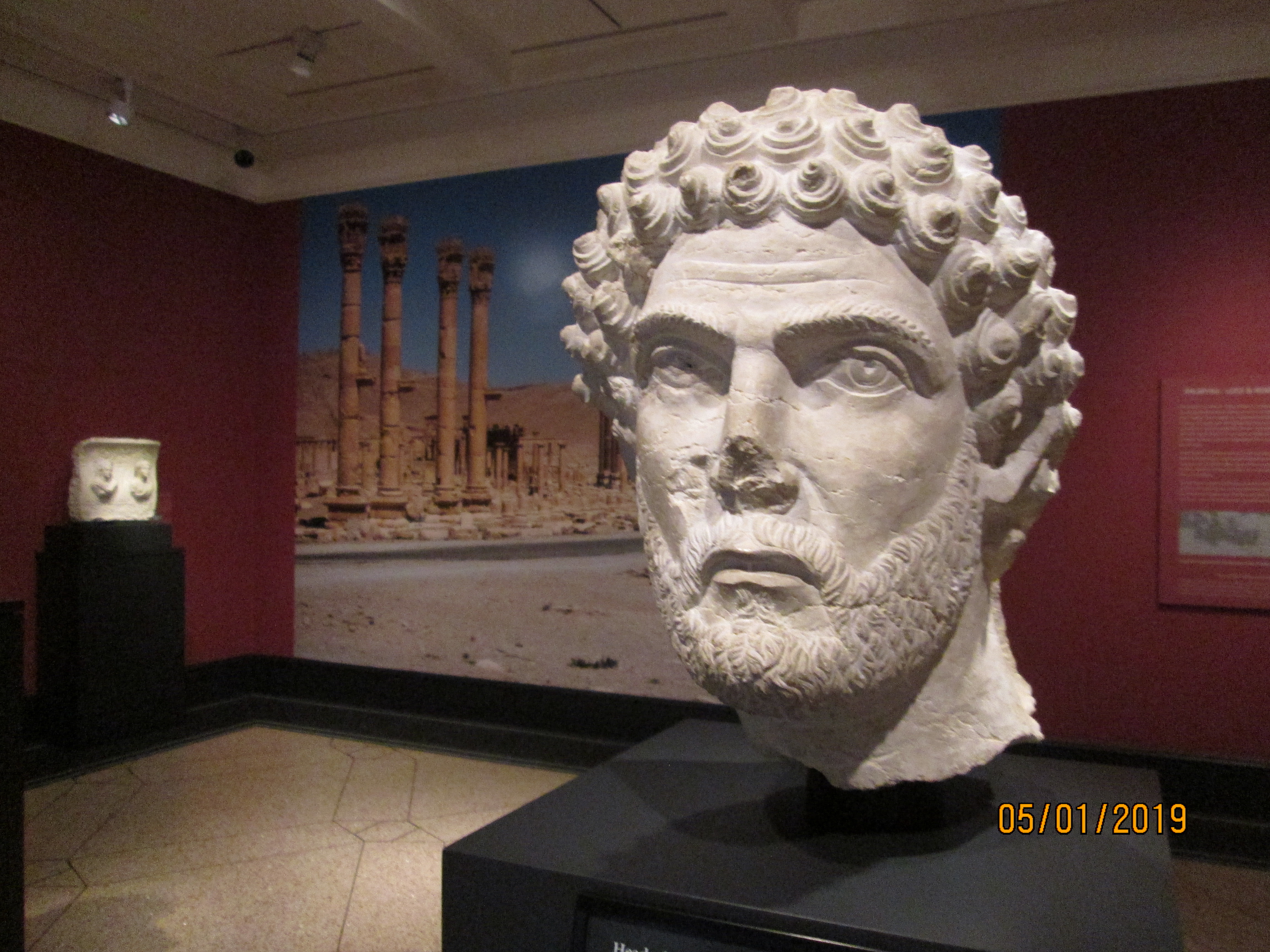
Bust of a Byzantine Emperor

I am still thinking of my visit to the Getty Villa yesterday. One thing the ancient Romans knew how to do was sculpt faces. In sculpture, in the images on coins, the goal was to create a recognizable image, even if it was uncomplimentary. And some of the later Roman emperors were nothing to look at. In a previous post, I showed the museum’s statue of Caligula, with his inverted triangle of a face radiating pure evil. I can’t imagine our current emperor—I mean president—accepting such uncomplimentary honesty.

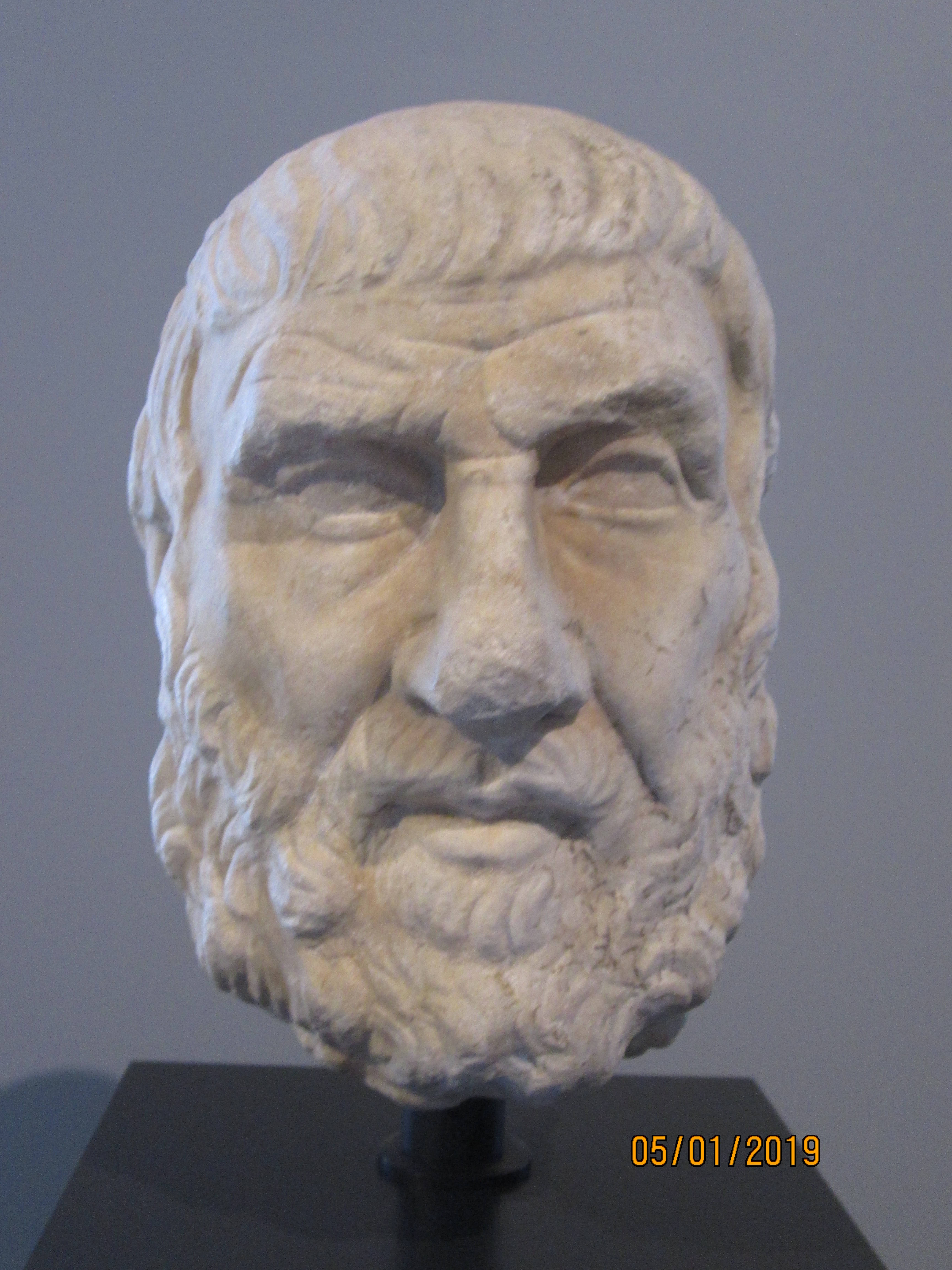
Unidentified Poet or Philosopher

Take a look at this face. The original is unidentified, but the museum thinks he must be a poet or philosopher. In any case, he is old and he has the facial expression of a man who is constitutionally set in his ways. The lines on his face, the slight lopsidedness of his features, the sneer on his lips—this is a man beholden to nobody.

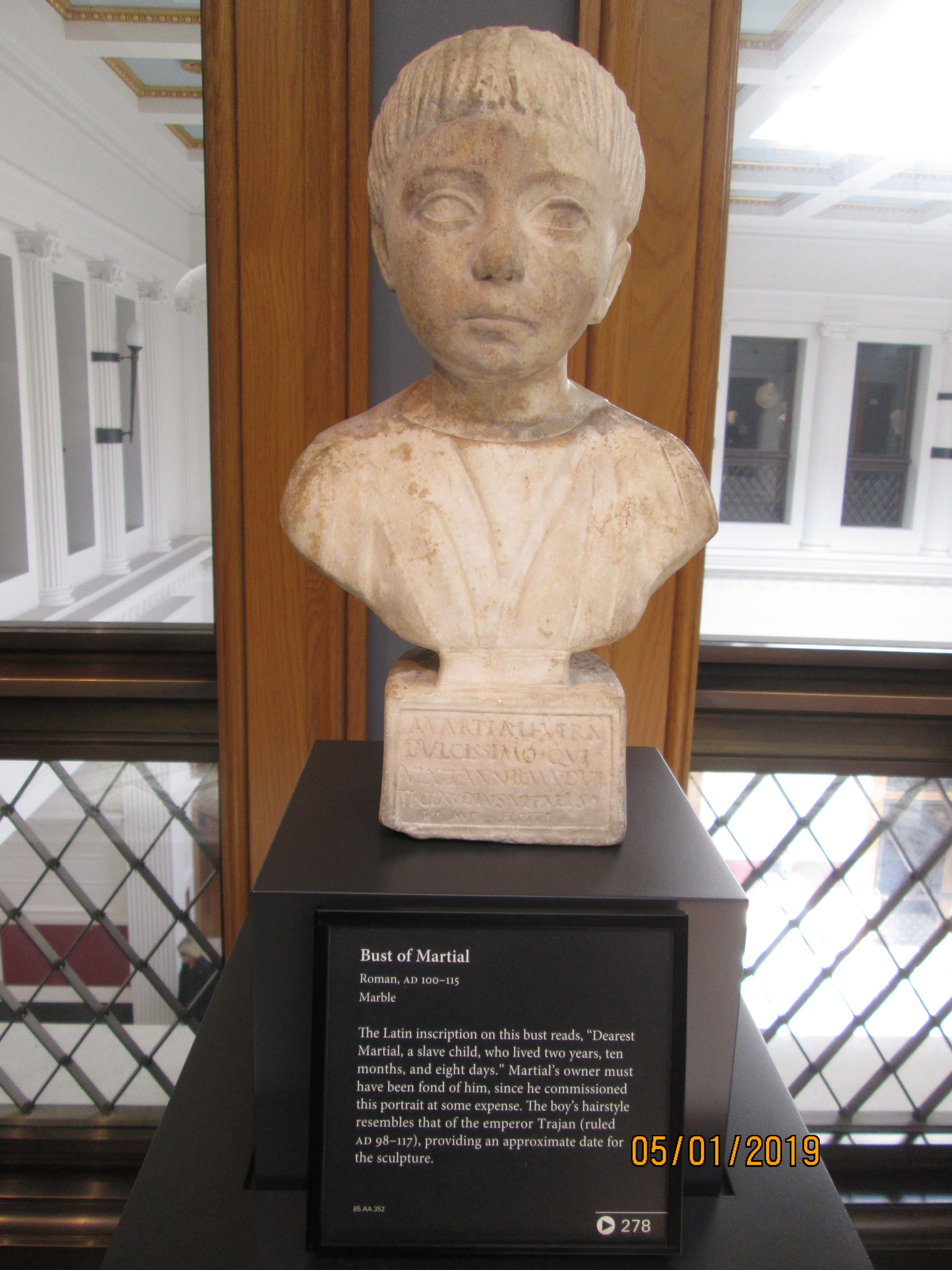
The Slave Boy Martial—Deceased

Finally there is a bust of the slave boy Martial, dead before his third birthday sometime in the second or third century AD. The boy must have been cherished by his owner, because he or she went to the trouble of commissioning this bust for a funerary monument.

Three faces—all very different—all very alive. Walking through the rooms of the Getty Villa, I was acutely conscious that these three individuals were real people. No attempt was made to idealize them. Some two thousand years ago, more or less, they walked the earth looking very much like the busts that commemorated them.


Palmyra

Bust from the Ruins of Palmyra in Syria

In 2015, ISIS seized the ruins of the ancient city of Palmyra in Syria. They proceeded to destroy many of the standing columns, temples, and tombs while gloating over their “accomplishments.” To make matters worse, they captured and beheaded the Khalel al-Asaad, a Syrian archeologist.

This morning, I visited the Getty Villa in Pacific Palisades and was delighted to find an exhibit on loan of mostly funerary statuary from Palmyra, most of which comes from the Ny Carlsberg Glyptotek in Copenhagen. It was titled “Palmyra: Loss and Remembrance.”

It was a revelation to me. Palmyra was neither Roman nor Greek. Their language was a dialect of Aramaic, which was the language of the Holy Land during the life of Christ and for some time after. Most of the items on display were funerary busts and reliefs from the tower tombs that dotted the landscape. The facial expressions were surprisingly realistic, though with larger, more pronounced eyes than found in Greek and Roman sculpture.

“The Beauty of Palmyra”: Obviously a Rich and Powerful Woman

Most women depicted in these sculptures were depicted holding a distaff and spindle in their hands. The statue above displays no such housewifely virtues. Instead she is bedecked with jewels on her headdress as well as her costume. The circles were once filled with precious and semi-precious stones which have disappeared in the course of time.

ISIS Gloating Over the Destruction by Explosives of the Temple of Baal Shamin on One of Their Websites

Naturally, I think ISIS’s actions in Palmyra and elsewhere show a total disregard for the antecedents of their own civilization. They will undoubtedly commit other barbaric crimes until this awful Jihadist movement is brought to account for their crimes against humanity.


Sparta Falls and Rises at Thermopylae

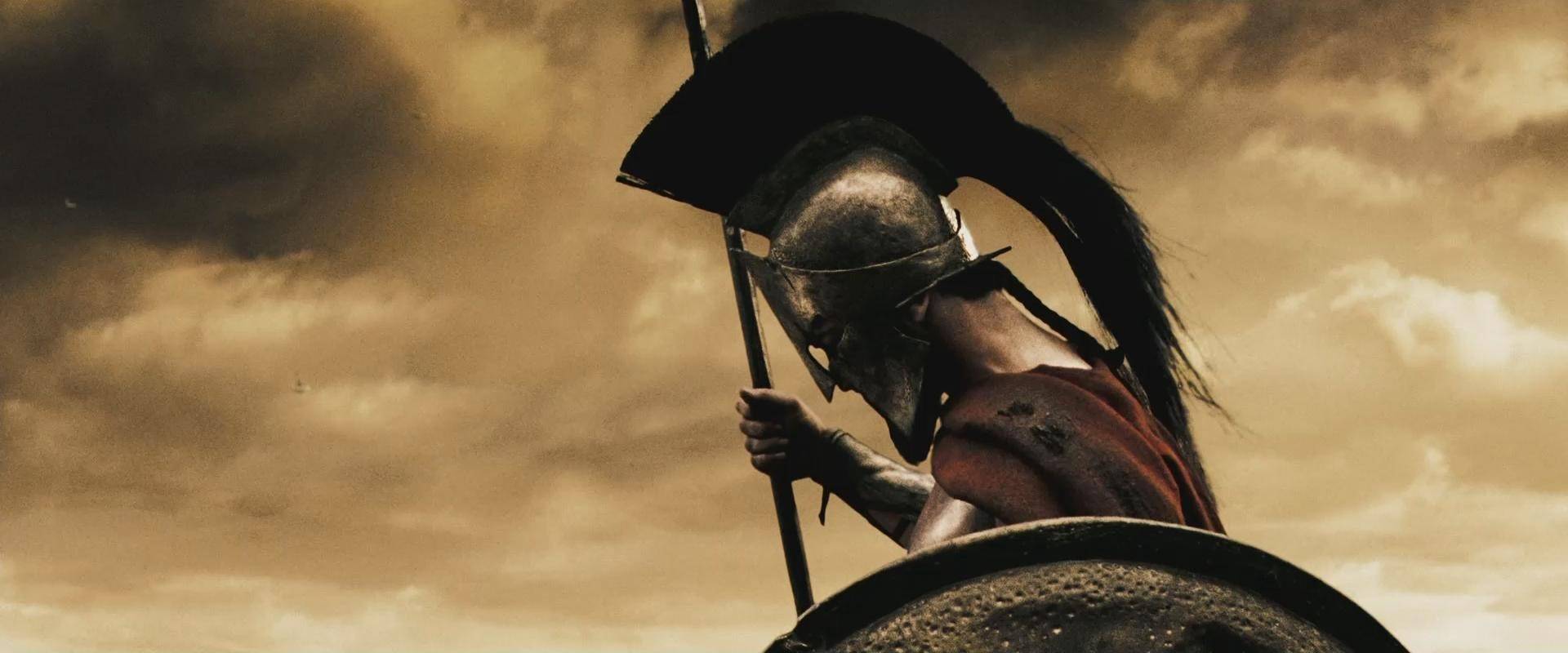
Spartan Warrior at Thermopylae

Ever since I first read Lawrence Durrell’s Justine many years ago, I have been in love with the poems of Constantine Cavafy (1863-1933), a Greek poet resident in Alexandria, Egypt. Here is one of his most famous early poems:

Thermopylae

Honour to those who in the life they lead
define and guard a Thermopylae.
Never betraying what is right,
consistent and just in all they do,
but showing pity also, and compassion;
generous when they’re rich, and when they’re poor,
still generous in small ways,
still helping as much as they can;
always speaking the truth,
yet without hating those who lie.

And even more honour is due to them
when they foresee (as many do foresee)
that Ephialtes will turn up in the end,
that the Medes will break through after all.

And who is Ephialtes? According to the History of Herodotus, he is a Greek who betrayed his homeland to the Persians by showing them a trail by which they could surprise Leonidas and his 300 Spartans. He expected to be rewarded by his new masters, but that fell apart when they lost the Battle of Salamis.