It’s Not Like Flicking a Switch

Abandoned City on Hashima Island, Near Nagasaki

Let me start by saying that I am no Pollyanna-ish prognosticator of Good News. The worldwide COVID-19 plague has wounded all economies to varying degrees, some of which may not return to “normal” for decades. I cannot help but think that most Americans in flyover country think that all the government has to do is flick a switch for us to return to the good old days before March 2020. I for one do not think it’ll be that easy.

What will inevitably happen is that the plague will settle most heavily on states which have gone off social distancing and quarantine too early. The people that Trump is most trying to help—his supporters in the South and Midwest—will die by the thousands, if not tens of thousands. Any attempt to return to “normal” too quickly will re-energize the plague as people go back to being in close contact with one another.

The governors of states like New York and California are for a more gradual approach. States with anti-science GOP governors, like Florida and Georgia, will suffer the consequences disproportionately.


Plague Diary 20: More Books and Films

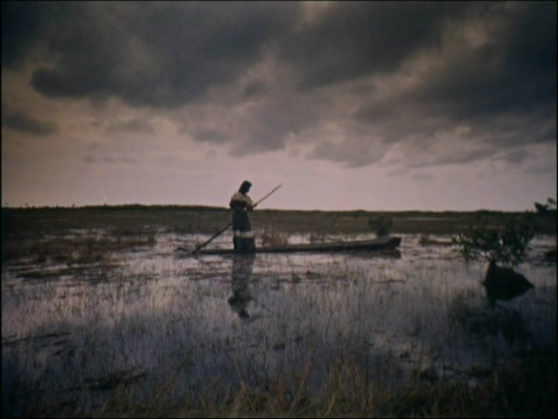
Christopher Plummer in Nicholas Ray’s Wind Across the Everglades

It was yet another day in quarantine (I am not keeping count). I started by making hot chocolate with the premium chocolate I had purchased in Mexico during my vacation. When produced in a double boiler the chocolate comes out perfect every time.

Then I decided to take a walk to the mailbox on Barry, about a mile east of here, to return a Netflix DVD of two Japanese samurai films I had seen over the previous two days. (I will write more about them in a future post.) I also wanted to stop in at the local Target store, but I had forgotten to bring my face mask with me—something I do about half the time. I notice a lot of people wear face masks all the time. They remind me of people who sleep alone with condoms draped over their jewels.

I returned to eat lunch with Martine. Mine was a couple of Chinese beef buns accompanied by frozen peach slices. While Martine went for her afternoon walk, I watched Nicholas Ray’s Wind Across the Everglades (1958) starring Burl Ives and Christopher Plummer. There were some beautiful shots of the Everglades and its bird life, and some highly dubious plotting, even if Budd Schulberg wrote the script.

Martine had wanted us to order Japanese from the Aki Restaurant on Santa Monica Blvd, so I phoned in an order and picked it up. It was a tasty reminder of when we used to eat our weekend meals in restaurants.

After dinner, I began reading Anthony Marra’s A Constellation of Vital Phenomena (2013), set during the Chechen wars. It looked like a good read.

Which brings me near to the end of another day. I will watch another episode of “Deep Space 9” and hit the sack.


Arthurian Spring

Perceval Arrives at the Castle of the Fisher King

Although I have always liked the philosophical and historical insights of Joseph Campbell, I have suddenly struck a particularly rich vein while reading his Romance of the Grail: The Magic and Mystery of Arthurian Myth. It is not unusual for me to suddenly change directions based on my reading. In this case, I foresee an Arthurian Spring.

By that I mean not just the Christian interpretation of the so-called “Matter of Britain,” but the nexus between that and a semi-Druidical interpretation allied to primitive, Islamic, and East Asian influences. In my book collection are a number of volumes of the originals in translation which I have either never read or read strictly through the eyes of later monastic sources.

The stories of the Holy Grail, the Knights of the Round Table, the Fisher King, and the Waste Land (including T. S. Eliot’s interpretation as influenced by Jesse L. Weston‘s From Ritual to Romance) are a rich treasure trove with interesting links to global sources. Most of the original works were written during a hundred-year period comprising parts of the eleventh and twelfth centuries A.D.

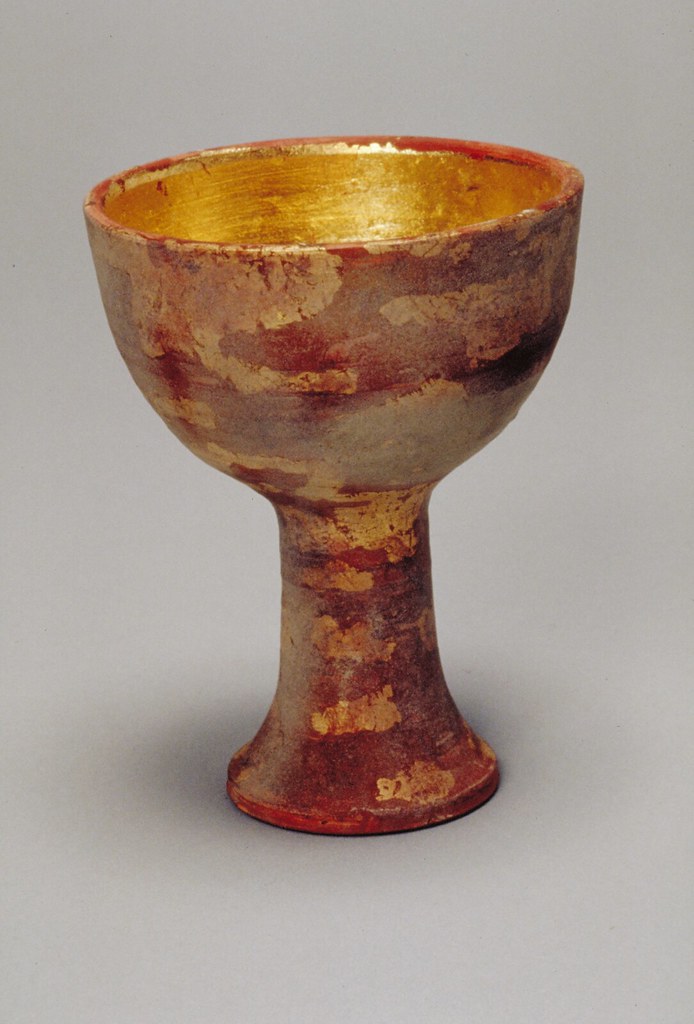
The Holy Grail of Indiana Jones

When most of us think of Camelot and the Arthurian legends, we think of Thomas Malory’s Morte d’Arthur or—worse yet—Howard Pyle’s 1903 re-telling in The Story of King Arthur and His Knights, which was my first introduction. Both are thoroughly influenced by the monastic hijacking of the legend that took place beginning late in the twelfth century.

So I am on my way to an absorbing world that should see me through much of the remaining quarantine and the transition to the worldwide economic depression that will inevitably follow.