Today, for the first time in over a year, I went to the movies. My brother Dan had recommended I see Michael Sarnovski’s film Pig (2021) starring Nicolas Cage. So I took the bus to Pico and Westwood to see the film at the Landmark Theatres there—seeing as how I hate to spend a lot of money on parking.
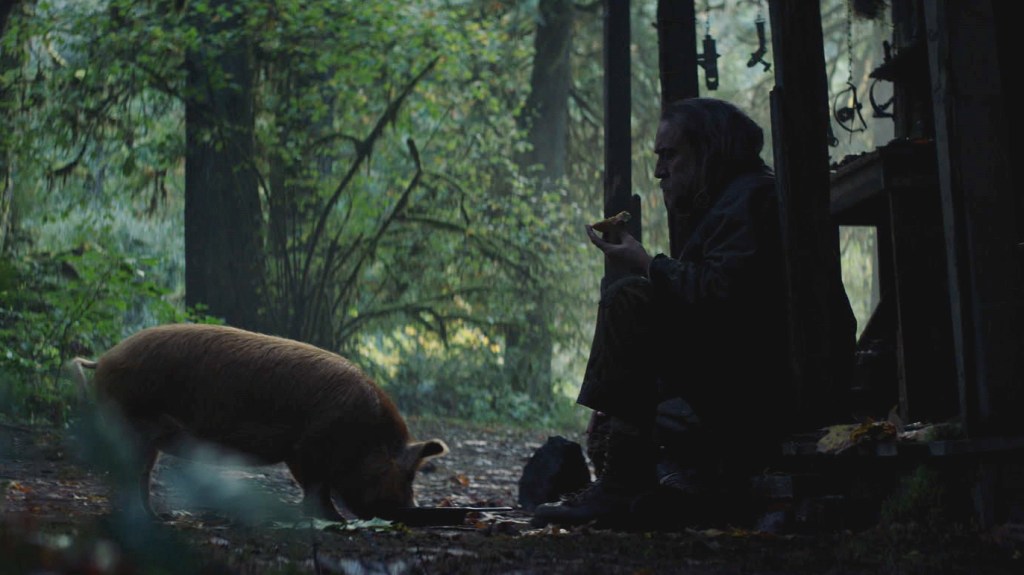
The film was a winner. Cage is made to look like a grizzled old homeless person, which is all part of Sarnovski’s attempt to make us underestimate the character. When Cage’s truffle-hunting pig is stolen, he heads to the city (Portland, Oregon) to find it and bring it back. There we learn that he is the formerly famous chef Robin Feld who was once a legend in the city’s restaurant world.
This is a film for people who are into food, as my brother certainly is. The film reminds me of Marie NDiaye’s novel The Cheffe, which has a similar foodie emphasis. And because of Robin Feld’s prodigious memory of every meal he ever prepared, I will add that you should check out Jorge Luis Borges’s story “Funes the Memorious.”
Great movies and stories always lead you to interesting places. And I think Pig fits into this category.
Why Is That Guy on the Left Not Sporting a Beard and Turban?
Well, Kabul has gone Kaboom once again. The predictable happened: The U.S. started a war, lost interest in it, and Ali Baba and the Forty Thieves waited for their opportunity to pounce, which they did. As in Viet Nam, the U.S. must evacuate thousands of Afghans who made the mistake of thinking we were in it for the long haul.
Note: The United States is never in it for the long haul. We are short-termers in just about everything we do.
The biggest losers, of course, will be the women of Afghanistan, who must resign themselves to a lifetime of drudgery, hidden behind ugly face-and-body-covering burkas. Naturally, women will no longer be able to go to school or work with men in jobs. Your hospital nurse will probably have a beard and turban as well as some kind of automatic weapon.
The Taliban remind me of the Cult of Hashashins in medieval Lebanon and the murderous Thuggees of India, who have given us two words in our English language: assassins and thugs.
Will the Taliban be as plug-ugly as they were in the lead-up to the 9/11 terrorist attacks? Or have they learned to be something other than cartoon villains resembling a 1930s Popeye cartoon based on the Ali Baba story? Only time will tell.
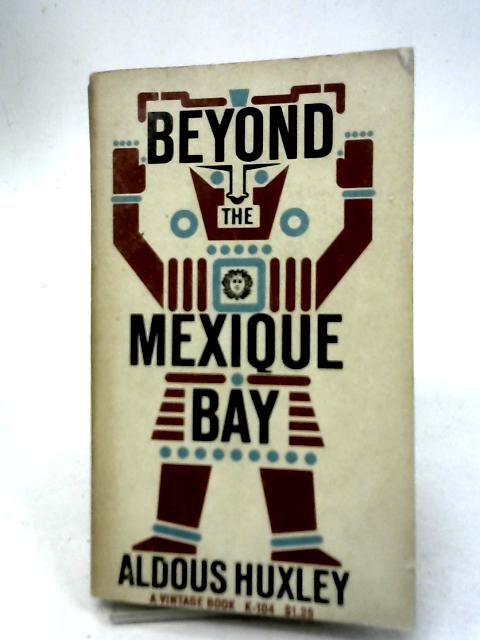
Two writers who influenced my travels in Mexico are Aldous Huxley, who wrote Beyond the Mexique Bay in 1934, and Graham Greene, who wrote The Lawless Roads in 1939. Both writers were there during a rough time. The Mexican Revolution was theoretically over in 1920, but there were not only widespread disturbances, but there were not, as there are today, a safe system of intercity roads. Plus Huxley spent most of his book on his travels in Guatemala and Honduras.
Greene’s book was my guide to a trip my brother and I took to Mexico in 1979. We flew to Mexico City and transferred to a flight to Villahermosa, which at the time impressed me as the armpit of the republic. Greene then then made his way to the Maya ruins at Palenque. From there to San Cristóbal de las Casas was lengthy journey over the Sierra Madre on muleback. For Dan and me, it was an all-day journey by second class bus during which we passed a bus from the same company (Lacandonia) that had run off the road and encountered an army inspection just outside of Ocosingo. From there we visited Oaxaca and rode an all-night bus back to the Mexico City airport.
Old Penguin Cover for The Lawless Roads
Greene had considerably worse experiences during his trip over forty years earlier. In the middle of his journey, he broke his glasses:
Just short of our destination a sudden blast of wind caught my helmet and the noise of cracking cardboard as I saved it scared the mule. It took fright and in the short furious gallop which followed I lost my only glasses. I mention this because strained eyes may have been one cause for my growing depression, the almost pathological hatred I began to feel for Mexico. Indeed, when I try to think back to those days, they lie under the entrancing light of chance encounters, small endurances, unfamiliarity, and I cannot remember why at the time they seemed so grim and hopeless.
Why the author went to Mexico with a single pair of glasses is a mystery to me. Fortunately, I never felt any pathological hatred for Mexico, based on the many subsequent journeys I took there.
The Edition of Huxley’s Book That I Own
I have also been to most of the places that Aldous Huxley described in Beyond the Mexique Bay during my trip to Guatemala and Honduras in 2019. Unlike Greene who saw only the Maya ruins at Palenque, Huxley traveled to Copán in Honduras and Quirigua in Guatemala.
Like Greene, Huxley also had a problem with the people of Central America. At one point, he lets it all hang out: “Frankly, try how I may, I cannot very much like primitive people. They make me feel uncomfortable. ‘La bêtise n’est pas mon fort.’” The French expression could be translated thus: Stupidity isn’t my strong point.
These two civilized and (perhaps) sticky Englishmen did manage to write interesting books which engaged my interest through multiple readings over a period of more than four decades.
Now why would you want to read books written almost a century ago when there are more current books on the subject? My answer is a simple one: The best recent books were written with a knowledge of what went before. And when it comes to Mexico, one could easily go back to the books of John Lloyd Stephens written in the 1840s. (In fact, I will do just that in a follow-up post.)
My 2019 vacation in Guatemala started out on a promising note. Instead of staying in Guatemala City, I immediately took a van to Antigua Guatemala, a beautiful city a scant thirty minutes from the capital that is surrounded by active volcanoes and the ruins of churches which collapsed during the disastrous 18th century, which required the city to move several times in its history:
The San Miguel Earthquake of 1717
The San Casimiro Earthquake of 1751
The Santa Marta Earthquake of 1773
When I was in Antigua in January 2019, I spent most of my time visiting ruined churches.
Ruined Church with Collapsed Roof
In the end, I got as much fun from visiting the ruins of Spanish Catholicism as I did the Maya cities like Copán in Honduras, and Quiriguá and Tikál in Guatemala’s Petén jungle.
Although Guatemala is not known for its cuisine, the food I had was uniformly good, particularly the beans. I wouldn’t mind going again, if that is in the cards for me.
Today I accompanied Martine to the Access Pharmacy in Westwood where she received the Johnson & Johnson Covid-19 vaccine (AKA Janssen Covid-19 Vaccine).
Martine is a person of monumental stubbornness, so I was surprised that she decided to get the vaccine. In all honesty, it wasn’t my impeccable persuasiveness that did the trick: Her tête de Normande (referring to her Norman French stubbornness) was swayed by the Los Angeles City Council, which was going to make it hard for her to go to restaurants, movies, museums, etc. without either a vaccination card or a weekly Covid test.
Whatever the reason, I am delighted that she has disobeyed the KABC shock jocks and consented to possibly save her life.
After months of bullyragging Martine about not getting her Covid-19 vaccination, Martine has finally made an appointment to receive the Johnson & Johnson vaccine tomorrow. There have been harsh words spoken by me (“That’s because you get all your info from Nazi radio!” “KABC Talk Radio is not Nazi radio!”). But the LA City Council’s unanimous vote on requiring vaccination proof for restaurants and other indoor locales finally did the trick.
I see this as a victory over the shock jocks of KABC, which I persist in referring to as Nazi radio.May all of them come down with Covid-19 complicated with a few other embarrassing ailments!
Since she made the appointment, Martine has been Googling all the negative info she could find about the shots, so I hope she doesn’t back down at the last minute.
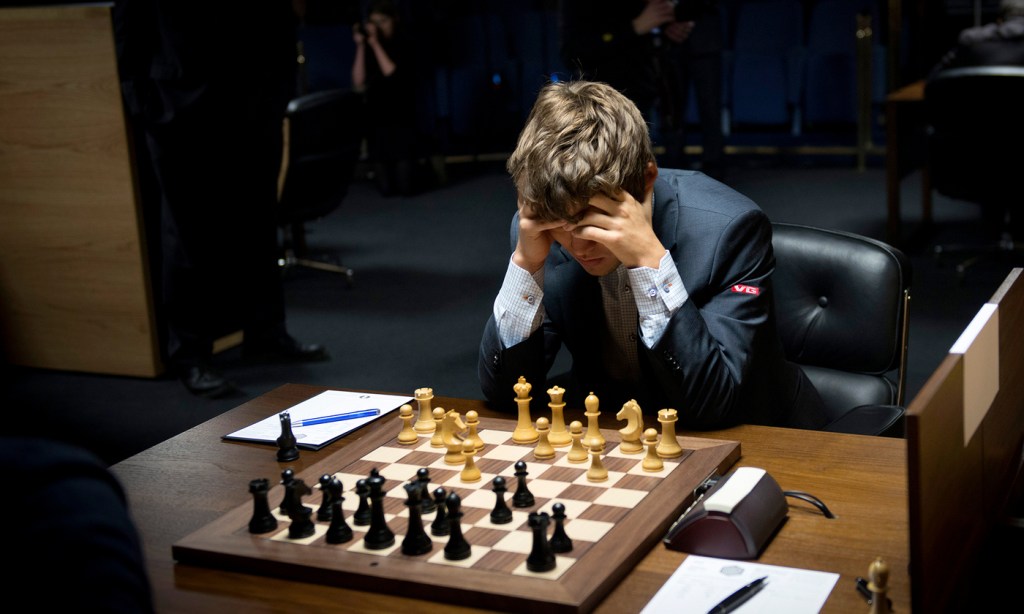
Argentinian poet Jorge Luis Borges (1899-1986) wrote two sonnets entitles “Chess.” This is the second one:
Faint-hearted king, sly bishop, ruthless queen,
straightforward castle, and deceitful pawn—
over the checkered black and white terrain
they seek out and begin their armed campaign.

They do not know it is the player’s hand
that dominates and guides their destiny.
They do not know an adamantine fate
controls their will and lays the battle plan.

The player too is captive of caprice
(the words are Omar’s) on another ground
where black nights alternate with whiter days.

God moves the player, he in turn the piece.
But what god beyond God begins the round
of dust and time and sleep and agonies?
From Jorge Luis Borges, The Sonnets (London: Penguin, 2010).
Opening Ceremony of the 2020 Tokyo Olympiad—in 2021!
Japan was put in an untenable position by the International Olympic Committee (IOC). At a time when Covid-19 was surging through the island nation, the IOC said the Olympic Games had to go on nonetheless. Of course, we won’t know for a week or two whether Japan will pay the price by putting on the games during an epidemic.
I must say, however, that Japan reacted with competence and grace and managed to put on a memorable event. Even if the stands were mostly empty, these games were an utter delight, even if NBC’s televising was at times ham-fisted and soap-opera-ish.
My favorite events were the team competitions, such as men’s and women’s basketball, women’s indoor and beach volleyball, women’s water polo, and some of track and field events. I didn’t much care for golf, canoeing/kayaking, swimming and diving. Never before have I spent so much time glued to the television set watching sporting events. It was worth it, and I feel bereft now that the Games are over.
In the above picture, Moldovan women athletes are synchronously showing amazement at a random consonant, in this case the letter “T.” Below, however, are some actual events planned for the next summer Olympics:
Team Parcheesi. Expect the Chinese to win gold here.
Underwater Track Cycling. Canada and New Zealand are already gearing up for this event.
Low-Jump. Exactly what it sounds like: medalists must leave the ground, but only for a few millimeters. The world record is currently held by Burkina Faso at 11.68 mm.
Ballroom Balance Beam. Ballroom dancing with a man and a woman as partners atop a balance beam. Both are expected to stick the landing … but exactly where I am not at liberty to say.
Dog Walking. Contestants must walk a pack of at least ten dogs and are downgraded for the dogs’ disobedience, toilet, and sniffing stops.
Sand Kayaking. How fast can contestants be when they have to paddle on sand dunes of various heights?
Dumpster Diving. Exactly what it sounds like. The dumpsters are filled with plastic detritus from the Pacific Garbage Patch, from heights of 10, 20, and 30 meters.
Women’s Cubic Beach Volleyball. The same as beach volleyball, but the “ball” is an inflatable cube. What matters most, however, is the skimpiness of the bikinis worn.
Blind Man’s Buff. Played on a 10-acre obstacle course.
Weight Watchers Watch Party. Judges will look for the most vapid and overweight participants in home watch parties. The U.S. is expected to win the Lead Medal at this event during most Olympics.
Within the last year and a half or so, whenever one of my crowns comes loose, there is some collateral damage that entails either (or both) a root canal and an extraction. I remember that my great grandmother, father, and mother all had false teeth. With my father, the false teeth were problematical, as any pressure on the roof of his mouth led to his ejecting his dentures at high speed across the kitchen table, to the amusement of my brother and myself. (I have inherited the same roof-of-the-mouth sensitivity, which makes me not a comfortable candidate for dentures.)
Now suddenly, I find myself in a similar situation. As my former dentist, Dr. Thomson Sun, said, “Teeth don’t last forever.” I am beginning to find that he is right.
Truth to tell, I have been greatly remiss about oral hygiene. I didn’t brush my teeth after every meal, or even once a day—and as for flossing, fuggedaboutit! I have become more regular about brushing my teeth with an electric toothbrush every evening before going to bed, but there were all those years during which I let plaque accumulate and attack my teeth.
I would love to have implants, but not only are they expensive, I would need special surgery to increase the bone mass of my upper teeth, where all the recent damage has occurred. And for me, it would be even more expensive because I would need to have an anesthesiologist present to make sure I awaken. (This harks back to my lack of a pituitary gland, and therefore no adrenaline.)
So if things continue along the same line, I will have a crystal meth addict’s smile, which is good for frightening small children and young women.








 Tarnmoor
You must be logged in to post a comment.