An Unhappy Time

I Was at Low Ebb in My Twenties

If I had to pick the worst decade of my life, I would have to pick my twenties, between 1966 and 1975. I had miraculously survived brain surgery in September 1966. For my entire adolescence, I did not have a functioning pituitary gland: Instead, I had a benign tumor that not only destroyed my pituitary, but was staging an incursion on my optic nerve. Oh, and by the way, due to the malfunction of my pituitary, I had, for all intents and purposes, no adrenaline, thyroid, sex hormones, or human growth hormone. At the age of twenty-one, I looked like a high school freshman. When I bought alcoholic beverages, I was always being carded by store employees who did not believe my true age.

As I have described my condition before, I felt like a Martian mixed among human beings. I had fallen in love with a young woman, but it was not reciprocated. Several times, I awoke in the middle of the night, walked several blocks to Zucky’s Deli and had breakfast, then walked a few more blocks to the beach at Santa Monica. In the pre-dawn hours, I stared at the waves wondering if I had the courage to take a walk to Japan.

In time, I weathered my depression. I signed up for group therapy, where I discovered that my problems were all part of the human condition, namely, that we were all Martians.
In his book of interviews with Osvaldo Ferrari, Jorge Luis Borges found an interesting way of describing my condition:

Yes, I am sure I am happier now than when I was young. When I was young, I sought to be unhappy for aesthetic and dramatic reasons. I wanted to be Prince Hamlet or Raskolnikov or Byron or Poe or Beaudelaire, but not now. Today, I am resigned to being who I am. And to summarize: I do not know if I have attained happiness—no one does—but I have sometimes attained a kind of serenity and that’s a lot. Also, seeking serenity seems to me to be a more reasonable ambition than seeking happiness. Perhaps serenity is a kind of happiness.

For Borges, that’s saying a lot, as he had lost the sight of his eyes some thirty years before the interview. After my surgery, I was sterile—which is, as I see it now, a highly survivable condition.

“Obscurest Night”

English Poet William Cowper (1731-1800)

It was the last poem Cowper (which he pronounced “Cooper”) ever wrote, shortly after he read the tale of Commodore George Anson’s circumnavigation of the globe, as described in his A Voyage Round the World in 1740-4. Cowper’s 1799 poem tells of one of Anson’s crewmen washed overboard and drowning within full view of his shipmates during an awful storm.\

Curiously, I discovered the poem as a resulting of reading Charlotte Bronte’s Shirley, which discusses the poem at some length. Here it is in its entirety:

The Castaway
Obscurest night involv’d the sky,
         Th’ Atlantic billows roar’d,
When such a destin’d wretch as I,
         Wash’d headlong from on board,
Of friends, of hope, of all bereft,
His floating home for ever left.

No braver chief could Albion boast
         Than he with whom he went,
Nor ever ship left Albion’s coast,
         With warmer wishes sent.
He lov’d them both, but both in vain,
Nor him beheld, nor her again.

Not long beneath the whelming brine,
         Expert to swim, he lay;
Nor soon he felt his strength decline,
         Or courage die away;
But wag’d with death a lasting strife,
Supported by despair of life.

He shouted: nor his friends had fail’d
         To check the vessel’s course,
But so the furious blast prevail’d,
         That, pitiless perforce,
They left their outcast mate behind,
And scudded still before the wind.

Some succour yet they could afford;
         And, such as storms allow,
The cask, the coop, the floated cord,
         Delay’d not to bestow.
But he (they knew) nor ship, nor shore,
Whate’er they gave, should visit more.

Nor, cruel as it seem’d, could he
         Their haste himself condemn,
Aware that flight, in such a sea,
         Alone could rescue them;
Yet bitter felt it still to die
Deserted, and his friends so nigh.

He long survives, who lives an hour
         In ocean, self-upheld;
And so long he, with unspent pow’r,
         His destiny repell’d;
And ever, as the minutes flew,
Entreated help, or cried—Adieu!

At length, his transient respite past,
         His comrades, who before
Had heard his voice in ev’ry blast,
         Could catch the sound no more.
For then, by toil subdued, he drank
The stifling wave, and then he sank.

No poet wept him: but the page
         Of narrative sincere;
That tells his name, his worth, his age,
         Is wet with Anson’s tear.
And tears by bards or heroes shed
Alike immortalize the dead.

I therefore purpose not, or dream,
         Descanting on his fate,
To give the melancholy theme
         A more enduring date:
But misery still delights to trace
   Its semblance in another’s case.

No voice divine the storm allay’d,
         No light propitious shone;
When, snatch’d from all effectual aid,
         We perish’d, each alone:
But I beneath a rougher sea,
And whelm’d in deeper gulfs than he.

Vee Dub

Another Show at El Segundo’s Automobile Driving Museum

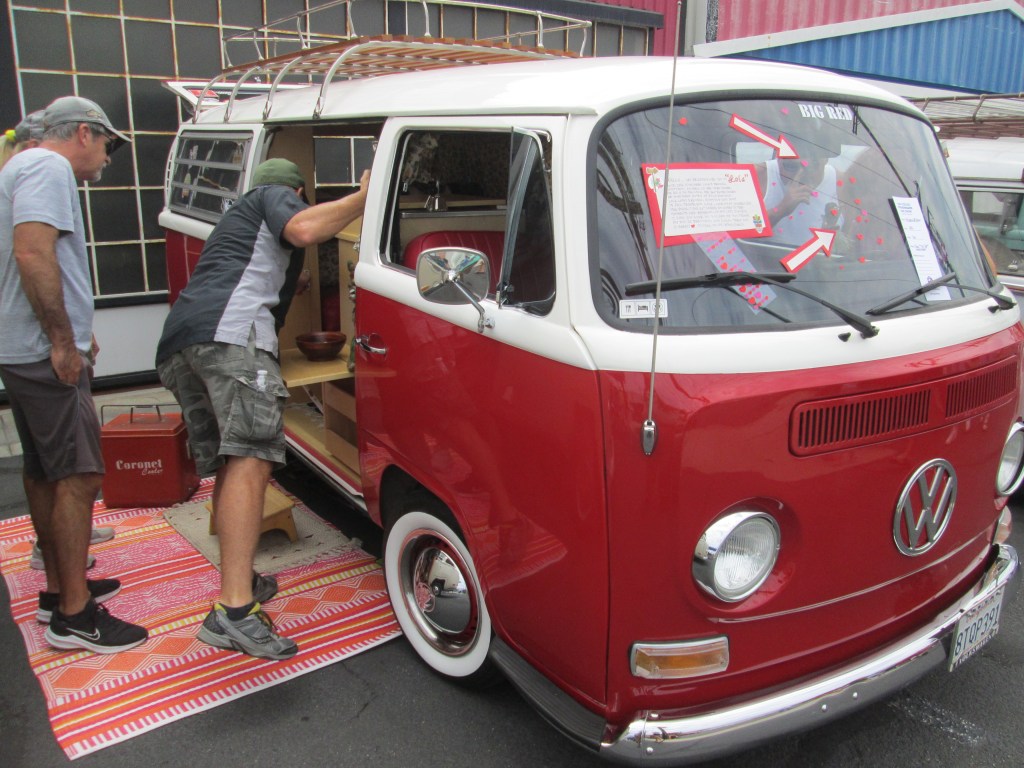
On Saturday morning, Martine and I drove down to the Automobile Driving Museum for their Air-Cooled Volkswagen Car Show. I was frankly surprised that so many entries and visitors showed up. It reminded me that around 1969 I consider buying a VW Beetle—and that was even before I learned to drive. Because of medical reasons, I was not to get my driver’s license until age 40. I never did get a VW. My first car was a 4-cylinder Mitsubishi Montero, followed by a Nissan Pathfinder, and now a 2018 Subaru Forester.

The Poster for the V Dub Show

In the late 1960s through the 1970s, I knew a lot of people who had Beetles, VW Microbuses (which I always thought looked cool), and Karmann-Ghias.

From the museum, we drove down to Captain Kidd’s Fish Market and Restaurant in Redondo Beach and had a great seafood lunch.

Summer Reading

During the Heat of Summer, My Mind Turns to India

Most people’s idea of summer reading is of some cheap paperback to be consumed on a beach towel or on a long plane, train, or bus ride. There are a large number of trashy novels written each year to satisfy this undemanding audience. My taste in reading material, however, is more of what you would describe as deep-dish.

When the temperature rises into the 80s F (30s Celsius), there are certain books that appeal to me. Looking back over July and August in the last several years, here is what appeals most to me during temperature spikes:

  • Books about India, such as those written by William Dalrymple, author of City of Djinns
  • The novels of William Faulkner set in Mississippi
  • The novels of Brazilian author Jorge Amado set in his native State of Bahia
  • The novels and short stories of Chilean author Roberto Bolaño
  • American and French noir novels
  • The Travis McGee novels of John D. MacDonald set in South Florida
  • Travel books such as those written by Freya Stark, who traveled extensively by herself in the Middle East

Sometimes, I go in the opposite direction: I recently read Chauncey C. Loomis’s Weird and Tragic Shores: The Story of Charles Francis Hall, about a failed trip to discover the North Pole.

I am currently rereading William Faulkner’s Go Down Moses and have Jorge Amado’s Home Is the Sailor in my TBR pile.

Favorite Films: Chinatown (1974)

Jack Nicholson and Faye Dunaway in Roman Polanski’s Chinatown

Eddie Muller of the Turner Classic Movies (TCM) series Noir Alley thinks that Chinatown is the greatest film ever made about Los Angeles. I am inclined to agree with him. Last night, I saw it for the nth time and newly appreciated it for its dark beauty.

How is it that the ultimate film about L.A. was directed by a Pole? You might remember that five years earlier, Charlie Manson and his gang brutally murdered Polanski’s wife, Sharon Tate, who at the time was 8½ months pregnant. She was stabbed 16 times, killing herself and her unborn child. Polanski was away in Europe at the time working on a film project.

Roman Polanski Playing a Bit Part in His Film

So, yes, I think Polanski had an understanding of the dark side of Los Angeles, which came out in his film. In fact, it was Polanski who insisted that Faye Dunaway gets shot in the head at the end of the movie while attempting to escape her father and incestuous lover played by John Huston. Both the producer and scriptwriter wanted to have Dunaway shoot Huston at the end. Polanski disagreed, saying that his film was not an adventure for children.

Film is a collaborative art form. In consequence, there are so many ways a film can go wrong. This film didn’t. Even after decades, it comes across as fresh, interesting, and somber as it did 48 years ago when it premiered.

I even like the sequel, The Two Jakes (1990) directed by and starring Jack Nicholson.

An interesting side note: I knew the next-door neighbor to the Tate murder house on Cielo Drive. It was inhabited by Richard Anderson, a Hollywood actor who had a long and illustrious career and was also a delightful person.

Sosh

This Picture Describes Succinctly What I Am NOT!

I used to work at Urban Decision Systems with a Vice President named Jay W. McBride, whom I liked and respected. Once, when I complained about another VP, Jay said that he was a “sosh,” pronounced like the beginning of the word “social.” As Jay was a lifelong Mormon, I wondered if this was a term used in his background to describe people who were essentially social butterflies.

One thing I am not is a sosh. That’s why I did not find the Covid-19 quarantine particularly onerous. I made a point to contact my friends regularly over the phone, but I did not attend any super-spreader events frequented by people who could not stay away from large groupings of their social cohort.

By now, I and most of my friends have been vaccinated. (Martine continues to be a holdout, but, like me, she’s not a sosh.) I have visited with my good friends from San Pedro and Altadena, and look forward to re-establishing several other connections.

But will I ever attend a large party? Perhaps. If I do, I will probably arrive late and leave early, as is my wont. I derive little pleasure from talking in person to many people, particularly if they are strangers.

Billionaires in Space

Amazon’s CEO Jeff Bezos

I find it amusing that two billionaire CEOs have decided to put their lives on the line and fly their own ships into space. First, it was Jeff Bezos of Amazon; then, Richard Branson of the Virgin Group.

Another “billionaire” comes to mind as a good candidate for space travel—even though his orange hair and facial coloring suggests he might himself be a space alien. Just to be sure, we can put him on a ship to Jupiter. You could click here to find out what would happen to Donald J. Trump on the largest planet in our solar system.

Perhaps sending CEOs into outer space would be a good way of thinning the herd. I’m all for that!

The Most Expensive Real Estate in Argentina

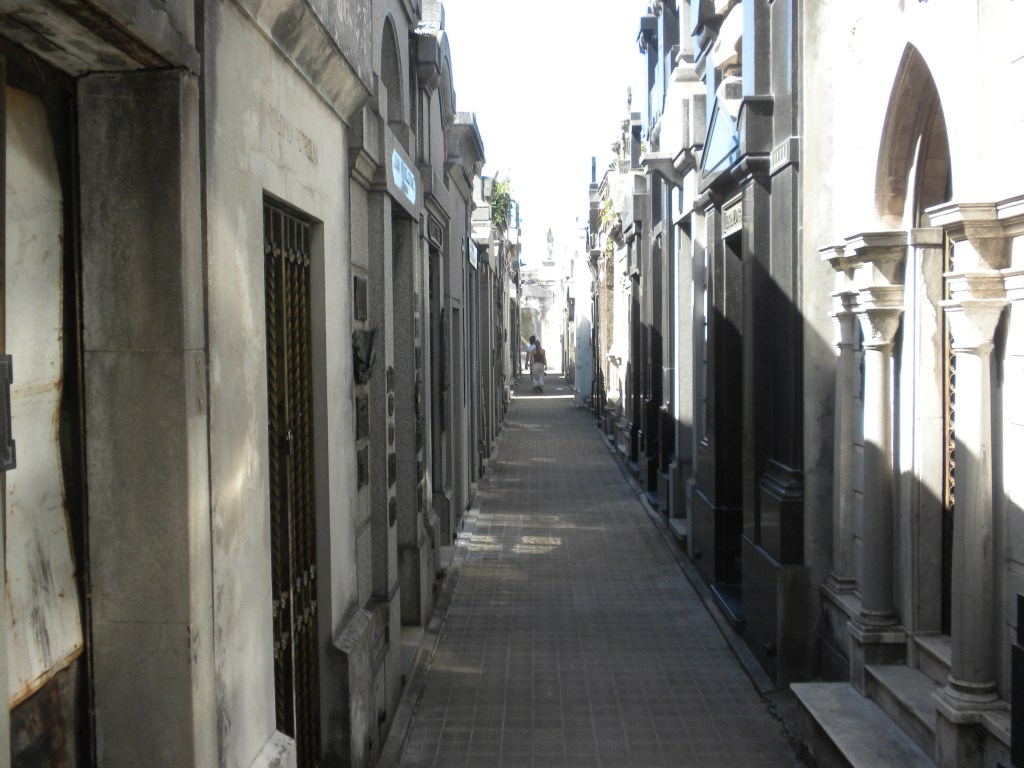
Recoleta Cemetery in Buenos Aires

When former military dictator of Argentina Juan Perón died in 1974, he couldn’t be buried at Buenos Aires’s exclusive Recoleta Cemetery. It was most galling to his followers that his widow Evita did manage to be buried there with the rest of her family (née Duarte). Eventually, his body was moved to the grounds of his estate in the exclusive barrio of Olivos.

I have visited Recoleta during each of my three trips to Argentina. Why? It is actually the number one tourist destination in Buenos Aires—and it’s free. Just about everyone of note in Argentine history and culture is buried there. Adolfo Bioy Casares the writer is buried there, but the Argentina’s greatest writer, his friend Jorge Luis Borges, is buried in Geneva, Switzerland, where he died in 1986.

One of Many Bronze Commemorative Plaques Marking the Grave of Evita Perón

Among other famous denizens are past presidents such as Agustín Pedro Justo, Bartolomé Mitre, Domingo Faustino Sarmiento, Hipólito Yrigoyen, Julio Argentino Roca, Pedro Eugenio Aramburu, and Raúl Alfonsín. There’s famous boxer Luis Firpo; Isabelle Walewski, a granddaughter of Napoleon Bonaparte; warlord Facundo Quiroga; writer Silvina Ocampo and her sister, publisher Victoria Ocampo; and William Brown, Irish-born founder of the Argentinean Navy (widely known as Almirante Brown).

The Narrow Streets of Argentina’s Notable Dead

In fact, the last time I stayed in Buenos Aires, I stayed at a hotel right across the street from the west wall of the cemetery.

“A World Construed Out of Blood”

The Best American Novel I Have Read in Years

I have seldom been so impressed by an American novel—especially a recent one—as I was by Cormac McCarthy’s The Crossing. The young hero, Billy Parham, crosses back and forth three times between New Mexico and Old Mexico. Finding his parents killed and robbed of their livestock, he is not at home either in the United States or the mountains of Mexico.

McCarthy writes with an Old Testament intensity of the kindness and evil that Billy finds across the Rio Grande. At one point, he writes:

When the flames came up her eyes burned out there like gatelamps to another world. A world burning on the shore of an unknowable void. A world construed out of blood and blood’s alcahest and blood in its core and in its integument because it was that nothing save blood had power to resonate against that void which threatened hourly to destroy it.

After finding his family slain and dispersed, Billy manages to locate his younger brother, Boyd, and returns with him to Mexico looking for the horses stolen from his father. Boyd manages to impress the campesinos they meet, wins the nickname El Guërito, and is described by the author:

He looked fourteen going on some age that never was. He looked as if he’d been sitting there and God made the trees and rocks around him. He looked like his own reincarnation and then his own again. Above all else he looked to be filled with a terrible sadness. As if he harbored news of some horrendous loss that no one else had heard of yet. Some vast tragedy of the way the world was.

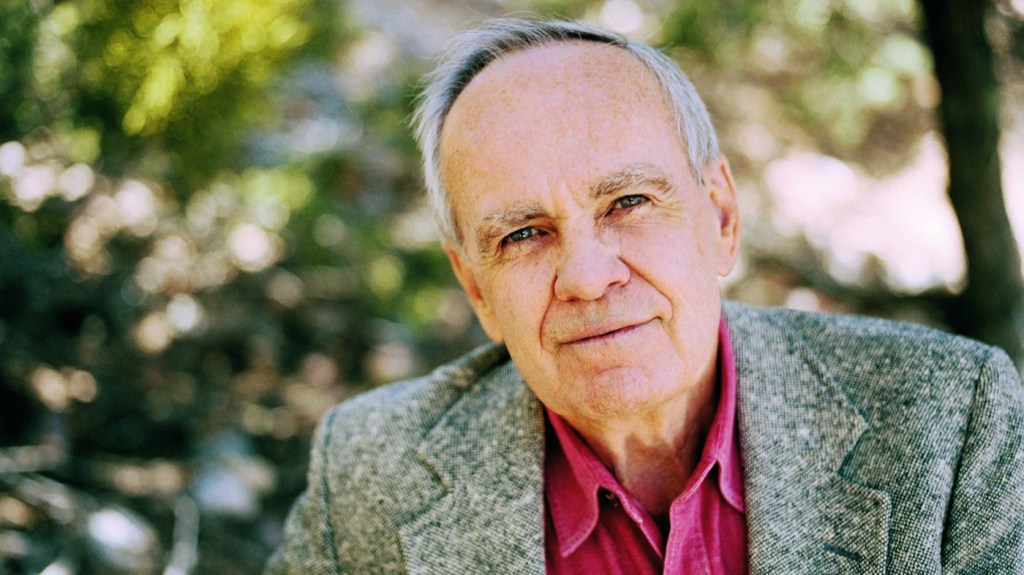
Author Cormac McCarthy

I have been impressed by McCarthy’s work before, when I read Blood Meridian, or The Evening Redness in the West (1985) and All the Pretty Horses (1992). So far, I have read the first two novels of McCarthy’s Border Trilogy, which consists of All the Pretty Horses, The Crossing (1994), and Cities of the Plain (1998). After reading the next novel in the trilogy, I will backtrack and read his first four novels, which are set in the South. Then I will move on to No Country for Old Men (2005) and The Road (2006).

One little note: I would not recommend that you read The Crossing unless you know some Spanish. Much of the dialog set in Mexico is in untranslated Spanish. I was able to get by pretty well, though I had my Cassell’s Spanish Dictionary at my side. But if you can tolerate the language factor, I think you will be mightily impressed by McCarthy’s work.

Glorious [Bang!] 4th

We Celebrate Our Independence by Playing at Terrorism

As I write these words, the air is full of explosions. Dogs and cats are whimpering as they hide under beds, tortured by their pet-loving owners who celebrate our independence with backyard barbecues and playing at being terrorists. I’m not sure that many Americans are giving any attention to the Declaration of Independence from King George III.

Ultimately we got our independence, but mainly because of help from France. You can read all you want about American history and not find a word about George Washington ever winning a battle. France helped us at a horrible cost to the French monarchy: their assistance bankrupted the treasury and was a major contributor to the French Revolution, which began shortly after we won our independence. Louis XVI and Marie Antoinette paid for helping us by being publicly beheaded in Paris’s Place de Grève.

Ingrates that we are, we tend to downplay the French role in winning our freedom. When the British under Cornwallis were tied up at Yorktown, it was because Admiral François Joseph Paul, Comte de Grasse, Marquis of Grasse-Tilly was backing up the Continental Army led by Washington and Lafayette.

Don’t think I’m feasting on escargots, Coquilles Saint-Jacques, and Pouilly-Fuissé because of this. I’m not celebrating at all, especially as it sounds like my street is being bombed.