This is not how I have written some 2,684 blog postings on WordPress. This picture is wrong for the following reasons:
I don’t wear nail polish.
I hate coffee. Even the smell of it sickens me.
I use a desktop, not a notebook computer.
Flowers? Not likely.
The only things that are true to life in this picture is a container for pens and pencils (none of which I use) and the folded eyeglasses. I have two pairs of glasses: one for long distance and the other for reading. It just so happens that my computer screen is midway between the two, so I don’t wear glasses unless I have to enter something from a book.
Next to my monitor on my desk are a Fujitsu Scanner and a Lexmark MC3224 color laser printer. Also various books I have recently reviewed on Goodreads.Com, keys, an MP3 player, various cords for transferring pictures from my digital camera (which is also on my desk), my cellphone, a box of AA alkaline batteries, tons of handwritten notes, and a pile of bills to be paid.
This Is More Like It
Anyhow, this is more in the spirit of the way I write, except I don’t smoke and I use a computer.
How can you become a prolific writer with incurable verborrhea, like me? All I can say is just write. Pick a time of day, have your say, and be religious about it. Every evening at 9 pm, I begin by writing a book review for Goodreads (where I have over 1,700 book reviews), and then thinking of what to post, beginning with an appropriate (or, in this case, inappropriate) picture to lead off with. And prepositions to end a sentence with.
Over the years, it’s become a bit of a compulsion. And that’s the way it has to be if you want to post 2,684 times.
The Martin Droeshout Portrait of Shakespeare for the First Folio
Today is the 457th birthday of William Shakespeare, the Bard of Avon. In my lifetime so far, I have read all the plays attributed to Shakespeare and about half of the poems. Many of the plays I have read multiple times, the leader being Hamlet. Currently, I am re-reading The Winter’s Tale, and, in the months to come, I hope to revisit several other of my favorite comedies, such as Measure for Measure, All’s Well That Ends Well, The Tempest, and Twelfth Night.
I know it would be better to see the plays performed. But even if Covid-19 were still not on the rampage, it’s not easy to see the Bard in performance. So I must reconcile myself to reading the plays.
All in all, he wrote some forty plays, most alone, but some in partnership with other playwrights. No, I do not think that Francis Bacon wrote his plays, nor the Earl of Southampton, nor Wile E. Coyote. I suppose I could live my life in an alternate universe like Donald Trump’s supporters, but I much prefer the real world. Consequently, I am not interested in doubting his authorship. After all, we probably know more about the Bard than we know about any of his contemporaries.
If you like Shakespeare as much as I do, I have a film to recommend: Jacques Rivette’s Paris nous appartient (Paris Belongs to Us) is about a group of young Parisians putting on a performance of Pericles, Prince of Tyre—not one of Shakespeare’s best plays, and one most likely not 100% written by him, but definitely fun for all Bardaholics.
One would think that I would praise the Los Angeles Museum of Art to the skies. I don’t. (Too much non-representational modern garbage.) Instead, I think back to the Cleveland Museum of Art as reflected in the lovely lagoon which leads to the main entrance. It was surrounded by two universities which have since joined into one: Case Western Reserve University used to be the Case Institute of Technology and Western Reserve University.
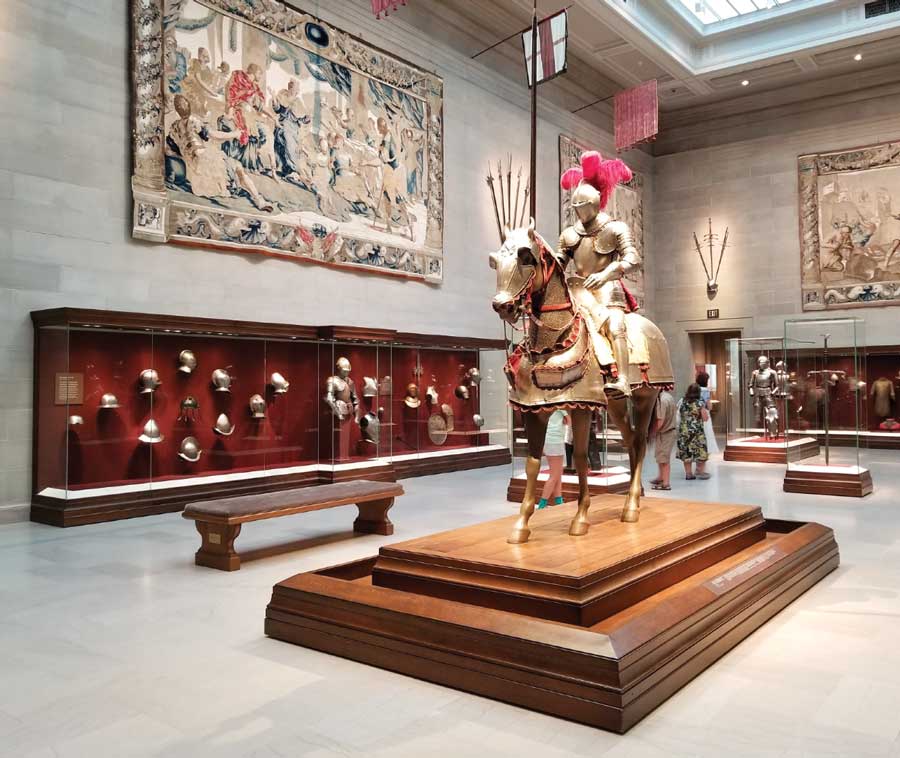
As a high school student, I used to take the bus down to University Circle and take an art appreciation class taught by the museum staff. After each class, I would stroll around the galleries, especially the one dedicated to the French Impressionists. There was a particularly beautiful Van Gogh there. And, as a kid, I loved the medieval armor gallery, the like of which I have never seen in any other art museum.
The Armor Court at the Cleveland Museum of Art
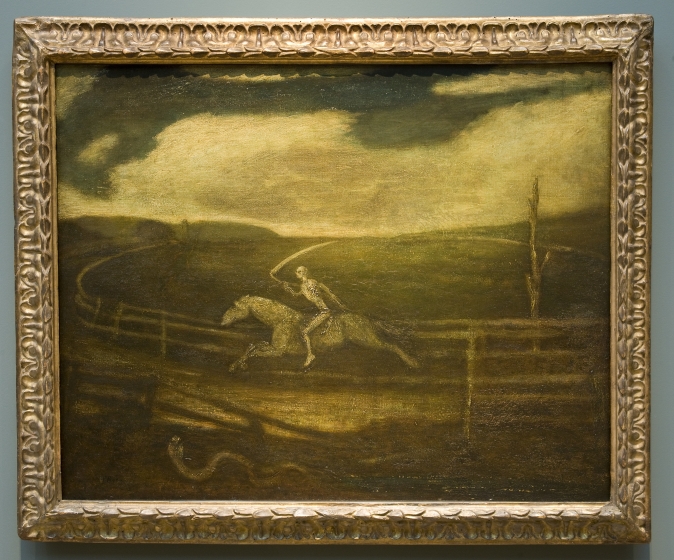
There wasn’t a whole lot of abstract expressionism around, though I suspect there is more now. The closest I came to liking modern art was a moody painting by the American Albert Pinkham Ryder (1847-1917). It was called “Death on a Pale Horse.” I am happy to hear the painting is still there.
“Death on a Pale Horse” by Albert Pinkham Ryder
Each time I went to the museum, I would have lunch at a soda fountain by East 105th Street, always ordering a lime rickey, which was pretty much like a lemonade except it was made with lime. Back then, I thought of lime as an exotic fruit instead of an accompaniment to my tequila.
Places like the Museum meant a great deal to me. It was a way I could get away from home on a Saturday and enjoy myself and learn something at the same time.
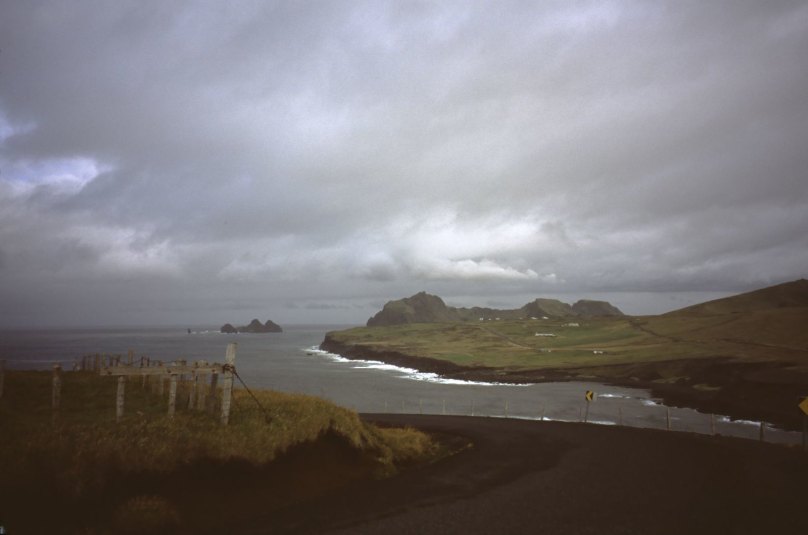
Looking South from the Island of Heimaey, Vestmannaeyjar
These are my oldest image files. They were converted from my Kodachrome slides from a trip I took to Iceland in 2001. Before I went to Iceland, there were parts of Europe that fascinated me. After Iceland, I was fascinated only by Iceland. Was it that I have an inborn need for wastelands like Patagonia or the Southwestern Deserts of the United States or the Peruvian Altiplano? I think so.
With the above photo, I was trying to see if I could find Surtsey, the island that was created by a recent volcanic upheaval beneath the sea. (The island still exists, but it is gradually getting smaller.)
The Ice in Iceland
The Jökulsárlón Glacial Lagoon Near Skaftafell
One of the most incredible sights in South Iceland is the Jökulsárlón glacial lagoon visible from the Ring Road on the way to Höfn in Hornstrandir. On one side of the road are these incredible chunks broken off from the giant glacier Vatnajökull; on the other, is a black sand beach dotted with tiny chunks of transparent ice like diamonds in a black satin setting.
The lagoon and beach are so spectacular that it is almost impossible to just pass on by. Even the bus to and from Höfn stops for a half hour or so. It’s not long enough for a boat ride on the lagoon—but it makes you want to come back, as I did in 2013.
Ice like Diamonds on a Black Sand Beach (Breiðamerkursandur) 2013
Why I Want To Return
My two visits to Iceland have merely whetted my appetite. I have read all the major Medieval Icelandic sagas, most of the novels of Iceland’s lone winner of the Nobel Prize for Literature (Halldor Laxness), and the superb books by Jesse L. Byock on Medieval Iceland. Plus there are parts of Iceland I have not seen, such as the Eastfjords, the stretch between Bru and Akureyri, Siglufjörður, and the Sprengisandur route through the middle of the island.
In Northern Chinese cities, such as Beijing, hutongs are usually narrow alleys formed by adjoining sineyuan, or traditional courtyard residences, squeezed together. Over the last few years, I have enjoyed reading contemporary Chinese literature, which gives me an altogether different view of the Chinese people than I get from contemplating the actions of the Xi Jinping government.
I thought I would list here a few of the best Chinese novels of the latter half of the 20th Century:
Geo Xingjian’s Soul Mountain, probably the best Chinese novel I have read, winner of the 2000 Nobel Prize
Mo Yan’s Shifu, You’ll Do Anything for a Laugh, a collection of novellas
Ma Jian’s Red Dust, a novel that is also a fascinating travel guide as the hero escapes Beijing to discover his country
Ge Fei’s The Invisibility Cloak, a delightful comic novella
Su Tong’s Rice, the most serious book of the bunch with its villainous main character
After reading these books, I have a strong feeling for the essential humanity of the Chinese people. I would have no trouble interacting with them—except for the simple matter of the language barrier.
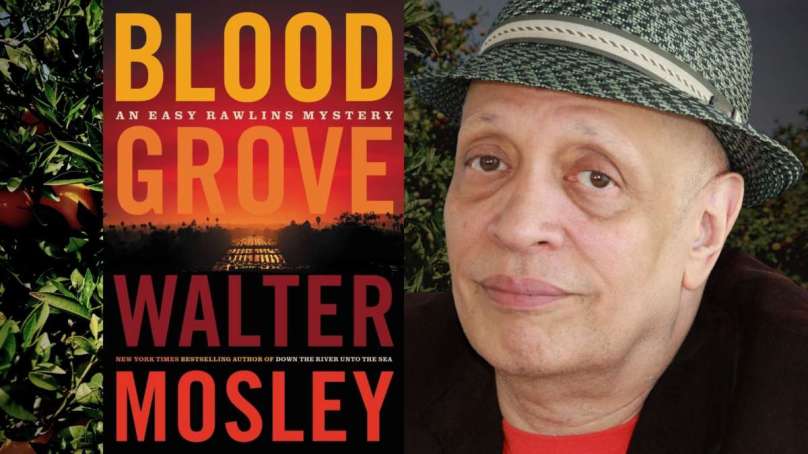
Walter Mosley, Author of the Easy Rawlins Mysteries
Yesterday afternoon, I “attended” the Los Angeles Times Festival of Books symposium entitled California Dreamin’: Los Angeles in the 1960s and 1970s. Actually, the event was virtual, so I tuned in with my computer for what turned out to be an excellent discussion. The moderator was USC Professor David L. Ulin, and the guest speakers were novelist Walter Mosley and political analyst Ron Brownstein.
One of the most interesting points made was about political mobilization against cultural change. Irrespective what the hippies tried to do in the 1960s, enough voters were freaked out to elect Republicans like Ronald Reagan and Donald Trump. As Mosley said at one point, the voters’ response was along the lines of “T don’t want to hear the truth; I want to hear what makes me feel good.” However, cultural change eventually wins out. For example, today’s youth do not tend to oppose homosexual marriage or transgender identification.
The Atlantic Editor Ron Brownstein
This was an interesting conclusion to someone like me, who is amazed that a shrinking demographic like that of the Republican Party can still win elections. For now, anyhow.
After the one-hour discussion ended, I immediately ordered the featured books by Mosley and Brownstein shown in the above photographs.
I arrived in Los Angeles at the tail end of 1967. One would have had to be deaf and blind to recognize the ferment that was taking place—only to be replaced by the 1970s and the onrush of a paranoid political conservatism.
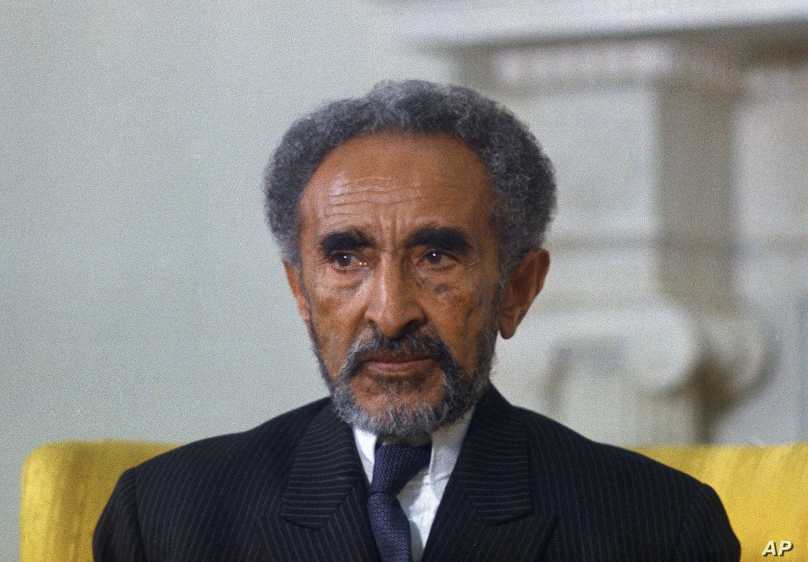
The Emperor Haile Selassie of Ethiopia, the Lion of Judah
He was short and somewhat frail, yet Haile Selassie managed to reign as Emperor of Ethiopia for some 44 years, from 1930 to 1974, when his government was toppled by a revolution. Although his book about Selassie, entitled The Emperor, has come under fire for certain inaccuracies, Ryszard Kapuściński leaves us an unforgettable portrait which is probably mostly true. Take, for instance, the following excerpt:
His Majesty spent the hour between nine and ten in the morning handing out assignments in the Audience Hall, and thus this time was called the Hour of Assignments. The Emperor would enter the Hall, where a row of waiting dignitaries, nominated for assignment, bowed humbly. His Majesty would take his place on the throne, and when he had seated himself I would slide a pillow under his feet. This had to be done like lightning so as not to leave Our Distinguished Monarch’s legs hanging in the air for even a moment. We all know that His Highness was of small stature. At the same time, the dignity of the Imperial Office required that he be elevated above his subjects, even in a strictly physical sense. Thus the Imperial thrones had long legs and high seats, especially those left by Emperor Menelik, an exceptionally tall man. Therefore a contradiction arose between the necessity of a high throne and the figure of His Venerable Majesty, a contradiction most sensitive and troublesome precisely in the region of the legs, since it is difficult to imagine that an appropriate dignity can be maintained by a person whose legs are dangling in the air like those of a small child. The pillow solved this delicate and all-important conundrum.
I was His Most Virtuous Highness’s pillow bearer for twenty-six years. I accompanied His Majesty on travels all around the world, and to tell the truth—I say it with pride—His Majesty could not go anywhere without me, since his dignity required that he always take his place on a throne, and he could not sit on a throne without a pillow, and I was the pillow bearer. I had mastered the special protocol of this specialty, and even possessed an extremely useful, expert knowledge: the height of various thrones. This allowed me quickly to choose a pillow of just the right size, so that a shocking ill fit, allowing a gap to appear between the pillow and the Emperor’s shoes, would not occur. I had fifty-two pillows of various sizes, thicknesses, materials, and colors. I personally monitored their storage, constantly, so that fleas—the plague of our country—would not breed there, since the consequences of any such oversight could lead to a very unpleasant scandal.
What happens when one of your favorite authors forms a friendship with another of your favorite authors and then writes a book about that friendship? That’s the case when Paul Theroux came out in 1998 with Sir Vidia’s Shadow: A Friendship Across Five Continents. Both authors wrote not only novels but travel books. IMHO, Naipaul was the better novelist (by a long shot); but Paul Theroux’s travel books are far better—to the extent that they have played a major role in the way I lived my life over the last forty years.
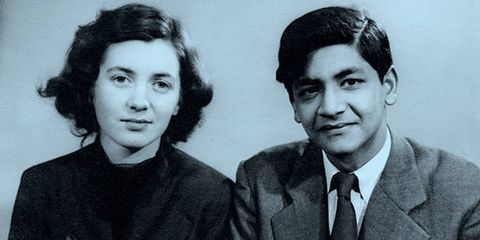
Sir Vidiadhar Surajprasad Naipaul was born in Trinidad of a Hindu Indian family. He parlayed his colonial background into a brilliant series of novels which eventually gained for him a knighthood (in 1990) and the Nobel Prize in Literature (in 2001). He encountered Paul Theroux in Uganda, where both were living for a while. They became fast friends even before Theroux published his first novel.
That friendship became an instrumental part of Theroux’s life. Even when separated by thousands of miles, they wrote to each other frequently. He was even sexually attracted to Naipaul’s first wife, Patricia, who died in 1996.
Patricia and Vidia Naipaul
Throughout the long friendship, Vidia Naipaul turned out to be a rather prickly individual. Some of it was due to his Brahmin fastidiousness:
“I can’t sleep in that bed,” he said. “It’s tainted. Why did he do it? The foolish, ignorant man!”
“What happened?” I asked.
“One of the workmen in Vidia’s bedroom was explaining something,” Pat began.
His face twisted in nausea, Vidia said, “And he sat on my bed…. He put his bottom on my bed.”
What would have bothered me more than it seemed to bother Theroux was that Naipaul was notorious about not picking up the check when they went out for dinner. And this was at a time when Paul was at the beginning of his career and constantly short of funds.
When Patricia died, the friendship suddenly came apart. Shortly after the funeral, Vidia married an Indian woman named Nadira, whom he had met previously in Africa. Quite suddenly, all of Paul’s attempts to contact Vidia were intercepted by Nadira, who was highly critical of the American writer.
The coffin nail was driven into the friendship when Paul and his son were taking a walk in London and suddenly encountered Vidia, who did not acknowledge him. When Paul addressed him, Vidia finally recognized him. When asked if he had received a recent fax from Paul, Naipaul was reluctant to discuss the matter further. When Paul asked what was to be done, Naipaul answered, “Take it on the chin and move on.”
Theroux was shocked:
He knew. It was over. It never occurred to me to chase him. There would be no more. And I understood the shock of something’s being over, like being slapped—hurt as the blood whipped through my body. “Like being hit by a two-by-four,” my friend had said when Vidia insulted her in Oregon.
This exchange takes place on the last page of the book. Theroux could have done a job of character assassination on his old friend, but he chose not to. After all those years, the friendship had meant a great deal to him, even if it ended badly.
I, too, have had prickly friends. Some I walked away from. Some I took up with again after a number of years had transpired. Would I have done differently than what I wound up doing in the end? Probably not.
In the end, I really liked Theroux’s book, which demonstrated that—for a time—his friendship with Vidia had great value in his life.
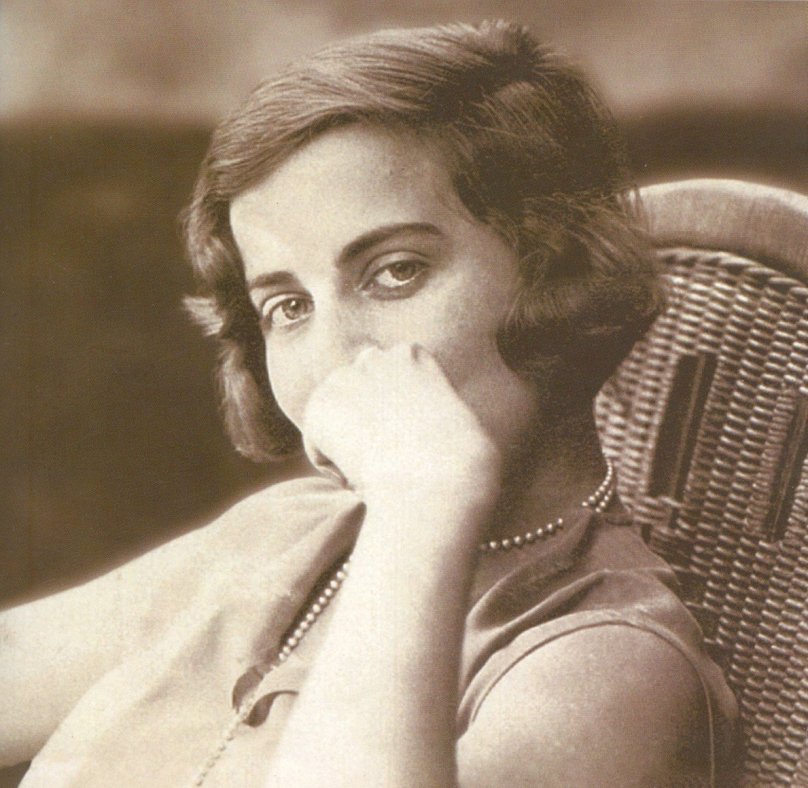
Argentinean Poet and Writer Silvina Ocampo Aguirre (1903-1993)
I’m not about to call her a poetess, because she could hold her own in the literary world of women and men. She was a great writer who was married to another great writer, Adolfo Bioy Casares, friend of Jorge Luis Borges. I understand she is buried in Recoleta Cemetery in Buenos Aires, which I have visited three times without finding her grave. I will have to make another visit and try harder to find her so that I can pay homage to her beauty and talent.
The following poem is from her collection Poemas de amor desesperado (Poems of Desperate Love, 1949).
Song
Oh, nothing, nothing is mine, not the tone of my voice, nor my absent hands, nor my distant arms! I have received it all. Oh, nothing, nothing is mine. I am like the reflections of a gloomy lake or the echo of voices at the bottom of a blue well when it has rained. I have received it all: like water or glass that turns into anything, into smoke, into a spiral, into a building, a fish, a stone, a rose. I am different from me, so different, like some people when they are in society. I am all the places I have loved in my life.
I am the woman I hated most. and the perfume that wounded me one night with decrees of an uncertain destiny. I am the shadows that entered a car, the luminosity of a port, the secret embraces hidden in the eyes. I am the knife of jealousy, and the aches red with wounds. Of the long eager glances I am the sparkle. I am the voice I heard behind the blinds, the light, the air above the cypress trees. I am all the words that I adored on the lips, in the books that I admired. I am the greyhound that fled in the distance, the solitary branch among the branches. I am the happiness of a day, the whisper of the flames. I am the poverty of naked feet, with children going silently away. I am what they did not tell me and I knew. Oh, I wanted everything to be mine! I am everything I have already lost. But everything’s elusive like the wind and the river, like the golden summer flowers that die in your hands. I am everything, but nothing, nothing is mine, not the pain, nor the joy, nor the terror, not even the words of my song.
This poem can be found in the excellent edition of Silvina Ocampo’s poetry published by NYRB/Poets and translated and edited by Jason Weiss.
The Peru of a Hundred Years Ago Through Peruvian Eyes
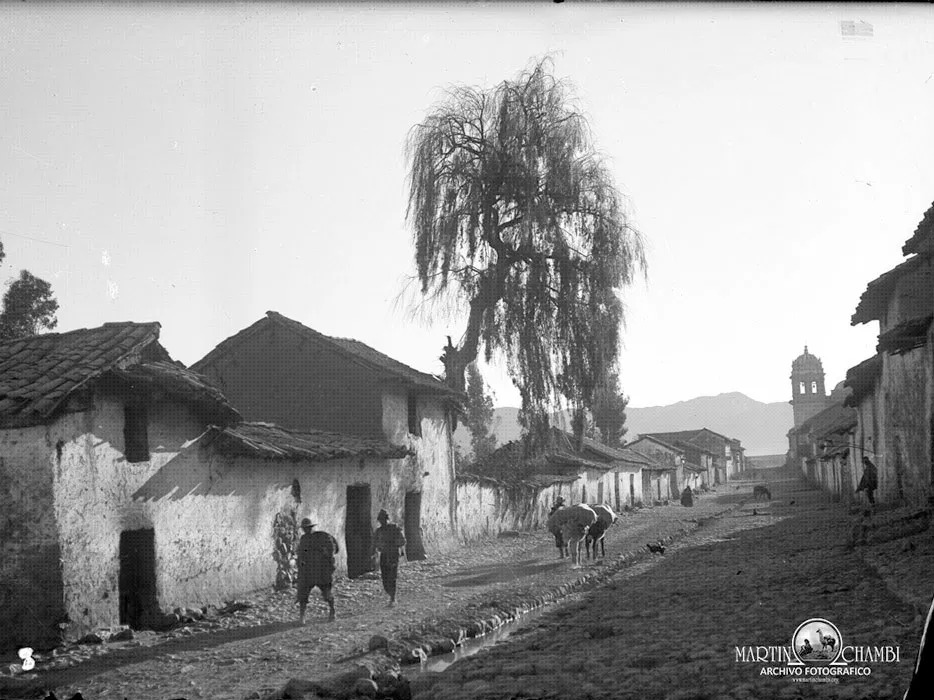
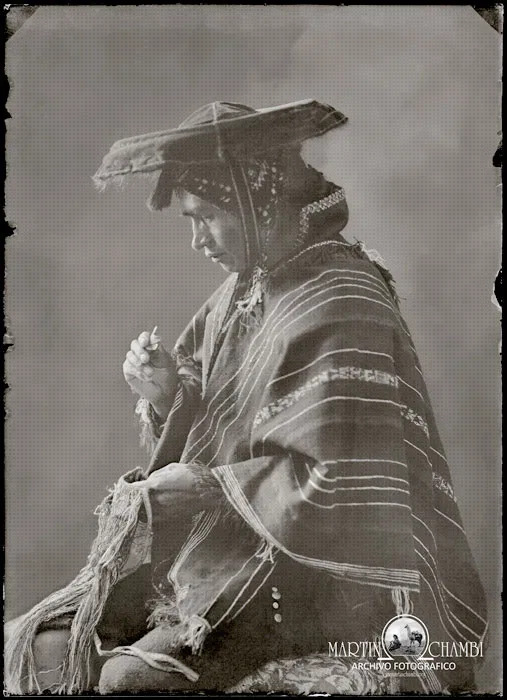
Martín Chambi Jiménez (1891-1973) was a Peruvian photographer who was active until a 1950 earthquake destroyed much of his beloved Cuzco. In his studio, he took pictures like the above musical group with their traditional instruments. But he also traveled around, photographing the altiplano of Peru, the city of Cuzco, and such sites as the ruins of Machu Picchu.
Cuzco Street Scene
In 1979, the Museum of Modern Art in New York displayed an exhibition of Chambi’s photographs, which traveled to other cities and inspired other shows displaying his work. Chambi was a native-born speaker of Quechua, the language of the Incas, and he saw the people and the landscape as only a native could see them.
Quechuan Woman Chewing Coca Leaves
Below is one of the many images he shot at the ruins of Machu Picchu.
Machu Picchu As It Was 100 Years Ago
Photographers like Chambi are a rare link to the past in faraway places that were not in the mainstream of Western European Civilization.













 Tarnmoor
You must be logged in to post a comment.