Okra

Last week, I visited the big Wednesday Farmers’ Market in Santa Monica and picked up a bottle of pickled okra. I have always liked okra, though Martine won’t touch it. (The seeds hurt her gums.) I remember liking to cook a vegetarian Indian dish called Aloo Bindhi, which consists of a dry curry of okra and potatoes. Quite tasty, though you have to dry the okra with paper towels after washing it so that it doesn’t turn to mush.

What I haven’t tried is the main okra dish that is part of American cuisine, namely gumbo. But that has nothing to do with the okra per se as the fact that I am not fond of chicken, shrimp, or crawfish.

Today I chowed down on the pickled okra while warming up my ground turkey tamale pie. I am very fond of pickled vegetables when the temperature outside begins to soar.

By the way, if you’re interested in trying Aloo Bindhi, here is a recipe that looks pretty good.

Howdy Doody and Harvey Rice

This is a repost from March 30, 2013.

That’s me on a tricycle, sometime around 1950. We were living at 2814 East 120th Street off Buckeye Road in Cleveland. The whole place was filthy with Hungarians. There were so many, in fact, that I did not know the English language existed until two things happened: First, we got a television set late in 1949, and I started watching the Howdy Doody show at 5 pm every day, just after Kate Smith closed her show by singing “When the Moon Comes Over the Mountain.” (It took me a while to understand what Howdy and Buffalo Bob Smith were saying.)

Secondly, I started kindergarten at Harvey Rice School on East 116th Street in January of 1950. My parents thought that, living as we did in a Hungarian neighborhood, the public school teachers would speak Hungarian. Nothing doing! Mrs. Idell sent me home with a note pinned to my shirt that asked, “What language is this child speaking?” As if she didn’t know!

That last factor decided my Mom that we had to leave our little Hungarian womb on the East Side and move to the suburbs. Gone forever would be the Reverend Csutoros and the First Hungarian Reformed Church; the Regent and Moreland movie theaters; Kardos’s Butcher Shop with its delicious Hungarian sausages; the College Inn, where my Dad would take me for French Fries; and the Boulevard Lanes where my Dad bowled and I kept score.

It was a cohesive little world, but my parents ate the apple from the Tree of Knowledge when they decided to raise me as a Hungarian. You know what? I’m grateful that they did. I made my adjustment to English (and I’m still making it), but my heart belongs to the Magyar Puszta.

Not at All Cute

As an apartment dweller, there is nothing that bothers me so much as little yapper dogs who bark incessantly. Their owners arrive at a strange kind of belief that the cuteness of their pets despite all other indications pointing at the fact that excitable small furballs are creatures from hell and their constant barking is nothing more than a canine form of mental breakdown.

According to the American Kennel Club (AKC):

Some barking is normal, but when barking becomes excessive not only is it frustrating for owners, but it’s also a sign your dog may be stressed, or their needs aren’t being met. Dogs use their barking as a means of communicating with us when they need things: to go outside, to play, because they are hungry, or because they are concerned about things. There is always a reason for the barking, and it’s our job to figure out what our dogs need.

All well and good, but apartment dwellers do not seem to get the message. When I first moved into this building in 1985, having pets was forbidden. But now it seems that many prospective renters are unable to get by without a small, noisy, outraged ball of fluff.

The barking gets particularly bad when the owners are away, and the dog is left alone to howl in the empty apartment for food, walkies, love, or whatever.

When I go to the supermarket, I am met by a sign that says Service Dogs Only, but inside there are numerous people, mostly elderly women, with their “furbabies” in tow as “mental health service dogs.” It seems that people are ever more dependent on small dogs with objectionable behaviors.

I know the dog owners are really to blame, as the AKC maintains, but why is it that I have never seen a well-adjusted small dog?

The Poet of Apprehension

The Young Patricia Highsmith

She was a gorgeous Texan from Fort Worth who just happened to be perhaps the best woman mystery novelist of all time. Graham Greene called her “The Poet of Apprehension.” Her novels and stories were unusually dark, beginning with her first novel, Strangers on a Train (1950), which was turned into a film by Alfred Hitchcock. Patricia Highsmith (1921-1995) was depressed and preferred relationships with women. Eventually, the depression dragged her down and destroyed her good looks.

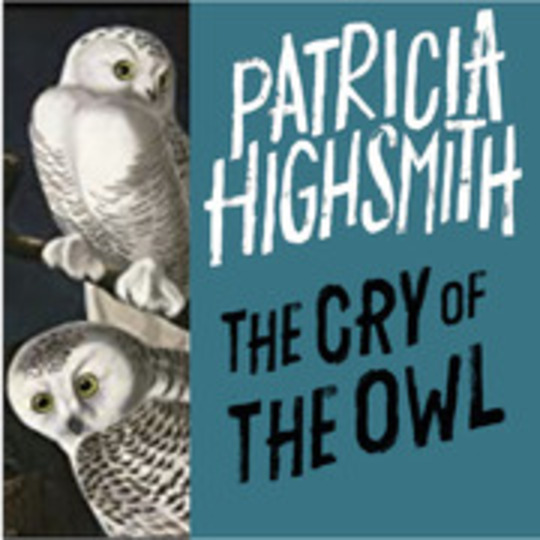
I have just finished reading her novel The Cry of the Owl (1962), one of her darkest novels. Robert, her hero, is a strange kind of asexual Peeping Tom who falls for a young woman by watching her prepare salads and entertain her boyfriend Greg. Things begin to develop dangerously when Jenny, the young woman, ends her relationship with Greg and begins to fall for Robert. There follow two murders, several attempted murders, a suicide, some incredibly sloppy police work, and encounters with the neighbors from hell.

When Greg teams up with Robert’s ex-wife Nickie, they both decide to make life difficult for Robert in every way possible, up to beating him up, wounding him, or killing him.

By the time I finished reading the novel about an hour ago, I began to understand that relationships can go bad at warp speed.

In addition to The Cry of the Owl, I have read the following Highsmith novels and collections, each of which I loved:

  • The Talented Mr. Ripley (1955)
  • A Game for the Living (1958)
  • A Suspension of Mercy (1965) – Released in the U.S. as The Story Teller
  • A Dog’s Ransom (1972)
  • Little Tales of Misogyny (1975)
  • The Black House (1981)

Fortunately, Highsmith was a fairly prolific writer, and I have only just begun to scratch the surface of her work.

Limes

Of late, I have become addicted to limes. In the morning, I squeeze a wedge of lime into my cup of hot tea (currently Darjeeling). At dinnertime, I mix the juice of half a small lime with a glass of tea remaining in the pot since morning, and add a packet of non-caloric Splenda to sweeten it.

Sometimes, when I think I am drinking too much tea (as I am wont to do), I just replace the cold tea with water, sometimes adding a dash of tequila, particularly when it is hot.

Typically, I buy limes by the bag. The unit price at the market is ridiculously high, and I have no difficulty finishing a bag of twenty or so limes within a few days.

What about lemons? I used to use lemons the way I use limes, but I have come to prefer the flavor of limes. During my travels in Mexico and Central America, I have rarely seen lemons at all. I presume that they grow there, but the locals, like me, probably prefer the taste of limes.

Day of Infamy

On our first full day in Hawaii, Martine and I plan to visit the Pearl Harbor National Memorial in Honolulu. We had been there before, in 1996, but I am more interested this time in reading up on Hawaii history before I go. The last time, I frankly thought I wouldn’t care for O’ahu, because it was so touristy. Now I begin to realize that it is touristy for good reason.

There are many stories about how the Pearl Harbor attack of December 7, 1941 came to be. Some have even speculated that Franklin Roosevelt knew in advance about the attack, since we had already cracked the Japanese Navy secret code. According to this theory, FDR wanted the U.S. in the war, and he was tired of the Congress lollygagging about what to do about Germany and Japan. It is interesting that none of the aircraft carriers were in the harbor during the time of the attack; and the battleships there were pretty long in the tooth.

That’s not to take away from Japan’s accomplishment. We lost a lot of good men—but probably no more than we would have lost of Congress had delayed for another six months to a year.

I remember that the whole Pearl Harbor National Memorial was pretty impressive back then. I am sure that it is even more impressive now.

This afternoon, I did a bit of research on how to use the Honolulu bus system to travel between Waikiki and the Memorial. I suppose we could pay big bucks and take a shuttle, but we could get off by paying four dollars for the both of us, round trip. I used the website TheBus.Org to obtain route maps and schedules.

Lament of the Blind Librarian

Though he lost the use of his eyes in the 1950s, Jorge Luis Borges was appointed to head the National Library of Argentina. He was the second blind librarian there, the first being Paul Groussac. Borges works on the theme of his blindness and Groussac’s in the following poem:

Poem of the Gifts

No one should read self-pity or reproach
into this statement of the majesty
of God, who with such splendid irony
granted me books and blindness at one touch.

Care of this city of books he handed over
to sightless eyes, which now can do no more
than read in libraries of dream the poor
and senseless paragraphs that dawns deliver

to wishful scrutiny. In vain the day
squanders on these same eyes its infinite tomes,
as distant as the inaccessible volumes
that perished once in Alexandria.

From hunger and from thirst (in the Greek story),
a king lies dying among gardens and fountains.
Aimlessly, endlessly, I trace the confines,
high and profound, of this blind library.

Cultures of East and West, the entire atlas,
encyclopedias, centuries, dynasties,
symbols, the cosmos, and cosmogonies
are offered from the walls, all to no purpose.

In shadow, with a tentative stick, I try
the hollow twilight, slow and imprecise—
I, who had always thought of Paradise
in form and image as a library.

Something, which certainly is not defined
by the word fate, arranges all these things;
another man was given, on other evenings
now gone, these many books. He too was blind.

Wandering through the gradual galleries,
I often feel with vague and holy dread
I am that other dead one, who attempted
the same uncertain steps on similar days.

Which of the two is setting down this poem—
a single sightless self, a plural I?
What can it matter, then, the name that names me,
given our curse is common and the same?

Groussac or Borges, now I look upon
this dear world losing shape, fading away
into a pale uncertain ashy-gray
that feels like sleep, or else oblivion.

Good Plain Food Since 1908

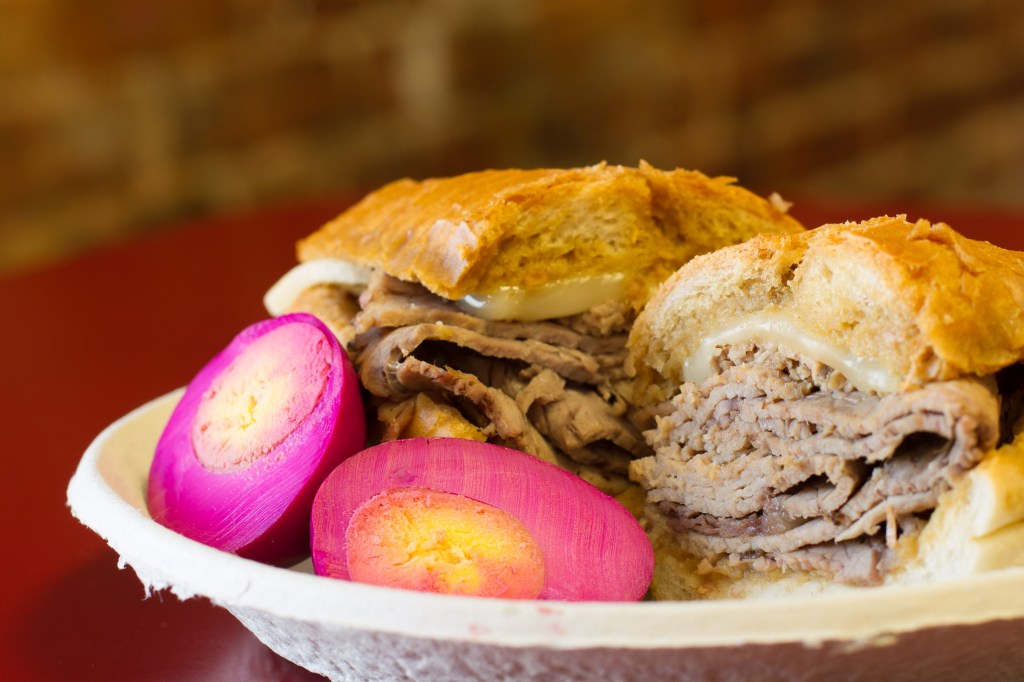
Philippe’s Dipped Roast Beef Sandwich with Pickled Egg

Martine has always liked good plain food, preferably old-fashioned American chow. There are fewer and fewer places which serve that type of food. One of the best is Philippe’s The Original, which sits at the corner of Alameda and Ord at the edge of Chinatown and just a few steps north of Olvera Street and its Mexican restaurants. Also, it is within walking distance of Union Station.

Philippe’s was opened 114 years ago and has been popular from the first. Whenever there is a home game at nearby Dodger Stadium, the lines could run out the front door. On any given day, you can find policemen, firemen, railroad employees, and God only knows. Everyone could use a great sandwich. Once Martine was there when there were even a bunch of Contra Costa County cops from Northern California chowing down on Philippe’s famous single-dipped roast beef sandwiches.

Philippe’s Restaurant

At a time when there are any number of “creative” chefs building little towers of unlikely ingredients into tasteless messes, it is good to find a place that knows how to (1) keep it simple and (2) keep it tasty.

I do not share Martine’s requirement for simple food, my preferences being Asian and Mexican; but I do appreciate having a restaurant in town where I can take her without giving her a pain in the tum. And I actually like their food, too.

Cozy Mysteries?

On my occasional visits to the few bookstores that remain, I have become conscious that some dealers have split mysteries into two categories:

  • The traditional hard police procedurals and noir works
  • “Cozy mysteries”

What? If they find a cadaver in a “cozy mystery,” does it not smell? Does it look nice rather than ghastly? One thing for sure, it tends to be either British or it imitates British mysteries. I am not implying that all British mysteries are “cozy,” because they aren’t. Take the works of Ian Rankin and P. D. James—which are anything but “cozy.”

I suspect that the sub-genre is meant to appeal mostly to women readers who like tales emphasizing ratiocination (as Poe called it) rather than being exposed to any form of unpleasantness. (Curiously, Dorothy Sayers’s excellent The Unpleasantness at the Bellona Club verges on “cozy” at times.)

Unpleasantness doesn’t bother me. I just finished reading Charles Willeford’s The Way We Die Now with its bloody murder of two Floridian backwoods baddies, and I found it rather soothing in a strange way.

Avoiding all unpleasantness, however, would bother me. I have always felt that whatever we most studiously avoid winds up biting us in the ass.

It Is Done

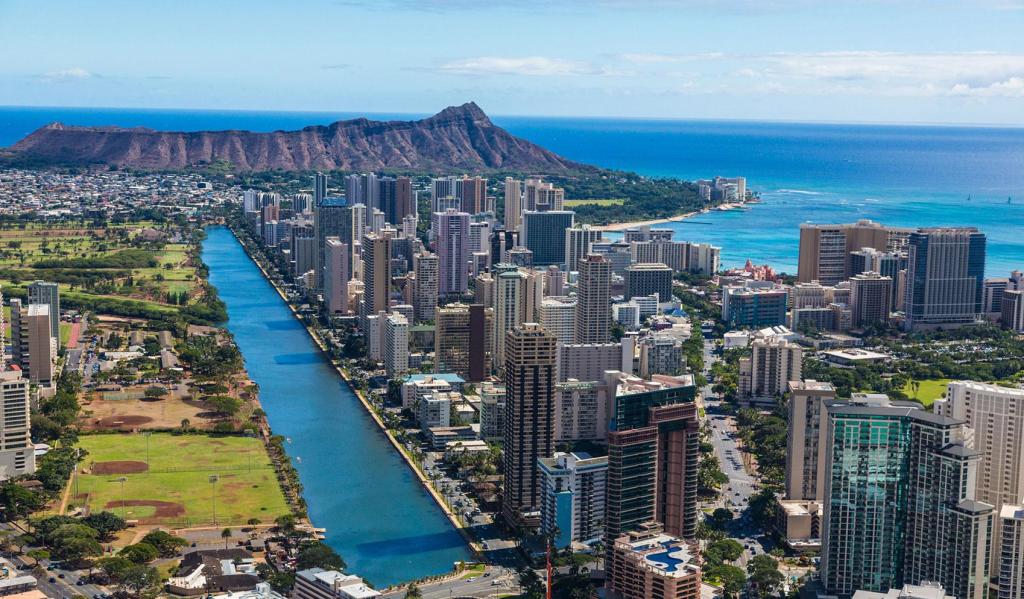
Waikiki, the Ala Wai Canal, and Diamond Head

Today I made the final payment on our September vacation in Honolulu. We got a good price on a package deal including the flight, transfer to and from the airport, and the hotel. All that remains are meals, admission fees, shopping, and public transportation.

Notice, I do not include an automobile. When Martine and I stayed at the Pacific Beach Hotel in 1996, a rental car was included, with no parking fees at the hotel. Today, car rental fees have gone through the roof, and hotels charge anywhere from $35 to $45 a night just for parking on their grounds.

How much will Martine and I pay for public transportation on Honolulu’s bus system? For both of us, the total will come to a mere $12.00 total. Right after we check in at our hotel, we head to the nearby Ala Moana shopping center and pick up a HOLO card for seniors, free of charge, at the office of the Satellite City Hall there. Thereafter, once we have dished out $12.00 in fares (three round rips for two people at $2 each), the bus is free.

Americans hate taking public transportation. Neither Martine nor I mind it. In 1996, we drove all around the island; consequently, we don’t feel we have to repeat it.

In future posts, I will describe the places we plan to visit.