The Januarius Project 2022

Near the beginning of every year, I set aside a month dedicated to reading authors I have never read before. The reason is to keep my book choices from becoming stale as I stick to the same set of “canonical” writers. So far this month, I have completed four books:

  • Pete Beatty’s Cuyahoga, a tall tale of Cleveland, Ohio (the city of my birth) set in 1837.
  • Angela Carter’s The Sadeian Woman and the Ideology of Pornography, a study of how the Marquis de Sade’s fiction morphed into modern-day porn.
  • Martha Gellhorn’s Travels with Myself and Another, a travel classic by a famed war correspondent and former wife of Ernest Hemingway.
  • Nic Pizzolatto’s Galveston, a superb, but bleak neo-noir novel about a hit man on the run to a city about which he has fond memories due to an early relationship.

It’s still early in January. I am currently reading Megan Abbott’s Die a Little and have plans to read works by George Meredith, William Beckford, Walter Kempinksi, Sam Wasson, Lászlo Földényi, Ben Loory, Elizabeth Hardwick, among others. According to past experiences doing this sort of thing, I will end up liking about half of the Januarius finds enough to read other works by them.

One result is that I find myself reading more books by women authors, which is a good thing.

Horror Journeys

If you read Martha Gellhorn’s Travels with Myself and Another: A Memoir, you should probably start with the penultimate chapter entitled “What Bores Whom?” In it, she muses about a large group of hippies staying at her hotel in Eilath, Israel’s port on the Gulf of Aqaba. The gilded youth were mostly strung out on hash, and their conversation was mostly about how so-and-so was squashed out of his or her gourd. And then, quite suddenly, we get Martha’s thoughts about travel:

Thinking of those kids at Eilath has given me a new slant on horror journeys. They are entirely subjective. Well of course. If I had spent any time analyzing travel, instead of just moving about the world with the vigour of a Mexican jumping bean, I’d have seen that long ago. You define your own horror journey, according to your taste. My definition of what makes a journey wholly or partially horrible is boredom. Add discomfort, fatigue, strain in large amounts to get the purest-quality horror, but the kernel is boredom. I offer that as a universal test of travel, boredom, called by any other name, is why you yearn for the first available transport out.

Travels with Myself and Another gives us four journeys, all of which are quite horrorshow. But they are by no means boring, though I would have given money to have stayed at home. First there was her trip with then-husband Ernest Hemingway to China in the middle of her war with Japan. That was followed up by a boat trip in the Caribbean in 1942, at a time when Nazi U-Boats were sinking hundreds of ships there. The longest chapter is about a solo trip to Africa, starting in Cameroon, stopping in Chad and the Sudan, and finally a jaunt through East Africa in a Land Rover which she drove herself. Finally, there is a short chapter about a visit to Moscow around 1972 to visit Nadezhda Mandelstam, the widow of poet Osip Mandelstam—during which she could not get a single decent meal.

Although all four of her journeys are truly horrible, the author seems to revel in her difficulties. In a way, they make her observe more clearly. And her book is a travel classic despite all the “discomfort, fatigue, strain.”

I think I will read some of her war correspondence next to see how she regards travel when she is being fired upon.

Among the Orc-Minded

I have been spending some time in Middle Earth the last few days, watching Sir Peter Jackson’s Hobbit trilogy. It made me think of much I don’t like about my fellow Americans, particularly white males. With their scruffy look, tattoos, and exaggerated machismo, I see many of them as little better than Tolkien’s orcs. Take this quote from The Lord of the Rings:

Much of the same sort of degraded and filthy talk can still be heard among the orc-minded; dreary and repetitive with hatred and contempt, too long removed from good to retain even verbal vigour, save in the ears of those to whom only the squalid sounds strong. [Italics mine]

Look at our movie heroes. How many of them remind you of the figure above? Sly Stallone, Vin Diesel, Bruce Willis, Dwayne Johnson, Russell Crowe—all could be cast as Middle Earth villains. The tent-dwelling homeless population of Los Angeles all look like orcs. It’s a look they tend to strive for: The “No one messes with me” look. I mean, who would want to? Even the police are not eager to make contact with males who look mean and diseased at the same time. Would you even want to share a police cruiser with one of them?

As for myself, I’m not into aggressive squalor. I’d prefer to throw in my lot with the elves, hobbits, wizards, dwarves, and men of Middle Earth.

Missionary Position

I am currently reading Martha Gellhorn’s Travels with Myself and Another. If the name sounds familiar, it’s because she was not only an ace war correspondent, but also the third wife of Ernest Hemingway. In the middle of a trip across Africa, she writes the following:

On the face of it, missionaries here are a doomed lot. They have been in Africa for over a hundred years and even if conversion to Christianity is merely a head count, I doubt they are a roaring success. I wouldn’t preach anything to the blacks, not anything at all. If they want our kind of medical care, it should be given to them, but ideally by trained black doctors, though that may disturb the Darwinian balance of their world and their lives. A child is born each year; the hardiest live. The survivors have to be strong enough to endure this appalling climate and land. Much better to teach the women birth control. But I think nothing will be taught or learned for a very long time, and I do not consider this a disaster by any means. Who are we to teach? Leave them alone is my cry; let them find their own answers. We cannot understand them and the answers er have found haven’t been anything to cheer about, for look at us….

Things To Do in Iceland

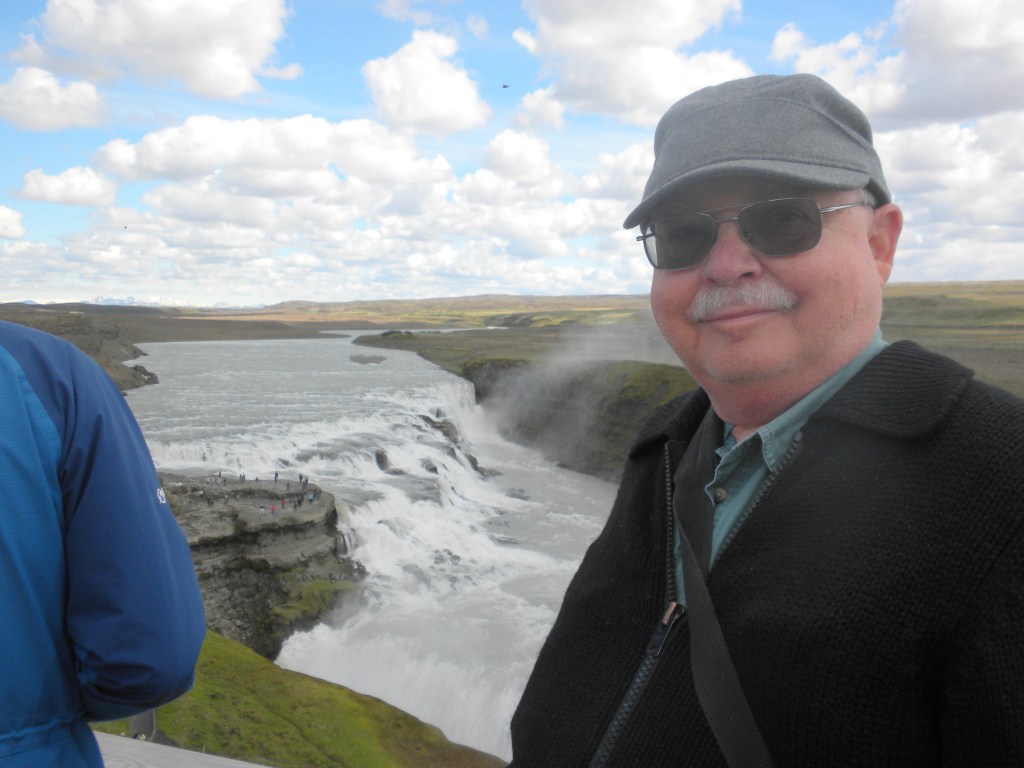
I’ve been to Iceland twice—in 2001 and 2013—and I hope to go again. People don’t have any concept of what the country is like. One hears the old chestnut that “Iceland should be called Greenland and vice versa.” With global warming, I suspect that both countries will in future be free of most ice. Below are a few highlights if you are thinking of visiting my favorite country in Europe:

  • Fish is always the cheapest and most interesting thing on the menu, and you’re never far from the ship that brought it to port.
  • If You Don’t Like Fish, don’t worry. Icelanders eat tons of hamburgers, hot dogs (which they call pylsur), and pizza.
  • The Interior of the Country is a picturesque and mostly uninhabited wasteland.
  • Icelandic Sagas from the 12-13th centuries A.D. are the best things to read, followed by the novels of 1955 Nobel prizewinner Halldor Laxness.
  • Islands off the coast of Iceland make great destinations, particularly Heimaey and Flatey. The first had a famous volcanic eruption in the 1970s, and the second was the site of a medieval monastery.
  • English is the Second Language of most Icelanders under the age of 70, so communication is no problem.
  • Iceland Is Expensive, particularly if you want to rent a car. Not to worry, there’s good long distance buses.
  • Waterfalls and Rainbows are everywhere, making it the most scenic country in Europe—if it can be said to be part of Europe.
  • Volcanoes are all over the place, and many of them are active. Don’t be surprised if you see one erupting during your trip.
  • Reykjavík contains half the population of Iceland, yet it’s small and quite walkable (if the weather isn’t foul).
  • The Westfjords are a bit out of the way, but shouldn’t be missed. Great hiking and incredible coastline views.
  • Northern Lights can be seen in the winter, but you can’t be 100% sure of a sighting.

How (Not) to Celebrate New Years

A traditional way of celebrating New Years Eve in France is by setting cars alight. According to the BBC, as of some 12 hours ago, a total of 874 cars have been set on fire. I’m sure that’s kind of like a firecracker, but multiplied out, that’s got to be about 10 million dollars in damages.

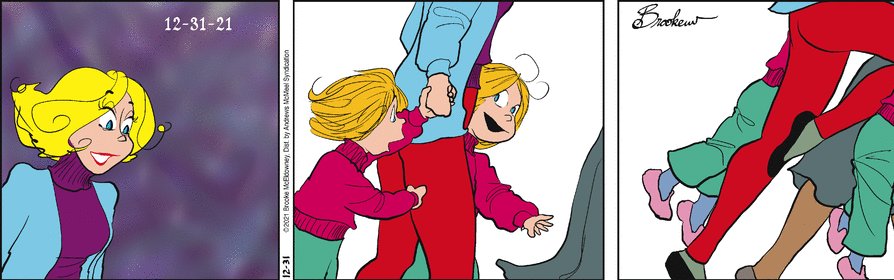
Far better is a series of two cartoons from Brooke McEldowney in his “9 Chickweed Lane” series. The first cartoon ran on December 31 and was a bit confusing:

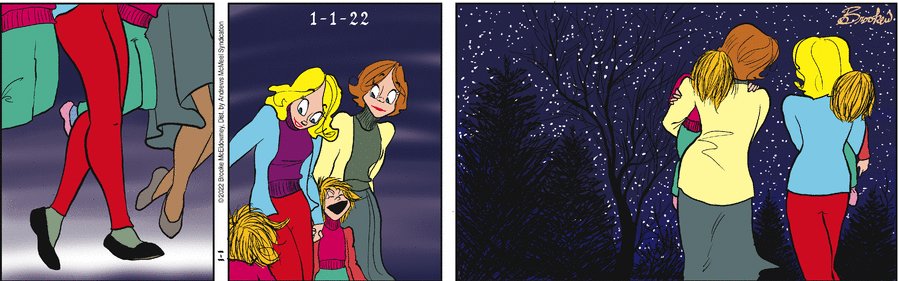
It all came clear with today’s cartoon:

I loved this set of images. We make a jump from one reality to another. Actually, it’s the same reality: Just a different template overlaying it. BTW, the look on the little girl’s face is priceless.

So let’s take that leap without incinerating any automobiles, if you please.