Not a Nice Guy

Representative Jim Jordan (R, Ohio)

Ever since Donald Trump came down that escalator at the Trump Tower to announce his run for the presidency on June 16, 2015, American politics has changed from bad to nightmarish. The ongoing travails of the House of Representative beginning with the ouster of Kevin McCarthy and the failed attempts by Jim Jordan to become Speaker of the House resemble nothing so much as the early days of Nazi Germany.

It seems the Republican Party is crawling with Brown Shirts Are we are heading toward some ghastly Night of the Long Knives in which the extreme MAGA Republicans with their totalitarian tendencies will be violently repudiated?

Jordan thought it a nifty idea to authorize threatening phone calls to the wives (?!) of Republican Congressmen who didn’t vote his way. It’s a long way from the America of George Washington, Benjamin Franklin, and Thomas Jefferson or the Republican Party of Abraham Lincoln. At the same time we are sanctioning Venezuela, we are becoming more like them.

Double ugh!
Amusing, But No Longer True

H. L. Mencken knew how to write, but not everything he wrote holds up today. In Prejudices Second Series, he took a hatchet to the literary reputation of the American South in an essay entitled “The Sahara of the Bozart.” Since then, some of the best American writing has come from the South, including William Faulkner (at the top of the list), Flannery O’Connor, Eudora Welty, Ralph Ellison, Harper Lee, Zora Neale Hurston, Robert Penn Warren, and a host of others. Still, Mencken is fun to read:

Alas, for the South! Her books have grown fewer—
She never was much given to literature.

In the lamented J. Gordon Coogler, author of these elegaic lines, there was the insight of a true poet. He was the last bard of Dixie, at least in the legitimate line. Down there a poet is now almost as rare as an oboe-player, a dry-point etcher or a metaphysician. It is, indeed, amazing to contemplate so vast a vacuity. One thinks of the interstellar spaces, of the colossal reaches of the now mythical ether. Nearly the whole of Europe could be lost in that stupendous region of fat farms, shoddy cities and paralyzed cerebrums: one could throw in France, Germany and Italy, and still have room for the British Isles. And yet, for all its size and all its wealth and all the “progress” it babbles of, it is almost as sterile, artistically, intellectually, culturally, as the Sahara Desert. There are single acres in Europe that house more first-rate men than all the states south of the Potomac; there are probably single square miles in America. If the whole of the late Confederacy were to be engulfed by a tidal wave to-morrow, the effect upon the civilized minority of men in the world would be but little greater than that of a flood on the Yang-tse-kiang. It would be impossible in all history to match so complete a drying-up of a civilization.

“In the Desert”

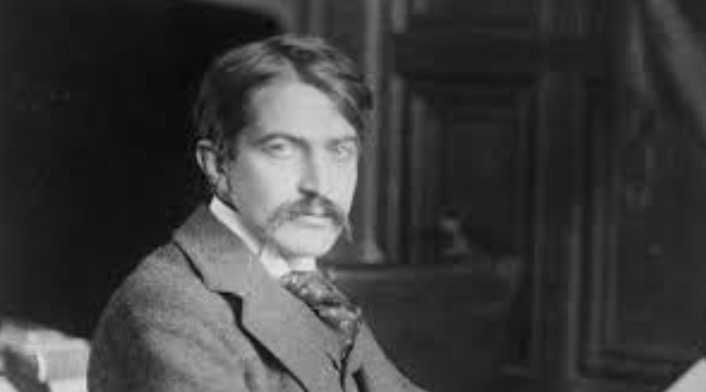
American Writer Stephen Crane (1871-1900)

One of the great “What Ifs” of American literature is what we would have had if Stephen Crane had not died at the age of 28. As it is, we had a great novel (The Red Badge of Courage), an interesting novelette (Maggie: A Girl of the Streets), and two great short stories (“The Open Boat” and “The Bride Comes to Yellow Sky”). Here is a short poem from Crane, the last two lines of which were used by Joyce Carol Oates as the title for one of her early novels:

In the Desert

In the desert
I saw a creature, naked, bestial,
Who, squatting upon the ground,
Held his heart in his hands,
And ate of it.
I said, “Is it good, friend?”
“It is bitter—bitter,” he answered;

“But I like it
“Because it is bitter,
“And because it is my heart.”

Jane, You Ignorant Slut!

Saturday Night Live Had It Right Way Back Then

Early in the 1970s, CBS’ Sixty Minutes news show had a segment in which a liberal debated a conservative. I could just imagine that CBS News was all thrilled they they were being “fair and balanced.” Then, Saturday Night Live parodied the segment with Jane Curtin and Dan Aykroyd, with Dan always opening with, “Jane, you ignorant slut ….”

That same genuflection to “fair and balanced” reporting results in segments where the political philosophy (?!) of QAnon is discussed with the same seriousness as the Federal budget. Attempts are made to mirror all sides of an issue, even when the one of the sides has (1) no merit, (2) no appreciable following, (3) dangerous repercussions to the nation. If you can’t find an articulate spokesman, there’s always of the more incendiary members of Congress, like Marjorie Taylor Greene or Matt Gaetz. Hell, you can always find some bozo in a Missouri coffee shop whose word the media will treat as if they were engraved in stone on Mount Sinai.

The misguided attempt to treat all sides of an issue as having equal merit has resulted in the public not knowing where to turn. That was certainly the case in the days of the Tea Party a few years ago, and still an issue when some bonehead in or out of office says something flagrantly stupid that is picked up by the press and widely disseminated.

So many news stories are picked up from Twitter (or X or whatever) and splashed around because they sound likely to result in fear or outrage. Trump’s tweets were certainly in this category. And we all know that even if he had no idea of how to run the country, our former president certainly knew how to manipulate the media.

Nowadays I am not likely to give any credence to political farts from the right or left. I don’t care what some Texas congressman or Trumpian fellow traveler has to say. My life is too valuable to allow myself to be crassly manipulated by people I do not in any way respect.

A Great Writer from India

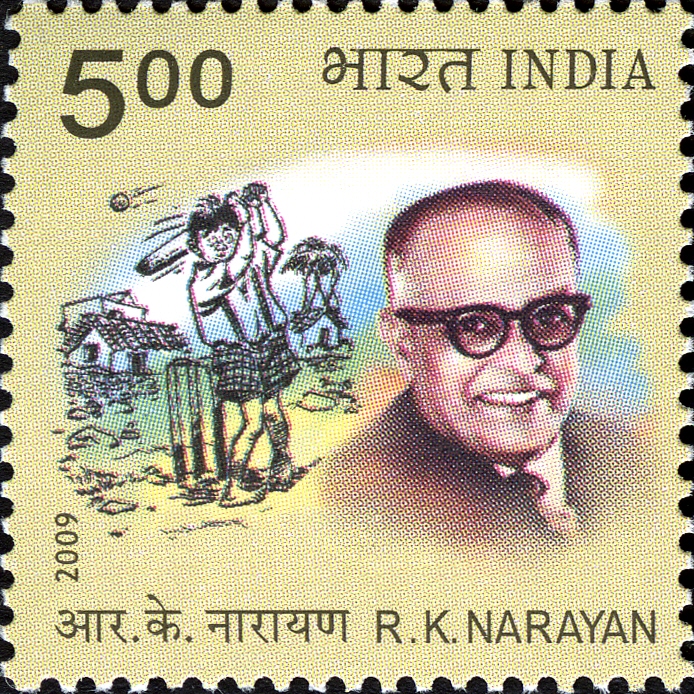
2009 Stamp Honoring R. K. Narayan (1906-2001)

The above stamp was issued to honor the 103rd anniversary of the birth of India’s greatest writer of fiction: Rasipuram Krishnaswami Iyer Narayanaswami, better known as R. K. Narayan. Interestingly, he wrote most of his fiction in English. And it was Graham Greene whose influence led to the publication of his first four books.

I have just finished reading his short-story collection entitled Malgudi Days (1942), in which every one of the 30-odd stories competed with all the others for Best in Show. Over the years, I have also read a number of other titles—all of which I loved—including:

  • Swami and Friends (1935) which includes the cricket scene shown on the illustrated stamp above
  • The Bachelor of Arts (1937)
  • The Financial Expert (1952)
  • The Guide (1959)
  • The Vendor of Sweets (1967)
  • A Tiger for Malgudi (1983)
  • Under the Banyan Tree and Other Stories (1985)

Narayan’s fiction is mostly set in a mythical South Indian city called Malgudi. Once you start reading his work, it will seem like home to you.

Guarding Against Another Pearl Harbor Attack

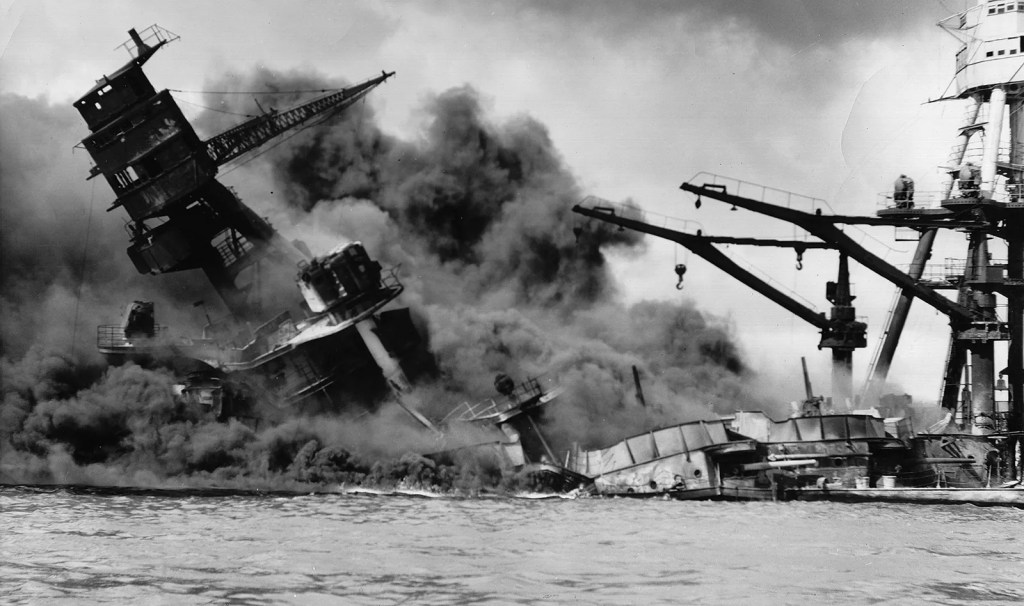
Torpedoed Battleship at Pearl Harbor

On our last full day in Hawaii, Martine and I split up. I took a bus to Pearl Harbor and visited both the National Memorial and the Aviation Museum on Ford Island. Martine, on the other hand, revisited old haunts from previous trips before she ever met me.

Actually, the real reason Martine didn’t want to visit Pearl Harbor on this trip was their somewhat draconian policy on what you can take into the park. Especially in light of this week’s Hamas attacks on Israel, there is some point in protecting one of our most sacred war memorials from terrorists. The rule that offended Martine the most was this one forbidding:

Bags, packages, or containers that offer concealment, such as purses, handbags, backpacks, fanny packs, camera bags, diaper bags, luggage, etc. that exceed the measurements of 1.5” X 2.25” X 5.5,” are not allowed at the monument. The Pacific Fleet Submarine Museum operates a baggage storage facility near the entrance to the visitor center. There is a fee per bag for all sizes, including luggage. Visitors may use the same bag storage and parking stall for visits to all Pearl Harbor Historic Sites. Security measures are strictly enforced at all visitor destinations on Pearl Harbor.

Martine did not want to put her purse plus the other things she habitually carries into a locker for which she would have to pay. For the complete list of things you can’t take into the park, check out the mandated safety policy for visits.

It was worth seeing Pearl Harbor again. I was aware of the park’s safety policy, so I took only a small portable bag containing my insulin and necessary medications.

One thing I did not bother to see again was the Arizona Memorial, which floats atop the sunken battleship Arizona. I’ve seen it before, and I wanted to spend time at the Aviation Museum on Ford Island, which neither Martine nor I had previously visited.

Pearl is a long bus ride from Waikiki, but for me it was worth it.

Et Tu, Brute?!

The Assassination of Julius Caesar by Mariano Rossi (1731-1807)

I have just finished reading an interesting book that sheds light on how rhetoric influenced the way people acted in ancient Rome. J. E. Lendon’s That Tyrant Persuasion: How Rhetoric Shaped the Roman World shows that public speechifying was the dominant mass medium of the time and affected the laws and, in many respects, the way people acted.

Lendon used as his prime example the conspiracy to assassinate Julius Caesar by Brutus, Cassius, and their associates. In Chapter Four, he discusses eight reasons why the whole conspiracy had been a shambles:

  • Decimus Brutus had armed gladiators near the Senate House of Pompey. Why did they not kill Caesar?
  • Why did all the conspirators in the Senate House want to stab Caesar themselves, producing a confused melee?
  • Why did the conspirators do nothing about Mark Antony and Marcus Lepidus, or any other followers of Caesar, not even arrest them for kid-glove treatment if the fastidious Brutus insisted? It was especially leaving Antony alive that Cicero later regarded as “childish.”
  • Why did Brutus think that after the assassination he would be able to address the Senate? Why did he not expect the senators, most of them loyalists of Caesar, to be terrified of the deed?
  • Why were the conspirators apparently surprised by the panic their deed caused in the city?
  • Why did the conspirators go up the Capitoline Hill?
  • Why did the conspirators spend March 16 giving speeches in the Forum?
  • Why, other than descending to give speeches, did the conspirators apparently have no plans for what to do after they ascended the Capitoline Hill, given that the reactions of Lepidus, Antony, their troops, and Caesar’s veterans could have been predicted?

In his book, Lendon deals with each of these questions in great detail. As I read his book, I suddenly saw that public speaking in ancient Rome was the equivalent of our social media, and that the conspirators who, at Donald Trump’s urging, marched on the Capitol on January 6, 2021 were being misled in much the same way that Brutus and his co-conspirators were by the conventions of ancient rhetoric.

“A Collection of Rare Tropical Plants”

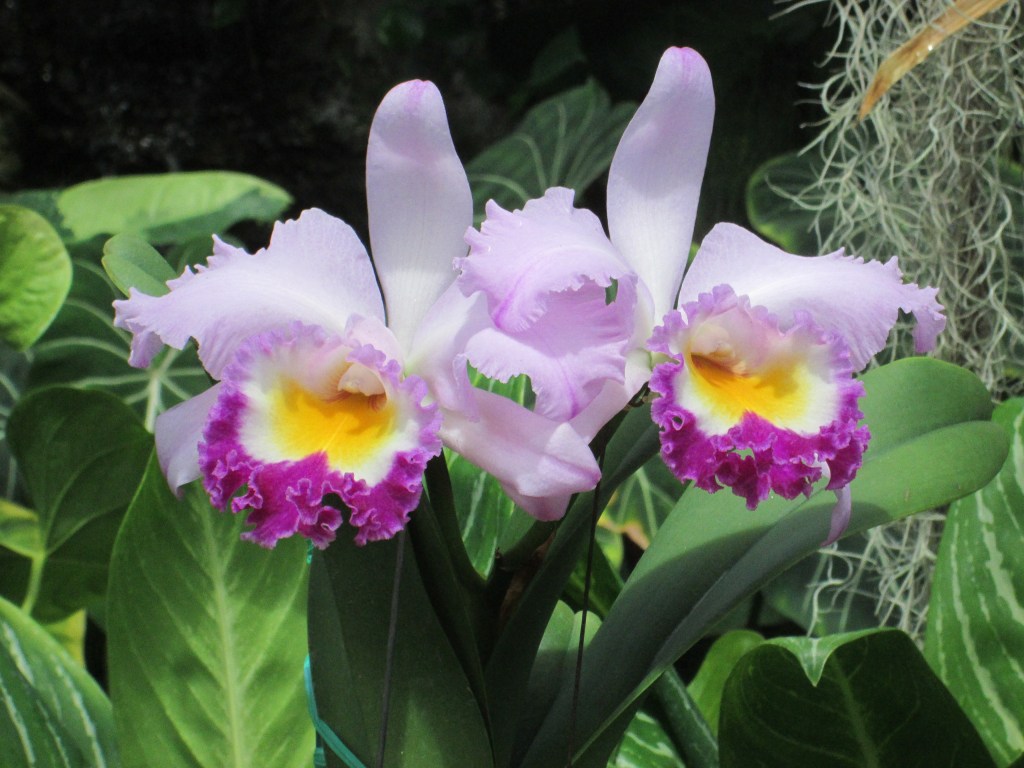
Orchids at the Foster Botanical Garden

During last year’s visit to Honolulu, Martine did not want to visit the Foster Botanical Garden, which consists of 14 acres (6 hectares) of tropical plants on the north edge of Honolulu’s Chinatown. She wound up enjoying it so much that we decided to visit it again.

It was a hot, humid day; so I wound up looking for benches in the shade of large trees. Plus I consumed two bottles of water. It was the same last year. Fortunately the gardens were so drop-dead beautiful that I still enjoyed the visit.

I found it interesting that perhaps a majority of the flora that grow in the Hawaiian Islands were introduced, either by the earliest settlers from the Marquesas Islands and Polynesia, or the white settlers. Included in the “invasive” species are pineapples and sugar, which are major exports for which Hawaii is known. When you think about it, Hawaii is basically volcanic rock, something like a tropical version of Iceland.

It is because of the many introduced plants that there are so many botanical gardens in the state. I hope to visit more of them on future visits.

Queen Emma’s Summer Palace

Queen Emma’s Summer Palace on the Pali Highway

I had originally planned to see it on last year’s trip to Hawaii, but I didn’t know how to get there using public transportation at that time. This year, I did additional research and found it involved a single bus transfer near the Iolani Palace. It turned out to be easy, as it was on the main line from downtown Honolulu over the mountains to Kailua.

After Martine’s ombrophobia (fear of rain) as exhibited during our visit to the Lyon Arboretum on the first full day of our trip, I made sure that she brought rain gear with her. At the Arboretum, it rained lightly on and off about thirty times during our visit; and I expected the same at Queen Emma’s Summer Palace, as it was also high in the hills. (Fortunately, we did not encounter any rainfall.)

In fact, that was its reason for existing. Honolulu is hot and humid most of the time, so King Kamehameha IV and his wife, Queen Emma would spend time at her hill “palace” (it was actually more of a house) because it was cooler there. We ourselves found the temperature to be considerably cooler than the coastal lowlands.

Unfortunately, King Kamehameha IV did not reign long before he joined his ancestors. Nor did the heir, Prince Albert Edward. As a widow, Queen Emma continued to live at the Summer Palace while her brother-in-law ruled as Kamehameha V.

The grounds are run by the Daughters of Hawai’i, who offer informative tours of the building.

Two Museums on Waikiki

This Museum Is on the Grounds of Fort DeRussy

Unknown to most tourists in O’ahu, there are two interesting museums on Waikiki itself. The first is on the Ewa (Western) side on the grounds of Fort DeRussy. The building used to be part of Hawaii’s coastal defenses and was once called Battery Randolph. Today, the U.S. Army Museum of Hawaii (admission free) covers the military history of Hawaii from the days of Kamehameha I with his war clubs studded with sharks’ teeth to the Viet Nam war.

Particularly interesting is the exhibit dedicated to the bombing of Pearl Harbor on December 7, 1941. The museum was closed during most of the Covid 19 epidemic but has recently re-opened. And when you have finished with the exhibits, you can wander among the shore defense cannon on the roof.

The story is that they were going to demolish Battery Randolph but found it would be too expensive as the walls were so thick. The upshot: An interesting little museum worth an hour or two of your time.

Within a few hundred yards of the museum is one of my favorite Waikiki eateries: The Shake Shack, right on Fort DeRussy Beach.

The other Waikiki museum I last visited some twenty years ago: It was a little museum dedicated to Father Damien de Veuster, a Catholic saint who dedicated his life to helping the lepers on Molokai. They are in process of expanding the museum greatly. When I saw it, it occupied a couple of rooms adjacent to Saint Augustine Catholic Church on the Diamond Head Side of Waikiki. At the time, it was free of admission costs, though I do not know the current status. Here’s where you can find more info: The Damien and Marianne of Moloka’i Education Center, costing some $6 million to build.

These are two sights you can visit without having to take one of those expensive, super-crowded tourist trolleys.