Renoir in the Waiting Room

Auguste Renoir’s “Bal du Moulin de la Galette” (1876)

There I was, waiting for a full hour beyond my appointment time at my physician’s office. Going through my mind was the question “What should I write about for my blog tonight?” Hanging in the waiting room were two reproductions of paintings by Pierre Auguste Renoir, one of which was “Bal du Moulin de la Galette.”

The thought suddenly came to me that no other artist depicted women so radiantly. In the above painting, it seems that there is a soft spotlight on every woman’s face. The men do not quite receive the same treatment. That tendency is even more pronounced in “La Promenade” at the Getty Center in Los Angeles:

Auguste Renoir’s “La Promenade” (1870)

The following is from an earlier post about the painter from December 2, 2021:

What I find truly amazing is that much of the same sensibility was passed on to his son, Jean, who became one of the great motion picture directors. There are times when the viewer feels that the father could have directed the same scene in the same way…..

Some of the same feeling is in his earlier The Rules of the Game (1939), which is set in the present day. The men in the film all fly around the Marquise de la Chesnaye (played by Nora Gregor) like moths circling a flame.

Of course, Jean Renoir was very conscious of his father’s work, appearing in several of the paintings. He also wrote a beautiful biography of him called Renoir, My Father, which is available in a New York Review edition and is well worth reading.

Although I was in my doctor’s waiting room for a long time, my mind kept flitting back to the father and son whose paintings and films have influenced me so much.


Was I Ever a Hippie?

You Won’t Find Me in This Picture

I arrived in Los Angeles at exactly the point when the Hippie movement was reaching its height. Many of my acquaintances looked much like the poseurs in the above photo. Oh, I had long hair all right, but nothing that was radical for the period. I went around dressed in chinos and a Jeans jacket, usually with a black cowboy hat which I bought at Disneyland.

In fact, I never really got close to any Hippies: I regarded them as not quite real, more like play actors.

There was another even more compelling reason I never became a Hippie: I had just undergone brain surgery for the removal of a pituitary tumor and had no desire to experiment with recreational drugs. In the late 1960s, I did not think I was long for this world. I had no desire to rush my exit from this life.

Though not drawn to the Hippies, I was something of a political radical. For a brief time, I attended meetings of the Progressive Labor Party at UCLA, but found studying Marx’s Surplus Theory of Value breathtakingly boring and the girls in the group heartbreakingly ill-favored.

Due to the influence of my late friend Norm Witty, I hung out for a while with The Resistance, which protested the Vietnam War by attempting to interfere with the draft process. In fact, I sent my draft card back to my draft board in Cleveland, fully expecting to be arrested for two felonies ([1] Returning my draft card and [2] Refusing to carry a draft card on my person) and sent to a Federal prison. It turns out that so many of my fellow students returned their draft cards that the Federal Government decided it was too expensive to prosecute and imprison the offenders.

By the Time You Read This

“The Sandhills of Saskatchewan”

I found this poem by the Irish poet Paul Muldoon in the January 6 issue of The Times Literary Supplement. Here’s hoping you like it as much as I do.

By the Time You Read This

By the time you read this I’ll be gone
for a newspaper and quart of milk
never to return, a half-mowed lawn
leading to me as a scroll of silk
once led to the mulberry silkworm.
By the time you read this I’ll be gone
AWOL in spite of the fact, in terms
of domesticity, I’ve outshone
even he heedful trumpeter swan
that spends five weeks constructing a nest.
By the time you read this I’ll be gone
less because of some profound unrest
than my fascination with the Cree
and the sandhills of Saskatchewan
into which windswept immensity,
by the time you read this, I’ll be long gone.

When Alexander Got Tyred Out

Ancient Tyre

I have been reading Niccolò Machiavelli’s The Discourses, in which he writes about governance and warfare in his day (around AD 1517). In Book II, he gives an anecdote about how not to negotiate with Alexander the Great:

When the whole East had been overrun by Alexander of Macedon, the citizens of Tyre (then at the height of its renown, and very strong from being built, like Venice, in the sea), recognizing his greatness, sent ambassadors to him to say that they desired to be his good servants, and to yield him all obedience, yet could not consent to receive either him or his soldiers within their walls. Whereupon, Alexander, displeased that a single city should venture to close its gates against him to whom all the rest of the world had thrown theirs open, repulsed the Tyrians, and rejecting their overtures set to work to besiege their town. But as it stood on the water, and was well stored with victual and all other munitions needed for its defence, after four months had gone, Alexander, perceiving that he was wasting more time in an inglorious attempt to reduce this one city than had sufficed for most of his other conquests, resolved to offer terms to the Tyrians, and to make them those concessions which they themselves had asked. But they, puffed up by their success, not merely refused the terms offered, but put to death the envoy sent to propose them. Enraged by this, Alexander renewed the siege, and with such vigour, that he took and destroyed the city, and either slew or made slaves of its inhabitants.

Forever Subscriptions

Beyond Baroque in Venice, California

Several years ago, when I was employed and making good money, I decided to join Beyond Baroque, a literary and arts center headquartered in Venice, California. When I retired on a mostly fixed income, I was appalled to discover that my membership was constantly being renewed, even though my intention was to make it a one-time event.

Since then, I have discovered that I have several “forever subscriptions,” some of which I don’t mind renewing, such as Flickr and WordPress. But what about the Entertainment Book, which no longer even produces a book but is now Internet-based?

Why is it not mandatory to request a renewal each year. Granted, many members would fall off the rolls; but I find it somewhat nasty to be charged annually, whether I want to be or not, for a service i do not used. I have even left messages for Beyond baroque, but they have never called me back. I suspect I will just have to show up in person and vent my displeasure face to face.

What I find particularly objectionable is that the credit card companies buy into this scam. I now have a new Discover card, but Discover still allows my old Discover card to be charged by Beyond Baroque.

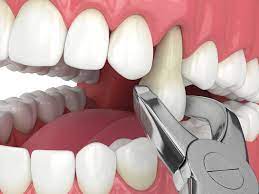
Another Tooth Bites the Dust

Teeth Are Not Always What They’re Cracked Up To Be

It started about a month ago. One of my upper bicuspids felt loose with several millimeters of give. I toyed with the notion of grabbing the tooth and yanking it out by main strength, but I decided to seek professional help instead. Of course, a visit to the dentist is bound to cost big bucks, so I had to take a pension distribution in preparation.

This afternoon, I finally went in to see Dr. Sakurai. She took one look at my wiggly tooth and, knowing my mouth from past experience, said she suspected the tooth was cracked. So she x-rayed it and, sure enough, there was a horizontal crack halfway down. It came out in two pieces.

Most people would just get a denture, but it seems I’ve inherited a special sensitivity to any pressure on the roof of my mouth from my father. Many times I remember him stopping in the middle of a meal, turning purple, and ejecting his dentures by force across the dinner table. (But then, of course, my parents got their dentures for free courtesy of the Peoples’ Republic of Hungary.)

The other option is super expensive: to get dental implants. Unfortunately, it would be even more expensive for me, as I would have to have an anesthesiologist handy in case I didn’t come out of the anesthetic properly. That is because, lacking a pituitary gland, my body does not produce adrenaline; and sometimes I need adrenaline to come out of the anesthetic.

Fortunately, my missing teeth are to the side, so I don’t yet have a jagged smile. Unfortunately, I may yet; as extractions frequently cause problems to the adjacent healthy teeth. So it goes.

To Prince or Not To Prince

Statue of Niccolò Machiavelli in Florence’s Uffizi Gallery

Will the real Niccolò Machiavelli please stand up. For over five hundred years, his name has been synonymous with cruelty and immorality in governance. But is that the real Machiavelli, or was his work The Prince not meant to be taken seriously?

Even Jean-Jacques Rousseau in The Social Contract had his doubts:

Machiavelli was a proper man and a good citizen; but, being attached to the court of the Medici, he could not help veiling his love of liberty in the midst of his country’s oppression. The choice of his detestable hero, Cesare Borgia, clearly enough shows his hidden aim; and the contradiction between the teaching of The Prince and that of the Discourses on Livy and the History of Florence shows that this profound political thinker has so far been studied only by superficial or corrupt readers. The Court of Rome sternly prohibited his book. I can well believe it; for it is that Court it most clearly portrays.

I am currently reading Machiavelli’s The Discourses and find it entirely different from The Prince, Instead of advice to princes to be evil, he comes across as altogether more reasonable. For instance:

All writers on politics have pointed out, and throughout history there are plenty of examples which indicate, that in constituting and legislating for a commonwealth it must needs be taken for granted that all men are wicked and that they will always give vent to the malignity that is in their minds when opportunity offers.

And: “Men never do good unless necessity drives them to it; but when they are too free to choose and can do just as they please, confusion and disorder become everywhere rampant.” It certainly does not look as if the writer were urging confusion and disorder on the people of Florence. In fact, everything he wrote other than The Prince shows him to be a loyal and responsible citizen of Florence.

Could it be that The Prince was written as a warning to his readers of what happens when their leaders are cruel and uncaring?

The Madness of Chess Champions

There is a curious parallelism in the lives of America’s two world chess champions. Both Paul Morphy (1837-1884) and Bobby Fischer had reached the pinnacle of chess and seem to have frittered the rest of their lives away. In Morphy’s case, there was no official championship, but he was universally acknowledged to have beaten the best chess players of his day during an extended European trip in 1857-1858. The only major player he did not beat was the British champ, Howard Staunton, mostly because Staunton, who was past his prime, was too chicken-hearted to play him.

After his European trip, Morphy stopped playing chess altogether—much like Bobby Fischer over a hundred years later. In Morphy’s case, the Civil War happened; and, being a Southerner from New Orleans, his sympathies were with the Confederacy. But things only got worse after the war. His friend Charles Maurian wrote about what appeared to be his madness:

It is unfortunately true that Mr. Morphy’s mind has been deranged of late but not to the extent that the New York Sun would have us believe.

I noticed some time ago some extraordinary statements he made of petty persecutions directed against him by unknown persons, that there was something wrong about him, but after a while he openly accused some well known persons of being the authors of the persecutions, and insisted upon their giving him proper satisfaction by arms.

You beg me to inform you if it is true that certain rumours about Paul Morphy are true that he may not be right mentally. I am sorry to have to reply to you that these rumours are only too well founded.

The subject is discussed at some length in a Chess.Com discussion board. Whether or not Morphy went batshit crazy, he was a great chess player. No less a champion than Bobby Fischer called him the greatest player who ever lived. If you can follow chess notation, you should look up some of his greatest games.

Punished for His Bad Attitude

Bobby Fischer (1943-2008), Former World Chess Champion

To be sure, Bobby Fischer was no exemplar for anyone’s behavior. His was the classical example of what can happen when you achieve your fondest wish, in his case to become the world chess champion after the Russians controlled the number one spot from 1937 to 1972.

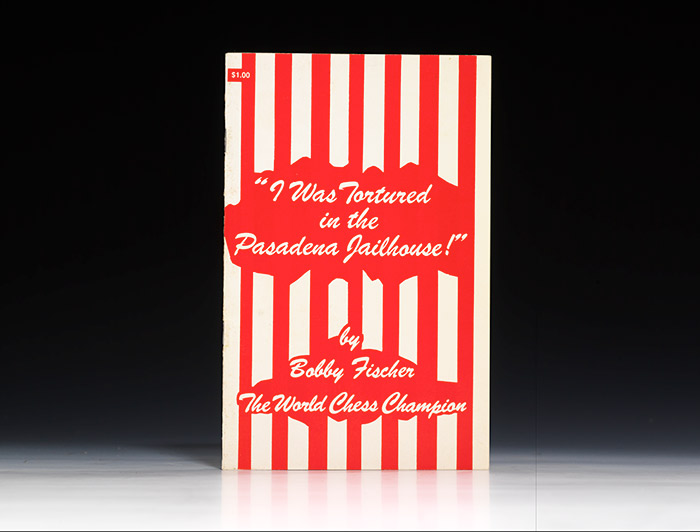
I just finished reading a pamphlet Fischer published after he was picked up by the Pasadena, California police in May 1981 and horrendously mistreated because of his “bad attitude.” He was kept without clothes in an icy cell, deprived of the right to make a phone call, robbed of the cash in his wallet, and denied sufficient food and water during his incarceration. Below is a photo of his pamphlet’s cover:

Why do I appear to be so obsessed with Bobby Fischer? The main reason is that I love chess, and Bobby was one of two American world champions—both of whom went off the rails after their moment of glory. I will post a blog about Paul Morphy (1837-1884) within the next day or so.

Also, I am appalled because this would not have happened to Fischer had he been Russian. Unless for some reason he defied the powers that be in the Soviet Union, he would have lived well with a generous pension from Mother Russia. America doesn’t always know how to treat its heroes. And Fischer was a real hero, possibly the best chess player who ever lived.

Another reason: Fischer’s birth father was NOT Hans-Gerhardt Fischer, whose name appeared on Bobby’s birth certificate, but Paul Neményi, a distinguished Hungarian mathematician whom whom his mother Regina had an affair during the war. See for yourself:

Left: Bobby Fischer, Right: Paul Neményi.

It warms my Magyar heart to know that Bobby was one of my countrymen, both as a Hungarian and as an American.