Horse and Rider from Albania

What survives from the ancient Greeks and Romans? There are certainly architectural ruins, statuary, funerary monuments, steles, coins, jewels, and even glassware. But everything made of paper, wood, and other materials that disintegrate over time are gone without a trace. And so much that has survived has been damaged.

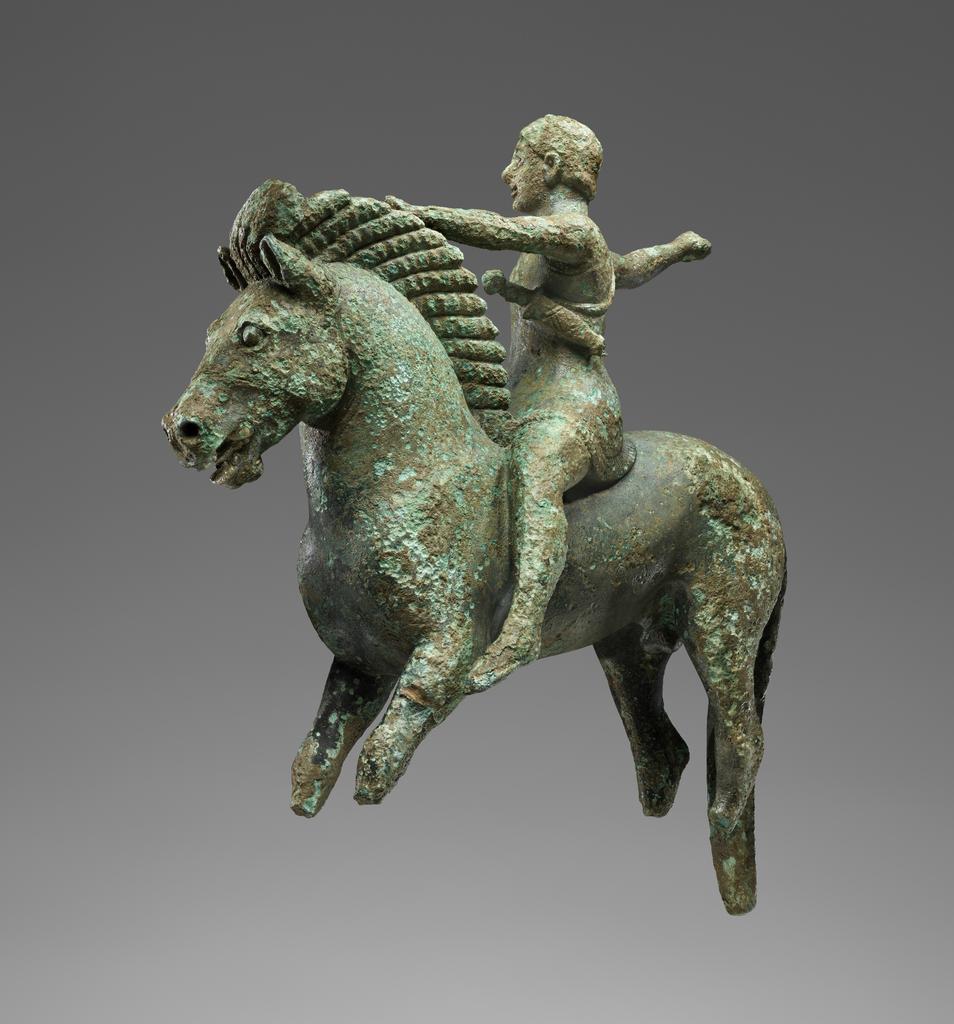
One of the surprises of my visit yesterday to the Getty Villa in Pacific Palisades was a whole gallery dedicated to a small bronze statuette of a horse and rider that was discovered in Babunjë, Albania, in 1939. At the time, that part of what is now Albania was a Greek colony. Although the lower legs of the horse are lost, the statuette is an almost perfect expression of the Greek élan in horseback riding.

Here is an even better view of the figure:

It’s a pity that the exhibition has closed—yesterday was the last day—because I would have loved to study it some more. Oh well, ars longa vita brevis.

The Good Emperor

Marcus Aurelius Antoninus (AD 121-180)

When Edward Gibbon came to write The Decline and Fall of the Roman Empire, he began with what he regarded as a golden age in the affairs of men, namely, the reign of the five “good” Antonine emperors. These were Nerva (AD 96-98), Trajan (AD 98-117), Hadrian (AD 117-138), Antoninus Pius (AD 138-161), and Marcus Aurelius (AD 161-180).

Among all the Roman emperors, it was only Marcus Aurelius who, in his Meditations, published a work of Stoic philosophy that is read to this day. It was he who wrote:

When you first rise in the morning tell yourself: I will encounter busybodies, ingrates, egomaniacs, liars, the jealous and cranks. They are all stricken with these afflictions because they don’t know the difference between good and evil. Because I have understood the beauty of good and the ugliness of evil, I know that these wrong-doers are still akin to me . . . and that none can do me harm, or implicate me in ugliness—nor can I be angry at my relatives or hate them. For we are made for cooperation.

Today was the last day at the Getty Villa in Pacific Palisades for a 3½-pound gold head of the emperor to be on display, so I felt I just had to see it. So I drove out to the Villa with my 90-year-old neighbor Luis to see it and check out the permanent collections as well.

It was well worth seeing, even though I developed a bad case of museum legs which tired me out after five hours. I visit the museum two or three times a year, and i love it more each time. And now I feel I should re-read the Meditations. I mean, how many world leaders ever wrote a major work of philosophy that still has worth in today’s world?

Earthquake-Proof

Inca Stonework on Calle Hatunrumiyoc in Cuzco, Peru

The Inca were, to my mind, most eminent for their stonework. Look at this wall in Cuzco. It was built almost 700 years ago, before a number of major earthquakes, particularly the ones of 1650 and 1950, shook most of the Spanish buildings to rubble. The remaining Inca walls did not budge. Interestingly, they were constructed without mortar, with each block trimmed to fit exactly atop the stones beneath it and to either side.

Best-known is the famous Twelve-Angle stone, not more than a few feet away from the above view:

The Famous Twelve Angle Stone

Now imagine trying to get a modern-day stonemason to do something like that. This stone is so revered that it is forbidden by law to even touch it. Yet it has withstood centuries of tremors and hard usage.

Today this wall forms part of the Archbishop’s Palace, which the Spanish wisely incorporated into the present structure.

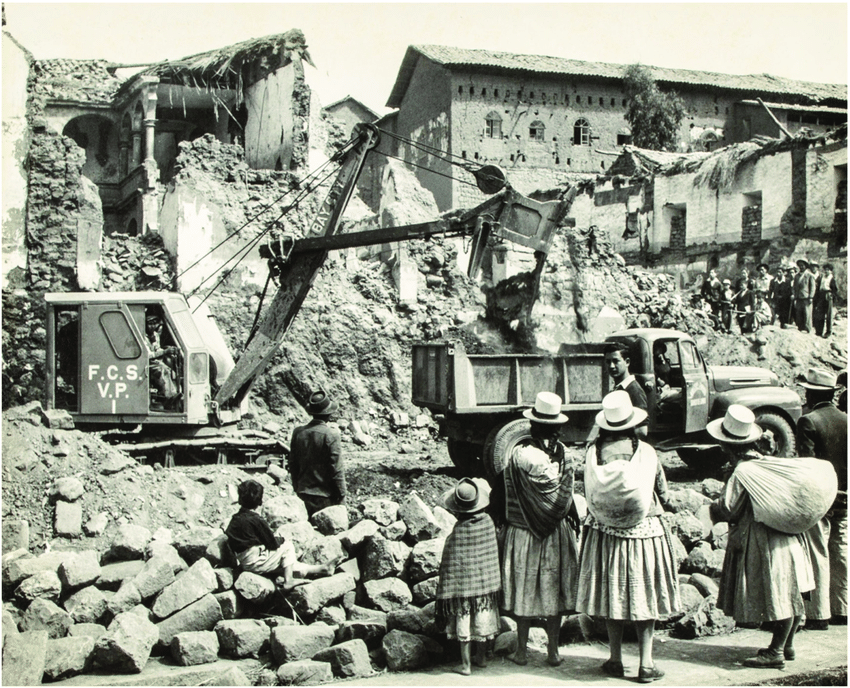
Below is an image of some of the damage after the 1950 earthquake:

Cuzco After the 1950 Earthquake

As good as the Inca were at being stonemasons, it is amazing to think that:

  1. They had no system of writing, though they did have a system of saving numerical data using a system of knotted cords known as quipu.
  2. They did not have the wheel to help them move all those heavy stones. But then they had no draft animals that could pull heavy carts, either,

Beatitudes Visuales Mexicanas

Street Scene: Xalapa, Mexico

Here is a prose poem from Lawrence Ferlinghetti (1919-2021). I remember going to a poetry reading which he gave at Dartmouth during my freshman year. He impressed me mostly because he was so clever at handling questions from smart-asses like Richard J. Dellamora, who was the teacher’s pet of the English Department.

This is a prose poem which was dated right at the time of my first trip to Mexico in November 1975. Ferlinghetti, however, was west of me in Mexico City and the State of Veracruz. I was in Yucatán. Later I was to visit all the places mentioned in his poem.

Beatitudes Visuales Mexicanas

October–November 1975

Autobus on Paseo de la Reforma with destination signs: bellas artes insurgentes. Exactamente. Just what’s needed: Insurgent Arts. Poesía Insurgente. This is not it …

1

Bus to Veracruz via Puebla + Xalapa … Adobe house by highway, with no roof and one wall, covered with words: la luz del mundo.

2

Passing through Puebla late Sunday afternoon. A band concert in a plaza next to a Ferris wheel — I have passed through many places like this, I have seen the toy trains in many amusement parks. When you’ve seen them all you’ve seen One.

3

Halfway to Xalapa a great white volcano snow peak looms up above the hot altiplano — White god haunting Indian dreams.

4

A boy and three burros run across a stubble field, away from the white mountain. He holds a stick. There is no other way.

5

Deep yellow flowers in the dusk by the road, beds of them stretching away into darkness. A moon the same color comes up.

6

As the bus turns + turns down the winding hill, moon swings wildly from side to side. It has had too many pathetic phallusies written about it to stand still for one more.

7

In Xalapa I am a head taller than anyone else in town — A foot of flesh and two languages separate us.

8

At a stand in the park at the center of Xalapa I eat white corn on the cob with a stick in the end, sprinkled with salt, butter, grated cheese + hot sauce. The dark stone Indian who hands it to me has been standing there three thousand years.

9

I’m taking this trip from Mexico City to the Gulf of Mexico and back without any bag or person — only what I can carry in my pockets. The need for baggage is a form of insecurity.

10

Two hours in this town and I feel I might live forever (foreign places affect me that way). The tall church tower tolls its antique sign: pray.

11

In early morning in the great garden of Xalapa, with its terraces and immense jacaranda trees, pines + palms, there are black birds with cries like bells, and others with hollow wooden voices like gourds knocked together. The great white volcano shimmers far off, unreached by the rising sun.

12

Brown men in white palmetto cowboy hats stand about the fountains in groups of three or four, their voices lost to the hollow-sounding birds. Along a sunlit white stone balustrade, student lovers are studying each other, novios awaiting the day. The sun beats down hot and melts not the mountain.

13

On the bus again to Veracruz, dropping down fast to flat coast. A tropical feeling — suddenly coffee plantation + palms — everything small except the landscape, horses the size of burros, small black avocados, small strong men with machetes — each still saying to himself Me llamo yo.

Surrounded by Volcanoes

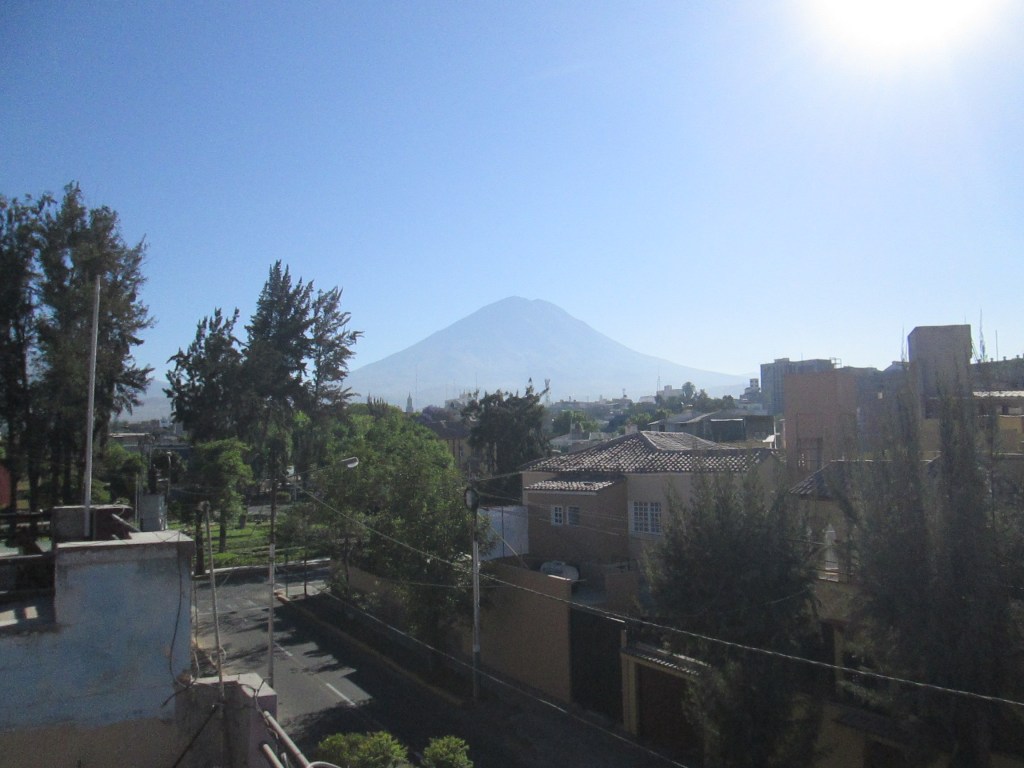
View of Volcan El Misti from Arequipa, Peru

Going back over my old Lonely Planet guidebooks, I am more and more impressed by my visit to Peru ten years ago. One of the places I loved most was the city of Arequipa, which I visited just to accustom my body to the altitudes I was to encounter at Colca Canyon, Puno, and Cuzco. Arequipa’s altitude was 7,660 feet (2,335 meters). Probably the highest altitude I reached was at Patopampas on the road to Chivay at Colca Canyon, which stood at 16,007 feet (4,879 meters).

It turns out that what was to have been primarily an exercise to avoid getting acute mountain sickness turned out to be a great destination.

Arequipa is surrounded by three volcanoes: El Misti, Chachani, and Pichu Pichu. Not surprisingly, the city has suffered major earthquakes that seem to go hand in hand with active volcanoes. Fortunately, the gods were not agitated when I was there late in 2014.

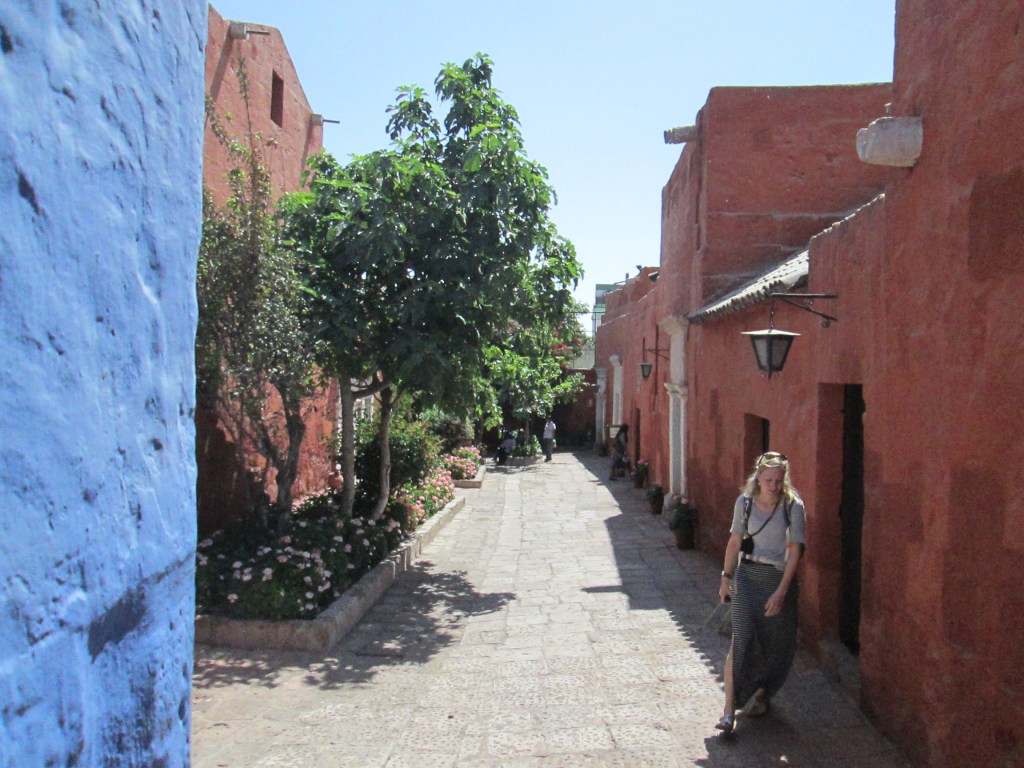
Of the city’s sights, I most enjoyed the monastery of Santa Catalina de Siena, which was itself city-sized. I spent a whole day from morning to late afternoon wandering through the monastery’s many streets, such as the one illustrated below:

Monastery of Santa Catalina in Arequipa

Running a close second and third are the Museo Sanctuarios Andinos, featuring the mummy of a 12-year-old girl sacrificed on Nevado Ampato around 1450 to stop the Volcan Sabancaya from erupting (it’s still erupting today) and the picturesque suburb of Yanahuara.

I would give my eye teeth to return. Maybe even more.

Joubert’s Notebooks

French Thinker Joseph Joubert (1754-1824)

To understand where we are today, I believe it is important to go back in time and read works written in the more distant past. In the middle of reading The Notebooks of Joseph Joubert: A Selection (New York Review Books, 2005), I am confronted by the philosophical fragments of a man who never published during his lifetime. He kept copious notes, however, which were published after his death. During his lifetime, he was best known as Napoleon’s inspector general of French universities.

Following are a number of his maxims which struck my eyes as I was reading his book.

It is not facts but rumors that cause emotions among the people. What is believed creates everything.

All truths are double or doubled, or they all have a front and a back.

What comes through war is given back through war. All spoils will be retaken, all plunder will be dispersed, All victors will be defeated and every city filled with prey will be sacked in its turn.

Clarity of mind is not given in all centuries.

When men are imbeciles, the one who is mad dominates the others.

The only good in man is his young feelings and his old thoughts.

Everything is double and is made up of a soul and a body.

You have searched in vain, you have found nothing but envelopes. Open a hundred, open a thousand, you will always be stopped before opening the last. You think you have touched the essence when you take off the outer skins. You take the homunculus for the animal. But it is much deeper…. In each drop is a drop, in each point another point.

The Barbarians Are Coming! The Barbarians Are Coming!

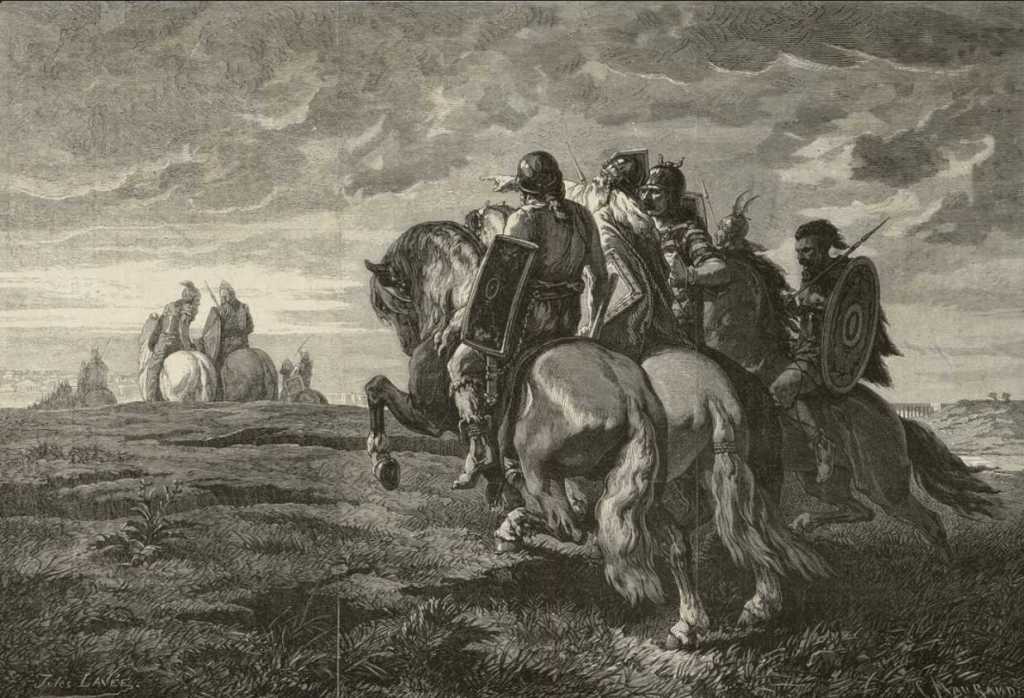
There are two ways of looking at the Barbarian Invasions of the Roman Empire. For the first, we have Orientius, said to be a cleric from Gascony, in his Commonitorium:

Look at how death has swept through the entire world,
at how many peoples have been affected by the madness of war.
What use are thick forests or high and inaccessible mountains,
what use the raging torrents with violent whirlpools,
carefully located fortresses, cities protected by their walls,
positions defended by the sea, the squalor of hiding places,
the darkness of caves and the hovels among the rocks;
nothing has been of use in avoiding the barbarians hunting in a pack….
In the villages and the villas, in the fields and at the crossroads,
in all the hamlets, on the roads and in every other place,
death, suffering, massacres, fire-raising, and mourning:
the whole of Gaul was burning in a single blaze.

Then there is the view of Greek poet Constantine Cavafy in his wonderful poem:

Waiting for the Barbarians

What are we waiting for, assembled in the forum?

The barbarians are due here today.

Why isn’t anything going on in the senate?
Why are the senators sitting there without legislating?

Because the barbarians are coming today.
What’s the point of senators making laws now?
Once the barbarians are here, they’ll do the legislating.

Why did our emperor get up so early,
and why is he sitting enthroned at the city’s main gate,
in state, wearing the crown?

Because the barbarians are coming today
and the emperor’s waiting to receive their leader.
He’s even got a scroll to give him,
loaded with titles, with imposing names.

Why have our two consuls and praetors come out today
wearing their embroidered, their scarlet togas?
Why have they put on bracelets with so many amethysts,
rings sparkling with magnificent emeralds?
Why are they carrying elegant canes
beautifully worked in silver and gold?

Because the barbarians are coming today
and things like that dazzle the barbarians.

Why don’t our distinguished orators turn up as usual
to make their speeches, say what they have to say?

Because the barbarians are coming today
and they’re bored by rhetoric and public speaking.

Why this sudden bewilderment, this confusion?
(How serious people’s faces have become.)
Why are the streets and squares emptying so rapidly,
everyone going home lost in thought?

Because night has fallen and the barbarians haven’t come.
And some of our men just in from the border say
there are no barbarians any longer.

Now what’s going to happen to us without barbarians?
Those people were a kind of solution.

Now which attitude do we take if Donald Trump and his incel hoards should regain the Presidency of the United States?


With the Cutlers

They suddenly appear on Page 207 of Olga Tokarczuk’s House of Day, House of Night (1988), a strange sect known for sharp knives:

They spent their days singing psalms and making knives. They made blades better than anyone in the whole of Silesia and fitted them with carefully polished handles made of ash wood, which every human hand fell in love with instantly. They sold them once a year in early autumn when the apples were ripening on the trees. They held a sort of fair, which attracted people from all over the district; they each bought several knives, sometimes as many as a dozen, in order to sell them on at a profit. During these fairs people forgot that the Cutlers were of a different faith and believed in a different God, and that it would have been easy to produce evidence and drive them away. For who would make such good knives then?

Whenever they bore a child they mourned instead of rejoicing. Whenever someone died, they undressed him, laid his naked corpse in a hole in the ground and danced around the open grave.

About forty pages later appears this poem, called “The Cutlers’ Psalm”:

Futility on all the earth
blessed be barren wombs
holy be all sterility
sacred is decay, desirous is decline
wondrous the fruitlessness of winter
the empty shells of nuts
logs burnt to ashes that still keep the shape of the tree
seeds that fall on to stony ground
knives gone blunt
streams run dry
the beat that devours another’s offspring
the bird that feeds on another’s eggs
war that is always the start of peace
hunger that is the beginning of repletion
Sacred old age, daybreak of death,
time trapped in the body,
death sudden, unexpected.
death downtrodden like a path in the grass
To do, but have no results
to act, but stir nothing
to age, but change nothing
to set off, but never arrive
to speak, but not give voice

Whew!

Currer, Ellis, and Acton

The Brontë Sisters as Painted by Their Brother Patrick

When the Brontë sisters began publishing their novels in the early 19th century, they did not use their original names. They figured they would find greater acceptance if they used men’s names. Consequently, Charlotte published under the name Currer Bell; Emily, under the name Ellis Bell; and Anne, under the name Acton Bell.

For most of history, there have been precious few women writers whom we know by name. Among the ancient Greeks of the 6th Century BCE, there was Sappho of Lesbos. Then we have to skip forward to the Middle Ages to find Christine de Pizan. In the 17th and 18th centuries, there were a handful of names, including Aphra Behn, Mary Shelley, Jane Austen, Anne Radcliffe, Charlotte Lennox, and Charlotte Smith in England as well as Mme. de Lafayette and Mme. de Staël in France.

In the first thirty years of the Nobel Prize in Literature, there were only three women: Selma Lagerlöf, Grazia Deledda, and Sigrid Undset. More recently, the distribution of Nobels is more equitable. Partly, that is because good literature is becoming increasingly female. I am currently reading Polish author Olga Tokarczuk’s House of Day, House of Night. In the recent past, I have enjoyed the work of Wisława Szymborska (Poland), Svetlana Alexievich (Belarus), Annie Ernaux (France), and Toni Morrison (U.S.A.)—all winners of the Nobel Prize.

No doubt about it, the future of literature is looking ever more female.

Rambles, Dreams, and Shadows

Two Men Cruising Central Park

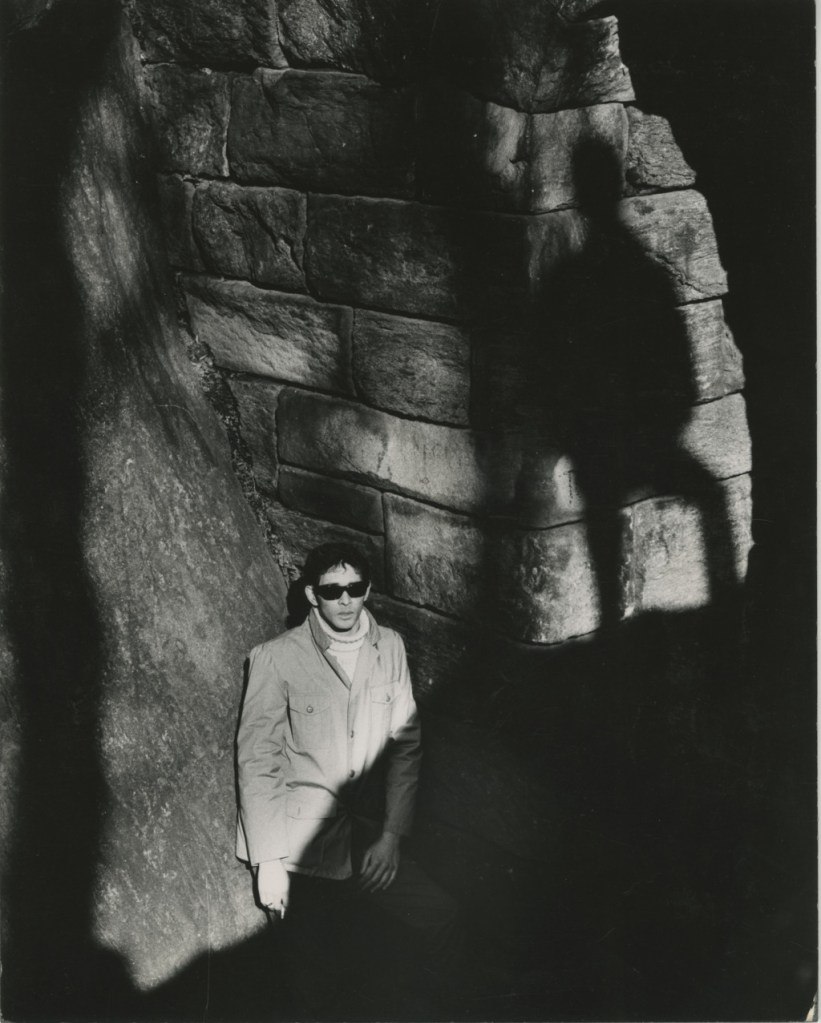
In last Thursday’s visit to the Getty Center, I concentrated on the prints of William Blake, but I also checked the photography exhibits, which are always changing and always interesting. I particularly enjoyed the “Rambles, Dreams, and Shadows” exhibit consisting mostly of cityscapes by Arthur Tress (born 1940).

Tress had a particular vision of a New York City shrouded in mystery. In the photo above, only one human figure is readily visible, until you notice the shadow of another in the upper right of the image.

Boy on Bike Crossing Williamsburg Bridge

I love this image of the cyclist on the long straight bridge with no other human beings in sight. There is a sort of last man on earth feeling about this image that appealed to me.

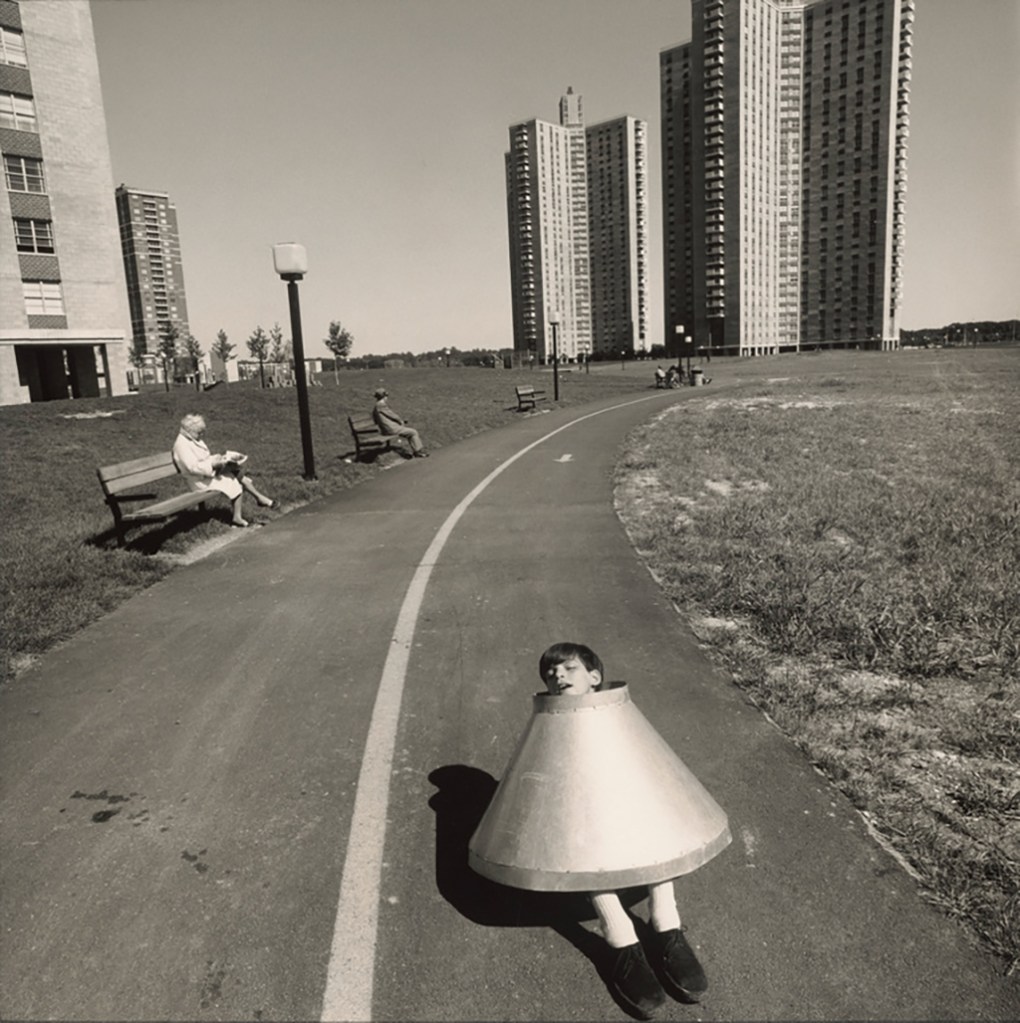
Boy in Tin Cone, Bronx

What the … ? Another mysterious image, this time of a boy wearing a metallic cone that gives him an otherworldly aspect, especially as the feet do not quite seem to match with the boy’s head.