I simply pick up a book. Reading a book makes you an active participant, while staring at a screen turns you ultimately into a bored wraith. Several times a week, I go out for lunch and occasionally take a walk.
For many years, Scottish writer and poet George Mackay Brown wrote a column for the local newspaper of the Orkney Islands, The Orcadian. The following column from his collection Rockpools and Daffodils: An Orcadian Diary 1979-1991. describes a once-in-a-generation thunderstorm:
I think we have never had a thunderstorm like it this generation in Orkney.
We had almost forgotten what a thunderstorm was. A few warnings lingered in the memory. ‘Cover the mirrors’ … ‘Don’t take shelter under a tree’ … Someone had said to us as children, ‘The lightning won’t strike if you wear rubber boots.’ … (Old wives’ mutterings beside the fire, half-forgotten.)
I suppose we ought to have been prepared for thunder—day after day of sunshine, a still brooding loaded atmosphere, no rain for weeks.
We were so thankful for early tokens of a good summer, no-one was complaining.
It came with dramatic suddenness, between breakfast and lunch. The darkening sky, the first vfew rain-drops heavy as coins, a low growl across the sky (as if Thor wasn’t in the sweetest of tempers). But Thor, in the last two or three decades, has occasionally given a growl or two on a summer day, and turned over to sleep again.
Thor the Thunderer had urgent things to do today, it soon became obvious. He had business on his hands. His mighty hammer thudded on the hills, amid flashings.
The clouds were torn apart. Black bags of water, they emptied themselves upon the town. The gardens, at least, must have loved it, after the long drought. One could sense the roots gorging themselves.
The stones of Stromness [Brown’s home town] could do nothing with the sudden weight of water. The gutters gushed and spluttered. Down the Distillery close came a river of water, and swung south. The lightning was mostly vivid blinks, followed at once by peal upon peal. Hundreds of tons of coal were being shifted along the horizon. There was a mighty furniture removal in the sky: grand pianos and huge Victorian sideboards. And sometimes it was as if a cannon had exploded by accident in a close or down a pier, a hideous ripping of hot metal.
The cosmic electricity had quelled the little expensive electricity that man makes. I switched on the light in the eerie darkling room—nothing doing.
A candle responded with a tranquil flame.
A golden fork stabbed down and singed Hoy Sound!
After a time it seemed that Thor had finished his mighty labours for the day. The sky brightened, the thunder grumbled under the horizon.
But Thor must have forgotten some tool in his sky-smithy. Back he came and blew up his forge and struck the anvil a few more mighty blows: while we nervous earthlings below trembled. By early afternoon it was all over. We looked at each other in the cleansed air, we spoke to each other, like folk who had had some wonderful, frightening new experience.
Entrance to Louisiana’s State Penitentiary at Angola
Located in West Feliciana Parish is Louisiana’s fearful Angola State Penitentiary. And within that penitentiary, by far the worst place to be incarcerated was the Red Hat Cell Block, which also contained the state’s electric chair, known as “Gruesome Gertie,” which was used for 87 executions between 1956 and 1991.
The Red Hat Cell Block was named after the red painted straw hats the inmates wore when working on the prison farm. It contained thirty cells that were 3 × 6 feet (0.91 meters × 1.8 meters), with a single window near the ceiling that was 1 foot square (0.3 meters square). Inmates slept on an iron bunk without any mattress. Temperatures frequently soared to slow oven levels; and the cells were infested with rats and other vermin. There was no toilet: prisoners had to eliminate in a bucket that was emptied each morning.
Naturally, most of the inmates of the cell block were non-whites. And, needless to say, even prisoners on death row in Angola had it better.
Entrance to the Red Hat Cell Block
Why am I describing such a terrible place? It is because I am becoming increasingly of the role that racism has played in the history of our country—a history which many Americans are trying to whitewash.
It goes all the way back to the Constitution of the United States. In an article by Steven Mintz entitled “Historical Context: The Constitution and Slavery,” it states:
The word “slave” does not appear in the Constitution. The framers consciously avoided the word, recognizing that it would sully the document. Nevertheless, slavery received important protections in the Constitution. The notorious three-fifths clause—which counted three-fifths of a state’s slave population in apportioning representation—gave the South extra representation in the House of Representatives and extra votes in the Electoral College. Thomas Jefferson would have lost the election of 1800 if not for the Three-fifths Compromise. The Constitution also prohibited Congress from outlawing the Atlantic slave trade for twenty years. A fugitive slave clause required the return of runaway slaves to their owners. The Constitution gave the federal government the power to put down domestic rebellions, including slave insurrections.
Lest we pat ourselves on the back for not being Southerners, I have seen enough in Cleveland and Los Angeles in my time to feel a deep sense of shame. How many decades, how many centuries must pass before the blot of slavery and racism are wiped out?
Yes: To be precise, I practice assorted bits and pieces of several religions, most particularly the Roman Catholicism in which I was raised, to which have been added bits of Buddhism, Hinduism, and Taoism. But in no sense do I belong to any organized religion.
I was an early user of the Internet. In fact, in the late 1960s, I used the Internet’s predecessor, ARPANET, at System Development Corporation in Santa Monica. ARPANET was the U.S. Department of Defense’s Advanced Research Projects Agency Network. At that time I was around 23 years old.
I found the following in Renata Adler’s Pitch Dark, which was published after her first novel, Speedboat:
We have the sins of silence here. Also the sins of loquacity and glibness. We have the sins of moderation, and also of excess. We have our sinner gluttons, and our sinner anorectics. We have the sins of going first, and of After you, Alphonse. We have the sins of impatience, and of patience. Of doing nothing, and of taking action. Of spontaneity and calculation. Of indecision, and of sitting in judgment on one’s peers. We try to be alert here for infractions, and when we find none, we know we have fallen among the sins of oversight, or of smugness. We have the sins of disobedience, and of just following orders. Of gravity and levity, of complacency, anxiety, indifference, obsession, interest. We have the sins of insincerity, and of telling unwelcome truths. We have the sins of ingratitude for our many blessings, and of taking joy in any moment of our lives. We have the sins of skepticism, and belief. Of promptness, and of being late. Of hopelessness, and of expecting anything. Of failing to think of the starving children in India, of dwelling on thoughts about those children, or to Uncle Bill, or Granny, or poor Joel, or whomever we are being asked to take another spoonful for. We have the sins of depression, and of being comforted. Of ignorance, and being well-informed. Of carelessness, and of exactitude. Of leading, following, opposing, taking no part in. Very few of us, it seems fair to say, are morally at ease.
I think that “Having It All” is a recipe for unhappiness. In most cases it can’t be done. And if it is done, it is not sustainable. In the words of the Dhammapada:
If you are filled with desire Your sorrows swell Like the grass after the rain.
But if you subdue desire Your sorrows fall from you Like drops of water from a lotus flower.
In Culver City there is an interesting museum dedicated to the period of the Cold War. It’s called the Wende Museum after the German term for “turning point” or “change.” Today Martine and I paid it a visit. We were most interested in seeing the current exhibition entitled “Counter/Surveillance: Control, Privacy, Agency,” which featured equipment and techniques for surveillance of the population of Soviet Russia and its satellites.
More than half my life was passed in fear of nuclear annihilation. We had relatives in the Budapest area and frequently sent them large clothbound bundles of clothing and other necessities addressed in indelible ink. Sometimes, our relatives actually received those packages.
I vividly remember the drills in grade school where we would protect ourselves from the A-Bomb by cowering under our desks in a “duck and cover” drill.
The Surveillance Exhibit at the Wende Museum
It is odd that we almost feel nostalgia for our old enemies. Now we are in the process of becoming everyone’s enemy, and a diverse mix of countries and terror groups are taking aim at us for our misdeeds. Americans are rethinking their foreign vacations to avoid facing an uncertain reception abroad.
When the Soviet Union collapsed around 1990, there was so much jubilation. We had won! Or had we? Now we are in the process of becoming the enemy. Not a pleasant prospect!
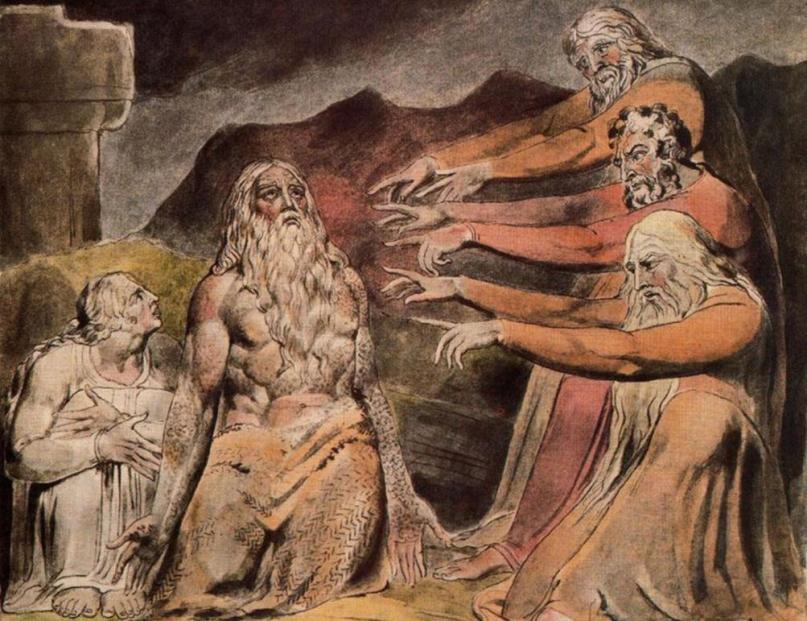
The following prose poem by Wisława Szymborska is the best treatment I have ever read of the Old Testament Book of Job.
SYNOPSIS
Job, sorely tried in both flesh and possessions, curses man’s fate. It is great poetry. His friends arrive and, rending their garments, dissect Job’s guilt before the Lord. Job cries out that he was righteous. Job does not know why the Lord smote him. Job does not want to talk to them. Job wants to talk to the Lord. The Lord God appears in a chariot of whirlwinds. Before him who had been cloven to the bone, He praises the work of his hands: the heavens, the seas, the earth and the beasts thereon. Especially Behemoth, and Leviathan in particular, creatures of which the Deity is justly proud. It is great poetry. Job listens: the Lord God beats around the bush, for the Lord God wishes to beat around the bush. Job therefore hastily prostrates himself before the Lord. Events now transpire in rapid succession. Job regains his donkeys and camels, his oxen and sheep twofold. Skin grows over his grinning skull. And Job goes along with it. Job agrees. Job does not want to ruin a masterpiece.
—Wisława Szymborska. Poems New and Collected 1957-1997





 Tarnmoor
You must be logged in to post a comment.