“I Have No Family To Say Farewell To”

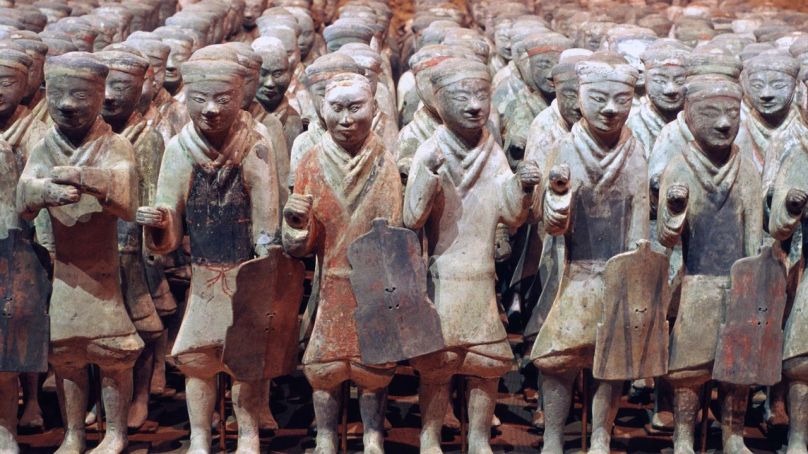
Chinese Soldiers Around Time of Tu Fu (8th Century)

Two of the greatest poets who have ever lived are Li Po and Tu Fu (a.k.a. Du Fu), who not only lived around the same time in China but who knew each other. Here is a heartbreaking poem by Tu Fu about coming back home after the wars to find his home has changed irrevocably.

A Homeless Man’s Departure

After the Rebellion of 755, all was silent wasteland,
gardens and cottages turned to grass and thorns.
My village had over a hundred households,
but the chaotic world scattered them east and west.
No information about the survivors;
the dead are dust and mud.
I, a humble soldier, was defeated in battle.
I ran back home to look for old roads
and walked a long time through the empty lanes.
The sun was thin, the air tragic and dismal.
I met only foxes and raccoons,
their hair on end as they snarled in rage.
Who remains in my neighborhood?
One or two old widows.
A returning bird loves its old branches,
how could I give up this poor nest?
In spring I carry my hoe all alone,
yet still water the land at sunset.
The county governor’s clerk heard I’d returned
and summoned me to practice the war-drum.
This military service won’t take me from my state.
I look around and have no one to worry about.
It’s just me alone and the journey is short,
but I will end up lost if I travel too far.
Since my village has been washed away,
near or far makes no difference.
I will forever feel pain for my long-sick mother.
I abandoned her in this valley five years ago.
She gave birth to me, yet I could not help her.
We cry sour sobs till our lives end.
In my life I have no family to say farewell to,
so how can I be called a human being?

A Major Assumption

The Image of Christ Pantokrator at Assumption Greek Orthodox Church

The assumption of which I speak is that of the Blessed Virgin Mary Theotokos, or “God Bearer.” Today Martine and I drove to Long Beach to visit the Greek festival at Assumption of the Blessed Virgin Mary Greek Orthodox Church.

According to both the Catholic and Greek Orthodox churches, when the Blessed Virgin died, she was taken up body and soul to heaven. Her feast day is celebrated by both religions on August 15.

There was music, dancing, Greek food (including scrumptious cookies), and a tour of the colorful church. The Assumption of the BVM Church in Long Beach is particularly colorful: The walls have painted images of literally hundreds of saints in addition to Biblical scenes from both the Old and New Testaments.

One of the saints depicted was Peter the Aleut, surnamed Cungagnak, who was martyred in 1815 after being tortured and killed by the Spanish in California. There are some doubts as to whether Peter ever existed, as the Russian Orthodox ministers on Kodiak Island said the Jesuits were behind the martyrdom. There were no Jesuits in California at that time, just mostly Franciscans. But it’s a nice story anyway.

The Royal Mile

The Busiest Mile in All of Tourism

If you want to see the most concentrated real estate in all of tourism, I recommend the Royal Mile in Edinburgh, Scotland. At one end is Edinburgh Castle. One passes historic pubs and fascinating museums, the towering hulk of St. Giles Cathedral in the center, and ending at Holyroodhouse Palace, from where Mary Queen of Scots ruled.

In my visits to Britain, I have always preferred Scotland to England. The food is better, the history more poignant, and the people more friendly. And then there’s the whisky, which can be ethereal. (In one of my boxes of photos is an image of Martine hugging the distillery at Bowmore on Islay.)

I particularly love the Highlands and Islands. My travels north of Edinburgh have included Stirling, Perth, Oban, Loch Ness, Inverness, and the isles of Iona, Mull, Islay, and the Orkney Mainland.

One can’t walk up to Stonehenge and look at it up close, but one can walk up to the Standing Stones of Stenness and the Ring of Brodgar.

As I sit here in Los Angeles during yet another overlong heat wave, I dream of re-visiting some of the places in Scotland Martine and I have seen and having a good meal of haggis and neaps washed down with a wee drappit of Scotch.

Sick Again

Twice in the last eight days, I have come down with a combined attack of nausea and diarrhea complicated by a lack of adrenaline to fight them. Both times, I wound up lying on my back in bed while my intestines attempted to turn my body into a Niagara of something browner and more disgusting than Lake Ontario.

I felt almost too weak to make the occasional dash to the bathroom, and for a while, I had the chills.

There was no fever, however, and there was a very clear solution. I took 60 mg of Hydrocortisone and waited several hours for it all to go away. By 4 PM, I was up and about and even able to eat some crackers and plums.

The good thing about my lack of a pituitary gland in these situations is that the solution is increased Hydrocortisone or Prednisone. The illness departs in a few hours and leaves no trace behind.

Except, one of these days I will be alone and too sick to take the steroids, and I will slowly, peacefully, glide out of this life. It’s not a bad death as deaths go, but it is just as final as any other.

Sorry I had to leave you with this image, but it is an aspect of my life that I cannot ignore. Thanks to Martine’s kind nursing, I’m still kicking.

A Renaissance Man, Not!

The Original (and Still Current) Logo of Cracker Barrel

The current occupant of the White House is a man with wide-ranging opinions and talents. (Snicker!) When Cracker Barrel wanted to change its logo, the Trumpster weighed in and set nyet! In addition to [mis]governing a large democracy, he also plans to take change of the 2028 Olympics in his favorite city (Los Angeles) and strike back at anyone who doesn’t like him.

I fully expect to go to the supermarket one day and find empty shelves which contained foodstuffs not liked by our presidente. The meat department will be all fried chicken and hamburgers. Fruits and vegetables? What are those?

Perhaps he will step in to break the engagement between Taylor Swift and Travis Kelce. Not that he likes either of them: It’s just that they don’t deserve to be happy together. How could they be if they don’t like him? Mr. Likeability-in-Chief.

This presidency is a slow motion nightmare that just keeps going on and on and on …

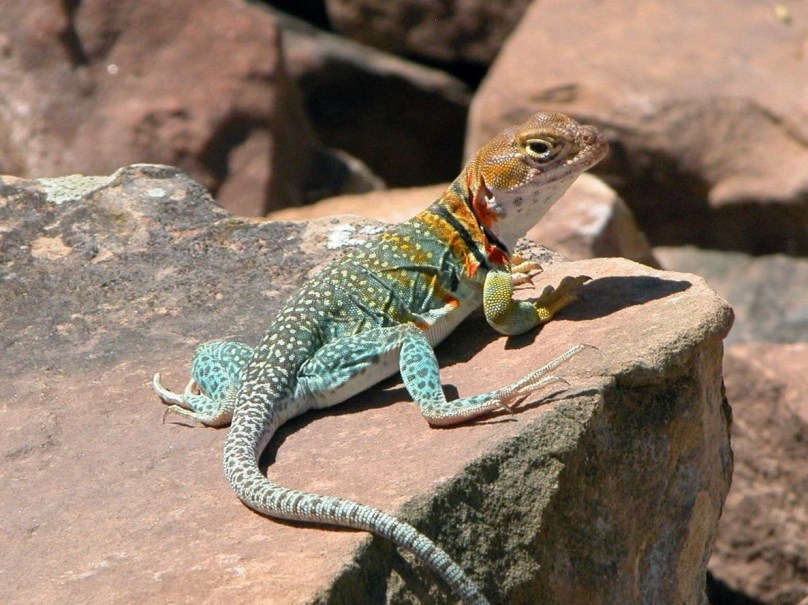
August Is for Lizards

We’ve had it pretty easy up until now. We all knew that the heat would suddenly descend on us along the Southern California coast, just as it has for weeks in the East, South, and Midwest.

Even now, it is nowhere near as hot and sticky here as it is inland or in the San Fernando and San Gabriel Valleys. (And we won’t even mention the Coachella Valley.)

Living as we do in an apartment building without any insulation, let alone air conditioning, it can get hot after a few days of heat radiating toward our walls and roof—and it can stay hot. Martine and I have fans going all over the place. It helps, particularly after the sun goes down; but dropping off to sleep is not easy.

I was going to cook a minted rice casserole for supper. As dinner time approached, however, I gave up on the idea. What? Turn on the oven on a day like this? No way José!

Instead I had some blue cheese with Ritz crackers, a glass of unsweetened ice tea, and a white peach.

Based on past experience, I knew the heat wave would last for days, perhaps even weeks, longer than the weather forecasters said it would. Time to live like a lizard!

Giving Life to a Period in History

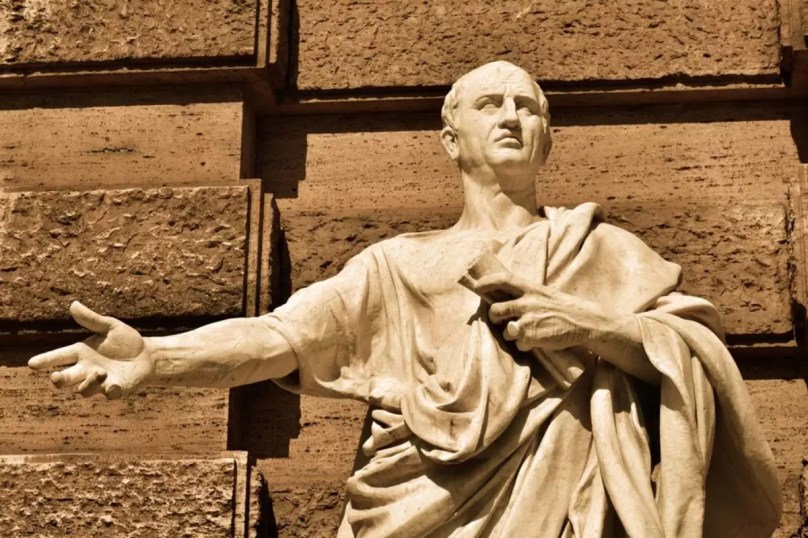
Roman Senator Marcus Tullius Cicero (100-43 BCE)

How many letters and journals have come down to us from Ancient Egypt or Classical Greece or Biblical Palestine? None. Consequently, our view of their respective civilizations is an incomplete one. For the last years of the Roman Republic, however, we have a voluminous orator, letter writer, and philosopher who was very much at the center of the action.

Marcus Tullius Cicero was one of the most powerful members of the Roman Senate. From him, we have political orations, speeches for the prosecution or defense of murder trials, essays on the gods and growing old (among other subjects), and letters to friends and political associates. In particular, his letters to his friend Atticus give us a picture of his times such as we do not have from any other ancient civilization.

What is more, his works are eminently readable today. In fact, his oration attacking Mark Antony was so effective that the Roman general promptly sent out an assassin to shut him up permanently.

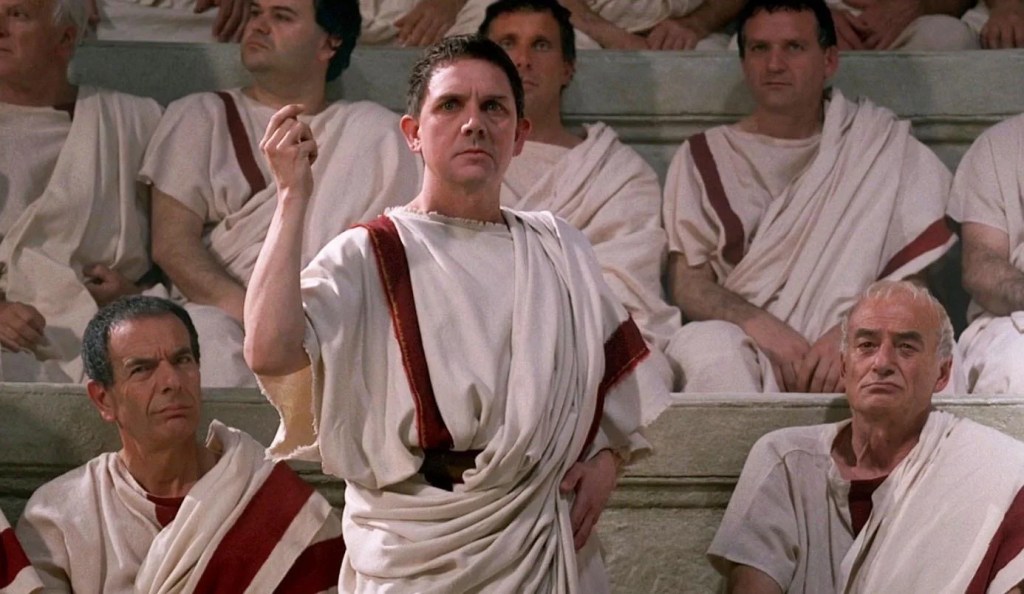
I have just finished viewing the HBO/BBC co-produced mini-series called Rome (2005-2007) which covered the last days of the Roman Republic. The twenty-two episodes include incidents in the life of Julius Caesar, Augustus Caesar, Mark Antony, Pompey the Great, Brutus, Cassius, Cleopatra, and Cicero.

David Bamber as Cicero in the HBO/BBC Mini-Series Rome

Both the mini-series and Cicero’s own writings portray the senator as a deeply divided individual. He was a follower of Gnaeus Pompey and was with him when he lost to Julius Caesar at Pharsalus. Then he sided with Brutus, Cassius, and the other slayers of Julius Caesar and was with them at the Battle of Philippi. That did not sit well with Antony and Octavian (later renamed Augustus), who agreed to his demise.

Even more than two thousand years later, we can see clearly that Cicero was a follower of the old, traditional senate and of Cato the Younger, who committed suicide after Philippi. In 63 BCE, he led the overthrow of the conspiracy of Lucius Sergius Catiline, having several of the participants executed without trial. Ever after, he was disappointed that the people did not express sufficient gratitude. It was clearly a case of, “Yes, but what have you done for us lately?”

I strongly urge you to read some of the excellent Penguin translations of Cicero’s work and, if you have time, view the Rome mini-series, which is still available on HBO.