
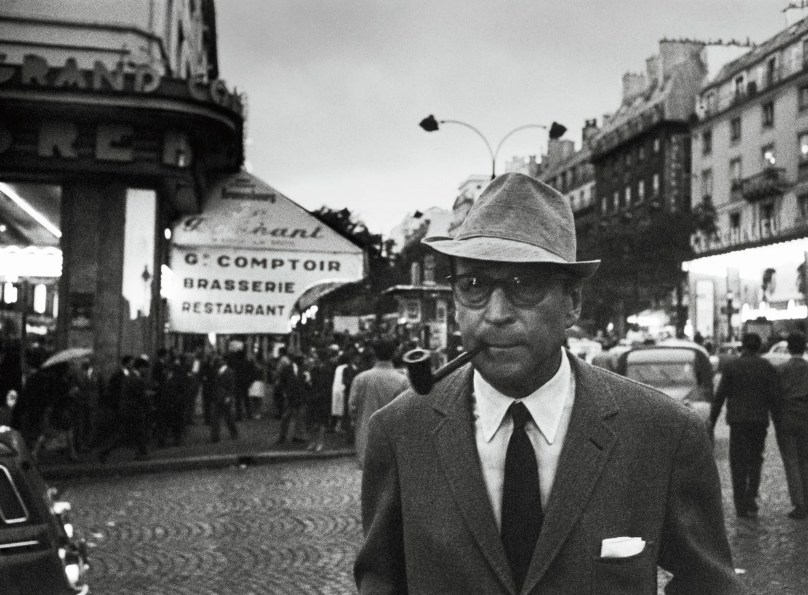
Author Georges Simenon (1903-1989)
He wrote hundreds of novels during the fifty years while he was active. There were 75 novels featuring Inspector Jules Maigret of the Paris Police Judiciaire, plus 28 short stories. According to Wikipedia, he also wrote some 117 romans durs, literally “hard novels,” usually grittier than his Maigret works.
I have just finished reading Le destin des Malou (The Fate of the Malous, 1948) about the young heir of a bankrupt developer who must make his way in the world after realizing that most of his family are completely unsympathetic. In the end, his hero Alain reminds me of Honoré de Balzac’s Eugène de Rastignac from Père Goriot as he resolves to conquer Paris as he stands on the heights of Père Lachaise cemetery overlooking the city. It is nothing short of a masterpiece.
I’ve read approximately half of Simenon’s work—at least half of what he published in his own name. I couldn’t find a bibliography of what he published under various pseudonyms. Although much of his work could be classified as genre fiction, I am beginning to think that perhaps, in our time, the best fiction falls into that category.
In a letter to the author, André Gide compared his roman dur La veuve Couderc (Ticket of Leave, 1942) to The Stranger by Albert Camus, “In my opinion, your book goes much further, and without seeming to—which is the height of Art.” Maybe that’s why Simenon is sadly underrated as an author of mysteries and police procedurals. I like that expression “goes much further, and without seeming to.”
That’s why I am now considering Georges Simenon the equal of other great 20th Century authors. I love reading his works, sometimes even multiple times. I’ve been reading his work for half a century now, and I am deeply grateful that he was so prolific.


You must be logged in to post a comment.