The 1950 Census has been unsealed and is now available for searching. Above is the page of the census (look starting with line 6). At the time, we lived at 2814 East 120th Street in the Buckeye Road Hungarian neighborhood of Cleveland, Ohio. In our household were:
My father Alex, born in what at the time of his birth was the Austro-Hungarian Empire, but in 1950 was part of Czechoslovakia.
My mother Sophie, born in the U.S. but raised in Hungary.
Me—but not my brother, who was to come along the next year.
My great-grandmother Lidia Toth (correct spelling: the enumerator goofed). Since both parents worked, she served as a live-in caregiver to me. She was born in Felcsut, Hungary, and spoke no English.
Note that my father was listed as a machinist. He was then employed by Lees-Bradner and Company, which manufactured gear-hobbing machines.
If you are curious about your own family, you can search the 1950 Census for yourself by clicking here. Please confine your search to the head of the household, as things get a little scattered when it comes to wives, children, and other live-in family members.
My Martine is as sweet as sweet can be, but her heart can be steel-plated when it comes to street hooligans. On most days, she takes a long walk in the neighborhood, keeping a weather eye out for what she calls “tiny treasures.” Sometimes these are foreign coins or interesting lanyards or any number of things.
Lately, however, some of her discoveries have been on the alarming side:
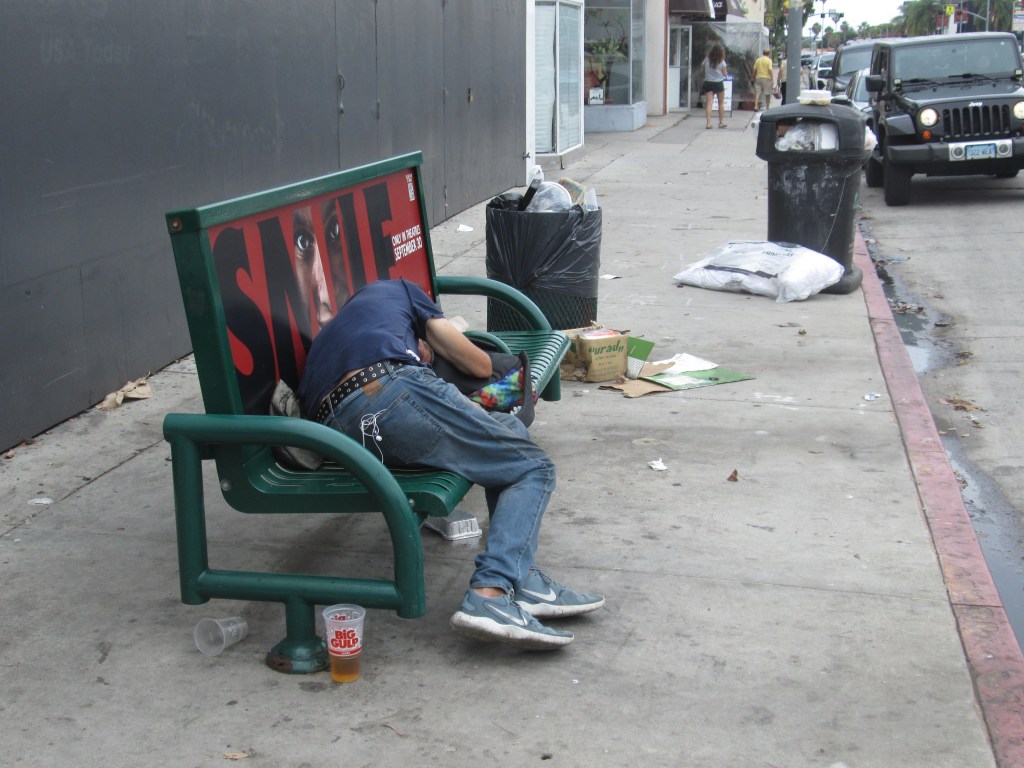
Two baseball bats, near a bus stop ad that had been vandalized
A bolt cutter
A large sledgehammer
In each case, she walked the item to the Santa Monica Police Station and handed it to the officer on duty. I cannot help but think that the local police are wondering what she will bring in next. Will it be an AK-47? An RPG (that’s rocket propelled grenade)? A box of land mines?
The streets of West L.A. and Santa Monica are getting rougher each year, and that’s reflected in what she finds.
I have just finished a collection of short stories by Anton Chekhov (1860-1904) entitled The Wife and Other Stories which has been, by far, the best book I have read so far this year. Even though her translations are being increasingly considered as clunky and slightly archaic, I really enjoyed Constance Garnett. The following discussion on happiness vs. unhappiness is from a story entitled “Gooseberries.”
I saw a happy man whose cherished dream was so obviously fulfilled, who had attained his object in life, who had gained what he wanted, who was satisfied with his fate and himself. There is always, for some reason, an element of sadness mingled with my thoughts of human happiness, and, on this occasion, at the sight of a happy man I was overcome by an oppressive feeling that was close upon despair. It was particularly oppressive at night. A bed was made up for me in the room next to my brother’s bedroom, and I could hear that he was awake, and that he kept getting up and going to the plate of gooseberries and taking one. I reflected how many satisfied, happy people there really are! What a suffocating force it is! You look at life: the insolence and idleness of the strong, the ignorance and brutishness of the weak, incredible poverty all about us, overcrowding, degeneration, drunkenness, hypocrisy, lying…. Yet all is calm and stillness in the houses and in the streets; of the fifty thousand living in a town, there is not one who would cry out, who would give vent to his indignation aloud. We see the people going to market for provisions, eating by day, sleeping by night, talking their silly nonsense, getting married, growing old, serenely escorting their dead to the cemetery; but we do not see and we do not hear those who suffer, and what is terrible in life goes on somewhere behind the scenes…. Everything is quiet and peaceful, and nothing protests but mute statistics: so many people gone out of their minds, so many gallons of vodka drunk, so many children dead from malnutrition…. And this order of things is evidently necessary; evidently the happy man only feels at ease because the unhappy bear their burdens in silence, and without that silence happiness would be impossible. It’s a case of general hypnotism. There ought to be behind the door of every happy, contented man some one standing with a hammer continually reminding him with a tap that there are unhappy people; that however happy he may be, life will show him her laws sooner or later, trouble will come for him—disease, poverty, losses, and no one will see or hear, just as now he neither sees nor hears others. But there is no man with a hammer; the happy man lives at his ease, and trivial daily cares faintly agitate him like the wind in the aspen-tree—and all goes well.
And mixed with these were splashes of California poppies. These too are of a burning color—not orange, not gold, but if pure gold were liquid and could raise a cream, that golden cream might be like the color of poppies.
As I mentioned in yesterday’s post, my favorite flowers are tulips and California poppies.
Some people say that it is illegal to pick a California poppy. The truth is actually a little more complicated. According to the CBS News site for San Francisco:
Now here is the interesting part: as a native Californian, I grew up believing it is illegal to PICK a California Poppy. As that turns out, it’s not entirely true! You can pick, bend, eat or smoke a Poppy as long it is not on state property. However, if a Poppy or any other flower is on School, Park, a median or even outside a courthouse, DO NOT pick or hurt the flower. Harming the flower or plant life could be considered a misdemeanor offense, and you can be fined up to $1000 and as many as six months in jail. That’s real Flower Power!
I wouldn’t pick a California poppy for different reasons: They are so beautiful that they should be left alone so that they can continue to bring joy to passers-by.
If you were to ask me what my favorite flowers are, I would unhesitatingly answer, “Tulips!” (In a close second would be California Poppies.) Yesterday, Martine and I braved the springtime crowds at Descanso Gardens to see the springtime flowers. Our first interest were the tulips, which we were the first thing we visited when we got there, and then again the last thing we saw before closing time.
What I love most about tulips are the gorgeous colors. Unfortunately, they last such a short time and are not seen anywhere for most of the year. They originally came from the Middle East in the 11th century AD, and were taken up by the Dutch only around the 1500s.
The world’s first speculative bubble was not in stocks or currency, but in Dutch tulip bulbs. The bubble lasted from 1634 to 1637, and saw numerous fortunes made and lost. In 1850, Alexandre Dumas Père, of The Three Musketeers and The Count of Monte Cristo fame, published a novel called The Black Tulip, which is well worth reading. It contains the following syllogism:
To despise flowers is to offend God The more beautiful the flower is, the more does one offend God in despising it The tulip is the most beautiful of all flowers Therefore, he who despises the tulip offends God beyond measure
I was surprised to find out that, according to a professor of anthropology, Machu Picchu should be called Huayna Picchu instead. The reason I was surprised is that the Incas never had a written language like the Maya and the Aztecs. They were great engineers and stonemasons, but left no writings or even hieroglyphs. The only “communication” of any sorts we have from the Incas are in the form of quipu, knotted cords that were used to quantify taxes or inventories.
Quipu at the Museo Larco in Lima, Peru
You can read the story here at CNN Travel. It doesn’t much matter what the “official” name of the Inca ruins was. After all, most Meso-American ruins are probably misnamed. Either the Conquistadores or the archeologists just assigned a name for convenience. And, for good or ill, it stuck.
The war in Ukraine just escalated. Two Ukrainian helicopter gunships flew 25 miles (40 km) into Russia and blew up a Russian fuel dump. It was yet another embarrassing moment for the Russian military, which neither detected nor prevented the incursion.
I only hope that none of the helicopters were of American manufacture, which would give Putin the opportunity he needed to say that the Ukrainians were just acting as a proxy for NATO. Of course, he could say that even if the helicopter attack had never happened. It’s one of those irksome imponderables involving the thinking processes of Vladimir Putin.
Ukrainian President Volodymyr Zelensky keeps saying that, if peace negotiations with Russia do not take place, it will be the beginning of World War Three. It is a sobering thought: If that happens, millions will die, myself included. I happen to live in one of the prime nuclear target areas, namely, Los Angeles.
Pundits keep referring to the search for an “offramp” from the war. Given Putin’s stubbornness and bloody-mindedness, I cannot see how the war would end. Or rather, all the options I see are rather grim.
I’m not going to get involved in the Will Smith/Chris Rock imbroglio at the Oscars, except to say that there is a time and place for everything. Perhaps the Academy should send Will Smith to Moscow to slap the Bejeezus out of Vladimir Putin for his savage war against the people of Ukraine.
Drag Queen RuPaul
Perhaps it would be even better to send RuPaul to slap Putin, given Putin’s aversion to any sort of gender bending.
Anyhow, somebody’s got to get to that man before he makes the world unlivable.
I have always loved the prose and poetry of George Mackay Brown, whom I met in 1976 in Stromness on the Orkney Mainland. (They call it the Mainland, even though it’s an island.) I have visited there twice, both times in bad weather, which I think is the only kind of weather prevailing there.
The Finished House
In the finished house a flame is brought to the hearth.
Then a table, between door and window
Where a stranger will eat before the men of the house.
A bed is laid in a secret corner
For the three agonies – love, birth, death –
That are made beautiful with ceremony.
The neighbours come with gifts –
A set of cups, a calendar, some chairs.
A fiddle is hung at the wall.
A girl puts lucky salt in a dish.
The cupboard will have its loaf and bottle, come winter.
On the seventh morning
One spills water of blessing over the threshold.
Dealing with Type 2 Diabetes can be onerous. Even worse than the insulin shots (which I need to do four times daily) are the finger-stick glucose tests. I know I can always give myself an insulin shot anywhere without arousing too much attention, but finger sticks are a different matter entirely.
The problem arises when you have difficulty getting your blood to bead on your finger so that you can apply the test strip and get a glucose reading. Sometimes, I have to stick myself several times, usually painfully, on some of my fingers. My right forefinger is already nerve damaged, so that I have to be very careful about avoiding the nerves on it. On my thumbs and little fingers, I need a thicker lancet to draw blood, currently a 30 gauge. On my other fingers, a narrower 33 gauge lancet is sufficient.
Can you imagine me at a restaurant sticking myself several times with a needle, with a loud “Ouch” from time to time? So when I go out to eat, I don’t usually test myself.
My doctor wants me to test my glucose three times a day, before each meal. Just before each appointment with her, I produce a spreadsheet with the before-meal glucose readings for each day since my last appointment.
Type 2 Diabetes requires considerable attention to detail. This can be rough if you are going out to eat, busy cooking a dinner, or taking a trip. When Martine and I went to Las Vegas last month, for example, I skipped doing the tests
You must be logged in to post a comment.