The Wanderer

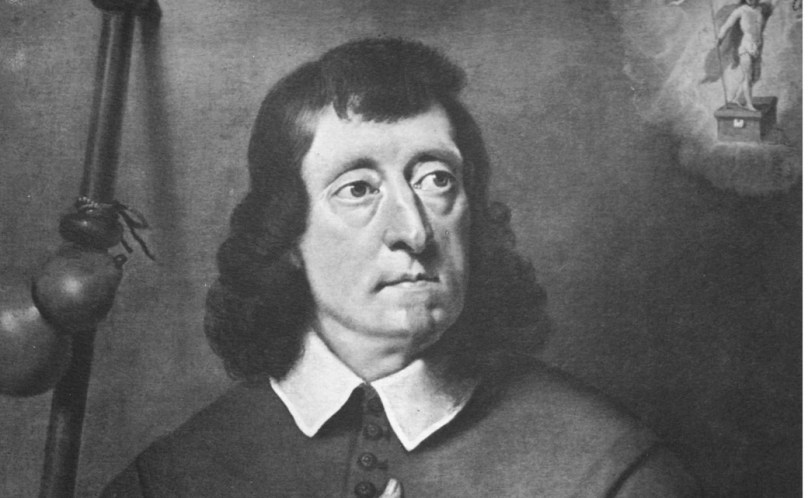
One of Many Anglo-Saxon Edwards Who Preceded the Conquest

The English language has a long history. We don’t have any samples of what the English spoke during the Roman occupation. In fact, it was not until the Angles, Saxons, and Jutes crossed the Channel into Britain that we have the bare bones of a literature. Today, I present one of the great Anglo-Saxon poems.

If you want to hear the poem in the original Anglo-Saxon of the Dark Ages, you can do so by checking out this YouTube site. It is a far, far cry from the language we speak today.

Here is “The Wanderer” in a modern translation from the Poetry Foundation:

The Wanderer

Always the one alone longs for mercy,
the Maker’s mildness, though, troubled in mind,
across the ocean-ways he has long been forced
co stir with his hands the frost-cold sea,
and walk in exile’s paths. Wyrd is fully fixed.

   Thus spoke the Wanderer, mindful of troubles,

of cruel slaughters and dear kinsmen’s downfall:
“Often alone, in the first light of dawn,
I have sung my lament. There is none living
to whom I would dare to reveal clearly
my heart’s thoughts. I know it is true
that it is a nobleman’s lordly nature
to closely bind his spirit’s coffer,
hold fast his treasure-hoard, whatever he may think.
The weary mind cannot withstand wyrd,
the troubled heart can offer no help,
and so those eager for fame often bind fast
in their breast-coffers a sorrowing soul,
just as I have had to take my own heart—
Often wretched, cut off from my own homeland,
far from dear kinsmen—and bind it in fetters,
ever since long ago I hid my gold-giving friend
in the darkness of earth, and went wretched,
winter-sad, over the ice-locked waves,
sought, hall-sick, a treasure-giver,
wherever I might find, far or near,
someone in a meadhall who might know my people,
or who would want to comfort me, friendless,
accustom me to joy. He who has come to know
how cruel a companion is sorrow
for one with few dear friends, will understand:
the path of exile claims him, not patterned gold,
a winter-bound spirit, not the wealth of earth.
He remembers hall-holders and treasure-taking,
how in his youth his gold-giving lord
accustomed him to the feast—that joy has all faded.

   And so he who has long been forced to forego

his lord’s beloved words of counsel will understand:
when sorrow and sleep both together
often bind up the wretched exile,
it seems in his mind that he clasps and kisses
his lord of men, and on his knee lays
hands and head, as he sometimes long ago
in earlier days enjoyed the gift-throne.
But when the friendless man awakens again
and sees before him the fallow waves,
seabirds bathing, spreading their feathers,
frost falling and snow, mingled with hail,
then the heart’s wounds are that much heavier,
longing for his loved one. Sorrow is renewed
when the memory of kinsmen flies through the mind;
he greets them with great joy, greedily surveys
hall-companions—they always swim away;
the floating spirits bring too few
familiar voices. Cares are renewed
for one who must send, over and over,
a weary heart across the binding waves.

   And so I cannot imagine for all this world

why my spirit should not grow dark
when I think through all this life of men,
how suddenly they gave up the hall-floor,
mighty young retainers. Thus this middle-earth
droops and decays every single day;
and so a man cannot become wise, before he has weathered
his share of winters in this world. A wise man must be patient,
neither too hot-hearted nor too hasty with words,
nor too weak in war nor too unwise in thoughts,
neither fretting nor fawning nor greedy for wealth,
never eager for boasting before he truly understands;
a man must wait, when he makes a boast,
until the brave spirit understands truly
where the thoughts of his heart will turn.

   The wise man must realize how ghastly it will be

when all the wealth of this world stands waste,
as now here and there throughout this middle-earth
walls stand blasted by wind,
beaten by frost, the buildings crumbling.
The wine halls topple, their rulers lie
deprived of all joys; the proud old troops
all fell by the wall. War carried off some,
sent them on the way, one a bird carried off
over the high seas, one the gray wolf
shared with death—and one a sad-faced man
covered in an earthen grave. The Creator
of men thus destroyed this walled city,
until the old works of giants stood empty,
without the sounds of their former citizens.

   He who deeply considers, with wise thoughts,

this foundation and this dark life,
old in spirit, often remembers
so many ancient slaughters, and says these words:
‘Where has the horse gone? where is the rider? where is the giver of gold?
Where are the seats of the feast? where are the joys of the hall?
O the bright cup! O the brave warrior!
O the glory of princes! How the time passed away,
slipped into nightfall as if it had never been!
There still stands in the path of the dear warriors
a wall wondrously high, with serpentine stains.
A storm of spears took away the warriors,
bloodthirsty weapons, wyrd the mighty,
and storms batter these stone walls,
frost falling binds up the earth,
the howl of winter, when blackness comes,
night’s shadow looms, sends down from the north
harsh hailstones in hatred of men.
All is toilsome in the earthly kingdom,
the working of wyrd changes the world under heaven.
Here wealth is fleeting, here friends are fleeting,
here man is fleeting, here woman is fleeting,
all the framework of this earth will stand empty.’

   So said the wise one in his mind, sitting apart in meditation.

He is good who keeps his word, and the man who never too quickly
shows the anger in his breast, unless he already knows the remedy
a noble man can bravely bring about. It will be well for one who seeks mercy,
consolation from the Father in heaven, where for us all stability stands.

A Word of Explanation

The following discussion is taken from the Octavia Randolph website:

Wyrd is an Old English noun, a feminine one, from the verb weorthan “to become”. It is related to the Old Saxon wurd, Old High German wurt, Old Norse urür. Wyrd is the ancestor of the more modern weird, which before it meant odd or unusual in the pejorative sense carried connotations of the supernatural, as in Shakespeare’s weird sisters, the trio of witches in MacBeth. The original Wyrd Sisters were of course, the three Norns, the Norse Goddesses of destiny.

Wyrd is Fate or Destiny, but not the “inexorable fate” of the ancient Greeks. “A happening, event, or occurrence”, found deeper in the Oxford English Dictionary listing is closer to the way our Anglo-Saxon and Norse forbears considered this term. In other words, Wyrd is not an end-point, but something continually happening around us at all times. One of the phrases used to describe this difficult term is “that which happens”.

“Something Indecent?”

Polish Poet Czeslaw Milosz (1911-2004)

Czeslaw Milosz was born in Eastern Europe the same year as my father was born. Only, Elek Paris was no poet; and Czeslaw Milosz was one of the greatest poetic voices of his century. For many years, he lived in the United States and taught at Berkeley. He won the Nobel Prize for Literature in 1980 and died in his native Poland in 2004.

Note that the title of the following poem ends with a question mark:

Ars Poetica?

I have always aspired to a more spacious form   
that would be free from the claims of poetry or prose   
and would let us understand each other without exposing   
the author or reader to sublime agonies.   

In the very essence of poetry there is something indecent:   
a thing is brought forth which we didn’t know we had in us,   
so we blink our eyes, as if a tiger had sprung out   
and stood in the light, lashing his tail.   

That’s why poetry is rightly said to be dictated by a daimonion,   
though it’s an exaggeration to maintain that he must be an angel.   
It’s hard to guess where that pride of poets comes from,   
when so often they’re put to shame by the disclosure of their frailty.   

What reasonable man would like to be a city of demons,   
who behave as if they were at home, speak in many tongues,   
and who, not satisfied with stealing his lips or hand,   
work at changing his destiny for their convenience?   

It’s true that what is morbid is highly valued today,   
and so you may think that I am only joking  
or that I’ve devised just one more means   
of praising Art with the help of irony.   

There was a time when only wise books were read,   
helping us to bear our pain and misery.   
This, after all, is not quite the same   
as leafing through a thousand works fresh from psychiatric clinics.   

And yet the world is different from what it seems to be   
And we are other than how we see ourselves in our ravings.
People therefore preserve silent integrity,   
thus earning the respect of their relatives and neighbors.   

The purpose of poetry is to remind us   
how difficult it is to remain just one person,   
for our house is open, there are no keys in the doors,   
and invisible guests come in and out at will.

What I’m saying here is not, I agree, poetry,   
as poems should be written rarely and reluctantly,   
under unbearable duress and only with the hope   
that good spirits, not evil ones, choose us for their instrument.

Beware of Awards

Yesterday, Martine and I attended a screening of old cartoons from Walt Disney, the Fleischer Studio, MGM, and United Productions of America (UPA). Much was made of fact that several of the cartoons had won Oscars for animation.

It was at that point that my hackles began to rise. Academy Awards? You mean those awards voted on by industry members who bore grudges against the studio for which they worked or for competing studios. Granted, some Oscar winners deserved their awards. Knowing the film industry as I do, however, many votes are cast based on pure spite.

There is no doubt that the Walt Disney Studio made some great cartoons. But did “The Old Mill” (1937) deserve an Oscar? See your yourself: The Old Mill. There were some very arty effects, but zilch in the way of story or characters.

On the other hand, a controversial Donald Duck cartoon entitled “Der Fuehrer’s Face” (1943) was banned for decades because it showed the Quackster having a dream that he was a Nazi in Hitler’s Germany. It was a fascinating look at American war propaganda. Was it a little racist? Hmm, could be….

In the speaker’s idolization of Disney, he totally left out Warner Brothers’ Looney Tunes and Merrie Melodies. No Bugs Bunny, no Tweety or Sylvester, no Roadrunner, no Porky Pig, and no Daffy Duck. And he said very little about the 1930s productions of Max and Dave Fleischer. I am referring to Popeye, Betty Boop, and a host of great cartoons, such as Poor Cinderella (1934) or Raggedy Ann and Raggedy Andy (1941).

As a low rent film scholar, I am suspicious of awards. I never watch the Academy Awards on television, and I never take awards into consideration when planning my viewing. I may not have the so-called prestige of the Oscars behind me, but I am more likely to see films for other reasons than industry backbiting.

My Halloween Reading

At the end of September, I set myself a program for reading several appropriate ghoulish, ghastly, and horrifying titles in honor of my favorite holiday, Halloween. You can read about my intentions here.

Of the ten books I ended up reading last month, five were appropriate for the season:

  • Ann Radcliffe: The Italian, or the Confessional of the Black Penitents
  • Joyce Carol Oates: Cardiff, by the Sea
  • Thomas Ligotti: The Agonizing Resurrection of Victor Frankenstein and Other Gothic Tales
  • Edgar Allan Poe: The Portable Poe
  • Ray Bradbury: The Halloween Tree

They were all pretty good. Not surprisingly, I thought the Poe was best, followed by the Bradbury. That was a surprise, as it was written for the juvenile market, but I enjoyed every minute of it. The Ann Radcliffe was a hoot, as the British tended to think that nothing was spookier than Catholicism, (Maybe it was that thing about the Holy Ghost.)

I liked the Ligotti book because it was a fun way to revisit all the high points of the genre. Cardiff, by the Sea wasn’t technically a Halloween novel, except for the fact that everything Joyce Carol Oates is a bit on the spooky side.

The Borgo Pass at Midnight

I have always loved the beginning of Tod Browning’s Dracula (1931). It shows Renfield (Dwight Frye) arriving at a Transylvanian village late in the evening at Walpurgis Night, when witches and evil spirits hold sway. Everybody is bemoaning that fact in Hungarian. As a Hungarian-American,I always had a fondness for that scene—rather than for the, I thought, less interesting events in England in the vicinity of Carfax Abbey.

Today I saw bits and pieces of the two original Universal horror classics—Dracula and Frankenstein (both 1931)—on Turner Classic Movies (TCM). There altogether too many large rooms in which too many people, many of them in formal evening attire, confronted one another. I was much happier with James Whale’s The Bride of Frankenstein (1935), which was a much better film than Whale’s original Frankenstein.

I suppose that, in the deepest days of the Great Depression, people had a yearning for actors with British accents dressed in tuxedos. I’ve always thought it was a bit silly.

Still, there were those scenes in which Renfield is working his way to Castle Dracula. They are forever etched in my mind.

Vladimir Ivanovich Leventon

Lobby Card for Val Lewton’s The Cat People (1942)

This is a re-post from October 20, 2022. I have just sat through four films directed by Jacques Tourneur on Turner Classic Movies (TCM), three of them produced by the great Val Lewton. He is the only producer who deserves to be called great. Most of the others are impediments to greater or lesser degrees.

There are horror films, and there are horror films. They can scare you out of your wits, like Curse of the Demon (1957) and Poltergeist (1982), or they can make you understand that the world is both light and dark in equal measure, like Val Lewton’s great films of the 1940s, such as The Cat People (1942).

Val Lewton, born Vladimir Ivanovich Leventon in Yalta, Russia, was interested in making low budget films to compete with Universal Pictures’ highly successful Frankenstein, Dracula, Mummy, and Wolf Man franchises. The title for The Cat People was assigned to Lewton by RKO, and Lewton went to work on a psychological thriller in which there is no overt violence. Perhaps the greatest scene takes place in a swimming pool in which a young woman is swimming all by herself at night. In the shadows, we imagine there is a black panther, but neither the swimmer nor we the viewers are absolutely sure.

Even though Halloween is just about over, I highly recommend all the following Lewton films:

  • The Cat People (1942)
  • I Walked with a Zombie (1943)
  • The Leopard Man (1943)
  • The Seventh Victim (1943)
  • The Ghost Ship (1943)
  • The Curse of the Cat People (1944)
  • The Body Snatcher (1945)
  • Isle of the Dead (1945)
  • Bedlam (1946)

All are great films worthy of being seen multiple times. They are short, thoughtful, extremely moody, and highly successful. Also available is a Turner Classics biopic about Lewton’s career called Shadows in the Dark narrated by Martin Scorsese. Martine and I watched it last night and recommend you see it.

In all of Hollywood’s history, Lewton was probably the only film producer who controlled his products as if he were the director. Even though Lewton directorial protegés Jacques Tourneur, Robert Wise, and Mark Robson went on to have brilliant careers, when one is watching a Lewton film, one recognizes it as a Lewton film.

Autumn Heat

Martine at Chace Park in the Marina

Predictably, we are in the middle of an autumn heat wave. No, I did not go to Chace Park today. This time of year, the wind blows hot air from the desert; so there is little to be gained waiting for sea breezes that are not likely to cool my brow.

Martine went downtown by herself to partake of the high-toned atmosphere around Union Station and the Civic Center. (Am I being ironic? To be sure I am being ironic.)

Tomorrow I may go downtown, though I may bail if the temp gets too high, like 95° degrees Fahrenheit (35° Celsius) or above. That walk from the Metro Rail 7th Street Station to the Central Library would be prohibitively hot. I will check the temp tomorrow morning before making my decision.

I have become very dependent on the weekly Mindful Meditation sessions at the Central Library. Then, too, there are those seven floors of books that draw me in.

Visiting the Equator

The Yellow Painted Line Is Supposedly the Equator

In November 2016—a time of evil omen for the United States—my brother Dan and I visited Ecuador. One of our destinations was latitude zero, the line of the equator. The Ecuadorians built a big park with museums. a planetarium, and restaurants at a place they called La Ciudad Mitad del Mundo—“Middle of the World City.” The line of the equator was as it was defined by scientists in the 18th century.

The only problem was that the actual equator line is some 250 meters to the north of Middle of the World City. But this was not determined until GPS was invented.

Dan and I didn’t much care that the Middle of the World City was slightly misplaced. It was a nice park, and the real equator line didn’t have as big a budget. So it goes.

Dan Paris with the Equator Monument in the Background

It’s always a tricky business to identify the location of the poles, the tropics, as well as the equator. Did you know, for instance, that because the earth is not a perfect sphere, if one were to identify the tallest mountain on the planet based not on its height from sea level, but from an imaginary point at the center of the earth, the tallest mountain would not be Everest but Ecuador’s own Mount Chimborazo? Don’t believe me? Check out this website from the National Oceanic and Atmospheric Administration.

Bad Weather Ahead

Moscow in the 1920s

Sigizmund Krzhizhanovsky (1887-1950) was a Soviet writer who, in his own words, was “known for being unknown.” Hopefully, that will no longer be true as New York Review Books releases more of his stories. I have just finished reading his Autobiography of a Corpse, which contains a prescient 1939 story titled “Yellow Coal.” Tell me if the first paragraph of the story, quoted below, reminds you of our present situation:

The economic barometer at Harvard University had continually pointed to bad weather. But even its exact readings could not have predicted such a swift deepening of the crisis. Wars and the elements had turned the earth into a waster of its energies. Oil wells were running dry. The energy-producing effect of black, white and brown coal was diminishing yearly. An unprecedented drought had swaddled the sere earth in what felt like a dozen equators. Crops burned to their roots. Forests caught fire in the infernal heat. The selvas of South America and the jungles of India blazed with smoky flames. Agrarian countries were ravaged first. True, forests reduced to ashes had given place to ashy boles of factory smoke. But their days too were numbered. Fuellessness was threatening machines with motionlessness. Even glacier snow-caps, melted by the perennial summer, could not provide an adequate supply of waterpower; the beds of shrinking rivers lay exposed, and soon the turbine-generators would stop.

Samhainophilia

The Winner: Most Popular and Guilt-Free Holiday

There is a such a word as samhainophobia, which means hatred of Halloween. By applying the principal of parallelism, there must be such a word as samhainophilia, meaning love of Halloween. According to Wikipedia:

Samhain is a Gaelic festival on 1 November marking the end of the harvest season and beginning of winter or the “darker half” of the year. It is also the Irish and Scottish Gaelic name for November. Celebrations begin on the evening of 31 October, since the Celtic day began and ended at sunset. This is about halfway between the autumnal equinox and winter solstice. It is one of the four Gaelic seasonal festivals along with Imbolc, Bealtaine, and Lughnasa.

We don’t celebrate Imbolc, Bealtaine, or Lughnasa very much any more; but Samhain, or Halloween, is continue to grow more and more popular. Think about it: There isn’t any guilt associated with buying a few bucks worth of candy and giving it to kids. On the other hand, you have to cook up a huge complicated feast for Thanksgiving and pretend to be nice to all your most objectionable relatives.

And don’t even get me started about Christrmas! You have to kill a tree, decorate it with expensive ornaments, buy expensive gifts for everybody, and do all the same stuff required for Thanksgiving, except maybe you don’t have to serve turkey at your holiday feast.

Then there are all those other holidays: You have to set off an explosive on Independence Day, blowing off a finger or limb. You have to get drunk and endanger your marriage at a New Years office party. And so on and so on.

Heck, I’ll take the candy any day.

The above photo was taken at Los Angeles’s Grier Musser Museum of Victoriana. Martine and I spent a pleasant afternoon visiting the museum owners, Susan and Rey Tejada, who live on the premises. They have an impressive collection of holiday-related books, animated displays, and figurines. I spent over an hour looking at 3-D First World War images on a stereopticon. They also have a great collection of pop-up books of every description.