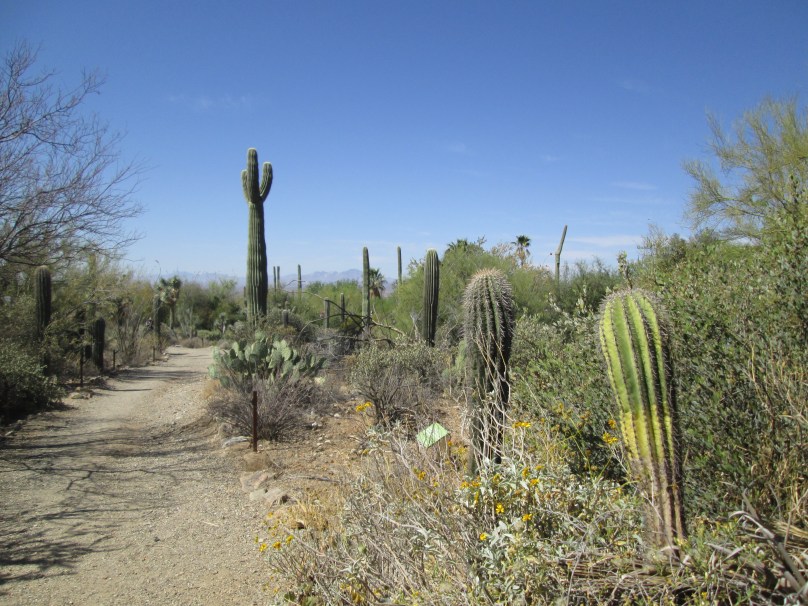
Path in the Arizona-Sonora Desert Museum
Living as I do at the edge of a vast desert, I am more than a little interested in the prospect of rain. In the desert, rain can be a serious matter. In the mid 1970s, I went camping with some friends to Death Valley. On the morning we were to return home, a thin layer of snow covered the ground—but that was not all. Shortly after we took the left turn onto California Route 178 towards Trona, we ran into a flash flood. We did the right thing: We waited it out. It took about a half hour for the waters to subside.
Soon it will be the Mexican Monsoon rainy season in Arizona. Large amounts of rain will fall on scattered areas throughout the state, and there will be flash floods galore.
What concerns me more directly is the news that this will be a major El Niño year. That means we can expect heavy rains beginning in the late autumn and possibly lasting to early spring. The Los Angeles River, which for most of its length is a concrete-lined flood channel, will be raging through the city carrying imprudent passersby and pets toward Long Beach Harbor.
The flood control channels which, most of the time, are standing jokes become terrifying when huge amounts of water are suddenly dumped on Southern California’s desert landscape. I remember one storm in the 1980s which made me search out alternate routes on the way home. Just about every street was flooded, and the storm drains were overloaded. It took me over an hour to drive the two miles to return home from work.
Generally, Martine and I like the rains. It’s nice to see green hills surrounding Los Angeles in the fall rather than the dry, dusty mountains we usually see. (Of course, we pay for that lush vegetation when the wildfires begin.)


You must be logged in to post a comment.