Summer Vacation

The following paragraphs come from the beginning of Chapter Eight in John D. MacDonald’s The Crossroads. In it, he satirizes the typical 1950s summer family vacation.

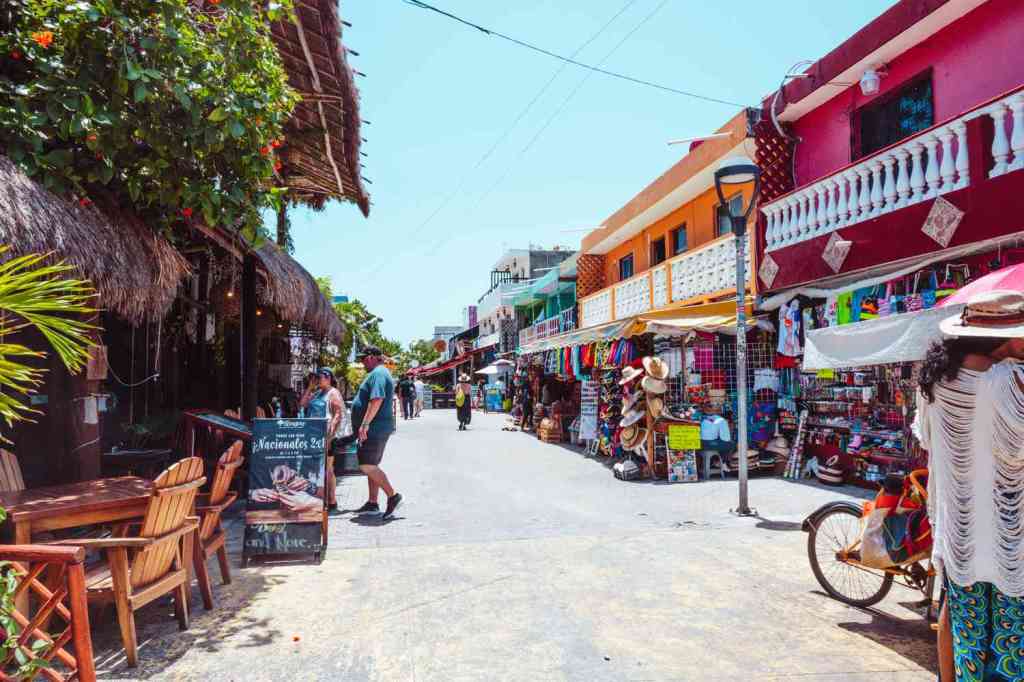
During the first twenty-two days of July the Crossroads Corporation experienced the normal seasonal change in the character of the business. Summer vacationers clogged the roads. The young families stopped at the restaurants and gas stations and motels. The young husbands, with fourteen days, or twenty-one days of freedom, spent it abrading their souls against the shimmer and stink of fast traffic, counting every night the thinning stack of traveler’s checks. The young wives put on pretty summer skirts and blouses in the morning, and by ten o’clock were stained, wilted, wrinkled and rump-sprung, the victims of the attrition of summer heat, sticky hands and road fumes. They called their husbands darling with iron emphasis. Small, weary, wind-burned children whined and threw up. The young families visited dear friends they had not seen in three years, and found nothing to say to them. They visited the showplaces of the nation, made the proper dutiful sounds of appreciation and found them a litter of gum wrappers, bored guides, and ill-mannered children of the other young families. They careened down the endless stone rivers between the bright thickets of billboards. Virginia Beach was where Junie thumped Russell on the head with a rock. Three stitches. The Suwanee River was where the trunk compartment lock jammed. The Grand Canyon was where Baby broke Mummie’s glasses. Franconia Notch was where Tiffin got into the poison ivy.

Tires burst. Speedometer cables squeaked and died. Pebbles chipped windshields. Pets escaped. (You were the one hadda bring that goddam dog in the first place.) Fan belts snapped. Ten billion pieces of Kleenex tumbled along the dusty shoulders.

Down the Hatch

Flame-Roasted Hatch Chiles

Hatch chiles are in season!

That is one of my most favorite things about summer. I love the taste of roasted Hatch chiles. Unfortunately, when I roast them on the flame of my gas range, Martine and my neighbors complain of the sharp (but utterly delicious) smell.

Yesterday, I bought a bag of Hatch chiles, intending to roast them in the oven. Following the instructions of a website which shall remain nameless, I roasted them at 550 degrees (288° Celsius) for about 15 minutes a side. I was told that after being locked in a plastic bag for 5-10 minutes, the blistered outer skin could be easily removed with my bare hands.

Hah! Instead, they went all to pieces, with the blistered skin not properly separating from the chile pepper itself. I wound up throwing the whole batch out.

So I decided to buy chiles that has been roasted and stripped of their skin. It cost a bundle, but I like to use roasted chiles in much of my cooking, such as in my Spanish Rice, with scrambled eggs, and so on. I could keep a supply in my freezer for up to six months.

I truly love Hatch chile peppers, so I could hardly wait until I pick them up on Saturday, August 16, at my local Bristol Farms market.

Habitual

Daily writing prompt
Describe one habit that brings you joy.

Nothing brings me joy more than travel. Unfortunately, I don’t have the cash tom do as much traveling as I want. So, the next best thing is breakfast. Early on in my life, I was not a big breakfast eater. After my brain surgery in 1966, however, I was prescribed medicines that made it mandatory to eat three meals a day—including breakfast. I love drinking a cup of hot tea with honey and fresh lime, accompanied by one of ten rotating breakfast dishes.

While eating breakfast, I perform the KenKen and Sudoku puzzles in the Los Angeles Times, followed by a reading of the funnies, where one finds more truth than in any other part of the newspaper.

In Love with the Twonky

Tony Randall as the Medusa in 7 Faces of Dr Lao (1964)

Oh, God, what is he on about now? Twonky? What is twonky?

You well know that there are films that you love but to which you cannot ascribe a high level of artistic excellence. I refer to them as twonky films. For me, a perfect example is George Pal’s 7 Faces of Dr Lao, produced at MGM. In it, Tony Randall actually plays eight roles: the inscrutable Dr Lao (pronounced LOH) himself, the magician Merlin, the god Pan, the Talking Serpent, Medusa, Apollonius of Tyana, the Abominable Snowman, and (uncredited) himself as a seated member of the audience.

In the last seven years, I have seen 7 Faces of Dr Lao four times and I’m still not tired of it. I will continue to see it and enjoy it whenever I can. I even read the book it was based on: Charles G. Finney’s The Circus of Dr Lao. (As a matter of fact, I think I’ll probably re-read the book pretty soon.)

Now where does this term twonky come from? In 1953, Arch Oboler directed a science fiction film entitled The Twonky starring Hans Conried. According to the Internet Movie Database (IMDB), the plot concerns a “Tweedy college professor [who] discovers his new TV set is animate, apparently possessed by something from the future, and militantly intent on regulating his daily life.”

I have not seen the film but it sounds pretty twonky to me.

There are many other films (and, dare I say it, books) that I would consider to be twonky. I’m thinking of Ed Wood’s Plan 9 from Outer Space, Showgirls, Popeye cartoons, and virtually the entire filmography of Roger Corman and William Castle.

Interestingly, there is a generation gap between the bad films I like and the bad films a Gen Z’er would like. That’s understandable because young people were raised to love a different kind of bad film. Even my younger brother (by six years) grew up loving Clutch Cargo and Huckleberry Hound cartoons, which I considered too unsophisticated for my tastes.

My Looks

Daily writing prompt
How would you describe yourself to someone who can’t see you?

Imagine a combination of Robert Redford and Brad Pitt. Throw in Paul Newman’s blue eyes. (He was from Cleveland like me.) Think of an exciting life of race-car driving and climbing the Southern Andes. That, in a word, is not me. I am too ordinary for words.

Hap

English Poet and Novelist Thomas Hardy (1840-1928)

He was a great novelist, but then gave it up and became a great poet. Alas, we do not recognize him as such, but I think in time people will realize his greatness.

Hap

If but some vengeful god would call to me
From up the sky, and laugh: “Thou suffering thing,
Know that thy sorrow is my ecstasy,
That thy love’s loss is my hate’s profiting!” 

Then would I bear it, clench myself, and die,
Steeled by the sense of ire unmerited;
Half-eased in that a Powerfuller than I
Had willed and meted me the tears I shed.

But not so.   How arrives it joy lies slain,
And why unblooms the best hope ever sown?
—Crass Casualty obstructs the sun and rain,
And dicing Time for gladness casts a moan. . . .
These purblind Doomsters had as readily strown
Blisses about my pilgrimage as pain.

The Oldest Book in My Collection

It was September 1962. I was 13½ years old, and newly enrolled as a freshman at Chanel High School in Bedford, Ohio. The school was a Catholic school and taught by the Marist Fathers, who lived in a community on the top floor of the high school building.

Probably the strangest (to me) course in my first year was Latin 1, in which we studied Julius Caesar’s The Gallic Wars in the original Latin.

Most of the kids from wealthier families picked up a copy of Cassell’s Latin-English dictionary, but I chose instead to get the Collins Latin Gem Dictionary, which could fit in my shirt pocket. (Eventually, I also got the White’s Latin Dictionary, which looked to have been originally published in the 1800s.)

My Collins Latin Gem Dictionary is still in good condition and still eminently usable. The nice thing about Latin is that books in and about the Latin language never go out of date.

Omnia Gallia in tres partes divisa est.

Honoring the Ancestors

Non-Japanese Participants in the Obon Dances

For the first time since before the Covid-19 closures, Martine and I attended the West Los Angeles Buddhist Temple’s Obon celebration yesterday. In Southern California, the various Buddhist temples take turns in offering an Obon celebration. Many of the participants that we saw included families from the Venice, Nishin (downtown L.A.), Gardena, Orange County, San Fernando Valley and various other hongwanjis that spend weekends traveling from one celebration to the next—as the celebrations are designed not to interfere with one another.

Again, the Men’s Club at WLA provided their superior udon noodle soup, which I enjoyed with some Japanese chili powder (togarashi) for extra flavor. Missing was the sushi booth, which I patronized in previous years.

In many of the posts I have written about ethnic festivals, I have rued the steady decline as various ethnicities become more attenuated to the hamburger and french fry mainstream of American culture. This does not seem to be the problem with the Obon festival we attended. Many of the participants dancing and wearing kimonos and happi coats represented either mixed families or all white families.

Apparently, the WLA Buddhist temple is very attractive to refugees from some of the nastier Christian denominations. According to their website:

We are a Jodo Shinshu Pure Land Buddhist temple located in the heart of Sawtelle Japantown in the West Los Angeles area of Southern California. We are an inclusive community welcoming of all people, regardless of age, ethnicity, gender, sexual orientation, etc.

That inclusive attitude seems to have borne fruit. I’m happy, at any rate, at least as long as the Men’s Club continues cooking up their udon soup.