Together Again

Martine and I in the Coachella Valley

Martine called me this morning from Sacramento and said she was returning home. Apparently her trip was marred by a combination of a bad cold and uncomfortable travel. Whatever the reason, I am happy to welcome her back. I hope she doesn’t plan any more of these departures (this was her third).  I just got back from the Greyhound Depot in downtown L.A., so I don’t have time for any further details at this time.


Five Epiphanies

Ushuaia from the Air

It was James Joyce who, in Stephen Hero and The Portrait of the Artist as a Young Man, coined the term epiphanies to refer to moments of clarity and sudden recognition of another perspective. There were several points in my life in which I had a shock of recognition and that I looked back on as pivotal points in my development as a person. In this post, I recognize five such epiphanies that occurred in my life:

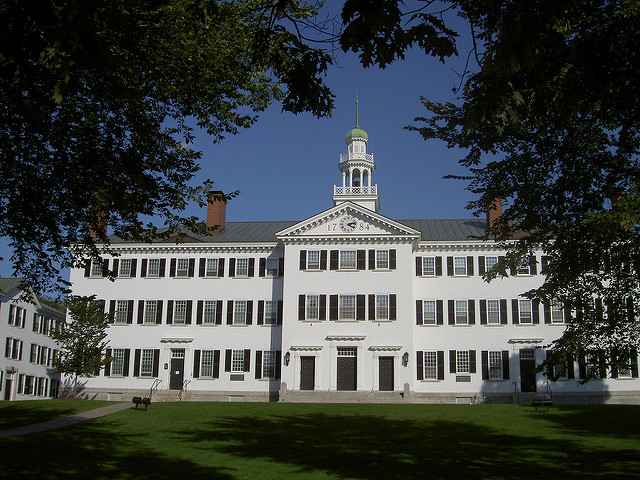
Dartmouth College 1962

It was a bad year. It looked as if my parents were headed for divorce, and rare was the day when there were no mutual recriminations. I was delighted that I was accepted at Dartmouth. When, during the summer, my future roommate’s parents drove me up to the campus, I fell in love with the place, deciding that here was a place I could heal.

Cleveland 1966

I was released from Fairview General Hospital after brain surgery to remove a pituitary tumor. As I was sitting as a passenger in our family automobile, I saw the people in the street almost as angelic beings. It was only after the operation that I was told how serious the operation was; and that my life was despaired of. I thought momentarily of Miranda’s lines in Shakespeare’s The Tempest:

Oh, wonder!
How many goodly creatures are there here!
How beauteous mankind is! O brave new world,
That has such people in ’t!
Uxmal 1975
On my first trip outside the United States, I arranged with Turistica Yucateca to have a driver take me to the Maya ruins at Uxmal in the Puuc Hills. As his car pulled up to the magnificent Templo del Adivino, he made a sign of the cross. I felt that I was on holy ground.
Death Valley 1979
It was my first camping trip and my first real introduction to the desert. We were at Furnace Creek, with desolation all around us. Just after sunrise, birds of every variety flocked to the campground and woke us up.
Ushuaia 2006
It was my first trip to South America. As our plane descended to Ushuaia, the southernmost city in the world, only 600 miles from Antarctica, I felt a shiver of excitement. Never mind that I was to break my shoulder in a blizzard within a few days, Ushuaia has always stood for a kind of subarctic wilderness. I returned in 2011 with Martine and would gladly return again.


The Travel Cure

Nariz del Diablo Train in Sibambe, Ecuador

I have a simple plan to cure the ignorance of most Americans who think themselves to be proud because they have lived in the same shithole all their lives. The idea came to me from reading Mark Twain, who wrote in The Innocents Abroad (1868):

Travel is fatal to prejudice, bigotry and narrow-mindedness and many of our people need it sorely on those accounts. Broad, wholesome, charitable views of men and things cannot be acquired by vegetating in one little corner of the earth all one’s lifetime.

Lest we all become too place-proud, we need to send our people to travel in the so-called Third World. And I don’t mean First Class seating on jet aircraft and staying at luxury hotels and ordering room service. I mean forcing them to take buses and trains, struggle with the language, and eat what the ordinary people eat. In every way, such an experience will open their eyes and, when they return to East Jesus, Arkansas, they will be better people for it.

And no, it isn’t an ordeal—not by a long shot! When I first started to travel, I had experience of only four places: Cleveland, Ohio (most of my life to that point); Hanover, New Hampshire (my 4 years at Dartmouth); Los Angeles (eight years at UCLA and after); and Lake Worth Florida (just a few weeks, not counting my infancy). Growing up in the Midwest, we never went anywhere for any length of time. My first whiff of Yucatán not only opened my eyes, my nasal passages, and my taste buds, but I felt I was at the beginning of a more wondrous existence.

Work kept me from traveling as much as I wanted to, but I traveled enough to have many happy memories.


In Dubious Terrain

Volcanic Steam Vents Near Þingvellir Iceland

It is almost five years since I last set foot in Iceland. Curiously, most of the vacations I have had since then have been in earthquake and volcanic zones. It is almost as if being in highly dubious terrain has become a metaphor for my life. All those Icelandic steam vents, all those fumaroles—they are a handy symbol for the curve balls that life can throw at you. I am reminded of John Bunyan’s Pilgrim’s Progress, in which Pilgrim must walk a straight and narrow path from the City of Destruction to the Celestial City, which is Heaven.

My first memory of Iceland, going back to my first visit in 2001, was of all the steam vents on the Reykjanes Peninsula between Keflavík Airport and Reykjavík. Then, too, there were those fields of geysers where one had to stay on the path if one didn’t want to fall through the crust and end up boiled to death within seconds.

The Volcano Sabancaya in Eruption Near Arequipa, Peru

In my seventy-third year on this earth, I find I must walk on the straight and narrow path lest I fall by the wayside. Living with Martine was a pleasant distraction—one I would gladly suffer again—but on my own, there are more things that can happen to me. I am determined to take good care of myself, insomuch as that is possible.

As you read these little squibs of mine, I should not be surprised if you could tell that something is wrong before I can inform you of the details.

In the meantime, I continue to plan for my vacation later this year in Guatemala, another land of earthquakes and volcanoes.


Rhyolite

Martine at Rhyolite Ghost Town Near Death Valley

On this, the first full day after Martine’s departure, I have been reading, watching old movies, and waiting for a major rain event that is due this week. I probably will not go downtown this Thursday because that’s supposed to be the heaviest rain day. Soon, I will have to get up and wash the dishes. That is one of the things that Martine used to do. That and the laundry are going to be my new duties.

I look at some of the old photos I had on Flickr and found the above pic of Martine standing by a ruined caboose by the ghost town of Rhyolite, NV—an old mining town that sprang up out of nowhere, became a fairly major railroad destination, and suddenly melted away into the sands of the desert early in the 20th century.

While I know I’m going to miss Martine, I do not plan to let my whole life swirl down the drain. I have to be more active about contacting my old friends and making new ones. Wish me luck.


The End?

My Most Recent Picture of Martine

This morning, I dropped Martine off at Union Station, from where she was to take a train to a destination she wouldn’t divulge to me (lest I try to stop her). My guess it was someplace in the Pacific Northwest. Starting in July, she decided she wanted to leave Los Angeles. She had been having problems with depression, and perhaps by some magical reasoning process decided changing venue would make her feel better. At no time did I ever feel she was leaving me and our relationship together as much as she was leaving a place.

I hope she comes back. She doesn’t have very much money, and she doesn’t have any friends that I know of that she would go to—not on the West Coast, at any rate.

Martine left late in October 2017, but she was hospitalized for observation in Truckee, California when she led a social worker to think that she came to Truckee to do away with herself. I personally do not think she would do that, or at least I hope she wouldn’t do that.

All I could do was to let her know that she was welcome to return, without preconditions, even though I would hope she received some care for her depression.

Martine Withdrawing Her Money from the Bank

Yes, I know she is a troubled person. I also know that she has always been sweet to me and unrelentingly honest. You see, I am used to having gone out with women before I met Martine who thought nothing of lying to me.

I hope she calls me so I can reassure her that I still feel the same way about her.


Beliefs—Rigid and Lite

Yes, He Certainly Looks Rigid

What is C-3PO doing in this blog? I put his picture here because the actor who played the robot in all the Star Wars films was named Anthony Daniels, but he is not to be confused with the writer Anthony Daniels. I guess the confusion was so much for the latter that he now goes by the name Theodore Dalrymple.

By now, I have read quite a few books about Guatemala, my next trip destination, and he is the first writer who checked his beliefs at the door. At first glance, I thought his sympathies lay with the hounds, in this case the dictators/army generals who were responsible for some two hundred thousand deaths in the period of the Civil War, roughly 1960-1996. But then I saw that he was giving equal ink to both sides of the war and making cogent arguments that showed he was a good listener. He spent several days in Nicaragua talking to Sandinistas and Sandinista sympathizers. As both a travel writer and a physician, he even spent a couple weeks serving as a doctor on an isolated coffee finca that could be reached only by airplane.

At one point in Sweet Waist of America: Journeys Around Guatemala, Daniels (or Dalrymple) writes:

In fact, Guatemala is not a country for those who want the world to be neatly divisible into good and evil. Perhaps such countries do not exist. But to restore my confidence in my ability to recognize evil when I encountered it, I sought an interview with General Benedicto Lucas García. I had tried to contact his brother, General Romeo Lucas García [the worst of the recent Guatemalan dictators], but he was never at home….

He also interviewed General Efrain Ríos Montt, who was one of the worst recent rulers and who is now an evangelical preacher. Naturally, he did not fess up to having authorized any massacres.

Around this time, I started getting interested in Daniels/Dalrymple. On Wikipedia, there was an interesting summary of the recurring themes in his writing. These include:

  • The cause of much contemporary misery in Western countries – criminality,domestic violence, drug addiction, aggressive youths, hooliganism, broken families – is the nihilistic, decadent and/or self-destructive behaviour of people who do not know how to live. Both the smoothing over of this behaviour, and the medicalisation of the problems that emerge as a corollary of this behaviour, are forms of indifference. Someone has to tell those people, patiently and with understanding for the particulars of the case, that they have to live differently.
  • Poverty does not explain aggressive, criminal and self-destructive behaviour. In an African slum you will find among the very poor, living in dreadful circumstances, dignity and decency in abundance, which are painfully lacking in an average English suburb, although its inhabitants are much wealthier.
  • An attitude characterised by gratefulness and having obligations towards others has been replaced – with awful consequences – by an awareness of “rights” and a sense of entitlement, without responsibilities. This leads to resentment as the rights become violated by parents, authorities, bureaucracies and others in general.
  • One of the things that make Islam attractive to young westernised Muslim men is the opportunity it gives them to dominate women.
  • Technocratic or bureaucratic solutions to the problems of mankind produce disasters in cases where the nature of man is the root cause of those problems.
  • It is a myth, when going “cold turkey” from an opiate such as heroin, that the withdrawal symptoms are virtually unbearable; they are in fact hardly worse than flu. [Remember, Daniels is a physician.]

Anthony Daniels/Theodore Dalrymple

  • Criminality is much more often the cause of drug addiction than its consequence.
  • Sentimentality, which is becoming entrenched in British society, is “the progenitor, the godparent, the midwife of brutality.”
  • High culture and refined aesthetic tastes are worth defending, and despite the protestations of non-judgmentalists who say all expression is equal, they are superior to popular culture.
  • The ideology of the Welfare State is used to diminish personal responsibility. Erosion of personal responsibility makes people dependent on institutions and favours the existence of a threatening and vulnerable underclass.
  • Moral relativism can easily be a trick of an egotistical mind to silence the voice of conscience.
  • Multiculturalism and cultural relativism are at odds with common sense. [I don’t altogether agree with this one.]
  • The decline of civilised behaviour – self-restraint, modesty, zeal, humility, irony, detachment – ruins social and personal life.
  • The root cause of our contemporary cultural poverty is intellectual dishonesty. First, the intellectuals (more specifically, left-wing ones) have destroyed the foundation of culture, and second, they refuse to acknowledge it by resorting to the caves of political correctness.

Now this is a largely conservative set of beliefs that do not coincide with mine, but I like the man’s even-handedness, especially in his Guatemala book. The man makes me think, and it helps me to understand in some way the Trumpf revolution of 2016.


“The Peace of Wild Things”

Finding the Ultimate Peace

I was wondering what to write about today, when I saw this poem quoted on Facebook by my friend Lynette Cahill. At that point, I said to myself, “Yep, that’ll do it!” It is called “The Peace of Wild Things” and was composed by Wendell Berry.

When despair for the world grows in me
and I wake in the night at the least sound
in fear of what my life and my children’s lives may be,
I go and lie down where the wood drake
rests in his beauty on the water, and the great heron feeds.
I come into the peace of wild things
who do not tax their lives with forethought
of grief. I come into the presence of still water.
And I feel above me the day-blind stars
waiting with their light. For a time
I rest in the grace of the world, and am free.

My Best of 2017

German Author W. G. Sebald (1944-2001)

Below is a list of my favorite books from 2017. Most are fiction, with some occupying the in-between zone, and only two are outright non-fiction. The only name which is repeated from 2016 is that of Patrick Modiano, about whom I posted yesterday. The 14 books listed below are in alphabetic order by the names of their authors. This year, I have also included the country of origin.

  • Rudolfo Anaya, Bless Me, Ultima (US). I was tempted to also include The Milagro Beanfield War by John Nichols, but of the two New Mexico novels, I think Anaya’s is the better.
  • Teju Cole, Open City (US). Cole’s Nigerian-American viewpoint is incredible. I am keeping my eye on this writer.
  • Ry Cooder, Los Angeles Stories (US). Granted, Cooder is a great musician; but he’s also got the makings of a great writer. I would love to see more from him.
  • Antonio di Benedetto, Zama (Argentina). This New York Review title introduces a writer unknown to Americans, but well known to South Americans. A Spanish government official in Paraguay finds his ambition is constantly being thwarted.
  • Joan Didion, South and West, From a Notebook (US). This is an old title that is just now being released. Didion’s 40-year-old observations of Dixie are still relevant.
  • David Goodis, Dark Passage (US). A noir masterpiece, far better even than the Bogart movie based on it.
  • Indriðason, Arnaldur, Reykjavík Nights (Iceland). Indriðason is a world-class mystery writer, and he seems to be getting better and better.
  • Patrick Modiano, After the Circus (France). A young man falls for an older woman he first sees at a police interrogation.
  • Natsume Soseki, The Gate (Japan). A real find: This quiet writer is a deep one. Even if he died early in the 20th century, his books read as if they were written yesterday. (This writer is not outside of alphabetic order: Natsume is his family name)
  • Raymond Queneau, The Last Days (France). A coming-of-age story with seven characters set in the 1920s.
  • Jonathan Raban, Passage to Juneau: A Sea and Its Meanings (US). Ostensibly a travel book, but a great one. Real life intervenes twice in the author’s solo sailing voyage up Alaska’s Inside Passage.
  • W G Sebald, The Emigrants (Germany). A book about people who have for various reasons emigrated from their home countries (like Sebald himself), and find themselves in a strange in-between place.
  • Marina Tsvetaeva, Selected Poems (Russia). By far the best poems I have read last year.
  • John Williams, Stoner (US). No, nothing to do with drugs. Professor Stoner is an English instructor at a Midwestern college, and we see how his life plays out.


Serendipity: “A Pretty Girl with an Arid Heart”

Patrick Modiano in 1968, the Year His First Novel Was Published

I have just finished reading the book whose cover is shown above. It is an autobiographical essay by a Nobel-Prize-winning (2014) author that covers the years from his earliest childhood to the publication of his first book in 1968. I believe I have mentioned elsewhere that Patrick Modiano is by far my favorite living French author. He is approximately the same age as I am, and I feel a unique kinship with him and his work. So far I have read six books by him, and I am just getting started.

His autobiographical essay Pedigree: A Memoir is painful to read. The author was raised—or I should rather say neglected by—two parents who did not particularly care to see him and shunted him off to various boarding schools, the farther apart from Paris the better. Below is a savage description of his mother, who was a small-time actress:

She was a pretty girl with an arid heart. Her fiancé [after her divorce from Patrick’s father] had given her a chow-chow, but she didn’t take care of it and left it with various people, as she would later do with me. The chow-chow killed itself by leaping from a window. The dog appears in two or three photos, and I have to admit he touches me deeply and that I feel a great kinship with him.