An Embarrassment to the Russians

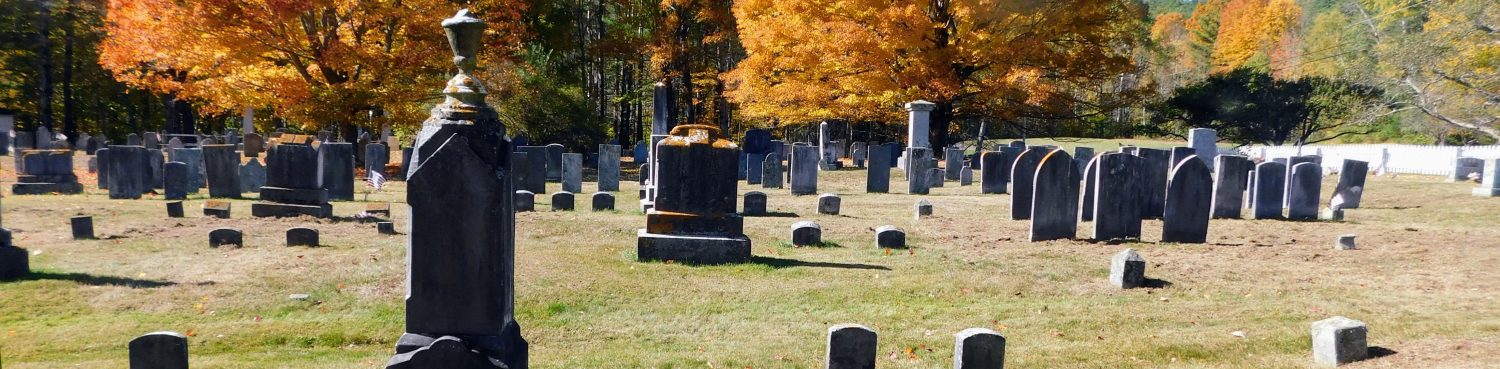
Cardinal Jószef Mindszenty

Cardinal Jószef Mindszenty

I have just finished reading Victor Sebestyen’s excellent Twelve Days: The Story of the 1956 Hungarian Revolution. As a Hungarian-American I was acutely conscious of the events of that Fall. I never forgave President Eisenhower, Secretary of State John Foster Dulles, or Secretary-General Dag Hammarskjöld of the United Nations for what I felt was their craven refusal to confront a very sticky issue. Did I say confront? They essentially ignored it—even while Radio Free Europe was broadcasting military advice and promises of American and U.S. military aid. Aid that never came. All that came was a mass invasion of Russian troops and armor that crushed the rebellion definitively.

As a kid in Cleveland in 1956, and as a student at St. Henry’s Catholic School, I had always thought that one of the heroes of the Revolution was Jószef Cardinal Mindszenty, Prince Primate, Archbishop of Esztergom, and leader of the Catholic Church in Hungary from the last year of World War II to his death in the 1970s. Poor Mindszenty had been imprisoned by the Hungarian Communist leadership until the beginning of the Revolution, in which he actually played no real part. Just days after he was released from prison, he sought asylum of the American legation in Budapest, where he stayed for the next fifteen years.

As a Catholic school kid, we were urged to sell the Diocese of Cleveland’s Catholic Universe Bulletin from door to door in our neighborhoods. According to the Universe Bulletin, Mindszenty was the hero of the Hungarian Revolution, whereas actually he played pretty much a walk-on, walk-off role. But I was just a kid and I believed all that pap.

In the end, Mindszenty proved an embarrassment to the Russians because it kept the memory of the uprising alive in peoples’ minds, even if he himself was a non-player. In the end, Pope Paul VI ordered Mindszenty to leave Hungary, and the Kádár government allowed him to go. His continued existence in the American legation made it difficult for the Catholic Church to come to any accommodation with the Kádár régime.

Mindszenty was just a minor embarrassment to the Russians. It was the Hungarian Revolution itself that proved to be a much greater embarrassment. After 1956, the Communist parties of Western Europe felt that Russia had behaved brutally. Never again were the Communist parties of France, Italy, Britain, and other countries bring any serious political influence to bear. From 1956, it was a mere 31 years before Soviet Communism itself crumbled.
 

Ice

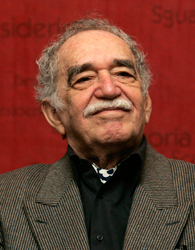
Gabriel Garcia Marquez

Gabriel Garcia Marquez

Many years later, as he faced the firing squad, Colonel Aureliano Buendía was to remember that distant afternoon when his father took him to discover ice. At that time, Macondo was a village of twenty adobe houses, built on the bank of a river of clear water that ran along a bed of polished stones, which were white and enormous, like prehistoric eggs. The world was so recent that many things lacked names, and in order to indicate them it was necessary to point. Every year during the month of march, a family of ragged gypsies would set up their tents near the village, and with a great uproar of pipes and kettledrums they would display new inventions. First they brought the magnet. A heavy gypsy with an untamed beard and sparrow hands, who introduced himself as Melquíades, put on a bold public demonstration of what he himself called the eighth wonder of the learned alchemists of Macedonia. He went from house to house dragging two metal ingots and everybody was amazed to see pots, pans, tongs, and braziers tumble down from their places and beams creak from the desperation of nails and screws trying to emerge, and even objects that had been lost for a long time appeared from where they had been searched for most and went dragging along in turbulent confusion behind Melquíades’ magic irons. “Things have a life of their own,” the gypsy proclaimed with a harsh accent. “It’s simply a matter of waking up their souls.”—Gabriel García Marquez, the opening lines of One Hundred Years of Solitude

Gabo

Gabriel Garcia Marquez with Shiner

Gabriel García Márquez with Shiner

Here’s a question for you: Which two winners of the Nobel Prize for Literature had a fist fight with each other? The above picture is a clue to the identity of one of them: The other is Mario Vargas Llosa of Peru, who felt that “Gabo” had been paying undue attentions to his wife. You can find all the gory details at this New York Times website from 2007.

I first discovered García Márquez’s One Hundred Years of Solitude in November 1975 while I was in Yucatán. There I was at the ruins of Chichén Itzá at an open air souvenir stand with a thatched roof looking for a book to read. On the rack was a UK Penguin paperback edition of the book not for sale in the United States. I picked it up, started reading it, and found myself entranced. First at Chichén, then at the majestic old Gran Hotel in Mérida, and then at Uxmal, I pored through the pages and fell in love with Macondo (the fictionalized birthplace of the author in Aracataca, Colombia) and its weird history.

Ironically, it was in Mexico City that García Márquez died today of infection and dehydration. I will miss him the way I miss Jorge Luis Borges of Argentina and a handful of other greats who died in my time, such as John Ford, Orson Welles, and Howard Hawks.

Since that 1975 trip that changed my life in so many ways, I have read more than a dozen of Gabo’s books and expect to finish the rest within the next year or so.

If you’d like to read a Paris Review interview with the author, click here.

Volcán Ubinas

A Volcanic Eruption Once Again Threatens My Vacation

A Volcanic Eruption Once Again Threatens My Vacation

Three of my last four vacations have been affected to some degree or other by volcanic eruptions. In 2011, it was Chile’s Puyehue-Cordón Caulle which covered San Carlos Bariloche in Argentina with ash and shut down the railroad from Viedma that I was hoping to take with Martine. In 2012, we went to Northern New England and the Canadian Maritime Provinces, which have not been volcanic for some thousands of years. In 2013, I was in Iceland’s Westmann Islands and Hvóllsvöllur when Hekla threatened to blow. (It didn’t, fortunately.)

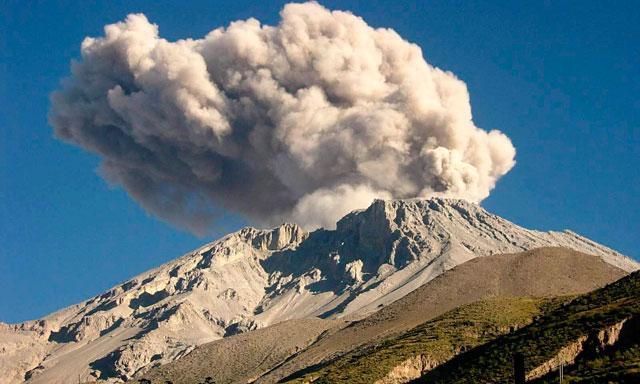
Now, it looks like the stratovolcano Ubinas in Peru’s State of Arequipa which is smoking and causing evacuations of nearby villages located near its base. Ubinas is Peru’s busiest volcano, with historical eruptions dating back to 1550 and as recently as 2006.

Ubinas Seen from Above

Ubinas Seen from Above

I am scheduled to spend four or five days in the State of Arequipa, visiting the City of Arequipa itself as well as Colca Canyon. The latter is twice the depth of Arizona’s Grand Canyon, and should be quite a view—providing, of course, that I am not engulfed by massive amounts of lava and volcanic ash.

My fingers are crossed.

It’s Over!

Finally, I Can Live a Normal Life!

Finally, I Can Live a Normal Life!

For me, April 15 means I can take weekends off, go visit my doctor and dentist, and not have to endure stress caused by selfish rich people who feel they don’t have to give us their tax data until April 14. I filed my own 1040 way back on January 31 and got my refund within two weeks. (Ooh, I just noticed the illustration above shows a 1040 from 2010. That should be good for some nice late interest and penalties!)

Today was particularly rough, as one of our accountants was sick and had to leave early; and the other one did not come in until 1:30 pm. Until his arrival, I was requested to pretend I was an accountant on doing an extension for a California Limited Liability Corporation, about which, of course, I know absolutely nothing. Although I work at an accounting firm, I serve as the office manager and data processing manager.

So at least it is done. I hope this is my last tax season. They don’t get any easier.


“Weeds Never Die”

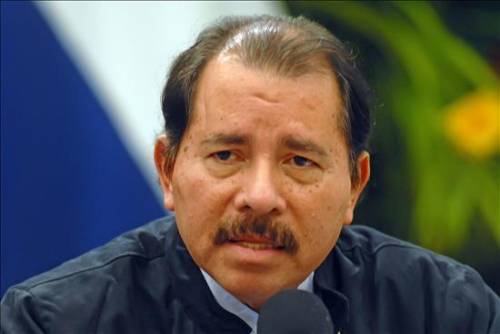
Daniel Ortega, Again in Power

Daniel Ortega, Again in Power

You remember him, don’t you? When Ronald Reagan was still in his stirrups, he did everything in his power to oust Daniel Ortega from control in Nicaragua by aiding the “patriot” Contras. Well, Reagan failed. Ortega was out for a while, but he’s back again. As the Nicaraguans say, “hierba mala nunca muere”—“weeds never die.”

Ortega’s latest gambit is to build another canal across Central America (see map following), but this time through Nicaragua. The idea had been considered once before, but rejected because of the nearness of the very active volcano Momotombo (see below). In fact, when the Panama Canal was cut through, in August 1914, Nicaraguan President General Emiliano Chamorro signed a treaty with William Jennings Bryan to the effect that the U.S. was granted the exclusive right—in perpetuity—to build a canal through Nicaragua.

Momotombo

Momotombo

Well perpetuity is over and done with. Ortega has cut a deal with the Chinese to build a Canal to be 100% owned by them, except that with each passing year, an additional 1% of the ownership rights would pass to the Nicaraguans. The company building the canal, called the Hong Kong Nicaragua Canal Development Investment Company (or HKND for short) is led by Wang Jing, who has no particular experience cutting canals. What is Nicaragua paying for the venture? Nothing. What is Nicaragua getting for the canal? Initially, just about nothing. What is China getting for the canal? A one hundred year concession in which majority control passes to the Managua government after 51 years. Many think that Ortega is getting a large cut of the action for making the deal, but no one knows for sure.

According to Dora Maria Téllez, head of the opposition Sandinista Renovation Movement:

The Chinese must be throwing themselves a party right now. Since the concession doesn’t specify geographic limits, it effectively gives them the whole country to do what they want. What do they have to pay in taxes? Nothing. What control does Nicaragua have? None.

Adán Aguerri, head of the Superior Council on Private Enterprise (COSEP), fielded a question on what this deal would do to Nicaragua’s sovereignty: “In a country where anyone can come and stomp all over us tomorrow, what’s sovereignty?”

And what about the Monroe Doctrine which we all learned about in school? According to Secretary of State John Kerry, it is no longer operative.

I’ll leave you with another Nicaraguan term: vendepatria, or “seller of the fatherland.”


Routes Being Considered for the New Nicaraguan Canal

Routes Being Considered for the New Nicaraguan Canal

For more information about this subject, read Jon Lee Anderson’s article entitled “The Comandante’s Canal” in the March 10, 2014 issue of The New Yorker magazine.


So You Think It’s Good for You?

Soybeans

Soybeans

Unfortunately, we Americans tend to pay far too much attention to the news media, not only when it comes to straight news, but also feature stories about food and health. We’ve all seen the stories: Avoid ill health by drinking sugarless sodas, followed by how artificial sweeteners are worse for you than sugar. For decades, articles are trumpeted the benefits of protein from soybeans. Now there are an equal number of articles blaming soy for feminizing men by giving them man-boobs.

The number of news villains in our diet have included eggs, fats, tomatoes (long ago thought to be poisonous), cheeses, and smoked meats. I am reminded of the scene in Woody Allen’s film Sleeper (1973) in which two doctors are discussing Miles Monroe (played by Woody):

Dr. Melik: This morning for breakfast he requested something called “wheat germ, organic honey and tiger’s milk.”

Dr. Aragon: [chuckling] Oh, yes. Those are the charmed substances that some years ago were thought to contain life-preserving properties.

Dr. Melik: You mean there was no deep fat? No steak or cream pies or… hot fudge?

Dr. Aragon: Those were thought to be unhealthy… precisely the opposite of what we now know to be true.

Dr. Melik: Incredible.

Maybe deep fat, steak, cream pies, and hot fudge are bad for you, but I have my suspicions about wheat germ, organic honey, and tiger’s milk—which may be no better.

I have come to the conclusion that the best thing to do is to not get into a food rut. A bad food rut can include salads just as much as it could include cheeseburgers and fries. Eat meat. Eat eggs. Eat fruit. Eat vegetables. But know this: There are no magic foods that will cure what ails you. That is pure snake oil.


Caudillismo

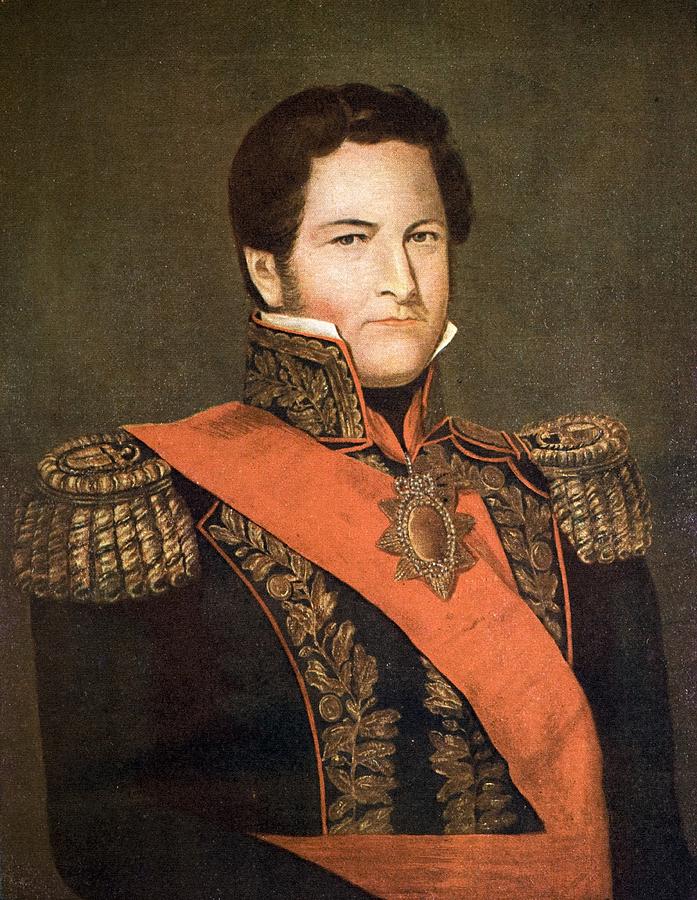
Juan Manuel de Rosas Ruled Argentina 1929 to 1952

Juan Manuel de Rosas Ruled Argentina 1929 to 1952

When we think of South America, we usually think of the military dictators, or caudillos, who seemed to rule most of the time. Why is it that the continent has had so much difficulty transitioning to a democratic form of government? I think the reason goes all the way back to the expulsion of Spain from her colonies. The Spanish forces were sent back, but the criollos were still very much in charge. They were mostly white, with rarely some Indian admixture, but they held the reins of power. Simón Bolívar, José de San Martín, and Bernardo O’Higgins were all criollos. All the big landowners, almost without exception, were criollos. Only rarely did an Indian come into power, and then usually only for a short time.

The armies of the South American countries were, until late in the Twentieth Century, pretty much in charge. They acted as a kind of Praetorian Guard to their favorites, who were usually the caudillos. God help them, however, when the favorites were no longer favored. Eric Lawlor in his excellent book In Bolivia enumerates the country’s heads of state who met violent ends:

The list of presidents and former presidents to die violently is extensive. Pedro Blanco was assassinated in 1829; Sucre in 1830; Jorge Córdova in 1861; Belzú in 1866; Melgarejo in 1871; Augustín Morales in 1872; Hilarión Daza in 1894; and José Manuel Pando in 1917. Nor did the tradition end in 1946: President René Barrientos died in a highly suspicious helicopter crash in 1969, and former President Torres was gunned down in Buenos Aires in 1972. Becoming chief of state in this country often amounts to signing one’s death warrant.

Actually, the most spectacular Bolivian President’s demise was that of Gualberto Villaroel, who was hanged by a mob on a lamp post across the street from the Presidential Palace in 1946. As Lawlor write, “A sobering sight for incumbent presidents, it [the lamp post, which still exists] may explain why so many Bolivian communities are still without streetlights.”

Bolivia might be the most spectacular bad example of misgovernment, but virtually every South American country has its own bad examples, from Juan Manuel de Rosas of Argentina, who set some type of caudillo longevity record; to General Augusto Pinochet Ugarte of Chile; to Ramón Castilla y Marquesado of Peru; to José Antonio Páez of Venezuela; to José Artigas of Uruguay. Of the independent countries, Chile and Brazil had the fewest; and probably Bolivia had the most.

There is a nice PDF file on “The Rise of the Caudillos,” which deals with the issue in outline format.


“Mildness and Complaisance”

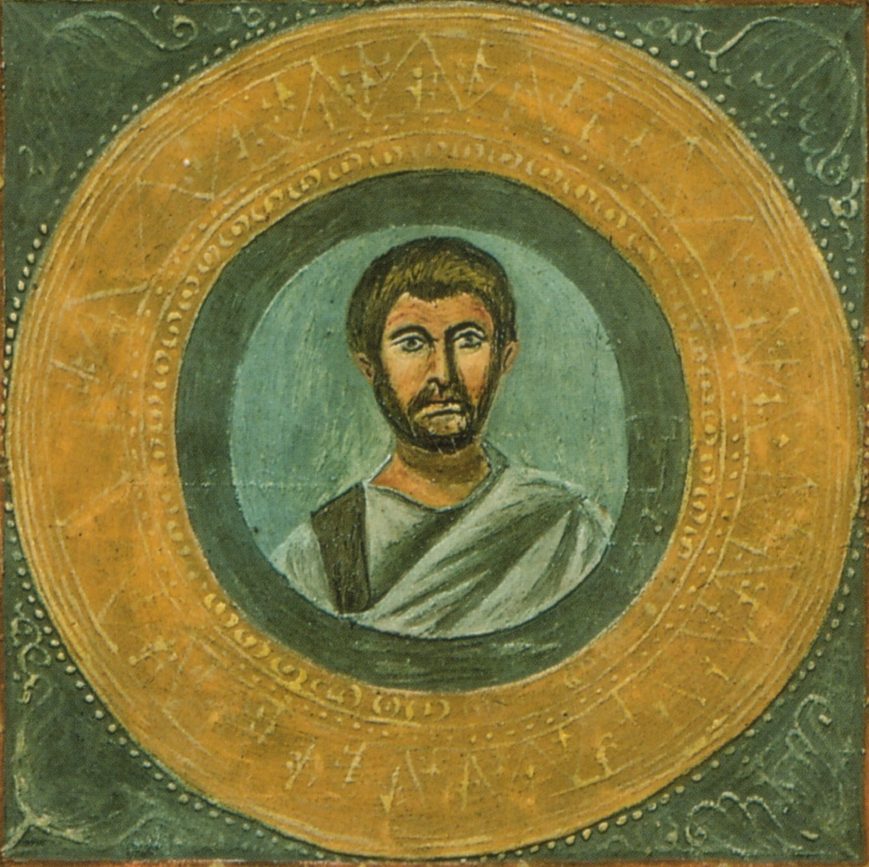
Terence

Terence

However well a man may have calculated his scheme of life, still circumstances, years, experience, always introduce a new element and teach new lessons. You find that you don’t know what you thought you did know, and what you thought of primary importance that in practice you reject. That’s what has happened to me. The hard life, which up to now I have lived, now that my race is almost run I renounce. And why? Hard facts have taught me that a man can have no better qualities than mildness and complaisance.—Terence, Adelphoe

What the Democrats Don’t Get

Do What’s Right First, THEN Ask for Money

Do What’s Right First, THEN Ask for Money

I am daily besieged by dozens of almost identical e-mails asking me for support. At first, they want me to just sign a petition. That’s fine with me. Then they hold out the tin cup, asking me for money so that the evil Koch Brothers, the Nazgul of our own time and place, do not hurl us all into a pit of unrelenting misery.

Look, I hate the Koch Brothers as much as they do—but I also hate television. All these Democratic-aligned organizations are doing is arranging for millions in political ad buys on a medium which I do not support, and for which I have active contempt. I am also getting a little bit suspicious: Just whom are these organizations supporting? Is it the issue named? Or is it the collective broadcast and cable television networks? And has anyone ever checked to see whether there are kickbacks taking place?

That reminds me of a snippet I read last night from Christopher Isherwood’s South American travel journal Condors and Cows: “In Bogotá, he says, the milk was always sold diluted with water. One day, a pure-milk dairy was started but soon went bankrupt. It had been deliberately ruined by the directors of the water-works, who feared a serious drop in water-consumption.” In other words, are the TV ad people involved in these movements as a way of drumming up business?

These are questions that need to be asked, because I, for one, am reluctant to respond to any of these ads—regardless of my political beliefs.