I Get Scammed

Doesn’t Look Like a Crime Scene, Does It?

Doesn’t Look Like a Crime Scene, Does It?

If I haven’t posted the last couple of days, it’s because Martine and I took the weekend off and drove to Santa Barbara. We were staying at the idyllic-looking Marina Beach Motel on Bath Street right near the coast in Santa Barbara. It was an ideal location, midway between the marina and Stearns Wharf with their seafood eateries.

Unfortunately, Martine is still not feeling up to par with the traveling pains around her back and shoulder blades (fibromyalgia?). She got tired quickly, and she wasn’t able to sleep comfortably on the king-sized bed in the motel because the mattress was too mushy for her. Also, she was still too exhausted to do much walking at the tourist attractions we visited, about which you will be hearing over the next few days.

More seriously, last night as I was dozing off in the motel room, I received a phone call purportedly from the front desk. It was one “Stacy Anderson” to tell me that the registration records for eighteen rooms in the motel had been lost because of a computer glitch, and would I dictate the relevant info to her over the phone? Because I was groggy and my critical faculties were not operating at par, I complied—including giving “Stacy” my credit card info.

As Bugs Bunny, would say, “Whatta maroon!” Just after I gave this info, I was given an 8-digit “confirmation number” (94184437) and told that I would get 40% off my bill for helping them out. It was at that point that I said the big “Uh oh!” and threw my clothes on.

Naturally, the night crew, who were sitting around sharing a pizza, had no idea of who “Stacy Anderson” was, nor had they called, nor was there anything wrong with their computer. I ran back to my room, picked up my cell phone, and called U.S. Bank to report a credit card fraud. Sure enough, they had already run up a $320 charge with Access Secure Deposits, which I denied having initiated. My credit card was promptly canceled, and I scissored it and distributed the pieces across a wide swath of Southern California.

If you are staying at a hotel or motel, you would do well to distrust any communications over the land line telephone in your room. If it is from the “front desk,” tello them you’ll be right there—and hang up! Don’t be a fool like me.

God Hates Westboro Baptist Church

Gonzo Picketer for So-Called “Westboro Baptist Church”

Gonzo Picketer for So-Called “Westboro Baptist Church”

The “Westboro Baptist Church” is no more a church than I am the Pope of Islam. They are a right-wing group that delights in fomenting outrage by picketing events where the vast majority of people attending are against their believes. That doesn’t bother the folks at WBC, who say on their website: “0 – nanoseconds of sleep that WBC members lose over your opinions and feeeeellllliiiiiings.” Also on the same page is a counter of the number of souls God has cast into hell since the web page was loaded. (Yeah, like they know!)

At a time when so much that is called political discourse is actually nothing but grandstanding in front of the media, WBC holds down a particularly odious niche. After all, their website is called GodHatesFags.Com. Whenever some disaster occurs, you can count on these hucksters to tell us all that we had it coming because of our tolerance of gays or something else these misguided white people hate or feel threatened by.

I do not think that WBC will be around for much longer: How much further can they go without bringing peoples’ wrath down on their heads or violating the law in some gross way?

So enjoy them while you can.

Dribbling Dritskers and Elf-Frighteners

The Hill of Helgafell Just South of Stykkisholmur

The Hill of Helgafell Just South of Stykkishólmur

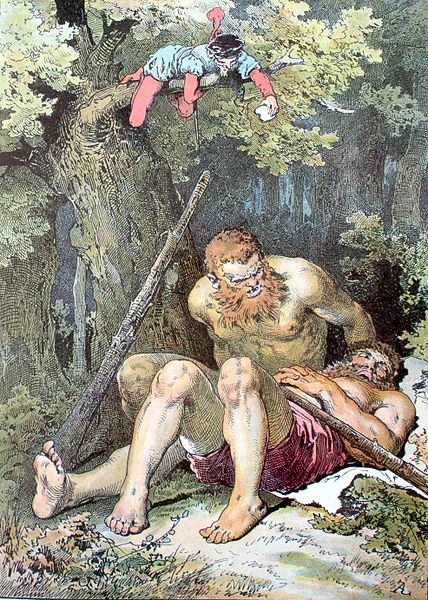
The old Vikings had a word for it. I learned about it last night as I was reading the thirteenth century Saga of the People of Eyri (also known as the Eyrbyggja Saga).In it, we learn about Thorolf Moster-Beard who dedicated a temple to his namesake god, Thor, atop Helgafell, a smallish hill near his farm at Thorsnes (now called Stykkishólmur) along the south shore of Breidafjórd. Let’s use the words of the skald who wrote the saga:

He named this mountain Helgafell and believed that he and all his family on the headland would go there when they died. At the place where Thor had come ashore, on the point of the headland, Thorolf held all court sessions and he established a district assembly there. He considered the ground there so sacred that he would not allow it to be defiled in any way, either by blood spilt in rage, or by anybody doing their elf-frighteners there—there was a skerry [small rocky islet] named Dritsker (Shit-Skerry) for that purpose.

Now this is a longish lead-in to the point I am trying to make, which is that television and the other news media are so full of people saying such ridiculous things leading variously to outrage (on the part of all right-thinking people) or pride (on the part of American Conservative wing-nuts). I am referring to people such as Wayne LaPierre; the “Reverend” Pat Robertson; Ted Nugent; Senators Lindsay Graham of South Carolina, Jim Imhofe of Oklahoma, and Rand Paul of Kentucky; Michele Bachmann; Sarah Palin; and Rush Limbaugh. Whenever they move their lips, all that comes out are various shapes and scents of dritskers and elf-frighteners.

Perhaps there should be a skerry someplace to which they can all be transported and where they can practice their creativity without scaring the dogs and children.

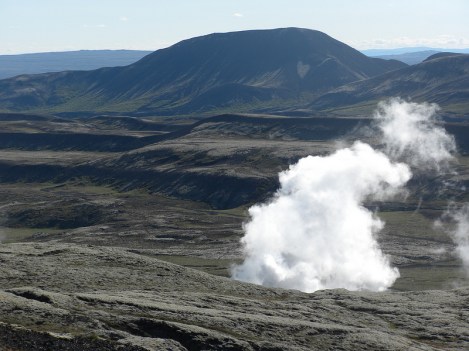
If you want to see more pictures of the area around Helgafell, where I will be visiting this June, check out The Magic of Iceland, from where I hijacked the above pic, which is actually one of the least interesting of the bunch.

“Grassed Down and Forgotten”

tess

Cover of Tess of the D’Urbervilles

The past was past; whatever it had been it was no more at hand. Whatever its consequences, time would close over them; they would all in a few years be as if they had never been, and she herself grassed down and forgotten. Meanwhile the trees were just as green as before; the birds sang and the sun shone as clearly now as ever. The familiar surroundings had not darkened because of her grief, nor sickened because of her pain.

She might have seen that what had bowed her head so profoundly—the thought of the world’s concern at her situation—was founded on an illusion. She was not an existence, an experience, a passion, a structure of sensations, to anybody but herself. To all humankind besides Tess was only a passing thought. Even to friends she was no more than a frequently passing thought. If she made herself miserable the livelong night and day it was only this much to them—’Ah, she makes herself unhappy.’ If she tried to be cheerful, to dismiss all care, to take pleasure in the daylight, the flowers, the baby, she could only be this idea to them—’Ah, she bears it very well.’ Moreover, alone in a desert island would she have been wretched at what had happened to her? Not greatly. If she could have been but just created, to discover herself as a spouseless mother, with no experience of life except as the parent of a nameless child, would the position have caused her to despair? No, she would have taken it calmly, and found pleasure therein. Most of the misery had been generated by her conventional aspect, and not by her innate sensations.—Thomas Hardy, Tess of the D’Urbervilles

Another Tax Season Over and Done With

You Won’t Find Me on the Side of Late Filers

You Won’t Find Me on the Side of Late Filers

I hope that this will be the last tax season I have to live through. It was by far the worst, mostly because of the same clients who—every year—wait until the last minute to get their information to us. I would probably lose a lot of these people by attaching late charges of 100% for all information submitted after, say, March 25. But my boss doesn’t want to get rid of these deadbeats, so the last few days are always a horror.

Perhaps it’s getting time for me to retire. Part of the problem is that the firm’s president thinks I’m an accountant. I’m not: I’m just a very good specialist on accounting software—not on tax law per se. I don’t get to go to the continuing education classes, and I am totally ignorant on how to prepare returns for trusts, corporations, foundations, partnerships, and estates. And yet I am consulted as if I knew about tax law for all those entities.


“It Will be Summer—Eventually”

A Poem from Emily Dickinson Looking Forward to Summer

A Poem from Emily Dickinson Looking Forward to Summer

As this year’s horrible tax season grinds to a close, I look forward to having weekends to myself once again, and time to enjoy them with Martine. Now, as often, I turn to the poems of Emily Dickinson to express my feelings:

It Will Be Summer—Eventually
by Emily Dickinson

 It will be Summer — eventually.
Ladies — with parasols —
Sauntering Gentlemen — with Canes
And little Girls — with Dolls —

Will tint the pallid landscape —
As ’twere a bright Bouquet —
Tho’ drifted deep, in Parian —          [porcelain, snow?
The Village lies — today —

The Lilacs — bending many a year —
Will sway with purple load —
The Bees — will not despise the tune —
Their Forefathers — have hummed —

The Wild Rose — redden in the Bog —
The Aster — on the Hill
Her everlasting fashion — set —
And Covenant Gentians — frill —          [blue flowers

Till Summer folds her miracle —
As Women — do — their Gown —
Or Priests — adjust the Symbols —
When Sacrament — is done —

“It will be Summer—eventually” (#342) by Emily Dickinson, from The Complete Poems of Emily Dickinson. © Back Bay Books, 1960. Reprinted without permission.

I am curious about that concluding dash in the poem. I cannot help but think that it is deliberate and contains its own message, such as: And the whole process will be repeated again one more time.

News On Demand

A Horrific Video of Bashar’s Jets Bombing a Village Filled with Refugees

A Horrific Video of Bashar’s Jets Bombing a Village Filled with Refugees

You don’t have to watch Faux News any more to find out what’s going on in the world. Salon.Com has published a link to Ifiles, which contains links to investigative reporting you may not get when you watch rancid sausage being squeezed through Sean Hannity’s lips. I was entranced by two videos currently available:

The first is almost half an hour long and shows footage of a bombing raid by Bashar al-Assad’s air force on the village of al-Bara in the north of Syria. Some dozen or two people were buried under rubble when two heavy bombs hit within 400 meters of each other. Typically, the jets make one pass, and loop around and return about 15-20 minutes later, when a crowd has gathered to dig out the victims of the first blast. We owe this frightening footage to FRONTLINE reporter Olly Lambert, who does a great job showing us the panic and the community spirit of people trying frantically to help one another when they don’t have the wherewithal to do so effectively.

The second was an amusing commentary on the failures of international reporters to get to the bottom of one continuing story: Somali piracy on the high seas. Naturally, it’s too dangerous to go to Somalia; so reporters are going to Kenya and interviewing enterprising Africans (some of whom are in fact Somalis) pretending to be pirates. This way the news media get their story, and the “pirates” get some money to support themselves in their nefarious venture. These pretend pirates have probably never even been in a boat.


Kimilsungia

A North Korean Flower Show with—What Else?—A Model of a Missile

A North Korean Flower Show with—What Else?—Models of Armed Missiles

The world is wondering where North Korea’s bellicose rhetoric will lead them. On one hand, some political analysts say that there will be a missile launch, but without a nuclear warhead, aimed in the general direction of South Korea and/or Japan. (John Kerry will be in the area on Sunday, and Monday is the birthday of Kim Il Sung, grandfather of present DPRK leader Kim Jong Un.) In this interpretation, the whole thing is merely a form of theater to exact concessions from South Korea and the United States.

My own feeling is that North Korea may attack some isolated island or other outlying piece of the peninsula not presently under their control, but claimed by them. In this case, there would be South Korean casualties aplenty; and the South will be attempted to launch a massive counterattack. In this event, the U.S. would probably get involved because of ongoing treaty obligations, though there would be a tug-of-war between Hawks and Doves as to the best response.

If Kim Jong Un is doing all this because he is comfortable wearing the vampire mantle of authority traditionally exercised by the Terrible Kims, he may be in some danger from forces inside his country, especially in the military. The North Korean army has not done any appreciable fighting in the last sixty years, and they have been a privileged and cosseted force within their country. Famines do not touch the DPRK armed forces: They get whatever they want. It kind of reminds me of the Praetorian Guard in the days of the Roman emperors.

Incidentally, the blossoms in the flower show illustrated above have been named Kimilsungia, after the eldest of the Kims.


Iceland’s Bell

A Long Review of Halldór Laxness’s Great Novel

A Long Review of Halldór Laxness’s Great Novel

The following is a review I published on Goodreads.Com yesterday:

There are several Icelands in history. Best known is the Iceland of the Vikings, roughly from the time of settlement in the 9th century to the transfer of the country to the Norwegian King Haakon in the 13th century. Then we skip the better part of a millennium to come to the hip modern Iceland, land of the runtur and of bankruptcy.

In between those two extremes was the Iceland of poverty and servitude. The Danes took over Iceland from the Norwegians and installed their merchants, gifting them with monopolies that made the merchants wealthy, but impoverished the natives. Halldór Laxness, the country’s only winner of the Nobel Prize for Literature (in 1955), wrote Iceland’s Bell to remind his countrymen of the utter waste and fecklessness of the Danish rule. (This theme is similar to the same author’s World Light, which is set in a later period.)

Iceland’s Bell is set early in the 18th century and is presented in three acts, each with a different hero. We begin with Jon Hreggvidsson of Skagi, who is arrested for stealing a length of cord. (Apparently, the Danes, not needing fish themselves, deliberately made it harder for the Icelanders to feed themselves with the piscine riches of their island.) Things go from bad to worse for Jon, who is then arrested for murdering the hangman who whipped him for his crime. But he is let loose on the night before his hanging by …

Snæfriður Bjornsdóttir, daughter of the magistrate who sentences Hreggviðsson, is a young beauty whose hand in marriage is sought by Icelanders of the best families. Unfortunately, the fair maiden weds a drunk, though really she loves the Icelander Arnas Arnaeus, a thinly disguised portrait of Arni Magnusson, famous for collecting texts of the old Icelandic sagas and advising the Danish king how to control his subjects.

Arnaeus is a patriot of sorts, but an unfaithful suitor to Snæfriður. His belief is that the texts which he has collected, and which are almost burned in a massive fire in Copenhagen, are the source of his people’s pride and fame. It is Arnaeus who says, “A fat servant is not much of a man. A beaten servant is a great man, because in his breast freedom has its home.” On another occasion, he says, “I regret nothing that has happened, neither in words nor thoughts. It may be that the most victorious race is the one that is exterminated.”

And under Danish rule, Iceland did come close on several occasions to being utterly annihilated, from plague and smallpox; from the volcanic eruption at Lakagigur in the 1780s that led to an even more vicious plague; and starvation.

Laxness is not only a great Icelandic and Scandinavian author: He is perhaps one of the very best novelists of the Twentieth Century—period! His love for Iceland and its sad plight shows itself frequently throughout the book:

Over verdant lowlands cut by the deep streamwaters of the south hangs a peculiar gloom. Every eye is stifled by clouds that block the sight of the sun, every voice is muffled like the chirps of fleeing birds, every quasi-movement sluggish. Children must not laugh, no attention must be drawn to the fact that a man exists, one must not provoke the powers with frivolity — do nothing but prowl along, furtively, lowly. Maybe the Godhead had not yet struck its final blow, an unexpiated sin might still fester somewhere, perhaps there still lurked worms that needed to be crushed.

I have now read all but three novels by Laxness that have been translated into English. I intend to read them all, and to hope against hope that the novelist’s other work finds a translator.

The Deception

Loneliness

Loneliness

Another wonderful quote from the website Laudator Temporis Acti:

“Fleetwood, you are too much alone. I hear people talk of the raptures of solitude; and with what tenderness of affection they can love a tree, a rivulet, or a mountain. Believe me, they are pretenders; they deceive themselves, or they seek, with their eyes open, to impose upon others. In addition to their trees and their mountains, I will give them the whole brute creation; still it will not do. There is a principle in the heart of man which demands the society of his like. He that has no such society, is in a state but one degree removed from insanity. He pines for an ear into which he might pour the story of his thoughts, for an eye that shall flash upon him with responsive intelligence, for a face the lines of which shall talk to him in dumb but eloquent discourse, for a heart that shall beat in unison with his own. If there is any thing in human form that does not feel these wants, that thing is not to be counted in the file for a man: the form it bears is a deception; and the legend, Man, which you read in its front, is a lie. Talk to me of rivers and mountains! I venerate the grand and beautiful exhibitions and shapes of nature, no man more; I delight in solitude; I could shut myself up in it for successive days. But I know that Christ did not with more alacrity come out of the wilderness after his forty days’ sequestration, than every man, at the end of a course of this sort, will seek for the interchange of sentiments and language. The magnificence of nature, after a time, will produce much the same effect upon him, as if I were to set down a hungry man to a sumptuous service of plate, where all that presented itself on every side was massy silver and burnished gold, but there was no food.”—William Godwin, Fleetwood: or, The New Man of Feeling (1805)