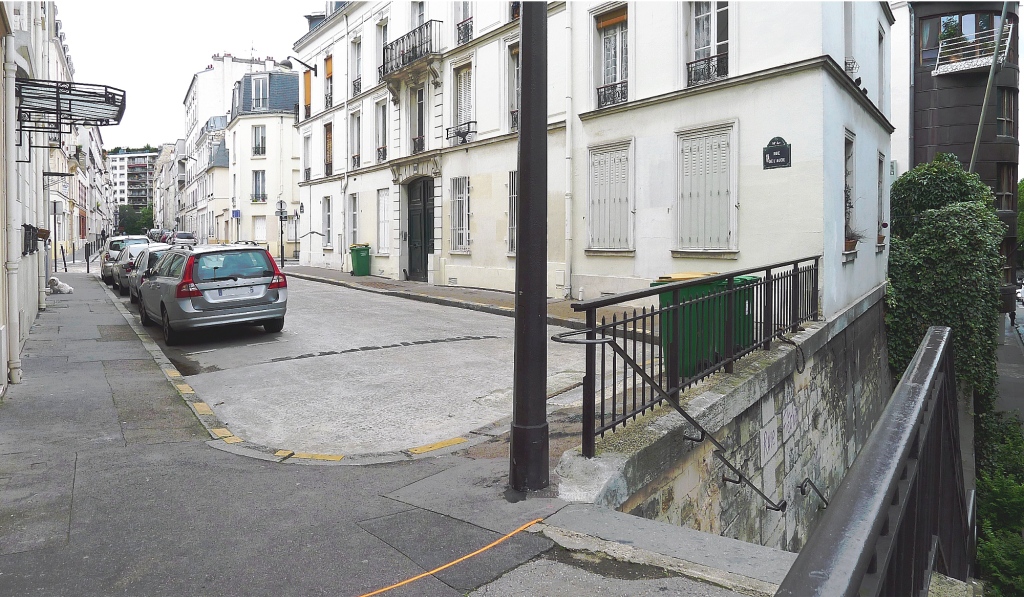
The Rue de l’Aude in the XV Arrondissement of Paris
I am fatally in love with the novels of Patrick Modiano. This evening, I re-read his The Black Notebook, published in France in 2012 as L’Herbe des nuits. His fatally lost characters end up wandering the streets of Paris, trying to recover lost memories. Meanwhile, I try following their path using an old copy of Paris Pratique par Arrondissement.
The following is from page 75 of my Houghton-Mifflin edition:
And I was afraid I would be waiting for her in vain that night. Then again, I often waited without knowing if she’d show. Or else she would come by when I wasn’t expecting her, at around four in the morning. I would have fallen into a light sleep, and the sound of the key turning in the lock would startle me awake. Evenings were long when I stayed in my neighborhood to wait for her, but it seemed only natural. I felt sorry for people who had to record appointments in their diary, sometimes months in advance. Everything was prearranged for them, and they would never wait for anyone. They would never know how time throbs, dilates, then falls slack again; how it gradually gives you that feeling of vacation and infinity that others seek in drugs, but that I found just in waiting. Deep down, I felt sure you would come sooner or later.
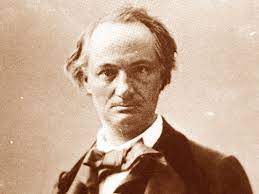
Today, as I was re-reading Patrick Modiano’s The Black Notebook (2012) with its labyrinthine reconstructions of an imperfectly remembered past, I thought of a poem by Charles Baudelaire that gave me the same feeling, It is called “The Swan”:
The Swan
I
Andromache, I think of you! The stream, The poor, sad mirror where in bygone days Shone all the majesty of your widowed grief, The lying Simoïs flooded by your tears, Made all my fertile memory blossom forth As I passed by the new-built Carrousel. Old Paris is no more (a town, alas, Changes more quickly than man’s heart may change); Yet in my mind I still can see the booths; The heaps of brick and rough-hewn capitals; The grass; the stones all over-green with moss; The _débris_, and the square-set heaps of tiles.
There a menagerie was once outspread; And there I saw, one morning at the hour When toil awakes beneath the cold, clear sky, And the road roars upon the silent air, A swan who had escaped his cage, and walked On the dry pavement with his webby feet, And trailed his spotless plumage on the ground. And near a waterless stream the piteous swan Opened his beak, and bathing in the dust His nervous wings, he cried (his heart the while Filled with a vision of his own fair lake): “O water, when then wilt thou come in rain? Lightning, when wilt thou glitter?” Sometimes yet I see the hapless bird — strange, fatal myth — Like him that Ovid writes of, lifting up Unto the cruelly blue, ironic heavens, With stretched, convulsive neck a thirsty face, As though he sent reproaches up to God!
II
Paris may change; my melancholy is fixed. New palaces, and scaffoldings, and blocks, And suburbs old, are symbols all to me Whose memories are as heavy as a stone. And so, before the Louvre, to vex my soul, The image came of my majestic swan With his mad gestures, foolish and sublime, As of an exile whom one great desire Gnaws with no truce. And then I thought of you, Andromache! torn from your hero’s arms; Beneath the hand of Pyrrhus in his pride; Bent o’er an empty tomb in ecstasy; Widow of Hector — wife of Helenus! And of the negress, wan and phthisical, Tramping the mud, and with her haggard eyes Seeking beyond the mighty walls of fog The absent palm-trees of proud Africa; Of all who lose that which they never find; Of all who drink of tears; all whom grey grief Gives suck to as the kindly wolf gave suck; Of meagre orphans who like blossoms fade. And one old Memory like a crying horn Sounds through the forest where my soul is lost…. I think of sailors on some isle forgotten; Of captives; vanquished … and of many more.
Sometimes I wonder why I am alive today. My father died at the age of 74 in 1985; and my mother, at the age of 79 in 1998. One reason I have survived is that between 1962 and 1966, I had to walk a mile to classes at Dartmouth College from one of the more distant dormitories, the infamous Middle Wigwam Hall, later renamed McLane Hall.
My journey led me past the Thayer School of Engineering, the Tuck School of Business, several dormitories, and the scary Hanover, New Hampshire cemetery. Burials in that graveyard went back to the 18th century. At the time I was in college, the walk past the cemetery was dark, lonely, and long. In the winter, it was also quite icy.
Then, after I graduated from college, I had brain surgery entailing the removal of my pituitary gland, after which I started growing again. My left hip did not like that, so the orthopedists at UCLA put me on crutches for two years. More exercise.
No sooner did I get off crutches than I did a lot of walking. It was 1.5 miles (2.4 km) from my apartment in Santa Monica to System Development Corporation, and 2.5 miles (4 km) from the same apartment to my next job at Urban Decision Systems. During that time, I also did a lot of hiking in the Santa Monica Mountains, sometimes on trails that were up to 10 miles (16.1 km) in length.
I don’t do so much walking any more, but over the years I had developed some good habits which, I think, are standing me in good stead today.
For their reading, Americans tend not to look beyond English-speaking North America and the countries of Western Europe. As a Hungarian, I have always delighted in the literature of Eastern Europe. In this post, I will give you a list of some of my favorite recent fiction from the former Soviet satellites, including one Ukrainian author, because Vladimir Putin is trying to turn his country into a Russian satellite.
I do not include any Russian authors—not because of any prejudice against—but because the field is so rich it deserves a separate post. Here’s the list in alphabetical order by author:
Ivo Andrić (Bosnian 1892-1975)
Won the Nobel Prize in 1961 for his novel The Bridge on the Drina about the Bosnian city of Viśegrad under the Ottomans and the Austro-Hungarians who succeeded them.
Ádám Bodor (Transylvanian Hungarian b. 1936)
His The Sinistra Zone (1992) is a delightfully funny story of one man’s quest to find his adopted son in a Romanian bear sanctuary and military zone near the Ukrainian border and spirit him return home with him.
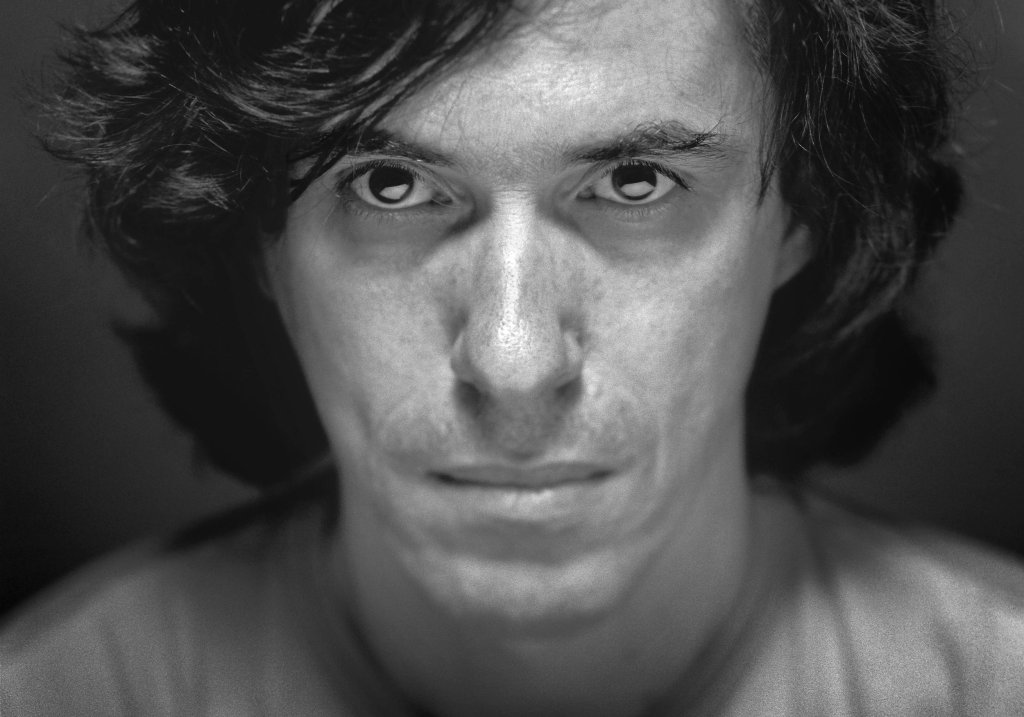
Mircea Cărtărescu (Romanian b. 1956)
I am on the point of finishing his novel Solenoid (2015), which is a wonderful work strongly influenced by Kafka, Borges, and Boris and Arkady Strugatsky. He has been shortlisted for the Nobel Prize and is likely to win it soon.
Bohumil Hrabal (Czech 1914-1997)
I have read several great novels from this Czech writer, including Dancing Lessons for the Advanced in Age (1964), I Served the King of England (1973), and Too Loud a Solitude (1977). His gentle humor is catching.
Franz Kafka (Czech Jew 1883-1924)
Although he wrote in German and died a hundred years ago, his work is a major influence on many of the Eastern European authors. My favorites: The Trial (1925) and his short stories.
Gyula Krúdy (Hungarian 1878-1933)
I have read most of his work that has been translated into English, but my favorites were The Crimson Coach (1913) and his journalism collected in Krúdy’s Chronicles (published in 2000).
Andrey Kurkov (Ukrainian b. 1961)
He wrote most of his works in Russian (a larger audience and more $$$), but after Putin has vowed to switch to the Ukrainian dialect. My favorites: Death and the Penguin (1996) and Grey Bees (2018).
Stanislaw Lem (Polish 1921-2006)
Yes, I know he is a sci-fi writer, but his work, especially Solaris (1961) and The Futurological Congress (1971) are of high literary quality.
Olga Tokarczuk (Polish b. 1962)
Won the 2018 Nobel Prize. So far, I’ve read only one of her novels, namely, House of Day, House of Night (1998), which is one of the best books I’ve read so far this year.
As I recall, I was about ten years old when I first had to give a blood sample from the crook of my elbow. My mother drove me to Saint Luke’s Hospital close by the old Buckeye Road Hungarian neighborhood where we had lived until 1951. When I found out that a nurse wanted to stick a needle in my arm, I took the only reasonable course. I bolted down the corridor until a couple of orderlies deputed to drag me back got hold of me.
I thought it hurt like hell. And ever since, it has not been easy to draw my blood. The veins around my elbow run deep and are not terribly visible. The person drawing my blood has to be very experienced with patients who veins like to hide. There have been times when I was punctured three or four times before a big enough vein was found. Sometimes, they just stuck the needle in the back of my hand, where my veins are more prominent.
Saint Luke’s Hospital from an Old Postcard
The only thing that’s changed is that I no longer resist getting by needles. In fact, I have to administer an insulin shot into my abdomen or thigh four times a day. Even when there is some pain, I know that it won’t be long-lasting. It’s one of those things you get used to as you age.
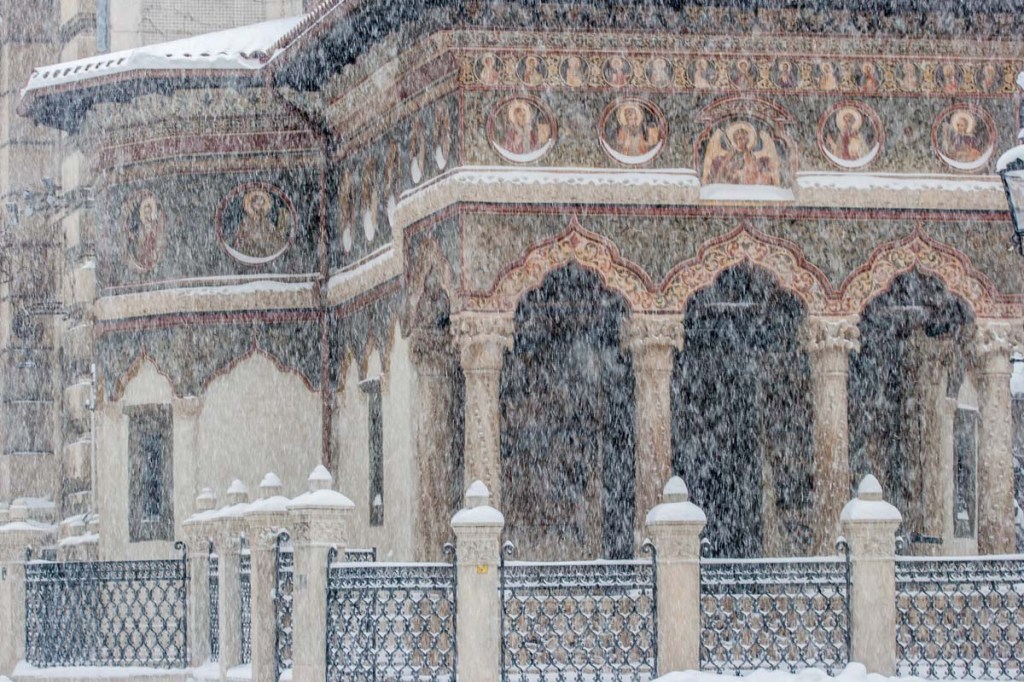
I am reading a great Romanian novel by Mircea Cărtărescu entitled Solenoid. In it, I found the following description of Bucharest, the country’s capital:
More probably, like all of Bucharest, the saddest city on the face of the earth, the factory had been designed as a ruin from the start, as a saturnine witness to time devouring its children, as an illustration of of the unforgiving second law of thermodynamics, as a silent, submissive, masochistic bowing of the head in the face of the destruction of all things and the pointlessness of all activity, from the effort of carbon to form crystals to the effort of our minds to understand the tragedy in which we live. Like Brasilia, but more deeply and more truly, Bucharest was born on a drawing board from a philosophical impulse to imagine a city that would most poignantly illustrate human destiny: a city of ruin, decline, illness, debris, and rust. That is, the most appropriate construction for the faces and appearances of its inhabitants. The old factory’s production lines, driven by long-immobile motors had produced—and perhaps, in a quiet isolation beyond humanity, continued to produce—the fear and grief, the unhappiness and agony, the melancholy and suffering of our life on Earth, in sufficient quantities for the surrounding neighborhood.
When I was young, I did not have many toys. My father worked in a factory as a machine tool builder, and my mother held various jobs including supermarket checker and assistant occupational therapist. We didn’t have much money.
Perhaps the fanciest toy I had was a Lionel O-Gauge model train I received for Christmas 1949. It ran on tracks with three rails and had several freight and passenger cars. My Dad must have felt financially secure that year to spend so much money on me. That train was used by my brother and me for approximately fifteen years.
1950s Vintage Lionel O-Gauge Train Set
What I probably played with more than anything else was a set of white pre-Lego plastic building blocks such as the ones illustrated above. I would build all kinds of structures and use them in conjunction with my pirate and military figurines.
I had a rich imagination as a boy and could play for hours imagining different situations. Do children whose toys are mostly electronic in nature have the same imagination? I think not.
To begin with, I am not a great lover of the news media. In fact, I believe that if somebody wants to have a good night’s sleep, they should not watch or listen to the news after dinner. And certainly not the eleven o’clock news just before bedtime. It’s just not healthy, because those news outlets are peddling fear or outrage as their primary product.
One example is what I call the “Somebody Sez” news story. Just to give you an example, here are a number of headlines I just gleaned from the Cable News Network (CNN) website tonight:
Biden could face obstacle getting on Ohio’s ballot, secretary of state’s office says
Retired judge says statute cited in Trump’s motion raises concerns about NY judge
Republican lawmaker says Russian propaganda has ‘infected a good chunk’ of GOP base
Retired US general predicts Israel’s withdrawal won’t prevent an invasion
Republican strategist says Trump has made a critical mistake in the campaign
CNN apparently relies on an army of “experts” who “say” certain things or “predict” certain outcomes. It is possible that none of these things come true, but they can certainly succeed in riling up the consumers of the news.
Let’s take a more biased news medium, the Salon.Com website. Its readership obviously does not wish Trump well. (Neither do I, for that matter.) But its page today bristles with chatty “experts”:
“Punk”: Don Winslow on Donald Trump
“This is a big deal”: Experts say Judge Cannon’s order signals “bad news” for fate of Trump case
“Things just got very real”: Legal experts say Jack Smith appeal threat “puts Cannon on notice”
“Trump is running scared”: Legal experts slam “harebrained” scheme to get NY judge to recuse
Profs: Trump ruling unlocks key evidence
Experts “very worried” at Cannon’s order
People, it’s not news until it actually happens.
It is possible for editors to avoid this type of rampant supposition. For example, I could find no examples of blabbing experts in the NBC or CBS news sites. Apparently, they are more interested in reporting the news rather than creating it.
Yesterday afternoon, I heard some strange animal-like sounds coming from below my living room window. I pushed back the blinds, only to see several policemen and paramedics tending to something hidden by the hedge separating my building from the neighboring building. As I continued to look, I saw the paramedics hauling a black man in a bloodied t-shirt who was still howling.
Just another day on the streets of L.A., watching as our civilization is being eclipsed. And not just for a few minutes, either, but for the long count.
I do not understand why anyone would think that recreational drugs would be an improvement on real life. Even when real life is grim, it beats madness and suicide by chemical.
What is the tipping point after which there are so many people on drugs that reality has been supplanted? For a possible picture, read Polish sci-fi author Stanislaw Lem’s The Futurological Congress.
After being conquered by the Spanish, the Maya of Yucatán wrote a series of miscellanies in the 17th and 18th centuries referred to as Chilam Balam. Many of the entries are poetic and filled with foreboding. Poet Christopher Sawyer-Lauçanno translated a number of them in his The Destruction of the Jaguar: Poems from the Books of Chilam Balam. Here is one of them:
Napuctum Speaks
Burn, burn, burn on earth we shall burn become cinders in the blowing wind drift over the land over the mountains out to sea.
What has been written will be fulfilled. What has been spoken will come to be.
Weep, weep, weep but know, know well: Ash does not suffer.








 Tarnmoor
You must be logged in to post a comment.