Christian Archeology

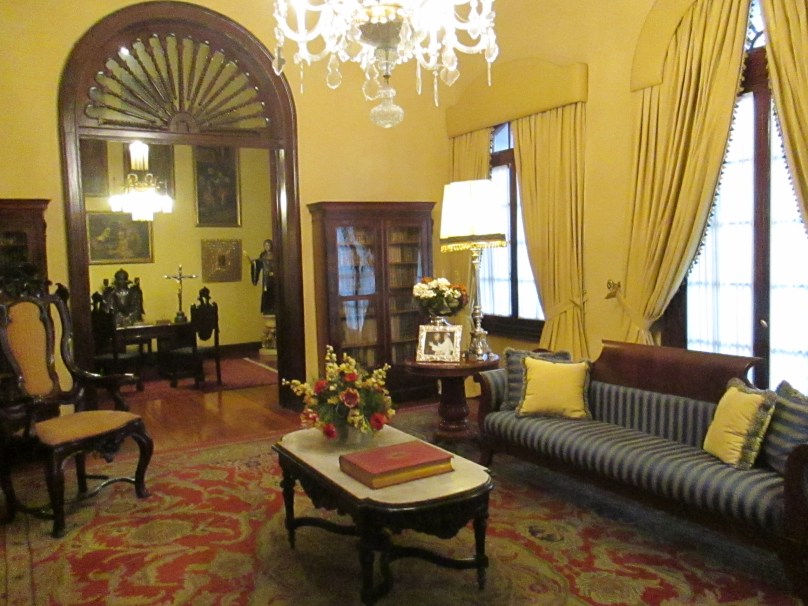
Interior of the Palace of the Archbishop, Lima, Peru

What shocked me more than anything during my 2014 visit to Peru was that the archeology of Spanish Catholicism in Peru was fully as interesting as the archeology of the Incas and other pre-Columbian peoples. The pictures here all come from my visit to the Palace of the Archbishop next to the Cathedral in Lima on November 9, 2014. I was guided through the Palace by a very cute young Peruvian nun who kept addressing me as “Gentleman.”

As I visited the Palace and the various churches and convents, I thought to myself that the Christian religion in Peru had passed its peak. What remained was partially syncretic, but in any case visually stunning.
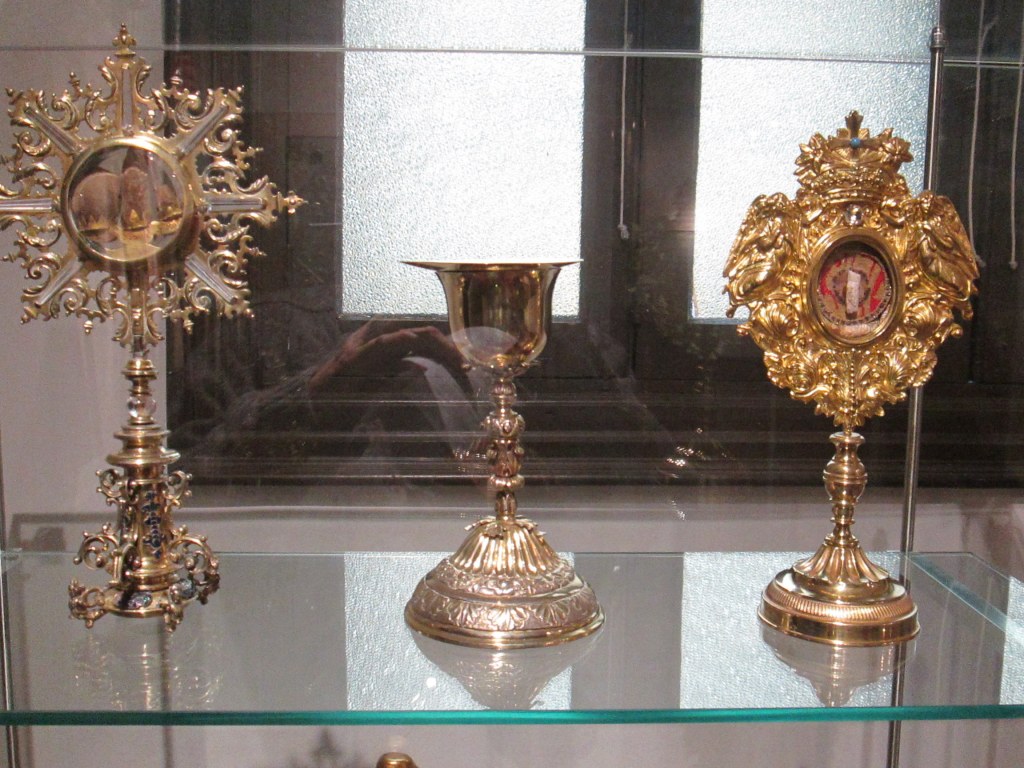
Chalice Flanked by Two Monstrances

I have often thought that it was not the King of Spain who benefited from the wealth of gold and silver transshipped from South America, as much as Holy Mother the Church. The churches and monasteries in the historic center of Lima are glistening with gold, silver, and precious stones. At the Monastery of Santo Domingo are the remains of three 17th century Limeño saints: Rose of Lima, Martín de Porres, and Juan Macías—all of whom were affiliated with the Dominican Order.

Brought up as a Roman Catholic, I found myself spending a lot more time in the churches than at the Inca ruins. They were usually beautiful and peaceful, even if I wound up attending Mass a number of times. In fact, I felt myself more a Catholic in Peru than I do in Los Angeles.

Statue of the Blessed Virgin

Whatever their original colors, it seems as if the paintings and statues of Christ, the Virgin, and the saints are predominantly reddish brown. This is particularly true of the Cusco School of Painting which predominated at the time. At some point soon, I will repeat a past post on the iconography of archangels shown in Peruvian paintings of the Cusco School.
Prophet and Visionary

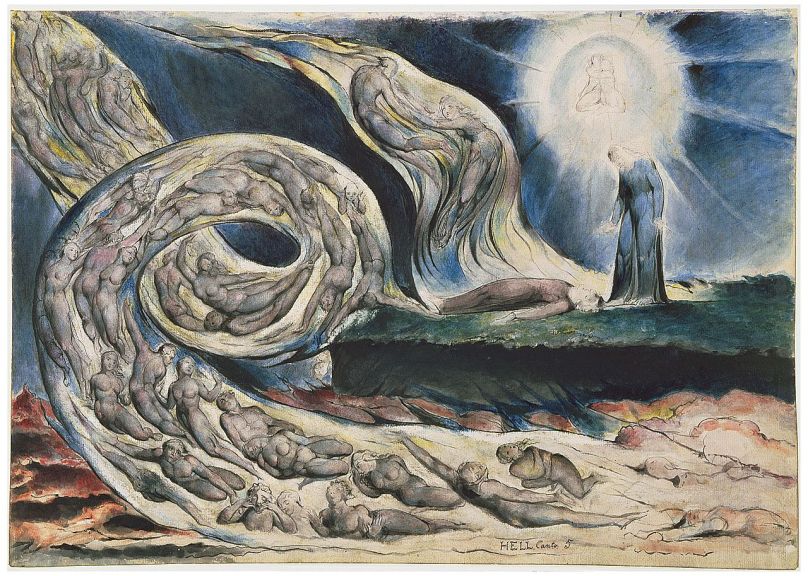
Blake’s Swirling Lovers from Dante’s Inferno

I have always loved the poetry of William Blake (1757-1827), particularly “The Marriage of Heaven and Hell.” But now I am increasingly becoming interested in his art, which exhibit the seemingly contradictory qualities of naiveté and authoritativeness. The scene above is from Canto V of the Inferno, in Robert Pinsky’s translation:

And cursing the power of Heaven. I learned
     They suffer here who sinned in carnal things—
     Their reason mastered by desire, suborned.
 As winter starlings riding on their wings
     Form crowded flocks, so spirits dip and veer
     Foundering in the wind’s rough buffetings

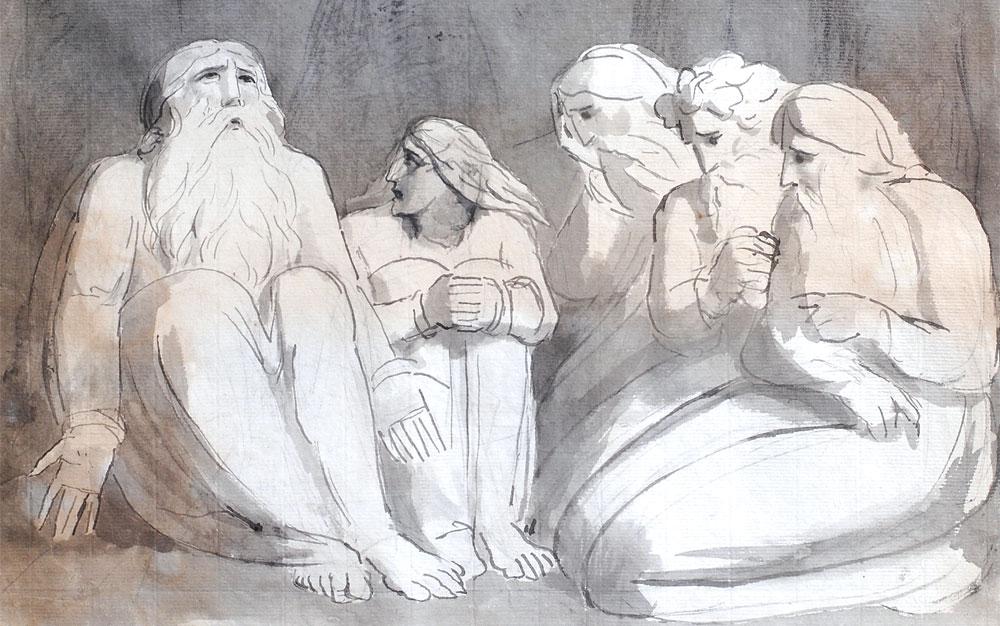
“The Complaint of Job”

In the above drawing, we see Job at the left, with his taunting friends Eliphaz, Bildad, and Zophar on the right. Like much of Blake’s art, the image is almost deceptively simple. Note the positioning of the fingers on his right hand indicating Job’s increasing agitation. The “friends” appear smug and serious, assuming identical positions.

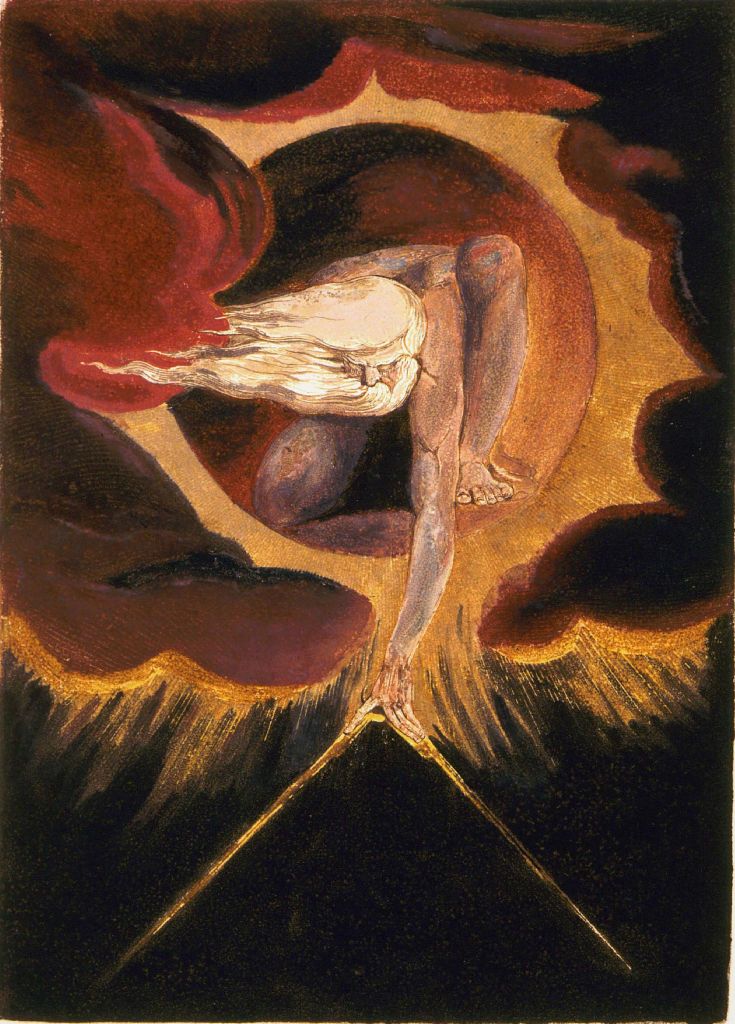
“The Ancient of Days”

Only Blake had the chutzpah to show God the Father intent in the act of creation. This is my favorite of the images shown here. You can see the force emanating from the Deity’s fingertips as dark clouds encircle him.

According to London’s Tate Gallery:

A committed Christian who was hostile to the Church of England (indeed, to almost all forms of organised religion), Blake was influenced by the ideals and ambitions of the French and American revolutions. Though later he rejected many of these political beliefs, he maintained an amiable relationship with the political activist Thomas Paine; he was also influenced by thinkers such as Emanuel Swedenborg. Despite these known influences, the singularity of Blake’s work makes him difficult to classify. The 19th-century scholar William Michael Rossetti characterised him as a “glorious luminary”, and “a man not forestalled by predecessors, nor to be classed with contemporaries, nor to be replaced by known or readily surmisable successors”.

Posted in art

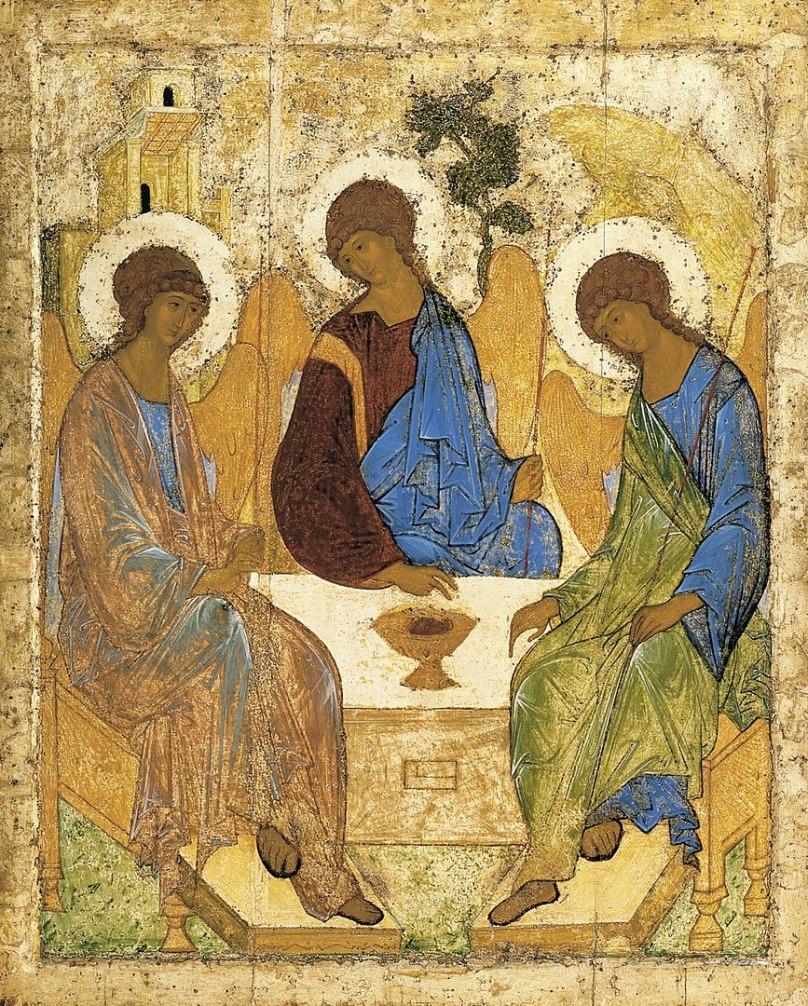
Andrei Rublev

Holy Trinity Icon (ca AD 1400)

I have always been fascinated by Eastern Orthodox icons, beginning around the time Martine and I began visiting Greek festivals in the Los Angeles area. Perhaps the greatest master of the icon was the Russian Andrei Rublev (Андрей Рублёв), born sometime between 1360 and 1370 and died sometime between 1427 and 1430. Not much is known about his life, but his work continues to inspire. In fact, I have seen a number of copies of his icons at different Greek Orthodox churches.

To the untutored eye, there is something rigid about the typical icon, with its gold-leaf background and its lack of attention to perspective and even realism. Most subjects are of God, the Blessed Virgin, and various saints. We are not privy to the mind of God and must therefore be respectful of any representation of Him or the saints. These icons are objects of worship which are venerated by the faithful as they enter the narthex of an Orthodox church.

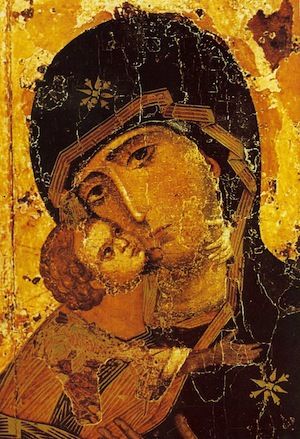
Rublev’s Icon of Our Lady of Vladimir (ca 1406)

However rigid the style may be, the facial expressions of the Blessed Virgin and the Infant Christ are incredible: On one hand, Mary seems to see the condemnation and crucifixion to come, while Christ seems to be staring at her with a look of purpose and strength.

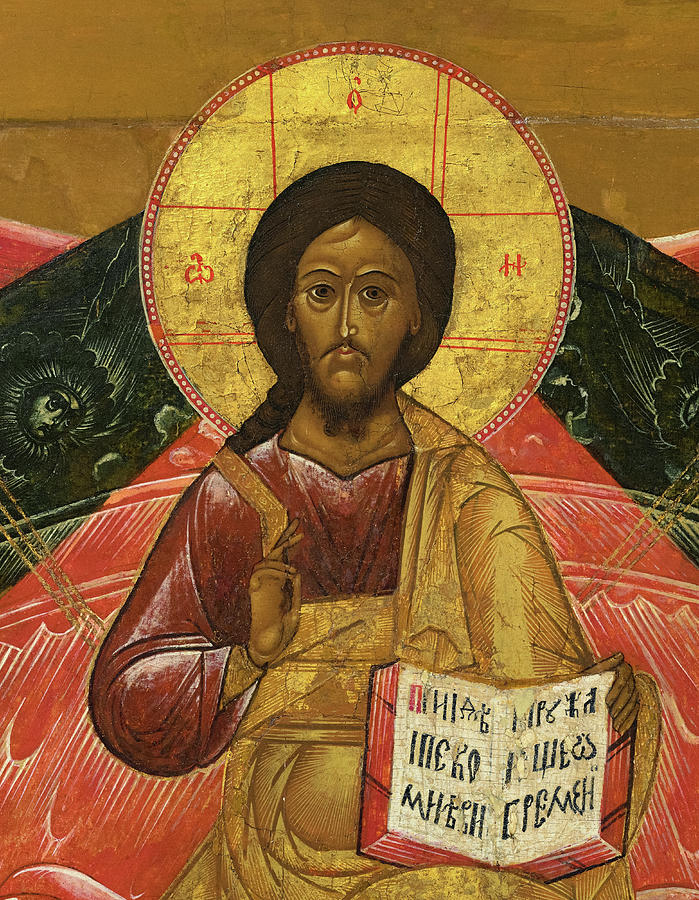
Icon of Christ Pantocrator (Detail)

According to a famed dealer in Russian icons:

The iconographic type of Pantocrator (Almighty or Omnipotent in Greek) shows Christ as the Lord of the Universe, co-equal and co-eternal to the Father. The iconography originates in Byzantine art and is known since the sixth century. The earliest known surviving example is the icon of Pantocrator from Saint Catherine’s Monastery in Sinai. Later on, gigantic images of the Pantocrator, represented half-length with a book of Gospels in his hand, can be seen on the mosaics and frescoes of Byzantine cupolas. In Russia, this iconography usually appeared in the Deisis Tier, the main part of the iconostasis, but could also be used for independent devotional images.

In Greek Orthodox churches, the image of Christ Pantocrator usually appears in the cupola above the nave.

Over the years I feel I have come to appreciate the artistry of these icons. If you are interested in learning more, I recommend you see Andrei Tarkovsky’s great film Andrei Rublev (1966), which is available in DVD from the Criterion Collection. It is a hagiography of sorts, and rightly so as the Russian Orthodox church has declared Rublev to be a saint in 1988.

A Splash of Art

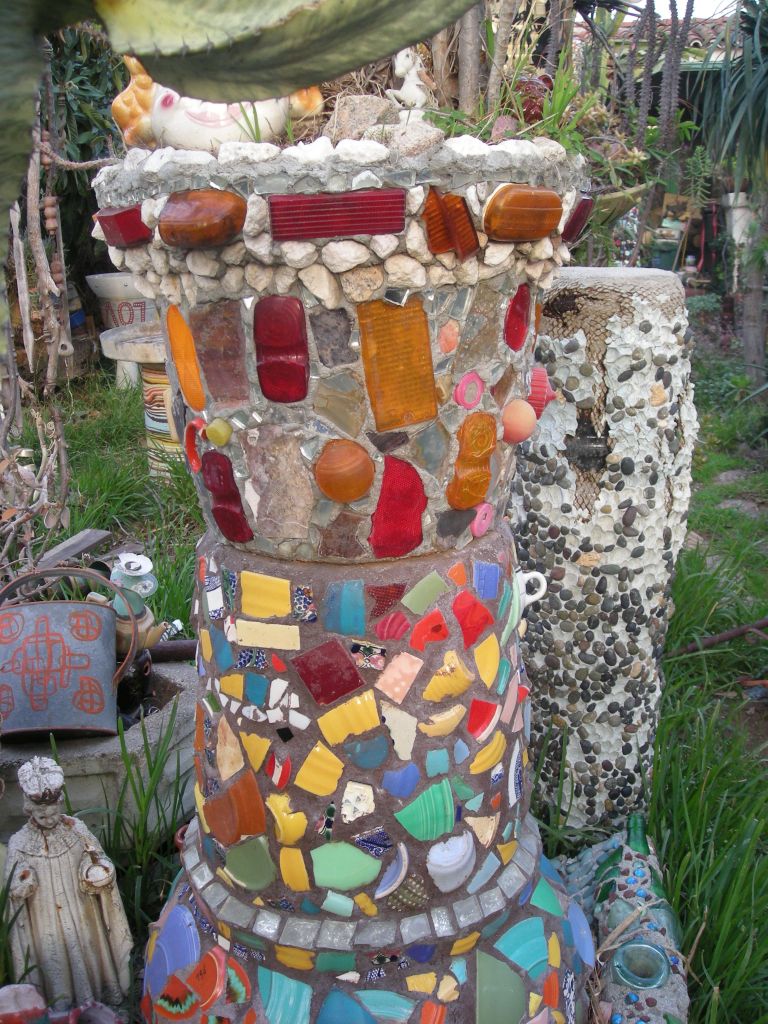
A Front Yard in Pasadena

It was eight years ago. My friend Bill Korn told me about a house he had discovered during one of his long walks. The front yard of this Pasadena property was a triumphant statement of a home-grown artist. I made the mistake of not noting the address, and I wonder if what we saw then is still there.

The art reminds me of the Watts Towers created by Simon Rodia out of various found objects. In this case, most of the objects were multicolored ceramics, toys, and other small items which were carefully cemented together by the owner of the house.

Broken Ceramics Cemented Together

I guess the front yard structures can be classified as a kind of gonzo art. Yet the effect is curiously pleasing. I’m sure that hundreds of hours went into creating these effects.

Some of the Trees and Succulents in the Yard

When we are able to travel once again and get together with friends and dine inside at a restaurant, I will have to find this place. It really struck a nerve with me.

A One-Man Renaissance

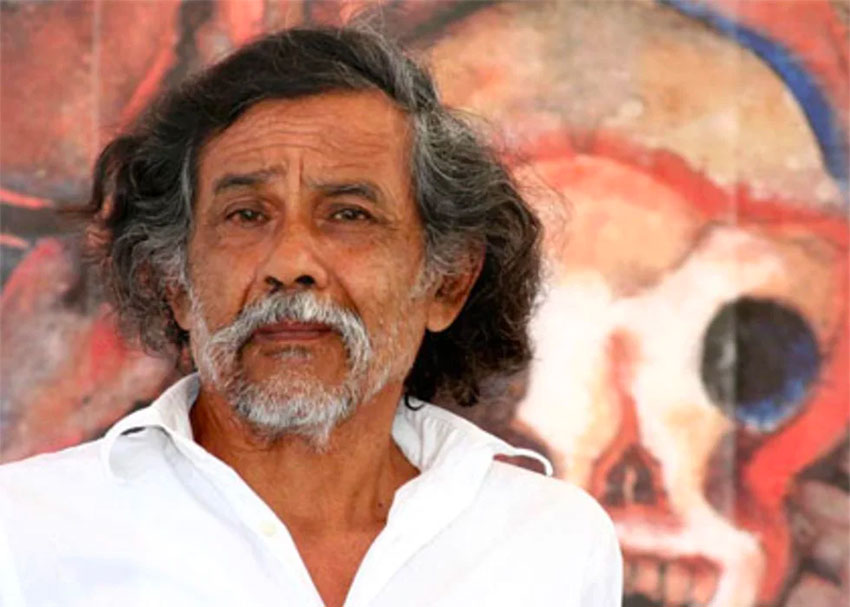
Francisco Toledo (1940-2019)

In his book On the Plain of Snakes: A Mexican Journey, Paul Theroux met with Francisco Toledo in Oaxaca shortly before the artist died. I was curious to see images of some of his works because his meeting with Theroux raised my interest.

A Zapotec Indian from Juchitán in the southeast corner of the State of Oaxaca (near the Isthmus of Tehuantepec), Francisco Benjamin López Toledo was a noted painter, sculptor, illustrator, and protestor. When McDonald’s wanted to plant the Golden Arches in the zócalo of Oaxaca, Toledo set up a table offering free tamalitos to passers-by explaining to them the damage that would be done to their culture.

Animal-Headed Woman

When Theroux asked him what he thought of Frida Kahlo, Toledo replied:

I started out hating her. Then later I began to see that she represented something. And outsiders were interested in her. Her life was so complex and painful. So she is something. But there are so many others.

Kahlo is well known to art critics outside of Mexico, along with a handful of other artists such as Orozco, Rivera, Tamayo, and Siqueiro; but Toledo is right that Mexico is fairly crawling with great art. This was brought home to me during my recent trip to Yucatán, when I made a point of visiting art and folk museums.

Illustration: Mythical Creature

To another American visitor, Toledo describes his work:

What I do is a mixture of things, but the pre-Hispanic world has been a source of inspiration. There are certain solutions that are decorative that come from pre-Hispanic art and at the same time there is much primitive art that is refined or simple but also very modern.

They described his work as employing innovative materials, such as sand and amate paper, which was used by pre-Columbian Indians, made with the crushed bark of the amate tree (Ficus insipida, a species of fig).

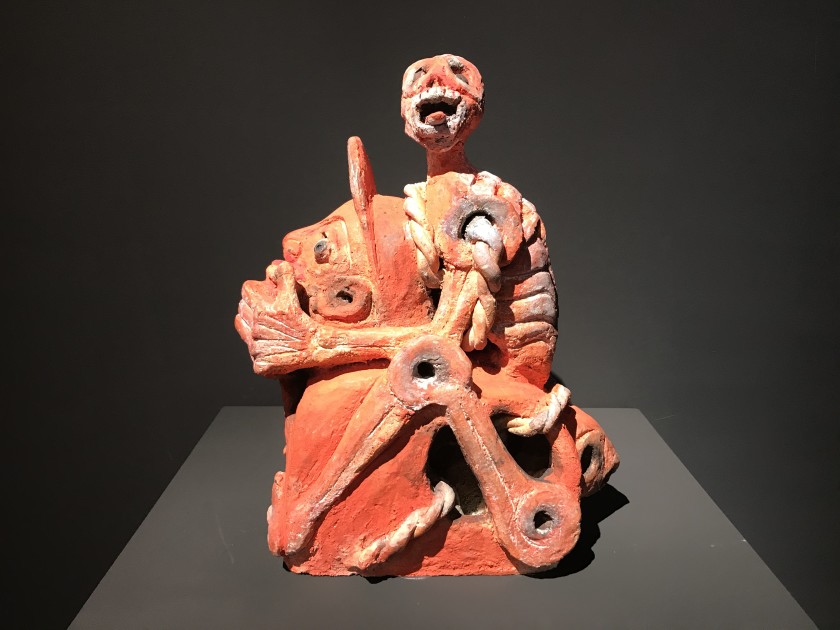
A Ceramic Sculpture Honoring the Disappeared of Mexico

I hope to present the work of other Mexican artists in posts to come.

América Tropical

The Reconstruction of América Tropical in Downtown LA

In the 20th century, Mexico produced three great muralists: José Clemente Orozco, Diego Rivera, and David Alfaro Siqueiros. On other occasions, I have written about the influence on me of the Orozco frescoes at Dartmouth College. Sometimes, I think that my interest in Latin America began in the Reserve Room of Baker Library, where the frescoes were located.

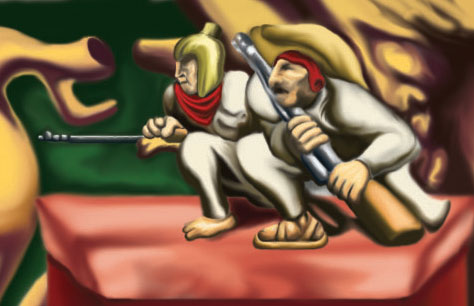
Los Angeles has only a reconstruction of David Alfaro Siqueiros’s América Tropical, which was created in 1932 at its present location on Olvera Street. Unfortunately, Siqueiros’s revolutionary message angered LA business leaders, who had the mural painted over.

Reconstruction of Detail

Today, the fresco is restored—but, alas, only in black and white. Below is what the original looked like:

The Fresco As It Originally Appeared

It took a quarter century for the Getty Conservation Institute to restore the image which was obliterated by layers of white paint. You can read about it here. When the Covid-19 outbreak comes to an end, you can view the restoration in person.

Mexican Folk Art: La Casa de los Venados

What It Feels Like to Stay at Home All the Time

I am about to take a break from my “Plague Diary” posts to remind myself that, somewhere, something like a normal life still exists. Toward the end of my vacation in Yucatán, I spent several days in Valladolid, home of one of the country’s best private collections of folk art at the Casa de los Venados. I loved the exhibits I saw throughout my trip of folk art. The combination of humor and brilliant color had me won over. Now that I am sitting out the plague in my apartment, sans restaurants, sans libraries, sans movie theaters, sans any humor or brilliant color. (Especially as it has rained all week.)

Dog Cart

Sometimes I feel as if North American culture is deficient, especially in the visual arts. It wasn’t always thus, but somehow I feel that abstract expressionism took all the fun out of painting. Seeing the collection at the Casa de los Venados, on the other hand, made me laugh out loud.

Mermaid


The amazing thing about Mexican folk art is that there is so much of it about and at such reasonable prices. Over several decades, you can have a great collection that might even rival the Casa de los Venados—and have loads of fun doing it.

Mexican Folk Art: Museo de Arte Popular

A Delightful Museum of Mexican Popular Art

I began my vacation staying at the Hotel La Piazetta at Parque de La Mejorada. At first, it didn’t seem there was very much to see in the immediate area—at first glance. Then I noticed a museum at the corner of Calle 50A and Calle 57 dedicated to Mexican folk art. So one morning, I started by visiting the Church of La Mejorada, which was right across the square. Then I waited for the museum to open at 10 am.

Masked Skeleton

On the ground floor was an exhibit of colorful textiles. They were nice, but I was was after something less abstract. My wish was fulfilled by the galleries on the second floor. There they were: all the Posadaesque skeletons, religious themes, and indigenous designs.

You cannot go far in Mexico without running into artesanias created, in many cases, by common people and readily available to yanqui tourists. Sometimes the work is so fine that it takes your breath away.  You can find something like this in parts of the United States, but most of the energy seems to go into antiques.

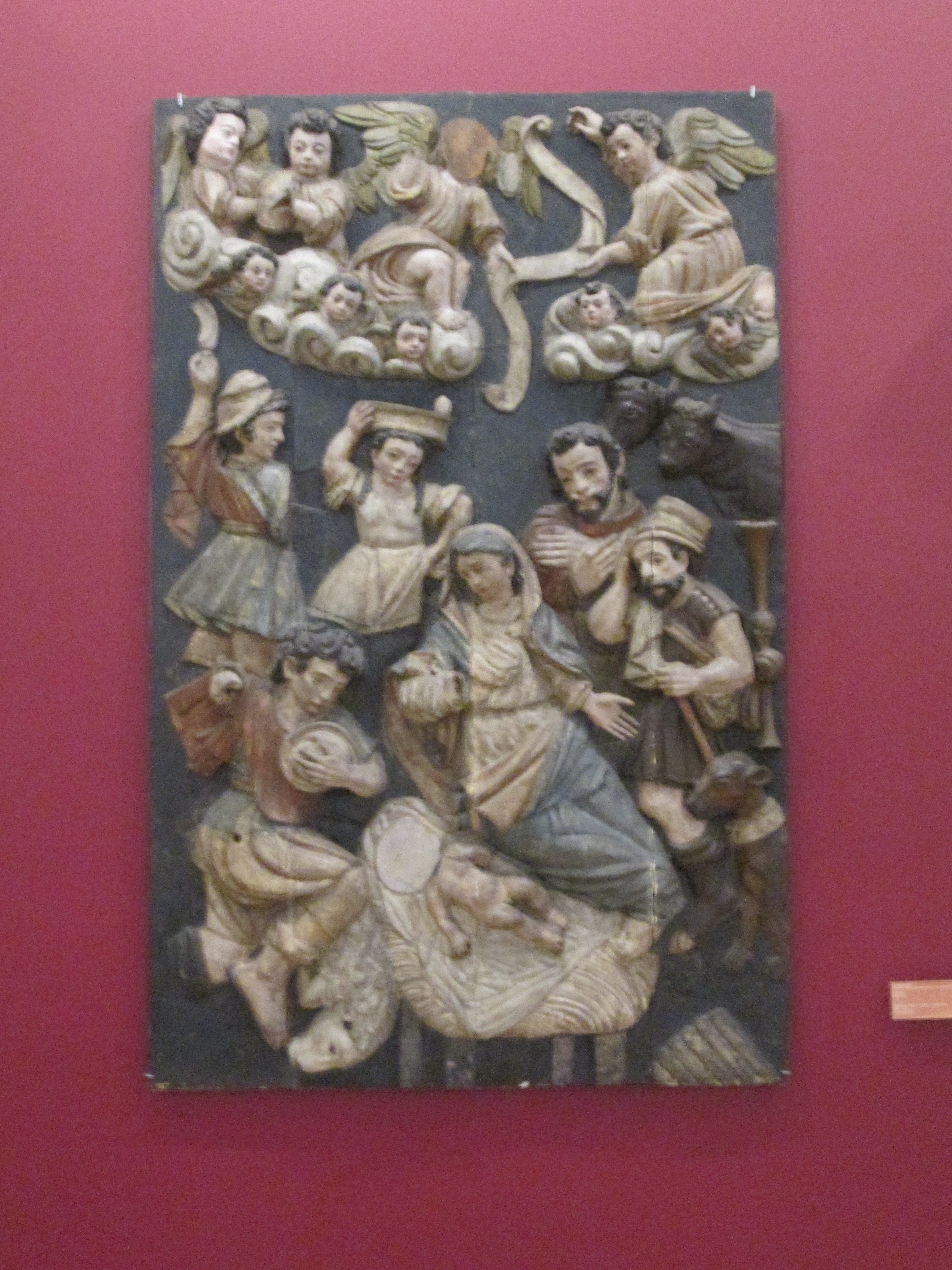
The Birth of Christ with Shepherds, Angels, and the Magi

It seems that wherever I have traveled in Mexico, I have run into what I regard as clearly identifiable Mexican folk art. Much of the folk art in Yucatán isn’t even particularly Maya: It seems to be more of a pan-Mexican thing.


Mexican Folk Art: Alebrijes

Magical Realism—Zapotec Style

At the Casa de Montejo in Mérida, I stumbled onto a special exhibit of Mexican folk art by Jacobo and María Ángeles and their collaborators from the Zapotec town of San Martín Tilcajete in the State of Oaxaca. In general, I think that Mexican folk art is magical, but Jacobo and María are something else. They are known for their sculpted figured known as alebrijes in a series called “Tonas and Nahuales.” According to Wikipedia, “Alebrijes are brightly colored Mexican folk art sculptures of fantastical creatures.”

These particular sculptures are carved from the wood of the copal tree, which is sacred to many Meso-American peoples because it is the source of incense for worship. They are meticulously painted, and various other objects are frequently attached.

Magical Monkey

This was the first of several visits I made to see Mexican folk art in both Mérida and Valladolid. In every case, I was enthralled.

The Ángeles art group has an excellent website which can be accessed here. Of particular interest is a four-minute video in Spanish with English subtitles explaining their method of creating these alebrijes as well as a quick survey of their other activities:

Future posts will describe other works of Mexican folk art that caught my eye.

The Art of Francisco Toledo

Mexican Painter Francisco Toledo (1940-2019)

Reading Paul Theroux’s On the Plain of Snakes: A Mexican Journey, I was intrigued by the writer’s interview in Oaxaca with artist Francisco Benjamín López Toledo. Looking up his work, I was chagrined to see that he had died just three months ago. It is a pity, because I have not followed Mexican art and artists since the classical trio of Diego Rivera, José Clemente Orozco, and David Siqueiros.

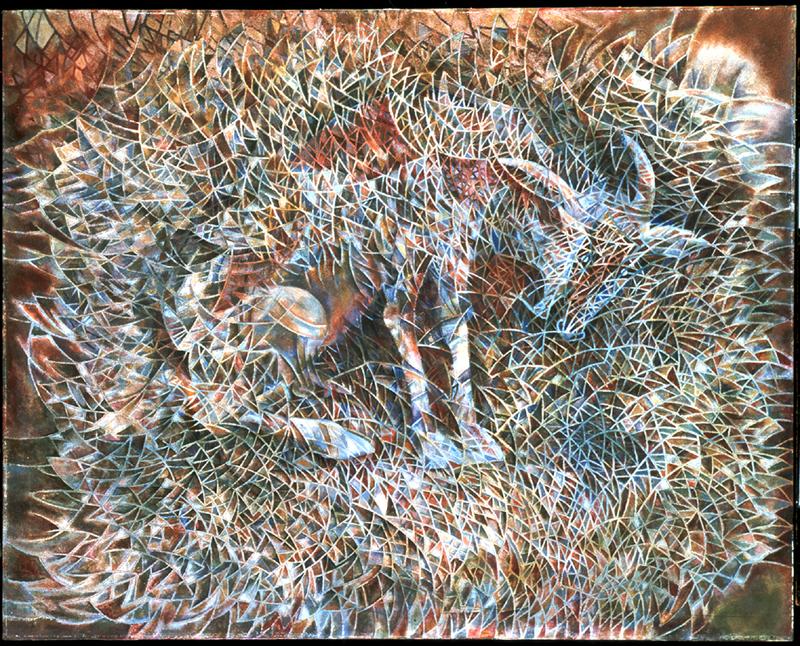
Toledo paintings have a uniquely Mexican feel to them, as if they sprang up from the soil like the prickly agave from which tequila and mezcal are distilled.

Self-Portrait of the Artist

Toledo’s textures are nothing short of amazing. Yet he remains faithful to the forms his work represents. There is no escape in the unadorned, unrepresenting abstract.

Goat (Chivo)

Born in Juchitán, which was recently leveled by several major earthquakes, Toledo was a social activist who threatened to protest naked against the construction of a McDonald’s at the zócalo in Oaxaca. Apparently, the hamburger chain wanted no part of that.