The Dinosaur and the Flickers

Changing Tastes Affect Whole Media

Changing Tastes Affect Whole Media

Yesterday at Cinecon 51, I had an interesting discussion with a film memorabilia vendor from Philadelphia about the changing tastes of the film audience. Both of us noted that there was a remarkable lack of younger filmgoers—anything under age forty—attending the recently restored films from former decades. In fact, most of the attendees were in their seventies or above.

That set me to thinking: I am happy that I did not achieve my educational goal of becoming a professor of motion picture history and criticism. If I had, I would have had to face the fact that my chosen field was, essentially, ultimately doomed for lack of interest. How many younger people would be interested in silent films, or early talkies in black and white, or even anything that had a more complicated story line. Who would even be able to sit still for The Seven Samurai or Doctor Zhivago or Rules of the Game?

People are clearly becoming more distracted as time goes on. Movie screens have gotten smaller, and home TV screens have grown larger. They haven’t quite met yet, though the tendency continues. One does not need to watch a television with rapt attention, not while one is texting, reading one’s e-mails, or watching YouTube on a smart phone.

So, if I were a professor of film history, I would feel as if I were ramming films down the throats of a younger generation that thought the subject matter was irrelevant.  Who cares about the films of F. W. Murnau, Josef von Sternberg, or even Alfred Hitchcock?  (I can just imagine trying to explain Hitch’s Vertigo or Shadow of a Doubt to a restive crowd who were itching to jump onto their smart phones.)

As far as my own tastes are concerned, I will follow them through à l’outrance, to the bitter end. The films I love, I will always love and continue to study, even though it separates me from the following generations. Does that make me a dinosaur? So be it!

The Stairs of Silverlake

One of the Stairs of Silverlake

One of the Stairs of Silverlake

This being Labor Day Weekend, Martine and I attended the Cinecon film restoration show in Hollywood. To me, the highlight of this show was how three comics of the 1930s and 1940s used the stairs of Silverlake, a hilly area just west of today’s Dodger Stadium. The stairways still exist, and I would not be surprised  if hundreds of student films took advantage of their cinematic qualities.

The three films in the so-called “Silverlake Steps Trilogy” were:

  • The Music Box (1932). The best of the three, starring the inimitable Laurel & Hardy, who try to wrestle a player piano up the steps. (See illustration below.)
  • An Ache in Every Stake (1941), with the Three Stooges. Larry, Curly and Moe try to deliver ice blocks on a super-hot day up the steps, only to have them turn into cubes once they get up top. The film ends with the three acting as chefs at a birthday party at the house where they deliver the ice.
  • It’s Your Move (1945), with Edgar Kennedy hefting a wash machine up the steps.
Billy Gilbert with Laurel and Hardy in “The Music Box”

Billy Gilbert with Laurel and Hardy in “The Music Box”

The above films are not only in chronological order, but also in descending order of quality. By the time It’s Your Move was released, the big studios were less interested in short programs, especially as television was looming over the horizon.


Where It All Began

Where Star Trek and Alien Began

Where Star Trek and Alien Began

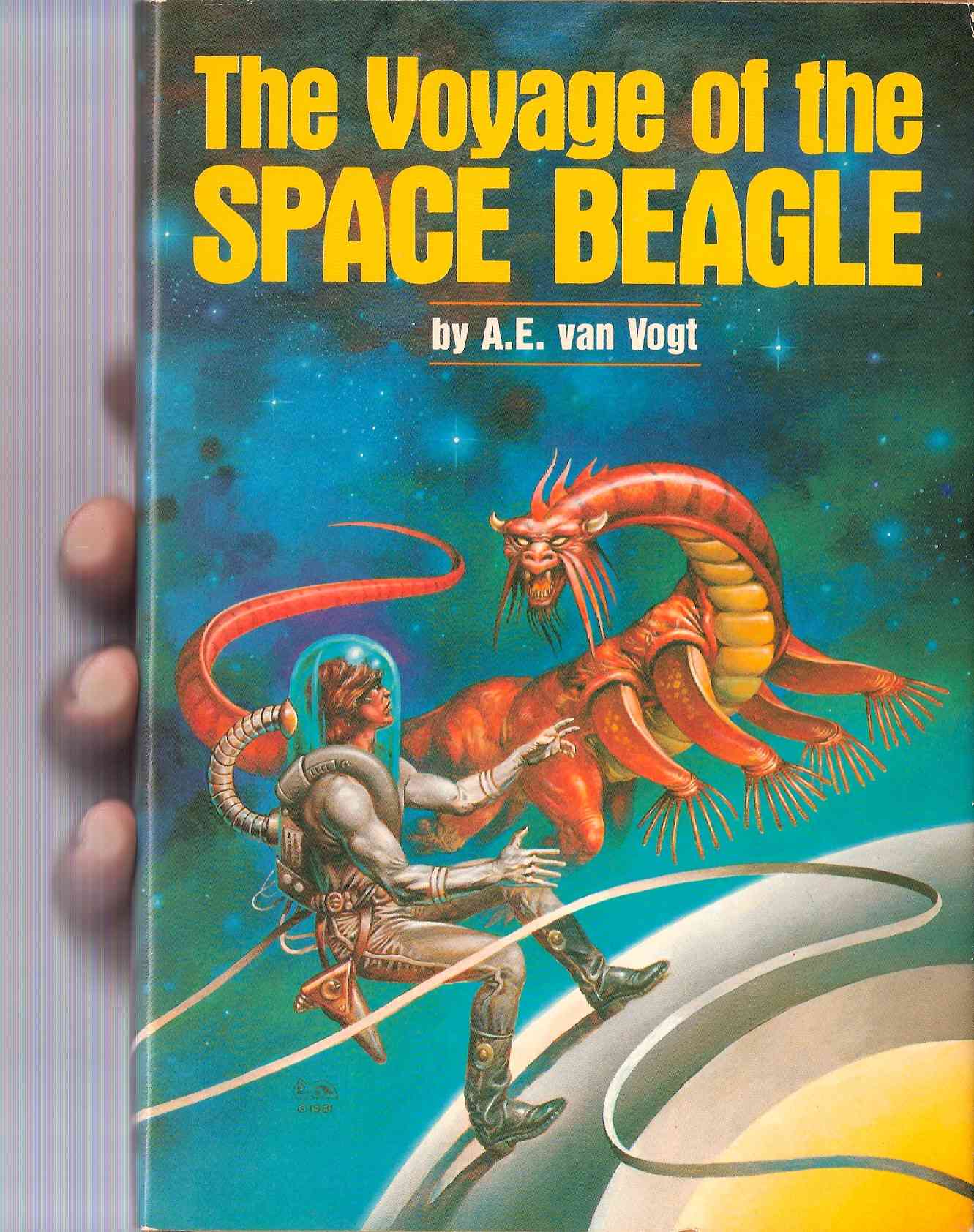
Lest we think of ourselves as too sophisticated and pooh-pooh out of hand some old (1950) science fiction with a somewhat clunky name, perhaps we should reconsider. A. E. Van Vogt’s The Voyage of the Space Beagle is a collection of four short stories cobbled together. From this unlikely source came the idea for Gene Roddenberry’s Star Trek and all its spin-offs and movies. From the third story came the idea for the movie Alien.

You remember the words that started the show: “Space, the final frontier. These are the voyages of the Starship Enterprise. Its five-year mission: to explore strange new worlds, to seek out new life and new civilizations, to boldly go where no man has gone before.” Van Vogt got his idea from Charles Darwin’s The Voyage of the Beagle, which, curiously, lasted five years. While the five years did not figure in Van Vogt’s book, it assumed new importance when Roddenberry lifted the general idea. And he never paid a penny to Van Vogt nor credited him with the idea for the series.

This Scene in Alien Did Not Come from Van Vogt

This Scene in Alien Did Not Come from Van Vogt

The producers of the film Alien did not get off so easily. Van Vogt sued the producers and came to an arrangement with them that was monetarily satisfactory to both sides. Needless to say, the character of Ripley, played by Sigourney Weaver (above), was not part of The Voyage of the Space Beagle, as all its crew were chemically castrated males.

There are many treasures from the Golden Age of Science Fiction (mostly the 1950s) that are worth re-examining. I would submit that the works of A. E. Van Vogt deserve a closer look. I have re-read three of his books recently and found them well worth the effort.

Favorite Films: His Kind of Woman (1951)

A Film Noir That Just Happens to Be Wildly Entertaining

A Film Noir That Just Happens to Be Wildly Entertaining

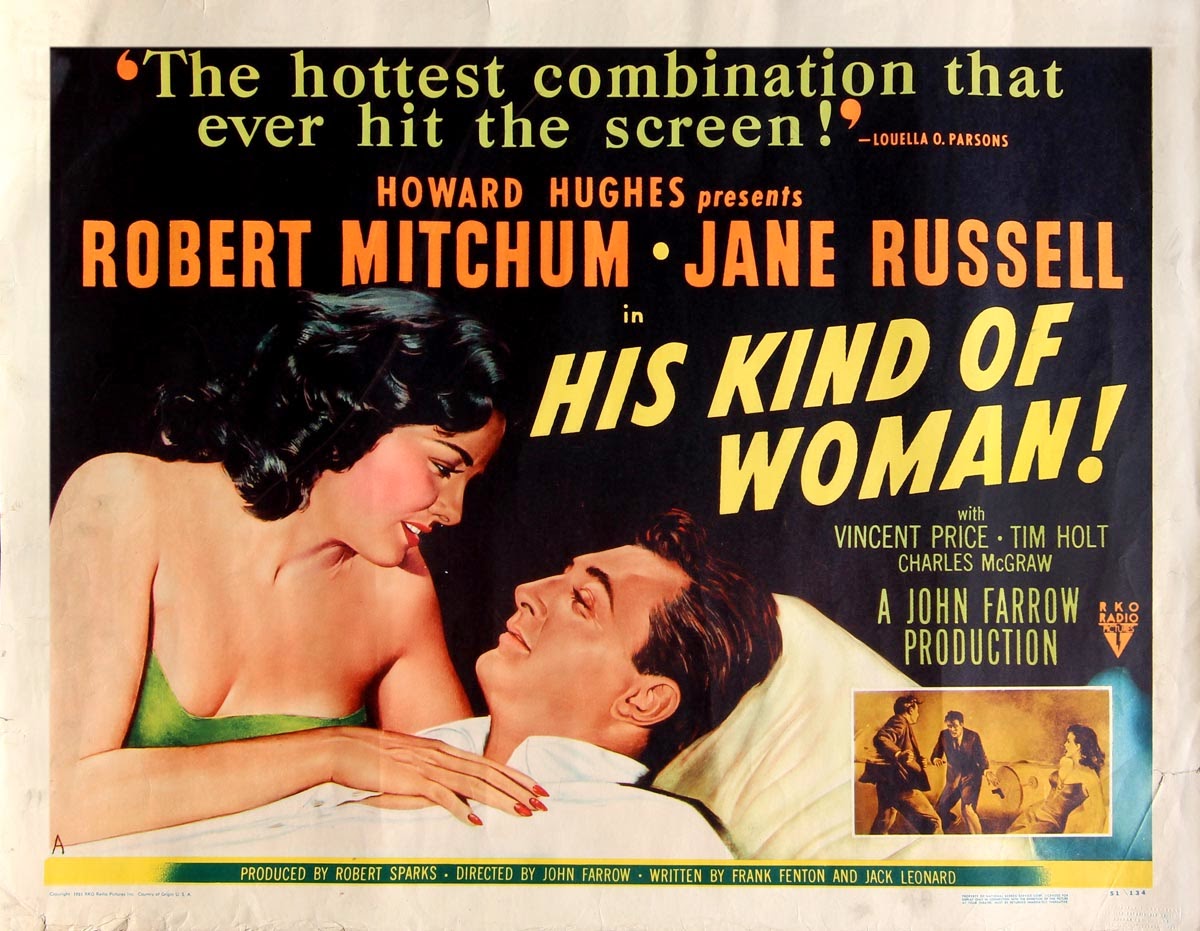
Most film noir productions take themselves pretty seriously, but His Kind of Woman is an exception. Robert Mitchum (as Dan Milner) is hanging out at a Mexican resort with Jane Russell (as Lenore Brent) after having been advanced fifteen thousand dollars for some unknown reason. No one seems to know what is going on, until the word is about that mafioso Raymond Burr (as Nick Ferraro) is on his way to meet him. Ferraro has been banned from the U.S. and is tired of his Italian exile, so he plans to return to the States—as Dan Milner.

About midway through the film, Vincent Price (as Mark Cardigan) pretty much steals the show, playing an actor who likes to hunt, fish, and collect mistresses, including Jane Russell. When it comes time for the shooting, however, Price dons a cape, begins spouting Shakespeare, commandeers a Mexican police squadron, and takes on Ferraro and his goons with his hunting rifles.

His Kind of Woman was directed by John Farrow and (uncredited) Richard Fleischer. Although there was a lot of re-shooting to please executive producer Howard Hughes, the film isn’t as jagged as it might have been. It alternates between a film noir grimness and goofy satire.

I had seen he end several times, but last night was the first time I sat through the entire picture.

Sir Christopher Lee (1922-2015)

Paying Tribute to “The Prince of Darkness”

Paying Tribute to “The Prince of Darkness”

The 6’4” Englishman was one of the greatest villains in all of the cinema. He reached his apogee in the Hammer horror films made from the late 1950s into the 1970s, with my favorite of his productions being the title character in Dracula Prince of Darkness, released in 1966. More recently, he has played Saruman in the Lord of the Rings and Count Dooku/Darth Tyranus (?!) in the later Star Wars films. I also remember him fondly as Mycroft Holmes in Billy Wilder’s The Private Life of Sherlock Holmes (1970) and Lord Summerisle in The Wicker Man (1973). If you scan his filmography, you will be surprised how many great roles he played over some six decades plus.

What with the film industry being what it is today, there are not a lot of great villains. Now they’re selected more on the basis of having a villainous face rather than any acting talent. One of the reasons for his success is the variety he brought to his parts. As he once said, “One thing to me is very important, if you’re playing somebody that the audience regards as, let’s say evil, try to do something they don’t expect, something that surprises the audience.”

Well, he surprised and delighted me for many years. I will miss him grievously.


Favorite Films: The Wages of Fear (1953)

Original French Poster

Original French Poster

Because of my broken shoulder, I took today off from work. (Tomorrow, I’ll work half a day and see the orthopedic surgeon in the afternoon.)

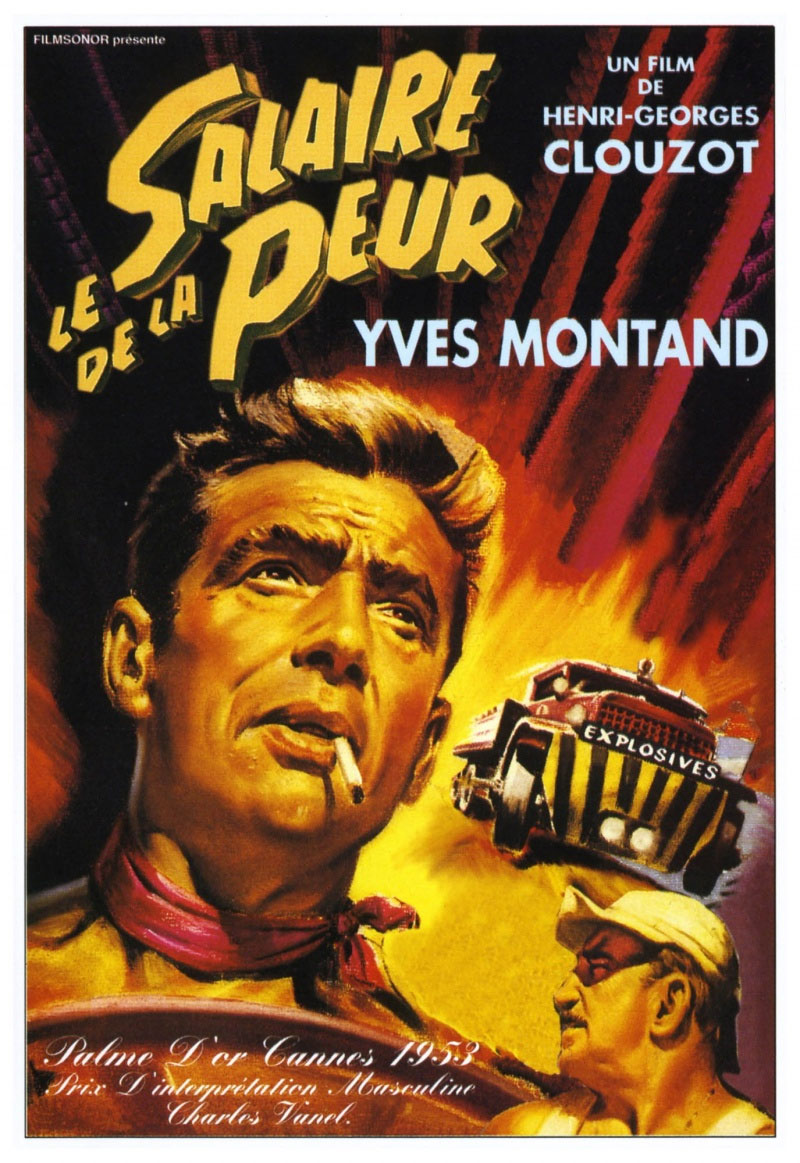
Fortunately, the Turner Classic Movies (TCM) channel was playing Henri-Georges Clouzot’s 1953 Le Salaire de la Peur (better known in the U.S. as Wages of Fear). In the whole history of cinema, there are relatively few action films that can hold their own with the classics. Akira Kurosawa’s The Seven Samurai is one of them, and I can think of several Westerns, including Sam Peckinpah’s The Wild Bunch and Howard Hawks’s Rio Bravo that are real action classics. Think of Wages of Fear as France’s contribution to the genre.

Starring Yves Montand, the film is set in some unspecified Latin American country in which there is an oil well fire. The American Southern Oil Company hires four foreign drifters to drive two trucks full of nitroglycerin over horrendous washboarded roads on the theory that at least one of the trucks will make it. They are to drive half hour apart in case one of the trucks explodes.

Along the route, they meet a number of obstacles that up the excitement level to the boiling point. These include a sharp right turn forcing them to back over a half-finished bridge full of rotten boards, a huge boulder in the middle of the road, and crossing a huge puddle of petroleum formed when a pipeline is ruptured.

There were two remakes, including a fairly decent one by directed William Friedkin called The Sorcerer (1977) with Roy Scheider. But the French original is much better.

Favorite Films: Orpheus (1950)

Heurtebise and Orpheus in the Underworld

Heurtebise and Orpheus in the Underworld

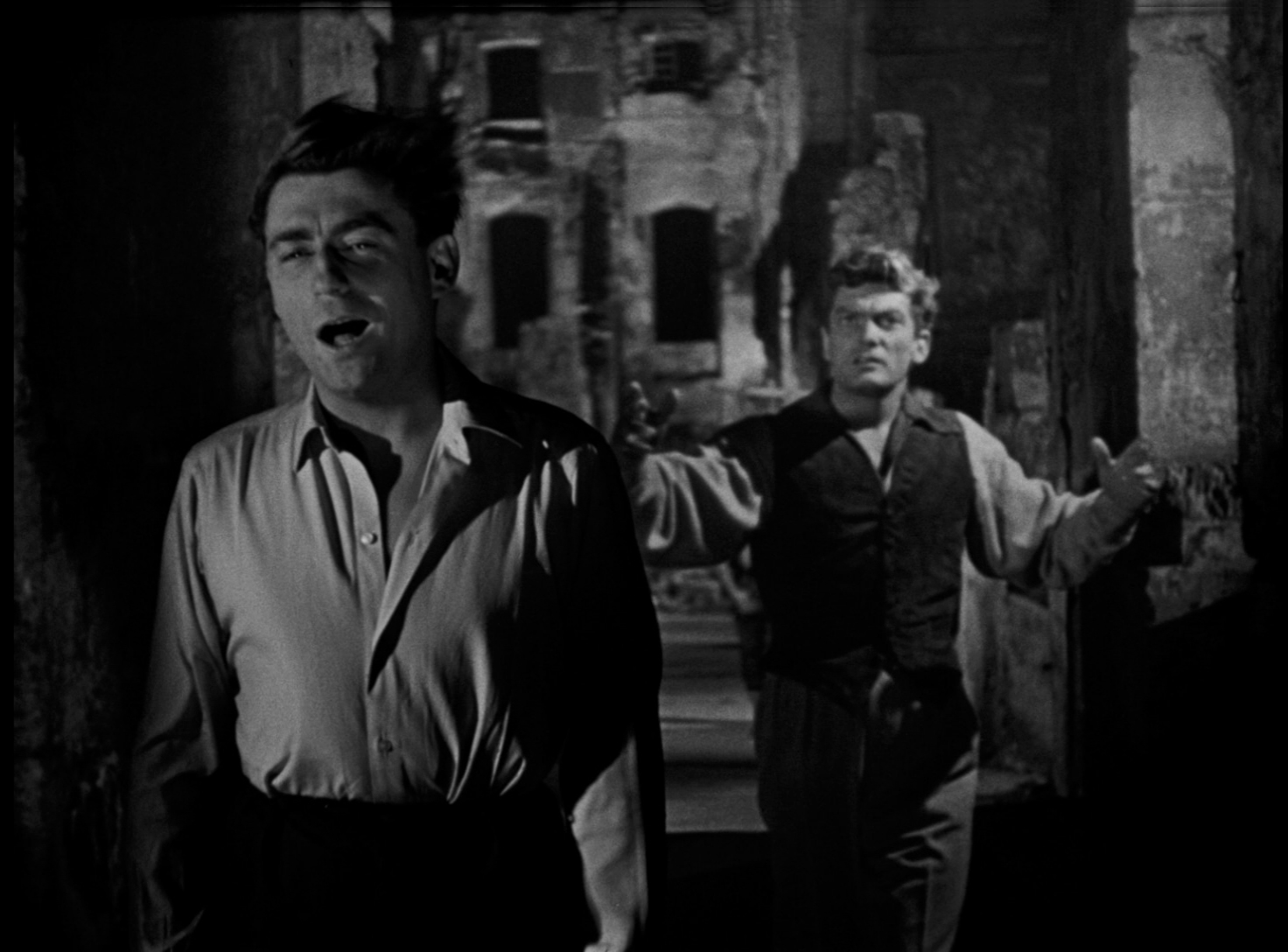
In just three hours, Turner Classic Movies is going to show one of my favorite films: Jean Cocteau’s Orpheus (1950), starring Jean Marais, Maria Casares, François Périer, and Marie Déa. Cocteau took a Greek myth and adapted it to the French experience in the Second World War and came up with a majestic dreamlike work which not only works but sticks in the memory. (Also great is Cocteau’s Beauty and the Beast, which also takes a myth and somehow improves on it.)

Particularly memorable are the scenes in the underworld, where Orpheus (Marais) goes with Heurtebise (Périer) to bring his wife Eurydice (Déa) back. According to the myth—and the film—Orpheus is not supposed to ever look upon his wife again once she has been rescued from the world of the dead. That did not work, and before long Orpheus himself is shot and finds himself walking by the ruined barracks where Cocteau’s underworld is set. One new difference is that Death herself, played by the severe and beautiful Maria Casares has fallen in love with him. This was not part of the Greek myth, either, but it makes for a better story.

I do not remember how many times I have seen Orpheus. However many times it was, it was apparently not enough.

Tati

Monsieur Hulot and His Brother-in-Law

Monsieur Hulot and His Brother-in-Law in Mon Oncle

Because of tax season stress, I am repeating this post from March 2006:

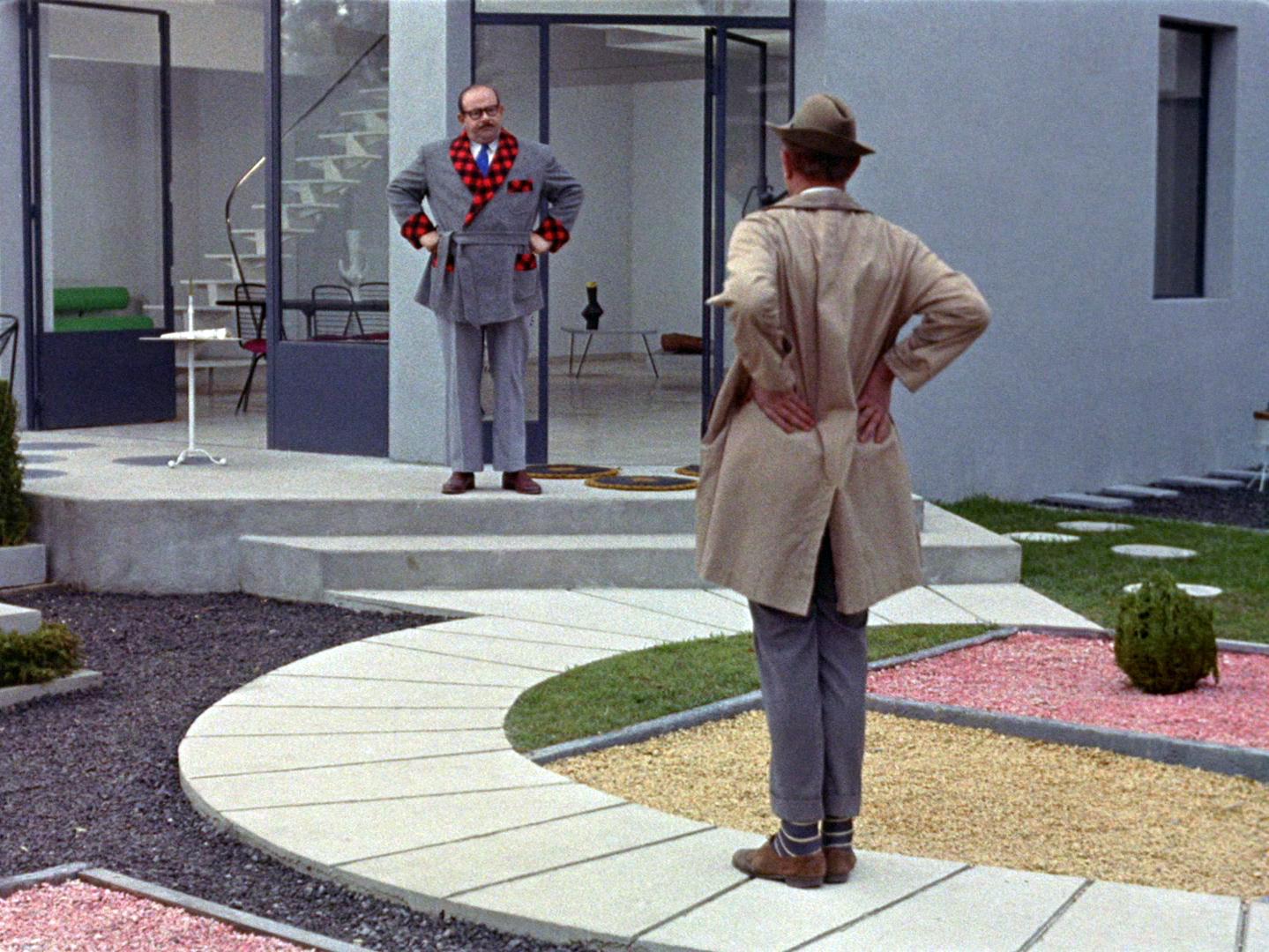
It is difficult to say which Jacques Tati film I love the most. In the end, it is a tie between Monsieur Hulot’s Holiday (1953) and Mon Oncle (1958), with Jour de Fete (1949) and Playtime (1967) close on their heels.  In the end, I chose Mon Oncle because I thought its humor has almost attained the status of myth. In the inter-generational rapport between M. Hulot and the young son of his social-climbing sister, we see how new Hulots are created. By the end of the film, even the insufferable CEO brother-in-law (shown in background above) has become Hulot-ized as he complicitly clasps the hand of his son.

We don’t usually think of the French as being funny. Yet there was a tradition of film comedy in France going back to Max Linder in the silent era, followed by the early talkie musical comedies of René Clair. It is in Jacques Tati (real name: Tatischeff), however, that it reaches its pinnacle.  During his film career, which extended from 1934 to 1974, he directed only nine films and acted in fifteen, including shorts. Some of these are minor, but the four films named above are gems that will stand the test of time.

To illustrate how natural Tati’s comedy is, I will mention one scene. Hulot’s nephew plays with a bunch of lower-class kids who like practical jokes. They hide on a hillside overlooking a street corner where there is a lamppost. When they see a likely victim coming, one of the boys runs down with a broom and starts vigorously sweeping the sidewalk in front of the oncoming pedestrian, in effect directing him to walk toward the post. As he nears the post, another boy gives a loud whistle, which causes the pedestrian to look around and walk face first into the lamppost.  They run several variations on this until they are caught.

Hulot’s Paris is a layered city in which eccentric ne’er-do-wells laze around picturesque streets and social climbers dine at horribly pretentious restaurants like Kington’s (which looks ahead to the destruction of a similar restaurant/nightclub in Playtime).

For more information about Tati, click on Tativille, the “official” site of this great comedian. If you have never seen any of his films and need some cheering up, I urge you to get one of the recently released DVDs of Monsieur Hulot’s Holiday or Mon Oncle and have yourself a ball.


Films: The Imitation Game

Benedict Cumberbatch as Alan Turing

Benedict Cumberbatch as Alan Turing

I knew I would love The Imitation Game even before I saw it. I’ve been working with computers for half a century. Back in the 1960s, they were still often called Turing Machines in honor of the perverse mathematical genius who almost single-handedly invented the first digital computer, code-named Christopher.

Ironically, what brought Turing down were England’s anti-homosexuality laws. Given a choice between prison and a regimen of hormonal drugs to “cure” him, he chose the latter. Within a couple of years, frustrated by the drugs’ effect on his intellect and libido, Turing finally committed suicide in 1956, a scant nine years before I started working on my first computer, a GE 600 series at Dartmouth College, using the world’s first timesharing system and the world’s first higher-order programming language, BASIC.

As you may know, I don’t see too many current films, especially when they are of the self-indulgent “indie” variety. The Imitation Game, on the other hand, is about a man whose way of thinking and feeling is radically different from most of us. And yet he is one of the greatest geniuses of the Twentieth Century, along with Einstein, Von Neumann, Szilard, Teller, Oppenheimer, and a handful of others.

I liked The Imitation Game so much that I intend the read the biography by Andrew Hodges on which it based, Alan Turing: The Enigma. Enigma was the code name of the cryptography machine the Nazis used during World War Two for all their most top secret communications. Turing and his assistants not only cracked the code, but did it in such a way that the Germans could not know that the code was cracked—so they continued using it throughout the war.

Benedict Cumberbatch was superb as the code-breaker, as was Keira Knightley as his talented assistant.


A True Life Adventure? Not Really!

Lemmings Committing Suicide En Masse

Lemmings Committing Suicide En Masse

We have all heard of the mass suicide of cute little Arctic lemmings, but has anyone ever seen it? You have if you’ve seen the Walt Disney True Life Adventure called White Wilderness (1958), directed by James Algar. And the reason you’ve seen it is because the filmmakers faked it. According to the Alaska Fish & Wildlife News in September 2003:

According to a 1983 investigation by Canadian Broadcasting Corporation producer Brian Vallee, the lemming scenes were faked. The lemmings supposedly committing mass suicide by leaping into the ocean were actually thrown off a cliff by the Disney filmmakers. The epic “lemming migration” was staged using careful editing, tight camera angles and a few dozen lemmings running on snow covered lazy-Susan style turntable.

“White Wilderness” was filmed in Alberta, Canada, a landlocked province, and not on location in lemmings’ natural habitat. There are about 20 lemming species found in the circumpolar north—but evidently not in that area of Alberta. So the Disney people bought lemmings from Inuit children a couple provinces away in Manitoba and staged the whole sequence.

In the lemming segment, the little rodents assemble for a mass migration, scamper across the tundra and ford a tiny stream as narrator Winston Hibbler explains that, “A kind of compulsion seizes each tiny rodent and, carried along by an unreasoning hysteria, each falls into step for a march that will take them to a strange destiny.”

That destiny is to jump into the ocean. As they approach the “sea,” (actually a river—more tight cropping) Hibbler continues, “They’ve become victims of an obsession—a one-track thought: Move on! Move on!”

The “pack of lemmings” reaches the final precipice. “This is the last chance to turn back,” Hibbler states. “Yet over they go, casting themselves out bodily into space.”

Faking documentaries is nothing new to the film industry. In the famous early documentary Nanook of the North (1922), filmmaker Robert J. Flaherty had to teach his Eskimos how to build an igloo. And the women who were supposedly the star’s wives were actually Flaherty’s common-law wives, who happened to be Inuit. So much for verisimilitude!

An Actual Lemming. Cute, Huh?

An Actual Lemming. Cute, Huh?