Tomorrow, I will, as usual, NOT watch the Oscars. That should make it about 50 consecutive years of non-participation in the annual awards show. I have nothing against Host Jimmy Kimmel whose weekday show I occasionally watch. Instead, I find that the Academy of Motion Pictures and I disagree most of the time.
If I were a member of the Academy, what films would I have chosen? Actually, I wrote a series of posts about that very subject about ten years ago:
After 1980, I find there are too few American films to merit my attention. In fact, last year I have seen a grand total of two films in theaters—and one of them was a Roger Corman title from the 1960s. The other film was Bullet Train, which I thought was pretty wretched.
Beginning in the 1960s and extending through the early 1970s, I thought that the most exciting filmmaker in the world was Jean-Luc Godard. While I was a film student at UCLA, it seemed that two or three new titles came out every year. All of them enthralled me.
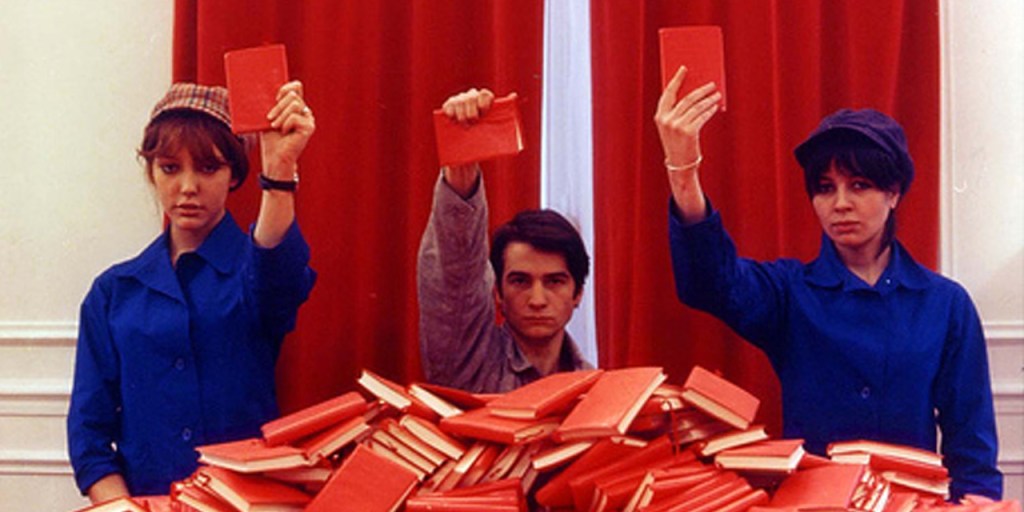
Then, something happened. When La Chinoise came out, I was sorely disappointed. Always sympathetic to revolutionaries, Godard seemed to have turned Maoist. His stars—Jean-Pierre Léaud and Anna Wiazemski—endlessly quoted from Chairman Mao’s little red book. Godard had gone doctrinaire on me. Even though I myself had flirted with the Progressive Labor Party in 1967, as a Hungarian-American I had uneasy feelings about dogmatic Communism.
La Chinoise: Way Too Dogmatic
Still, I thought that most of Godard’s films of the 1960s were exciting. At the time, all my favorite American directors were either dead or dying, and here was a young French director still in his thirties who could be relied upon to produce more masterpieces in the years to come. Alas! It was not to be. I have seen a few of his later productions, which I found not quite up to the standard Godard had set earlier in his career.
Among my favorites of his were:
À bout de souffle or Breathless (1960), one of the iconic films of the French New Wave
Vivre sa vie or My Life to Live (1962)
Le mépris or Contempt (1963), starring Brigitte Bardot
Alphaville (1965), a great combo of noir and science fiction
Pierrot le fou (1965)
Masculin féminin (1966), starring French pop star Chantal Goya
Made in USA (1966)
Weekend (1967), an apocalyptic satire of the French bourgeoisie
Many of the above films starred Godard’s wife, the lovely Anna Karina, which for me served as an added inducement to see the films.
Godard continued to make films. Between 1968 and 1972, he made political films with the Dziga Vertov Group, none of which I have seen. As late as 2022, he kept releasing films. The exhilaration of the earlier works, however, was gone. I have yet to see more than a handful of them, but I would like to at some point. Many of them are pretty obscure and hard to find.
Last year, at the age of 91, Godard found himself suffering from a series of incapacitating illnesses, such that he committed assisted suicide on September 13, which is allowed by Swiss law. It is an unfortunate end for a great artist whose work influenced my life in so many ways at a time when I was young and alienated. But then, such is life.
Raymond Chandler had the good fortune to have three excellent movies adapted from his books. There have been others, too, but they are either rarely seen or not quite up to snuff.
The Big Sleep (Warner Brothers 1946), directed by Howard Hawks with Humphrey Bogart as Marlowe
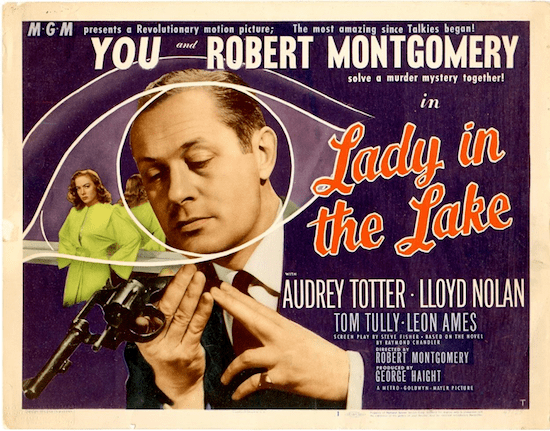
Lady in the Lake (MGM 1947), directed by Robert Montgomery and starring the director as Marlowe
Murder, My Sweet (RKO 1944), directed by Edward Dmytryk with Dick Powell as Marlowe
The films are listed in order from my most favorite to my least favorite—though I like all three very much and have seen all of them multiple times.I consider The Big Sleep as one of the 10 best American films ever made.
Lady in the Lake was a tour de force all filmed by Robert Montgomery from the point of view of Philip Marlowe. The only times we see Marlowe are at the beginning and end of the film and when Marlowe looks in the mirror. It was a chancy experiment, but it succeeded largely because of the great acting job put in by Audrey Totter.
I just saw Murder, My Sweet again for the nth time this afternoon on Turner Classic Movies (TCM). The film was based on Chandler’s Farewell, My Lovely. It came at a key point in Dick Powell’s acting career: Hitherto, he had been a singer and dancer. With this film, he showed he could be as hard-boiled as anyone in Hollywood.
Raymond Chandler’s novels and stories are among my favorite works of mystery fiction. I have read them all, several of them multiple times. And I will continue to re-view these three films again and again.
This last Saturday, Martine and I visited the Grier Musser Museum, which had just re-opened to the public after the Covid-19 lockdown. I have always particularly loved their Halloween antiques, art, and other displays, such as the above throw pillow. Martine wore her witch costume (see yesterday’s post: Decidedly a Good Witch). We both resolved to re-visit them just before Christmas, when their displays will be less horrific.
Tonight, I watched four horror films in a row, three of which were the original Universal Frankenstein releases:
Frankenstein (1931)
Bride of Frankenstein (1935)
The Son of Frankenstein (1939)
The Plague of Zombies (1966)—a Hammer horror film
I waited by the door just in case some trick-or-treaters would come. As usual none came. I don’t think any have climbed the stairs for upwards of thirty years. I thought this year would be different because my downstairs neighbors are Ukrainian refugees with two young daughters.
Now that Halloween is almost past, I realize we are in the HallowThanksMas Continuum, where three Holidays seem to come one after the other like falling dominoes.
This October, I read four horror-related books in celebration of Halloween:
Tales of Terror from Blackwood’s Magazine (1817-1834)
Ann Radcliffe’s The Romance of the Forest (1791), the first half of which is set in a spooky abandoned monastery
Edith Wharton’s Ghosts (1937), selected by the author
Peter Ackroyd’s The Casebook of Victor Frankenstein (2008), a re-telling of the original Mary Shelley story
The following is a repost from October 31, 2015. I had just saw The Leopard Man on Turner Classic Movies (TCM) and started thinking (for the nth time) how great Val Lewton was as a producer—probably the only great film producer.
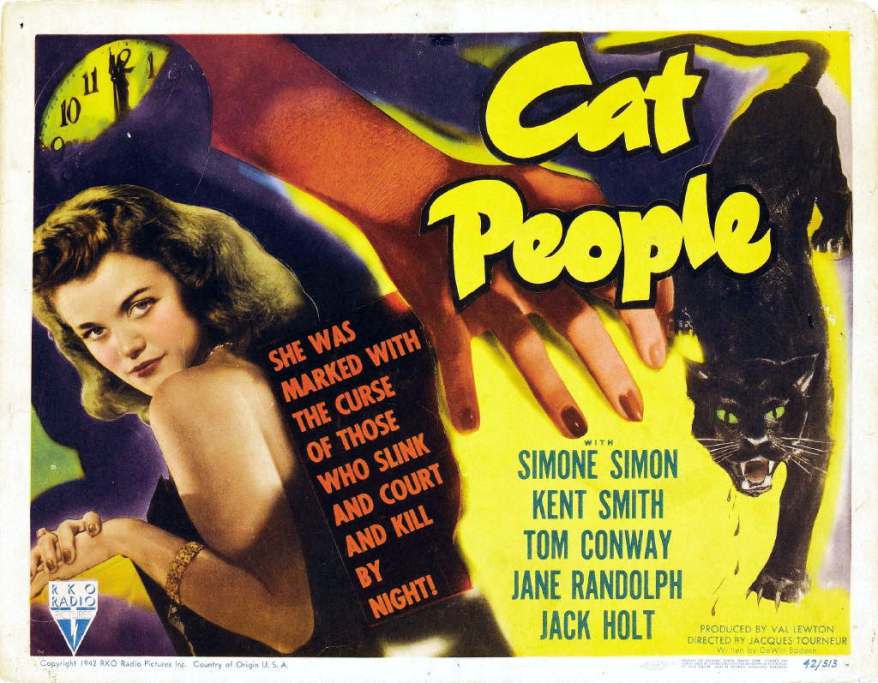
There are horror films, and there are horror films. They can scare you out of your wits, like Curse of the Demon (1957) and Poltergeist (1982), or they can make you understand that the world is both light and dark in equal measure, like Val Lewton’s great films of the 1940s, such as The Cat People (1942).
Val Lewton, born Vladimir Ivanovich Leventon in Yalta, Russia, was interested in making low budget films to compete with Universal Pictures’ highly successful Frankenstein, Dracula, Mummy, and Wolf Man franchises. The title for The Cat People was assigned to Lewton by RKO, and Lewton went to work on a psychological thriller in which there is no overt violence. Perhaps the greatest scene takes place in a swimming pool in which a young woman is swimming all by herself at night. In the shadows, we imagine there is a black panther, but neither the swimmer nor we the viewers are absolutely sure.
Even though Halloween is just about over, I highly recommend all the following Lewton films:
The Cat People (1942)
I Walked with a Zombie (1943)
The Leopard Man (1943)
The Seventh Victim (1943)
The Ghost Ship (1943)
The Curse of the Cat People (1944)
The Body Snatcher (1945)
Isle of the Dead (1945)
Bedlam (1946)
All are great films worthy of being seen multiple times. They are short, thoughtful, extremely moody, and highly successful. Also available is a Turner Classics biopic about Lewton’s career called Shadows in the Dark narrated by Martin Scorsese. Martine and I watched it last night and recommend you see it.
In all of Hollywood’s history, Lewton was probably the only film producer who controlled his products as if he were the director. Even though Lewton directorial protegés Jacques Tourneur, Robert Wise, and Mark Robson went on to have brilliant careers, when one is watching a Lewton film, one recognizes it as a Lewton film.
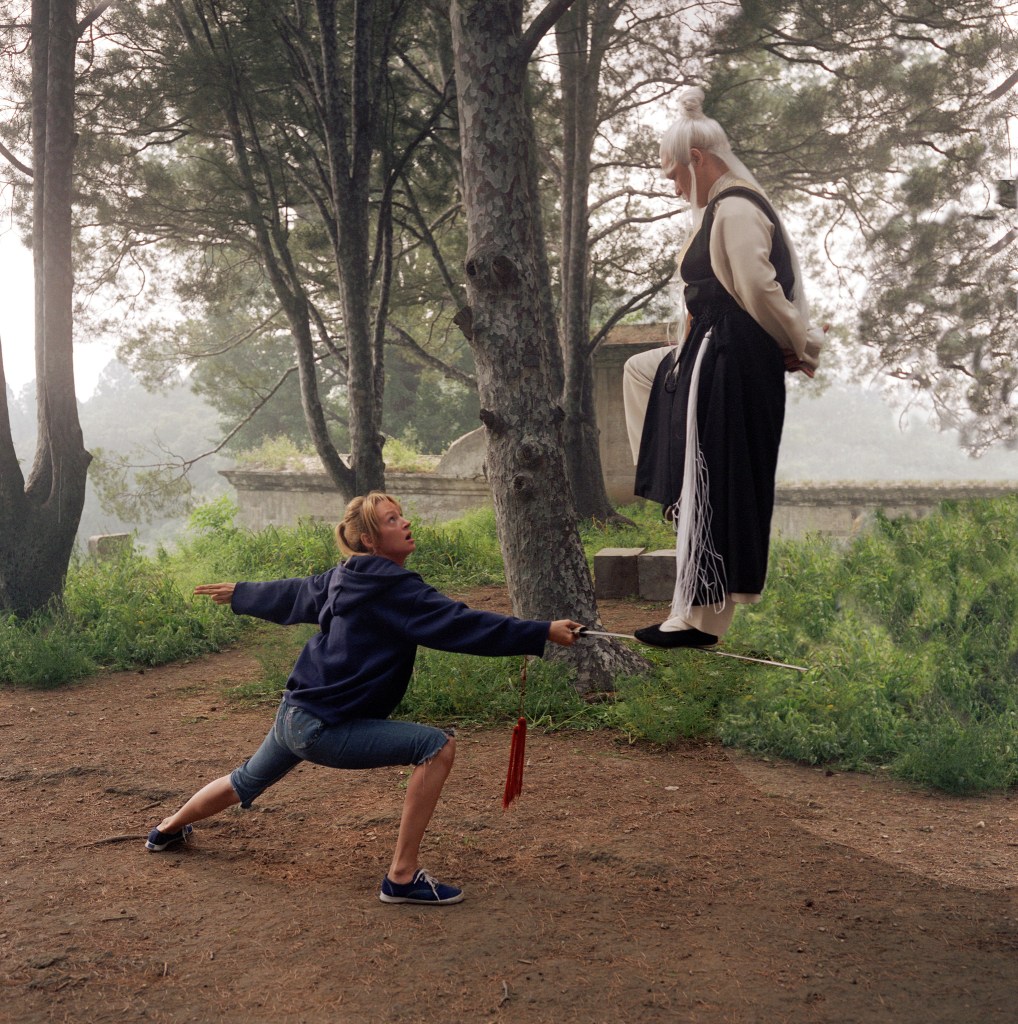
Uma Thurman as Beatrix Kiddo Wielding Her Hattori Hanzo Sword
Of the current batch of U.S. film directors, among the ones I like the most is Quentin Tarantino. Granted his films could be a tad violent, especially the two films in the Kill Bill series; but they are like bloody ballets. It also helps that the films star the lovely Uma Thurman, whom I had always thought was Swedish though she was born in Boston, Massachusetts.
Last night, I was surfing the Showtime channels when I landed around a quarter of an hour into Kill Bill Volume 2 (2004). Although I had seen both parts of the saga multiple times, I took the time to see Uma as Beatrix Kiddo kill several members of the Deadly Viper Assassination Squad who sprayed bullets into her attempted wedding to an El Paso record shop owner. In Volume 1 (2-003) messy she had sliced Vernita Green, O-Ren Ishii, and the latter’s Crazy 88s gang into sashimi. In Volume 2, she sends Bill’s brother Budd and Elle Driver (played by Darryl Hannah) into a white trash trailer massacre followed by Bill himself—who dies by the Five Point Palm Exploding Heart Technique at a Mexican beach resort.
Along the way, we have an interlude wherein Beatrix is taught advanced martial arts technique by a Chinese immortal named Pai Mei.
Pai Mei Astounds Beatrix Kiddo
This segment is almost a film in its own right, though it does show two things:
How Beatrix avoids beings buried alive in Barstow by Bill’s brother, who had shot her in the chest with two shotgun shells filled with rock salt
How Elle Driver had one eye poked out as a result of sassing Pai Mei
I don’t know how many more times I will see the Kill Bill films, though I bet I will continue to enjoy them.
As of today, I have seen Jacques Tourneur’s excellent The Curse of the Demon at least half a dozen times. (The film, released by Columbia in 1957, is also known as Night of the Demon.)
I regard films involving demonology as potentially the scariest of horror films. After all, there are ways to overcome vampires, Frankenstein monsters, mummies, werewolves, and zombies; but no one can overcome Satan himself. The script is based on a famous short story by M. R. James entitled “Casting the Runes.” You can find a copy of the story by clicking here.
Dr. John Holden (Dana Andrews) is a skeptical investigator sent from the U.S. to England to speak at an international conference on the paranormal, shortly after one of the other speakers dies gruesomely outside his home. It is suspected that Dr. Julian Karswell, a British Satanist, was involved.
Karswell meets Holden in the British Library Reading Room, where he chivalrously reaches down and hands Holden a file he has dropped. Inside that file is a strip of paper with an ancient runish curse that Holden will die at 10 pm several days hence.
As the time approaches, Holden and the niece of the dead investigator try to understand what is happening and to cleverly circumvent it.
Along the way, there are weird sequences when Karswell summons the powers of darkness to scare Holden and convince him that he is a goner.
This is a film worth seeing multiple times. Watch out that you don’t bite your tongue while munching on popcorn during the scarier scenes.
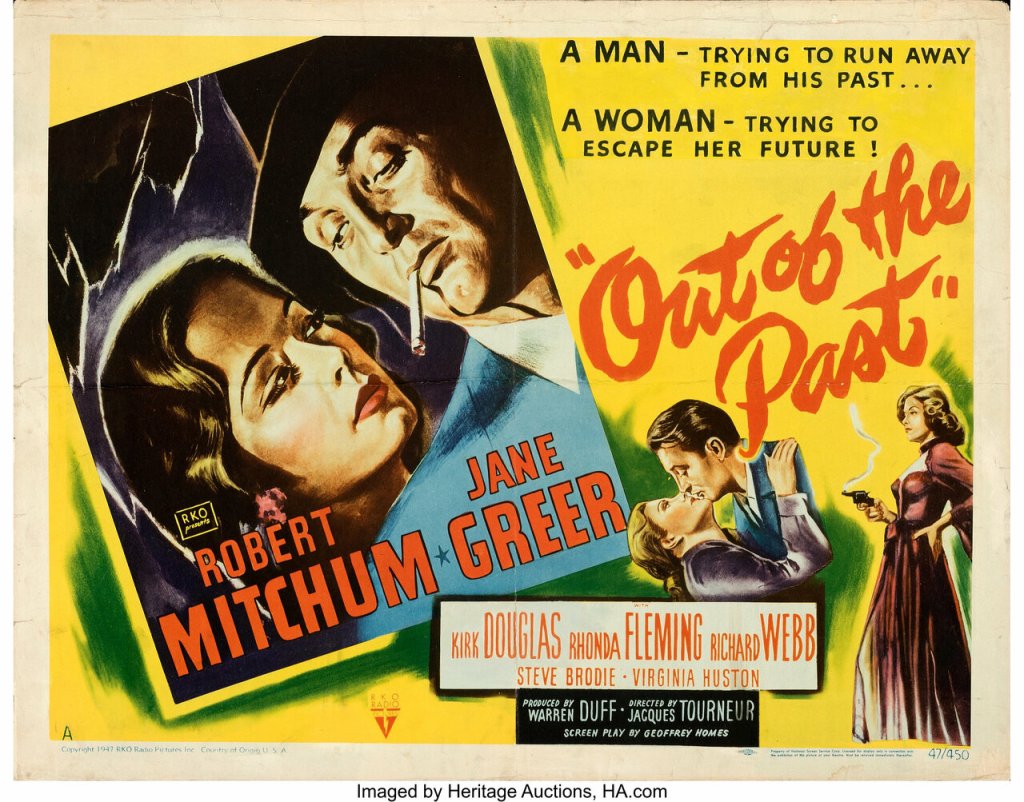
Robert Mitchum and Jane Greer in RKO’s Out of the Past
It seems the most unlikely place to open one of the greatest film noir productions that Hollywood ever made: the bright sunny town of Bridgeport, California, within view of the Eastern Sierras. (But then, didn’t Warner Brothers’ High Sierra end up with Humphrey Bogart’s death in the same general area?)
I have seen Jacques Tourneur’s Out of the Past approximately half a dozen times now and am nowhere near tired of the film. It contains early performances by Robert Mitchum and Kirk Douglas, and a sockdollager femme fatale performance by Jane Greer. Jane would have had a brilliant career if Howard Hughes hadn’t fallen in love with her and gotten the brush-off when she married someone else: She remained on contract to RKO, but she was not chosen for many roles.
The plot concerns a gas station operator in Bridgeport who has, in the past, worked for a sleazy gangster played by Kirk Douglas. Though he changed his name and disappeared to a small town, Douglas has him tracked down and sucks him into his criminal schemes. In this, he is abetted by the devious Jane Greer, who, it seems, is unable to tell the truth, even when she and Mitchum fall for each other.
It’s strange that so soon after the glorious victory of World War Two by the so-called Greatest Generation, Hollywood produced so many great films noted for their pessimism. And this is one of the most pessimistic, with the message that if you should stray ever so slightly off the straight and narrow path, you are an irredeemable goner.
This is a film that never grows old. I may have aged since the first time I viewed it, but the film is still as fresh as an Eastern Sierra field full of wildflowers.
Much has been written about D. W. Griffith as the greatest early director. True, his very early films were revolutionary; and he had a great actress in Lillian Gish. But it is difficult to like a director who made the Ku Klux Klan into heroes in Birth of a Nation (1915), and to tolerate the Victorian sentimentality of his later films. At almost the same time that Griffith was working in Hollywood, Victor Sjöström was making great films in Sweden, films like A Man There Was (1917) and The Outlaw and His Wife (1918), both of which starred the filmmaker.
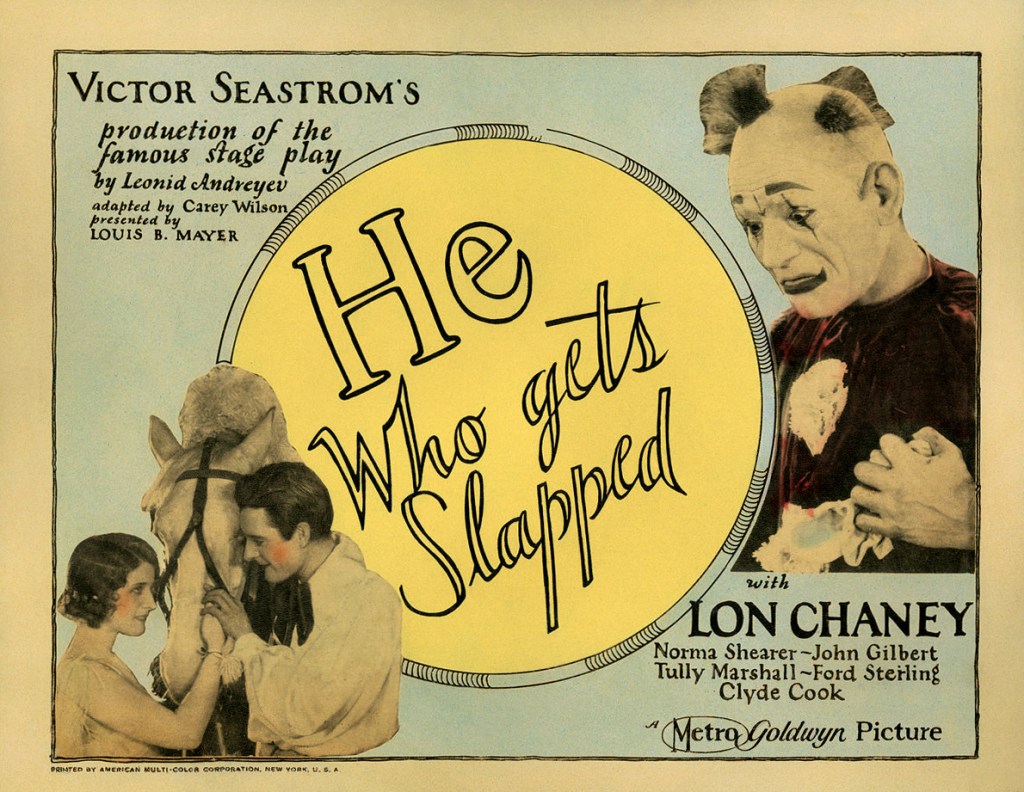
When Sjöström was brought to Hollywood by Louis B. Mayer of MGM, he made several silent masterpieces in quick succession:
He Who Gets Slapped (1924) starring Lon Chaney, Norma Shearer, and John Gilbert
The Scarlet Letter (1926) with Lillian Gish and Lars Hanson
The Wind (1928) with Lillian Gish and Lars Hanson
These three pictures are—all of them—in my list of the ten all-time best silent films made anywhere. And two of them star Griffith’s favorite star, Lillian Gish, who shines more in both films than she does in any of Griffith’s productions. And without all the ludicrous sentimentality.
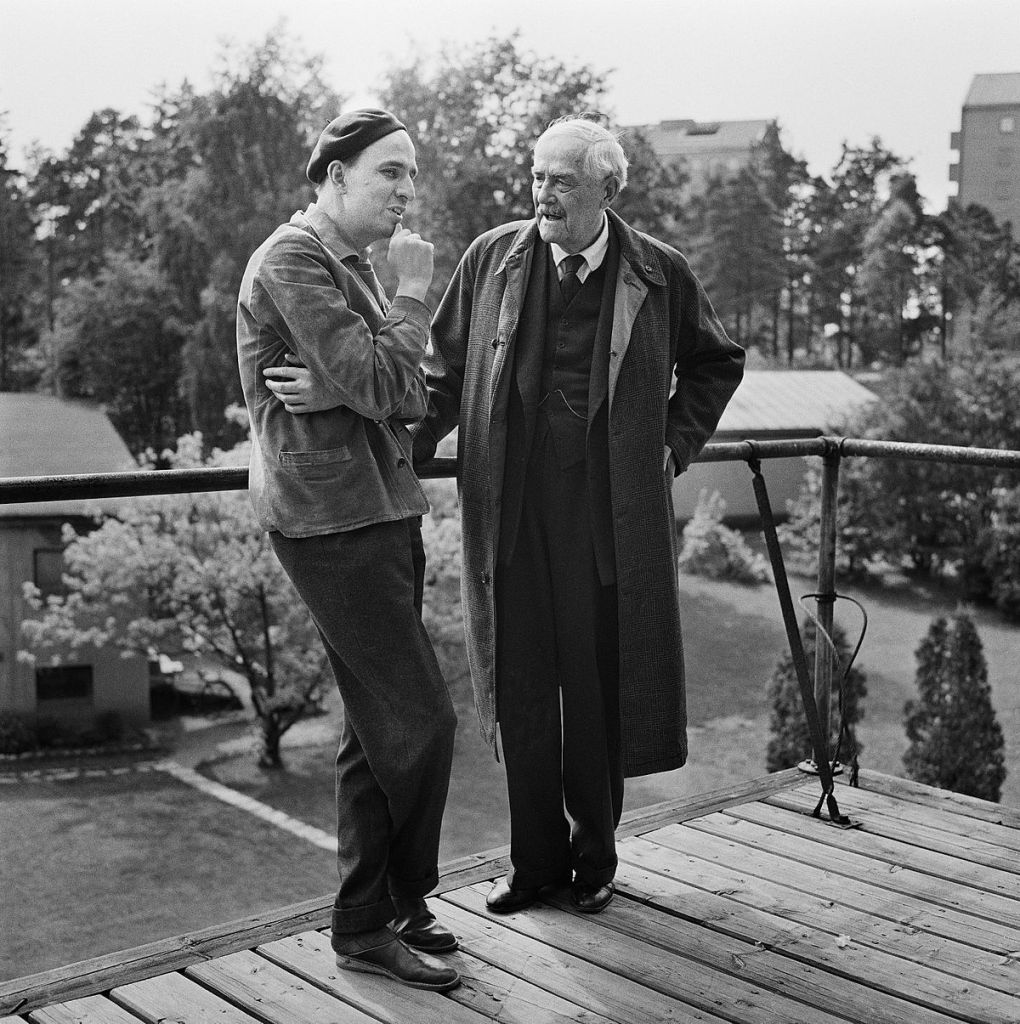
Ingmar Bergman (L) with Sjöström
Sjöström went back to Sweden in 1930, supposedly because he was unwilling to be bound by the many restrictions of early sound films. After making three more films in Europe, he returned to the theater as well as acting. He can be seen in his role of Dr. Isak Borg in Ingmar Bergman’s Wild Strawberries (1957).
If he weren’t so sentimental, I would rate Griffith higher than I currently do, but I still think Sjöström was better.
One of the greatest of all science fiction films is a short consisting of nothing but black and white stills accompanied by a voice-over narration. I am referring to Chris Marker’s La Jetée, which is all of 28 minutes long. And yet for all its uniqueness, the film holds the viewer in its grasp until the last shot (shown above). Following is the film’s plot summary from Wikipedia:
A man (Davos Hanich) is a prisoner in the aftermath of World War III in post-apocalyptic Paris, where survivors live underground in the Palais de Chaillot galleries. Scientists research time travel, hoping to send test subjects to different time periods “to call past and future to the rescue of the present”…. They eventually settle upon the protagonist; his key to the past is a vague but obsessive memory from his pre-war childhood of a woman (Hélène Châtelain) he had seen on the observation platform (“the jetty”) at Orly Airport shortly before witnessing a startling incident there. He did not understand exactly what happened but knew he had seen a man die.
Apparently, motion is not necessary for a successful motion picture. As long as the images grab you, and as long as the story is well crafted, the result can be more than good. It can even be great.
See for yourself. The film is available in its full length on YouTube in French with English subtitles:










 Tarnmoor
You must be logged in to post a comment.