Hexagram 52

Mountain and Mountain

Mountain and Mountain

It was the late 1960s. My late friend Norm Witty, who was much closer to the hippie scene than I ever was, told me all about the I Ching, also known as The Book of Changes. I was impessed and immediately tried to use it for divination. Essentially, the system involves sixty-four possible hexagrams which involve eight different trigrams in combination. These are: Earth, Mountain, Water, Wind, Thunder, Fire, Lake, and Heaven.

Hexagram 52, for instance,  consists of the two trigrams for Mountain, one above the other. I will summarize this hexagram using diferent translations so that you can see some of the difficulties involved.

John Minford saw it thus:

The back
Is still
As a Mountain;
There is no body.
He walks
In the courtyard,
Unseen.
No Harm,
Nullum malum.

That Latin bit comes from early Jesuit attempts at understanding the I Ching in a Christian light. Minford called the hexagram Stillness and commented: “Stillness in your back. Expect nothing from your life. Wander the courtyard where you see no one. How could you ever go astray?”

In the famous Richard Wilhelm translation, it is called “Keeping Still, Mountain.” He goes on:

KEEPING STILL. Keeping his back still
So that he no longer feels his body.
He goes into the courtyard
And does not see his people.
No blame.

Well, that’s a bit different. As is the version by Richard John Lynn who calls Hexagram 52 Restraint: “Restraint takes place with the back, so one does not obtain [sic] the other person. He goes into that one’s courtyard but does not see him there. There is no blame.”

As there are numerous translations, one wonders whether is as much variation in the original Chinese. Apparently, there is. Although one of its uses is for divination, the vastly different interpretations in both Chinese and English, for instance, make it all but impossible to be sure.

I’ll stick with the two mountains and forget about bodies in the courtyard. There it is: mountain above mountain. One would think that would be the maximum of stability. Living as I do on the Pacific Ring of Fire, I don’t see mountains as being all that static. They may give that appearance, but there are pressures from below (volcanism) and the side (plate tectonics) that can result in unexpected cataclysms.

Stillness is a nice idea, but you can never be sure.
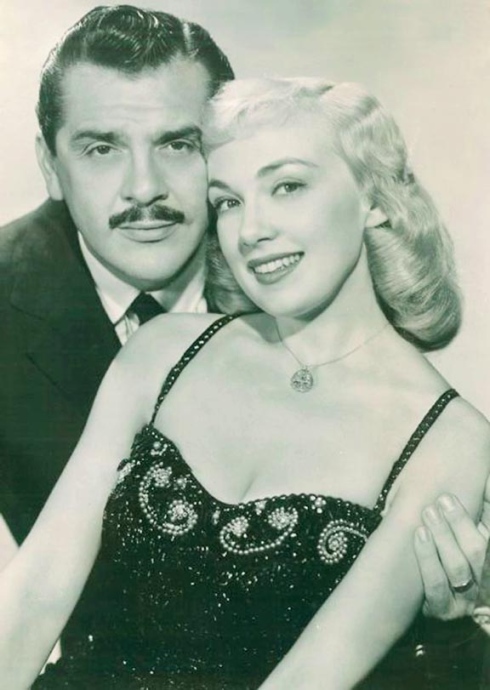


“The Longing for Impossible Things”

Ernie Kovacs and Edie Adams

Ernie Kovacs and Edie Adams

One of the most poignant things about watching old movies and television programs is that, quite suddenly, the veil of years disintegrates, sometimes leaving an image of inexpressible beauty. That happens when I see films with Louise Brooks, Mabel Normand, Marilyn Monroe, and now Edie Adams.

Sunday was a rare wet day in Los Angeles, so Martine and I spent it at the Paley Center for Media in Beverly Hills. While Martine watched some of her old faves, for three hours I watched nothing but the old Ernie Kovacs show. While she was married to Ernie, until he died in a spectacular car crash in West Los Angeles on my 17th birthday, she was in her late twenties and drop-dead gorgeous. The above picture doesn’t do her justice. In the earlier shows on the Dumont and NBC networks, she was cute and obviously in love with her tall Hungarian madman.

Although she had a long and distinguished career in showbiz after the accident, she is buried at Forest Lawn Hollywood Hills next to her late husband.

As a child, I remember watching Ernie because, well, we were Hungarians; and Ernie was our hero. I recall Edie as being lovely. Years later, she still is in those old kinescopes.

As Portuguese writer and poet Fernando Pessoa wrote, “The feelings that hurt most, the emotions that sting most, are those that are absurd—The longing for impossible things, precisely because they are impossible; nostalgia for what never was; the desire for what could have been; regret over not being someone else; dissatisfaction with the world’s existence. All these half-tones of the soul’s consciousness create in us a painful landscape, an eternal sunset of what we are.”

About Those 72 Virgins …

Well, I Guess That’s What the Egyptians Thought

Well, I Guess That’s What the Egyptians Thought

Since I have passed threescore years and ten that is marked as the Old Testament’s standard limit for a length of a life, I am aware that there are many things that I am doing for the last time. Will I ever again see the streets of Buenos Aires? What about the glaciers and waterfalls of Iceland? Can I ever realize my dream of taking the Trans-Siberian Railroad all the way from Moscow to Vladivostok? Or, nearer at hand, what about the hills of San Francisco or the hoodoos of Bryce Canyon? Or even Descanso Gardens and Huntington Gardens?

Let’s take a look at what Psalm 90:10 actually says:

The days of our years are threescore years and ten; and if by reason of strength they be fourscore years, yet is their strength labour and sorrow; for it is soon cut off, and we fly away.

When that day finally comes when I cross over, will I be angrily denied my access to the seventy-two large breasted virgins promised by Islam because I have not died fighting the infidel? Will St. Peter slam the pearly gates in my face because I once cussed out an aggressive panhandler? Will I be reborn in Brazil as a microcephalous infant due to my new mother’s having contracted the Zika virus? Will there, perhaps, be nothing? Or will there be a something I cannot imagine?

Because of the limitations inherent in our condition, I will continue to soldier on. So far I have been doing pretty well, considering. I’ll try to put off the “labour and sorrow” as long as I can, knowing full well that nobody lives forever.

Perhaps I write this because I am bummed out by all the famous people younger than me who recently died, like David Bowie and Glenn Frey and Natalie Cole and even the guy who played Leatherface.

I continue to walk the earth, but with a lighter step.

Yay! Hooray! Yawn….

Who Celebrates the Passing of Time?

Who Celebrates the Passing of Time?

First of all, don’t make any New Year’s resolutions. It’s a wasted effort, usually leading to broken resolutions before the month of January is over. Sure, everybody wants to be rich, healthy, and thin; but that just may not be your path. (It’s certainly not mine.)

Don’t go to any New Year celebrations. That would only embolden the terrorists. (Come to think of it, is there anything that doesn’t embolden the terrorists?)

It’s not a terribly good idea to get drunk. That’ll make you feel maudlin and resentful, just what you’re trying to avoid, isn’t it? Ditto for recreational drugs. There are no happy dopers.

That doesn’t mean it’s not a good idea to see your friends. Just make sure you show them how much you appreciate them. You may need their help in the coming year.

Remember that time will pass whether you celebrate it or not. As those calendar pages fly off, stick to the things that count, like love. Everything else is pretty much frou-frou.


My Christmas Place

Reykjavik

Reykjavik

At Christmas time, my thoughts turn to Reykjavik, Iceland. I always think of the small city—the world’s northernmost capital—as my special Christmas place.

Not that I have ever been there at Christmas, which at that latitude is dark twenty-two hours a day around the winter solstice. No, like most of the other tourists, I have only been here in the summer. Then why do I think of Reykjavik when I think of Christmas? Is it the warmth of its people in that freezing seasonal darkness? Is it the thirteen Yule Lads of Icelandic lore that have woven their spell on me?

Here is a photo of the port of Reykjavik taken by Páll Stefánsson of The Iceland Review. His photographs have a way of keeping his little land foremost in my mind.

As for the “real” meaning of Christmas, I give you this comic strip by Berkeley Breathed:

A Merry Christmas to All!

A Merry Christmas to All!

At the Greek Tailor’s

It’s Greek to Them

It’s Greek to Them

It’s a stupid little joke, but it highlights an important lack in our education. I saw it as a cartoon in a magazine when I was a child. I understood it at once, but only because I had a good classical education.

A man wearing a toga walks into a Greek tailor shop:

Tailor: Euripides? (“You rip these?”)
Customer: Eumenides! (“You mend these!”)

Euripides was, of course, a great Greek tragedian (ca. 480-406 B.C.), author of Medea and eighteen other surviving plays.

But who was or were the Eumenides? Eumenides was the name of a play by Aeschylus in the Oresteia trilogy, which also consisted of Agamemnon and The Libation Bearers.

Another name for the Eumenides is the Erinyes, probably better known as the Furies, Greek goddesses of vengeance, mostly invoked by the gods when someone has sworn a false oath. I believe the Eumenides gave George W. Bush a hard time over “weapons of mass destruction” in Iraq, from which he is still suffering.

By the time I was in high school, I had read Edith Hamilton’s The Greek Way and The Echo of Greece, as well as a number of the Greek tragedies, so I was fairly conversant with classical literature. Now virtually no one reads the works of ancient Greece and Rome, let alone books about them. But that’s where it all began.

If you don’t know your origins, you won’t know where you’re headed.

Fire and Water

Well, Which Is It To Be?

Well, Which Is It To Be?

As I sit here writing this, I hake my head in total perplexity. On one hand, today was so hot that I felt my face burning off. On the other, a mega El Niño event is predicted for later this year and possibly lasting through next spring. Of course, predictors hasten to add that it wouldn’t put an end to California’s historic drought. (Sounds like nothing would, short of another Noah’s Ark flood.)

The way it looks, I will be burned by searing heat, and then drowning in an incredible flood. Will there be any transition between the two? Will there be a day with not a cloud in the sky and 120 degree heat, followed immediately by waves of heavy rain fronts? Or will it be a slow transition?

In the end, the only person who, to my mind, has ever shed light on what El Niño means is the late Chris Farley, in this video clip on YouTube.


Did the Earth Move for You, Too?

A Force That Could Push Mount Everest Around

A Force That Could Push Mount Everest Around

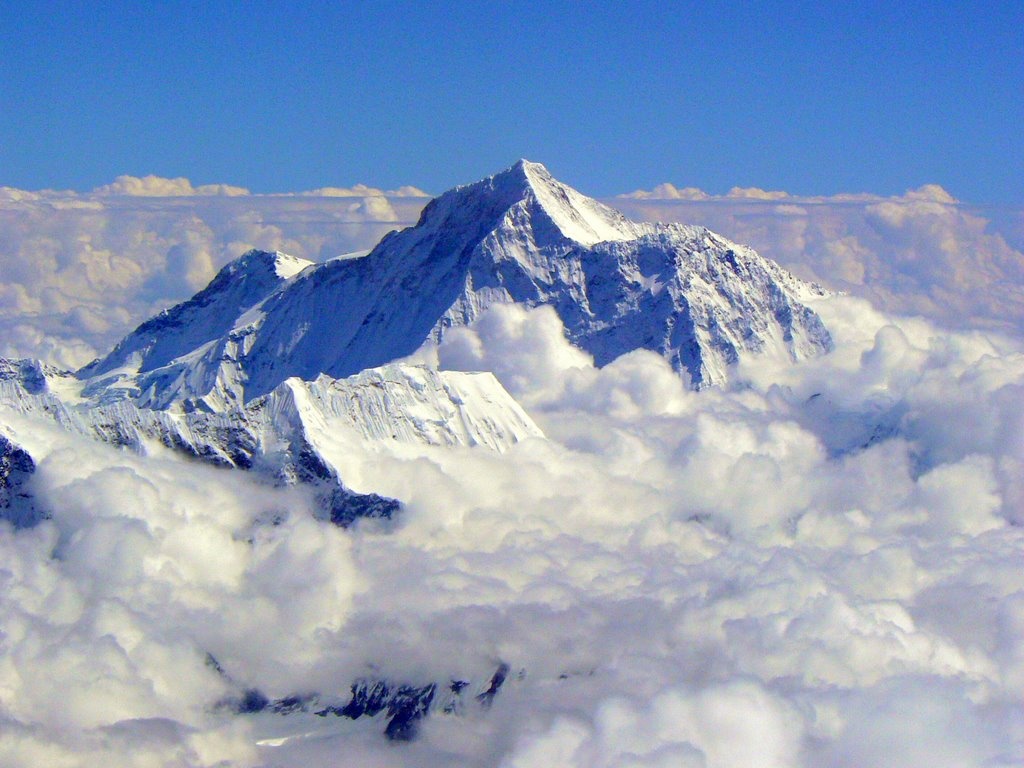
CNN has just announced that the recent magnitude 7.8 quake in Nepal moved Mount Everest to the southwest by 3 centimeters (1.2 inches). The story added, as an aside, that the height of the mountain is unchanged, just its location.

As Neil deGrasse Tyson once said, “If your ego starts out, ‘I am important, I am big, I am special,’ you’re in for some disappointments when you look around at what we’ve discovered about the universe. No, you’re not big. No, you’re not. You’re small in time and in space. And you have this frail vessel called the human body that’s limited on Earth.”

I am always shocked at man’s puniness, not only in the face of the universe, but just on his native planet.

Did you know, for existence, that perhaps the most powerful volcano on earth is Yellowstone National Park? (It is sometimes referred to as the Yellowstone Supervolcano.) Its caldera measures 35 by 45 miles. Three times it has erupted: 2.1 million, 1.3 million, and 640,000 years ago. Each time it substantially re-formed what is now the North American continent. Lest you feel smug, two huge magma chambers have been recently discovered in April. That doesn’t mean that Yellowstone will blow its top this year, or even in our lifetime and the lifetimes of our descendents, but when it does happen, it’ll be something to write home about, if home still exists.

There is a Buzzfeed site called 26 Pictures Will Make You Re-Evaluate Your Entire Existence. Before you decide to cut off your fellow motorist on the highway in your shiny new Porsche, perhaps you should meditate a while on it.


Remember to Bike Your Walk

And Beware of Xinging and Peds

Reading from Bottom to Top? Or Top to Bottom?

California is perhaps the best state in the Union when it comes to road signs. I remember driving down I-80 from Truckee, Califonia to Reno, Nevada and suddenly becoming confused by the state’s failure to provide advance warning of exceptional road conditions. I found the same confusion in parts of Canada, Arizona, and New Mexico.

Perhaps the oddest Califonia signage practice is assuming the pedestrians, motorists, and bicycle riders read from bottom to top. Does any peoples on earth do this? On the Venice Boardwalk (above), I am told to Bike My Walk. Does that mean I should give up walking and get a bicycle instead? Should I install kickstands in the vicinity of my ankles? It’s just so confusing.

Is This Some Sort of Advertisement?

Is This Some Sort of Advertisement?

The other sign in this category is Xing Ped (or is it Ped Xing?) shown above. Perhaps if I bought some Xing Ped at my local pharmacy, I would have more of a spring in my step. I wonder, do I take it with meals?

Laki and Tambora

Volcanic Eruption at Holuhraun in Iceland

Volcanic Eruption at Holuhraun in Iceland

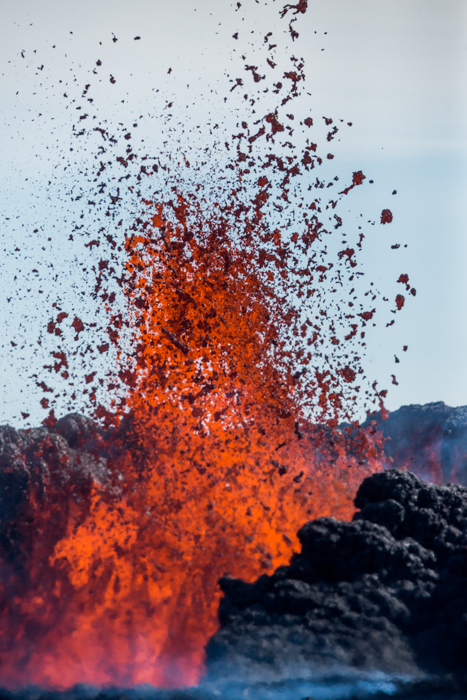
After all these billions of years, it never fails to amaze me that, beneath the crust of the earth, there are superhot gases that could, at a moment’s notice, change all our lives. Since our country was founded, there have been two volcanic mega-events that caused widespread death, destruction, and—surprisingly—temporary global cooling.

In answer to a question from an American reader, ESA, one of the staff writers of The Iceland Review wrote the following about Laki:

The Laki eruption (aka Skaftáreldar) took place over an eight-month period between June 8, 1783, and February 7, 1784. The eruption occurred in the Lakagígar craters in fissures on either side of Laki mountain between Mýrdalsjökull and Vatnajökull in the southern highlands and the adjoining Grímsvötn volcano in Vatnajökull….

The eruption began as a fissure with 130 craters opened with phreatomagmatic explosions. This event is rated as 6 on the Volcanic Explosivity Index (VEI). The scale is open-ended with the largest volcanoes in history given magnitude 8. For comparison, the 2010 Eyjafjallajökull eruption is rated as magnitude 3 on VEI.

The Laki eruption produced an estimated 14 km3 (3.4 cubic miles) of lava, and the total volume of tephra emitted was 0.91 km3 (0.2 cubic miles). Lava fountains were estimated to have reached heights of 800 to 1,400 meters (2,600 to 4,600 feet).

The gases emitted, including an estimated 8 million tons of hydrogen fluoride and 120 million tons of sulfur dioxide (SO2), caused the death of over 50 percent of Iceland’s livestock, leading to a famine killing approximately 25 percent of the country’s inhabitants.

The Laki eruption and its aftermath caused a drop in global temperatures, as SO2 was spewed into the Northern Hemisphere. This caused crop failures in Europe and may have caused droughts in Asia. The eruption has been estimated to have killed over six million people worldwide, making it the deadliest in historical times.

Not too long after, in 1816, there was another mega volcanic event. Bill McGuire, in The New Scientist (28 March 2015), wrote:

Two hundred years ago, a simmering tropical volcano tore itself apart in spectacular fashion. Mount Tambora, on the Indonesian island of Sumbawa, erupted in a colossal blast that led to the deaths of more than 70,000 people in the region. So large was the explosion that its reach extended far beyond South-East Asia, loading the stratosphere with 200 million tonnes of sulphate particles that dimmed the sun and brought about a dramatic cooling with widespread ramifications half a world away.

The extended climate disruption saw 1816 dubbed “the year without a summer.” There was a wholesale failure of harvests in eastern North America and across Europe, contributing to what economic host John Post has called “the last great subsistence crisis in the western world.” Famine, bread riots, insurrection and disease stalked many nations, while governments sought to cope with the consequences of a distant geophysical phenomenon they didn’t understand.

It can happen again at any time somewhere along the Ring of Fire that encircles the earth. Pray that it doesn’t happen in our lifetime.