Fire and Water

Well, Which Is It To Be?

Well, Which Is It To Be?

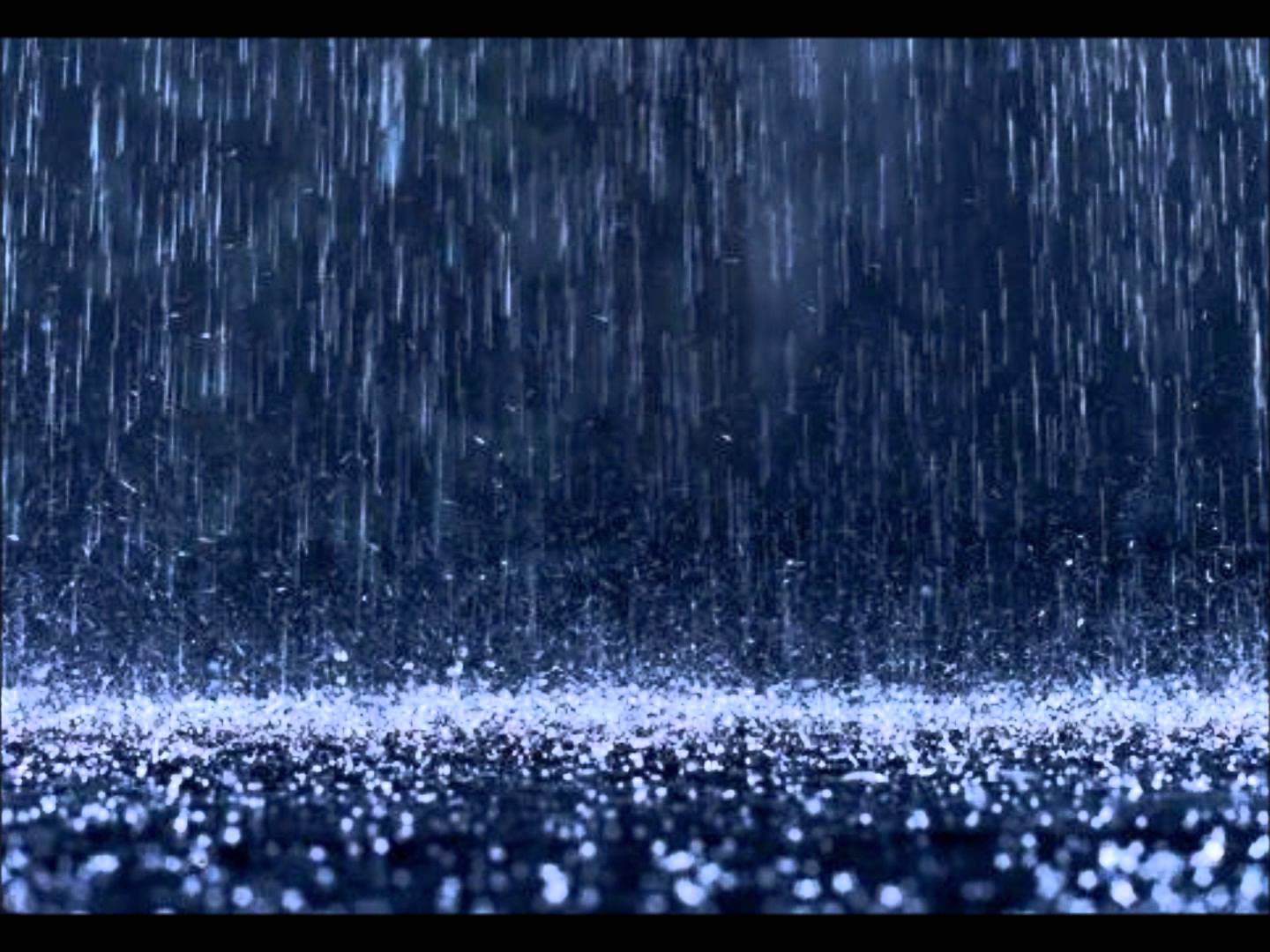
As I sit here writing this, I hake my head in total perplexity. On one hand, today was so hot that I felt my face burning off. On the other, a mega El Niño event is predicted for later this year and possibly lasting through next spring. Of course, predictors hasten to add that it wouldn’t put an end to California’s historic drought. (Sounds like nothing would, short of another Noah’s Ark flood.)

The way it looks, I will be burned by searing heat, and then drowning in an incredible flood. Will there be any transition between the two? Will there be a day with not a cloud in the sky and 120 degree heat, followed immediately by waves of heavy rain fronts? Or will it be a slow transition?

In the end, the only person who, to my mind, has ever shed light on what El Niño means is the late Chris Farley, in this video clip on YouTube.


Did the Earth Move for You, Too?

A Force That Could Push Mount Everest Around

A Force That Could Push Mount Everest Around

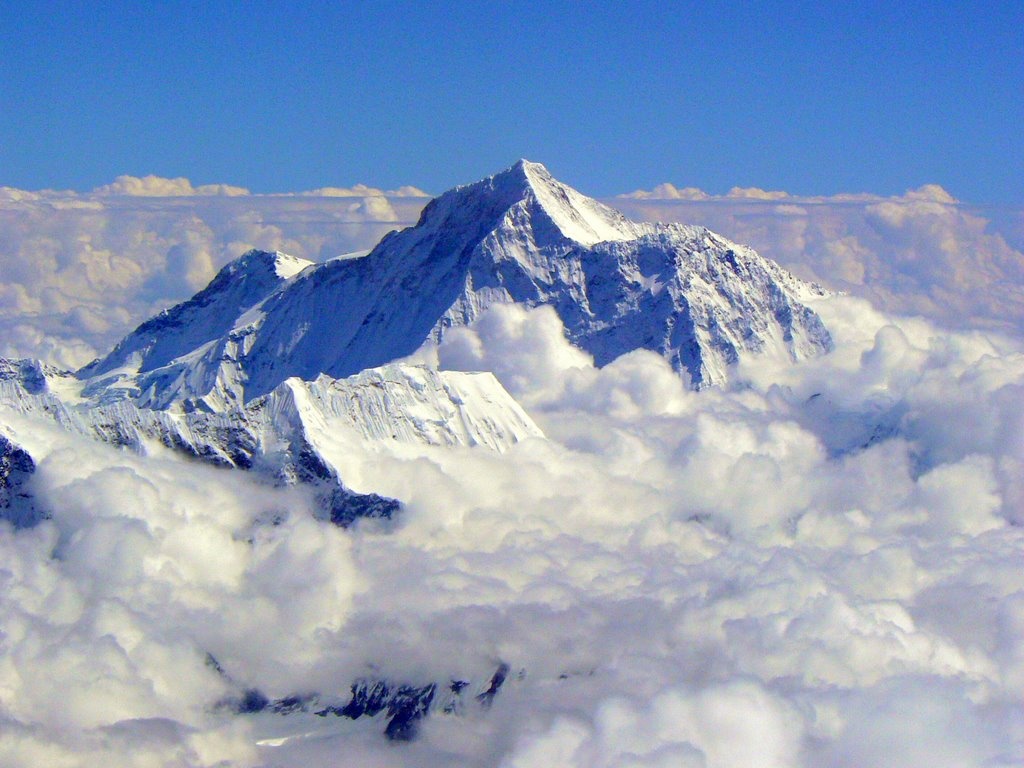
CNN has just announced that the recent magnitude 7.8 quake in Nepal moved Mount Everest to the southwest by 3 centimeters (1.2 inches). The story added, as an aside, that the height of the mountain is unchanged, just its location.

As Neil deGrasse Tyson once said, “If your ego starts out, ‘I am important, I am big, I am special,’ you’re in for some disappointments when you look around at what we’ve discovered about the universe. No, you’re not big. No, you’re not. You’re small in time and in space. And you have this frail vessel called the human body that’s limited on Earth.”

I am always shocked at man’s puniness, not only in the face of the universe, but just on his native planet.

Did you know, for existence, that perhaps the most powerful volcano on earth is Yellowstone National Park? (It is sometimes referred to as the Yellowstone Supervolcano.) Its caldera measures 35 by 45 miles. Three times it has erupted: 2.1 million, 1.3 million, and 640,000 years ago. Each time it substantially re-formed what is now the North American continent. Lest you feel smug, two huge magma chambers have been recently discovered in April. That doesn’t mean that Yellowstone will blow its top this year, or even in our lifetime and the lifetimes of our descendents, but when it does happen, it’ll be something to write home about, if home still exists.

There is a Buzzfeed site called 26 Pictures Will Make You Re-Evaluate Your Entire Existence. Before you decide to cut off your fellow motorist on the highway in your shiny new Porsche, perhaps you should meditate a while on it.


Remember to Bike Your Walk

And Beware of Xinging and Peds

Reading from Bottom to Top? Or Top to Bottom?

California is perhaps the best state in the Union when it comes to road signs. I remember driving down I-80 from Truckee, Califonia to Reno, Nevada and suddenly becoming confused by the state’s failure to provide advance warning of exceptional road conditions. I found the same confusion in parts of Canada, Arizona, and New Mexico.

Perhaps the oddest Califonia signage practice is assuming the pedestrians, motorists, and bicycle riders read from bottom to top. Does any peoples on earth do this? On the Venice Boardwalk (above), I am told to Bike My Walk. Does that mean I should give up walking and get a bicycle instead? Should I install kickstands in the vicinity of my ankles? It’s just so confusing.

Is This Some Sort of Advertisement?

Is This Some Sort of Advertisement?

The other sign in this category is Xing Ped (or is it Ped Xing?) shown above. Perhaps if I bought some Xing Ped at my local pharmacy, I would have more of a spring in my step. I wonder, do I take it with meals?

Laki and Tambora

Volcanic Eruption at Holuhraun in Iceland

Volcanic Eruption at Holuhraun in Iceland

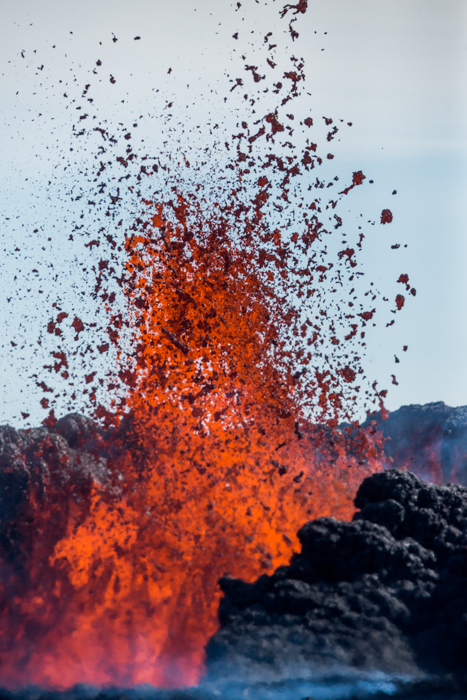
After all these billions of years, it never fails to amaze me that, beneath the crust of the earth, there are superhot gases that could, at a moment’s notice, change all our lives. Since our country was founded, there have been two volcanic mega-events that caused widespread death, destruction, and—surprisingly—temporary global cooling.

In answer to a question from an American reader, ESA, one of the staff writers of The Iceland Review wrote the following about Laki:

The Laki eruption (aka Skaftáreldar) took place over an eight-month period between June 8, 1783, and February 7, 1784. The eruption occurred in the Lakagígar craters in fissures on either side of Laki mountain between Mýrdalsjökull and Vatnajökull in the southern highlands and the adjoining Grímsvötn volcano in Vatnajökull….

The eruption began as a fissure with 130 craters opened with phreatomagmatic explosions. This event is rated as 6 on the Volcanic Explosivity Index (VEI). The scale is open-ended with the largest volcanoes in history given magnitude 8. For comparison, the 2010 Eyjafjallajökull eruption is rated as magnitude 3 on VEI.

The Laki eruption produced an estimated 14 km3 (3.4 cubic miles) of lava, and the total volume of tephra emitted was 0.91 km3 (0.2 cubic miles). Lava fountains were estimated to have reached heights of 800 to 1,400 meters (2,600 to 4,600 feet).

The gases emitted, including an estimated 8 million tons of hydrogen fluoride and 120 million tons of sulfur dioxide (SO2), caused the death of over 50 percent of Iceland’s livestock, leading to a famine killing approximately 25 percent of the country’s inhabitants.

The Laki eruption and its aftermath caused a drop in global temperatures, as SO2 was spewed into the Northern Hemisphere. This caused crop failures in Europe and may have caused droughts in Asia. The eruption has been estimated to have killed over six million people worldwide, making it the deadliest in historical times.

Not too long after, in 1816, there was another mega volcanic event. Bill McGuire, in The New Scientist (28 March 2015), wrote:

Two hundred years ago, a simmering tropical volcano tore itself apart in spectacular fashion. Mount Tambora, on the Indonesian island of Sumbawa, erupted in a colossal blast that led to the deaths of more than 70,000 people in the region. So large was the explosion that its reach extended far beyond South-East Asia, loading the stratosphere with 200 million tonnes of sulphate particles that dimmed the sun and brought about a dramatic cooling with widespread ramifications half a world away.

The extended climate disruption saw 1816 dubbed “the year without a summer.” There was a wholesale failure of harvests in eastern North America and across Europe, contributing to what economic host John Post has called “the last great subsistence crisis in the western world.” Famine, bread riots, insurrection and disease stalked many nations, while governments sought to cope with the consequences of a distant geophysical phenomenon they didn’t understand.

It can happen again at any time somewhere along the Ring of Fire that encircles the earth. Pray that it doesn’t happen in our lifetime.

Be Cool, Be Stupid

Looking at How People Cross the Street

Looking at How People Cross the Street

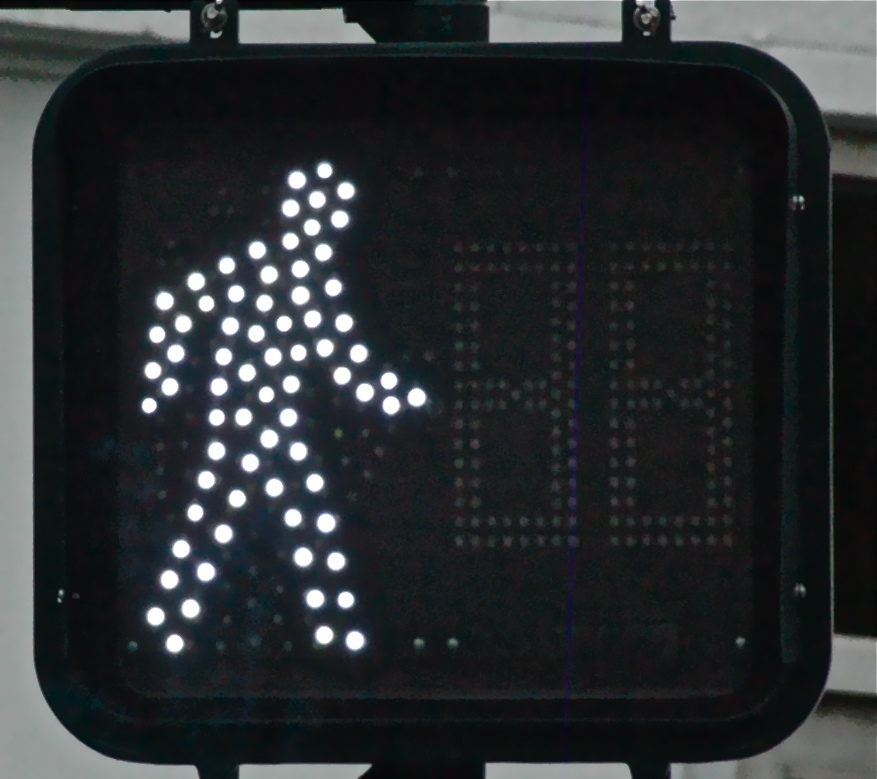
Right outside the building where I work is one of Southern California’s busiest intersections, featuring a four-way crossing that makes for an interesting sociological laboratory. There are two behaviors that I would like to note at this time: First, some people jump the gun each time because they think they know how the signal works.Usually, they have to duck out of the way of the ten or so cars turning left onto Wilshire because they thought that the walk sign would come on right away. It doesn’t, and the Real Cool Guys showing how much they know risk getting flattened by motorists who just don’t care.

Even if the RCGs (Real Cool Guys) got the signals right, the signal occasionally does a “Crazy Ivan.” If you’ve ever seen the movie The Hunt for Red October (1980), you’ll know this is a major plot point, in which the Adam Baldwin character establishes his intelligence cred by predicting that, at regular intervals, Russian submarines do a 180 degree turn to flummox any pursuers. Sometimes the pedestrian crossing signal does the traffic equivalent by not letting any cars turn left during that cycle.

Much less dangerous is the cool persons’ sins of omission: One has to push the button for the pedestrian crossing signal to engage. One cannot rely on people crossing Wilshire on the other side of Westwood because that’s a separate system. Today, as I was coming back from lunch. A large woman was bogarding the crossing button without pressing it. That cool individual then had to deal with the sardonic leers of other pedestrians who must wait for the next cycle to cross. The coolness metamorphoses into shame which I occasionally make worse by commenting aloud, “Looks like someone forgot to press the button” while staring at the bogarder.

Ghost Duds

If They’re Spirits, Why Do Ghosts Wear Clothes?

If They’re Spirits, Why Do Ghosts Wear Clothes? (If Not Shoes)

I don’t often do this, but the subject whetted my appetite. The following comes verbatim from a November 24, 2013 posting on Futility Closet. Do visitors from the spirit realms have an innate sense of modesty? Do they not want to arouse our lubricity or disgust? Or do they not want to leave their clothing in—of all places—the Futility Closet? Come to think of it, the one ghost I saw—that of my Great Grandmother Lydia—was fully clothed in her normal everyday wear. Anyhow here goes:

Why do ghosts wear clothes? If a ghost is the spirit of a living creature, how can it carry its inanimate garments into the afterlife?

“How do you account for the ghosts’ clothes — are they ghosts, too?” asked the Saturday Review in 1856. “What an idea, indeed! All the socks that never came home from the wash, all the boots and shoes which we left behind us worn out at watering-places, all the old hats which we gave to crossing-sweepers … What a notion of heaven — an illimitable old clothes-shop, peopled by bores, and not a little infested with knaves!”

In 1906 psychic researcher Andrew Lang argued that, far from confusing the notion of an afterlife, ghosts’ clothing might even help to corroborate its existence. “A pretty instance occurs, I think, in a biography of Warren Hastings. The anecdote, as I remember it, avers that at a meeting of the Council of the East India Company in Calcutta one of the members (I think several shared the experience) saw his own father, wearing a hat of a peculiar shape, hitherto strange to the observers. In due time came a ship from London bearing news of the father’s death, and a large and well-selected assortment of the new hat fashionable in England. It was the hat worn by the paternal appearance! If the circumstances are recorded in the minutes of the proceedings of the Council, which I have not consulted, then the hat of that spook becomes important as evidence.”

Even if we grant that a dead person can convey his most personal belongings into the afterlife, how are we to account for phantom ships, coaches, and railway trains? In his 1879 book The Spirit World, American spiritualist Eugene Crowell decided that, rather than being the spirits of “dead” earthly conveyances, these are constructed in the afterlife by the ghosts of mariners and railwaymen who want to ply their trades again. Spectral ships “glide over the waves without sinking,” Crowell explained, “and earthly winds propel them at rates of speed which our ships cannot attain.” If that’s true, then perhaps some ghostly tailor is simply manufacturing clothes for the naked spirits of the newly dead. Decent of him.

I Have This Thing About Volcanoes

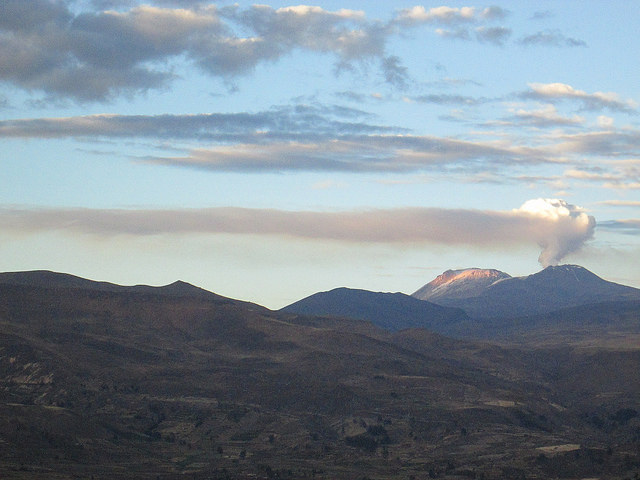
The Volcano Sabancaya in Eruption, seen from Colca Canyon

The Peruvian Volcano Sabancaya in Eruption, seen from Colca Canyon

I can tell you the day and time when it first started. It was at 6:00:41 am PST on February 9, 1971, when the earth started shaking. I held on to my mattress for dear life, even as it was sliding onto the bedroom floor from the massive jolts. The noise was deafening with all those structures shaking, and all the kitchen cabinets being emptied onto the floor. I had just lived through the Sylmar Quake in which 58 people lost their lives.

It was then that I realized we as a species were not exactly in control. Man inhabited a thin crust which was criss-crossed by earthquake faults and floating atop oceans of magma waiting to break out at points along the globe and cover our puny undertakings with layers of lava and ash. And there I was, right on the famed Ring of Fire, in a state with hundreds of faults and not a few volcanoes.

Since then, I have been to Iceland to see Hekla and Eyjafjallajökull, which at various points in history—the latter in 2010—caused havoc worldwide. And now, even as I write, it is Bárðarbunga which continues spewing lava after several weeks.

In September, I saw two volcanoes in Peru’s State of Arequipa spewing ash: Sabancaya and Ubinas. Both are highly active and may continue erupting for some time.

Our lives on this earth are incredibly fragile. I am most impressed by earthquakes and volcanoes, but there are other terrestrial and atmospheric events that can cut our short lives even shorter. That’s not even to mention microscopic bacteria and viruses, slips and falls, tree branches crashing down on our heads, automobile accidents, or any number of causes. Life is magnificent even when it is at its most destructive. Enjoy it while you can!


Peru in the Rear View Mirror

Schoolchildren with Teacher in Lima’s Plaza de Armas

Schoolchildren with Teacher in Lima’s Plaza de Armas

It is now almost two months since I’ve returned from Peru, and it’s beginning to seem as if it all happened years ago. When you replace one present with another, it becomes part of an ever-diminishing past. Well, I have no intention of jettisoning some beautiful memories, such as:

  1. Seeing Peruvian schoolchildren, such as the ones above in front on Lima’s Palacio de Gobierno. (You can see the security personnel in the background.) Kids always make me feel good about the future, even if I don’t have any of my own.
  2. Being awestruck by the Volcano Sabancaya in eruption from Colca Canyon.
  3. Reliving my past by visiting the most ornate and gorgeous Catholic Churches I have ever seen.
  4. Experiencing heartfelt gratitude in Puno when I bought a handmade alpaca scarf from an old Aymara woman.
  5. Eating delicious wor won ton soup at a Peruvian Chinese restaurant, or chifa, on a cold day.
  6. Interacting with the Peruvian people in my broken Spanish, and finding it no bar to communicating with them.
  7. Feeling that the Inca moment in history is still going on, especially in the Sacred Valley.

Because today is Thanksgiving, I will give thanks for Peru and for all the other wonderful places I have seen, all the kind people I have met, and that I still have it in me to want more.


Santa Monica 1966-2014

The Santa Monica Promenade Today

The Santa Monica Promenade Today

When I first arrived in Los Angeles between Christmas and New Year in 1966, the whole place looked brand spanking new. I had just arrived on the Santa Fe Railroad’s El Capitan at Union Station and saw a city very different from the grimy red brick and industrial pollution that was Cleveland. Within the first two days after my arrival, I took the Santa Monica #3 bus from San Vicente and Barrington down to the Santa Monica Mall, or, as it’s called today, the Promenade.

I was impressed by the neatness and cleanliness of the place. There were movie theaters, restaurants, bookstores (yes, several), anchored by a J. C. Penney at the north end by Wilshire. It used to be fun to visit Santa Monica. The place made such an impression on my friends that most of them still think I live in Santa Monica, rather than West L. A.

But now, I try to avoid Santa Monica, even though it begins a scant two blocks west of me. All the restaurants I loved are gone, replaced by places that are more pretentious and less tasty. The bookstores? Now there is only one, a Barnes & Noble at the Wilshire end. The movie theaters are sort of hanging on, but it looks as if the Criterion were history. The J. C. Penney store is long gone.

What changed? There are two ways of looking at it. On one hand, the city has become a ghetto for the 1%, with only a few downmarket neighborhoods along Pico Boulevard that escaped gentrification. Also, I have changed. My taste in food is probably far different from that of the 21-year-old that ate at Castillo’s (the daughter of the owner was muy guapa), Las Casuelas, Marco Polo, Chowder Call, the Broken Drum (“You Can’t Beat It!”), the Little Inn Swedish Smorgasbord, El Tepa, the Great American Food & Beverage Company, and the El Sombrero on Fifth Street. Somewhere between Santa Monica becoming too hoity-toity for me, and my own self developing into another person, I found the place chilled me.

Oh, I still use their excellent library—though I have to pay for the privilege now. But Martine and I almost never eat in Santa Monica any more. Today, for a change, we ate at the El Cholo on Eleventh and Wilshire. And we regretted it.

Beware of the Passionate Idealist

Philosopher Isaiah Berlin (1909-1997)

Philosopher Isaiah Berlin (1909-1997)

We don’t read philosophers much any more. That’s a pity. Even though their works can be difficult, there is a payoff. I am thinking, for instance, of the late Isaiah Berlin, who died in 1997. Years from now, people will be referring to him as the greatest 20th Century thinker about human liberty.

Twenty years ago, on November 25, 1994, he accepted an honorary degree of Doctor of Laws from the University of Toronto. On that occasion, he pleaded with people not to give way to a passionate idealism that violates individual freedoms:

I am afraid I have no dramatic answer to offer: only that if these ultimate human values by which we live are to be pursued, then compromises, trade-offs, arrangements have to be made if the worst is not to happen. So much liberty for so much equality, so much individual self-expression for so much security, so much justice for so much compassion. My point is that some values clash: the ends pursued by human beings are all generated by our common nature, but their pursuit has to be to some degree controlled—liberty and the pursuit of happiness, I repeat, may not be fully compatible with each other, nor are liberty, equality, and fraternity.

That Business of Making Omelets

That Business of Making Omelettes

That is one of the reasons I so distrust conservative ideologues such as Ted Cruz and Paul Ryan: For the sake of their ideological purity, they are willing to deprive us, if necessary, of our liberties. (By the way, I feel the same about liberal ideologues, even though they have not been much in evidence lately.) Berlin goes on:

We must weigh and measure, bargain, compromise, and prevent the crushing of one form of life by its rivals. I know only too well that this is not a flag under which idealistic and enthusiastic young men and women may wish to march—it seems too tame, too reasonable, too bourgeois, it does not engage the generous emotions. But you must believe me, one cannot have everything one wants—not only in practice, but even in theory. The denial of this, the search for a single, overarching ideal because it is the one and only true one for humanity, invariably leads to coercion. And then to destruction, blood—eggs are broken, but the omelette is not in sight, there is only an infinite number of eggs, human lives, ready for the breaking. And in the end the passionate idealists forget the omelette, and just go on breaking eggs.

For Nazism in Germany, the original goal was to unite the rich and poor in a common national project (“Volksgemeinschaft” or people’s community) and “promoted the subordination of individuals and groups to the needs of the nation, state and leader” (Wikipedia)  Of course, it was not for all. Jews, Communists, Gypsies, Slavs, and other non-Aryans were rounded up and eliminated.

In Russia, everything was subordinated to the Dictatorship of the Proletariat, which never quite happened.

As for the United States in the 21st Century, I conclude with Yeats in his poem “The Second Coming”:

The best lack all conviction, while the worst
Are full of passionate intensity.

Does that make me wishy-washy? To some, perhaps, but I would rather lack all conviction than be full of a passionate intensity that deprives anybody of the right to life, liberty, and the pursuit of happiness.

If you’d like to see the complete text of Berlin’s address, you will find it on Page 37 of the October 23, 2014 issue of The New York Review of Books under the title “A Message to the 21st Century.”