Be Cool, Be Stupid

Looking at How People Cross the Street

Looking at How People Cross the Street

Right outside the building where I work is one of Southern California’s busiest intersections, featuring a four-way crossing that makes for an interesting sociological laboratory. There are two behaviors that I would like to note at this time: First, some people jump the gun each time because they think they know how the signal works.Usually, they have to duck out of the way of the ten or so cars turning left onto Wilshire because they thought that the walk sign would come on right away. It doesn’t, and the Real Cool Guys showing how much they know risk getting flattened by motorists who just don’t care.

Even if the RCGs (Real Cool Guys) got the signals right, the signal occasionally does a “Crazy Ivan.” If you’ve ever seen the movie The Hunt for Red October (1980), you’ll know this is a major plot point, in which the Adam Baldwin character establishes his intelligence cred by predicting that, at regular intervals, Russian submarines do a 180 degree turn to flummox any pursuers. Sometimes the pedestrian crossing signal does the traffic equivalent by not letting any cars turn left during that cycle.

Much less dangerous is the cool persons’ sins of omission: One has to push the button for the pedestrian crossing signal to engage. One cannot rely on people crossing Wilshire on the other side of Westwood because that’s a separate system. Today, as I was coming back from lunch. A large woman was bogarding the crossing button without pressing it. That cool individual then had to deal with the sardonic leers of other pedestrians who must wait for the next cycle to cross. The coolness metamorphoses into shame which I occasionally make worse by commenting aloud, “Looks like someone forgot to press the button” while staring at the bogarder.

Ghost Duds

If They’re Spirits, Why Do Ghosts Wear Clothes?

If They’re Spirits, Why Do Ghosts Wear Clothes? (If Not Shoes)

I don’t often do this, but the subject whetted my appetite. The following comes verbatim from a November 24, 2013 posting on Futility Closet. Do visitors from the spirit realms have an innate sense of modesty? Do they not want to arouse our lubricity or disgust? Or do they not want to leave their clothing in—of all places—the Futility Closet? Come to think of it, the one ghost I saw—that of my Great Grandmother Lydia—was fully clothed in her normal everyday wear. Anyhow here goes:

Why do ghosts wear clothes? If a ghost is the spirit of a living creature, how can it carry its inanimate garments into the afterlife?

“How do you account for the ghosts’ clothes — are they ghosts, too?” asked the Saturday Review in 1856. “What an idea, indeed! All the socks that never came home from the wash, all the boots and shoes which we left behind us worn out at watering-places, all the old hats which we gave to crossing-sweepers … What a notion of heaven — an illimitable old clothes-shop, peopled by bores, and not a little infested with knaves!”

In 1906 psychic researcher Andrew Lang argued that, far from confusing the notion of an afterlife, ghosts’ clothing might even help to corroborate its existence. “A pretty instance occurs, I think, in a biography of Warren Hastings. The anecdote, as I remember it, avers that at a meeting of the Council of the East India Company in Calcutta one of the members (I think several shared the experience) saw his own father, wearing a hat of a peculiar shape, hitherto strange to the observers. In due time came a ship from London bearing news of the father’s death, and a large and well-selected assortment of the new hat fashionable in England. It was the hat worn by the paternal appearance! If the circumstances are recorded in the minutes of the proceedings of the Council, which I have not consulted, then the hat of that spook becomes important as evidence.”

Even if we grant that a dead person can convey his most personal belongings into the afterlife, how are we to account for phantom ships, coaches, and railway trains? In his 1879 book The Spirit World, American spiritualist Eugene Crowell decided that, rather than being the spirits of “dead” earthly conveyances, these are constructed in the afterlife by the ghosts of mariners and railwaymen who want to ply their trades again. Spectral ships “glide over the waves without sinking,” Crowell explained, “and earthly winds propel them at rates of speed which our ships cannot attain.” If that’s true, then perhaps some ghostly tailor is simply manufacturing clothes for the naked spirits of the newly dead. Decent of him.

I Have This Thing About Volcanoes

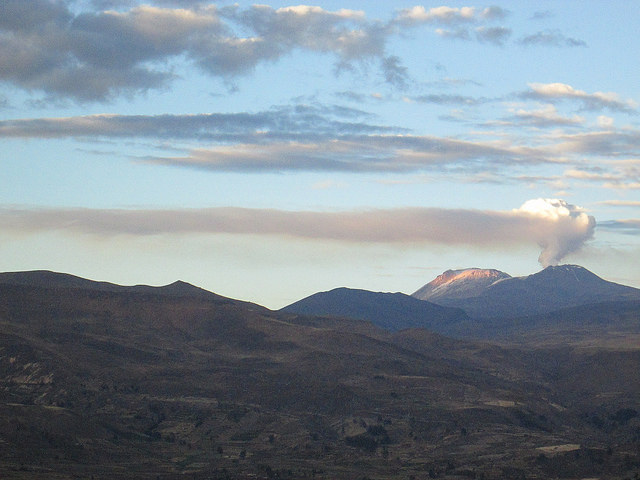
The Volcano Sabancaya in Eruption, seen from Colca Canyon

The Peruvian Volcano Sabancaya in Eruption, seen from Colca Canyon

I can tell you the day and time when it first started. It was at 6:00:41 am PST on February 9, 1971, when the earth started shaking. I held on to my mattress for dear life, even as it was sliding onto the bedroom floor from the massive jolts. The noise was deafening with all those structures shaking, and all the kitchen cabinets being emptied onto the floor. I had just lived through the Sylmar Quake in which 58 people lost their lives.

It was then that I realized we as a species were not exactly in control. Man inhabited a thin crust which was criss-crossed by earthquake faults and floating atop oceans of magma waiting to break out at points along the globe and cover our puny undertakings with layers of lava and ash. And there I was, right on the famed Ring of Fire, in a state with hundreds of faults and not a few volcanoes.

Since then, I have been to Iceland to see Hekla and Eyjafjallajökull, which at various points in history—the latter in 2010—caused havoc worldwide. And now, even as I write, it is Bárðarbunga which continues spewing lava after several weeks.

In September, I saw two volcanoes in Peru’s State of Arequipa spewing ash: Sabancaya and Ubinas. Both are highly active and may continue erupting for some time.

Our lives on this earth are incredibly fragile. I am most impressed by earthquakes and volcanoes, but there are other terrestrial and atmospheric events that can cut our short lives even shorter. That’s not even to mention microscopic bacteria and viruses, slips and falls, tree branches crashing down on our heads, automobile accidents, or any number of causes. Life is magnificent even when it is at its most destructive. Enjoy it while you can!


Peru in the Rear View Mirror

Schoolchildren with Teacher in Lima’s Plaza de Armas

Schoolchildren with Teacher in Lima’s Plaza de Armas

It is now almost two months since I’ve returned from Peru, and it’s beginning to seem as if it all happened years ago. When you replace one present with another, it becomes part of an ever-diminishing past. Well, I have no intention of jettisoning some beautiful memories, such as:

  1. Seeing Peruvian schoolchildren, such as the ones above in front on Lima’s Palacio de Gobierno. (You can see the security personnel in the background.) Kids always make me feel good about the future, even if I don’t have any of my own.
  2. Being awestruck by the Volcano Sabancaya in eruption from Colca Canyon.
  3. Reliving my past by visiting the most ornate and gorgeous Catholic Churches I have ever seen.
  4. Experiencing heartfelt gratitude in Puno when I bought a handmade alpaca scarf from an old Aymara woman.
  5. Eating delicious wor won ton soup at a Peruvian Chinese restaurant, or chifa, on a cold day.
  6. Interacting with the Peruvian people in my broken Spanish, and finding it no bar to communicating with them.
  7. Feeling that the Inca moment in history is still going on, especially in the Sacred Valley.

Because today is Thanksgiving, I will give thanks for Peru and for all the other wonderful places I have seen, all the kind people I have met, and that I still have it in me to want more.


Santa Monica 1966-2014

The Santa Monica Promenade Today

The Santa Monica Promenade Today

When I first arrived in Los Angeles between Christmas and New Year in 1966, the whole place looked brand spanking new. I had just arrived on the Santa Fe Railroad’s El Capitan at Union Station and saw a city very different from the grimy red brick and industrial pollution that was Cleveland. Within the first two days after my arrival, I took the Santa Monica #3 bus from San Vicente and Barrington down to the Santa Monica Mall, or, as it’s called today, the Promenade.

I was impressed by the neatness and cleanliness of the place. There were movie theaters, restaurants, bookstores (yes, several), anchored by a J. C. Penney at the north end by Wilshire. It used to be fun to visit Santa Monica. The place made such an impression on my friends that most of them still think I live in Santa Monica, rather than West L. A.

But now, I try to avoid Santa Monica, even though it begins a scant two blocks west of me. All the restaurants I loved are gone, replaced by places that are more pretentious and less tasty. The bookstores? Now there is only one, a Barnes & Noble at the Wilshire end. The movie theaters are sort of hanging on, but it looks as if the Criterion were history. The J. C. Penney store is long gone.

What changed? There are two ways of looking at it. On one hand, the city has become a ghetto for the 1%, with only a few downmarket neighborhoods along Pico Boulevard that escaped gentrification. Also, I have changed. My taste in food is probably far different from that of the 21-year-old that ate at Castillo’s (the daughter of the owner was muy guapa), Las Casuelas, Marco Polo, Chowder Call, the Broken Drum (“You Can’t Beat It!”), the Little Inn Swedish Smorgasbord, El Tepa, the Great American Food & Beverage Company, and the El Sombrero on Fifth Street. Somewhere between Santa Monica becoming too hoity-toity for me, and my own self developing into another person, I found the place chilled me.

Oh, I still use their excellent library—though I have to pay for the privilege now. But Martine and I almost never eat in Santa Monica any more. Today, for a change, we ate at the El Cholo on Eleventh and Wilshire. And we regretted it.

Beware of the Passionate Idealist

Philosopher Isaiah Berlin (1909-1997)

Philosopher Isaiah Berlin (1909-1997)

We don’t read philosophers much any more. That’s a pity. Even though their works can be difficult, there is a payoff. I am thinking, for instance, of the late Isaiah Berlin, who died in 1997. Years from now, people will be referring to him as the greatest 20th Century thinker about human liberty.

Twenty years ago, on November 25, 1994, he accepted an honorary degree of Doctor of Laws from the University of Toronto. On that occasion, he pleaded with people not to give way to a passionate idealism that violates individual freedoms:

I am afraid I have no dramatic answer to offer: only that if these ultimate human values by which we live are to be pursued, then compromises, trade-offs, arrangements have to be made if the worst is not to happen. So much liberty for so much equality, so much individual self-expression for so much security, so much justice for so much compassion. My point is that some values clash: the ends pursued by human beings are all generated by our common nature, but their pursuit has to be to some degree controlled—liberty and the pursuit of happiness, I repeat, may not be fully compatible with each other, nor are liberty, equality, and fraternity.

That Business of Making Omelets

That Business of Making Omelettes

That is one of the reasons I so distrust conservative ideologues such as Ted Cruz and Paul Ryan: For the sake of their ideological purity, they are willing to deprive us, if necessary, of our liberties. (By the way, I feel the same about liberal ideologues, even though they have not been much in evidence lately.) Berlin goes on:

We must weigh and measure, bargain, compromise, and prevent the crushing of one form of life by its rivals. I know only too well that this is not a flag under which idealistic and enthusiastic young men and women may wish to march—it seems too tame, too reasonable, too bourgeois, it does not engage the generous emotions. But you must believe me, one cannot have everything one wants—not only in practice, but even in theory. The denial of this, the search for a single, overarching ideal because it is the one and only true one for humanity, invariably leads to coercion. And then to destruction, blood—eggs are broken, but the omelette is not in sight, there is only an infinite number of eggs, human lives, ready for the breaking. And in the end the passionate idealists forget the omelette, and just go on breaking eggs.

For Nazism in Germany, the original goal was to unite the rich and poor in a common national project (“Volksgemeinschaft” or people’s community) and “promoted the subordination of individuals and groups to the needs of the nation, state and leader” (Wikipedia)  Of course, it was not for all. Jews, Communists, Gypsies, Slavs, and other non-Aryans were rounded up and eliminated.

In Russia, everything was subordinated to the Dictatorship of the Proletariat, which never quite happened.

As for the United States in the 21st Century, I conclude with Yeats in his poem “The Second Coming”:

The best lack all conviction, while the worst
Are full of passionate intensity.

Does that make me wishy-washy? To some, perhaps, but I would rather lack all conviction than be full of a passionate intensity that deprives anybody of the right to life, liberty, and the pursuit of happiness.

If you’d like to see the complete text of Berlin’s address, you will find it on Page 37 of the October 23, 2014 issue of The New York Review of Books under the title “A Message to the 21st Century.”


In Search of Lost Restaurants

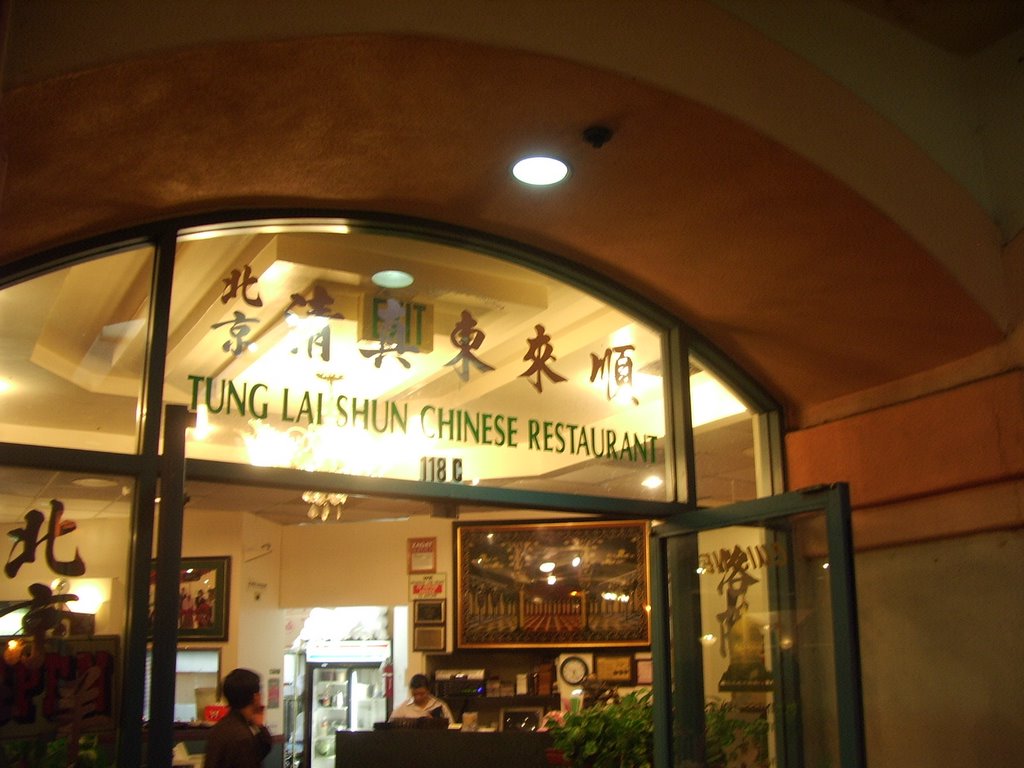
The Much Lamented Tung Lai Shun Islamic Chinese Restaurant

The Much Lamented Tung Lai Shun Islamic Chinese Restaurant

If one doesn’t have any children, the easiest way to mark the passage of time is by restaurant closings. For example, my favorite used to be the Tung Lai Shun Islamic Chinese Restaurant at 140 W. Valley Blvd. in San Gabriel. One Hawaiian patron wrote on Yelp:

This was my favorite Chinese restaurant for years and years. I loved it so much, I’d fly over from Hawaii then spend 45 minutes on those dreaded L.A. highways driving over. Before my flight back home, I’d drive over again to pick up green onion pancakes and deep fried shrimp balls (okay, stop laughing, I don’t know what else to call them) dipped in salt and pepper to eat on the plane.

There are hundreds of others: Stelvio’s, Mario’s, Asuka, and Carl Andersen’s Chatham in Westwood; Toi on Wilshire and the Broken Drum in Santa Monica; Gorky’s Cafe and Russian Brewery in downtown L.A.; Marco Polo’s and Pepy’s Chili in Culver City; the Hortobagy Hungarian Restaurant in Studio City; Nichols Restaurant* in Marina Del Rey; and the Chung King in West Los Angeles. I could name hundreds more, but what would be the point?

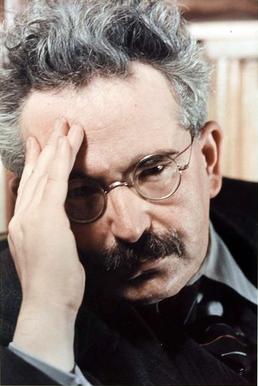
Today, while I ate lunch at the still robust Westwood Thai Restaurant, I was reading an article amount Walter Benjamin in the July 10 issue of The New York Review of Books. Benjamin was a German Jew who committed suicide when he was unable to cross over into Spain from France during the Second World War. The war not only killed much of what he loved, but he felt hunted by the Nazis and couldn’t take the stress of returning to Vichy France and trying on a better day. As Susan Sontag said about him, “He felt that he was living in a time when everything valuable was the last of its kind.”

Walter Benjamin

Walter Benjamin

In our crazy 21st Century existence, it’s easy to feel that way. I am thinking now of Robin Williams’s suicide because of … whatever it was really because of: We just don’t know for sure. At some point, Robin, like Walter Benjamin, made the decision that there were not enough valuable things in life left to make a go of it.

It seems quite a jump from a closed restaurant one has loved to a decision about life and death, but is it really? Restaurants open and close quickly. There are other things going on in our lives, however, at a much more glacial pace that could affect how we feel about ourselves and life in general. For instance, do we have a fatal illness? Has everyone we have ever loved died (cf. Mark Twain)? Have we lost the ability to see or hear? Are we facing a future of grinding poverty? Do we feel guilt for an evil that we have committed (most school shooters)?

Life wants us to live as much as we can, or dare. I learned early on from having brain surgery in 1966 that things will change, and I would have to change with them. Just because he became deaf, Beethoven did not quit composing great works. I knew early on I could never have children without a pituitary gland, so I became whatever it is I am today, with which I am all right. I feel relatively good in my aging skin.

* – This is a footnote. Don’t be alarmed. The Nichols Restaurant didn’t die: It became a zombie, now called J. Nichols Restaurant, where it serves TSF (thirty-something food) for millennials and others who want an alternative to Cheerios.

The Way We See Ourselves

Reagan Popularized This Concept

Reagan Popularized This Concept

The text originally comes from the Bible, from the Sermon on the Mount in Matthew 5:14: “You are the light of the world. A city that is set on a hill cannot be hidden.” The phrase had been used by several Americans since to describe the way we as a people wanted to be seen. While still aboard his ship en route to the New World, John Winthrop delivered a sermon in 1630 that contained the following phrase:

For we must consider that we shall be a city upon a hill. The eyes of all people are on us. So that if we shall deal falsely with our God in this work we have undertaken, and so cause Him to withdraw His present help from us, we shall be made a story and a by-word through the world. We shall open the mouths of enemies to speak evil of the ways of God, and all professors for God’s sake. We shall shame the faces of many of God’s worthy servants, and cause their prayers to be turned into curses upon us till we be consumed out of the good land where we are going.

In 1961, John F. Kennedy used the phrase in one of his speeches. More famous, however, was Ronald Reagan in 1984 when he said:

…I’ve spoken of the shining city all my political life, but I don’t know if I ever quite communicated what I saw when I said it. But in my mind it was a tall proud city built on rocks stronger than oceans, wind-swept, God-blessed, and teeming with people of all kinds living in harmony and peace, a city with free ports that hummed with commerce and creativity, and if there had to be city walls, the walls had doors and the doors were open to anyone with the will and the heart to get here. That’s how I saw it and see it still…

In the course of the passing years, after Vietnam, Grenada, Iraq, Afghanistan and various other global hotspots, we have developed another image. In a short story entitled “Absence,” a Peruvian-born writer named Daniel Alarcón painted a very different picture of what the United States had become: “Americans always feel bad. They wander the globe carrying this opulent burden. They take digital photographs and buy folk art, feeling a dull disappointment in themselves, and in the world. They bulldoze forests with tears in their eyes.”

Tenniel’s Walrus and the Carpenter

John Tenniel’s Illustration for Walrus and the Carpenter

Now what this reminds me of are the Walrus and the Carpenter from Lewis Carroll’s Through the Looking Glass. You might remember from the accompanying poem that the Walrus and his Carpenter friend talk some oysters into joining them for dinner. Of course, they eat all the oysters, and begin to cry. The following conversation then takes place between Alice, Tweedledee, and Tweedledum:

‘I like the Walrus best,’ said Alice: ‘because you see he was a LITTLE sorry for the poor oysters.’

’He ate more than the Carpenter, though,’ said Tweedledee. ‘You see he held his handkerchief in front, so that the Carpenter couldn’t count how many he took: contrariwise.’

‘That was mean!’ Alice said indignantly. ‘Then I like the Carpenter best—if he didn’t eat so many as the Walrus.’

‘But he ate as many as he could get,’ said Tweedledum.

This was a puzzler. After a pause, Alice began, ‘Well! They were BOTH very unpleasant characters—’

It’s a long way between the City on a Hill and Lewis Carroll’s the Walrus and the Carpenter, but I do believe that over the centuries, the U.S. seems to have arrived at that point with surpassing ease—while at the same time with all our illusions intact.


Their Hearts Are in the Highlands

Highland Lass with Lore Master

Highland Lass with Lore Master

One of the premier attractions at last week’s Old Fort MacArthur Days was my visit to the encampment of Clan Mac Colin. One of the reasons is that, although many of the performers cooked their own food, the Clan’s food looked the most scrumptious. When I asked some questions to the young lady in the photo above, she referred me to the clan’s Lore Master, who set me straight.

Clan Mac Colin attempts to reproduce a Scottish Highland (and Irish) way of life dating back to the Sixteenth Century, mostly centered around Glenderry, around East Loch Ewe, the Isle of Ewe, and the Gruinard Peninsula in what is now County Ross and Cromarty. I suspect some of the geography might be made up, but the way of life represented attempts to be as authentic as possible. If you are interested in delving into some of the details, you could hardly do better than scanning through the Basic Guide (which loads as an Adobe Acrobat PDF file). Also check out their Tribal Lore website, which is more succinct.

Although I have not an iota of Celtic blood in my veins, if I wanted to escape the cares of a stupid workaday life, I should think that Clan Mac Colin would exercise a powerful lure.

While going to Old Fort MacArthur Days is like walking through history, joining Clan Mac Colin is like living history. I would worship Saint Maolrubha with my fellow clan members. As the Tribal Lore site says, the good saint “continued the work of Saint Columba in Wester Ross and, retiring from that abby, established a cell on the isle of Maree in Loch Maree, the sight of his holy well. He is also the patron saint of the insane, being drug behind a boat around his island three times widdershins and drinking from this well is reputed to be a cure.”

Well, why not?


Red Sunset Mother

It All Goes Back to Aesop

It All Goes Back to Aesop

The three words of the title of this post were separately suppressed by Myanmar’s ruling junta: “red” because of its association with Communism; “sunset” because General Ne Win’s name meant “sunrise”; and “mother” because that was the nickname of Burmese dissident Aung San Suu Kyi.

That brings back to mind another draconian instance of censorship. In Costa-Gavras’s film (1969), the rightist Greek colonels in charge forbid the use of the letter Z (Zeta) in the Greek alphabet because of the protestors’ use of the Greek phrase “Ζει,” meaning “He lives.” The pronoun refers to the democratic politician Grigoris Lambrakis, who was assassinated in 1963.

What does one do when the powers that be forbid the use of certain words? Russian and Eastern European writers under Communist rule came up with the solution: use other words in their place. This is referred to as the use of Aesopian, or Aesopic, language. Just as the ancient Greek teller of fables used stories to mask political realities, writers would use metaphorical language to stand in for the proscribed language. In an article entitled “The Rhetoric of Subversion: Strategies of ‘Aesopian Language’ in Romanian Literary Criticism Under Late Communism,” Andrei Terian describes the procedure used:

Since organized dissent was absent, the ‘resistance through culture’ represented in Romania the main form of assertion of the writers’ independence from the Communist regime. Civically, it materialized through the refusal to enroll in the party’s propaganda machine, while artistically, it took place through the defense of the priority of the ‘aesthetic’ criterion in the production and reception of literary works, which generated a literature relatively autonomous from the political sphere. Nevertheless, from the perspective of maximalist ethics, the ‘resistance through culture’ is a deeply duplicitous phenomenon, which fits perfectly in the Ketman paradigm described by Czeslaw Milosz. In the Polish writer’s opinion, ‘Ketman means self-realization against something’ (The Captive Mind ….), which, in the case of totalitarian societies, is translated in a profound divergence between an individual’s private thoughts and their public expression.

I thought Milosz expressed it better in The Captive Mind—a book I urge everyone to read—but I can’t quote it because, alas, I can’t lay my hand on it at the moment.

Terian is a bit abstruse, so let me think of an example. Let us say that the Tea Party rules America as a rightist junta and bans the use of the word “abortion.” A hated Liberal writer can use another term, such as “ablution” in such a way that a censor would let it pass, despite the fact that its meaning would be clear from its context, as in “they were able to limit the size of their family with the discreet use of ablution.” Writers can and did develop an entire language of such circumlocutions under the noses of the Communist censors.

Even words as basic as “red,” “sunset,” and “mother” can find Aesopian equivalents, such as, perhaps, “rubicund,” “gloaming,” or “progenitrix” respectively—though a poet can play with the concept much as Viking poets used kennings such as “wave’s steed” for “ship” or “Freyja’s tears” for “gold.” And the Viking’s did this not because of censorship, but to help the meter of their compositions.