The Missing Link, Going Forward

Man May Prevail, But With What “Modifications”?

Man May Prevail, But With What “Modifications”?

I am always amused about talk of a “missing link” between what was recognizably ape and what is recognizably human. But once we have Homo sapiens down, what about changes to our species that may be as significant—if not more significant—to those which we have traditionally associated with the concept of a missing link?

Today, I had lunch at a local Thai restaurant. In the next booth sat a woman who was part of a larger party that had not yet all met up. No sooner did she get seated than she had a long painful conversation with another member of the party which was supposedly looking for the restaurant but had trouble finding it. At no point did she get the name of the restaurant correct (she kept calling it simply “Thai Café”) and never thought to supply the exact street address. All her instructions were with regard to the identities of nearby retail establishments. If her friend was several blocks away, he would have no more luck finding the “Thai Café” than the stores in its immediate vicinity.

The thought suddenly hit me that the smart phone has introduced new ways of thinking. No longer is any sort of advance preparation required for anything. One can simply make a phone call and use relational markers to home a friend in to the desired location employing fuzzy logic of a sort.

Man has developed increasingly sophisticated tools for tens of thousands of years, but for the first time we are approaching the point where we are using tools to change ourselves and our very thought processes. It is possible, for example, that the smart phone may be as significant for the human race as Gutenberg’s invention of moveable type. If we ever improve robots to the point that we can communicate with them, that may be even more significant. In both cases, man is delegating his own brain powers to a device that parses, stores, and possibly communicates commands.

What do you suppose the effect of that will be on the human brain? Perhaps it will begin to atrophy. Once one has a truly smart phone, one does not have to think for oneself any more.

I’m not sure I would like that development, or should I say retrogression?

Our Heroes Are Developers?

What About Our Artists, Writers, and Scientists?

What About Our Artists, Writers, and Scientists?

I’m sorry to have to say this, but there is something highly suspect in the way we name our cities and streets. In Los Angeles, we have Culver City—named after a real estate developer, one Harry Culver. Van Nuys is named after a developer with the unlikely name of Isaac Newton Van Nuys. World-famous Wilshire Boulevard is named after Henry Gaylord Wilshire. Again and again, we see streets named after developers, their wives, daughters, sons, and I wouldn’t be surprised if some are called after their dogs and cats.

Where in this broad city of ten million people do we see writers like Raymond Chandler, Nathanael West, or Evelyn Waugh commemorated? And what about scientists? Granted, Burbank is named after world-famous botanist Luther Burbank—oops, sorry, it was David Burbank, a dentist and entrepreneur who gave his name to Beautiful Downtown Burbank. In a city crawling with Nobel Prize winners, it seems the names have already been taken by lowlife developers, who splashed out with their developments and skipped town before the inevitable problems began to “develop.”

When I was in Buenos Aires, I stayed on a street named Emiliano Zola. Granted, Zola was a French writer, but at least it wasn’t named after some entrepreneurial skunk. Paris has an Avenue Victor Hugo. Northern California does much better than we do, with numerous streets named after writers, not to mention Jack London Square in Oakland. Well, where is there anything in La-La Land named after Charles Bukowski or John Fante?

Is it some residual puritanism that makes us avoid artists, writers, and scientists when naming places? I am sure that Donald Trump (depicted above) is no model of right behavior.

Perhaps we should rename some of those cities and streets originally named after long-forgotten developers and replace them with people who have mattered to us—not people who have ripped off our forefathers.

And while we’re at it, what about showing someone other than dead presidents and other founding fathers on our currency? I’d like to see Nathaniel Hawthorne, Edgar Allan Poe, Walt Whitman, Emily Dickinson, and William Faulkner on our currency. We can hold our head up high among the peoples of the world with our great writers.


Fútbol

Better Than American Football?

Better Than American Football?

Frankly, I think that most American spectator sports are there strictly for the commercial breaks. There is a brief spurt of intense activity, followed by several interminable ads directed at selling junk to macho males and hip females. The only exception is baseball, which is too much like watching grass grow. There is a pitcher, a batter, a catcher; and, very occasionally, some other players are briefly involved.

While I was in the hospital on Saturday, I watched the Argentina-Iran game in the morning. I was impressed. Despite the fact that the Argentinians won it 1-0 (superstar Lionel Messi finally came alive), it was beautiful to see the ball handling. The Iranian goalkeeper, Alireza Haghighi, frustrated all of Argentina’s many shots at goal until late in the Second Period. It was beautiful to watch the action, from the setup in the backfield to the elegant passing back and forth, along with the numerous interceptions that forced the other side to begin all over again.

The thing I loved was that something was always happening, like waves starting far out in the ocean and crashing on the shore.

Why do I love soccer football so much? For one thing, it was a tie to my father which I remember with great fondness. Elek (Alex) Paris and his brother Emil were identical twins who played the same position in the semi-pro nationality club teams of the 1930s. There were stories from my youth about my father forcing a referee to swallow a whistle (while inhaling to blow it), requiring him to pull it out by the lanyard while choking. Numerous players told me of my father’s powerful kicks that broke other players’ legs.

In the long run, I think that soccer football will replace the mayhem of American armored football. Parents just don’t want their sons to have to deal with concussions leading possibly to death or other serous head injuries. The next generation will be much more receptive to the game—unless they have to play someone like Elek Paris.

There are three reasons why, for the time being, soccer will take second place to the prolate spheroid pigskin, at least for the time being.

The main reason is that games can end in ties. Americans don’t like ties. When the USA-Portugal match ended in a 2-2 tie, newspapers around the country weighed in and harshly criticized the American effort. That was too bad, because the US really outplayed Portugal: Unfortunately, they left a brief opening for Ronaldo to set up a strike at the net. It didn’t matter to me: The Americans played a great game that showed that they deserve their 11th place world ranking. (“What only 11th place?” say the critics.) They’ll be better anon. Whether they ever reach the top spot is a different matter. First they have to pay some dues.

Another thing that drives many American fans crazy is the “expandable clock” of regulation play. A game runs 90 minutes, but referees can add minutes at the end for injuries and whatnot. In the US-Portugal game, there was a time-out at the end of the First Half as a water break. The jungle city of Manaus was hot and sticky, and the players were seriously drenched and dehydrated. In the end, the game ran approximately 95 minutes. It’s not over until the referee whistles the game over.

Finally, many Americans want more bathroom and snack breaks. Well, then, they can watch baseball, which is a lot of nothing—or some other sport with numerous breaks for ads.


The Runaway Trolley Dilemma

What Is the Right Decision?

What Is the Right Decision?

We tend not to discuss ethical dilemmas in the abstract, if for no other reason that they usually tend to be real posers.Take this famous dilemma: There is a runaway trolley headed in your direction, and in its path there are five people tied to the track. You find you are standing right next to a switch which could shunt the trolley off on a siding. You proceed to pull the switch, only to find there is a single person tied to the track on the siding.

The Utilitarians would say that it is a better thing to sacrifice one life rather than five—all other things being equal. But are they really equal? What if the five people tied to the track are all serial child molesters, and the single person tied to the siding is Pope Francis? Also, are there any people on the trolley? If so, wouldn’t they all risk dying in any case?

There is a variant of this dilemma, but without a switch and a siding. Again, we have a runaway trolley, again with five people tied to the track. You are standing on a footbridge over the track with a fat man whom you don’t know. You are between the runaway trolley and the five persons on the track. Should you push the fat man off the footbridge so that he lands in the path of the trolley, leading to a derailment upon impact?

Is This an Easier Decision?

Is This an Easier Decision?

In the first case, most people would throw the switch in the first case, but few would push the fat man to his death in the path of the trolley.

My own preference is to avoid situations where I am anywhere near any runaway trolleys, especially since I could be considered a fat man myself.

Aldous Huxley Foresees the Future

The Young Aldous Huxley

The Young Aldous Huxley

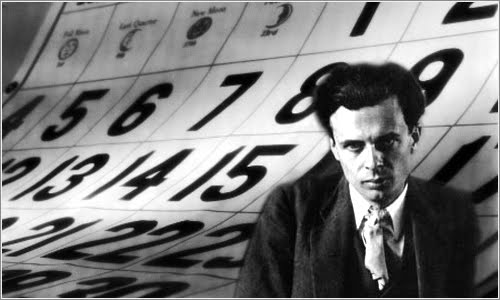
The Twentieth Century gave us two dystopias to consider: George Orwell’s 1984 and Aldous Huxley’s Brave New World. It is interesting to note, years after the fact, whose vision is closer to the reality. My vote goes to Aldous Huxley, as does the writer of this website, which compares the two point by point using comics to make their point.

In 1949, right after 1984 came out, Huxley wrote a letter to Orwell in which he doubts the latter’s vision would ever come true:

The philosophy of the ruling minority in Nineteen Eighty-Four is a sadism which has been carried to its logical conclusion by going beyond sex and denying it.

Whether in actual fact the policy of the boot-on-the-face can go on indefinitely seems doubtful.

My own belief is that the ruling oligarchy will find less arduous and wasteful ways of governing and of satisfying its lust for power, and these ways will resemble those which I described in Brave New World.

Corybantic Dancers on Reverse of Coin

Corybantic Dancers on Reverse of Greek Coin

Last night, I saw a DVD containing what my friend Lee Sanders claims is the only filmed interview with Huxley, shortly before his death in 1963. Considering the extent to which Huxley has been one of my gurus over the last half century, it is no surprise that I found it fascinating. During the interview, Huxley repeatedly made the point that our own intellectualism was over-rigorous. He brings up the point that the Ancient Greeks needed the frenzied Corybantic Dances to maintain their lives on an even keel.

He also quoted two related poems by William Wordsworth entitled “Expostulation and Reply” and “The Tables Turned.” The the former, a visitor, thought to be Hazlitt, remonstrates with the poet, who appears to be sitting and doing nothing:

‘The eye—it cannot choose but see;
We cannot bid the ear be still;
Our bodies feel, where’er they be,
Against or with our will.

’Nor less I deem that there are Powers
Which of themselves our minds impress;
That we can feed this mind of ours
In a wise passiveness.

’Think you, ’mid all this mighty sum
Of things for ever speaking,
That nothing of itself will come,
But we must still be seeking?

’—Then ask not wherefore, here, alone,
Conversing as I may,
I sit upon this old grey stone,
And dream my time away.’

In “The Tables Turned,” Wordsworth goes on the offensive:

Sweet is the lore which Nature brings;
Our meddling intellect
Mis-shapes the beauteous forms of things:—
We murder to dissect.

Enough of Science and of Art;
Close up those barren leaves;
Come forth, and bring with you a heart
That watches and receives.

Significantly, Huxley wrote a novel entitled Those Barren Leaves (1925), which I have not yet read.

Whether we fling our clothes off and engage in wild corybantic dances, or we sit still and let the world communicate with us in its own time, we are in the process sharpening and shaping our minds using all of our faculties, rather than just a few.


In the Rant Room

Ranting Is Almost Inherent in the Act of Blogging

Ranting Is Almost Inherent in the Act of Blogging

Although I didn’t know it at the time, “Rant Room” is an anagram for “Tarnmoor.” But then, so are “Man Rotor,” “Roman Rot,” “A Mr No Ort,” and “Rat Moron”; so perhaps it’s not worth reading too much into this. Looking back at some of my older postings, particularly during election years (of which this is one), I see that I have frequently indulged in knee-jerk reactions of outrage.

Outrage is so much a part of our national political scene. There is a whole spectrum of the media that feeds on outrage and slings it back magnified and undeodorized. One result is that millions of Americans have lost the ability to communicate with one another, except through the use of buzzwords and loaded talking points. Just look at this partial list of hot buttons (in no particular ordure) that have been used to poison the national debate:

Abortion. Benghazi. Socialism. Prayer. Voter ID. Unwed Mothers. Sharia. Bible. Gay Marriage. Rape. Makers. Takers. One Percent. Tea Party. Cliven Bundy. Racism. Climate Change. Evolution. Ownership. Fox News. Obama. Obamacare. Solar Power. Creationism. Nanny State. Guns. Marijuana. Welfare. Immigration. Terrorists. Hillary. Taxes. Death Panels. Fluoridation. LGBT. Sovereign Citizen.

This is a highly partial list, but it is enough to fuel years of debate and cripple the nation.

I may find myself writing about some of the above, but not, I hope, out of outrage. Please, Lord, let me shed light rather than darkness in the places where I walk.


“Mildness and Complaisance”

Terence

Terence

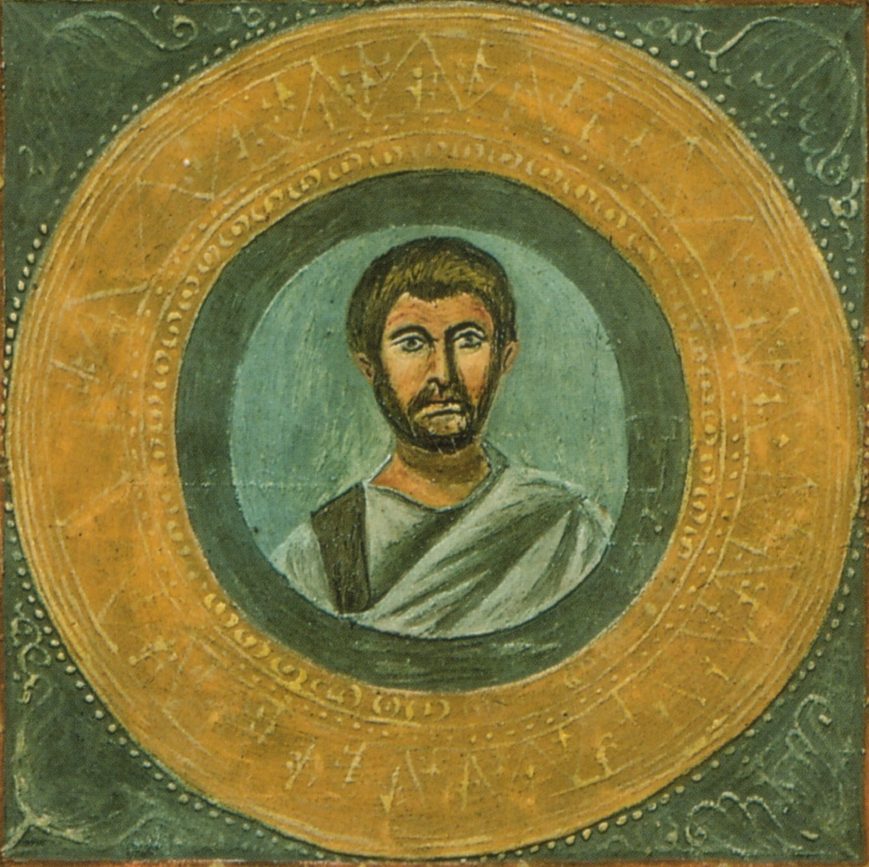
However well a man may have calculated his scheme of life, still circumstances, years, experience, always introduce a new element and teach new lessons. You find that you don’t know what you thought you did know, and what you thought of primary importance that in practice you reject. That’s what has happened to me. The hard life, which up to now I have lived, now that my race is almost run I renounce. And why? Hard facts have taught me that a man can have no better qualities than mildness and complaisance.—Terence, Adelphoe

De Incommodis Senectutis

Old Man

Old Man

But even then, if anyone does reach old age, his heart weakens, his head shakes, his vigor wanes, his breath reeks, his face is wrinkled and his back bent, his eyes grow dim and his joints weak, his nose runs, his hair falls out, his hand trembles and he makes silly gestures, his teeth decay, and his ears get stopped with wax. He will believe anything and question nothing. He is stingy and greedy, gloomy, querulous, quick to speak, slow to listen, though by no means slow to anger. He praises the good old days and hates the present, curses modern times, lauds the past, sighs and frets, falls into a stupor, and gets sick. Hear what the poet says: Many discomforts surround an old man. But then the old cannot glory over the young any more than the young can scorn the old. For we are what they once were; and some day we will be what they are now.—Pope Innocent III, On the Misery of the Human Condition

Sochi Soap Opera

Great Athletes, Crappy Coverage

Great Athletes, Crappy Coverage

Several of my friends and co-workers have asked whether I am following the Sochi Winter Olympics. I usually shake my head and say that I can’t take the typical U.S. sports reporting, with its emphasis on heartwarming stories of athletes who give their all for their late Uncle Poochie, who was caught in a threshing machine, only to come in seventeenth on the moguls. The vast majority of the media coverage is of American athletes. What I would like to see is a greater emphasis on other countries—without any sob stories or even biographies.

The young men and women who compete in the Olympics are too young to have a real biography. They have an incredible amount of dedication, but this is not limited to Americans. What about Slovenians, Icelanders, and others whose name the U.S. announcers can’t pronounce? They worked just as hard to get there and deserve a nod from us, even if we massacre their names.

Also, I am a little dismayed at the negative coverage about Russia. Having used Russian toilets in Hungary and Czechoslovakia back in the 1970s, I know that Russian workmanship can be a little dicey at times. Even if Vladimir Putin is an ass, he deserves better than a load of sneering press stories. Listen, guys, the Cold War is over. We won. Now let’s all try to get along together.


Of Celtic Cats and Consonants

What Do They Do With All Those Consonants?

What Do They Do With All Those Consonants?

The other day, I was browsing through Compton Mackenzie’s classic novel Whisky Galore when I ran into a passage that confused me mightily:

I remember my mother once sat down on the cat, because you’ll understand the plinds were pulled down in our house every Sabbath and she didn’t chust see where she was sitting. The cat let out a great sgiamh and I let out a huge laugh, and did my father take the skin off me next day? Man, I was sitting down on proken glass for a week afterwards. [No words have been misspelled: The novel is in Hebridean Scottish dialect]

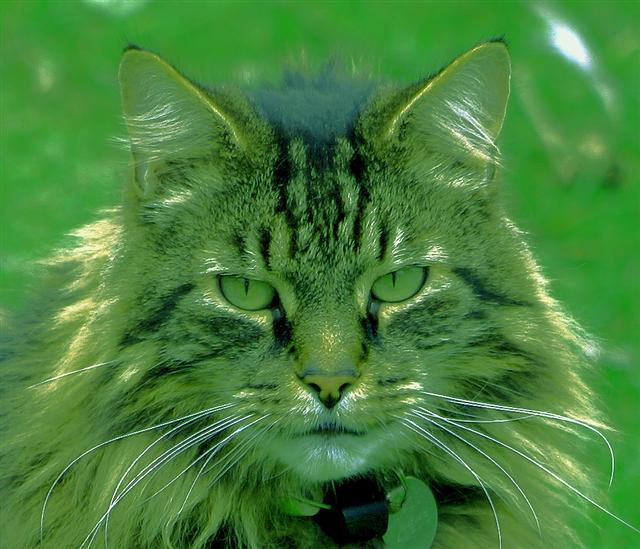
What made me sit up is that cat cry: sgiamh. Can someone please pronounce that for me? I have never heard any creature, human or otherwise, make a sound like that; and, not being of the Celtic persuasion, I have not the slightest idea how that is sounded.

Incidentally, Mackenzie’s book was turned into a delightful film variously called Whisky Galore or Tight Little Island by Alexander Mackendrick in 1949. Starring were Basil Radford and the delightful Joan Greenwood. No cats were harmed in the making of that film, and none were coached into crying sgiamh!