The Australian Fly

In Chapter 9 of his book about Australia entitled In a Sunburned Country, Bill Bryson writes about an encounter with New South Wales’s Australian Flies, called in Australia “March Flies,” because that’s when they manifest themselves.

I had gone no more than a dozen feet when I was joined by a fly—smaller and blacker than a housefly. It buzzed around in front of my face and tried to settle on my upper lip. I swatted it away, but it returned at once, always to the same spot. A moment later it was joined by another that wished to go up my nose. It also would not go away. Within a minute or so, I had perhaps twenty of these active spots all around my head and I was swiftly sinking into the state of abject wretchedness that comes with a prolonged encounter with the Australian fly.

Flies are of course always irksome, but the Australian variety distinguishes itself with its very particular persistence. If an Australian fly wants to be up your nose or in your ear, there is no discouraging him. Flick at him as you will and each time he will jump out of range and come straight back. It is simply not possible to deter him. Somewhere on an exposed portion of your body is a spot, about the size of a shirt button, that the fly wants to lick and tickle and turn delirious circles upon. It isn’t simply their persistence, but the things they go for. An Australian fly will try to suck the moisture off your eyeball. He will, if not constantly turned back, go into parts of your ears that a Q-tip can only dream about. He will happily die for the glory of taking a tiny dump on your tongue. Get thirty or forty of them dancing around you in the same way and madness will shortly follow.

And so I proceeded into the park, lost inside my own little buzzing cloud of woe, waving at my head in an increasingly hopeless and desultory manner—it is called the bush salute—blowing constantly out of my mouth and nose, shaking my head in a kind of furious dementia, occasionally slapping myself with startling violence on the cheek or forehead. Eventually, as the flies knew all along, I gave up and they fell upon me as on a corpse.

Cherrapunji

Photo by Manish Jaishree of the Wettest Place on Earth

Here I am, reading about massive rainstorms in India circa 1990 while living iat the edge of a desert—and one in an increasing cycle of drought. I imagine, someone in Cherrapunji, India, might have dreams of living in a dry country in which, for all intents and purposes, there is no rainfall for six months of the year.

For your information, Cherrapunji is considered the wettest place on earth. It holds the record for the most rainfall in a calendar month and in a year: it received 9,300 millimeters (370 inches; 30.5 feet) in July 1861 and 26,461 millimeters (1,041.8 inches; 86.814 feet) between 1 August 1860 and 31 July 1861. in Alexander Frater’s book Chasing the Monsoon, the author talks of a friend of his father experiencing rainfall for several consecutive days in which between 30 and 40 inches of precipitation fell.

I miss rain. In Los Angeles, we only had one day of persistent rain in the last twelve months. There have been numerous instances of what I call a dirty drizzle, in which the windshield of my car is muddy as the result of an insufficient drizzle. To form a raindrop, there must be a bit of dust in every drop. But when not enough rain falls to operate the windshield wiper, then the dust predominates.

California and the American Southwest looks to be one of the big losers in climate change. The Colorado River is drying up, the Sierra snowpack is insufficient to fill the reservoirs the state needs, and horrible wildfires are destroying our forests.

There is not too much one can do about it except wait it out. Climate change has happened before. Up until the 13th century, Greenland was actually a fairly prosperous place, but then a little ice age set in and the colonists appear to have vanished from the pages of history. The town of Garðar was actually a bishopric, but nothing remains of its past glory.

Actually, I wouldn’t mind another “little ice age,” but who knows what will happen in the years to come?

A Plague of Fruit Flies

I Kill Dozens Every Day, But They Keep Coming

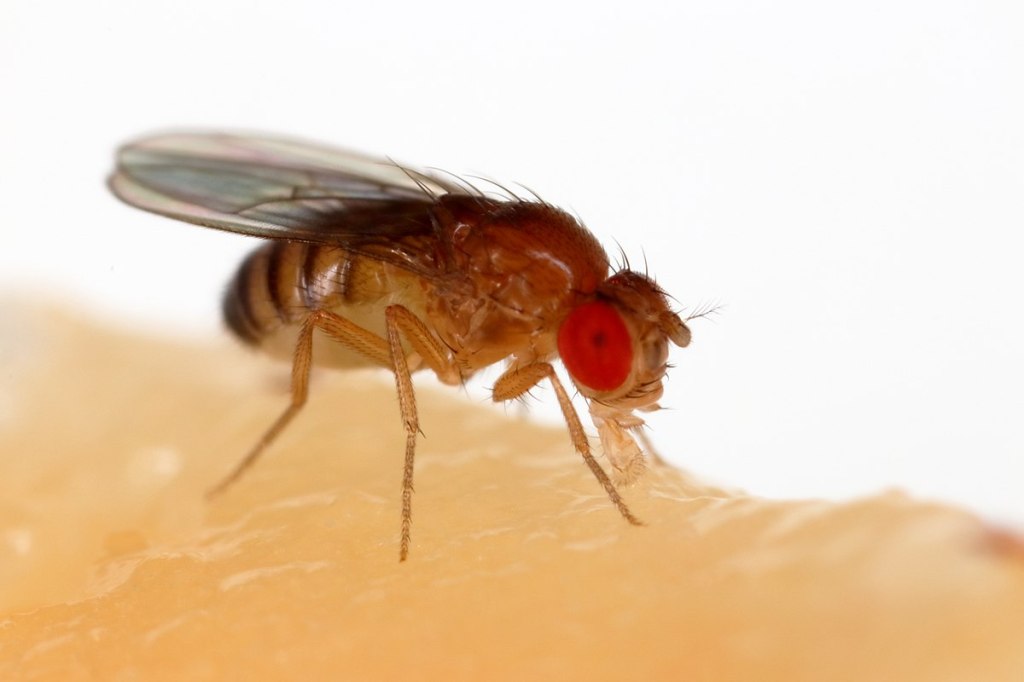
Even as I sit here writing this, I am being buzz-bombed by tiny fruit flies that land on my head, my arm, my computer screen, and pieces of paper atop my desk. keep throwing out food that has been infested with them, but they keep finding other comestibles that suit their fancy. I suspect that I have to set traps in my kitchen, while still continuing to inspect my food storage area and ruthlessly toss everything I don’t need.

Excuse me while I get up and kill the flies perched on the light fixture above my head ….

Aah, that was satisfying. But I know there will be several more on the light fixture within the next ten minutes. I feel like the Heinrich Himmler of the insect world.

Atacama Norte

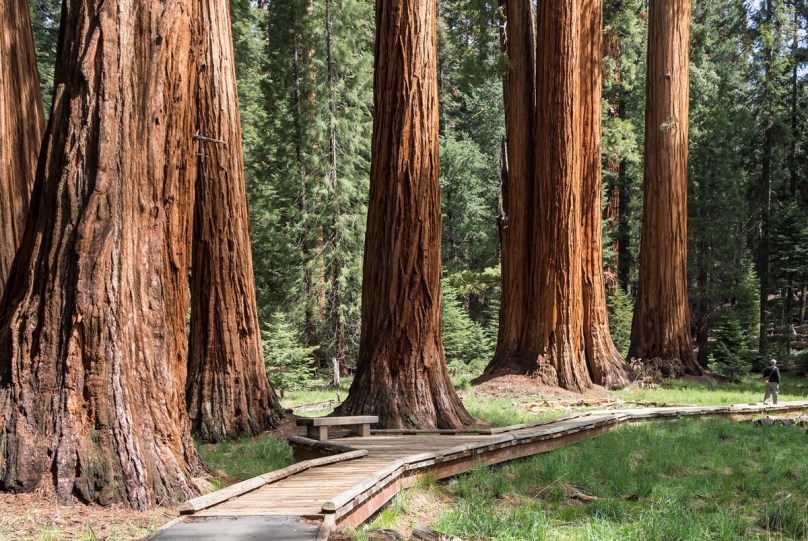
Path at Sequoia National Park

John Muir understood the forests of California better than anyone: “And into the forest I go to lose my mind and find my soul.” There are beautiful forests in California, as well as beautiful mountains and even beautiful deserts. Thanks to climate change, however, in a very few years we might still find the mountains, but in place of the forests, we will have greatly enlarged deserts.

Currently, the driest desert on earth is the Atacama, which comprises parts of northern Chile and southern Peru. It is a major event there if the rainfall runs to several millimeters! As California becomes ever drier and the wildfires ever more uncontrollable, I can foresee much of this happening in the dwindling years of my lifetime.

California has both the largest and the oldest living things on earth in its forests. The Sequoia Redwoods can run to 115.5 meters (379 feet) in height. They can—under normal circumstances—live between 1,200 and 2,200 years. In the White Mountains on the other side of the Owens Valley are the Great Basin bristlecone pines, which, unlike the redwoods, look hardly alive. Yet the oldest trees of this species are 4,800 years old, making them venerable oldsters while the Greeks were conducting the Siege of Troy described by Homer in the Iliad.

Bristlecone Pine Tree of the White Mountains

Both types of tree are hardy and have survived multiple wildfires caused by lightning strikes in the last several thousand years. But man is a relatively new factor, and many of the fires that are decimating the forests of California are the result of arson or human carelessness.

Call me a tree-hugger if you will, but there are many things in California that I have come to love. Let me close with another quote from John Muir, who is the bard of the wilds of California: “Come to the woods, for here is rest. There is no repose like that of the green deep woods. Sleep in forgetfulness of all ill.”