Family Plot

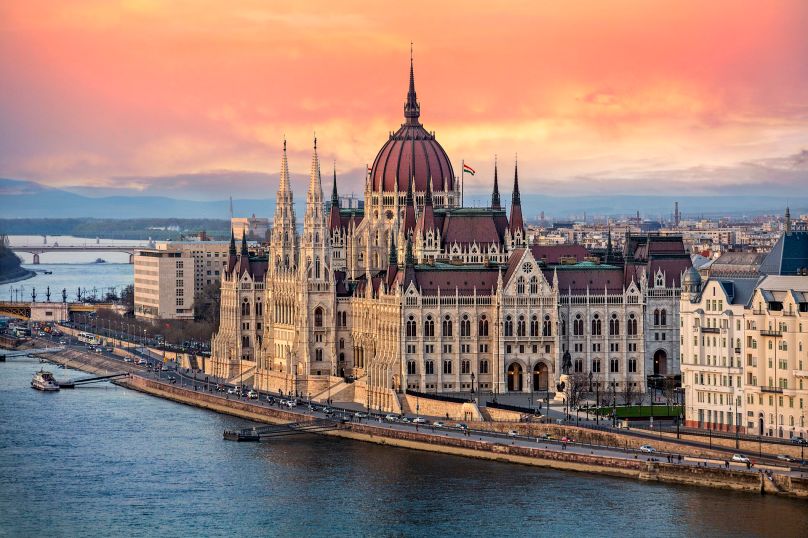
The Hungarian Parliament in Budapest

In my family, there was a plot to marry me off to a nice Hungarian girl who would think nothing of giving up her life with me to take care of my aging parents. They had even settled on a distant cousin of mine, one Ilona Vörös (Helen Red in English), a resident of Újpest who worked for MAV, the Hungarian State Railways.

This all happened in the mid-1970s, when my parents brought Ilona to the U.S. to introduce her to me. Mind you, I had nothing against marriage per se; but something about this whole arrangement set all my warning lights blinking and alarms sounding off.

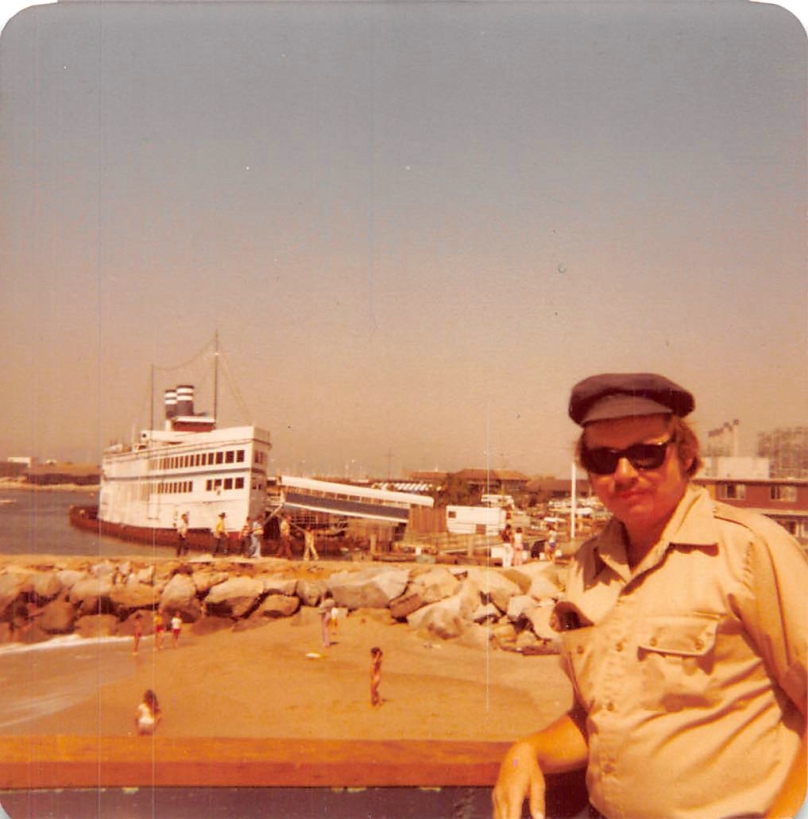
Me in Hungary 1977 on the Shores of Lake Balatón

Why would any self-respecting young woman want to enter into a kind of weird marriage in which would become a slavey to my Mom and Dad, whom I thought were being incredibly naive about the whole thing? When I backed out of the arrangement, my father was furious with me. Why? I had not made any promises to marry Ilona, and then send her to Cleveland to serve as a housekeeper for my parents. I was just going to meet her and see what came of things. (Which was naive on my part, I now see.)

I suspect that what my parents really wanted was for all four of us to live in one household. I had been in Los Angeles for ten years. This was a plot to bring us all together. But I didn’t want to live with my Mom and Dad, as much as I loved them. I rather liked living in California on my own. As for marriage, I preferred to find someone who was not hedged about with all kinds of weird expectations.

Then it came about that Ilona and one of her MAV co-workers had been carrying on a long relationship in Budapest. Then my Mom had words with Ilona’s mother, and within a year or two, Ilona and her family were persona non grata.

Probably just as well.

10 Years Ago…

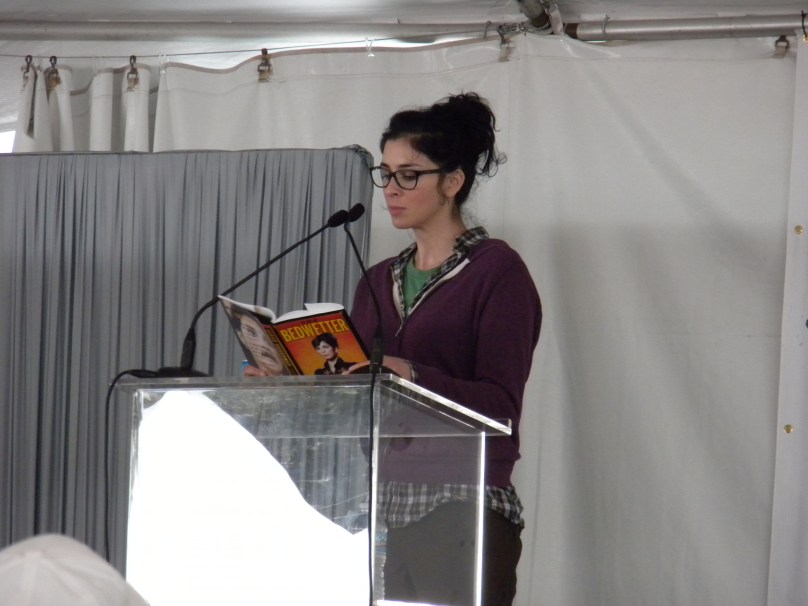
Sarah Silverman at the L.A. Festival of Books April 2010

One of the events I miss the most during this grey endless quarantine is the Los Angeles Times Festival of Books, particularly when it was held at the nearby UCLA Campus. Hell, I wouldn’t even mind going again to the USC Campus, where it’s always considerably warmer than Westwood.

I always liked Sarah Silverman’s comedy. I even thought she was pretty sexy—as well as uproariously funny.

Of course, now we all have to stay away from one another because of this ghastly coronavirus outbreak, which seems to be getting worse all the time. With luck, I will survive a couple of years of a monastic existence; but in going back over old photographs, I deeply miss events like the Festival of Books.

I even miss going to the library and walking through the stacks looking for books to read.

Eventually, the world will open up again. But I will have wasted two whole years in disgruntled loneliness.

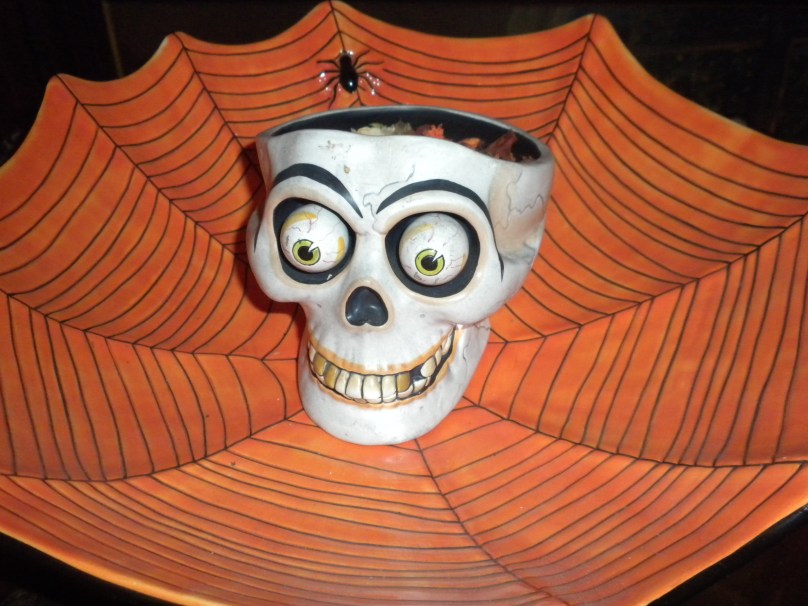
Happy Halloween!

In this truly ghastly year of 2020, I sincerely wish all of you a happy—and safe—Halloween. It happens to be one of the more meaningful holidays on my own calendar. Unlike Memorial Day, the 4th of July, Columbus Day, Thanksgiving, or even Christmas. I mean all of us are on a journey, and the holiday commemorates the destination of that journey, for all of us, even for “billionaires” like Trump.

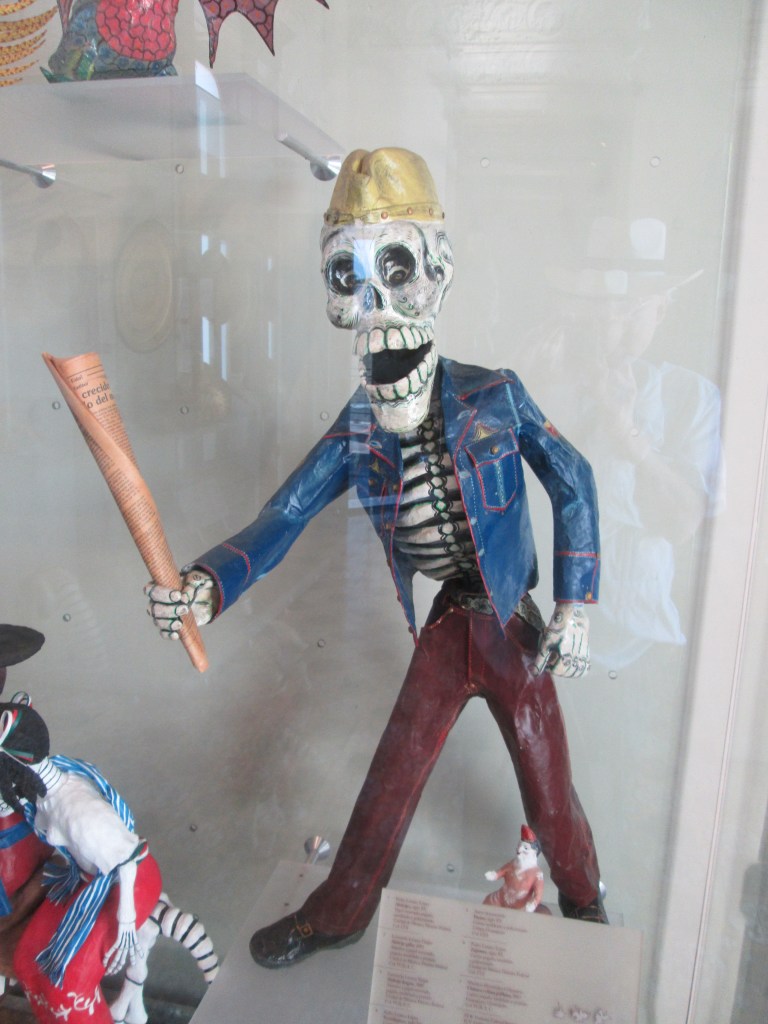
It’s followed on November 1 by All Saints Day and on November 2 All Souls Day, known in Mexico as the Dia de los Muertos.

Mexican Folk Art with Skeleton

Although no kids have come Trick or Treating at my place for over thirty years, I’ve always liked Halloween. (Kids don’t like to climb stairs, even though I’m only on the second floor.)

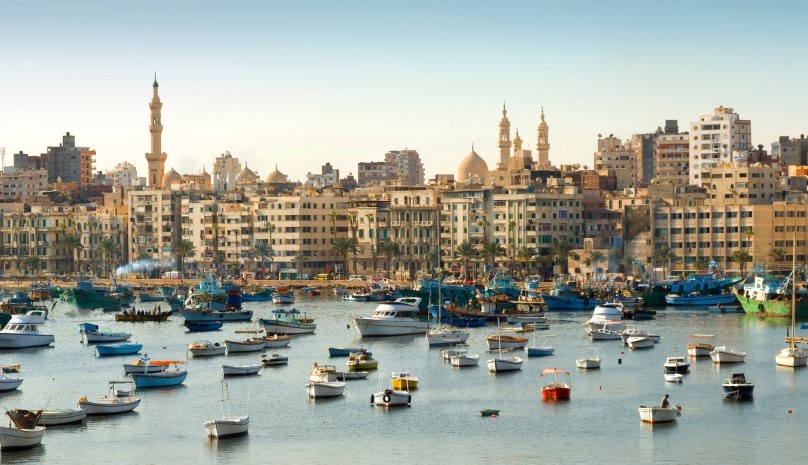
Alexandria on the Pacific

The Port of Alexandria As It Is Today

Every once in a while, I re-read a book that has meant a lot to me in the past, in the hopes of somehow rediscovering myself as I was when I first encountered it. Around 1967-1968, I first delved into Lawrence Durrell’s Justine, the first volume of his Alexandria Quartet.

I had just reached the age of puberty in my early twenties thanks to regular injections of depo-testosterone. In September 1966, I had a pituitary tumor (chromophobe adenoma) removed by slicing through my forehead and hinging my brain upward. As a result, I was a strange sort of late-blooming virgin who was mightily puzzled by and preoccupied with sex.

The Edition I Read

Imagine me as I lie in the sand on Santa Monica Beach by lifeguard station 12 reading the following:

Five races, five languages, a dozen creeds: five fleets turning through their greasy reflections behind the harbour bar. But there are more than five sexes and only demotic Greek seems to distinguish among them. The sexual provender which lies to hand is staggering in its variety and profusion. You would never mistake it for a happy place. The symbolic lovers of the free Hellenic world are replaced here by something different, something subtly androgynous, inverted upon itself. The Orient cannot rejoice in the sweet anarchy of the body—for it has outstripped the body. I remember Nessim once saying—I think he was quoting—that Alexandria was the great winepress of love, those who emerged from it were the sick men, the solitaries, the prophets—I mean all who have been deeply wounded in their sex.

So there I was on the hot sands of Santa Monica, surrounded by women in bikinis, indulged in morose delectation.

Actually, Justine is pretty good, though it is quite arch at times. I am no longer the same unhappy young man on the beach. I read all four volumes of the Alexandria Quartet that one summer, and I loved it—however disturbing I found it.

Fanatical About Libraries

The LA Central Library Flower Street Entrance

I have always depended on public libraries for much of my reading material. When I lived on the East Side of Cleveland, I went to the Cleveland Public Library branch on Lee Road, where a fellow Hungarian, Mr. Matyi, was the librarian. He also played the oboe for the Cleveland Philharmonic Orchestra.

They had a summer reading program in which I participated for so many years that they had to invent a participation certificate at my advanced level. (I wish I still had them.)

Even then, I also visited the main library on Superior Avenue in downtown Cleveland:

It was really quite beautiful, being funded by Andrew Carnegie’s vast fortune. (Can you imagine a modern billionaire doing something like that?)

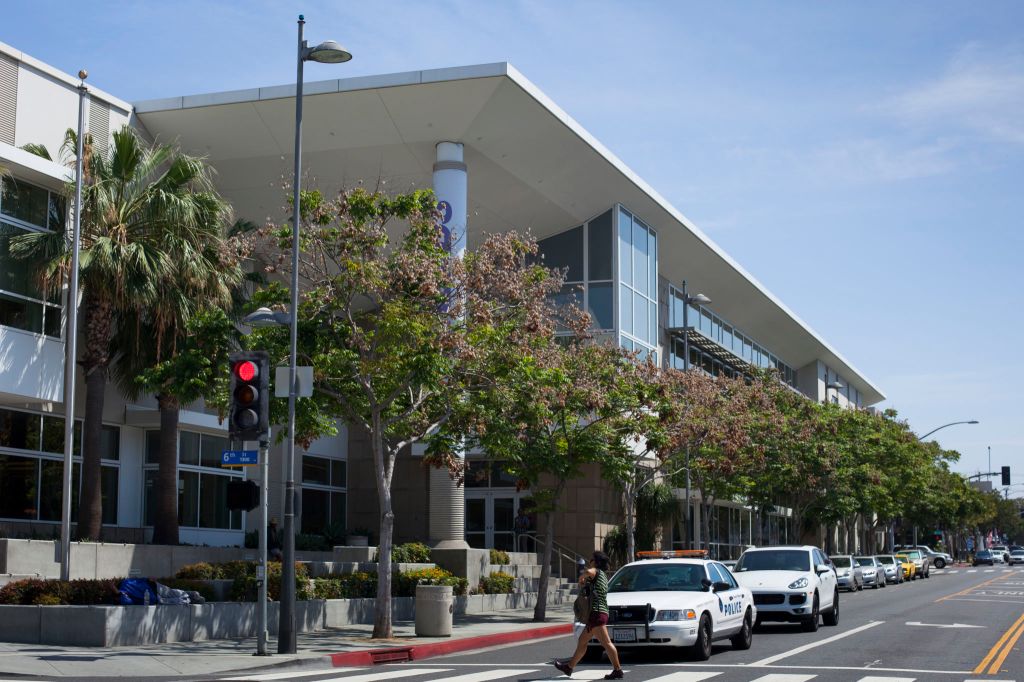
When I came out West, I started by going to the main library in Santa Monica at the corner of Santa Monica Boulevard and 6th Street:

Although it was fairly large with two stories full of books, I actually outgrew it. I found that they got rid of too many of their classical titles, replacing them with more recent … well … dreck.

I was elated with the Expo Line connecting Santa Monica to Downtown LA opened in May 2016. At once, I signed up for a senior pass which enabled me to go from the Bundy Station (about a mile south of I lived) to the 7th Street Metro Center, which was three blocks south of the Los Angeles Central Library—for a mere 50¢.

Even with the library building being closed due to the coronavirus, the LA Library has started a “Library to Go” program which enabled me to put a hold on the books I want to read. Within a few days, I get an e-mail saying they are holding them for me, and I just take the train downtown to pick them up.

Over the last week I have been busy reading these three books:

  • Kōbō Abe’s Inter Ice Age 4, a 1958 sci-fi novel about global warming
  • Ivan Klíma’s Waiting for the Darkness, Waiting for the Light, about Czechoslovakia’s rocky path from Communism to Capitalism
  • Tim Butcher’s Blood River: A Journey to Africa’s Broken Heart, about an English writer who re-traces Henry M. Stanley’s journey along the length of the Congo River in the 1870s.

Cleveland 28, Ohio

The ’Burbs 1951-1962 (The Red Arrow Was Our Home)

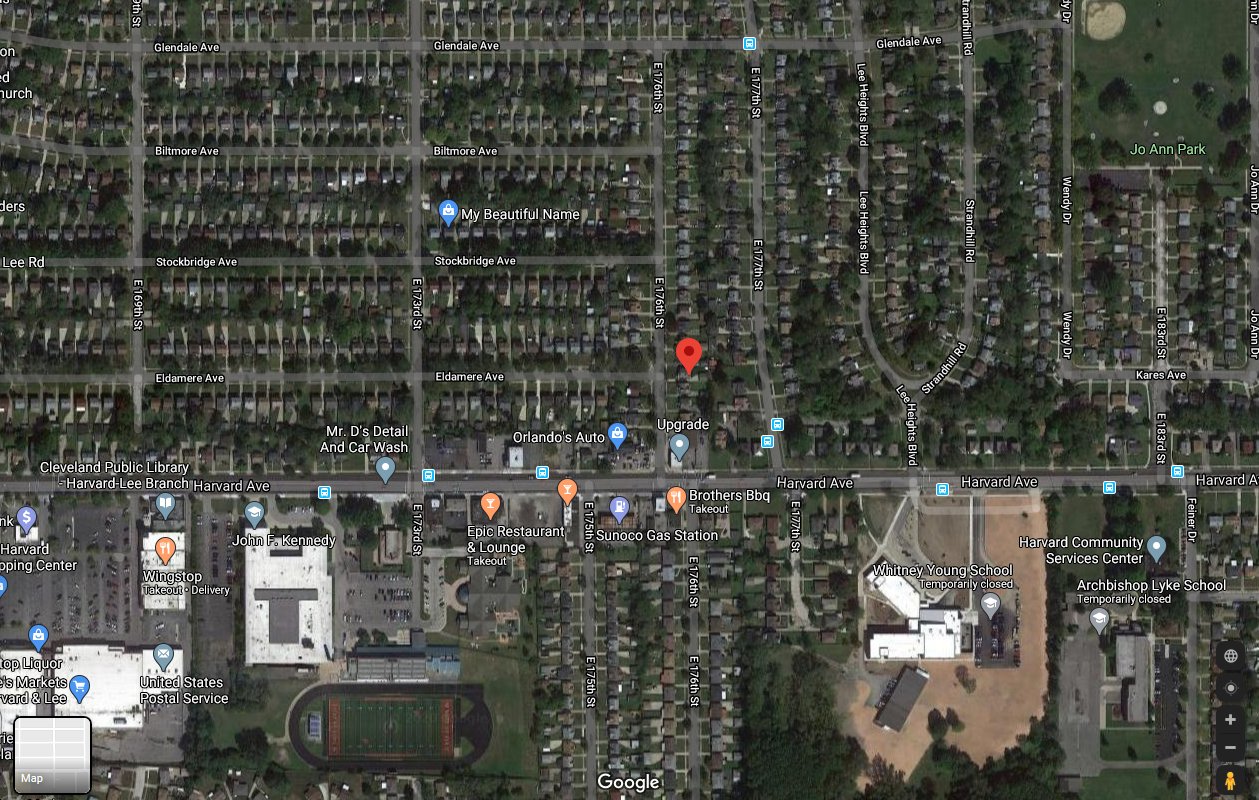
In 1951, we moved to the Harvard-Lee area of Cleveland, the extreme southeast corner of the city. Buckeye Road was only a few miles north and west of us and easily reachable by way of the Shaker Rapid light rail line. The next stage of my life was to consist of seven years attending Saint Henry School (which is no more) and the next four attending Chanel High School (which was just demolished this summer).

Several things were different in the suburbs. For one thing, there were a lot of bullies around, including our neighbors Jimmy and Joey Fordosi and Jack Rulison, three doors south of us. I guess that was because I reached the age when bullies magically appear; and it didn’t help that I was very young-looking for my age. Could it be that my pituitary tumor had already begun, stunting my growth? Throughout my years at Saint Henry, I was either the shortest or second shortest kid in class, including both boys and girls.

Chanel High School as It Was 1958-1962

When I “graduated” from eighth grade (there was no real ceremony), I was surprised to find that I had won a scholarship to Chanel High School in nearby Bedford, Ohio. In fact, my parents never had to pay a penny for tuition, because in each of my four years at Chanel, I received the highest grades in the elite, or “A” section. I had outgrown my slowness in the English language and in fact proceeded to make the language my own.

I was helped in this by four successive English teachers who were so good that I decided, when I graduated, to work at becoming an English professor. There was Father Gerard Hageman SM (Society of Mary “Marist”) in 9th grade; Father Raymond Healey SM in 10th grade; Father William Parker SM in 11th grade; and Father James Murray SM in 12th grade. These four priests provided an incredible education in literature and language—one for which I will be eternally grateful.

My graduation from Chanel was a much more formal event. Not only was I the class valedictorian, but I had won the Mr. Chanel award for all-around academic and extracurricular achievement. And I was going to an Ivy League college with a full scholarship. Those were my glory days.


Buckeye Road

Cleveland’s Terminal Tower, Once the Tallest Building West of NYC

In my youth, there were two Clevelands. First there was Buckeye Road, which was my world between the ages of one and six. (There had been a brief interlude in Florida, which I will describe in a later post.) Then, when I was sent home from kindergarten with a note from my teacher pinned to my shirt asking what language I was speaking (it was, of course, Hungarian), my parents planned for a move to the suburbs. That happened in 1951, shortly after my brother Dan was born. I will describe the Harvard-Lee Area tomorrow.

Buckeye Road was after World War Two the most vital Hungarian neighborhood in the United States. I have never been able to figure out why, unless my people had an affinity for hot, humid summers and dark, icy winters.

An Exhibit About Buckeye Road at Cleveland’s Hungarian Heritage Museum

We lived at 2814 East 120th Street, a short block from the main drag and only a short walk from ritzy Shaker Square—not for us penny-pinching Hunkies. There were two movie theaters within walking distance: the Moreland and the Regent. On nearby East 116th Street were Harvey Rice School, where I was to be a problem to the non-Hungarian teachers; the local library, the College Inn, whose French Fries I adored; the Boulevard Lanes where my Dad bowled (he was pretty good); and a very tasty doughnut shop not far from St. Luke’s Hospital. The residential streets were filled with two-story duplexes, on the second floor of one of which we lived.

Just before we moved out to the ’burbs, the city built a nice playground on nearby Williams Avenue, which I had just begun to enjoy.

There was a Hungarian Reformed Church on Buckeye, where the Reverend Alex Csutoros preached. His services were broadcast—in Hungarian—each Sunday on a local radio station to which my Mom listened. Dad didn’t, because he was a Catholic, like his two sons. The deal was that any girls born into the family would be Protestant; the boys, Roman Catholic.

My earliest memory was listen to my parents argue about money, while I lay anxiously in my crib. Both Dad and Mom worked, and my great grandmother Lidia Toth took care of us during the day. She spoke not a word of English her whole life long.

Still, my memories of Buckeye Road are probably seen mostly through rose-tinted glasses. There were hard times, but they didn’t leave me with many bad memories.


My Tragic First Love

Traduced by My First Love

My first love—really, a schoolboy crush—was with Laura Sowinski in the Third Grade at Saint Henry School in Cleveland. She was a pretty little girl with some artistic talent. For some reason, I thought she was Swiss, because Sowinski sort of sounded like “Swiss.” Hey, I was only eight years old. What did I know? Now I would think she was Polish, which was more likely for the neighborhood in which I had lived.

Of course, I had hoped that my feelings for her were reciprocated, though I don’t know how she knew what I felt for her, because I never communicated it.

The rupture—and yes, there was a rupture—came when I was sick at home for a few days. In the Catholic school system of Cleveland in those days, there were often days off with little advance notice. When I got better from my cold or whatever it was, I dutifully walked to school the next day. (In those days, we walked to and from school.) To my surprise, the school building was all locked up. I turned around and returned home.

My unexpected free day came to an end the next day, so I trudged to school the next day. Being the age I was, I told everyone I showed up to school on a free day. In a week or two, when the next dittoed edition of the St. Henry Golden Knights news sheet came out, the whole last page was a drawing by none other than Laura Sowinski of me walking up to the school when it was closed. The caption read “James Paris Going to School on a Free Day.”

I thereupon turned several shades of vermilion and thought of my great love as wrecked on the rocks. I don’t think I ever spoke to Laura again. Not that I had ever spoken to her before.

Heat Wave

A Heat Wave with No Place to Go

I thought that somehow, in this first year of the coronavirus outbreak, that somehow me might be spared extremes of heat. Well, it was not to be. As I sit here at my computer, I feel stuck to my chair with the sticky heat. In addition, Martine is suffering from an attack of Irritable Bowel Syndrome, making it impossible to eat almost anything without suffering in consequence.

Usually we get this type of Mexican Monsoon heat in July, but I guess we can’t rely on data from past years. The earth is sufering. The United States is suffering. I am suffering.


Childless

I Was Fated Never to Be a Parent

So much of my life has been affected by a brain tumor that I had roughly between the ages of ten and twenty-one. Because the tumor—a chromophobe adenoma—controlled my sex hormones, I was potent, but quite sterile. I did not discover until some ten years ago that it was theoretically possible for me to have children’ but by then I was sixty-five years old, and I was in a relationship with Martine, who did not want to bear children for reasons of her own. (In fact, she made me get tested to verify that I could not impregnate her.) So I just resolved to accept my childlessness without complaint.

My friends and acquaintances would always use the same four-word phrase, telling me, “You could always adopt.” I have friends who have done this, but it is not always an easy road. My answer to this suggestion sometimes turned people off: “I don’t want to be responsible for other people’s mistakes.” When I said that to one cute co-worker named Alexis, she hung up on me in exasperation.

I know that raising a child is a long term commitment; but I also know myself, that I would not necessarily be willing to make the sacrifice if the child were not of my blood. If that makes me a bad person, then I must reluctantly admit that I am a terrible person. Better that, sometimes, than making my life and that of my partner possibly a living hell. Sure, the reward can be great, but I have seen cases where it wasn’t.

There was another factor: At times I have a savage temper like my father did. Since I was childless for so many years, I am sometimes not patient with the behavior of children who misbehave. I suspect I might behave as my father did—by swatting the child. In these times, that is considered child abuse.