Cankles

The Ancient Greeks Certainly Didn’t Like Them

Semonides of Amorgos (floruit 7th Century BC) is by no means the most famous ancient Greek poet. In Richmond Lattimore’s Greek Lyrics, which I read at Dartmouth in a class on ancient Greek literature in translation, there is a brief quote (the rest of the poem has been lost) to the effect that:

A woman thick around the ankles is no good.

There isn’t much literary quality there. In fact, there isn’t much of anything. But there is something about that line from 2,700-2,800 years ago that has somehow survived whereas many plays by Sophocles and Euripides haven’t.

And are men with thick ankles any good? I know that whenever I visit the doctor, she checks my ankles to see whether the blood is pooling there, indicating poor circulation. (I used to have thicker ankles, but over the last several years it’s been OK.)

There is a word in popular parlance describing the phenomenon. The word is cankles, combining the words calf and ankles. My Mom had cankles, but then she did have problems with blood circulation that eventually precipitated fatal heart failure in her 79th year. Based on my Mom and what I have picked up from my own doctors, cankles go with all kinds of bad things relating to the heart.

Now it is possible for cankles to not be related to heart or kidney failure. I just don’t know what else they could signify, other than obesity.


Trading Bubble Gum Cards

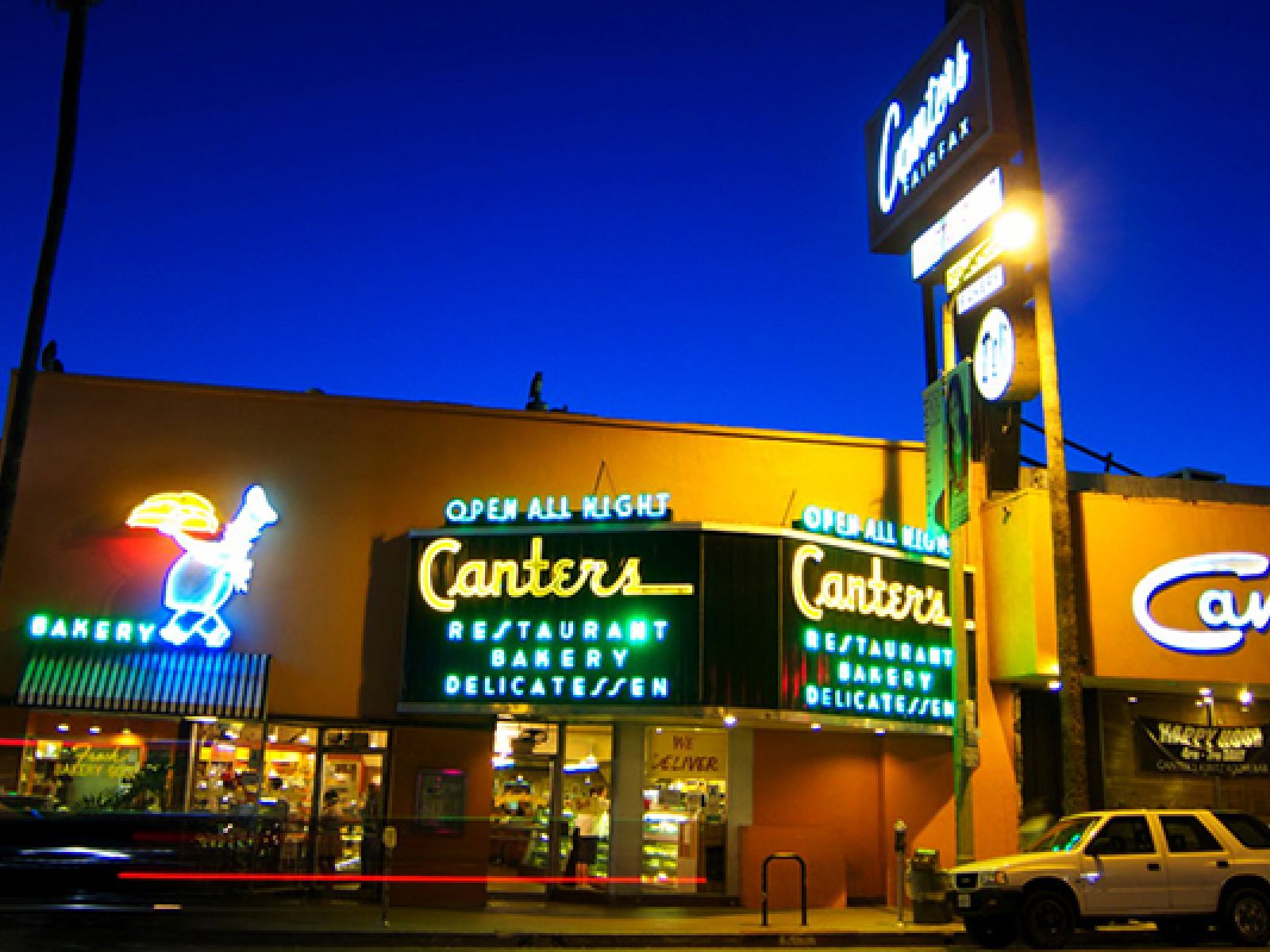
Canter’s Deli on Fairfax

When the restaurants in L.A. started to open, Martine and I decided to go for our first restaurant meal in three months to Canter’s Deli on Fairfax. So on Saturday we actually found space in the deli’s postage-stamp-sized parking lot and wandered in wearing our required face masks. I ordered half of a pastrami sandwich on rye on a cup of bean and barley soup with iced tea. Martine had knockwurst and beans. We shared a plate of kosher dill pickles.

Okay, so it wasn’t a romantic choice; but my patronage of the deli goes back more than half a century. When I went to see movies with my film freak friends, we usually stopped for a late night feed at Canter’s, which at the time professed to be open all night but usually wasn’t. Over a corned beef sandwich or a plate of kasha varnishkes, we argued about which movies were super great and which were shit. These conversations were sometimes heated, as film freaks can be counted on to be opinionated. I referred to these sessions as “trading bubble gum cards,” as they were pretty juvenile.

Two of the friends I went to Canter’s with—who curiously were the most dogmatic in their positions—are no longer with us. Norman Witty died in 2013, and Lee Sanders in 2015. In a way, I miss those days when our opinions meant so much to us. Now, even when discussing even the greatest films, I am more inclined to shrug differences off. (Maybe that’s why I’m still alive.)

Martine and I enjoyed our meal. I know we were putting ourselves at risk, but we were impatient to return to normality even for a short time. As the coronavirus threat dies down, we will return more frequently; but however good Canter’s is, it’s not worth sacrificing our life for their food.


Plague Diary 20: More Books and Films

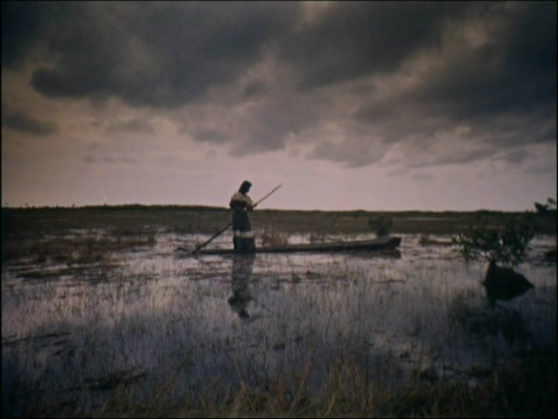
Christopher Plummer in Nicholas Ray’s Wind Across the Everglades

It was yet another day in quarantine (I am not keeping count). I started by making hot chocolate with the premium chocolate I had purchased in Mexico during my vacation. When produced in a double boiler the chocolate comes out perfect every time.

Then I decided to take a walk to the mailbox on Barry, about a mile east of here, to return a Netflix DVD of two Japanese samurai films I had seen over the previous two days. (I will write more about them in a future post.) I also wanted to stop in at the local Target store, but I had forgotten to bring my face mask with me—something I do about half the time. I notice a lot of people wear face masks all the time. They remind me of people who sleep alone with condoms draped over their jewels.

I returned to eat lunch with Martine. Mine was a couple of Chinese beef buns accompanied by frozen peach slices. While Martine went for her afternoon walk, I watched Nicholas Ray’s Wind Across the Everglades (1958) starring Burl Ives and Christopher Plummer. There were some beautiful shots of the Everglades and its bird life, and some highly dubious plotting, even if Budd Schulberg wrote the script.

Martine had wanted us to order Japanese from the Aki Restaurant on Santa Monica Blvd, so I phoned in an order and picked it up. It was a tasty reminder of when we used to eat our weekend meals in restaurants.

After dinner, I began reading Anthony Marra’s A Constellation of Vital Phenomena (2013), set during the Chechen wars. It looked like a good read.

Which brings me near to the end of another day. I will watch another episode of “Deep Space 9” and hit the sack.


Plague Diary 19: A Busy Day

Masks … Masks … Masks

This is a short post because the Internet has slowed to the speed of a rheumatic snail with bunions. This morning, I had to take my car in for repairs related to A/C and ventilation—especially as it’s about to get hot soon. Then I had to drive Martine for an EKG in preparation for a colonoscopy scheduled for next month. I finished one book (Terry Pratchett’s Jingo) and read most of a second (Tony Hillerman’s The Shape Shifter). Within a few minutes, I will watch on old Deep Space 9 re-run hoping for a glimpse of Jadzia Dax or Major Kira Nerys. Then, bed.


Perpetuum Mobile

Author and World Traveler Bruce Chatwin (1940-1989)

I have several things in common with the late British writer Bruce Chatwin. He was not in love with the land of his birth: In one letter, he writes, “England is gradually closing in on me again, and the moments of euphoria become rarer and rarer as one gets paler and paler and fatter and fatter and the backbiting conversations grow bitchier and bitchier, and everyone thinks and talks of selling something to somebody else.” To his friend Ivry Freyberg, he writes,“My life at present is the way I like it. Perpetuum mobile.”

In like manner, although I had a happy childhood in Cleveland, I desperately wanted to get away from the place and see the world—this at a time when the family’s finances were unencouraging. I got my four-year scholarship to Dartmouth College and went off to graduate school in California, but it was to be another nine years after graduation in 1966 that I went beyond the borders of the U.S.

Reading the letters of Chatwin (published as Under the Sun: The Letters of Bruce Chatwin), I feel some of the same excitement as when I read his two masterpieces, In Patagonia and The Songlines. I loved reading about Bruce’s travels when he was at his best. At the same time, I am well aware of the flip side of his way of life. As his friend John Kasmin wrote, “Bruce’s biggest problem was where to be. He never knew where to be. It was always somewhere else.”

Even more damning was his wife Elizabeth’s judgment on his travels:

He would wear out people in certain places and then have to move on. Everything was absolute paradise etc for about a month and then things were not quite what he wanted them to be. I discovered after years of this nonsense that the sure-fire way of making Bruce not buy a house was for me to agree.

Part of Chatwin’s wanderlust was his own dual life as a bisexual. The letters show him to be seemingly happily married, yet spending most of his time on the road, enthusing about various places and people.

I, too, would like to be a traveler; but I am content to use Southern California as my base. And I hope not to be tempted by a double life.


Plague Diary 16: I Take a Walk

Bus Riders in El Monte

Once again, I hijack a picture from the Los Angeles Times showing the impact of the plague on the life of the United States’s second largest city. One would hardly think that there were upwards of ten million people squeezed into the county.

Today the weather was sunny and cool, so I decided to take a walk into Santa Monica. Not having any bookstores to go to, I made another stop at Bay Cities Italian Deli near Lincoln and Broadway. There I picked up a couple rolls of toilet paper (at $1/roll) and the fixings for another Italian pasta dish. I had bought the sausage yesterday at Marconda’s Meats at the Original Farmers Market at 3rd and Fairfax.

It was a lovely day for a walk, perfect for avoiding the masked phantoms who occasionally crossed my path during the two-mile trek. The shopping done, I boarded the #1 Santa Monica bus for the return trip home. Once so busy, the bus is full of masked phantoms staying as far apart from one another as the seating allowed. (Needless to say, I wasn’t wearing my mask: It was in the pocket of my jacket.)

When this whole plague period is over and done with, will we remember how strange it was? Being retired, I have no problems with apportioning my time at home, though I miss going to places. And I miss seeing my friends. I keep in touch with them on the telephone, but it’s not the same thing.


Plague Diary 15: No Destinations

The Beach During the Early Days of the Plague: Now Forbidden

I used to love taking walks, but now I am somewhat indifferent. You see, what attracted me was not the mere exercise: It was having a destination. And my favorite destinations were bookstores. Well before the coronavirus plague reached our shores, the bookstores of Los Angeles pretty much melted into history. Now I will occasionally take a walk to an Italian grocery in Santa Monica or to the West Los Angeles Post Office.

For a while, it was possible to walk along the beach, or over the bluffs in Santa Monica overlooking the beach. Now both are closed to enforce social distancing. The above Los Angeles Times photo was shot during the early days of the plague. Now, the police are out in force chasing people from the beach or anything else that looks like a nice place to walk. We are urged only to walk for the sheer fun of it, or to go to the market or pharmacy to shop for necessaries.

One thing I absolutely refuse to do is wear a mask while taking a walk. If some random bozo attempts to upbraid me for it, I will gladly send my sputum in his direction. As I wrote in yesterday’s post, until I can find another solution, I cannot exercise while fogging up my glasses. I will gladly stay far away from other walkers, as my distrust of strangers long predates the arrival of the coronavirus. I am always happy to answer strangers’ questions in my ungrammatical Hungarian, which may include some colorful expressions of contempt.

Later this week, I will probably walk to Bay Cities Imports (the Italian deli in Santa Monica) to pick up one of their delightful Spaniard sandwiches together with some ingredients for a future Italian meal. Their pasta, sauces, and Italian sausages are nothing short of superb.


Plague Diary 14: From Not Recommended to Mandatory

What’s Next? Encasing Our Heads in Blocks of Lucite?

A scant week ago, the World Health Organization (WHO) was recommending that face masks should only be worn by people who had the coronavirus. Now, all of a sudden, security guards are turning away customers who are not masked. In no way does a face mask protect the wearer from getting exposed to the virus, unless it is from another person who has the virus but is not masked.

Now all this causes problems for me. First of all, my exhalations result in my eyeglasses fogging up. So imagine trying to read the ingredients of a food item through a fog of one’s own creation. I will try to rig up some kind of improvised cloth face mask for myself using a scarf, if I can.

Secondly, anything that inhibits me from inhaling normally occasionally causes me to gag or choke. Again, an improvised cloth face mask may be the answer.

The face mask I wear is identical with the one in the above photo, except that I have stretchy rubber loops that attach to my ears.


Plague Diary 13: Rainy Day Quarantine

Death’s Head Overlooking Venice Beach

Once again, I have taken a Los Angeles Times photograph from their evocative series on the effects of the quarantine on L.A.’s public spaces.

Today has been a day of steady rain, which started late morning and will probably continue through the night. We did get out around 11 am: Martine needed repairs to her eyeglass frames that only an optician could make, and I picked up a couple of Chick-Fil-A chicken sandwiches for her. Martine was none too happy with the yellow split pea rice pilau I had cooked the previous evening, preferring meat dishes even as I drift slowly into a vegetarian diet.

Returning around noon, we have stayed in the apartment. I sat in the library finishing Daniel Defoe’s A Journal of the Plague Year. As I compare the current coronavirus disease with the bubonic plague, I would have to say that COVID-19 is by far less horrible. Whereas the mortality rate of the current outbreak is 2% of those afflicted, some 69,000 Londoners out of a total of 500,000 died of the 1665 outbreak.

The way that London enforced quarantine was to lock up any household where there was an instance of plague, enforced by two shifts of watchmen who would assist the tenants of the house get food and other necessities. But if one person in a household got the plague, it was fairly certain that all would die horribly.

On most days, I see at least one film, either from Spectrum Cable, Netflix’s DVD.COM service, or my personal DVD collection, consisting mostly of American and foreign classics. Today, since Martine did not go out for a walk, I decided not to induce her to retire to the bedroom to avoid listening to samurai sword fights, Western gunfights, or other irritatingly loud sound tracks.

Tomorrow, the rain will gradually taper off, and I will be able to play one of my films.


Plague Diary 12: Ways of Escape

I Keep Looking for a Way Out

For the first thirty years of my life, I was stuck either in Cleveland or in school. I loved my parents, but they wanted to control my life—and my whereabouts—for much longer than I thought was right. So one day in 1975, instead of taking a flight to Cleveland and remaining stuck in childhood, I flew to Mérida in Yucatán. Ever since then, I saw Cleveland as part of a past that I just happened to sidestep.

Now, during the awful coronavirus plague of 2020, I feel once again that my hands are being tied tightly behind my back. The only difference is that there is a matter of survival involved. For a few weeks, I could stay at home and remain more than six feet away from everyone but Martine. But my mind is traveling. While I eat, I page restlessly through an old Lonely Planet Mexico guide (cover illustrated above) picking places that look promising. Places like Bahía Kino and Alamos in Sonora, Morelia in Michoacán, or San Blas in Nayarit.

It seems that travel has become necessary to my feeling of well-being. I would even pick an American destination so that I can travel with Martine. Of late, she has shied away from going to foreign countries. She has even neglected to renew her passport. I would prefer to travel with Martine, but above all I need to travel.

Have I developed a thousand-mile stare? Perhaps I have. I guess spending a childhood in Cleveland will do that to one.