Walking Through History

The Nice Lady from the Legio X Fretensis

The Nice Lady from the Legio X Fretensis

Martine and I love attending the large military re-enactment encampment at Old Fort MacArthur in San Pedro. Last year we missed it because I was still in Iceland, but today we spent the whole day at the Old Fort MacArthur Days event. It’s not that we were interested in the shooting events with all their noise and smoke: It’s just that it feels like walking through history.

The Legio X Fretensis (“of the sea strait”) actually existed. It was established by Augustus (then called Octavius) Caesar around 40 or 41 B.C. to fight during the Roman civil war. It lasted almost 500 years, fighting in the civil war that saw the end of the Roman Republic, plus two of the Roman-Jewish wars in Palestine. Some elements of it fought with Marcus Aurelius.

In San Pedro, the members we saw belong to a group that calls itself an “educational service organization” whose purpose is to instruct people about the Roman army, particularly in the First Century A.D. I enjoyed stopping by their tent for a few minutes to talk to the well-informed lady pictured above. As you may or may note know, I am a Roman history nut who has read all the works of Tacitus and many of his contemporaries. I am always delighted to find people who not only are well read in the subject, but can add to my knowledge.

During the next few days, you will see a few more postings about some of the things we saw during the re-enactment. By the way, Old Fort MacArthur is not named after General Douglas MacArthur, but after his father, General Arthur MacArthur, Jr., who was Governor-General of the Philippines after the Spanish American War. It seems to me his son also had some dealings with that particular archipelago….


Tarnmoor’s ABCs: Los Angeles

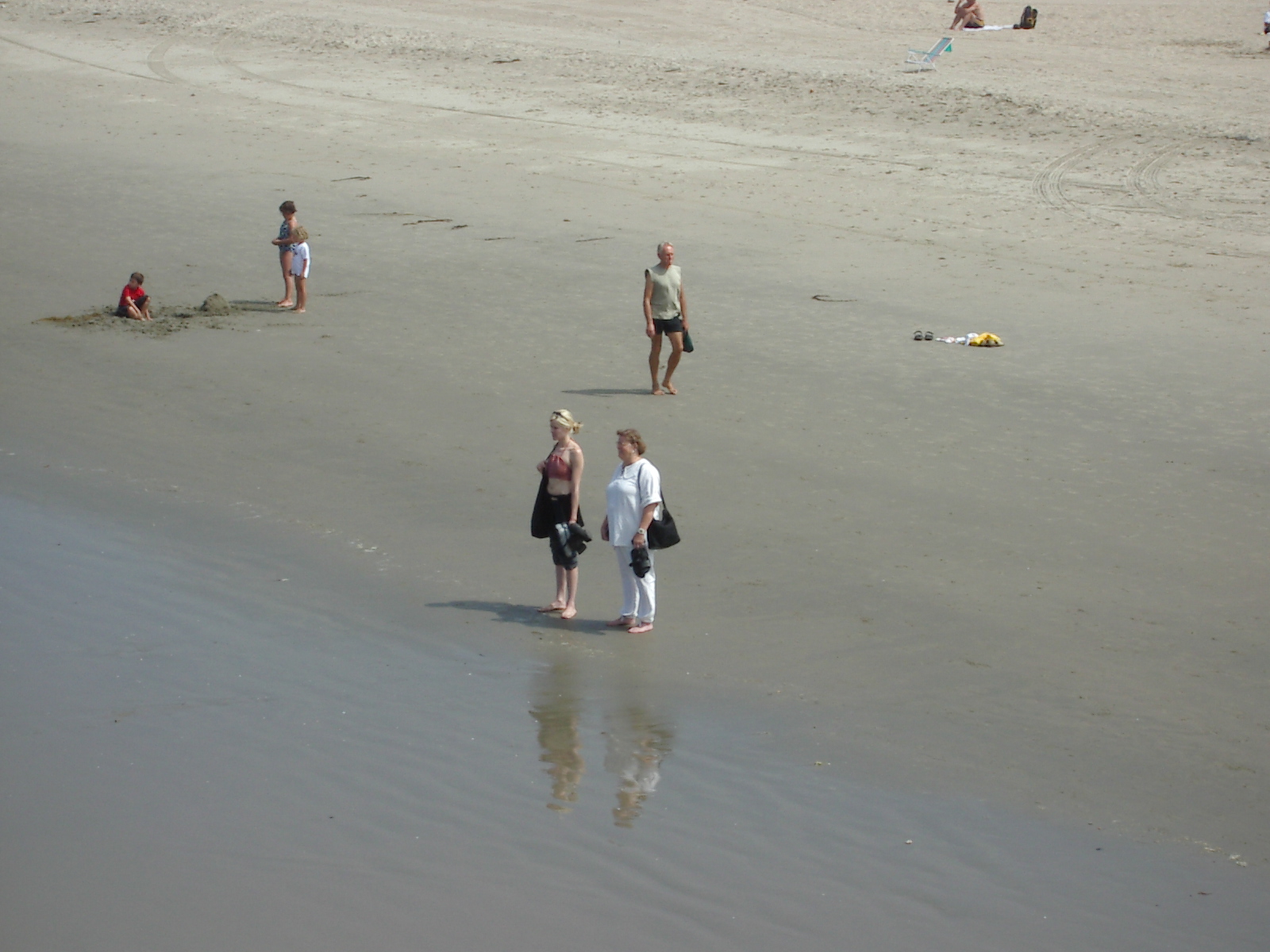
Venice Beach 2002

Venice Beach 2002

I was so very impressed by Czeslaw Milosz’s book Milosz’s ABC’s. There, in the form of a brief and alphabetically-ordered personal encyclopedia, was the story of the life of a Nobel Prize winning poet, of the people, places, and things that meant the most to him. Because his origins were so far away (Lithuania and Poland) and so long ago (1920s and 1930s), there were relatively few entries that resonated personally with me. Except it was sad to see so many fascinating people who, unknown today, died during the war under unknown circumstances.

My own ABCs consist of places I have loved (Iceland), things I feared (Earthquakes), writers I have admired (Chesterton, Balzac, and Borges); things associated with my past life (Cleveland and Dartmouth College), people who have influenced me (John F. Kennedy), and things I love to do (Automobiles and Books). This blog entry is my own humble attempt to imitate a writer whom I have read on and off for thirty years without having sated my curiosity. Consequently, over the months to come, you will see a number of postings under the heading “Tarnmoor’s ABCs” that will attempt to do for my life what Milosz accomplished for his. To see my other entries under this category, hit the tag below marked “ABCs”. I don’t guarantee that I will use up all 26 letters of the alphabet, but I’ll do my best. Today, we’re at the letter “L,” for Los Angeles, where I have lived for almost half a century..

Los Angeles is a difficult place to get to know. It took me at least five years before I even had a grudging acceptance of the city. Now I feel that I love it, for all its strange ways. I do not love the earthquakes, the hot weather, the gigantic brush fires that fill my lungs with ash, the self-entitled young professionals in their expensive sports cars, the decaying infrastructure, the Santa Ana Winds that make the skin peel off around my fingernails, or the long distances involved in going just about anywhere. And yet, there is a quality of the light that suffuses this place, especially early and late in the day. I also like the blend of cultures, mostly Latino and Asian, that make this a cosmopolitan metropolis.

This is a city that has its own literature. Here, for instance, is Raymond Chandler in his story “Red Wind”:

There was a desert wind blowing that night. It was one of those hot dry Santa Anas that come down through the mountain passes and curl your hair and make your nerves jump and your skin itch. On nights like that every booze party ends in a fight. Meek little wives feel the edge of the carving knife and study their husbands’ necks. Anything can happen. You can even get a full glass of beer at a cocktail lounge.

Mostly because of the outside influence of Hollywood in its glory days, many great writers passes this way and left their mark: Aldous Huxley, Bertolt Brecht, Thomas Mann, William Faulkner, Scott Fitzgerald, Nathanael West, John Fante, Evelyn Waugh, Ray Bradbury, and Joan Didion—just to name a few. If you like that sort of thing (I do not), there has also been a lot of modern art and architecture produced.

You may have heard that California is in a historic drought and has received precious little rain for the last three years. When I go to Lima, Peru, later this summer, I will be in another Pacific coast city where it almost never rains. I suspect it will remind me of L.A., except for the very different cultural context.

Would I ever move from Los Angeles? Possibly. Around the time I retire, I will no doubt come to the realization that I can no longer afford to live here. When that happens, it will be a difficult time for me. But then, nothing is forever.


The Phantom Beep

It Was Driving Me Nuts

It Was Driving Me Nuts

It happened yesterday morning at work. Every 30 seconds, like clockwork, I would hear a beep. At first I thought it was the microwave in our office kitchen, but it continued to happen. Then I thought it was our HP 9050 copier. In fact, I identified the sound as coming from the rear left of the sorter. At that point, I called LaserCare to send out a rep to shut off the beep. He came out and checked out the machine, but he couldn’t figure out the source.

Around this time, I went to the other side of the office and heard it coming from around there. First I suspected the secretary’s laser printer, but it continued after I unplugged out. Then my attention was drawn to the smoke alarms overhead. I called the Office of the Building, and they sound out a technician to check it out. After he informed me that the alarms were not battery operated, I had an awful suspicion.

The beeps were coming from me!

After I had a Transient Ischemic Attack (TIA) a couple of weeks ago, the UCLA Cardiology Department fitted me with an event monitor “just in case.” While I was wearing the unit on my belt, the cable connection from the unit to the contact points on my chest had worked loose. Partly, it was because the plastic tab connecting the unit to my belt had gotten stretched.

So now I wear the unit in a small digital camera case. The only problem is that there is a visible wire that emerges from the case and disappears into my shirt. When people notice it, I warn them to be careful of what they say because I’m wearing a wire….

When Hungarians Picnic

My Father and My Uncle at a Picnic

My Father and My Uncle at a Picnic

Set your Wayback Machine to about seventy-five years ago. At one of Cleveland’s many parks, you would see those two irrepressible Slovak twins—Elek (Alex) and Emil Paris—and their girls having a Hungarian-style picnic. The entrée of choice is likely to be szalonnás kenjer, or sliced rye bread with chopped onions, paprika, and smoked bacon drippings. On the left is Elek, my father, with either a girlfriend or his first wife, who was said to be overweight. Next to her are my Aunt Annabelle (née Herbaj) and Uncle Emil. It was a scene to be repeated well into my teen years, except the girlfriend/first wife was replaced by my mother.

Speaking of Hungarian picnics, allow me to quote Carl Sandburg to you. His short poem is called “Happiness”:

I asked the professors who teach the meaning of life
      to tell me what is happiness.
And I went to famous executives who boss the work of
      thousands of men.
They all shook their heads and gave me a smile as though
      I was trying to fool with them
And then one Sunday afternoon I wandered out along
      the Desplaines river
And I saw a crowd of Hungarians under the trees with
      their women and children and a keg of beer and an
      accordion.

I’m not altogether sure about the accordion. The Paris brothers were too busy eating to sing. On the other hand, when I went to Slovakia with my parents in 1977 (it was then part of Czechoslovakia), we sang all the old songs with my pretty cousins Gabriela, Margit, and Marinka (the last two being themselves twins).

A brief note about nationality: Like the Kurds, the Slovaks were a cohesive people for hundreds of years before ever having a country of their own, until Vaclav Havel, last President of Czechoslovakia, granted them their independence in 1993. When my father and uncle were born in 1911, Slovakia was a part of the Austro-Hungarian Empire that was administered by the Hungarians. In the end, my father spoke better Hungarian than Slovak; though I found out as early as 1977, Hungarian was spoken only by the old people.


(Almost) Never at a Loss for Words

Ho I Wound Up in the Emergency  Room This Weekend

How I Wound Up in the Emergency Room This Weekend

It all started at work 45 minutes before quitting time. Our deranged boss had left, and I was chatting with one of the accountants about accommodations and food service at Death Valley National Park.

All of a sudden, although I knew very well what I wanted to say, it all came out as inarticulate babbling of the village idiot variety. For about three minutes, I could not translate my thoughts into words. That frankly freaked me out. The accountant suggested I call 9-1-1, which is exactly what I did. Within twenty minutes, I was hauled out of my workplace in a gurney and taken by ambulance to UCLA Medical Center, which is only about five blocks away.

No sooner was I wheeled into the emergency room than I was surrounded by doctors questioning me and testing my reactions. I thought I had suffered a mild stroke, but there was no drooping of one side of my face or difference how I felt being touched on my right or my left. I was asked to touch my nose, touch the doctor’s finger. (Fortunately he did not ask me to pull it.) The tests kept on for several hours and were even resumed this morning. UCLA is a teaching hospital, and my case appeared to be a good instructional vehicle.

I was given an MRI scan, X-Rayed, electrocardiogramed, and marinated. in olive oil The upshot was that I had not in fact suffered a stroke, but merely a temporary clot that had deprived me of the ability to speak and be understood. The whole thing lasted only about three minutes. By the time the Fire Department paramedics came, I was able to pronounce terms like panhypopituitarism and chromophobe adenoma without batting an eyelash.

The way I see it, I was once again nicked ever so slightly by the Grim Reaper’s scythe as it whooshed by me and hit someone else. What I had was called a Transient Ischemic Attack (TIA). I know  now that I have to watch my step carefully. The next whoosh of the scythe could wind up removing my head from my shoulders.


Wedding Break

Vineyards Around Paso Robles

Vineyards Around Paso Robles

I will be away from my computer for a few days while I attend the wedding of my niece Hilary in Paso Robles, where my brother Dan lives. The ceremony will be held at a B&B in nearby Templeton. Martine and I will also be spending some time at Solvang and Coalinga.My next post will probably come on Monday afternoon or evening.

How I Survived 7 Years with the Penguins

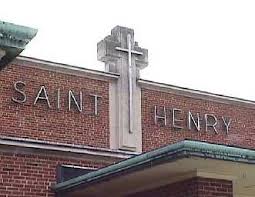
The Former Saint Henry Church and Elementary School

The Former Saint Henry Church and Elementary School

To begin with, I have a terrible admission to make: I never finished First Grade. As my birthday is in January, I started kindergarten at Cleveland’s Harvey Rice Elementary School on East 116th Street in January 1950. I was not a huge success, as I did not speak a word of English. Mrs. Idell sent me home with a note pinned to my shirt that said, “What language is this child speaking?” Duh! She was teaching kids in a Hungarian neighborhood, so she should have guessed. But in 1950, people didn’t think that way.

Halfway through First Grade, my parents moved to the suburbs in what was then called the Lee-Harvard area. After half a year of First Grade at Harvey Rice, I started in immediately with Second Grade at the newly opened Saint Henry School on Harvard Avenue. Please don’t tell the authorities at the Cleveland School District that I didn’t complete First Grade, or they might come looking for me and make me sit for six months at one of those tiny school desks in which my adult posture would become stunted.

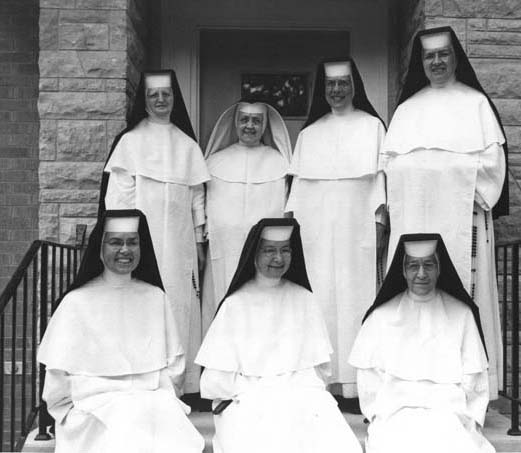
Dominican Sisters

Dominican Sisters (a.k.a. Penguins)

For the next seven years, I was a prisoner of a mixture of Dominican nuns (whom we referred to as penguins because of the color of their habits) and lay teachers. They included:

  1. Sister Francis Martin (Second Grade). She pulled my ears and called me Cabbagehead.
  2. Sister Marjorie (Third Grade). She was not a full sister yet, just a postulant; but she was rather cute as I recall.
  3. Mrs. McCaffery (Fourth Grade). A nice, warm-hearted Irish woman.
  4. Miss Cunningham (Fifth Grade). Something of a cold fish, looked vaguely like Tippi Hedren.
  5. Mrs. Joyce (Sixth Grade). Friendly and knowledgeable.
  6. Sister Beatrice (Seventh Grade). In her eighties, but with no diminution of her abilities.
  7. Sister Rose Thomas (Eighth Grade). A short martinet, but very capable.

I started Saint Henry with a rudimentary knowledge of English and ended up something of a whiz kid—with a specialty in English. In my younger years, I took a lot of guff because of my foreignness, so I deliberately set about becoming something of a specialist in the language. I could still diagram a sentence. (Do they do that any more?)


Television IS News?

Look What’s Popping Up on TV News Websites?

Look What’s Popping Up on TV News Websites?

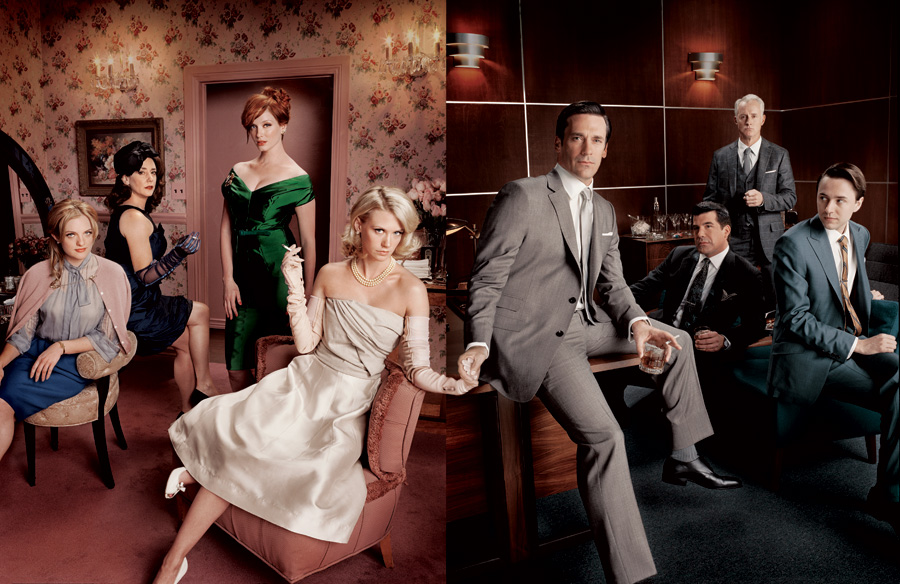
It was bound to happen sooner or later. Now that the same corporations that own television news also own popular television series.One can’t look at CNN.com or NBCNews.com without running into articles about the latest developments in “Man Men,” “Breaking Bad,” or even the dwindling “American Idol.” That never used to happen before. Even Salon.Com, which insofar as I know, is unaffiliated with any entertainment producers, is heavily interlarded with references to popular shows.

Since I have deliberately abandoned television programming over ten years ago, all these references in the news mean nothing to me. They end up as descriptions of cultural phenomena that are meaningless to me. In no case do I ever become interested enough to see what all the hoopla is about. I think the last time I tried was a few years ago when I rented the first season of “The Sopranos” from Netflix. I thought it was all right, but not good enough to maintain my interest.

Instead of television series, it would be interesting to see more news articles about books. That occasionally happens on Salon.Com, but almost never on the mainstream media websites. Oh, well, you can always come here and look at what I am reading. You are bound to encounter quite a few books. I have made a commitment to Goodreads.Com to read 106 books this year. So far, I am 16 books ahead on my goal. Maybe I should alert CNN?

Beigli

Hungarian Ground Walnut and Poppy Seed Rolls (Beigli)

Hungarian Ground Walnut and Poppy Seed Rolls (Beigli)

Today was a combined Spring Festival and Mother’s Day Celebration at the San Fernando Grace Hungarian Reformed Church in Reseda.Martine and I always show up the first Sunday in May to help relieve the parishioners of their excellent home cooked food. Available was gulyás leves (better known as Hungarian Goulash, actually a beef and vegetable soup), Hungarian kolbasz sausage with red cabbage, barbecued pork (laci pecsenye), and langos (a fried bread concoction that Hungarians go gaga over). But the starring attraction were the many varieties of pastries, especially a type of custardy cheesecake not quite as sweet as the deli variety, and, of course, beigli.

When I was a kid in Cleveland, it was the beigli with ground walnut that I most particularly remembered. My Mom made it at least once a week, together with the ground poppy seed variety which I did not like nearly as much Although Martine made major inroads on the pastry table, including several varieties to take home, for the first time I passed up sampling any. I know what it tastes like. I love it. But I have Type 2 Diabetes and am fighting a difficult battle.

Still, we had a good time, watching a recitation, singing, and dancing presentation on the subject of Mother’s Day. Then, the local dancing master, Tibor, showed couples how to dance the csardás, the most famous of the Magyar folk dances.

Finally, there was a literary event in which the author of a book on the 1956 Hungarian Revolution had two reciters read passages about how he fled Budapest to Yugoslavia and finally settled in the United States. I didn’t understand very much, as my Hungarian is quite rudimentary, and both the book and the recitation were mostly above my head. Still, it’s good for me to reacquaint myself with my native tongue, however much I stumble my way through it.

With Martine at Huntington

My First REAL Weekend After Tax Season

My First REAL Weekend After Tax Season

After the beginning of February, Martine and I really didn’t go places. We pretty much stayed at home, me to psychologically prep myself for those horrible Monday mornings in tax season, after having worked both Saturday and Sunday, Martine to endure. Then, no sooner did tax season end than I found myself in the emergency room at UCLA Santa Monica Hospital with an Addisonian Crisis. This weekend, we finally went somewhere, to the Huntington Gardens and Museum, of which we are members.

It’s a good thing I wore my hiking shoes, because we put in several miles walking through the Chinese and Japanese Gardens, not to mention the herb and cactus garden. And in between, we saw the rose garden and relaxed by the lily ponds, looking at ducks and turtles.

Afterwards, I took Martine to her favorite restaurant in Southern California, Sevan Chicken in Glendale at the corner of Glenoaks and Kensington. It’s not particularly famous, but it has the best Armenian rotisserie chicken around, beating even Zankou Chicken for the honors.

Tomorrow, Martine travels to Sacramento for a few days to see her dentist and visit the grave of her mother and brother. I wanted to make sure she had her favorite dark meat rotisserie chicken before setting out.