More Personal History

Fairview General Hospital in Fairview Park, Ohio

Fairview General Hospital in Fairview Park, Ohio

This is a reposting from I blog I wrote several years ago on Multiply.Com. Several people who have read yesterday’s posting asked me about my unusual medical history. So I hope you don’t mind an occasional repeat. A few changes have been made to reflect the present reality:

The story of my life would be incomplete without a description of the physical pain that wracked me from approximately the age of ten until just five years ago. It all started with the headaches: They were centered at a spot about an inch or so above the imaginary line between my eyes.  And they were incredibly severe. Fortunately, I did not have them every day. At first, it was only two or three times a week.

What does one know about pain when one is young? I knew that the headaches were bad, but was afraid of making them out worse than they were. My parents took me to doctors, but they thought I had migraines or hay fever or that I was just basically shamming. My mother would boil a large pot of water, add salt, and have me bend over it with a towel over my head so that the vapor would relieve the pain. Sometimes it seemed to work.

Time went on: I graduated from high school and went on to college, where it got worse. In the summer after I graduated, I saw the best ophthalmologist in Cleveland because of some surprising lateral visual disturbances I was beginning to have. When I saw a stop sign, sometimes it looked as if it were saying stp; other times, it looked like stoooooop. This doctor said I had a “lazy eye” and prescribed eye exercises. (No one who reads has much as I do can be said to have a “lazy eye.”)

Days before I was to leave by train to Los Angeles to begin graduate school at UCLA, it all came to a head, so to speak. I had just prepared a lunch for myself (my parents work at work) of a hot dog with catsup and a can of creamed corn. (For years after, I was unable to eat any of these foods; and I still can’t face catsup.) Suddenly, all the demons in hell were inside my head jabbing with pitchforks. I collapsed in bed, and then it got worse. Over a period of an hour, I managed to drag myself to a telephone—blacking out several times in the process—and, after several wrong numbers, got my mother at work. She heard the panic in my voice, but I didn’t care because I had collapsed.

The next thing I remember, I was in the emergency ward at Fairview General Hospital in Fairview Park, Ohio [now part of the prestigious Cleveland Clinic] . A doctor was asking me questions, but I was too groggy to give articulate answers. Another blackout. Then, a coma. My temperature shot up dangerously high, and my body was cooled by bags of ice . In 1966, there were no CAT scans, no MRIs—only X-Rays. No one had a clue what was wrong with me, and my family was prepared for the worst. I received the last sacraments of the Catholic Church when—quite suddenly and inexplicably—I awoke.

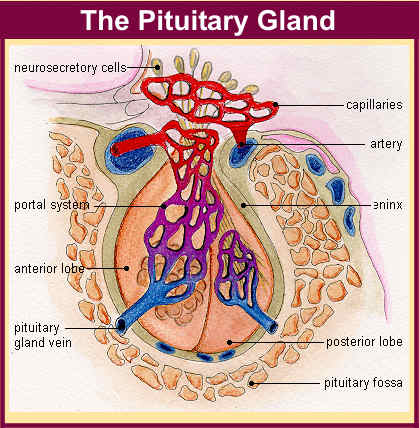
At times in my life, I have had incredible luck. One of the most incredible strokes of luck was that my family physician was an endocrinologist, Doctor Michael Eymontt. While I was out, he had deduced from sketchy evidence that I had a chromophobe adenoma, or pituitary tumor. It made sense: I was 21 years old, but looked as if I were only 11. I had practically no body hair and had not yet reached the age of puberty. The doctors told me I had a cyst in my pituitary which had to be operated on within a few days. If they had said tumor, which would have been the truth, my family would have been more alarmed. One day, the neurosurgeon, Dr. William Hegarty, walked into my room, introduced himself, and said, “Tomorrow, we’ll be peeking into your pituitary.”

They did more than peek. The pituitary gland is located midway between the ears, ensconced on all sides by brain, except from the bottom. In those primitive days of the 1960s, they had to go through my brain. The chances of death, paralysis, blindness, and a whole host of evils stood near 100%.  Nowadays, this surgery is fairly routine. The surgeons go up from the roof of the mouth, or even through the nasal cavity. But in that era, it was tantamount to a death warrant.

Three hours after the surgery, as I lay in bed in the intensive care unit with my mother and father standing by my side, I suddenly sat up with all the tubes tied to me and said, “The operation was a success. Could I have some bacon?”  It had been a success. Little by little, the doctors and nurses imparted to me the medications I must now take for the rest of my life, the dangers I had been through, and the possible dangers to come. But I had survived. When, eighteen days later, my father drove me home, I marveled at the people walking down the street and thought, “O brave new world!” All of creation was suffused with a glow, even the run-down brick homes of West Side Cleveland looked to me like gleaming palaces.

The feeling was not to last. It turns out that I was allergic to dilantin, an anticonvulsive drug that I was taking that attacked all my joints simultaneously and made it impossible for me to move without screaming in pain. They switched me to phenobarbitol instead, and the pain finally went away.

I was alive! [And still am!]
Addisonian Crisis

Something I Happen Not To Have Any More

Something I Happen Not To Have Any More

This morning, I did not want to get up. As I am usually an early riser, Martine was concerned that I stayed in bed past noon. I was feeling extremely lethargic. This is not the first time this has happened to me: It was an Addisonian Crisis, caused by adrenal insufficiency. It’s not that there’s anything wrong with my adrenal glands: It’s just that I no longer have a pituitary gland to send messages to the adrenals to produce adrenaline.

We’ve been through this before, so Martine knew exactly what to do. Over the period of two hours, I took ten 5mg tabs of prednisone and made arrangements to go to the emergency ward at UCLA Santa Monica Hospital. There, they put me on an intravenous drip and took my vital signs. After the first hour or so, the prednisone I had taken earlier started to kick in; and my improvement was rapid.

Fortunately, the ER doctor at UCLA was able to contact an endocrinologist who confirmed the treatment. My first such Addisonian Crisis was at a San Diego hospital where the doctor not only refused to contact an endocrinologist but started testing me for the functionality of a certain internal organ I no longer had. Upon the advice of my own physician back in L.A., I checked myself out of that hospital before they decided to do some serious damage to me.

The lethargy that comes with an Addisonian Crisis can be fatal. I keep thinking of those old movies where people are freezing to death and want nothing more than to drop off to sleep. It’s not a bad way to check out of this life, but, to quote Robert Frost:

The woods are lovely, dark and deep,
But I have promises to keep,
And miles to go before I sleep,
And miles to go before I sleep.

It’s Over!

Finally, I Can Live a Normal Life!

Finally, I Can Live a Normal Life!

For me, April 15 means I can take weekends off, go visit my doctor and dentist, and not have to endure stress caused by selfish rich people who feel they don’t have to give us their tax data until April 14. I filed my own 1040 way back on January 31 and got my refund within two weeks. (Ooh, I just noticed the illustration above shows a 1040 from 2010. That should be good for some nice late interest and penalties!)

Today was particularly rough, as one of our accountants was sick and had to leave early; and the other one did not come in until 1:30 pm. Until his arrival, I was requested to pretend I was an accountant on doing an extension for a California Limited Liability Corporation, about which, of course, I know absolutely nothing. Although I work at an accounting firm, I serve as the office manager and data processing manager.

So at least it is done. I hope this is my last tax season. They don’t get any easier.


I Run Into Charles Keating

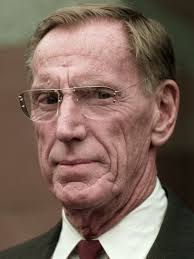
S & L Fraud Meister Charles Keating (1923-2014)

S & L Fraud Meister Charles Keating (1923-2014)

When Charles Keating died in Phoenix last week, I thought of my meeting with him in Iceland (of all places) in August 2001. I was staying at the Foss Hotel Skaftafell in Svinafell (see photograph below), about two kilometers south of what was then the Skaftafell National Park, and is now merely part of the giant Vatnajökull National Park that occupies most of the country’s southwestern quadrant. Since I was traveling alone and without camping gear, it was the only place I could stay in walking distance of the park without roughing it.

I was sitting in the hotel dining room, close to a large center table where there was a large, noisy group who were swilling large amounts of imported wine. (What other kind is there in Iceland?) The oldest member of the group excused himself for a rest room visit, while his friends talked about him behind his back. It was then I learned the man was the infamous Charles Keating, whose leadership of the American Continental Corporation and the Lincoln Savings & Loan Association led him afoul of the law, more so because he had tried to suborn five legislators (the so-called “Keating Five”) into letting him off scot free. It didn’t work, as in December 1991, he was convicted on seventeen counts of fraud, racketeering, and conspiracy and given the maximum sentence of ten years by Judge Lance Ito. At the time, Ito is said to have remarked, “More people have suffered from the point of a fountain pen than from a gun.”

When Keating returned to the table, he noticed my sour looks (I don’t much cotton to strangers, especially when they’re drunk ratbags) and invited me over to his table. I politely refused and finished up my meal to return to my room and read Viking sagas about even more thoroughgoing ratbags.

The Foss Hotel Skaftafell

The Foss Hotel Skaftafell

The next morning, as I was hiking to the national park headquarters, I saw the Keating party leave in a small chartered tour bus and sighed with relief. I knew two people who had invested in his S&L and nothing good to say for or to the man. It was rather pitiful that he found it necessary to travel with a bunch of yes-men who had nothing particularly good to say about him while he was out of earshot.

So it goes.


The Fruits of Luigi

It Does Not Appear in This Illustration

It Does Not Appear in This Illustration

No one can be held responsible for his dreams, even as wild as mine were last night. Various attractive women were offering me their breasts to fondle, when—quite suddenly—a physician wearing a stethoscope and white lab coat informed me that the underside of the female breast is so soft because of an internal organ officially referred to as the Fruits of Luigi.

I know I’ve been under considerable pressure because I’ve been working seven days a week, interspersed with nasty arguments with my boss, who is not aging well. So I am grateful I was informed via my dreams of this useful organ.

What Does a Tea Drinker Do … ?

This Is What Gets Me Going in the Morning

This Is What Gets Me Going in the Morning

If one is not a coffee drinker—as I certainly am not—occasionally one needs something to administer a matutinal kick in the butt in order to get moving. For most of the year, I’ll drink a nice mellow tea like a good grade of Ceylon or, if I’m feeling rich, a Darjeeling. But during tax season, when it’s still dark at 6:30 in the morning, I need something that will keep me from pouring my body back into bed.

I buy most of my tea loose and prepare a whole pot using one heaping tablespoon measure per 1.5 liter pot. A pound of tea, which lasts me for four to six months, costs somewhere between $5.00 and $10.00. (Compare them with coffee prices, if you will!)

The Assam teas available from Ahmad of London are Barooti and Ghalami. Curiously, neither are featured on the company’s U.S. website, probably because they’re packaged for the Persian market; and I buy all my tea at the local Persian markets. Since I live and work in a neighborhood that is joking referred to as Tehrangeles, it’s not difficult to find a number of well-stocked Persian markets, such as, for instance, Star Market on Santa Monica Boulevard and the Jordan Market on Westwood Boulevard.

Every time I’ve ever written about tea, I make the point that tea has far less caffeine than coffee—even the stronger Assam blends—because a pound of tea makes infinitely more tea than the equivalent weight of coffee beans makes coffee.


Tarnmoor’s ABCs: Earthquakes

Earthquake Fissure in Road

Earthquake Fissure in Road

I was very impressed by Czeslaw Milosz’s book Milosz’s ABC’s. There, in the form of a brief and alphabetically-ordered personal encyclopedia, was the story of the life of a Nobel Prize winning poet, of the people, places, and things that meant the most to him. Because his origins were so far away (Lithuania and Poland) and so long ago (1920s and 1930s), there were relatively few entries that resonated personally with me. Except it was sad to see so many fascinating people who, unknown today, died during the war under unknown circumstances.

This blog entry is my own humble attempt to imitate a writer whom I have read on and off for thirty years without having sated my curiosity. Consequently, over the next few months, you will see a number of postings under the rubric “Tarnmoor’s ABCs” that will attempt to do for my life what Milosz accomplished for his. I don’t guarantee that I will use up all 26 letters of the alphabet, but I’ll do my best.

If there is any natural phenomenon that frightens me, I would have to say it is earthquakes. During my years in Southern California, I have lived through two big ones: The Sylmar earthquake on February 9, 1971 (Richter 6.6) and the Northridge earthquake of January 17, 1994 (Richter 6.7).

On Friday, we had a small tremor centered on nearby Marina Del Rey. It was only a 3.2, but I acted as if it were just the start of a much bigger shake. Sitting in my library reading Proust, I dropped the book, jumped clear over the hassock and headed to the hallway just outside my bathroom to brace myself for what (perhaps) was to come. It didn’t. In the meantime, Martine peered around the corner and asked what was wrong. Did she feel the quake? Yes, but it was only a tiny one. But there I was, standing in the doorway with my heart racing, preparing myself for the worst.

The origins of my fear go back to 1994, when I used to sleep on an improvised futon in my living room. It was around 4:30 am when the earth began to shake in the darkness of the pre-dawn hours. Lights flashed whenever a nearby transformer exploded. Things were falling down from the walls and shelves, and some of them even rolled to where I was lying in terror as the sounds and smells and shaking had incapacitated me. What happened immediately after, I don’t recall because I actually lost my memory. All I know was that I was picked up by the police several hours later carrying two gallon jugs of purified water on Santa Monica Boulevard with blood flowing down my right leg.

Little by little, my terror subsided, only to be ramped up again with each aftershock. The damage caused by the quake was substantial: some nearby buildings were askew, and my kitchen had to be cleaned up with a shovel.

Ever since then, I do not go to bed without laying out all my clothes for the next day on a chair between the bedroom and the front door. Walking barefoot on broken glass and crockery is not a pleasant experience. So even now, a small temblor is capable of bringing back the terror, for however short a time.


Getting the Joke 55 Years Later

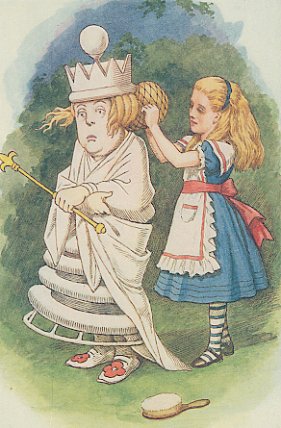
Tenniel’s White Queen in Through the Looking Glass

Tenniel’s White Queen in Through the Looking Glass

I was a mere fourteen years old, a Freshman in Latin 1 at Chanel High School in Bedford, Ohio. My instructor was the Rev. Seamus MacEnri, S.M., from Dungannon, County Tyrone, Northern Ireland. One day, he archly drew the following on the chalkboard:

Jam tomorrow, jam yesterday, but never jam today

Our reaction was a uniform, “Whaaa?” But then, we were all a bunch of hayseed kids from the southeastern suburbs of Cleveland and didn’t have Father MacEnri’s breadth of experience. It took quite a while before the whole joke became clear to me. Today, in this post, I will analyze the joke, effectively forestalling any laughter or snickers.

First, let’s take a look at this from Lewis Carroll’s Through the Looking Glass:

“I’m sure I’ll take you with pleasure!” the [White] Queen said. “Two pence a week, and jam every other day.”

Alice couldn’t help laughing, as she said, “I don’t want you to hire me – and I don’t care for jam.”

“It’s very good jam,” said the Queen.

“Well, I don’t want any to-day, at any rate.”

“You couldn’t have it if you did want it,” the Queen said. “The rule is, jam to-morrow and jam yesterday – but never jam to-day.”

“It must come sometimes to ‘jam to-day’,” Alice objected.

“No, it can’t,” said the Queen. “It’s jam every other day: to-day isn’t any other day, you know.”

“I don’t understand you,” said Alice. “It’s dreadfully confusing!”

And so were we all confused. Now, why would a teacher of Latin spring this rather arcane joke on a bunch of high school freshmen. It took a while to swirl around in my mind before I got the picture. It all comes down to something that Medieval copyists started doing in the 13th century:

Sometimes one will see a “j” in Latin. Technically Latin has no letter J. It was introduced in the 13th century or thereabouts to differentiate between the vowel i and the consonant i. The consonantal i is like our y. “Major” in Latin is pronounced as MAH-yor. Until this last century, most printed Latin texts used the j to indicate the different sounds. Today the j’s are usually replaced with the more classical i’s.

That’s why we have words like juvenile and justice, which come from the Latin iuvenilis and iustitia respectively.

Now, what does jam—or should I say iam?—mean in Latin? It means nothing less than now. Jam tomorrow, jam yesterday, but never jam now.

Well, Father MacEnri, I finally got the joke—and damned near killed it, too.

Tarnmoor’s ABCs: Dartmouth College

Dartmouth Hall

Dartmouth Hall

It was a beautiful place to spend four years, even if I had never really been more than a few miles away from home by myself before then. I went from being a valedictorian who had won all the non-sports-related honors at Chanel High School to one of hundreds of similar people from all around the country, including those famous prep schools that have sprouted up over all of New England.

At that time, Dartmouth College was isolated by the fact that the Interstate Highway system had not yet made its way into New Hampshire and Vermont. Today, Hanover, New Hampshire, is less than two hours from Boston via I-89. During the months of January and February, we were at times cut off from all supplies until the snow plows could cut a channel for cars and trucks. All four years, I stayed in Middle Wigwam Hall, which was later renamed to McLane Hall. My dorm stood a mile from the center of campus. To get to class, I had to trudge past the eerie old Hanover cemetery, with its tombs dating back to the Eighteenth Century, often on a sidewalk that had obligingly turned into a sheet of ice.

During those years, I suffered frequently from severe frontal headaches, which were the result of a pituitary tumor (chromophobe adenoma) pressing on my optic nerve. The attacks occurred on 50% of all days, with the “penumbra” of the headache beginning around 11 am and reaching a crescendo around midnight. That’s why I did most of my homework before midnight and 3 am. It was not until after I graduated that I was properly diagnosed: Until then, doctors did not know what to think—especially since MRIs and CT Scans had not yet been invented.

Pain and all, I loved Dartmouth. The quality of the instructors was, for the most part, incredibly high. Particularly in the English department, I had a succession of professors I will never forget: men like Chauncey Loomis, Peter Bien, and Thomas Vance.

At first, I hoped to become an English professor, until the movies turned by head. The Dartmouth Film Society screened great films, including a huge year-round Alfred Hitchcock festival. Plus I made the acquaintance of Arthur L. Mayer, the former “Merchant of Menace” from New York’s Rialto Theater and the author of Merely Colossal (1953). It was while at Dartmouth that I decided to go to graduate school in film history and criticism at UCLA—and that’s how I wound up in La La Land.

Dartmouth College had been founded as a missionary school for Indians in 1769 under the patronage of the Earl of Dartmouth. In 1819, the school made legal history when Daniel Webster argued before the Supreme Court in Trustees of Dartmouth College vs. Woodward, better known as the Dartmouth College Case. President Franklin “Handsome Frank” Pierce graduated from there and went on to become one of the most mediocre presidents in U.S. history.

I will leave you with the official seal of Dartmouth:

“A Voice Crying in the Desert”

“A Voice Crying in the Desert”

The motto was most appropriate considering the school’s winter isolation.


Tarnmoor’s ABCs: Cleveland

My Home Town

My Home Town

Cleveland has not aged well. When I was a grade school student, it was one of the ten largest cities in the United States, famed for its steel, machine-tool building, and automotive support industries. Now it is a fraction of the size, with a large bombed-out crater of a central business district and suburbs stretching across several counties in Northeast Ohio. When I graduated from high school, there was a regular diaspora to … anywhere but Cleveland.

The “Mistake on the Lake.” The “Worst Location in the Nation.” Perhaps the ultimate insult was when Amtrak pondered whether it was worth even stopping at the large underground station in the Terminal Tower, illustrated above. There was a time when the Terminal Tower was the largest building in the country outside of New York City.

Just being from Cleveland makes one feel humble. Wasn’t the movie that Maynard G. Krebs of The Affairs of Dobie Gillis always going to see The Monster That Devoured Cleveland? Well, Cleveland got devoured all right: The monster that devoured it was rampant unemployment.

I can only talk about the Cleveland that was because, after 1962, I spent most of my time elsewhere, either in Hanover, New Hampshire, attending Dartmouth College, or here in Los Angeles, where I seem to have set down roots.

The last time I saw my native city was 1998, when I attended my mother’s funeral. She had died in Kings Beach, California, on the shores of Lake Tahoe; but at her request, my brother and I had the body flown to Cleveland, where it was buried next to my father. After the funeral, my brother and I spent some time driving around our old haunts.

What surprised me more than anything else were the trees! When I lived on East 176th Street in the 1950s, the neighborhood was still relatively new and bare; and the trees were all tiny. By 1998, they were gigantic and imposing. It was actually rather nice. I should probably go back there again, perhaps stopping in on a visit to New York or Boston. Most of the people I grew up with are either elsewhere or under the ground, especially the older generation. So it goes.