Survival Mechanism

My father was a semi-professional athlete both in Czechoslovakia and in Cleveland, where he played in the 1930s in a nationality-based soccer league. As his firstborn, I was something of a disappointment to him. I was a bit of a shrimp, later ballooning into a short tubby boy with a broad spectrum of allergies. Plus, around the age of ten, I started getting severe frontal headaches almost daily that were constantly misdiagnosed by the physicians we saw. (It turned out to be a pituitary tumor, which was successfully operated on after I graduated from college.)

What unpromising material!

When my brother was born, my father must have breathed a sigh of relief. Dan was tall and an athlete in my father’s mold.

Where did that leave me?

Thanks to my mother’s genius for story-telling—what with dark forests and witches and princesses—I turned to books as soon as I learned to read. There was a period of adjustment of several years during which I had to switch from being an American kid who spoke only Hungarian to an English-speaker. Those dark forests and witches and princesses, luckily, could also be found in books, together with a lot of other interesting stuff.

Although I always had friends, I was left out of school sports because I was frankly somewhat sickly. That turned out to be all right in the end, as my friends were interested in the same sort of things that I was. With Richard Nelson, who was an astronomy freak, I collaborated in writing an illustrated hand-printed study of our solar system and galaxy. Richard later became a meteorologist. Then there was James Anthony, who became a gynecologist.

While I was physically weak, books made me strong in every other way. I never became a famous author or a college professor, but I held down some interesting jobs that help finance my love of books. And I always read a lot. Even today, as I approach my ninth decade, I read anywhere from twelve to sixteen books a month.

What started out as a survival mechanism has brought happiness to my life. I have no children (because I no longer have a pituitary gland), but my retirement years have been mostly contented.

I know that there will be bad times to come as Martine and I age, but I retain a mostly sunny view of life. And in an election year in which Donald Trump is running, that’s a major accomplishment.

My Cities: Cleveland

This is the first in a series of posts on cities where I have lived or traveled to or even just yearned to visit. It is natural that I begin with the city in which I was born, namely, Cleveland, Ohio. Once I left to go to college in 1962, my visits have all involved school vacations, family visits, or family funerals. In the 1960s, Cleveland was a city that was going nowhere. Jobs were vanishing, particularly from what had once been a healthy industrial base.

And, to make matters worse, my parents’ marriage seemed to be coming apart, after almost twenty years. (Fortunately, it never did.) Nonetheless, I didn’t want to stick around for the escalating nastiness.

So when, during a family truce, my folks drove me to the wilds of New Hampshire, I was already not planning ever to return to Cleveland unless I had to. It was only when I wound up in Los Angeles to attend grad school that Mom and Dad realized that I would never again live in the family home on Lawndale Drive.

Yet after almost half a century on the West Coast, I no longer have any negative feelings about Cleveland and the monster that, according to Seymour Krebs of “Dobie Gillis” fame, devoured it. On the other hand, there is no longer any reason for me to go there. My mother and father have both passed on (in 1998 and 1985 respectively), and my brother now lives in the Coachella Valley of California. My uncle and aunt are no more, and my cousin Emil is also gone. The only remaining members of my family are my cousin Peggy and her three daughters—but I was never particularly close to them as I was to Emil.

Cleveland has some wonderful museums, a world-class symphony orchestra, and some top-notch colleges and universities. But lost forever is the Hungarian neighborhood that helped nurture me—all moved to the distant suburbs and become deracinated.

Lake Worth

My Home for a Few Months in 1946-47

When I was about one year old, my parents decided to move to Lake Worth, Florida. It was more of its own city then: Now it’s more like a suburb of West Palm Beach. I don’t know why they decided to do this, and I was never curious enough to ask. I have no memories of the place before a 1950 visit with my mother when I was five years old. And my only memories of that visit was discovering a weed with a nettle at one end and straight enough to use as an arrow with my toy bow, and also of the train ride there.

The only proof I have of my residence in Lake Worth is a picture of me at the age of one wearing no clothes and peeing into a bucket. I would insert that here except that I once got into trouble by doing just that. Oh well, I suppose there are a lot of sickies who would get off on that, so WordPress would be in their rights.

Our stay in Florida came to an end because of my father’s easily upset digestion. When your job is disposing of the rotted bodies of dead alligators, it’s difficult to keep one’s lunch down. So it was back to Cleveland we went where Dad, who was a master machinist, could get a job that was more in his line.

When he retired, he and my Mom bought a condominium in Hollywood, Florida, in the same complex where my Uncle Emil and Aunt Annabelle lived. It was more to his liking to live in Florida as a retiree than as a young man with a foreign accent trying to get a job anywhere in the South.

Although I visited Florida a number of times, I never liked the heat and humidity. There’s something about always being sweaty that didn’t appeal to me. Even after buying the condo, my folks preferred to spend their summers in Cleveland, which I thought was only marginally better.

Hello Darkness My Old Friend

Los Angeles at Night

This afternoon the thought suddenly hit me that, in the Los Angeles night, it never really gets dark—or altogether quiet, either. I have experienced total darkness only once, when the lights in the Cave of Balancanche near the ruins of Chichén Itzá in Yucatán were turned off to show the turistas why the Maya thought that caves were portals to Xibalba, the “place of fright,” the underworld.

I used to love camping in the desert during the winter months, finding the nighttime in places like Death Valley, Hovenweep, and Chaco Canyon a magical experience. Seeing the myriad of stars in the sky without interference from city lights is something I recommend to all. When was the last time I saw stars in Los Angeles? How about … never?

In addition to the all-pervasive light pollution, there is constant noise, not only from the heater and refrigerator, plus an all-pervasive high-pitched electronic susurrus, but from the city around us. Whenever a motorcycle or a performance car races down the street, a number of car alarms go off and screaming until the automatic shutoff kicks in.

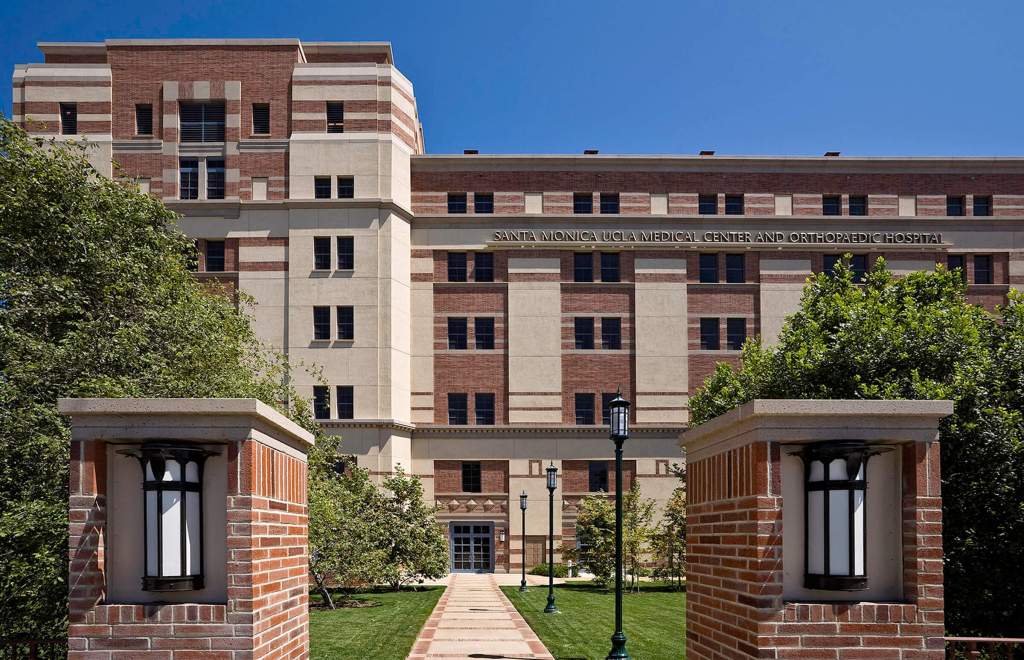
Also, I live within 2-3 miles of three major hospitals: UCLA Ronald Reagan, UCLA Santa Monica, and Saint John. In an average night, we hear several ambulance sirens carting the sick to local emergency centers.

Despite all this, I somehow manage to clock 8-9 hours a night of fairly solid sleep.

I wish I could say the same for Martine. To avoid nightmares, Martine must take a sleeping pill that gives her only 4-5 hours a night, or even less. At a certain point during what I call the Hour of the Wolf, Martine just lies in bed trying without luck to drop off into slumberland.

Whistling Past the Cemetery

Sometimes I wonder why I am alive today. My father died at the age of 74 in 1985; and my mother, at the age of 79 in 1998. One reason I have survived is that between 1962 and 1966, I had to walk a mile to classes at Dartmouth College from one of the more distant dormitories, the infamous Middle Wigwam Hall, later renamed McLane Hall.

My journey led me past the Thayer School of Engineering, the Tuck School of Business, several dormitories, and the scary Hanover, New Hampshire cemetery. Burials in that graveyard went back to the 18th century. At the time I was in college, the walk past the cemetery was dark, lonely, and long. In the winter, it was also quite icy.

Then, after I graduated from college, I had brain surgery entailing the removal of my pituitary gland, after which I started growing again. My left hip did not like that, so the orthopedists at UCLA put me on crutches for two years. More exercise.

No sooner did I get off crutches than I did a lot of walking. It was 1.5 miles (2.4 km) from my apartment in Santa Monica to System Development Corporation, and 2.5 miles (4 km) from the same apartment to my next job at Urban Decision Systems. During that time, I also did a lot of hiking in the Santa Monica Mountains, sometimes on trails that were up to 10 miles (16.1 km) in length.

I don’t do so much walking any more, but over the years I had developed some good habits which, I think, are standing me in good stead today.

Drawing Blood

Looking Back on the First Time

As I recall, I was about ten years old when I first had to give a blood sample from the crook of my elbow. My mother drove me to Saint Luke’s Hospital close by the old Buckeye Road Hungarian neighborhood where we had lived until 1951. When I found out that a nurse wanted to stick a needle in my arm, I took the only reasonable course. I bolted down the corridor until a couple of orderlies deputed to drag me back got hold of me.

I thought it hurt like hell. And ever since, it has not been easy to draw my blood. The veins around my elbow run deep and are not terribly visible. The person drawing my blood has to be very experienced with patients who veins like to hide. There have been times when I was punctured three or four times before a big enough vein was found. Sometimes, they just stuck the needle in the back of my hand, where my veins are more prominent.

Saint Luke’s Hospital from an Old Postcard

The only thing that’s changed is that I no longer resist getting by needles. In fact, I have to administer an insulin shot into my abdomen or thigh four times a day. Even when there is some pain, I know that it won’t be long-lasting. It’s one of those things you get used to as you age.

My Toy Story

White Plastic Building Blocks

When I was young, I did not have many toys. My father worked in a factory as a machine tool builder, and my mother held various jobs including supermarket checker and assistant occupational therapist. We didn’t have much money.

Perhaps the fanciest toy I had was a Lionel O-Gauge model train I received for Christmas 1949. It ran on tracks with three rails and had several freight and passenger cars. My Dad must have felt financially secure that year to spend so much money on me. That train was used by my brother and me for approximately fifteen years.

1950s Vintage Lionel O-Gauge Train Set

What I probably played with more than anything else was a set of white pre-Lego plastic building blocks such as the ones illustrated above. I would build all kinds of structures and use them in conjunction with my pirate and military figurines.

I had a rich imagination as a boy and could play for hours imagining different situations. Do children whose toys are mostly electronic in nature have the same imagination? I think not.

Sawtelle Days

Ketchie’s Stand at Sawtelle and Missouri

The third place I lived in Los Angeles was the first that I had picked out for myself. The apartment on Sunset Boulevard was picked by my roommate and best friend, Peter; and my father picked out the hot-box on Darlington where I sweltered from a total lack of ventilation.

In the fall of 1967, I was diagnosed with idiopathic aseptic necrosis of the left femoral head. My orthopedist at UCLA thought I would be placed in traction for months, so I hightailed it back to Cleveland to stay with my parents. It turned out that the treatment was for me to be on crutches for a couple of years.

Around New Years of 1968, I returned to L.A. and, with the help of my friend Norm, found a studio apartment on Mississippi Avenue a half block west of Sawtelle Boulevard. It was and, to some extent, still is a Japanese neighborhood. And this was at a time that I was gaga over Japanese films and cuisine and culture. I dreamt of meeting some Nisei cutie who looked like Toho film star Mie Hama.

Toho Film Cheesecake Star Mie Hama

Of course, I didn’t—and, besides, what kind of dating scene can a guy on crutches have who doesn’t have either a car or a driver’s license? For me, that was still in the future….

But it was interesting living in a Japanese neighborhood and eating teriyaki and donburi regularly at the O-Sho Restaurant and the Futaba Café, which were right around the corner on Sawtelle. And there was Ketchie’s Stand at Missouri and Sawtelle where the friendly Okie chef cooked up some very creditable hamburgers and tacos.

I was still attending graduate school in film at UCLA and wound up taking two Santa Monica buses to and from classes, unless I just decided to walk the five blocks from Santa Monica Boulevard and Sawtelle.

Around this time, I joined my film friends from UCLA in making regular treks to the Japanese movie theaters in town. At the time, there were five of them: the Toho La Brea, which showed films from Toho; the Kokusai and Sho Tokyo, from Daiei Studio; the Kabuki, from Shochiku; and the Linda Lea, from Tohei. At the time, I think the Japanese film industry was consistently making the best films anywhere. Needless to say, those theaters are no more.

I lived in the Mississippi apartment for about a year before moving to the first of my two Santa Monica apartments on 12th and 11th Streets respectively. But that is a story for another time.

A Vanished Legacy

My Old Grade School—Since Renamed

Between September 1951 and June 1958, I attended Saint Henry Catholic School in Cleveland, Ohio. It was taught mostly by Dominican sisters who had a two-story convent on the premises. I started in second grade after having finished only half of first grade at Harvey Rice Elementary School in the old Buckeye Road neighborhood. My persistent nightmare is that someone will find out that a illegally skipped half a grade and force me to go back to Cleveland and sit at one of those tiny desks and spend my days trying to puzzle out phonics.

I suspect that we moved to the Harvard-Lee neighborhood primarily because, when I lived in the old Hungarian neighborhood, I didn’t speak English, which didn’t help my academic standing.

The good sisters at Saint Henry forced me to become more of an American (and less of a Hungarian). With my poor second grade marks, Sister Frances Martin O.P. (short for Ordinis Praedicatorum, or Order of Preachers) would sneak up behind me when I misbehaved, pull my ears and call me “cabbagehead.”

My grades improved, until in fifth grade I was considered less of a wiseacre and more of an “A” student. My seventh grade teacher, Sister Beatrice, was in her eighties when she taught my class. In eighth grade, I had Sister Rose Thomas.

Back at Saint Henry, we typically had an average of 55 students per class. At some point, the Harvard-Lee neighborhood became majority African American and (probably) Baptist. The church (whose entry is the door on the right in the above photo) was closed down; and in 1993 the school was renamed Archbishop Lyke School Saint Henry Campus, with an average of 17 students per class.

While I was in college, my parents joined the “White Flight” to the all-white community of Parma Heights on the West Side of Cleveland, where my brother attended Holy Family School.

When last I was in Cleveland—for my mother’s funeral in 1998—I couldn’t recognize the old Harvard-Lee neighborhood. The trees that were planted when the neighborhood was new right after the Second World War were now massive. We never had anything like that in the way of shade during the 1950s and 1960s.

Ablative Absolute

St Peter Chanel High School in Bedford, Ohio

The year was 1958. I began attending a new Roman Catholic high school which had opened the previous year. At the time, there were only a sophomore and freshman class. I was in the latter.

My most memorable teacher was the Rev. Gerard Hageman for English. He was super strict. Some years earlier, he has put together his own summary of grammatical rules which he distributed copies of to the class. Any violation of the rules, and the student received not only a flunking grade, but a zero. Since the numerical grades were averaged out—without any sort of bell curve adjustment—it was possible to get and stay in deep trouble insofar as your English grade was concerned.

Fortunately, I led the pack with an 89% average. I thrived in Father Hageman’s class. Even though I told everyone I wanted to be a nuclear physicist, at the time I did not know that I had no head for the sciences and only an indifferent head for mathematics.

I remember Father Hageman assigned us to write one page essays (graded either 0 or 100—nothing in between). Being a good Catholic, I wrote a whole series of essays on Jesus Christ standing before Pontius Pilate. My writing style was influenced largely by what I gleaned from William Faulkner after reading only The Sound and the Fury and by my class in Latin I.

The only thing I remember clearly is when I actually used an obscure Latin construction called an Ablative Absolute in one of my English essays. The opening phrase of the sentence in question was “Cold sweat covering his dolorous countenance” followed by what I conceived Pontius Pilate was thinking.

Prett6y fancy for a 14-year-old! I guess I’m still the same kind of writer, though I generally avoid obscure Latin grammar. On the other hand, by now I have read all of Faulkner’s novels; so I can copy him with some degree of confidence.