Silvina Ocampo and Our Other Selves

Another Great Argentinean Writer for Your Consideration

Another Great Argentinean Writer for Your Consideration

She is incredibly well connected insofar as Argentinian literature is concerned. Her husband was Adolfo Bioy Casares, who was a frequent collaborator with Jorge Luis Borges. Her sister, Victoria Ocampo, published the literary magazine Sur, for which both Bioy Casares and Borges wrote. In her own right, Silvina Ocampo is a superb writer of short stories. (Thus Were Their Faces is an excellent collection published by New York Review Books, which I have just finished reading.) Together with Borges and Bioy Casares, she edited a book of fantasy and horror stories called The Book of Fantasy which was published in 1990.

I like the following poem because it seems to have been influenced by Borges. Or was it she influenced Borges?

In Every Direction

We go leaving ourselves in every direction,
in beds, in rooms, in fields, in seas, in cities,
and each one of those fragments
that has ceased to be us, continues being
as always us, making us
jealous and hostile.
“What will it do that I would like to do?”
we think. “Who will it see that I would like to see?”
We often receive chance news
of that creature . . .
We enter its dreams
when it dreams of us,
loving it
like those whom we love most;
we knock at its doors
with burning hands,
we think it will return in the illusion of belonging to us
mistaken as before
but it will keep being treacherous and unreachable.
As with our rivals we would kill it. We will only be able
to glimpse it in photographs. It must survive us.

New York Review Books has also published a volume of her poetry translated into English that I will probably be ordering soon. The above poem is from that edition.

“He Never Sallied from His Library”

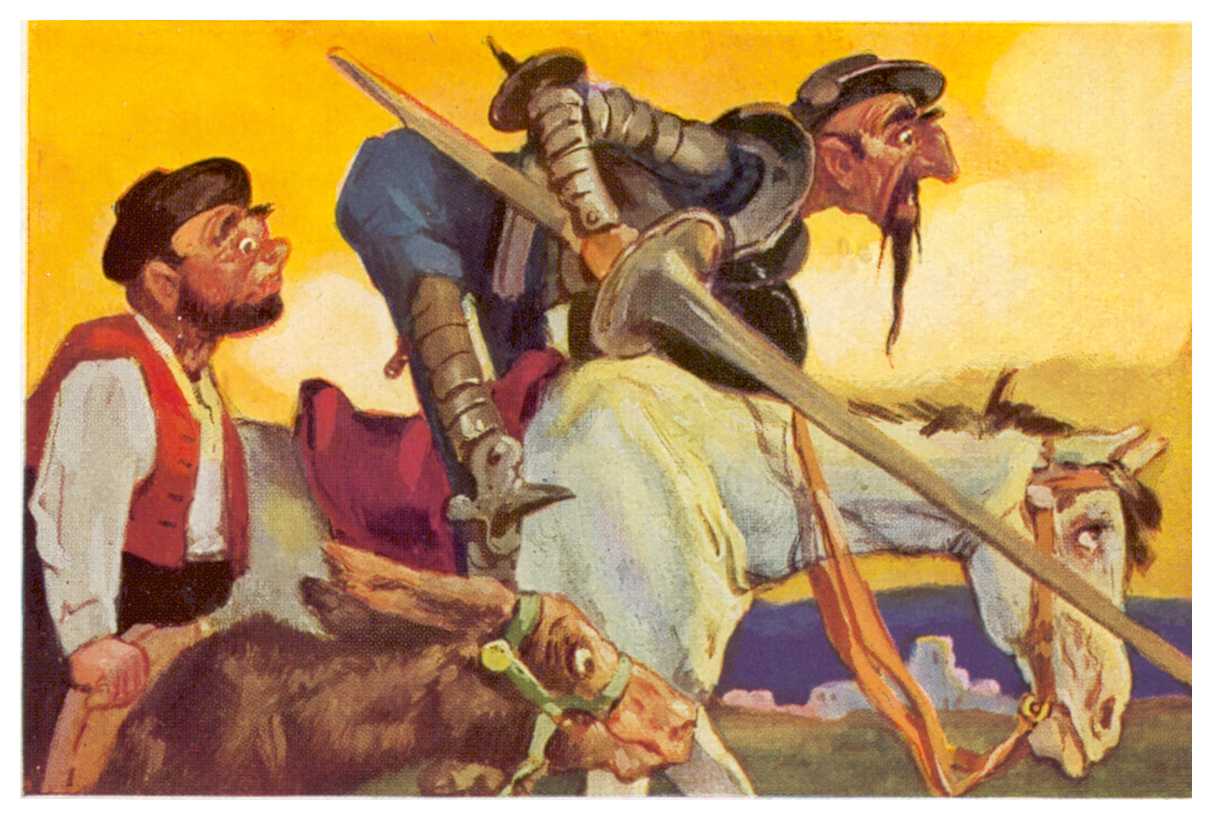
Did Quixote Imagine It All?

Did Don Quixote Imagine It All?

One reason I love this poem about the Knight of La Mancha is that its author, Jorge Luis Borges, was a bookworm like myself. Therefore, he could speculate as to whether the good Don dreamed all his adventures from the comfort of his own library.

Readers

Of that knight with the sallow, dry
Complexion and heroic bent, they guess
That, always on the verge of adventure,
He never sallied from his library.
The precise chronicle of his urges
And its tragic-comical reverses
Was dreamed by him, not by Cervantes,
It’s no more than a chronicle of dream.
Such my fate too. I know there’s something
Immortal and essential that I’ve buried
Somewhere in that library of the past
In which I read the history of the knight.
The slow leaves recall a child who gravely
Dreams vague things he cannot understand.

The translation is by A.S. Kline in this choice selection of Borges’s poetry on the Internet.

Life is different when you’re a reader. During my least favorite time of the year—tax season—I am lifted out of any temptation to depression by solving crimes with Chesterton’s Father Brown and Gaston Laroux with his mysterious Yellow Room; fighting the War of the Roses with Shakespeare’s Henry VI; becoming part of the mysterious search for Malory through a painterly landscape in Geoff Dyer’s The Search; and enjoying the world of books with Anatole France’s Sylvestre Bonnard.

After a day fighting with numbers, bits, and bytes, I vanish into my library and go tilting at my own windmills.

“A Web of Cigarette Smoke and Revery”

This Could Have Been the Place

Could This Have Been “Hotel Insomnia”?

I have just finished reading a strange surrealistic novel—one which made me want to find a poem to match. Here it is: “Hotel Insomnia” by Serbian-American poet Charles Simic.

Hotel Insomnia by Charles Simic

I liked my little hole,
Its window facing a brick wall.
Next door there was a piano.
A few evenings a month
a crippled old man came to play
“My Blue Heaven.”

Mostly, though, it was quiet.
Each room with its spider in heavy overcoat
Catching his fly with a web
Of cigarette smoke and revery.
So dark,
I could not see my face in the shaving mirror.

At 5 A.M. the sound of bare feet upstairs.
The “Gypsy” fortuneteller,
Whose storefront is on the corner,
Going to pee after a night of love.
Once, too, the sound of a child sobbing.
So near it was, I thought
For a moment, I was sobbing myself.

He received a Pulitzer Prize in 1990; and, in 2007, he was appointed Poet Laureate Consultant in Poetry to the Library of Congress.

“The Lark Sings for Itself and God”

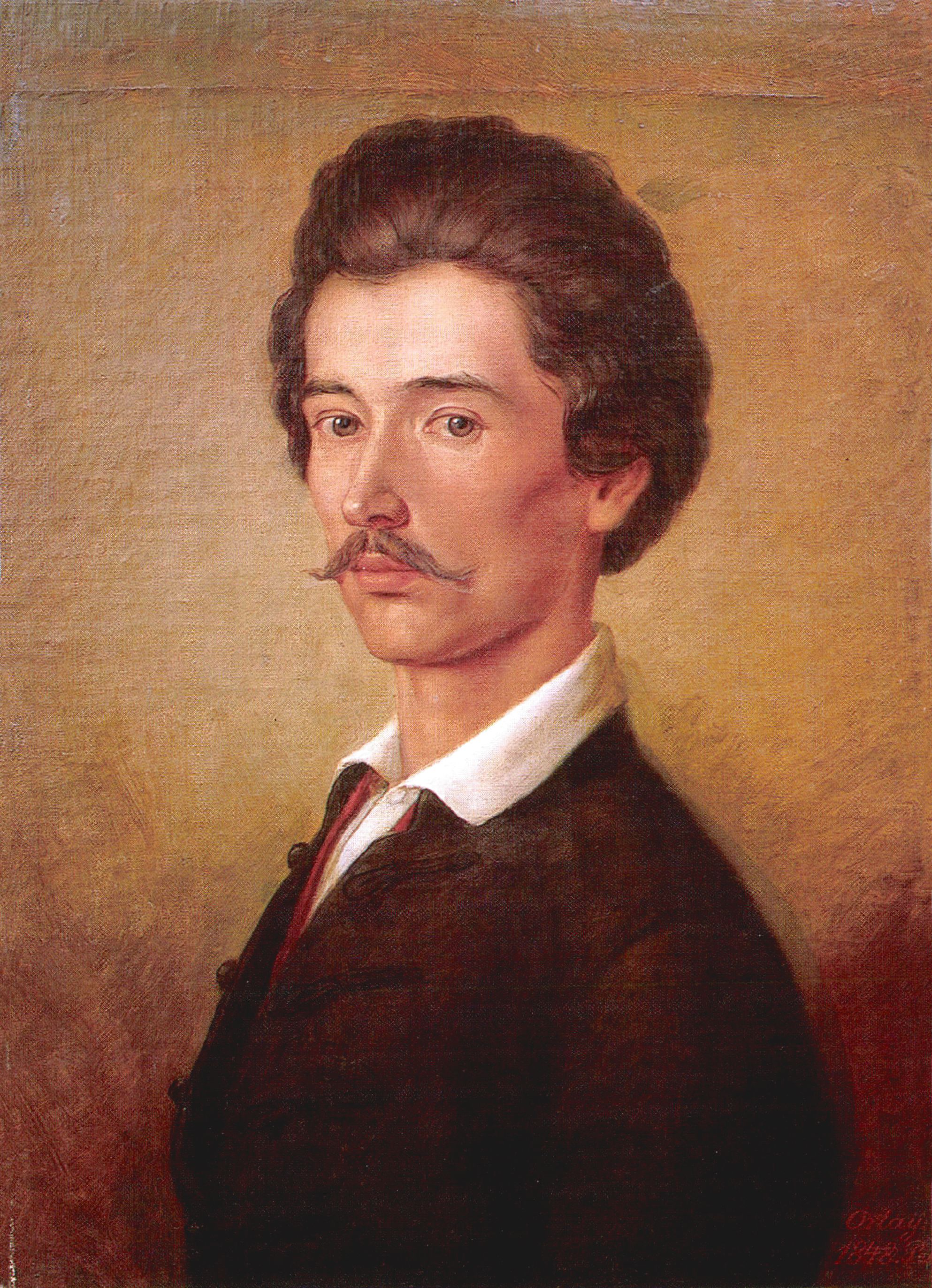
Hungary’s National Poet, Sándor Petofi (1823-1849)

Hungary’s National Poet, Sándor Petőfi (1823-1849)

Now that I am able to spell Hungarian words correctly, I will try to write more blogs about my exploration of my heritage. Today, we have a poem by Sándor Petőfi who died at the Battle of Segesvár during the 1848 Revolution against Austrian rule, where he was shot by Russian troops allied with the Austrians.

Why Are You Still Singing Gentle Bards? (Mit Daltoltok Még ti, Jámbor Költők)

Why are you still singing gentle bards,
in times like these what good is the song?
The world can hardly hear your words,
the noise of war drones on and on.

Lay down your lute, wholesome boys,
your beautiful music falls too flat.
Even the lark’s melodious voice
disappears amid thunderous claps.

Or maybe not. Birds don’t really care
if down here they are even heard?
In the vast blueness of their air,
the lark sings for itself and god.

When sorrow or joy touches our hearts
songs fly from us so naturally,
and sail on the waves of a steady wind
like the tattered leaves of a rosewood tree.

So let us sing lads, like we used to,
but even louder, so our lutes will vie
with the clamor of a disturbed earth,
and add a note or two to the clearing sky.

Half the world in rubble … a bleak vision
and though it troubles our hearts and heads
let our souls descend on these harsh ruins,
and our songs like ivy gently spread.

At home, I have Petőfi’s complete poetic works in a volume I purchased in Budapest, when I was there in 1977. The above poem was translated by Arlo Voorhees and is one of several that appears at Pilvax Online Magazine. I may also in future add some translations of my own.

Emily and Eternity

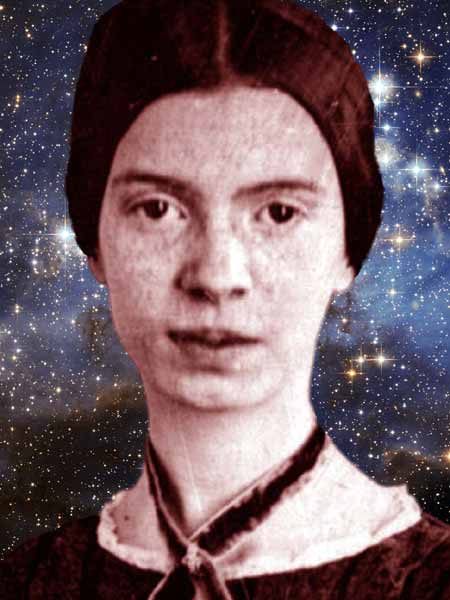
Emily Dickinson

Emily Dickinson

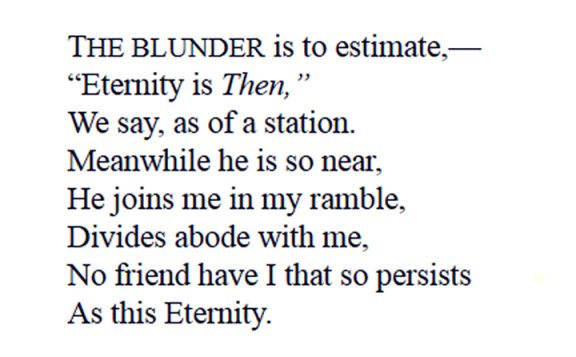
Every so often, I feel like sharing an Emily Dickinson poem with you. Her stark simplicity opens blocked passages in my lungs and brains, allowing my breaths and thoughts to flow more freely.
POEMEmilyEternity

Blake’s Milton

The Expulsion of Satan and His Angels from Heaven

The Expulsion of Satan and His Angels from Heaven

William Blake was not only a great poet, but he was also a great artist. When I was younger, I used to think that his art was a bit clunky—until I started reading his poetry. Then I saw that both the poetry and the art were all of a piece: they were like flames from a mind and heart on fire.

It was in his greatest poem, “The Marriage of Heaven & Hell,” that William Blake wrote this line:

The reason Milton wrote in fetters when he wrote of Angels and God, and at liberty when of Devils and Hell, is because he was a true Poet, and of the Devil’s party without knowing it.

Certainly, Book I of Paradise Lost shows a Satan who is unrepentant and verging on the magnificent:

What though the field be lost?
All is not lost; the unconquerable Will,
And study of revenge, immortal hate,
And courage never to submit or yield:
And what is else not to be overcome?
That Glory never shall his wrath or might
Extort from me.

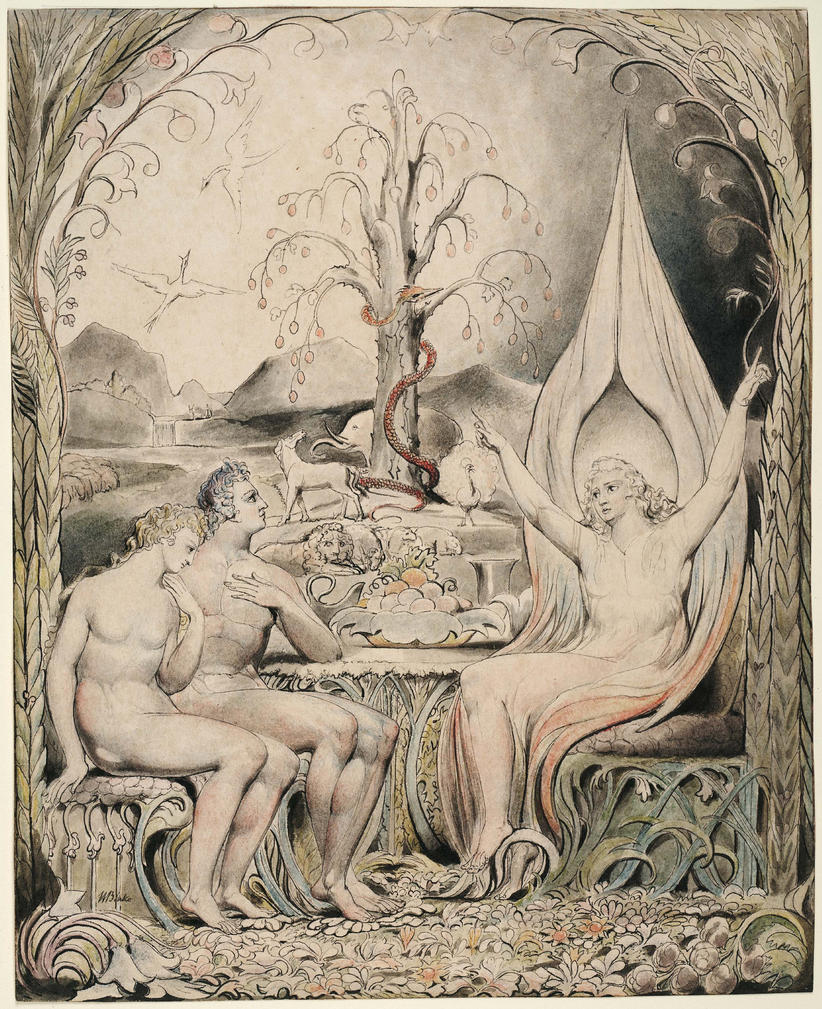
At the same time, Milton’s God is also splendid. When he hears that Satan is loose on Earth, he foresees what is to come and sends the Archangel Raphael to explain to Adam and Eve the story of the fall of Satan and his angel followers. Blake illustrates the scene thus:

Note the Snake Wrapped Around the Tree of the Knowledge of Good and Evil in the Background

Note the Snake Wrapped Around the Tree of the Knowledge of Good and Evil in the Background

In actuality, Milton has Eve fall into a sleep while Raphael talks with Adam.

Blake’s Eden is strangely desert-like, whereas Milton gives us a verdant creation in which Adam and Eve are early agronomists who take care of the plants as part of their daily tasks. No matter, Blake is an artist in his own right and has no compunctions about creating his own Paradise Lost in pictures.


The Etruscan Smile

A Smile That Shines Across Millennia

A Smile That Shines Across Millennia

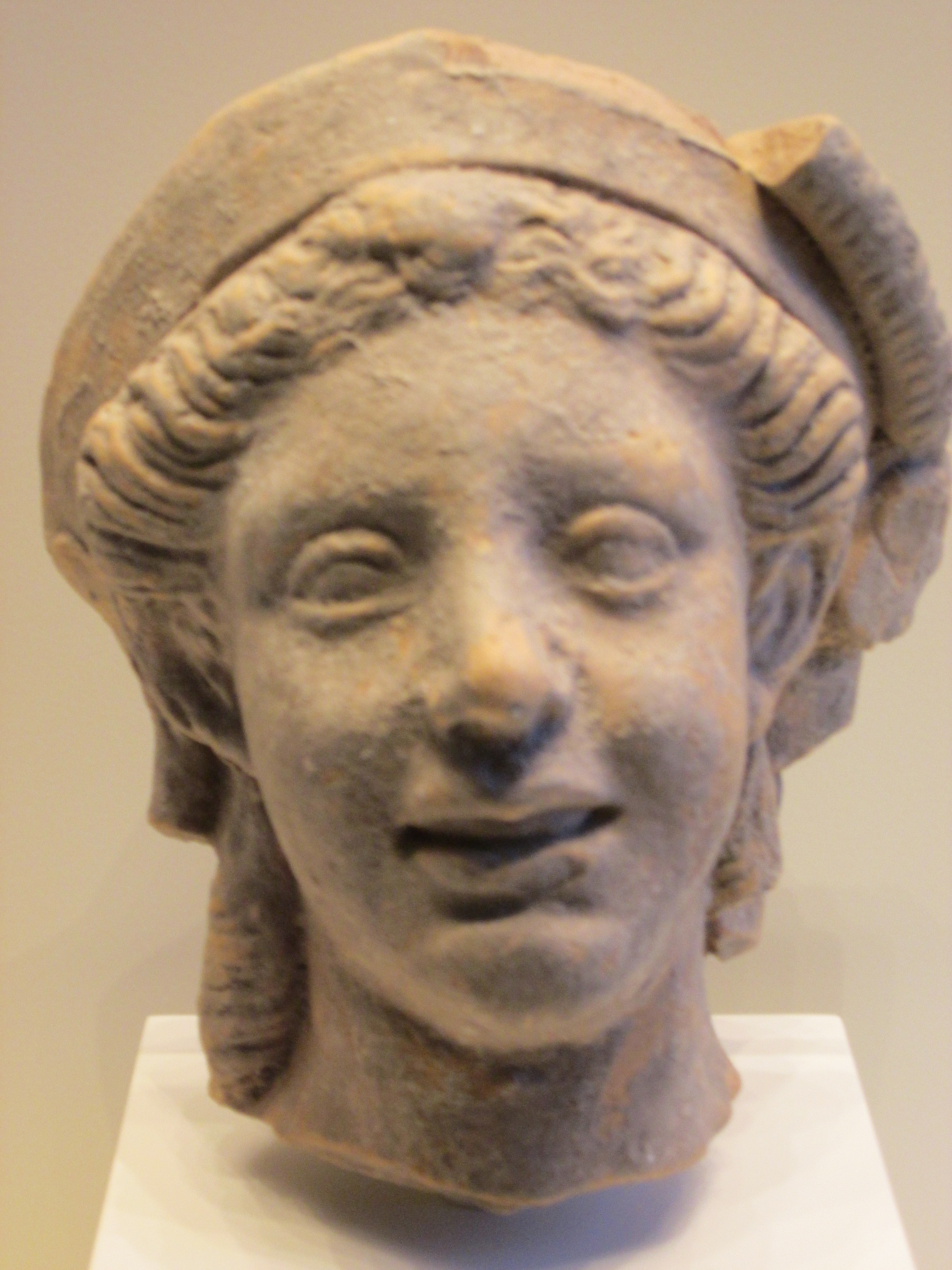
The whole world of the smiling girl in he above photo is long gone, but her smile still speaks to us. It tells us that, even in Ancient Rome, there was something to laugh about. When I took the picture on Friday, I did not note the provenance of the figurine, but I wonder if it was Etruscan. This ancient people is the only one that has allowed itself to be depicted as wreathed in smiles—very contrary to the picture we have of the dour Romans.

Below is a hollow cinerary urn from the Banditaccia Necropolis showing a married couple, whose ashes are presumably intermingled therein:
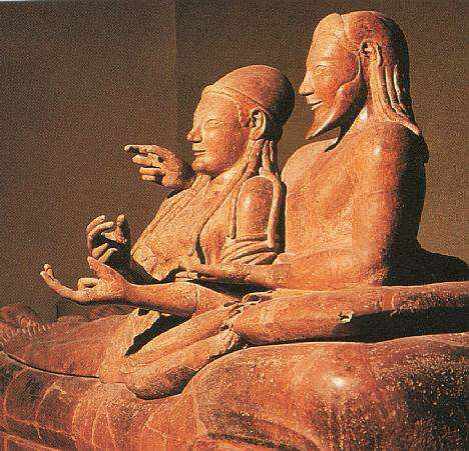
Hi, We’re Dead. Why Don’t You Come and Join Us?

Hi, We’re Dead. Why Don’t You Come and Join Us?

I guess my little figurine is not Etruscan.Their images always show them as having sharp features and almond eyes. The girl above is definitely Roman.

Not to change the subject, but it reminds me somewhat of the following poem by Robert Browning:

My Last Duchess

That’s my last Duchess painted on the wall,
Looking as if she were alive. I call
That piece a wonder, now: Frà Pandolf’s hands
Worked busily a day, and there she stands.
Will ‘t please you sit and look at her? I said
‘Frà Pandolf’ by design, for never read
Strangers like you that pictured countenance,
The depth and passion of its earnest glance,
But to myself they turned (since none puts by
The curtain I have drawn for you, but I)
And seemed as they would ask me, if they durst,
How such a glance came there; so, not the first
Are you to turn and ask thus. Sir, ‘t was not
Her husband’s presence only, called that spot
Of joy into the Duchess’ cheek: perhaps
Frà Pandolf chanced to say, ‘Her mantle laps
Over my lady’s wrist too much,’ or ‘Paint
Must never hope to reproduce the faint
Half-flush that dies along her throat:’ such stuff
Was courtesy, she thought, and cause enough
For calling up that spot of joy. She had
A heart—how shall I say?—too soon made glad,
Too easily impressed; she liked whate’er
She looked on, and her looks went everywhere.
Sir, ‘t was all one! My favour at her breast,
The dropping of the daylight in the West,
The bough of cherries some officious fool
Broke in the orchard for her, the white mule
She rode with round the terrace—all and each
Would draw from her alike the approving speech,
Or blush, at least. She thanked men,—good! but thanked
Somehow—I know not how—as if she ranked
My gift of a nine-hundred-years-old name
With anybody’s gift. Who’d stoop to blame
This sort of trifling? Even had you skill
In speech—(which I have not)—to make your will
Quite clear to such an one, and say, ‘Just this
Or that in you disgusts me; here you miss,
Or there exceed the mark’—and if she let
Herself be lessened so, nor plainly set
Her wits to yours, forsooth, and made excuse,
—E’en then would be some stooping; and I choose
Never to stoop. Oh, sir, she smiled, no doubt,
Whene’er I passed her; but who passed without
Much the same smile? This grew; I gave commands;
Then all smiles stopped together. There she stands
As if alive. Will ‘t please you rise? We’ll meet
The company below then. I repeat,
The Count your master’s known munificence
Is ample warrant that no just pretence
Of mine for dowry will be disallowed;
Though his fair daughter’s self, as I avowed
At starting, is my object. Nay, we’ll go
Together down, sir. Notice Neptune, though,
Taming a sea-horse, thought a rarity,
Which Claus of Innsbruck cast in bronze for me!

That line about “all smiles stopped together” is grimly humorous.


Old Cypresses

Stamp Commemorating the Chinese Poet Tu Fu

1983 Stamp Commemorating the Chinese Poet Tu Fu

It’s been a long time since I posted a blog about poetry. Today’s poem goes back over thirteen hundred years, from A.D. 766 to be exact. China’s Tang dynasty gave us two of the greatest poets who ever lived, Li Po and Tu Fu. The following is from the latter. It is called “Ballad of the Ancient Cypresses.”

Before Kongming’s shrine stands an ancient cypress,
Its branches are like green bronze, its roots just like stone.
The frosted bark, slippery with rain, is forty spans around,
Its blackness blends into the sky two thousand feet above.
Master and servant have each already reached their time’s end,
The tree, however, still remains, receiving men’s devotion.
Clouds come and bring the air of Wuxia gorge’s vastness,
The moon comes out, along with the cold of snowy mountain whiteness.

I think back to the winding road, east of Brocade Pavilion,
Where the military master and his lord of old share a hidden temple.
Towering that trunk, those branches, on the ancient plain,
Hidden paintings, red and black, doors and windows empty.
Spreading wide, coiling down, though it holds the earth,
In the dim and distant heights are many violent winds.
That which gives it its support must be heaven’s strength,
The reason for its uprightness, the creator’s skill.

If a great hall should teeter, wanting rafters and beams,
Ten thousand oxen would turn their heads towards its mountain’s weight.
Its potential unrevealed, the world’s already amazed,
Nothing would stop it being felled, but what man could handle it?
Its bitter heart cannot avoid the entry of the ants,
Its fragrant leaves have always given shelter to the phoenix.
Ambitious scholars, reclusive hermits—neither needs to sigh;
Always it’s the greatest timber that’s hardest to put to use.

Kongming (Zhuge Liang) was the chief minister of Liu Bei, one of the imperial claimants in the Three Kingdoms period. The poem shifts between the tree at the shrine to Kongming near Wuxia gorge (one of the Three Gorges); another tree at the shrine to Kongming and Liu Bei in Chengdu; and the allegorical equation of timber and talent – 材 and 才 (cái) – etymologically the same word. The Brocade Pavilion was built by Tu Fu near his house in Chengdu.

Ancient Chinese Cypress

Ancient Chinese Cypress

In talking about old trees, the poet is also talking about old age. I love the line “Its bitter heart cannot avoid the entry of the ants.”


Serendipity: Dreams of Prisons

One of Giambattista Piranesi’s Carceri Prints

One of Giambattista Piranesi’s Carceri, or Prison Etchings

I am currently reading Thomas De Quincey’s Confessions of an English Opium-Eater (1822). Although I remember starting it some twenty years ago, I never finished it. Turning to it once again, I am delighted by his elegant prose combined with his large-scale surrealistic dreams as a result of ingesting opium. At the same time, I love what he has to say about Giambattista Piranesi (1720-1778), whose etchings of vast imagined prisons are among my favorite prints.

When I started at UCLA in 1967 as a graduate student in the film program, I rented one of the originals of the above print for three months as part of a special program. (I can’t imagine anything so valuable being rented out to students under present circumstances.)

Here is what De Quincey wrote:

Many years ago, when I was looking over Piranesi’s, Antiquities of Rome, Mr. Coleridge, who was standing by, described to me a set of plates by that artist, called his Dreams, and which record the scenery of his own visions during the delirium of a fever.  Some of them (I describe only from memory of Mr. Coleridge’s account) represented vast Gothic halls, on the floor of which stood all sorts of engines and machinery, wheels, cables, pulleys, levers, catapults, &c. &c., expressive of enormous power put forth and resistance overcome.  Creeping along the sides of the walls you perceived a staircase; and upon it, groping his way upwards, was Piranesi himself: follow the stairs a little further and you perceive it come to a sudden and abrupt termination without any balustrade, and allowing no step onwards to him who had reached the extremity except into the depths below.  Whatever is to become of poor Piranesi, you suppose at least that his labours must in some way terminate here.  But raise your eyes, and behold a second flight of stairs still higher, on which again Piranesi is perceived, but this time standing on the very brink of the abyss.  Again elevate your eye, and a still more aërial flight of stairs is beheld, and again is poor Piranesi busy on his aspiring labours; and so on, until the unfinished stairs and Piranesi both are lost in the upper gloom of the hall.  With the same power of endless growth and self-reproduction did my architecture proceed in dreams.  In the early stage of my malady the splendours of my dreams were indeed chiefly architectural; and I beheld such pomp of cities and palaces as was never yet beheld by the waking eye unless in the clouds.  From a great modern poet I cite part of a passage which describes, as an appearance actually beheld in the clouds, what in many of its circumstances I saw frequently in sleep:

The appearance, instantaneously disclosed,
Was of a mighty city—boldly say
A wilderness of building, sinking far
And self-withdrawn into a wondrous depth,
Far sinking into splendour—without end!
Fabric it seem’d of diamond, and of gold,
With alabaster domes, and silver spires,
And blazing terrace upon terrace, high
Uplifted; here, serene pavilions bright
In avenues disposed; there towers begirt
With battlements that on their restless fronts
Bore stars—illumination of all gems!
By earthly nature had the effect been wrought
Upon the dark materials of the storm
Now pacified; on them, and on the coves,
And mountain-steeps and summits, whereunto
The vapours had receded,—taking there
Their station under a cerulean sky.  &c. &c.

The quoted poem is from William Wordsworth’s “The Excursion.”


Funny Peculiar

Poet Mark Ford

Poet Mark Ford

I cracked up yesterday at lunch while I was reading a New York Review of Books article about British poet Mark Ford. In it was a poem called “Funny Peculiar” which I present for your enjoyment:

I sit down here drinking hemlock
While terrible things go on
   upstairs.

Sweat creeps like moss outward to
   the palms,
And time itself seems a strange,
   gauze-like medium.

Sleep will leave still newer scars
   each night, or,
Infuriatingly, is a curtain that
   refuses to close.

On the horizon, bizarre
   consolations make themselves
Known—a full fridge, a silent
   telephone.

The television quiet in its corner
Everything and nothing have
   become a circular

Geometrical figure, seamlessly
   joined,
To be wrestled innocently
   this way and that

Into the most peculiar almost
   whimsical shapes.

In the meantime, do enjoy your bizarre consolations!