“Don’t Read Books!”

Chinese Scroll

Chinese Scroll

Don’t read books!
Don’t chant poems!
When you read books your eyeballs wither away,
leaving the bare sockets.
When you chant poems your heart leaks out slowly
with each word.
People say reading books is enjoyable.
People say chanting poems is fun.
But if your lips constantly make a sound
like an insect chirping in autumn,
you will only turn into a haggard old man.
And even if you don’t turn into a haggard old man,
it’s annoying for others to have to hear you.

It’s so much better
to close your eyes, sit in your study,
lower the curtains, sweep the floor,
burn incense.
It’s beautiful to listen to the wind,
listen to the rain,
take a walk when you feel energetic,
and when you’re tired go to sleep.

—Yang Wan-li (1127-1206), “Don’t Read Books!”

“Mother of Stone and Sperm of Condors”

Pablo Neruda

Pablo Neruda

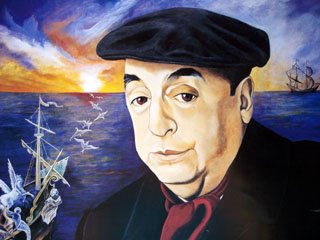
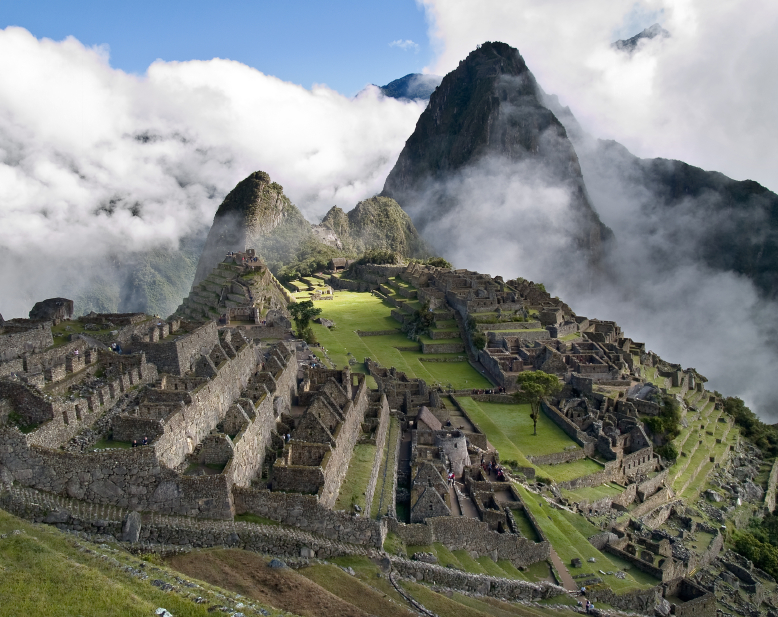
Chilean poet Pablo Neruda has, in his The Heights of Macchu Picchu, written with exquisite feeling about those Inca forebears who gave all South Americans a metaphor that unites the disparate strains of their pasts. The following is the sixth poem in the sequence:

Then up the ladder of the earth I climbed
through the barbed jungle’s thickets
until I reached you Macchu Picchu.

Tall city of stepped stone,
home at long last of whatever earth
had never hidden in her sleeping clothes.
In you two lineages had run parallel
met where the cradle both of man and light
rocked in a wind of thorns.

Mother of stone and sperm of condors.

High reef of the human dawn.

Spade buried in primordial sand.

This was the habitation, this is the site:
here the fat grains of maize grew high
to fall again like red hail.

The fleece of the vicuña was carded here
to clothe men’s loves in gold, their tombs and mothers,
the king, the prayers, the warriors.

Up here men’s feet found rest at night
near eagles’ talons in the high
meat-stuffed eyries. And in the dawn
with thunder steps they trod the thinning mists,
touching the earth and stones that they might recognize
that touch come night, come death.

Neruda’s Macchu Picchu

Neruda’s Macchu Picchu

I gaze at clothes and hands,
traces of water in the booming cistern,
a wall burnished by the touch of a face
that witnessed with my eyes the earth’s carpet of tapers,
oiled with my hands the vanished wood:
for everything, apparel, skin, pots, words,
wine, loaves, has disappeared,
fallen to earth.

And the air came in with lemon blossom fingers
to touch those sleeping faces:
a thousand years of air, months, weeks of air,
blue wind and iron cordilleras—
these came with gentle footstep hurricanes
cleansing the lonely precinct of the stone.

For some reason, Neruda always spelled the ruins “Macchu Picchu” rather than “Machu Picchu,” as it is called today. That’s okay. He’s a poet and can call the place whatever he wants. For all intents and purposes, it’s his creation.


When Hungarians Picnic

My Father and My Uncle at a Picnic

My Father and My Uncle at a Picnic

Set your Wayback Machine to about seventy-five years ago. At one of Cleveland’s many parks, you would see those two irrepressible Slovak twins—Elek (Alex) and Emil Paris—and their girls having a Hungarian-style picnic. The entrée of choice is likely to be szalonnás kenjer, or sliced rye bread with chopped onions, paprika, and smoked bacon drippings. On the left is Elek, my father, with either a girlfriend or his first wife, who was said to be overweight. Next to her are my Aunt Annabelle (née Herbaj) and Uncle Emil. It was a scene to be repeated well into my teen years, except the girlfriend/first wife was replaced by my mother.

Speaking of Hungarian picnics, allow me to quote Carl Sandburg to you. His short poem is called “Happiness”:

I asked the professors who teach the meaning of life
      to tell me what is happiness.
And I went to famous executives who boss the work of
      thousands of men.
They all shook their heads and gave me a smile as though
      I was trying to fool with them
And then one Sunday afternoon I wandered out along
      the Desplaines river
And I saw a crowd of Hungarians under the trees with
      their women and children and a keg of beer and an
      accordion.

I’m not altogether sure about the accordion. The Paris brothers were too busy eating to sing. On the other hand, when I went to Slovakia with my parents in 1977 (it was then part of Czechoslovakia), we sang all the old songs with my pretty cousins Gabriela, Margit, and Marinka (the last two being themselves twins).

A brief note about nationality: Like the Kurds, the Slovaks were a cohesive people for hundreds of years before ever having a country of their own, until Vaclav Havel, last President of Czechoslovakia, granted them their independence in 1993. When my father and uncle were born in 1911, Slovakia was a part of the Austro-Hungarian Empire that was administered by the Hungarians. In the end, my father spoke better Hungarian than Slovak; though I found out as early as 1977, Hungarian was spoken only by the old people.


Tributes: Maya Angelou (1928-2014)

The Young Poetess Half a Lifetime Ago

The Young Poetess Half a Lifetime Ago

Losing a poet is a serious thing. They tend not to get replaced often enough with others who are as good. Or maybe we have gotten too used to their voices to hear newer voices emerging from the mass.

I was saddened to hear of Maya Angelou’s death this morning. She had been in poor health and slipped away from us quietly. Fortunately, her voice remains behind to remind us of what we are missing. Such as these brief lines entitled “Awaking in New York”:

Curtains forcing their will
against the wind,
children sleep,
exchanging dreams with
seraphim. The city
drags itself awake on
subway straps; and
I, an alarm, awake as a
rumor of war,
lie stretching into dawn,
unasked and unheeded.

I love that image of children sleeping while exchanging dreams with seraphim.

To one interviewer who asked in 1984 about how she wrote her poems, Miss Angelou had a quick retort:

I also wear a hat or a very tightly pulled head tie when I write. I suppose I hope by doing that I will keep my brains from seeping out of my scalp and running in great gray blobs down my neck, into my ears, and over my face.

Maybe that’s what I should do when I write these blogs!


Tarnmoor’s ABCs: Jorge Luis Borges

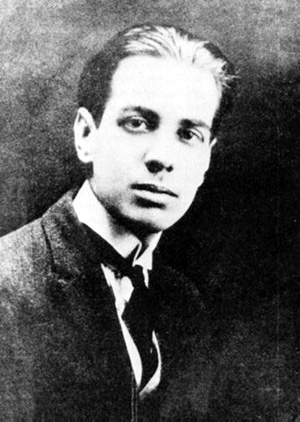
Jorge Luis Borges in 1921

Jorge Luis Borges in 1921

I was so very impressed by Czeslaw Milosz’s book Milosz’s ABC’s. There, in the form of a brief and alphabetically-ordered personal encyclopedia, was the story of the life of a Nobel Prize winning poet, of the people, places, and things that meant the most to him. Because his origins were so far away (Lithuania and Poland) and so long ago (1920s and 1930s), there were relatively few entries that resonated personally with me. Except it was sad to see so many fascinating people who, unknown today, died during the war under unknown circumstances.

My own ABCs consist of places I have loved (Iceland), things I feared (Earthquakes), writers I have admired (G. K. Chesterton and Honoré de Balzac); things associated with my past life (Cleveland and Dartmouth College), and things I love to do (Automobiles and Books). This blog entry is my own humble attempt to imitate a writer whom I have read on and off for thirty years without having sated my curiosity. Consequently, over the months to come, you will see a number of postings under the heading “Tarnmoor’s ABCs” that will attempt to do for my life what Milosz accomplished for his. To see my other entries under this category, hit the tag below marked “ABCs”.I don’t guarantee that I will use up all 26 letters of the alphabet, but I’ll do my best. Today, we’re at the letter “J,” for Jorge Luis Borges.

Ever since I first learned about Jorge Luis Borges (1899-1986), I have been hooked. By now, I have read just about everything that has been translated into English, sometimes two or three times. He has guided my reading for over forty years: Without him, I would never have discovered Iceland or the works of G. K. Chesterton. Without him, I would never have gone to Argentina twice, once in 2006 and once in 2011. His City of Buenos Aires has become one of the ineluctable geographies of my dreams.

Of his works, I recommend most highly Labyrinths, Ficciones, Other Inquisitions, and, of course, his magnificent poetry. Below, from the recent Penguin anthology entitled Poems of the Night, I have excerpted one poem entitled “Sleep” as translated by Stephen Kessler:

SLEEP

The night assigns us its magic
task. To unravel the universe,
the infinite ramifications
of effects and causes, all lost
in that bottomless vertigo, time.
Tonight the night wants you to forget
your name, your elders and your blood,
every human word and every tear,
what you would have learned from staying awake,
the illusory point of the geometricians,
the line, the plane, the cube, the pyramid,
the cylinder, the sphere, the sea, the waves,
your cheek on the pillow, the coolness
of the fresh sheets, the Caesars and Shakespeare
and the hardest thing of all, what you love.
Oddly enough, a pill can
erase the cosmos and erect chaos.

Most people who know of Borges know only that he was blind. For the last half of his life, he was a kind of Teiresias. That’s why I wanted to reproduce above a photograph of the poet in his twenties. The other thing many people know is that he was singled out by the Swedish Academy to be passed over for the Nobel Prize for Literature, primarily because one member of the selection committee disagreed with his politics. This was supposedly because he accepted an award from Chilean dictator General Augusto Pinochet Ugarte. I do not care a fig if Borges’s politics are to the right of mine: All that counts is that he has had a benign, lasting, and ever growing influence on the person I have become.

Aldous Huxley Foresees the Future

The Young Aldous Huxley

The Young Aldous Huxley

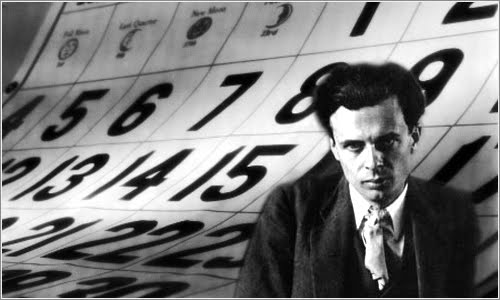
The Twentieth Century gave us two dystopias to consider: George Orwell’s 1984 and Aldous Huxley’s Brave New World. It is interesting to note, years after the fact, whose vision is closer to the reality. My vote goes to Aldous Huxley, as does the writer of this website, which compares the two point by point using comics to make their point.

In 1949, right after 1984 came out, Huxley wrote a letter to Orwell in which he doubts the latter’s vision would ever come true:

The philosophy of the ruling minority in Nineteen Eighty-Four is a sadism which has been carried to its logical conclusion by going beyond sex and denying it.

Whether in actual fact the policy of the boot-on-the-face can go on indefinitely seems doubtful.

My own belief is that the ruling oligarchy will find less arduous and wasteful ways of governing and of satisfying its lust for power, and these ways will resemble those which I described in Brave New World.

Corybantic Dancers on Reverse of Coin

Corybantic Dancers on Reverse of Greek Coin

Last night, I saw a DVD containing what my friend Lee Sanders claims is the only filmed interview with Huxley, shortly before his death in 1963. Considering the extent to which Huxley has been one of my gurus over the last half century, it is no surprise that I found it fascinating. During the interview, Huxley repeatedly made the point that our own intellectualism was over-rigorous. He brings up the point that the Ancient Greeks needed the frenzied Corybantic Dances to maintain their lives on an even keel.

He also quoted two related poems by William Wordsworth entitled “Expostulation and Reply” and “The Tables Turned.” The the former, a visitor, thought to be Hazlitt, remonstrates with the poet, who appears to be sitting and doing nothing:

‘The eye—it cannot choose but see;
We cannot bid the ear be still;
Our bodies feel, where’er they be,
Against or with our will.

’Nor less I deem that there are Powers
Which of themselves our minds impress;
That we can feed this mind of ours
In a wise passiveness.

’Think you, ’mid all this mighty sum
Of things for ever speaking,
That nothing of itself will come,
But we must still be seeking?

’—Then ask not wherefore, here, alone,
Conversing as I may,
I sit upon this old grey stone,
And dream my time away.’

In “The Tables Turned,” Wordsworth goes on the offensive:

Sweet is the lore which Nature brings;
Our meddling intellect
Mis-shapes the beauteous forms of things:—
We murder to dissect.

Enough of Science and of Art;
Close up those barren leaves;
Come forth, and bring with you a heart
That watches and receives.

Significantly, Huxley wrote a novel entitled Those Barren Leaves (1925), which I have not yet read.

Whether we fling our clothes off and engage in wild corybantic dances, or we sit still and let the world communicate with us in its own time, we are in the process sharpening and shaping our minds using all of our faculties, rather than just a few.


“I’ve Seen a Dying Eye”

Emily Dickinson

Emily Dickinson

The above illustration is from TeenReads.Com, which has an interesting take on the New England poetess. Whenever I have been away from her for a while, I love to read a few scattered poems by the poetess from Amherst, Massachusetts. Most recently, I have admired the following short poem:

I ’ve seen a dying eye
Run round and round a room
In search of something, as it seemed,
Then cloudier become;
And then, obscure with fog,
And then be soldered down,
Without disclosing what it be,
’T were blessed to have seen.

The images of the eye of the dying person running round and round, becoming obscured with fog, and finally being “soldered down” are a sobering, almost too intimate view of death. At the very end, Dickinson at last calls the dying person’s sight “blessed” without divulging the mystery of what was seen during those last few moments. A sense of mystery pervades the room, and our consciousness as readers.


At the Admiral Benbow

N. C. Wyeth’s Blind Pew

N. C. Wyeth’s Blind Pew

It was one of the most fun novels I ever read; and it’s also not a bad poem by Jorge Luis Borges. Picture yourself at the Admiral Benbow Inn in the Southwest of England, with Jim Hawkins helping his widowed mother, when suddenly he hears the tap-tap of a cane. It is the old reprobate Blind Pew, and that is also the name of Borges’s poem:

Far from the sea and from fine war,
Which love hauled with him now that they were lost,
The blind old buccaneer was trudging
The cloddy roads of the English countryside.

Barked at by the farmhouse curs,
The butt of all the village lads,
In sickly and broken sleep he stirred
The black dust in the wayside ditches.

He knew that golden beaches far away
Kept hidden for him his own treasure,
So cursing fate’s not worth the breath;

You too on golden beaches far away
Keep for yourself an incorruptible treasure:
Hazy, many-peopled death.

Remember that the poet, too, is blind; so he has a special feeling for “the blind old buccaneer” who turns Jim Hawkins’s world upside down.

What I find most interesting is which “You” it is that Borges refers to in the first line of the fourth stanza. It cannot refer to Blind Pew, because his treasure is buried in the sands of an island in the South Pacific. It cannot be the reader of the poem, because he presumably does not desire “Hazy, many-peopled death.”

Perhaps the answer will come if we look at the same poem in the original Spanish:

Lejos del mar y la hermosa guerra,
que así el amor lo que ha perdido alaba,
el bucanero ciego fatigaba
los terrosos caminos de Inglaterra.

Ladrado por los perrors de las granjas,
pifia de los muchachos del poblado,
dormía un achacoso y agrietado
sueño en el negro polvo de las zanjas.

Sabía que en remotas playas de oro
era suyo un recóndito tesoro
y esto aliviaba su contraria suerte;

a ti también, en otras playas de oro,
te aguarda incorruptíble tu tesoro:
la vasta y vaga y necesaria muerte.

Some things start clicking into place. First of all, the poet uses the intimate form of “you,” not the formal form. It looks as if he is addressing himself. Curiously, the Spanish contains no reference indicating that these other golden beaches are “far away.” Rather, it moves directly to the poet keeping incorruptible his own treasure, that of “vast, vague, and necessary death” [my own literal translation].

Now why would Borges, blind as he is, wish for death and envy Blind Pew for his “beautiful war”? The answer is interesting, because the more of Borges you read, the more you discover that Borges is the descendant of military heroes. One of them fought in Peru at Junín to evict the Spanish. Another was Colonel Francisco Borges Lafinur (1835-1874), who died at the Battle of La Verde. The scion of these military heroes, Borges wished that he himself could have been a military hero. His stories and poems feature knife fights, hoods in the suburbs of Buenos Aires, and bravery in battle between the Unitarios and the Federales. Instead, he was born a weakling with eye troubles, like his father before him.

Tarnmoor’s ABCs: G. K. Chesterton

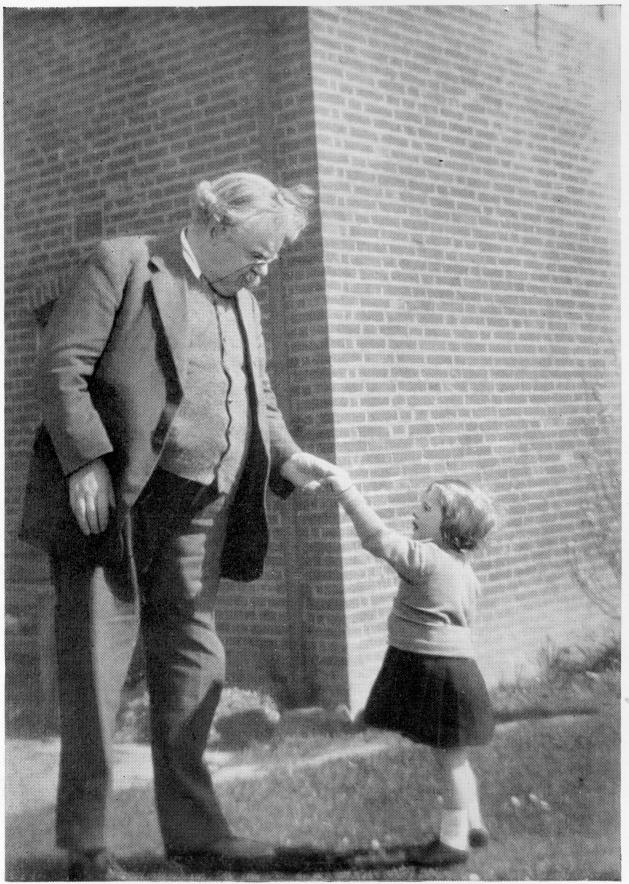
Chesterton with Admirer

Chesterton with Admirer

I was so very impressed by Czeslaw Milosz’s book Milosz’s ABC’s. There, in the form of a brief and alphabetically-ordered personal encyclopedia, was the story of the life of a Nobel Prize winning poet, of the people, places, and things that meant the most to him. Because his origins were so far away (Lithuania and Poland) and so long ago (1920s and 1930s), there were relatively few entries that resonated personally with me. Except it was sad to see so many fascinating people who, unknown today, died during the war under unknown circumstances.

This blog entry is my own humble attempt to imitate a writer whom I have read on and off for thirty years without having sated my curiosity. Consequently, over the next few months, you will see a number of postings under the heading “Tarnmoor’s ABCs” that will attempt to do for my life what Milosz accomplished for his. I don’t guarantee that I will use up all 26 letters of the alphabet, but I’ll do my best. Today, we’re at the letter “G”:

This is my first ABC entry about the writers who have most influenced me. Interestingly, I discovered all of them right around the same time, just after 1970. Gilbert Keith Chesterton (1874-1936) is the only one of them who might very well be declared a saint of the Catholic Church during my lifetime—or not. Roman Catholic Bishop Peter Doyle of Northampton, England, has ordered an examination into the life of the author, which is the usual first step on the road to beatification and, eventually, canonization. Feeling is strong both for and against his sainthood, some alleging that he was anti-Semitic, though I have never seen any evidence to that effect.

GKC was incredibly prolific, writing journalism, fiction, essays, poetry, plays, biography, and political and religious works. I started by reading his essays (mostly published as journalism), then moved on to his fiction, and in the end reading as much of everything as I could find. He is probably one of the most quotable writers of the Twentieth Century. The following is from my favorite of his novels, The Man Who Was Thursday:

He knew that each one of these men stood at the extreme end, so to speak, of some wild road of reasoning. He could only fancy, as in some old-world fable, that if a man went westward to the end of the world he would find something—say a tree—that was more or less than a tree, a tree possessed by a spirit; and that if he went east to the end of the world he would find something else that was not wholly itself—a tower, perhaps, of which the very shape was wicked. So these figures seemed to stand up, violent and unaccountable, against an ultimate horizon, visions from the verge.

And again:

Syme had for a flash the sensation that the cosmos had turned exactly upside down, that all trees were growing downwards and that all stars were under his feet. Then came slowly the opposite conviction. For the last twenty-four hours the cosmos had really been upside down, but now the capsized universe had come right side up again.

Following is a poem called “A Ballad of Abbreviations,” making fun of how Americans replace simple Anglo-Saxon terms with clumsier circumlocutions:

A Ballad of Abbreviations

The American’s a hustler, for he says so,
And surely the American must know.
He will prove to you with figures why it pays so
Beginning with his boyhood long ago.
When the slow-maturing anecdote is ripest,
He’ll dictate it like a Board of Trade Report,
And because he has no time to call a typist,
He calls her a Stenographer for short.

He is never known to loiter or malinger,
He rushes, for he knows he has ‘a date’ ;
He is always on the spot and full of ginger,
Which is why he is invariably late.
When he guesses that it’s getting even later,
His vocabulary’s vehement and swift,
And he yells for what he calls the Elevator,
A slang abbreviation for a lift.

Then nothing can be nattier or nicer
For those who like a light and rapid style.
Than to trifle with a work of Mr Dreiser
As it comes along in waggons by the mile.
He has taught us what a swift selective art meant
By description of his dinners and all that,
And his dwelling, which he says is an Apartment,
Because he cannot stop to say a flat.

We may whisper of his wild precipitation,
That it’s speed in rather longer than a span,
But there really is a definite occasion
When he does not use the longest word he can.
When he substitutes, I freely make admission,
One shorter and much easier to spell ;
If you ask him what he thinks of Prohibition,
He may tell you quite succinctly it is Hell.

You can find many of Chesterton’s best works available for free from Gutenberg.Com or for cheap from E-Book vendors.


A Neglected Poet

Rain as a Subaltern

Rain as a Subaltern

Thomas Hardy is not one of our most widely-read poets. If anything, people are far more familiar with his novels, such as Jude the Obscure, Tess of the D’Urbervilles, and Far from the Madding Crowd. Fortunately, after years of neglect, his poems are coming into their own. The other night, I was reading an essay on the 20th century Russian poet Joseph Brodsky in J. M. Coetzee’s Stranger Shores: Literary Essays 1986-1999, and I came across the following:

[Joseph] Brodsky’s system can best be illustrated from the essay on Thomas Hardy. Brodsky regards Hardy as a neglected major poet, “seldom taught, less read,” particularly in America, cast out by fashion-minded critics into the limbo of “premodernism” (On Grief, pp. 373, 315, 313)

It is certainly true that modern criticism has had little of interest to say about Hardy. Nevertheless, despite what Brodsky says, ordinary readers and (particularly) poets have never deserted him. John Crowe Ransom edited a selection of Hardy’s verse in 1960 [I have a copy]. Hardy dominates Philip Larkin’s widely read Oxford Book of Twentieth-Century English Verse (1973), with 27 pages as opposed to 19 for Yeats, 16 for Auden, a mere 9 for [T. S.] Eliot. Nor did the Modernist avant-garde dismiss Hardy en bloc. Ezra Pound, for instance, tirelessly recommended him to younger poets. “Nobody has taught me anything about writing since Thomas Hardy died,” he remarked in 1934.

Here is my favorite of Hardy’s poems. Picture a man struggling to walk through a rainstorm:

The Subalterns

I

“Poor wanderer,” said the leaden sky,
“I fain would lighten thee,
But there are laws in force on high
Which say it must not be.”

II

–“I would not freeze thee, shorn one,” cried
The North, “knew I but how
To warm my breath, to slack my stride;
But I am ruled as thou.”

III

—“To-morrow I attack thee, wight,”
Said Sickness. “Yet I swear
I bear thy little ark no spite,
But am bid enter there.”

IV

—“Come hither, Son,” I heard Death say;
“I did not will a grave
Should end thy pilgrimage to-day,
But I, too, am a slave!”

V

We smiled upon each other then,
And life to me had less
Of that fell look it wore ere when
They owned their passiveness.

Hardy can be at one and the same time incredibly simple and incredibly deep. At the same time, we have sickness and death acting with compassion against the poor traveler. Who can write such a poem today?