Although the Chinese language is a formidable obstacle to understanding the poetry written in it, there are some Chinese poets whose thoughts nonetheless ring clear. Such is Du Fu (aka Tu Fu), who wrote some thirteen hundred years ago. The name of the poem in today’s blog is:
Restless Night
As bamboo chill drifts into the bedroom, Moonlight fills every corner of our Garden. Heavy dew beads and trickles. Stars suddenly there, sparse, next aren’t.
Fireflies in dark flight flash. Waking Waterbirds begin calling, one to another. All things caught between shield and sword, All grief empty, the clear night passes.
Poems from Iceland are not frequently encountered outside the island nation. The following poem is from Jónas Hallgrímsson (1807-1845).
On New Years Day 1845
Thus the years open, each of them in turn, endlessly blooming flowers of transiency. Their ceaseless passing is of no concern, for time no longer means a thing to me.
I have a treasure of eternal worth: a guardian heart which—girded against harm— gazes on heaven but is content with earth, and views the threatening fog without alarm.
“Always be tough!” they tell me. “Hold your own!” But I would rather live and feel and see— even when this earns me men’s antipathy—
than be a hollow half-decayed sheepbone, hidden by pack-train boys in piles of stone, stuffed full of slander and obscenity.
Today’s poem is “Stella’s Birthday” by Jonathan Swift, written either in 1720 or 1721. This is the version from The Penguin Book of Irish Verse. (It seems that Swift wrote several poems commemorating the young lady’s birthday.)
Stella’s Birthday
All travellers at first incline
Where’er they see the fairest sign
And if they find the chambers neat,
And like the liquor and the meat,
Will call again, and recommend
The Angel Inn to every friend.
And though the painting grows decay’d,
The house will never lose its trade:
Nay, though the treach’rous tapster, Thomas,
Hangs a new Angel two doors from us,
As fine as daubers’ hands can make it,
In hopes that strangers may mistake it,
We think it both a shame and sin
To quit the true old Angel Inn.

Now this is Stella’s case in fact,
An angel’s face a little crack’d.
(Could poets or could painters fix
How angels look at thirty-six:)
This drew us in at first to find
In such a form an angel’s mind;
And every virtue now supplies
The fainting rays of Stella’s eyes.
See, at her levee crowding swains,
Whom Stella freely entertains
With breeding, humour, wit, and sense,
And puts them to so small expense;
Their minds so plentifully fills,
And makes such reasonable bills,
So little gets for what she gives,
We really wonder how she lives!
And had her stock been less, no doubt
She must have long ago run out.

Then, who can think we’ll quit the place,
When Doll hangs out a newer face?
Nail’d to her window full in sight
All Christian people to invite.
Or stop and light at Chloe’s head,
With scraps and leavings to be fed?

Then, Chloe, still go on to prate
Of thirty-six and thirty-eight;
Pursue your trade of scandal-picking,
Your hints that Stella is no chicken;
Your innuendoes, when you tell us,
That Stella loves to talk with fellows:
But let me warn you to believe
A truth, for which your soul should grieve;
That should you live to see the day,
When Stella’s locks must all be gray,
When age must print a furrow’d trace
On every feature of her face;
Though you, and all your senseless tribe,
Could Art, or Time, or Nature bribe,
To make you look like Beauty’s Queen,
And hold for ever at fifteen;
No bloom of youth can ever blind
The cracks and wrinkles of your mind:
All men of sense will pass your door,
And crowd to Stella’s at four-score.
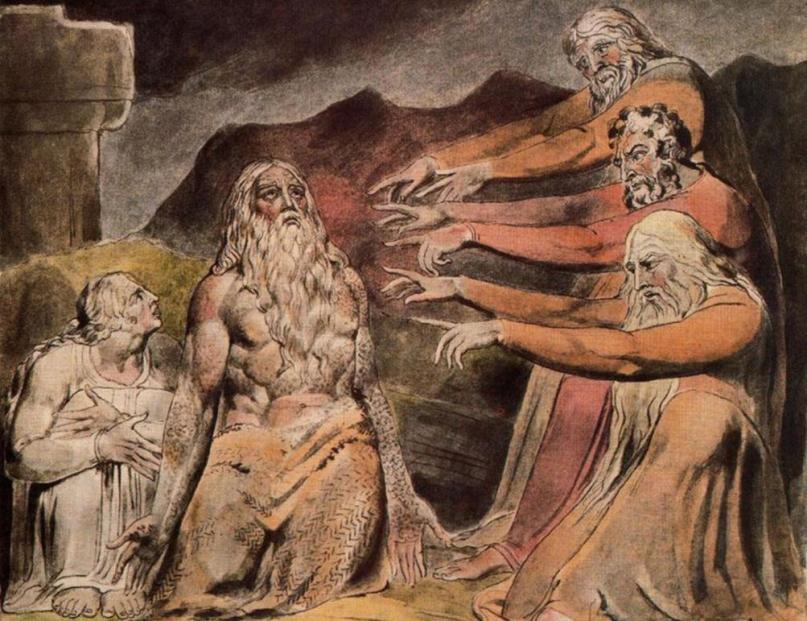
The following prose poem by Wisława Szymborska is the best treatment I have ever read of the Old Testament Book of Job.
SYNOPSIS
Job, sorely tried in both flesh and possessions, curses man’s fate. It is great poetry. His friends arrive and, rending their garments, dissect Job’s guilt before the Lord. Job cries out that he was righteous. Job does not know why the Lord smote him. Job does not want to talk to them. Job wants to talk to the Lord. The Lord God appears in a chariot of whirlwinds. Before him who had been cloven to the bone, He praises the work of his hands: the heavens, the seas, the earth and the beasts thereon. Especially Behemoth, and Leviathan in particular, creatures of which the Deity is justly proud. It is great poetry. Job listens: the Lord God beats around the bush, for the Lord God wishes to beat around the bush. Job therefore hastily prostrates himself before the Lord. Events now transpire in rapid succession. Job regains his donkeys and camels, his oxen and sheep twofold. Skin grows over his grinning skull. And Job goes along with it. Job agrees. Job does not want to ruin a masterpiece.
—Wisława Szymborska. Poems New and Collected 1957-1997
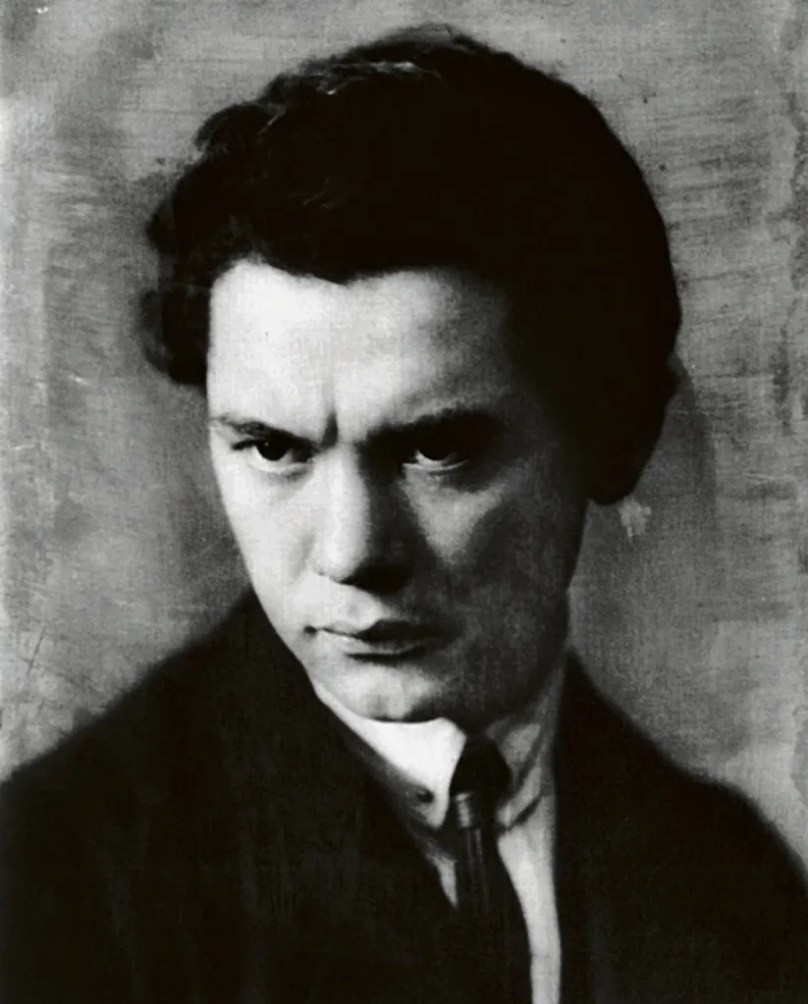
The last few days I have been suffering from a summer cold. I know it’s not summer yet, but the temperature has been hot. During that time, I was reading a manically humorous detective novel written in the 1940s and finally quit as I was two-thirds of the way through. What I picked up next was a collection of 40 disturbing poems by a Hungarian poet who committed suicide by throwing himself under a train in 1937.
It’s not that I’m addicted to gloominess, but I am after all a Hungarian myself. So it must be something in the blood. Here is the title poem from the collection I read:
Perched on Nothing’s Branch
I finally arrive at the sand’s wet edge, look around, shrug
that I am where I am, looking at the end. A silver ax strokes summer leaves. Playfully.
I am perched solidly on nothing’s branch. The small body shivers to receive heaven.
Iron-colored.
Cool shiny dynamos revolve in the quiet revolution of stars. Words barely spark from clenched teeth.
The past tumbles stonelike through space, blue time floating off without a sound. A blade flashes, my hair—
My mustache is a full caterpillar droopong down my numb mouth, my heart aches, words are cold. There’s no one out here to hear—
Another poet whose work I enjoyed at the Los Angeles Times Book Festival was Oakland poet Kim Addonizio. I remember attending one of her readings back when the L.A. Times Festival was held at UCLA. The following poem is from her collection entitled Exit Opera:
This Too Shall Pass
was no consolation to the woman whose husband was strung out on opioids.
Gone to a better place: useless and suspect intel for the couple at their daughter’s funeral
though there are better places to be than a freezing church in February, standing
before a casket with a princess motif. Some moments can’t be eased
and it’s no good offering clichés like stale meat to a tiger with a taste for human suffering.
When I hear the word miracle I want to throw up on a platter of deviled eggs. Everything happens
for a reason: more good tidings someone will try to trepan your skull to insert. When fire
inhales your house, you don’t care what the haiku says about seeing the rising moon. You want
an avalanche to bury you. You want to lie down under a slab of snow, dumb as a jarred
sideshow embryo. What a circus. The tents dismantled, the train moving on,
always moving, starting slow and gaining speed, taking you where you never wanted to go.
This past weekend was the annual Los Angeles Times Book Festival, in fact its 30th anniversary. I attended both days, listened to a number of poetry readings, and picked up some interesting books (as if I needed more). I liked the poems of Louise Mathias that she read from her collection, the hauntingly named What If the Invader Is Beautiful. Here is one of her intriguing desert poems:
Bombay Beach
You know someone, somewhere. A collection of knives, linoleum, unfortunately.
There’s a room now in the chest, Comprised of a secretive clock—
clock in, clock out. The blonde
unfastens the strap, sorry human noise
divorced of song, unlatched now in the palms,
cocaine and ridicule, but also, love, also.
Below is a picture I shot at Bombay Beach, on the polluted shore of the Salton Sea, when my brother and I visited last year.
He died in Baden Baden, Germany at the age of 28—one of the most underrated of American poets, short story writers, and novelists. Granted, most of us have read The Red Badge of Courage in high school, but some of his lesser-known works are even better, such as this poem:
A Man Said to the Universe
A man said to the universe: “Sir, I exist!” “However,” replied the universe, “The fact has not created in me A sense of obligation.”
Too short? Here is another one of my favorites:
I Saw a Man Pursuing the Horizon
I saw a man pursuing the horizon; Round and round they sped. I was disturbed at this; I accosted the man. “It is futile,” I said, “You can never —”
“You lie,” he cried, And ran on.
The illustration above was taken from the Poetry Foundation’s website.
Chilean Writer and Poet Roberto Bolaño (1953-2003)
It’s a pity that Roberto died so young! Only fifty years of age! Over the last ten years he has brought so much enjoyment to me with his novels, stories, and poems. Here is one of his poems of which I am particularly fond:
The Memory of Lisa
The memory of Lisa descends again through night’s hole. A rope, a beam of light and there it is: the ideal Mexican village. Amidst the barbarity, Lisa’s smile, Lisa’s frozen film, Lisa’s fridge with the door open sprinkling a little light on this disorganized room that I, now pushing forty, call Mexico, call Mexico City, call Roberto Bolaño looking for a pay phone amidst chaos and beauty to call his one and only true love.








 Tarnmoor
You must be logged in to post a comment.