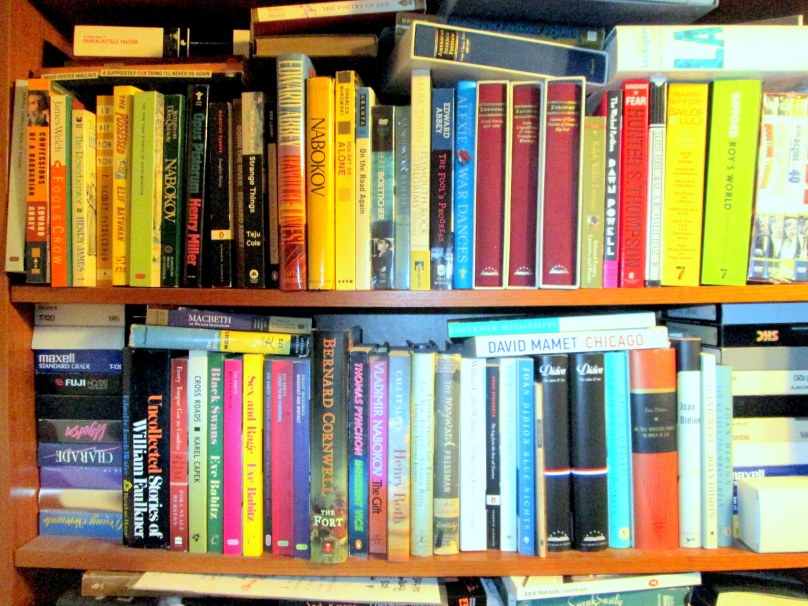
I’ve always loved Henry David Thoreau, and I’ve always loved Edward Abbey. Today I came across a longish essay by Abbey on Thoreau that was by far and away the best thing I ever read about the man from Concord. The first essay in his collection Down the River is entitled “Down the River with Henry Thoreau.” It is at the same time a love letter and a critique.
Writing his thoughts on Thoreau while rafting down the Green River in Utah to where it joins the Colorado, Abbey recognizes the greatness of Thoreau—as well as the fact that he is something of a stick-in-the-mud. Always sociable, he had few real friends other than Ralph Waldo Emerson; Nathaniel Hawthorne thought he was something of a bore. And although he proposed to two local women, he was rejected by both, and very likely died a virgin.
Abbey writes:
Poor Thoreau. But he could also write, in the late essay “Walking,” “The wildness of the savage is but a faint symbol of the awful ferity with which good men and lovers meet.” Ferity—now there’s a word. What could it have meant to Thoreau? Our greatest nature lover did not have a loving nature. A woman acquaintance of Henry’s said she’d sooner take the arm of an elm tree than that of Thoreau.
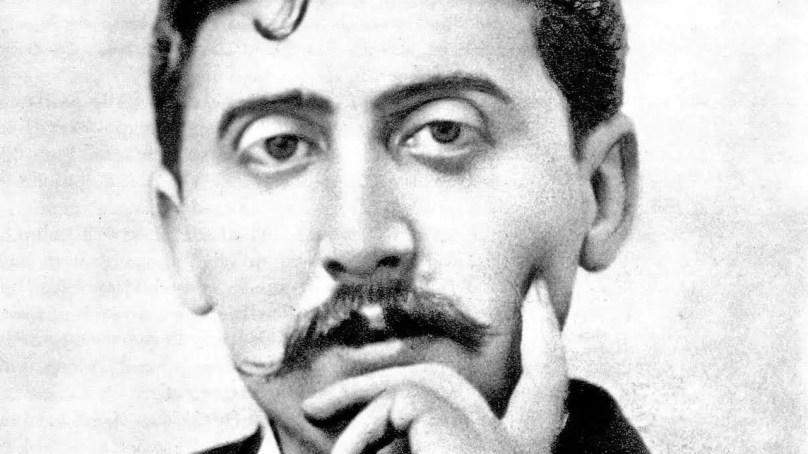
It is possible that we might not have a good time if we encountered Thoreau in the flesh. But then, I wonder if I would like hanging with Honoré de Balzac or Marcel Proust, hoisting a brewski with Charles Bukowski, drinking tea with Emily Dickinson, or chatting with G. K. Chesterton. What each of this figures created was an edifice more than a personality. One honors the edifice while acknowledging that we might think the personality to be a bit yucky, perhaps even slightly repellent.
In his novel Dombey and Son (1848), Charles Dickens had a striking passage about the effect that railroad construction was having on parts of London. I remember this passage vividly from when I first read the book decades ago.
The first shock of a great earthquake had, just at that period, rent the whole neighbourhood to its centre. Traces of its course were visible on every side. Houses were knocked down; streets broken through and stopped; deep pits and trenches dug in the ground; enormous heaps of earth and clay thrown up; buildings that were undermined and shaking, propped by great beams of wood. Here, a chaos of carts, overthrown and jumbled together, lay topsy-turvy at the bottom of a steep unnatural hill; there, confused treasures of iron soaked and rusted in something that had accidentally become a pond. Everywhere were bridges that led nowhere; thoroughfares that were wholly impassable; Babel towers of chimneys, wanting half their height; temporary wooden houses and enclosures, in the most unlikely situations; carcases of ragged tenements, and fragments of unfinished walls and arches, and piles of scaffolding, and wildernesses of bricks, and giant forms of cranes, and tripods straddling above nothing. There were a hundred thousand shapes and substances of incompleteness, wildly mingled out of their places, upside down, burrowing in the earth, aspiring in the air, mouldering in the water, and unintelligible as any dream. Hot springs and fiery eruptions, the usual attendants upon earthquakes, lent their contributions of confusion to the scene. Boiling water hissed and heaved within dilapidated walls; whence, also, the glare and roar of flames came issuing forth; and mounds of ashes blocked up rights of way, and wholly changed the law and custom of the neighbourhood.
In short, the yet unfinished and unopened Railroad was in progress; and, from the very core of all this dire disorder, trailed smoothly away, upon its mighty course of civilisation and improvement.
But as yet, the neighbourhood was shy to own the Railroad. One or two bold speculators had projected streets; and one had built a little, but had stopped among the mud and ashes to consider farther of it. A bran-new Tavern, redolent of fresh mortar and size, and fronting nothing at all, had taken for its sign The Railway Arms; but that might be rash enterprise—and then it hoped to sell drink to the workmen. So, the Excavators’ House of Call had sprung up from a beer-shop; and the old-established Ham and Beef Shop had become the Railway Eating House, with a roast leg of pork daily, through interested motives of a similar immediate and popular description. Lodging-house keepers were favourable in like manner; and for the like reasons were not to be trusted. The general belief was very slow. There were frowzy fields, and cow-houses, and dunghills, and dustheaps, and ditches, and gardens, and summer-houses, and carpet-beating grounds, at the very door of the Railway. Little tumuli of oyster shells in the oyster season, and of lobster shells in the lobster season, and of broken crockery and faded cabbage leaves in all seasons, encroached upon its high places. Posts, and rails, and old cautions to trespassers, and backs of mean houses, and patches of wretched vegetation, stared it out of countenance. Nothing was the better for it, or thought of being so. If the miserable waste ground lying near it could have laughed, it would have laughed it to scorn, like many of the miserable neighbours.
I had never read any of Sherman Alexie’s poems before, Wedged in between the short stories in his collection War Games were a number of poems, the most interesting of which is this one at the start of the book:
The Limited
I saw a man swerve his car And try to hit a stray dog, But the quick mutt dodged Between two parked cars
And made his escape. God, I thought, did I just see What I think I saw? At the next red light,
I pulled up beside the man And stared hard at him. He knew that’d I seen His murder attempt,
But he didn’t care. He smiled and yelled loud Enough for me to hear him Through our closed windows:
“Don’t give me that face Unless you’re going to do Something about it. Come on tough guy,
What are you going to do?” I didn’t do anything I turned right on the green He turned left against traffic.
I don’t know what happened To that man or the dog, But I drove home And wrote this poem.
Why do poets think They can change the world? The only life I can save Is my own.
Original Covers of Three of L. Frank Baum’s Oz Books
It’s all well and good to read serious literature, but every once in a while it is good to return to the land of childhood. Why? It is a place where imagination rules, and we can all use a little childlike imagination to see us through the consequences of our bad decisions.
After reading a serious Russian novel (Eugene Vodolazkin’s The Aviator), I decided to read the sequel to L. Frank Baum’s The Wonderful Wizard of Oz, namely: The Marvelous Land of Oz. In all, Baum wrote some fourteen books set in the Land of Oz, and I intend to read all of them—even the ones I have read some decades ago.
In this second book of the series, there is no Wizard, no Dorothy, no Toto, and no Kansas. We do, however, encounter the Scarecrow and the Tin Woodsman and even the Good Witch Glinda. As Baum was no slave to precedent, he introduces several new characters: the boy Tip, Jack Pumpkinhead, an animated sawhorse, and others. There are in addition the moderately bad witch Mombi, the feminist General Jinjur, the Gump (an animated flying machine made of inanimate spare parts), and H. M. Woggle-Bug, T. E. (The H. M. is short for Highly Magnified, and T. E. refers to his being Thoroughly Educated.)
The closest thing to a villain is Mombi, who is allied with General Jinjur and his all-girl army to rule Oz after the Scarecrow and his friends are driven out. Jinjur’s army does not come across as much of a threat, as they are armed only with knitting needles.
I plan to read one Oz book per month until I have finished the series, which I have complete on my Kindle.
As I read today for the first time a play by French Writer Honoré de Balzac, I was reminded of the last scene in his great novel Père Goriot as Eugène de Rastignac attended the poor funeral of his old neighbor Goriot..
But just as the coffin was put in the hearse, two empty carriages, with the armorial bearings of the Comte de Restaud and the Baron de Nucingen, arrived and followed in the procession to Pere-Lachaise. At six o’clock Goriot’s coffin was lowered into the grave, his daughters’ servants standing round the while. The ecclesiastic recited the short prayer that the students could afford to pay for, and then both priest and lackeys disappeared at once. The two grave diggers flung in several spadefuls of earth, and then stopped and asked Rastignac for their fee. Eugene felt in vain in his pocket, and was obliged to borrow five francs of Christophe. This thing, so trifling in itself, gave Rastignac a terrible pang of distress. It was growing dusk, the damp twilight fretted his nerves; he gazed down into the grave and the tears he shed were drawn from him by the sacred emotion, a single-hearted sorrow. When such tears fall on earth, their radiance reaches heaven. And with that tear that fell on Father Goriot’s grave, Eugene Rastignac’s youth ended. He folded his arms and gazed at the clouded sky; and Christophe, after a glance at him, turned and went—Rastignac was left alone.
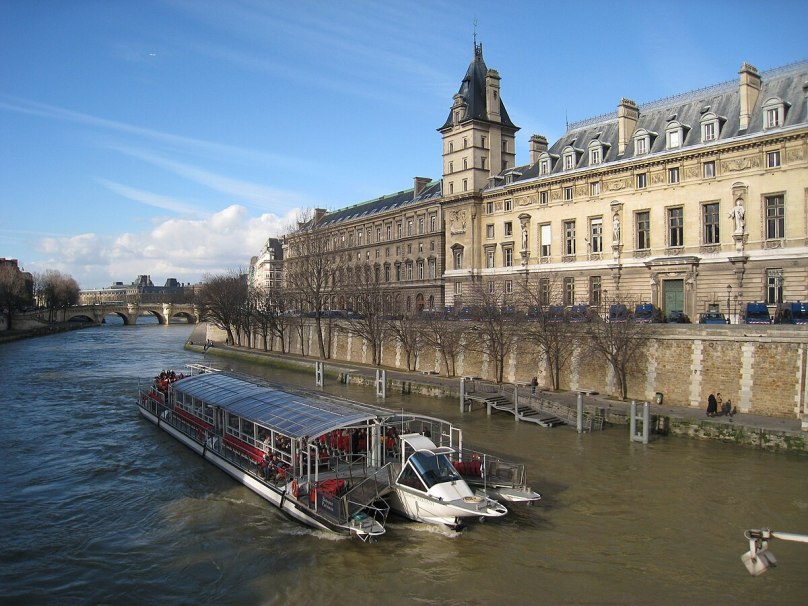
He went a few paces further, to the highest point of the cemetery, and looked out over Paris and the windings of the Seine; the lamps were beginning to shine on either side of the river. His eyes turned almost eagerly to the space between the column of the Place Vendome and the cupola of the Invalides; there lay the shining world that he had wished to reach. He glanced over that humming hive, seeming to draw a foretaste of its honey, and said magniloquently:
“Henceforth there is war between us.”
And by way of throwing down the glove to Society, Rastignac went to dine with Mme. de Nucingen.
At the end of September, I set myself a program for reading several appropriate ghoulish, ghastly, and horrifying titles in honor of my favorite holiday, Halloween. You can read about my intentions here.
Of the ten books I ended up reading last month, five were appropriate for the season:
Ann Radcliffe: The Italian, or the Confessional of the Black Penitents
Joyce Carol Oates: Cardiff, by the Sea
Thomas Ligotti: The Agonizing Resurrection of Victor Frankenstein and Other Gothic Tales
Edgar Allan Poe: The Portable Poe
Ray Bradbury: The Halloween Tree
They were all pretty good. Not surprisingly, I thought the Poe was best, followed by the Bradbury. That was a surprise, as it was written for the juvenile market, but I enjoyed every minute of it. The Ann Radcliffe was a hoot, as the British tended to think that nothing was spookier than Catholicism, (Maybe it was that thing about the Holy Ghost.)
I liked the Ligotti book because it was a fun way to revisit all the high points of the genre. Cardiff, by the Sea wasn’t technically a Halloween novel, except for the fact that everything Joyce Carol Oates is a bit on the spooky side.
As part of my Halloween reading, I am reading Penguin Books’ The Portable Edgar Allan Poe. After having read numerous popular editions of Poe, I decided to concentrate on an edition that took him seriously as one of the greatest literary figures of the young Republic.
There is little doubt in my mind that Poe is a genius. At the same time, there is little doubt in my mind that Poe was anything but warm and fuzzy as a person. He admitted as much in his story “MS. Found in a Bottle” (1832): “Of my country and of my family I have little to say. Ill usage and length of years have driven me from the one, and estranged me from the other.”
Later in the same paragraph:
I have often been reproached with the aridity of my genius; a deficiency of imagination has been imputed to me as a crime; and the Pyrrhonism of my opinions has at all times rendered me notorious.
Looking back at Poe’s life, one can see him constantly produce brilliant stories and poems, yet struggle to earn a living or find happiness in marriage or family. He was orphaned at the age of two and had a tempestuous relationship with his stepfather John Allan, whose last name he adopted as his middle name.
Over and over again, we find that the characters in life died young of consumption. Poe did not react well: He took to the bottle. In fact, he died of alcohol poisoning at the age of forty, though the newspapers of the time blamed “congestion of the brain” or “cerebral inflammation.”
It requires some extra discipline for me to forget Poe’s unhappy life and concentrate on his works. Let’s face it: some very unhappy people have created works of such vivid imagination that made him ever so much more than the lunatic that critic Rufus Wilmot Griswold described as walking “the streets, in madness or melancholy, with lips moving in indistinct curses, or with eyes upturned in passionate prayers, (never for himself, for he felt, or professed to feel, that he was already damned).”
Poe’s life is a closed book, but his works will live on forever.
Usually, I spend much of the month of October each year reading gothic or horror fiction. I have already started reading Ann Radcliffe’s The Italian, or the Confessional of the Black Penitents (1797), after which she quietly stopped writing and spent the last twenty-six years of her life as a private person. I have fond memories of reading her novels The Romance of the Forest (1791) and The Mysteries of Udolpho (1794).
Also, I will inevitably read one of Joyce Carol Oates’s underrated gothic novels or collections of short fiction. Other possibles are Thomas Ligotti and Robert Aickman. And I will certainly re-read some of Edgar Allan Poe’s stories.
In November, I will write a post detailing with gothic/supernatural/horror titles I have read.
Soviet Writers Arkady (1925-1991) and Boris (1933-2012) Strugatsky
They were by far the greatest science fiction authors who ever lived. The two brothers produced a string of masterpieces (the greatest being Roadside Picnic, or Пикник на обочине) that are unlikely to be surpassed, ever!
I am currently reading two of their novels whose chapters are artfully interleaved. They wrote Ugly Swans (Гадкие лебеди) in 1972; in 1986, they wrote Lame Fate (Хромая судьба) and shuffled the chapters together. Reading it is an amazing experience. I’ve finished about 40% of the nested novels at this point. I haven’t even encountered the science fiction yet, though I feel it is lurking and waiting to pounce.
Among the brothers’ works I have read are:
Space Apprentice (1962)
Far Rainbow (1963)
Hard to Be a God (1964)
The Final Circle of Paradise (1965)
The Second Invasion from Mars (1967)
Prisoners of Power (1969)
The Dead Mountaineers’ Hotel (1970)
Roadside Picnic (1972)
Definitely Maybe (1977)
Beetle in the Anthill (1980)
The Time Wanderers (1986)
Many of the Strugatskys’ titles have never been translated into English. I think that, ultimately, they will all be. I can think of few Soviet writers working in any genre that have such a large and consistently excellent body of work.
There are only a handful of science fiction writers I admire. After the Strugatsky brothers, there are Stanislaw Lem from Poland and, in the United States, Philip K. Dick and Clifford D. Simak.
It was September 1962. I was 13½ years old, and newly enrolled as a freshman at Chanel High School in Bedford, Ohio. The school was a Catholic school and taught by the Marist Fathers, who lived in a community on the top floor of the high school building.
Probably the strangest (to me) course in my first year was Latin 1, in which we studied Julius Caesar’s The Gallic Wars in the original Latin.
Most of the kids from wealthier families picked up a copy of Cassell’s Latin-English dictionary, but I chose instead to get the Collins Latin Gem Dictionary, which could fit in my shirt pocket. (Eventually, I also got the White’s Latin Dictionary, which looked to have been originally published in the 1800s.)
My Collins Latin Gem Dictionary is still in good condition and still eminently usable. The nice thing about Latin is that books in and about the Latin language never go out of date.
You must be logged in to post a comment.