Arthurian Spring

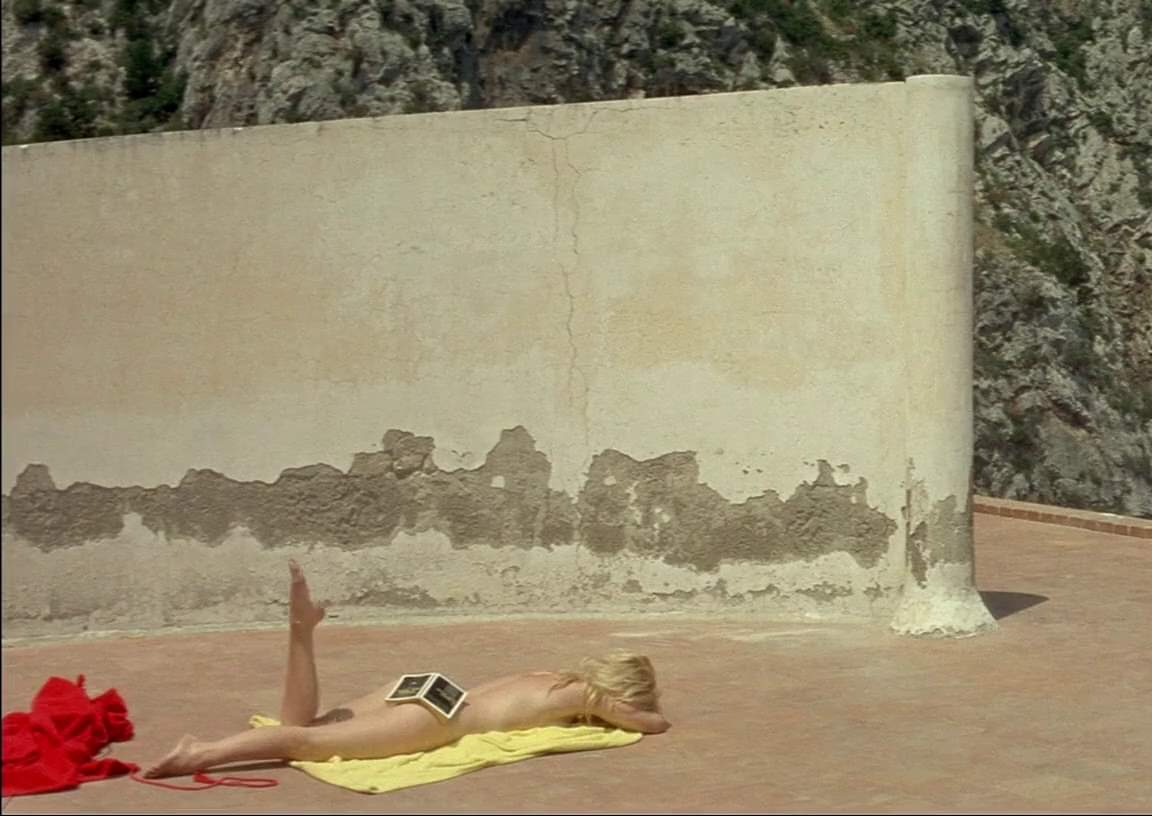
Perceval Arrives at the Castle of the Fisher King

Although I have always liked the philosophical and historical insights of Joseph Campbell, I have suddenly struck a particularly rich vein while reading his Romance of the Grail: The Magic and Mystery of Arthurian Myth. It is not unusual for me to suddenly change directions based on my reading. In this case, I foresee an Arthurian Spring.

By that I mean not just the Christian interpretation of the so-called “Matter of Britain,” but the nexus between that and a semi-Druidical interpretation allied to primitive, Islamic, and East Asian influences. In my book collection are a number of volumes of the originals in translation which I have either never read or read strictly through the eyes of later monastic sources.

The stories of the Holy Grail, the Knights of the Round Table, the Fisher King, and the Waste Land (including T. S. Eliot’s interpretation as influenced by Jesse L. Weston‘s From Ritual to Romance) are a rich treasure trove with interesting links to global sources. Most of the original works were written during a hundred-year period comprising parts of the eleventh and twelfth centuries A.D.

The Holy Grail of Indiana Jones

When most of us think of Camelot and the Arthurian legends, we think of Thomas Malory’s Morte d’Arthur or—worse yet—Howard Pyle’s 1903 re-telling in The Story of King Arthur and His Knights, which was my first introduction. Both are thoroughly influenced by the monastic hijacking of the legend that took place beginning late in the twelfth century.

So I am on my way to an absorbing world that should see me through much of the remaining quarantine and the transition to the worldwide economic depression that will inevitably follow.

Letters: In Search of a Bolt-Hole

Bruce Chatwin Writing

This is the first in a series of posts on literary letters. I have just finished reading Under the Sun: The Letters of Bruce Chatwin, edited by Chatwin’s wife Elizabeth and his biographer Nicholas Shakespeare.

When I started reading Bruce’s work, he was a hero to me. One of the mixed blessings of biography is that you are likely to find out some uncomplimentary facts about your heroes. This is definitely the case with Bruce, who lived an oddly compartmentalized kind of life. He was married, yet carried on numerous affairs with men and women, some of which were predatory. Although I still love his writing, I would feel uncomfortable with the man himself. (For more on this subject, I would refer to two postings by his late friend, Patrick Leigh-Fermor entitled Bruce Chatwin: Letters from a Fallen Angel (or, A Woman Scorned and Bruce Chatwin’s Journey to Mount Athos.

Reading his letters, I find almost half of them deal with Chatwin’s search for a comfortable place to live, where he can read and write—separately from his semi-estranged wife Elizabeth—and carry on affairs. There was no love lost between him and the land of his birth, England. In a letter to Patrick Leigh-Fermor, he writes:

At least I thought that going to England in August might lessen the shock, climatically. But no! Nothing but rain. Freezing cold. I went wind-surfing on a scummy little reservoir near Oxford, and my hands were white and numb after ten minutes. But what I miss the most are the mountains! The country round here is tolerably attractive, immaculately kept: but then you keep running up against the cooling towers of the Didcot [nuclear] power-station; the antennae of Greenham Common; the nuclear installations at Harwell—all of which give me the feelings of claustrophobia.

But then there doesn’t seem to be anyplace that suits. It’s either too hot or too noisy or too crowded with tourists or yadda-yadda-yadda. To his in-laws, he complains:

But I’m afraid this gypsyish life cannot go on. I shall have, whether I like it or not, to get a proper bolt-hole to work in. Otherwise I find I can fritter away six months at a time without achieving anything, and that only makes me very bad-tempered. In a way, I like being in Italy, but the climate’s quite tough in winter, and the villages (because I’m sure it must be in a village) are usually quite depressing. Our old stamping ground in the Basses-Alpes is not half bad. Uzès is another possibility. What it’ll mean, I’m afraid, is that the London flat will have to go. I’m after 3 rooms: one to sleep and work in; one to live in, and a spare room. It’ll have to have a terrace, somewhere to sit out at least; and walks in neighborhood.

Alas, Bruce died without finding his perfect bolt-hole in a land with perfect climate. Every place has its disadvantages, even Los Angeles. Last night, I was jolted awake at 12:03 am by a Richter 3.7 earthquake whose epicenter was only a few miles south of me. And so it goes!


Letters

Say Goodbye to One of My Favorite Literary Forms

When was the last time you actually took pen in hand and wrote a letter to someone? I don’t mean an e-mail or a “text.” I rather think that most of the electronic communications will all disappear into some digital hell, and no one will actually write letters. As the Japanese novelist Haruki Murakami wrote, “How wonderful it is to be able to write someone a letter! To feel like conveying your thoughts to a person, to sit at your desk and pick up a pen, to put your thoughts into words like this is truly marvelous.”

As I continue to read the collected letters of Bruce Chatwin, I foresee that within a very short time (if not now), no one will write letters. The thought saddens me, as I think back on great letters of the past from such writers as Dostoyevsky, Tolstoy, Aldous Huxley, Chekhov, Joseph Conrad, Flaubert, Sir Walter Scott, and countless others. Already in Chatwin, many of the letters are scribbles on postcards, interspersed with a few lengthy think pieces.

Now there are so many more ways to communicate, including telephone, text messaging, e-mail, and more ad infinitum. I can’t for the life of me think of an e-mail I’ve written that was worth saving for any reason except for passing convenience.

People used to save letters because of their sentimental or literary value. Long-distance relationships were conducted in the mails, resulting in bundles of letters that were saved for decades, letters that warmed the soul as the cold of age started to set in. Do I save my text messages? Not for more than a week or two. As for e-mails, I do large-scale erasures every six months or so.

I think I will highlight in future posts some of my favorite letters from authors and poets.

Perpetuum Mobile

Author and World Traveler Bruce Chatwin (1940-1989)

I have several things in common with the late British writer Bruce Chatwin. He was not in love with the land of his birth: In one letter, he writes, “England is gradually closing in on me again, and the moments of euphoria become rarer and rarer as one gets paler and paler and fatter and fatter and the backbiting conversations grow bitchier and bitchier, and everyone thinks and talks of selling something to somebody else.” To his friend Ivry Freyberg, he writes,“My life at present is the way I like it. Perpetuum mobile.”

In like manner, although I had a happy childhood in Cleveland, I desperately wanted to get away from the place and see the world—this at a time when the family’s finances were unencouraging. I got my four-year scholarship to Dartmouth College and went off to graduate school in California, but it was to be another nine years after graduation in 1966 that I went beyond the borders of the U.S.

Reading the letters of Chatwin (published as Under the Sun: The Letters of Bruce Chatwin), I feel some of the same excitement as when I read his two masterpieces, In Patagonia and The Songlines. I loved reading about Bruce’s travels when he was at his best. At the same time, I am well aware of the flip side of his way of life. As his friend John Kasmin wrote, “Bruce’s biggest problem was where to be. He never knew where to be. It was always somewhere else.”

Even more damning was his wife Elizabeth’s judgment on his travels:

He would wear out people in certain places and then have to move on. Everything was absolute paradise etc for about a month and then things were not quite what he wanted them to be. I discovered after years of this nonsense that the sure-fire way of making Bruce not buy a house was for me to agree.

Part of Chatwin’s wanderlust was his own dual life as a bisexual. The letters show him to be seemingly happily married, yet spending most of his time on the road, enthusing about various places and people.

I, too, would like to be a traveler; but I am content to use Southern California as my base. And I hope not to be tempted by a double life.


RLS on Vailima

Epitaph of Robert Louis Stevenson at Vailima on Samoa

He wrote his own epitaph for his grave atop a mountain in Samoa, and it is one of the great epitaphs:

Under the wide and starry sky
Dig the grave and let me lie.
Glad did I live and gladly die,
And I laid me down with a will.

This be the verse you grave for me;
“Here he lies where he longed to be,
Home is the sailor, home from sea,
And the hunter home from the hill.”

I have become obsessed by the last days of Robert Louis Stevenson in the South Pacific, where he busily spent his last days in a frenzy of writing, local politics, and building. I had always liked the work of RLS, but I think in the South Seas he came into his own.

One of the best books I have read over the last twelve months are the Vailima Letters:  Being Correspondence addressed by Robert Louis Stevenson to Sidney Colvin (1895) of the author, named after the estate he built in Samoa, just south of the capital at Apia.

Stevenson’s Estate at Vailima: Early Stages

About a year ago, a friend in Australia recommended two books about Stevenson’s final days in Samoa: Joseph Farrell’s Robert Louis Stevenson in Samoa and Michael Fitzgerald’s The Pacific Room. I immediately downloaded both books from Amazon Kindle. The Farrell I read last May, and I am now halfway through the Michael Fitzgerald. Both have been excellent reads. Now I will try to read more of RLS’s last novels that he wrote from Vailima.

As I grow older, I find myself drawn more and more to Stevenson. His style is so limpid, and yet his thoughts can be so profound.


Reconnecting

French Novelist Marie NDiaye

For one month out of every year, I attempt to read only authors I have not previously read. One of the biggest surprises this month as been French novelist Marie NDiaye, whose novel My Heart Hemmed In [Mon coeur à l’étroit] I have just finished reading. Unlike many postmodern writers, who do not shy away from boring their readers to tears, NDiaye carries out a relentless examination of the life of her heroine, a teacher who, along with her husband, suddenly finds herself roundly hated by most of her acquaintances. Nadia has distanced herself from her ex-husband, her son, and her parents. She has gained weight, and several of the people she meets assume that she is pregnant.

The story begins when her husband Ange returns from the class he has been teaching with a serious stomach wound. A neighbor shows up who is known to everyone she meets as an educator and television personality, but whom she does not know as both she and Ange do not even own a TV, being disconnected from their popular culture. NDiaye follows Nadia closely as she begins to try to reconnect with her past and try to come to terms with the pain she feels. The process is a wonderfully told voyage of self-discovery that transforms her.

I have always felt that the best novels involve a radical transformation of the main character. What NDiaye has done is make this voyage exciting rather than the usual banal. I can see myself reading more of her works in the months to come, most recent of which is La Cheffe, which is on my TBR pile.


Plague Diary 3: Making Adjustments

Small World Books in Better Days

No one knows how long the current plague restrictions will be in place. I have to assume it will be for several weeks. During that time, I cannot go to the movies or dine at a restaurant or visit a museum. For lunch, I visited Bay Cities Imports, Santa Monica’s primo Italian import grocery, and bought one of their Spaniard sandwiches. Based on a review at the Food GPS site:

The Spaniard isn’t made to order; you’ll find them wrapped in white butcher paper on the deli counter, along with other grab-and-go sandwiches, meaning they may sit for awhile. Still, my experience with The Spaniard still worked out well. The small-ish sandwich was stacked with jamon serrano, coppa seca, honey ham, Pamplona chorizo, Gruyere cheese, oregano, parsley, roasted tomatoes, olive oil, black pepper, and rosemary on a chewy baguette. Next time, I’ll probably beg to go back to The Godmother like some kind of guilt-ridden sandwich adulterer, but I enjoyed my brief fling with The Spaniard.

Since I could not eat lunch at the store, I took my lunch with me and drove to Venice, stopping at a parking meter and munching away while a parking enforcement officer kept circling my car seeing if she could ticket me. I waved my sandwich at her by way of greeting.

After I finished, I popped some quarters in the meter and walked to Small World Books. As you can see in the above photo, the bookstore is in the same building as the Sidewalk Cafe. As the bookstore is run by the wife of the cafe owner, it was not altogether surprising that it, too, is closed for the duration.

So I headed home and watched a DVD version of Krzysztof Kieslowski’s Blue (1993), which I loved. I plan to see the other two films in the trilogy—White and Red (both 1994)—within the next few months. After dinner, I read another hundred pages of Jan Neruda’s Prague Tales.


Serendipity: Henry Clarendon IV

Raymond Chandler (1888-1959)

It was the last of Raymond Chandler’s seven novels. The fact of the matter is that Playback (1958) is not up to the other six. But that’s all right, because I like the character of Private Detective Philip Marlowe so much that even so-so Chandler makes for fine reading—and this was the third time I read it. In this reading, one thing stood out from the rest, sort of like a sudden Buddhist burst of contemplation. It was an old man named Henry Clarendon IV sitting in a hotel lobby as Marlowe tries frantically to find a man named Larry Mitchell whose whereabouts are important for solving a case.

“Don’t bother with that one [Mitchell],” he said. “He’s a pimp. I have spent many many years in lobbies, in lounges and bars, on porches, terraces and ornate gardens in hotels all over the world. I have outlived everyone in my family. I shall go on being useless and inquisitive until the day comes when the stretcher carries me off to some nice airy corner room in a hospital. The starched white dragons will minister to me. The bed will be wound up, wound down. Trays will come with that awful loveless hospital food. My pulse and temperature will be taken at frequent intervals and invariably when I am dropping off to sleep. I shall lie there and hear the rustle of the starched skirts, the slurring sound of the rubber shoe soles on the aseptic floor, and see the silent horror of the doctor’s smile. After a while they will put the oxygen tent over me and draw the screens around the little white bed and I shall, without even knowing it, do the one thing in the world no man ever has to do twice.”

He turned his head slowly and looked at me. “Obviously, I talk too much. Your name, sir?”

“Philip Marlowe.”

“I am Henry Clarendon IV. I belong to what used to be called the upper classes. Groton, Harvard, Heidelberg, the Sorbonne. I even spent a year at Uppsala. I cannot clearly remember why. To fit me for a life of leisure, no doubt. So you are a private detective. I do eventually get around to speaking of something other than myself, you see.”

“Yes, sir.”

“You should have come to me for information. But of course you couldn’t know that.”

I shook my head. I lit a cigarette, first offering one to Mr. Henry Clarendon IV. He refused it with a vague nod.

“However, Mr. Marlowe, it is something you should have certainly learned. In every luxury hotel in the world there will be half a dozen elderly idlers of both sexes who sit around and stare like owls. They watch, they listen, they compare notes, they learn everything about everyone. They have nothing else to do, because hotel life is the most deadly of all forms of boredom. And no doubt I’m boring you equally.”


Gothick

The Four Volumes of Ann Radcliffe’s The Mysteries of Udolpho

I have been spending some time lately reading 18th century English literature. As an English major at Dartmouth College, my favorite course was Chauncey Chester Loomis’s survey of the 18th century English novel. Although he is known primarily for his work on Arctic exploration, I admired his teaching and only now am filling in some of the gaps of what he taught me, which gaps were mostly the result of my own laziness at the time.

Over the last month, I have read Horace Walpole’s The Castle of Otranto, which I didn’t much like, and Laurence Sterne’s The Life and Opinions of Tristram Shandy, Gentleman, which I thought was fantastic (reprising my reaction back in the 1960s). Tonight, I have completed Ann Radcliffe’s The Mysteries of Udolpho, which was not on my course syllabus, but which was highly regarded as a work of the gothick sensibility of the times.

The Plot of Udolpho (Much Condensed)

The setting for the middle third of the book is the grim Castle of Udolpho in the Pennine Mountains near Venice, Italy. Emily Saint-Aubert, being a minor,must submit to the will of her cruel, unfeeling aunt, Madame Cheron, who marries a dubious Italian bandit chief known as Count Montini.

The Grim Castle of Udolpho

In many ways, the highly atmospheric castle with all its ruined galleries, secret passages, outlandish tapestries, and the cavorting banditti who make the castle their headquarters is the star of the novel. It is hard for a 21st century male such as myself to admire a frequently fainting heroine such as Mlle. Saint-Aubert. I managed to stick it out for the novel’s full 620 pages because Ann Radcliffe is really a superior writer. The things I didn’t like about it were more the result of the culture of the times than any deficit in the author’s abilities. There are some beautiful passages and not a few negligible verses.
 

Dostoyevsky Describes Trump Voters

The Supporters of Trump: A Great Mystery?

I am re-reading the Richard Pevear and Larissa Volkhonsky translation of Fyodor Dostoeyevsky’s Notes from the Underground. Suddenly, I saw the following passage, which predicted the emergence of Trump and his supporters:

Man really is stupid, phenomenally stupid. That is, he’s by no means stupid, but he’s so ungrateful that it would be hard to find the likes of him. I, for example, would not be the least bit surprised if suddenly, out of the blue, amid the universal future reasonableness, some gentleman of ignoble, or, better, of retrograde and jeering physiognomy, should emerge, set his arms akimbo, and say to us all: “Well, gentlemen, why don’t we reduce all this reasonableness to dust with one good kick, for the sole purpose of sending all these logarithms to the devil and living once more according to our own stupid will!” That would still be nothing, but what is offensive is that he’d be sure to find followers: that’s how man is arranged. And all this for the emptiest of reasons, which would seem not even worth mentioning: namely, that man, whoever he might be, has always and everywhere liked to act as he wants, and not at all as reason and profit dictate; and one sometimes even positively must (this is my [i.e. Dostoyevsky’s] idea now).