V.—That Obscure Object of Desire

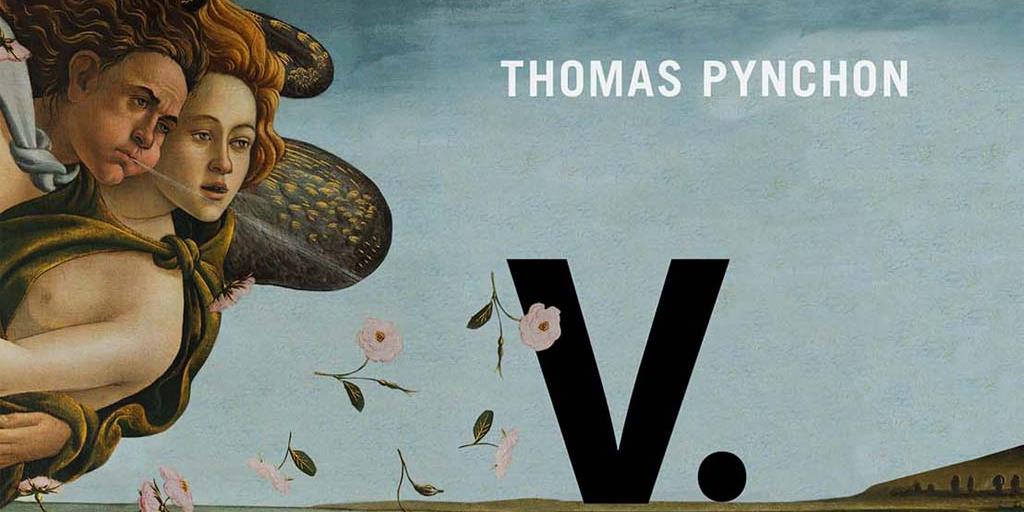
Swedish Book Cover for Thomas Pynchon’s V.

I have just finished reading Thomas Pynchon’s first novel, V. (1963). This is one of those works which is so disturbing to readers who feel they must understand every reference, every symbol, every character. And what if the novel has hundreds of characters, most of them with highly fanciful names like Herbert Stencil or Benny Profane or Rachel Owlglass or Pig Bodine. For good or ill, something happened in the twentieth century that resulted in a great divorce of art from the common everyday experience of reality.

One can find it in James Joyce (Finnegan’s Wake), Samuel Beckett (The Unnamable), Georges Perec (Life: A User’s Manual), William Faulkner (Absalom, Absalom!), and Gertrude Stein (The Making of Americans). And, in fact, all over the place.

Because my academic training is in film history and criticism, I was able to make a connection to one of my favorite directors, the Spaniard Luis Buñuel. In an interview with André Bazin and Jacques Doniol-Valcroze that appeared in Cahiers du Cinéma in June 1954, Buñuel wrote:

For me it is natural to tend to see and to think of a situation from a sadistic rather than from, say, a neorealistic or mystical point of view. I ask myself: What must this character reach for? A revolver? A knife? A chair? In the end, I always choose whichever is most disturbing. That’s all…. [Quoted in Ado Kyrou, Luis Buñuel: An Introduction (New York: Simon & Schuster, 1963)]

Film Director Luis Buñuel (1900-1983)

If one looks at Pynchon’s novel V., one finds a search for a feminine entity referred to as V., presumably because that is the first letter of her name. In the course of the novel, there are dozens of characters who could qualify, and Pynchon is in no hurry to identify which one is right. The candidates include Victoria Wren, Vera Meroving, the goddess Venus, Veronica Manganese, a rat named Veronica in the sewers of New York, Madame Viola, Hedwig Vogelsang, the Blessed Virgin, or ??? Then again, V. could be a place, such as Valetta (Malta), Venezuela, the mysterious Vheissu (never explained), Vesuvius, or the V-Note Jazz Club in Manhattan ???

Thomas Pynchon is not terribly interested in providing closure, but he does know how to suck you in and keep turning those pages until you get to the strange death by waterspout of Sydney Stencil in 1919.


Filling In the Gaps

No One Considers This To Be One of Faulkner’s Best

If one has read a whole lot of books, as I have, one eventually gets to the point of filling in the minor works that are not highly regarded by the critics. In William Faulkner’s case, that includes his first two novels, Soldiers’ Pay (1926) and Mosquitoes (1927). It was only when he began setting his stories in his mythical Yoknapatawpha County that Faulkner’s reputation began its steady ascent. And even then, he was not frequently read until he received the Nobel Prize for Literature in 1949 that Americans decided to start reading his work. Since that point, his work has remained in print.

What is to be gained from reading an author’s minor works, especially at the beginning of his career? I enjoyed Soldiers’ Pay only because I love Faulkner. I better understand the steps he took to be able to write The Sound and the Fury (1929), As I Lay Dying (1930), Light in August (1932), Absalom! Absalom! (1936), The Hamlet (1940), and Go Down Moses (1942).

I will continue to “fill in the gaps” in my reading of Faulkner’s work. In the next year or so, I plan to read Mosquitoes, Pylon (1935), and A Fable (1954). At the same time, I’ll re-read one of the great novels just to remind myself what I am trying to do.

William Faulkner

I am doing the same thing with the opus of Fyodor Dostoyevsky, but in a slightly different way. I am midway through Joseph Frank’s five-volume biography of the writer and am reading or re-reading his work in tandem with the biography. I am about to re-read Notes from the Underground (1864).


The Trilogy from Hell?

Samuel Beckett (1906-1989)

I finally finished reading Samuel Beckett’s “trilogy” of novels: Molloy (1955), Malone Dies (1956), and The Unnamable (1958). The years are for the English versions written by Beckett of works originally released in French.

In recommending it to you, I am doing you a favor, or I am doing you no favors, or you are probably wondering about my sanity, which you might well do, as I do myself even on changeable days in the spring. Have I gone too far? Or have I not gone far enough?

It took me many years to read this trilogy, though I only started in 2010. (It took me eight years to read 414 pages? I must be slipping.) I owned the edition below since the 1970s at least.

The Evergreen Black Cat Edition I Read

Molloy wasn’t too bad. At times, it even resembled a novel as I knew it, or thought I knew it:

And if I failed to mention this detail in its proper place, it is because you cannot mention everything in its proper place, you must choose, between the things not worth mentioning and those even less so. For if you set out to mention everything you would never be done, and that’s what counts, to be done, to have done.

Malone Dies are the thoughts of a dying man (who must actually be pretty healthy to remember so many thousands of words in his “condition”):

For I want as little as possible of darkness in his story. A little darkness, in itself, at the time, is nothing. You think no more about it and you go on. But I know what darkness is, it accumulates, thickens, then suddenly bursts and drowns everything.

With The Unnamable, one is on altogether dicier terrain. There are paragraphs that seem to go on for a hundred pages and sentences that go on for two or three pages. Molloy and Malone had actual human existences at some point, but the unnamed character in the final novel, who may once have been called Mahood and who may once have been called The Worm, has one arm and one leg, or no arms and no legs. At one point he has a single lidless unblinking eye, and he seems to have ears and a mouth, or maybe not. There isn’t a lot to hold on to in The Unnamable. Except, of course, the language:

…I don’t feel a mouth on me, I don’t feel the jostle of words in my mouth, and when you say a poem you like, if you happen to like poetry, in the underground, or in bed, for yourself, the words are there, somewhere, without the least sound, I don’t feel that either, words falling, you don’t know where, you don’t know whence, drops of silence through the silence, I don’t feel it, I don’t feel a mouth on me, nor a head, do I feel an ear, frankly now, do I feel an ear, well frankly now I don’t, so much the worse, I don’t feel an ear either, this is awful, make an effort, I must feel something, yes, I feel something, they say I feel something, I don’t know what I feel, tell me what I feel and I’ll tell you who I am…

Now all of that is just a small part of a single sentence near the end of The Unnamable. Can you wrap your head around a hundred and twenty pages of that? I managed to and even loved it. This is a “story” in which nothing happens, in which everything ventured meets its opposite. It’s like a collision of matter with anti-matter. Boom!


An Excerpt from My Book List

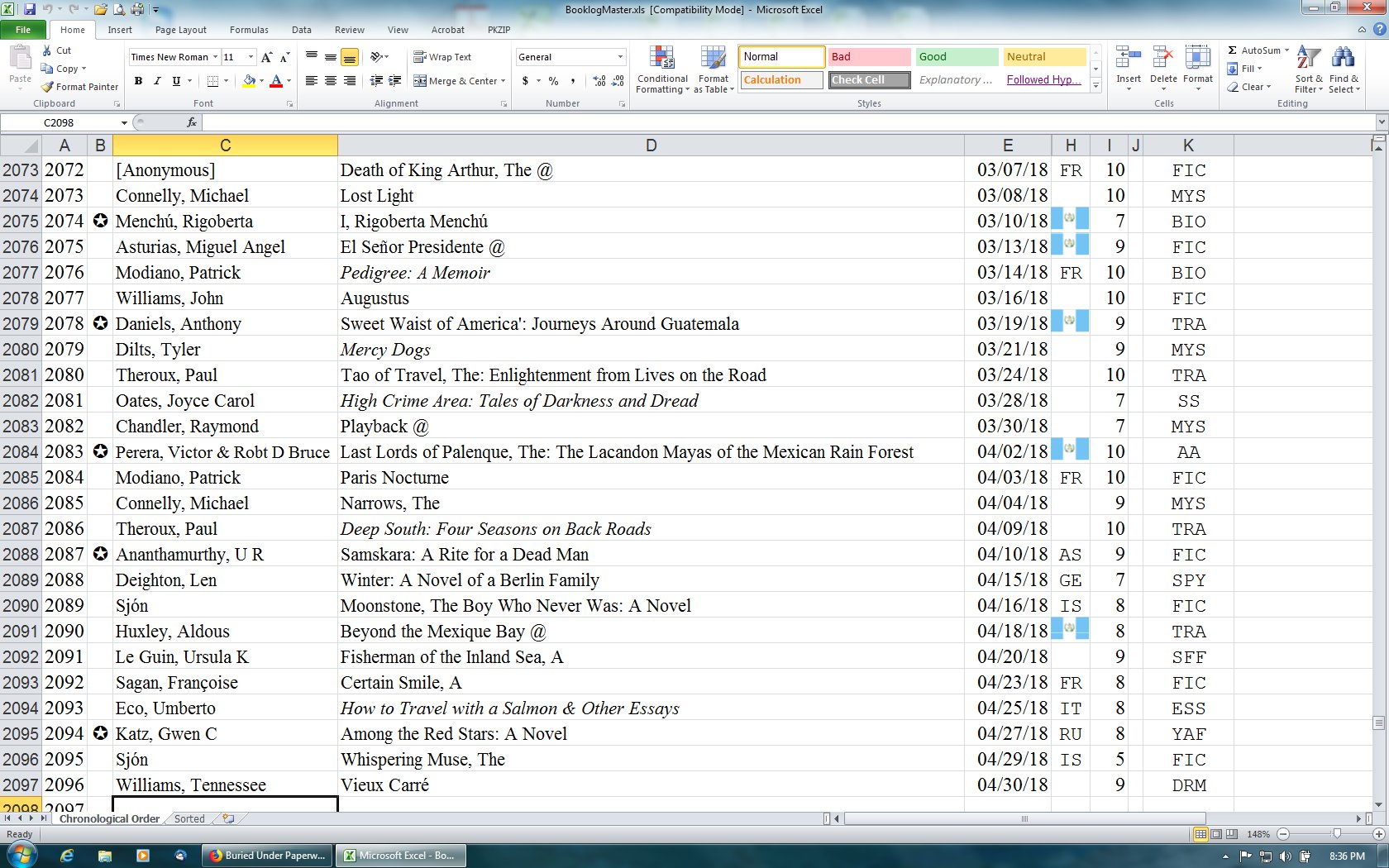
My Excel List of Books I’ve Read Since Early March

I know it’s a little fancy, but I’ve been messing with computers since 1964, when I was a junior at Dartmouth College. There are a lot of abbreviations and symbols which may not make sense, but which I will try to explain here:

  • Col B: A star indicates a new author I have never read.
  • Col D: If an entry is in Italics, I read it on my Kindle. A Commercial-At (@) indicates a re-read.
  • Col H: Either a miniature Guatemalan flag for my vacation reading, or a 2-character country abbreviation. FR=France, AS=Asian, GE=Germany, IS=Iceland, IT=Italy, RU=Russia.
  • Col I: My rating from 0 (worst) to 10 (best).
  • Col K: Genre. FIC=Fiction, MYS=Mystery,BIO=Biography, TRA=Travel, SS=Short Stories, AA=Anthropology & Archeology, SFF=Sci-Fi and Fantasy, DRM=Drama, YAF=Young Adult Fiction, and so on.

The first column is a counter indicating I have read 2,096 works since 1998, when I started. Now that I am retired (for now), I am reading more than ever.


Among the Night Witches

A Young Adult Novel About Women Night Bomber Pilots for the Russians in WW2

I don’t usually read Young Adult fiction, but circumstances dictated that I read Among the Red Stars by Gwen C. Katz. First of all, my friend Bill Korn recommended it to me and suggested that I visit the author at last weekend’s Los Angeles Times Festival of Books. The which I proceeded to do last Saturday. Gwen was there in a shared booth, and I purchased a hardbound copy of her book.

Yesterday, I finally had a chance to start the book. Given Bill’s recommendation, I expected it would be interesting. It was actually written well enough to almost qualify as standard adult fiction. The book was about what the Wehrmacht troops invading Russia called the Nachthexen, the Night Witches. The term referred to young women who flew primitive old bombers at night behind enemy lines. The heroes are Valka (Valentina) and Iskra, a pilot and navigator who knew each other from childhood. Valka corresponds with Pasha, a friend from her home town who is conscripted into a rifle company.

Almost half of the novel consists of letters between Valka and Pasha, which gradually turn into love letters as Valka begins to realize how much her childhood friend means to her.

Valka (Valentina) , the Heroine

Many of the events described as well as many of the minor characters are taken from real life. Although I do not know much about the women flyers in the VVS (short for Военно-воздушные силы, or Military Air Forces), I felt that Gwen Katz did a creditable job researching her book. Added to that were interesting and diverse characters and well-plotted-out action that was exciting without being too subject to shallow wish fulfillment.  The ending, in which Valka and Iskra fly to rescue Pasha in German-held territory might be a bit much; but it is well within the standards of YA literature.

Author Gwen C. Katz at the L.A. Times Festival of Books

I am curious to see what Miss Katz will do for her next novel. And I will be looking out for it.


Serendipity: The Writer Gives an Interview

Jorge Luis Borges Giving an Interview for Spanish Television in 1967

I was just looking through V. S. Naipaul’s A Turn in the South (1989) when a passage on page 57 suddenly struck my eyes. Toward the end of his life, Jorge Luis Borges was blind. During this time, he gave many interviews which were published (I have at least a dozen of them on my shelves). My guess is that he saw the interviews as an easy replacement for having to write the stories, essays, and poems for which he was famous.

It was something I had worried about that these figures of Atlanta, because they had been so often interviewed, and though they might appear new to the out-of-towner, might in fact have been reduced to a certain number of postures and attitudes, might have become their interviews. Like certain writers—Borges, to give a famous example, who had given so many interviews to journalists and others who, in the manner of interviewers, had wanted absolutely the set interview, the one in the file, had wanted to leave out nothing that had occurred in every other interview, that he, Borges, had finally become nothing more than his interview, a few stories, a few opinions, a potted autobiography, a pocket personality. Which was the way, I had been told, the media created two or three slogans for a politician and reduced him to those easily spoken words.

Fortunately, Borges was wily enough to give a series of varied interviews which, though they had some common elements, especially in the area of “a potted autobiography,” are still capable of entrancing the reader.


A Gathering of Readers

Looking Out from the South Entrance to the Festival of Books

For the first time since the event moved from UCLA to the University of Southern California campus, I attended both days of the Los Angeles Times Festival of Books. It was exhilarating to see so many people in one place who were united by the simple fact that they liked to read. Also, many of the attendees brought their children along because they wanted them to read as well.

Based on what was on offer, many of the books were not to my taste. I did buy titles by Jeddu Krishnamurti, Gabriel García Marquez, Magda Szabo (a fellow Magyar), Gwen Katz, and Dorothy B. Hughes; and I will probably read all five within the next couple of months.

On Saturday, I attended two panels by Times reporters, one on world travel and one on homelessness. Because the seat next to me was vacant at both panels (was it my deodorant?), I found myself answering the inevitable question as to whether I was saving the empty seat with something obscene in Hungarian.

Times Panel on Editorial Policy

Most of the time, I was in remarkably good temper. I didn’t like buying my lunch from food trucks, as there is a certain mediocrity built into the delivery medium. Three of the best remaining bookstores in L.A. were represented with interesting selections: Vroman’s Bookstore from Pasadena, Book Soup from the Sunset Strip, and Kinokuniya from Little Tokyo.

There were a lot of booths manned by authors who were using the Festival to push their books. I felt a little sorry for them, but I can understand how they felt, dishing out so much cash for so little return. (I make one exception: Gwen Katz, who was recommended along with her book by my friend Bill Korn).

It’s great that the MetroRail Expo Line is now fully operational, as I would much rather pay $1.20 for public transportation than $12.00 for parking in a distant structure. I am already looking forward to next year’s Festival.


The Danger of Denying the Existence of Dragons

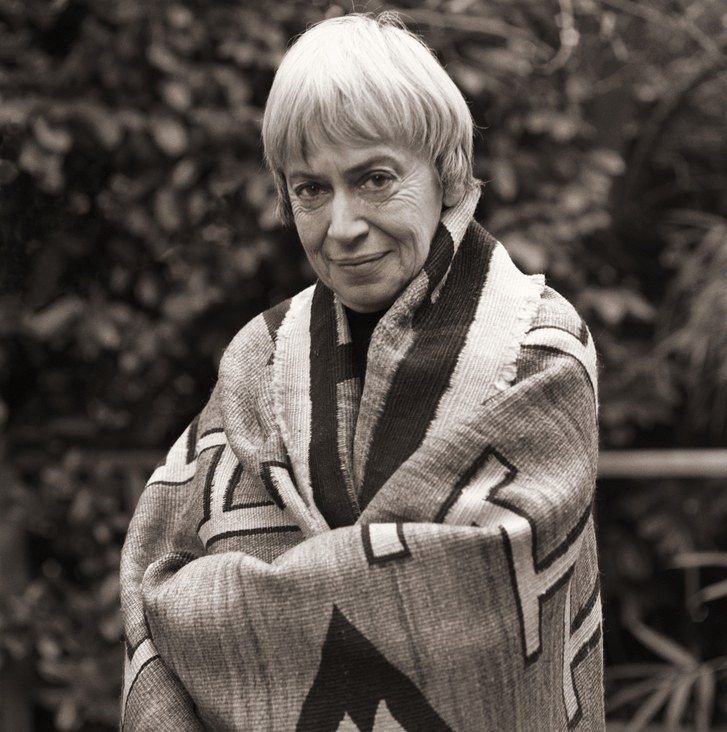
Ursula K. Le Guin (1929-2018)

Here is the complete quote: “People who deny the existence of dragons are often eaten by dragons. From within.”

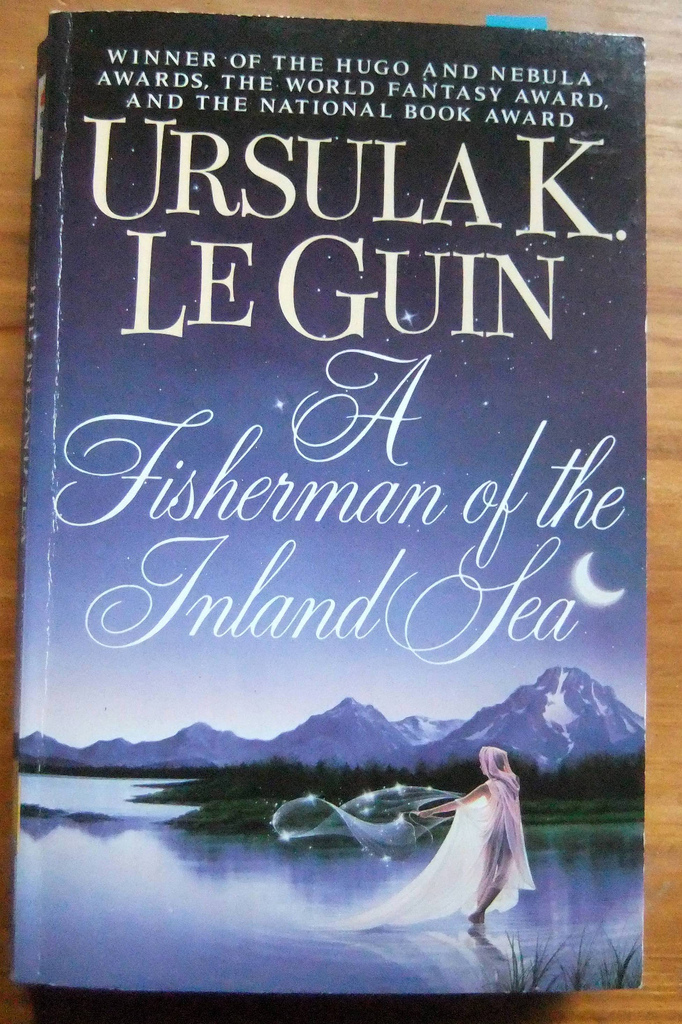
Ursula K. Le Guin died in January of this year, leaving me bereft of her elfin wisdom. Not entirely, because there are all those books and stories of hers, which I am still plodding my way through. Today, I finished A Fisherman of the Inland Sea (1994), which contained three short stories that are to my mind the best stories ever written about space travel. They include “The Shobies’ Story,” “Dancing to Ganam,” and “Another Story, or A Fisherman of the Inland Sea.”

That middle initial in her name, the “K,” comes from her father, Anthropologist Alfred Louis Kroeber. What elevates Ursula from the technoid school of science fiction is her interest in exotic, invented cultures. These are best seen in her Hainish stories, which are my favorites among her works.  There is no end to the writing of fantasy stories, but somehow Ursula’s were special. They might be set in the distant future and on distant planets, but they involve real feelings among real beings. As she once said ,“We read books to find out who we are. What other people, real or imaginary, do and think and feel … is an essential guide to our understanding of what we ourselves are and may become.”  Well, she wrote those kind of books. In spades.

The Edition of A Fisherman of the Inland Sea That I Read

In the three stories I have mentioned from A Fisherman of the Inland Sea, there are two methods of space travel:

  • NAFAL, short for Nearly As Fast As Light. To the space travelers, the time expended in travel does not seem so long, but for those who have been left behind, years or even centuries pass.
  • Churten Theory, in which the travel is instantaneous. One could travel to Antares and be back for lunch. Travel via a Churten drive can be highly problematical, however, especially if the people traveling don’t get their stories straight or are incompatible in odd ways. “Wrinkles” in Churten travel can lead to strange results.

I look forward to reading (and maybe re-reading) several more of Ursula K. Le Guin’s work this year.


Going South for the Winter

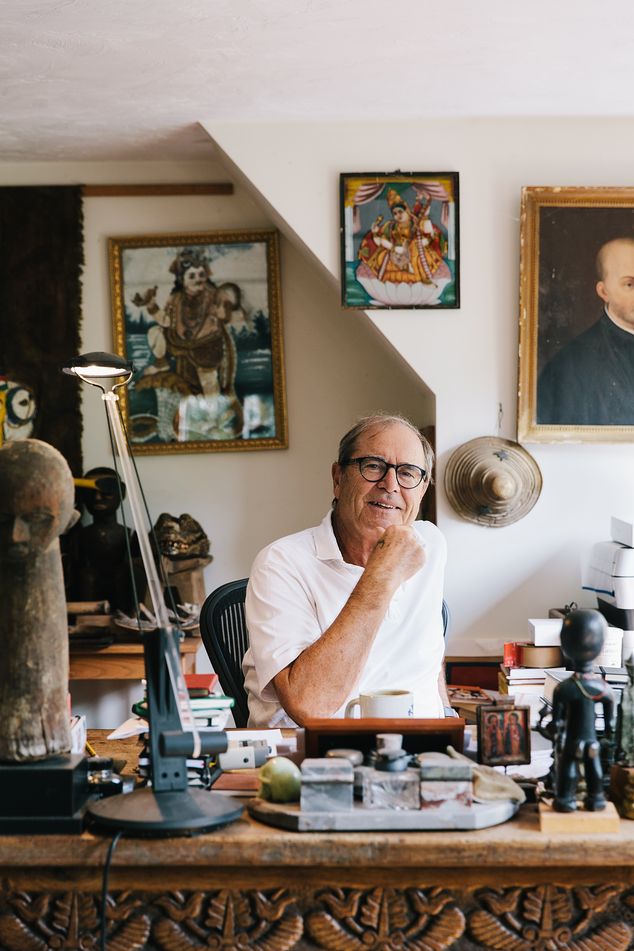
Novelist and World Traveler Paul Theroux

Paul Theroux has had an immense influence on my life. When I first read The Old Patagonian Express: By Train Through the Americas in 1981, I knew that I wanted to travel as he did. But I couldn’t: I was stuck in a demanding job, and many of the places I wanted to visit, such as Guatemala, Peru, and Argentina, were undergoing hard times; and travel there was not recommended by our State Department.

But the years have passed, and travel to Latin America is not so problematic any more. (Though, now, parts of Mexico are dangerous—including many cities, such as Veracruz, which I have visited.)

After writing books about traveling by rail through Asia and China, about traveling around the coasts of Britain and the Mediterranean, and about island-hopping in the South Pacific, Theroux spent four winters traveling through the Deep South, concentrating on poor small towns in Georgia, the Carolinas, Alabama, Mississippi, and Arkansas. His book, Deep South: Four Seasons on Back Roads, opened my eyes to why Trump won in 2016. Theroux’s South was a place where people were more civil to strangers than in other parts of the country. Yet there is a great deal of poverty, and many of its people feel they have been shunted aside by history, large corporations, and general neglect.

Theroux, the world traveler, spent those four winters dealing with people who, for the most part, never traveled abroad. He spent more time with Black Americans than with Whites. Both racists are as far apart as ever, yet there are glimmers of hope. And the hope is not from Washington and New York, where all the money is concentrated, but from local people who bring about incremental improvements rather than global change.

He is older and wiser after his forty-odd years of travel. “The greatest advantage to being an older traveler is being invisible, unregarded, ignored. This allows one to eavesdrop and to see much more of a place or a people. There is a detachment, too, in being older: You’re not looking for a new life, not easily tempted. So you see a place clearly. Perfect for writing.”

The travels that went into the making of this book took place before the electoral debacle of 2016, but one could see the widespread willingness to try something new, to talk to somehow who promised to “Make America Great Again.” Not that this administration will anything to help them. A trade war with China would hurt voters in Trump country far more than voters in the Northeast and West.


My Best of 2017

German Author W. G. Sebald (1944-2001)

Below is a list of my favorite books from 2017. Most are fiction, with some occupying the in-between zone, and only two are outright non-fiction. The only name which is repeated from 2016 is that of Patrick Modiano, about whom I posted yesterday. The 14 books listed below are in alphabetic order by the names of their authors. This year, I have also included the country of origin.

  • Rudolfo Anaya, Bless Me, Ultima (US). I was tempted to also include The Milagro Beanfield War by John Nichols, but of the two New Mexico novels, I think Anaya’s is the better.
  • Teju Cole, Open City (US). Cole’s Nigerian-American viewpoint is incredible. I am keeping my eye on this writer.
  • Ry Cooder, Los Angeles Stories (US). Granted, Cooder is a great musician; but he’s also got the makings of a great writer. I would love to see more from him.
  • Antonio di Benedetto, Zama (Argentina). This New York Review title introduces a writer unknown to Americans, but well known to South Americans. A Spanish government official in Paraguay finds his ambition is constantly being thwarted.
  • Joan Didion, South and West, From a Notebook (US). This is an old title that is just now being released. Didion’s 40-year-old observations of Dixie are still relevant.
  • David Goodis, Dark Passage (US). A noir masterpiece, far better even than the Bogart movie based on it.
  • Indriðason, Arnaldur, Reykjavík Nights (Iceland). Indriðason is a world-class mystery writer, and he seems to be getting better and better.
  • Patrick Modiano, After the Circus (France). A young man falls for an older woman he first sees at a police interrogation.
  • Natsume Soseki, The Gate (Japan). A real find: This quiet writer is a deep one. Even if he died early in the 20th century, his books read as if they were written yesterday. (This writer is not outside of alphabetic order: Natsume is his family name)
  • Raymond Queneau, The Last Days (France). A coming-of-age story with seven characters set in the 1920s.
  • Jonathan Raban, Passage to Juneau: A Sea and Its Meanings (US). Ostensibly a travel book, but a great one. Real life intervenes twice in the author’s solo sailing voyage up Alaska’s Inside Passage.
  • W G Sebald, The Emigrants (Germany). A book about people who have for various reasons emigrated from their home countries (like Sebald himself), and find themselves in a strange in-between place.
  • Marina Tsvetaeva, Selected Poems (Russia). By far the best poems I have read last year.
  • John Williams, Stoner (US). No, nothing to do with drugs. Professor Stoner is an English instructor at a Midwestern college, and we see how his life plays out.